Download from:
https://lhapdf.hepforge.org/downloads/
Developer checkout:
https://gitlab.com/hepcedar/lhapdf
Download from:
https://lhapdf.hepforge.org/downloads/
Developer checkout:
https://gitlab.com/hepcedar/lhapdf
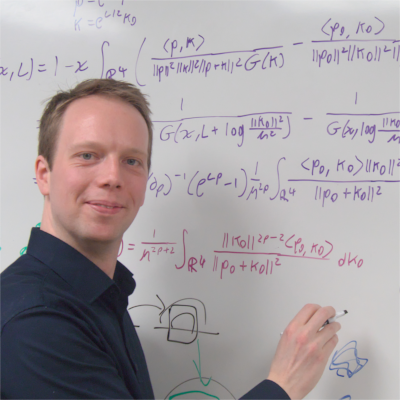
The #paperOfTheDay is "Renormalons and fixed points". This article from 1996 investigates the relation between #renormalons and infrared behaviour of #QCD. A renormalon is an effect that can lead to the divergence of a perturbation series, and such effects have been observed in various contexts. What has never become quite clear (at least to me) is the precise logical relation between its different incarnations: Divergence of the series, Landau poles, the peculiarities of QCD (renormalons exist in scalar theories as well!), non-trivial fixed points, and questions of uniqueness and resummability. The present paper points out some difficulties -- namely that some of the quantities involved are only defined perturbatively, or are sensitive to choices of analytic continuation. These considerations are interesting and not trivial, but I find it sometimes hard to follow the article since it has no explicit structure such as subsections or theorems, it is simply one continuous discussion. Or maybe I've just become too much of a mathematician by now.
#dailyPaperChallenge https://www.sciencedirect.com/science/article/pii/0370269396000615
A few days ago in the #dailyPaperChallenge I read Veneziano's proposal for a 4-point amplitude. This Friday, my #paperOfTheDay was "Alternative Construction of Crossing-Symmetric Amplitudes with Regge Behaviour" from 1969, were another, more general, expression is proposed by Virasoro. Overall, the spirit is very similar to Veneziaon's article: Propose a formula and discuss its properties. In particular, the Virasoro amplitude reduces to the Veneziano one if an extra condition is imposed, and at the same time it is argued that this condition is not satisfied for some realistic scattering processes, and therefore Virasoro's amplitude should be expected to better reflect reality than Veneziano's. Again, such heuristic arguments have become somewhat obsolete by now since we now know #QCD as a fundamental theory, and don't have to guess amplitudes any more. Still, the Virasoro amplitude stays relevant for certain theoretical considerations. https://journals.aps.org/pr/abstract/10.1103/PhysRev.177.2309
@cdarwin Fascinating read. QCD struggles to connect the 3-quark proton picture with the gluon sea.
My topological QCD work shows *intrinsic charm* emerges at a **TMST threshold https://doi.org/10.5281/zenodo.18207031 a geometric phase transition from 3 quarks to collective regime.
Python module ready for Belle II correlation tests. Seeking their software team review as independent researcher.
Curious about entanglement thresholds in proton structure?
Sunday physics: in QCD, “topology” refers to the structure of the vacuum (sectors, instantons, θ‑vacua, confinement). In quantum computing, “topology” is engineering: qubit geometry + stabilizers (toric/surface codes) to protect information via local syndromes. And within QCD, instantons and θ‑vacua are like two kids: both matter; which one would you start with to explain it? #QCD #QuantumComputing
📍 Location: Kraków
📅 Start: Oct 2026 (flexible)
⏳ Priority deadline: 31 May 2026
Full details & application info:
👉 https://inspirehep.net/jobs/3092375
“This is the most complicated thing that you could possibly imagine,” said Mike Williams, a physicist at the Massachusetts Institute of Technology.
“In fact, you can’t even imagine how complicated it is.”
The proton is a quantum mechanical object that exists as a haze of probabilities until an experiment forces it to take a concrete form.
And its forms differ drastically depending on how researchers set up their experiment.
Connecting the particle’s many faces has been the work of generations.
“We’re kind of just starting to understand this system in a complete way,” said Richard Milner, a nuclear physicist at MIT.
Proof that the proton contains multitudes came from the Stanford Linear Accelerator Center (SLAC) in 1967.
In earlier experiments, researchers had pelted it with electrons and watched them ricochet off like billiard balls.
But SLAC could hurl electrons more forcefully,
and researchers saw that they bounced back differently.
The electrons were hitting the proton hard enough to shatter it
— a process called deep inelastic scattering
— and were rebounding from point-like shards of the proton called quarks.
“That was the first evidence that quarks actually exist,” said Xiaochao Zheng, a physicist at the University of Virginia.
After SLAC’s discovery, which won the Nobel Prize in Physics in 1990,
scrutiny of the proton intensified.
Physicists have carried out hundreds of scattering experiments to date.
They infer various aspects of the object’s interior by adjusting how forcefully they bombard it and by choosing which scattered particles they collect in the aftermath.
Even SLAC’s proton-splitting collisions were gentle by today’s standards.
In those scattering events, electrons often shot out in ways suggesting that they had crashed into quarks carrying a third of the proton’s total momentum.
The finding matched a theory from Murray Gell-Mann
and George Zweig,
who in 1964 posited that a proton consists of three quarks.
Gell-Mann and Zweig’s
“quark model” remains an elegant way to imagine the proton.
It has two “up” quarks with electric charges of +2/3 each and one “down” quark with a charge of −1/3,
for a total proton charge of +1.
But the quark model is an oversimplification that has serious shortcomings.
It fails, for instance, when it comes to a proton’s #spin,
a quantum property analogous to angular momentum.
The proton has half a unit of spin,
as do each of its up and down quarks.
Physicists initially supposed that
— in a calculation echoing the simple charge arithmetic
— the half-units of the two up quarks minus that of the down quark must equal half a unit for the proton as a whole.
But in 1988, the European Muon Collaboration reported that the quark spins add up to far less than one-half.
Similarly, the #masses of two up quarks and one down quark only comprise about 1% of the proton’s total mass.
These deficits drove home a point physicists were already coming to appreciate:
The proton is much more than three quarks.
The Hadron-Electron Ring Accelerator ( #HERA ),
which operated in Hamburg, Germany, from 1992 to 2007,
slammed electrons into protons roughly a thousand times more forcefully than SLAC had.
In HERA experiments, physicists could select electrons that had bounced off of extremely
low-momentum quarks,
including ones carrying as little as 0.005% of the proton’s total momentum.
And detect them they did:
HERA’s electrons rebounded from a maelstrom of
low-momentum quarks and their antimatter counterparts, antiquarks
The results confirmed a sophisticated and outlandish theory that had by then replaced Gell-Mann and Zweig’s quark model.
Developed in the 1970s, it was a quantum theory of the “strong force” that acts between quarks.
The theory describes quarks as being roped together by
force-carrying particles called #gluons.
Each quark and each gluon has one of three types of “color” charge, labeled red, green and blue;
these color-charged particles naturally tug on each other and form a group
— such as a proton
— whose colors add up to a neutral white.
The colorful theory became known as #quantum #chromodynamics, or #QCD.
According to QCD, gluons can pick up momentary spikes of energy.
With this energy, a gluon splits into a quark and an antiquark
— each carrying just a tiny bit of momentum
— before the pair annihilates and disappears.
It’s this “sea” of transient gluons, quarks and antiquarks that HERA,
with its greater sensitivity to
lower-momentum particles,
detected firsthand.
HERA also picked up hints of what the proton would look like in more powerful colliders.
As physicists adjusted HERA to look for lower-momentum quarks,
these quarks
— which come from gluons
— showed up in greater and greater numbers.
The results suggested that in even higher-energy collisions, the proton would appear as a cloud made up almost entirely of gluons
https://www.quantamagazine.org/inside-the-proton-the-most-complicated-thing-imaginable-20221019/
Thesis: Using Deep Reinforcement Learning for Automatic Code Optimization in the MLIR Compiler
The #TopQuark decays too fast to hadronize. Its lifetime (~5×10⁻²⁵ s) is shorter than #QCD timescales (~10⁻²⁴ s). So we see a "bare" quark decay: t → W + b, before confinement. A rare clean look into quark physics. 🧪⚛️ #Science #ParticlePhysics #Physics Image: commons.m.wikimedia.org/wiki/File:To...

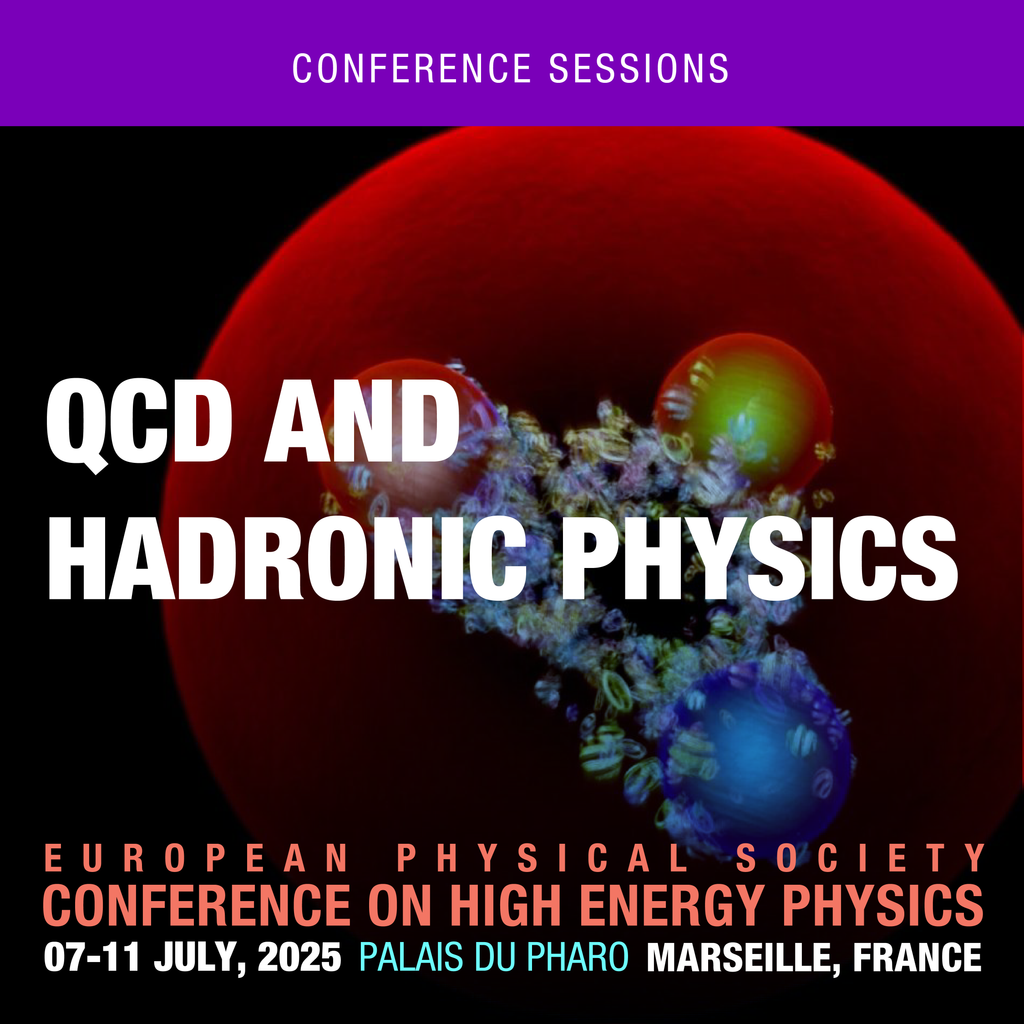
Dive into the heart of strong interactions! The QCD & Hadronic Physics session at #EPSHEP will explore Quantum Chromodynamics, hadron structure, and the mysteries of the strong force that bind quarks and gluons. Don’t miss out on the latest breakthroughs! 💥 #QCD #HadronPhysics #ParticlePhysics
We start from the electron mass and each increment is greater than the previous one, there is no way to refine the result by playing on the number of iterations.
Only uses universal constants are used in the calculation. Check it.
You won't come out of this reading unscathed !
https://science-wide-open.blogspot.com/2024/10/relative-mass-proton-electron.html
#Physics #QuantumPhysics #proton #neutron #electron #Quark #Quarks #QCD

More calculation details on the link.
The program to generate those numbers is available there, check it.
No cheating. But you won't come out of this reading unscathed.
https://science-wide-open.blogspot.com/2024/10/relative-mass-proton-electron.html
#Physics #QuantumPhysics #Quark #Quarks #QCD
Congratulation to Jakob Finkenrath for 2024 EU ERC Consolidator Grant on Lattice QCD simulations at the dawn of European Exascale Computing
Quarks are fundamental particles thought to be permanently confined within protons, neutrons, and other composite particles. Quantum Chromodynamics (QCD) theory suggests that separating quarks requires immense energy, increasing confinement rather than allowing separation. While strong evidence supports that quarks are bound this way, absolute proof is still elusive. If quark confinement were ever disproven, it would challenge our understanding of particle physics. #Quarks #QCD #ParticlePhysics
Hannah Bossi @MIT gives #nikhef theory seminar on energy correlators as a probe of QCD from simple to complex systems
I suspect that experiments in #Brizzle and #Yorkshire might cause problems for this newly discovered law of Bing/AA/Google Maps #physics that requires that any journey in England involve either #HS2 or #Luton.
I predict that our Higgs Boson equivalents will be #Leeds and a very hard to discover rule involving *nearly* going to #Swindon.
Then Mancunian JourneyCartoGraphics will come along and turn everything on its head, like.
(-:
A thirty minute video on why Quantum Chromodynamics can't be explained in a thirty minute video. 😁 She is great, as ever.