#ReddestRock

V Martínsharponlooker
2025-11-24

The greenish spots at the southern bank of Neretva are also astrobiology-interesting.

Broz et al: "Green reduction spots in red sedimentary rocks of the Bright Angel formation..."
agu.confex.com/agu/agu25/meeti

Companion figure of the preview abstract: views of the Malgosa Crest abrasion with greenish reduction spots.
V Martínsharponlooker
2025-02-11

This one looks at the opposite shore of Neretva, where things are complicated by unsure stratigraphy (see post nr 1 in this thread). Also there's a lacking detection of organics. Abiotic processes are deemed "possible"

Broz et al :"Green Reduction Spots in Red Beds of the Bright Angel Formation and Implications for Biosignature Preservation Potential"
hou.usra.edu/meetings/lpsc2025

🧵 8/n

Figure 3 from the linked paper: "Comparison of putative redox features in 3-to-4 billion-year-old mudstones of the Bright Angel formation"
65dBnoise65dBnoise
2024-09-06

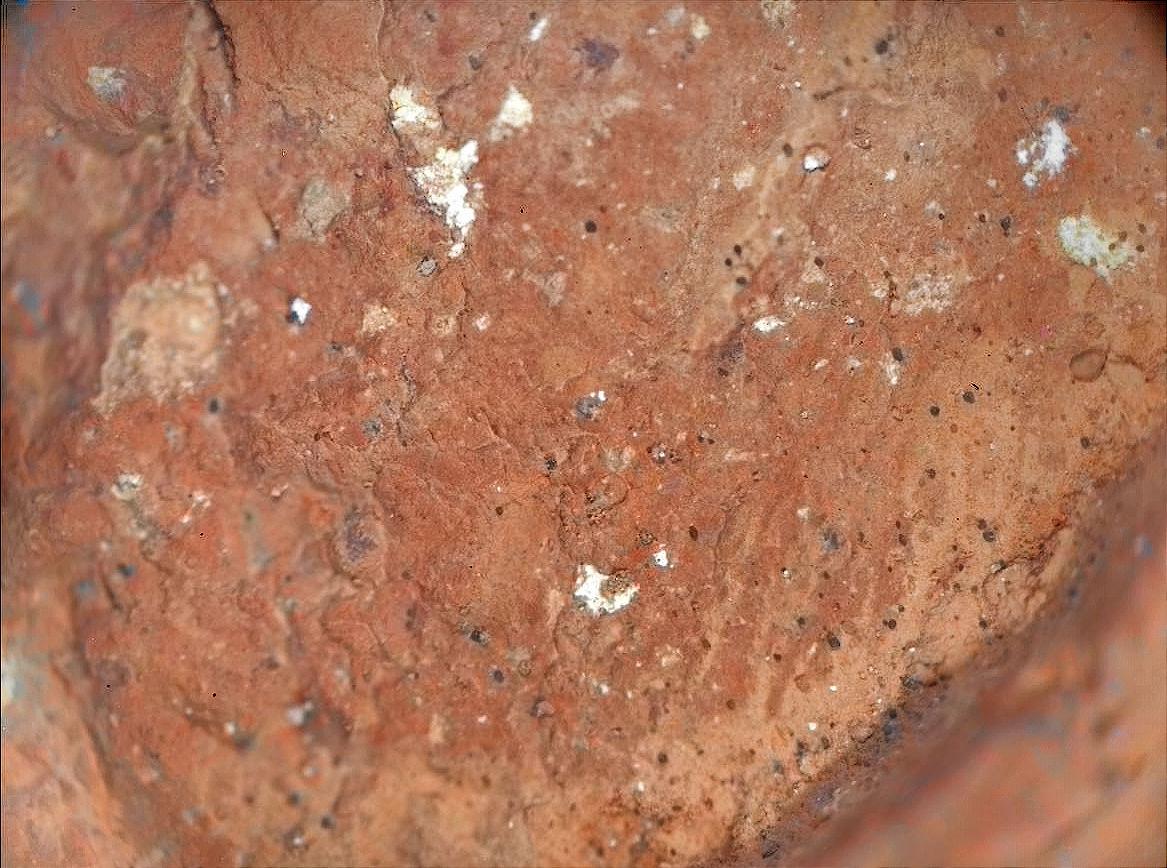
Remember the "reddest rock"?
Here is an animation of WATSON images received yesterday, with a stop when the bottom of the pit becomes focused.

For more of this interesting rock, see the hashtag.

Raw SHERLOC_WATSON animated
looking down from RMC 56.3438
Sol 1242, LMST: 13:53:54

One original:
mars.nasa.gov/mars2020-raw-ima

Credit: /JPL-Caltech/65dBnoise

65dBnoise65dBnoise
2024-08-18

The above, combined monochrome SHERLOC_ACI and color SHERLOC_WATSON (a combo itself), animated:

65dBnoise65dBnoise
2024-08-18

has spent quite some time examining the intricacies of this "reddest rock". So have we 🤓.

Here is a combination of two images (SHERLOC_ACI and WATSON) to create a new image inheriting the greater detail of the one and the color of the other (have a look at the originals).

Originals:
mars.nasa.gov/mars2020-raw-ima
mastodon.social/@65dBnoise/112

Credit: /JPL-Caltech/65dBnoise

65dBnoise65dBnoise
2024-08-18

Craters, valleys, caves and sinkholes, maybe colonies of thousands, of millions of microbes thriving and dying here a billion years ago; a whole cosmos, imaginary or real, in ~ 1 inch of red rock.

Processed SHERLOC_WATSON
looking down (-77°) from RMC 56.3438
Sol 1242, LMST: 13:53:18

Original: mars.nasa.gov/mars2020-raw-ima

Credit: /JPL-Caltech/65dBnoise

No, we don't know if there is any sign of life in this rock, but that doesn't stop us from imagining there might have been.
65dBnoise65dBnoise
2024-08-18

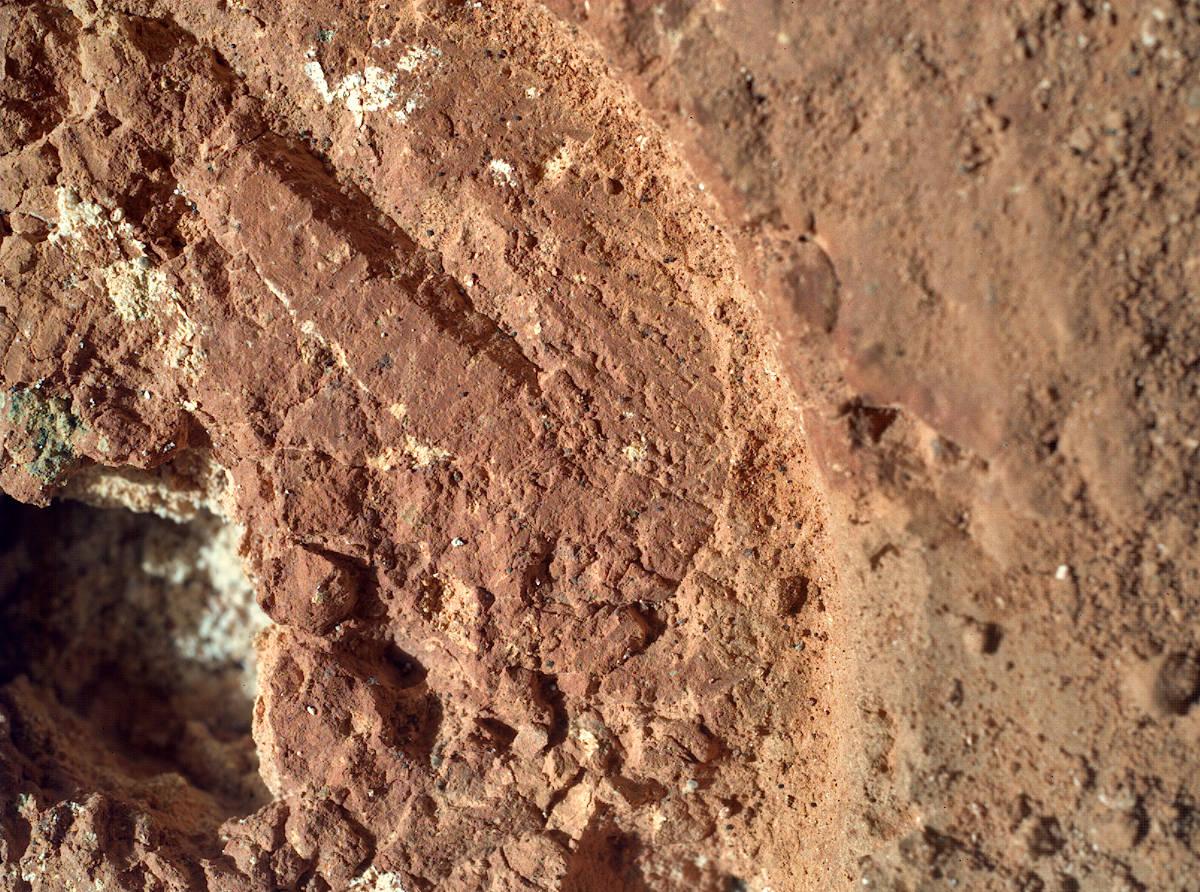
The "reddest rock" proved to be crumbly, too.

Processed MCZ_RIGHT, FL: 110mm
looking SSE (153°) from RMC 56.3438
Sol 1242, LMST: 11:57:40

Original: mars.nasa.gov/mars2020-raw-ima

Credit: /JPL-Caltech/ASU/65dBnoise

65dBnoise65dBnoise
2024-08-16

The abrasion, though, appears to be not where the rock was zapped with the laser, which is where a distinct "discoloration" of the rock was observed in artificial light, but rather to the left of it, maybe leaving the "good" spot for a coming up sample?

Processed SHERLOC_WATSON
looking down (-74°) from RMC 56.3438
Sol 1240, LMST: 13:49:47

Original: mars.nasa.gov/mars2020-raw-ima

Credit: /JPL-Caltech/65dBnoise

65dBnoise65dBnoise
2024-08-16

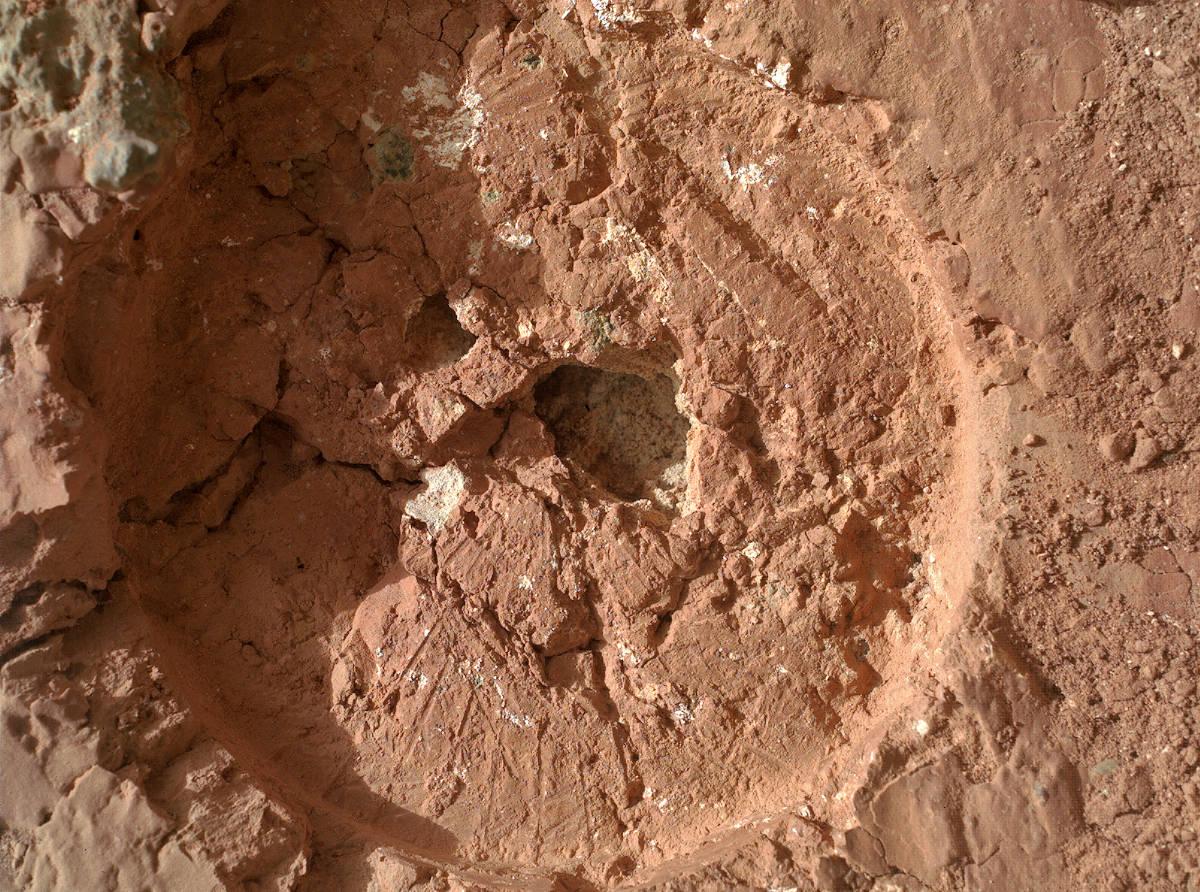
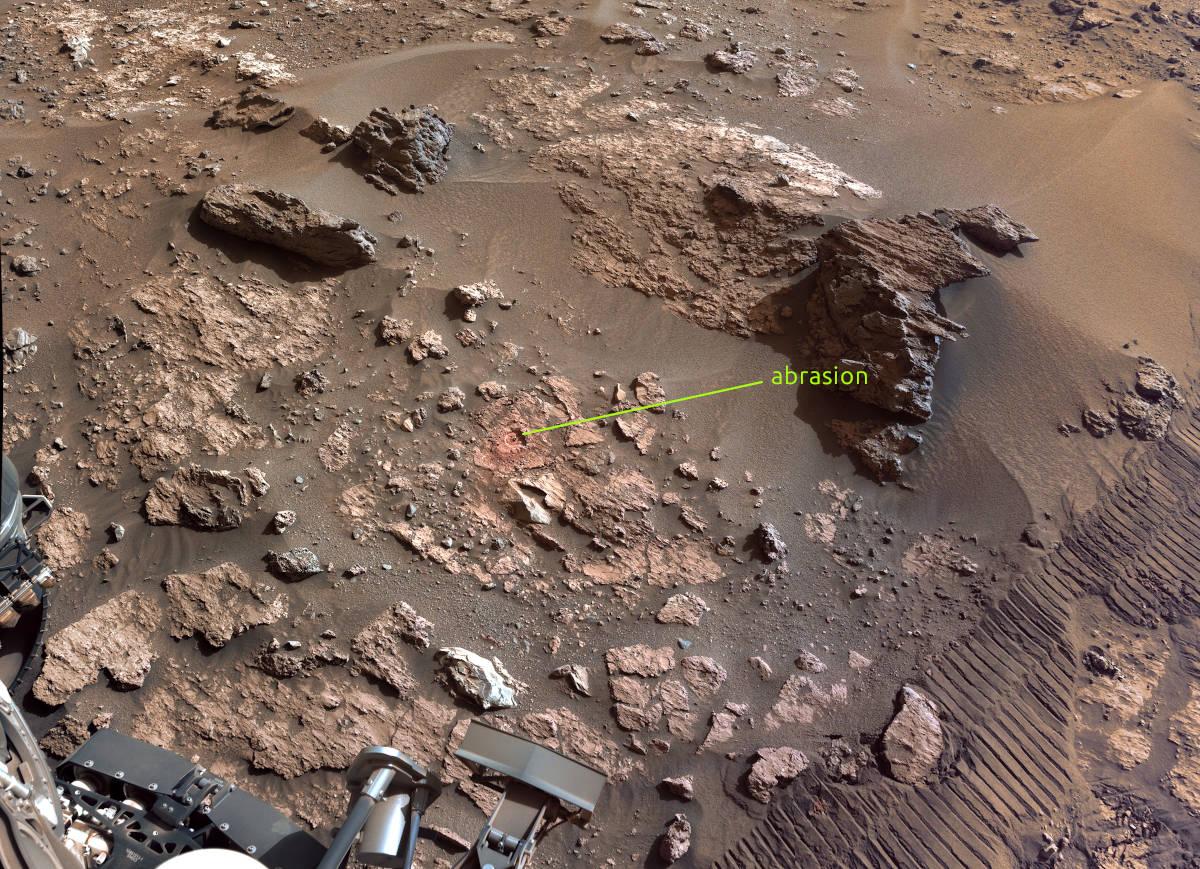
That "reddest rock" has been examining for a number of sols now? Well, it's at least as red deeper as it is on the surface.

The rover has now abraded the .

Processed SHERLOC_WATSON
looking down (-74°) from RMC 56.3438
Sol 1240, LMST: 14:59:05

Processed, undistorted NAVCAM_RIGHT
looking SSE (157°) from RMC 56.3438
Sol 1240, LMST: 14:40:37

Originals:
mars.nasa.gov/mars2020-raw-ima

Credit: /JPL-Caltech/65dBnoise

65dBnoise65dBnoise
2024-08-15

Zapping rocks with a laser is even more fun; it scares the hell out of rocks, which, um…, give out gases you then analyze for fun and for science 🙃

The from the other sol is seen here zapped across a two color interface. Looks similar to the leopard spots of the Cheyava Falls rock, but without the dark outline.

Processed SHERLOC_WATSON
looking down (-79°) from RMC 56.3438
Sol 1238, LMST: 19:59:43

Credit: /JPL-Caltech/65dBnoise

65dBnoise65dBnoise
2024-08-13

This must be the reddest rock we've seen in Jezero, Mars, so far.

It's the same red rock we saw yestersol, but here the laser was fired so that could have a go at determining its chemical composition by analyzing the plasma created using its LIBS and Raman spectrometers.

Processed SUPERCAM_RMI
looking SSE (157°) from RMC 56.3438
Sol 1237, LMST: 13:27:53

Original: mars.nasa.gov/mars2020-raw-ima

Credit: /JPL-Caltech/LANL/CNES/IRAP/65dBnoise

Client Info

Server: https://mastodon.social
Version: 2025.07
Repository: https://github.com/cyevgeniy/lmst