
Black holes are solutions to Einstein’s equations that describe extreme gravity. They matter because they reveal how space, time, and matter behave at physical limits.
#Relativity

@LaEsperantaHominoid wrote (22. Jan. 2026, 06:37):
> _I keep hearing "relativity says nothing can travel faster than causality"_
This exact wording you didn't hear from me. ...
Damn shame we can no longer search exactly what was to be heard (read) directly from Einstein; as per: https://en.wikipedia.org/wiki/Einstein_Papers_Project#(2014-2025)_The_Digital_Einstein_Papers
FWIW, I'd sound more like
"In #relativity , attention is given to the front of a signal, i.e. to the very first indication which an (sensitive) observer perceived of an event actually having happend in which he didn't take part himself.
Whatever a particular observer noticed of a particular event, or causally due to this event, he must have noticed at, or after, having noticed the signal front of this event."
> _Well what if just assume it can and do the mathematics anyways?_
Referring to notions + symbols https://en.wikipedia.org/wiki/Causal_structure#Causal_relations
we can suitably formalize
- (the timelike world line \(\mathcal W\) of) an observer, as a chronologically ordered set of events:
\( \forall a, b \in \mathcal W : (((a \ll b) \land \)
\( \qquad (not[ b \leq a ])) \lor ((b \ll a) \land (not[ a \leq b ])) \lor (a \equiv b)) \)
\( \forall a, b, c \in \mathcal W : (((a \ll b) \land (b \ll c)) \implies (a \ll c)) \)
- the event of \(\mathcal W\), which is unique provided it exists at all, which belongs to the signal front of a given event \(\varepsilon\):
\( f \in \mathcal W : (f \neq \varepsilon) \land (\varepsilon < f) \land \)
\( \qquad (\forall x \in \mathcal W : (\varepsilon < x) \implies ((x \equiv f) \lor (f \ll x))) \)
So: "just assuming"
\[ \exists y \in \mathcal W : (\exists f) \implies (\varepsilon < y) \land (y \ll f))) \]
... says: the very assumption of \(y\) existing as described is an absurdity.

Read more in the LIGO-Virgo-KAGRA Science Summary about this paper: https://ligo.org/science-summaries/GW250114_TGR/
Testing Einstein’s theory of relativity with the clearest gravitational-wave signal yet
📄 https://journals.aps.org/prl/abstract/10.1103/6c61-fm1n (Open Access)
1️⃣ Relativity put to the test: A LIGO-Virgo-KAGRA team has conducted some of the most precise tests of Einstein’s theory of general relativity.
2️⃣ Einstein holds fast: In all tests, the observations match the theory’s predictions. In some cases, the tests based on this signal alone are two to three times more stringent than those obtained by combining data from dozens of other signals.
3️⃣ The clearest signal: The team used data from GW250114, the strongest gravitational-wave signal ever detected from the merger of two black holes.
4️⃣ Like a bell: For the first time, detailed analyses of the complete signal and the ringdown phase, which occurs shortly after the merger, have identified or constrained three gravitational-wave tones.
Image: H. Pfeiffer, A. Buonanno (@mpi_grav), K. Mitman (Cornell University)


A cluster of historic scientific contributions were to come from the interactions of the people mentioned above (+a few). Galilean velocity / transform, Newtonian Time & Space.. From our vantage point, we know that there was still a very important chapter to be written regarding #relativity here.

Vulcan | The Planet That Didn't Exist
https://www.youtube.com/watch?v=iJyweEcpsGc
Re-watching one of my favorite #youtube #documentaries. It is a nice #historical approach to how #sicence is constantly working to improve and challenge it self.
#relativity #astronomy #documentary #mathematics #physics #math #stem #history #historyofscience

I keep hearing "Einstein's relativity says nothing can travel faster than causality"
Well what if just assume it can and do the mathematics anyways? What kind of results would we obtain?

Note to self: #ITeachPhysics #Relativity #LorentzTransformation
3D Printed Mechanical Lorentz Transform - Visualize Spacetime : 15 Steps (with Pictures) - Instructables https://www.instructables.com/3D-Printed-Mechanical-Lorentz-Transform-Visualize-/

I of course goofed and left out the explanation of Lorentz Contraction from the obvious place in Part 3 where I should have talked about it.
So I've slotted it in here:
https://wrog.dreamwidth.org/71271.html#hrel3_lorentz
along with a new diagram to make super-clear what's happening.
Or if you want to get the flow/parallelism there's now this link https://wrog.dreamwidth.org/71271.html#hrel3_timedil
to the earlier time dilation discussion (cleaned up a bit), since that's really the same issue but turned on its side 90°.
So maybe the Stargate SG-1 example will be clearer now. or maybe not
(the point of the blue arrows is this is the kind of shit you can do if you have stargates: A Completely Easy Time Machine they'd have built half-way thru season 2)
![How to draw this:
From a point in the center of the page
draw two yellow-dashed rays sloping left-up and right-up at 45° to the edge of the page. Mark the right angle between the two rays. ([center] pt)
On each of these mark a point near the corner right before it runs off of the page ([upper-left] pt and [upper-right] pt)
From [upper-right] draw a downwards-left blue arrow, slope 3/2, to a point directly below [center],
label that "moving Now snapshot"
label the destination "Here and Now"
Draw up-left (slope −3/2) blue arrow from "Here and Now" to [upper-left]
label that "stationary Now snapshot"
Draw black segment from [upper-left] slope −2/3 to intersect at right angles with downwards arrow,
label that "1-unit-up Stationary Person"
label intersection "where 1-unit-up Stationary Person is Now according to Moving People"
Draw black segment from [upper-right] slope 2/3 to intersect at right angles with upwards arrow,
label that "1-unit-up Moving Person"
label intersection "where 1-unit-up Moving Person is Now according to Stationary People"
Draw 2 short black segments through "Here and Now"
one slope 2/3 labeled "Moving Here"
one slope −2/3 labeled "Stationary Here"](https://files.mastodon.social/cache/media_attachments/files/115/919/614/040/545/370/original/2968385f7a2cd7f0.gif)

Universal Law of Relativity: Finding Meaning Through Perspective
January 15, 2026This article is written as part a series exploring the 12 Universal Laws, timeless principles that guide the flow of energy and influence the fabric of our reality. Each law, from the Law of Divine Oneness to the Law of Gender, represents a fundamental truth about how the universe operates and how we can harmonize with its rhythms to enhance our lives.
In this series, we will delve into each law, unraveling its significance, real-world applications, and practical insights that can help you align with these cosmic principles.
Whether you’re new to these metaphysical concepts or seeking to deepen your understanding, welcome to this journey of inner and outer transformation.
I invite you to share your perspectives in the comments — your experience may illuminate a new layer of insight for others.
The Twelve Universal Laws
Before we explore this specific principle, it’s helpful to remember that these laws are part of a larger whole — a system of interconnected principles that describe how energy behaves in all realms of existence.
Based on the Seven Hermetic Principles of Hermes TrismegistusA quick search engine query will land you with results listing a wide array of universal laws and authors from a myriad of scholarly disciplines. I watched a video posted to YouTube that outlined FIFTY universal laws!
While the information included in the video was valid and relevant, they are mere extensions of a list that was first published in 1908 in a sacred esoteric text titled, The Kybalion.
The most popular occult work of the twentieth century–now in a hardbound CENTENARY edition!! *paid linkThe authors, identified only as the “Three Initiates,” reportedly documented divine revelations of Hermes Trimegistus of ancient Egypt that had before only been passed verbally to initiates.
Known as the Hermetic Principles, these immutable and eternal laws of the universe influence everything around us, every detail and circumstance in our lives. Our ignorance of their existence is not an accident. They have been kept hidden from us because, without them, we can’t comprehend the hidden connections between our internal and external worlds, and we are subject to the volatile nature of our emotions. This makes us much easier to control and manipulate.
Start at the beginning and learn more about the Twelve Universal Laws.
The Twelve Universal Laws are not isolated truths. They work together, weaving a cohesive framework that explains how energy manifests, transforms, and expresses itself through experience. Each law offers a unique lens through which we can better understand ourselves and the world around us — not as something happening to us, but something unfolding with us.
As with the Laws of Vibration, Attraction, and Perpetual Transmutation of Energy, the Law of Relativity invites awareness. It encourages us to pause, reflect, and recognize the power of perception in shaping our reality.
The Law of Relativity plays a vital role within this framework by teaching us how comparison and perspective influence meaning, emotion, and understanding.
What Is the Law of Relativity?
The Universal Law of Relativity states that everything is relative and can only be understood in comparison to something else. There is no absolute “good” or “bad,” “easy” or “hard,” “success” or “failure” — only experiences viewed through context.
In simple terms:
Nothing has meaning on its own;
meaning arises through comparison.
Just as light is perceived because of darkness, and warmth because of cold, our experiences gain clarity when viewed in relation to others. This law reminds us that our challenges are not inherently negative — they are reference points that help us grow, learn, and expand.
How the Law of Relativity Shapes Our Experience
This law gently shifts us away from judgment and into understanding.
Challenges Are Perspective-Dependent
What feels overwhelming today may feel insignificant months from now. Likewise, what once felt impossible may later appear as a stepping stone. The Law of Relativity teaches us that difficulty is not a fixed truth — it’s a temporary comparison.
Growth Requires Contrast
Without contrast, expansion cannot be recognized. Joy feels deeper after sorrow. Confidence is earned through uncertainty. Strength is revealed through resistance. Life offers contrast not to punish us, but to define our becoming.
Comparison Can Be a Teacher — or a Trap
This law does not ask us to compare ourselves to others in ways that diminish our worth. Instead, it invites conscious comparison: How far have I come? What does this moment reveal about my values? What is this experience teaching me?
When used wisely, comparison becomes insight rather than insecurity.
Applying the Law of Relativity in Daily Life
Here are practical ways to work with this law intentionally:
1. Reframe Difficult Situations
When facing hardship, ask yourself:
- Compared to what?
- How might this appear from a higher perspective?
- What could this moment be preparing me for?
Often, discomfort is a sign of growth in motion.
2. Release Self-Judgment
Rather than measuring yourself against someone else’s timeline or success, reflect inward:
- Who was I a year ago?
- What have I learned since then?
- How has my awareness expanded?
Your journey is meaningful because it is yours.
3. Cultivate Gratitude Through Contrast
Gratitude deepens when we recognize contrast. Moments of peace stand out because chaos once existed. Stability is cherished because uncertainty was known. The Law of Relativity helps us appreciate what we might otherwise overlook.
4. Find Neutrality in Emotional Waves
When emotions feel intense, remember they are relative states — not permanent identities. Just as joy passes, so does sorrow. Observing emotions without attaching to them allows energy to flow more freely.
Conclusion: Perspective Is Power
The Law of Relativity reminds us that life is not happening in absolutes — it’s unfolding through relationships, contrasts, and shifting viewpoints.
When we understand this law, we stop asking, “Why is this happening to me?” and begin asking, “What is this showing me?”
✨ Perspective doesn’t erase difficulty — it transforms meaning.
Join the Conversation
Have you ever looked back on a difficult season and realized it shaped you in unexpected ways? How has changing your perspective altered your experience?
Share your insights in the comments below.
And if this message resonated, consider sharing it with someone who may need a reminder that everything is relative — and nothing is permanent.
#hermeticPrinciples #Kybalion #relativity #SpiritualAlchemy #SpiritualAwakening #Spirituality #universalLaws

Part 4:
https://wrog.dreamwidth.org/71432.html
#physics #relativity #ftl #scienceed
On the Storrow Drive Theorem
This is on how, having developed how one does spacetime for a 1-dimensional universe, how you put back the 2nd and 3rd spatial dimensions,
and the key question is what happens when you have college students attempting to measure the height of a bridge using rental trucks,
i.e., what differences are there in how the Moving People see it vs. how the Stationary People see it. Do the Moving People see a different height? Or see the truck slanted weirdly? Curiously, the answer to both of these turns out to be NO.
And we have this fun diagram

Is the Theory of Special Relativity Wrong? https://hackaday.com/2026/01/15/is-the-theory-of-special-relativity-wrong/
#Science #Gammaray #Lorentzinvariance #Relativity #Specialrelativity

Direct Observations of Einstein's Frame Dragging Effect - YouTube
https://www.youtube.com/watch?v=TktvULG3Vjw
#Science #Physics #Relativity #BlackHoles #Astronomy #Cosmology
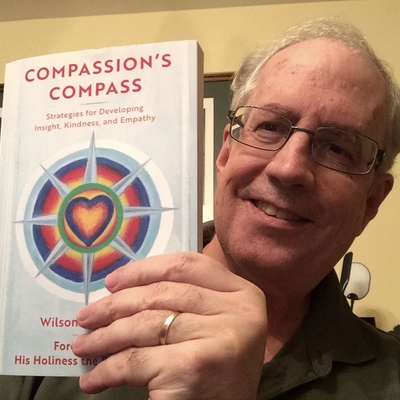
Wisdom reveals the relativity of things, www.compassmethods.com. https://youtube.com/@compassionscompass-sb7jo?si=PvxCAlFy_-6K7G3l #mentalhealth #wisdom #relativity #love #compassion

Part 3:
https://wrog.dreamwidth.org/71271.html
…introduce the _Interval_ between two events
= (Δz, spatial separation)² − (Δt, time lapse)²
and show that this number is an **invariant**, i.e., all slower-than-light observers get the same result calculating this in their own coordinates.
Magic diagram (with ALT text!) below proves this for Moving (upwards) vs. Anti-Moving (downwards, same speed) observers (i.e., using that Intermediate POV from before), and go from there.
Interval is either
(*) (proper distance)² > 0 [events are simultaneous for somebody],
(*) −(proper time)² < 0 [events are co-located for somebody], or
(*) zero [light-speed trajectory]
and then we do Twin Paradox and How FTL Violates Causality.
#physics #relativity #ftl #scienceed

I also really like how this diagram came out.
It's another spacetime-with-left-to-right-time grid from the stationary observer POV, showing trajectories of
(*) the stationary observer,
(*) the (velocity v) moving observer, and
(*) all possible in-between trajectories
+
how the two observers measure velocities
+
how the two observers will **not** agree on which trajectory is going v/2
+
how the One True Intermediate Trajectory
(i.e., the one that both see going the same speed) is between the v/2 trajectories **and** seen by both observers as going **faster** than v/2.
...this being the Big Red Flag that velocities don't add the way you'd think.
(also spelled out more fully in Part 2)

Part 2:
https://wrog.dreamwidth.org/71156.html
In some ways, the following diagram is the whole ball of wax, essentially summarizing why the moving observer will *not* agree with stationary observer on simultaneity of events.
It's a spacetime diagram with time going left to right, depicting someone moving upwards (black line), bouncing a light ray off of a reflector above/below them (yellow lines).
If you get what's going on here, why the moving person''s '"snapshot" (blue line) of what's going on Right Now cannot be vertical (i.e., aligned with the stationary person's snapshots), you can derive everything else.
(see the full post for the actual argument)


`The Lense-Thirring effect, a prediction of general relativity, implies that massive rotating objects like Earth can slightly "drag" spacetime, which could affect the pendulum's oscillation. This effect, though theoretically significant, is currently too small to measure with a Foucault pendulum.`
https://en.wikipedia.org/wiki/Foucault_pendulum#Absolute_reference_frame_for_pendulum
#physics #Foucault #pendulum #FoucaultPendulum #Earth #rotation #relativity #generalRelativity #Einstein

RE: https://mastodon.murkworks.net/@wrog/115860196660746312
Roger's having another go at explaining special relativity without complex maths. ^_^
I decided it was time for another go at explaining Special Relativity.
I remain annoyed at how few people really get it, even amongst avid SF consumers, who have gotten entirely too accustomed to generations of SF writers papering over the FTL issues with technobabble, 'cause we need that galactic empire, don'tcha know.
The idea is to do this with basic geometry you knew or could have learned about in 6th grade plus a bit of algebra (up to Pythagorean Theorem, which I *definitely* remember our math classes teaching in 6th grade).
I think I can get by without using a single square-root sign.
Anyway, here's part 1:
Client Info
Server: https://mastodon.social
Version: 2025.07
Repository: https://github.com/cyevgeniy/lmst