#TransparentDisplay

2024-08-16

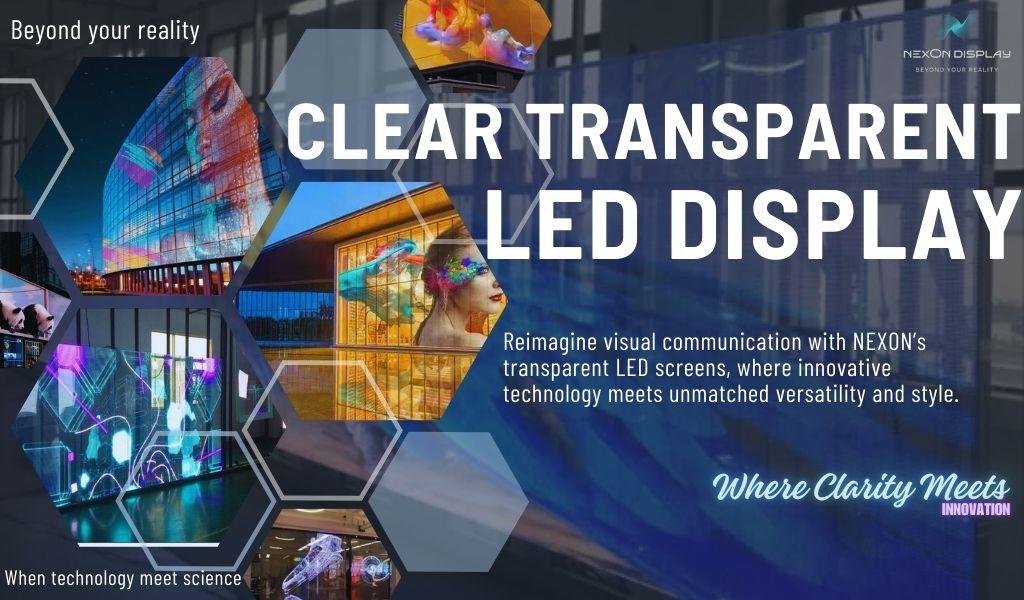
Transform Your Visual Experience with Nexon’s Clear LED Displays: Pioneering Transparent Signage Solutions


More Details: nexondisplay.hashnode.dev/expe

2024-02-26

Lenovo’s ThinkBook Transparent Display Laptop concept has a 17.3 inch see-through micro-LED screen

As expected, Lenovo is showing off the first laptop that might actually be able to claim a truly bezel-free display, because the screen is a transparent micro-LED display that looks like a sheet of clear glass when there’s nothing on the screen.
But turn the laptop on and the 17.3 inch Micro-LED display can show text, images, and other graphics. While […]

https://liliputing.com/?p=166912

#concept #lenovo #LenovoThinkBookTransparentLaptopConcept #mwc2024 #transparentDisplay #transparentLaptop

2024-02-15

Lenovo developed a concept laptop with a transparent display (leaks)

Companies have been showing off transparent OLED display technology for more than a decade. But 2024 might be the year when it finally breaks through to the mainstream.
LG’s big-screen TV with a transparent display was one of the most buzzworthy products announced at CES this year. And now it looks like Lenovo plans to show off a laptop with […]

https://liliputing.com/?p=166584

#leaks #lenovo #lenovoConcept #mwc2024 #transparentDisplay #transparentLaptop

2024-01-08

Samsung's groundbreaking transparent MicroLED prototype showcased for the first time in public. Distinguishing itself from LG's transparent OLED TV, Samsung's innovation leverages MicroLED, first introduced in 'The Wall' at CES. Offering self-lit pixels without the organic downsides or burn-in risk associated with OLED, MicroLED marks a significant leap in display quality.
myelectricsparks.com/samsung-t

#SamsungInnovation #MicroLED #TransparentDisplay #FutureTech

Samsung's groundbreaking transparent MicroLED prototype showcased for the first time in public. Distinguishing itself from LG's transparent OLED TV, Samsung's innovation leverages MicroLED, first introduced in 'The Wall' at CES. Offering self-lit pixels without the organic downsides or burn-in risk associated with OLED, MicroLED marks a significant leap in display quality.

While the seamless panels are becoming more TV-like, the technology remains in the prototype stage due to the current cost constraints. Despite its potential, the widespread adoption of transparent MicroLED displays awaits further advancements. 

 #SamsungInnovation #MicroLED #TransparentDisplay #FutureTech
2022-06-01

RT from Mukesh Sankhla (@Mukesh_Sankhla0)

Make Your Own Sci-Fi 3D Printed Winter Soldier Make With Transparent OLED Displays.

@dfrobotcn @instructables @Hacksterio @hackaday @ElectromakerIO @hackadayio
#3dprinting #arduino #espressif #esp32 #transparentdisplay #Marvels #wintersoldier #CaptainAmericaCivilWar

[Video embedded in original tweet]

Original tweet : twitter.com/Mukesh_Sankhla0/st

2021-08-30

Nokia LCD Goes Transparent for Hands-Free Reminders

These days everyone's excited about transparent OLED panels, but where's the love for the classic Nokia 5110 LCD? As the prolific [Nick Bild] demonstrates in his latest creation, all you've got to do is peel the backing off the the late 90s era display, and you've got yourself a see-through cyberpunk screen for a couple bucks.

View through the modified LCD.

In this case, [Nick] has attached the modified display to a pair of frames, and used an Adafruit QT Py microcontroller to connect it to the ESP32 powered ESP-EYE development board and OV2640 camera module. This lets him detect QR codes within the wearer's field of vision and run a TensorFlow Lite neural network right on the hardware. Power is provided by a 2000 mAh LiPo battery running through an Adafruit PowerBoost 500.

The project, intended to provide augmented reality reminders for medical professionals, uses the QR codes to look up patient and medication information. Right now the neural network is being used to detect when the wearer has washed their hands, but obviously the training model could be switched out for something different as needed. By combining these information sources, the wearable can do things like warn the physician if a patient is allergic to the medication they're currently looking at.

Relevant information and warnings are displayed on the Nokia LCD, which has been placed far enough away from the eye that the user can actually read the text; an important design consideration that [Zach Freedman] demonstrated with his (intentionally) illegible wearable display a few weeks back. That does make the design a bit…ungainly, but at least you don't have to worry about hand-cutting your optics

#parts #wearablehacks #computervision #esp32 #nokia5110lcd #nokialcd #qrcode #transparentdisplay

image
2021-08-19

Why You Can’t Make Build A Wearable Display With A Just A Transparent OLED

After seeing the cheap transparent OLED displays that have recently come on the market, you might have thought of using them to build a wearable display as an affordable way to build your own wearable display, for much less than the expensive commercial offerings. To save you the inevitable disappointment that would result from such a build, [Zach Freedman] took it upon himself to do so, and show why transparent wearable displays are a harder than it looks.

[Zach] built a headband with integrate microcontroller to hold the transparent rich over his eye. To the wearer, anything shown on the display would be practically invisible save for a slight glow, not just hard to read. Contrary to what many people might think, the hard part of wearable displays is not in the display itself, but rather the optics. The human eye is physically incapable of focusing on any object at that distance, [Zach] explains why this is the case in the video after the break and gives an excellent introduction to optics in the process. For a wearable display to work, all the light beams from the display need to be focused into your eyeball by lenses and or reflectors, without distorting your view of everything beyond the lens. This requires, lightweight and distortion-free collimators and beam splitters, which are expensive and hard to make.

While these transparent OLEDs might not make practical heads-up displays, they are still a cool part for projects like a volumetric display. It is certainly possible to build your own smart glasses or augmented reality glasses, you just need to focus on getting the optics right.

#wearablehacks #oled #transparentdisplay #voidstarlab #wearabledisplay

image

Client Info

Server: https://mastodon.social
Version: 2025.07
Repository: https://github.com/cyevgeniy/lmst