#WelshWater

Brynymor Road sinkhole larger than expected, says councillor

The sinkhole that forced the closure of Brynymor Road in Swansea last week is “significantly larger than first anticipated,” according to Uplands councillor Peter May, who shared an update on social media after meeting with Welsh Water engineers.

Cllr May said the company had accepted liability for the collapse, which is believed to have been caused by a major leak just above the affected area. That leak was repaired last week, but engineers are still working to assess the full extent of the damage beneath the surface.

“The hole is significantly larger than first anticipated,” he wrote, “and when I left site they were still trying to find the extent of the void under the road.” Based on surface cracking, the damage could stretch around three metres wide, five to six metres long, and just over one metre deep.

Excavation underway at the Brynymor Road sinkhole site. Engineers are working to assess and repair the damage.

Welsh Water plans to excavate the area fully, backfill it with new material, and reinstate the carriageway. While repairs were initially hoped to be completed by Thursday evening, Cllr May said that timeline was “somewhat optimistic” and that a Friday reopening was more likely.

“There was a significant leak just above the sinkhole which was repaired last week,” he added. “Welsh Water agree that this has in all probability caused the collapse.”

Council investigation continues

Swansea Council last issued an update on 24 November, confirming that highways teams had begun investigating the cause of the sinkhole, which appeared at the junction of Brynymor Road and Westbury Street.

The council said the road would be reinstated once the investigation was complete and the area made safe. In the meantime, Brynymor Road remains closed to traffic between Westbury Street and Eaton Crescent. Westbury Street itself is open, but there is no access onto Brynymor Road from that junction. The section of Brynymor Road between St Helen’s Road and King Edward Road remains open to traffic.

#brynymorCrescent #brynymorRoad #eatonCrescent #kingEdwardRoad #roadClosure #sinkhole #stHelensRoad #swansea #swanseaCouncil #uplands #welshWater #westburyStreet

Wide view of Brynymor Road sinkhole site with safety barriers, construction vehicles, and workers.Excavation site on Brynymor Road with safety barriers and exposed soil.

Welsh Government says South West Wales bathing waters rated ‘excellent’ – but sewage and pollution issues cast shadow

The 2025 results, published this week, show that 98% of bathing waters across Wales met strict environmental standards following monitoring by Natural Resources Wales (NRW). Officials say the findings demonstrate the resilience of Wales’s beaches and the success of ongoing efforts to protect water quality.

Deputy First Minister Huw Irranca‑Davies said the results reflected “our commitment to protecting water quality” and praised communities and partners for working together towards a cleaner Wales.

Mary Lewis, Head of Natural Resource Management at NRW, added:

“Our wonderful beaches and bathing waters are an important part of Wales’s identity and culture… The results reflect the dedication of our teams, partners, environmental groups and communities who protect and care for our environment.”

Local results at a glance

AreaBeaches rated ‘Excellent’Other classificationsSwanseaLangland, Caswell, Bracelet Bay, RhossiliSwansea Bay – GoodNeath Port TalbotAberafan Beach–CarmarthenshirePembrey, Pendine Sands–PembrokeshireTenby South, Castle Beach, Freshwater West, Barafundle, Newgale, Whitesands (plus many more)–Bridgend CountyTrecco Bay, Sandy Bay, Rest Bay (Porthcawl)–

Sewage spills and enforcement fines temper the good news

While the classifications are positive, they come against a backdrop of ongoing public concern about water quality.

Residents in Gower have repeatedly voiced frustration over sewage spills affecting popular beaches, saying they feel “pooped off” by the frequency of incidents. Campaigners argue that these spills undermine public confidence in official bathing water ratings.

💧 What do bathing water ratings mean?

Excellent
The highest standard. Water quality is consistently very good, giving strong reassurance for swimmers and visitors.

Good
Meets high standards but with occasional dips in quality. Still safe for bathing, though less consistent than ‘excellent’ sites.

Sufficient
Passes the minimum EU and UK requirements. Bathing is permitted, but water quality may be variable and less reliable.

Poor
Fails to meet the required standards. Official advice is against bathing due to risks to health.

Who sets the ratings?
Natural Resources Wales monitors designated bathing waters during the season (May–September) and classifies them under Welsh Government regulations.

Why it matters:
Ratings guide public health advice, tourism confidence and environmental management. They reflect long‑term monitoring, not just daily conditions.

Rivers and coastlines under pressure

Beyond the beaches, rivers in South West Wales have also been highlighted as pollution hotspots. The River Tawe was recently ranked among the most sewage‑affected in the UK, raising questions about how inland water quality connects to coastal bathing standards.

In Pembrokeshire, warnings have been issued about sewage pollution at popular beaches, prompting local MPs to challenge regulators and water companies during Welsh Affairs Committee hearings.

Calls for reform and a sewage action plan

The wider debate has led to growing political pressure. Campaigners and politicians, including Welsh MPs, have called for a national sewage action plan to tackle pollution at its source. At the same time, Welsh Government has outlined plans to overhaul water regulation, promising reforms that put “people, the environment and future generations at its heart.”

Deputy First Minister Huw Irranca‑Davies acknowledged that climate change and heavy rainfall — including 170% of average levels in September — can significantly affect water quality. He said maintaining standards will require “sustained investment, innovation, and partnership working across all sectors.”

A mixed picture for South West Wales

The headline figures show South West Wales beaches performing strongly, with almost all rated ‘excellent’. But the wider context of sewage spills, enforcement fines and river pollution means the story is more complex.

For swimmers and visitors, the classifications provide reassurance about water quality at designated sites. Yet campaigners insist that behind the ratings lies a system under strain, with regulators, water companies and government facing mounting pressure to deliver lasting improvements.

Related stories from Swansea Bay News

Welsh Water under pressure as sewage pollution incidents hit ten‑year high
Regulators report a surge in sewage discharges, sparking calls for tougher enforcement across Wales.

Residents say they’re ‘pooped off’ with Gower sewage spills
Locals express frustration over repeated sewage incidents affecting popular beaches on the Gower peninsula.

Welsh Water fined £1.35m for over 800 breaches to sewage discharge permits
The company faces a record penalty after failing to control pollution at treatment sites across Wales.

River Tawe one of the most sewage‑filled in the UK
New analysis ranks the Tawe among Britain’s most polluted rivers, raising concerns for downstream bathing waters.

#aberafanBeach #aberavonBeach #barafundle #bathingWaterQuality #beaches #braceletBay #caswellBay #cefnSidanBeach #dwrCymru #freshwaterWest #huwIrrancaDaviesMs #langlandBay #naturalResourcesWales #newgale #pembrey #pendineSands #pollution #porthcawl #restBay #rhossiliBay #sandyBay #sewage #swanseaBay #tenby #treccoBay #waterQuality #welshGovernment #welshWater #whitesandsBeach

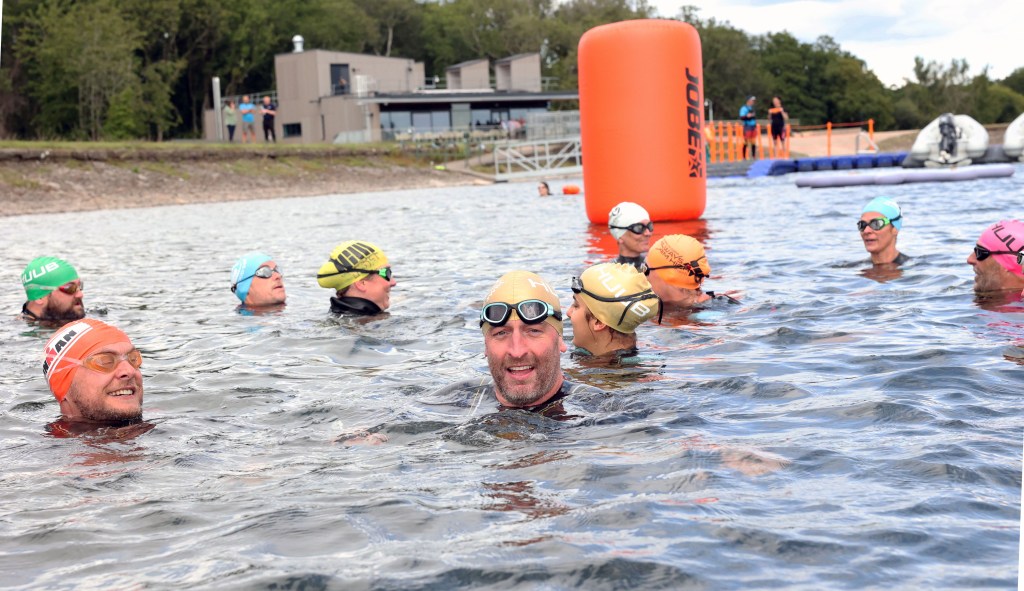
A group of swimmers in Lisvane and Llanishen Reservoir, Cardiff, with clear water and surrounding greenery, reflecting its new ‘excellent’ bathing water status.

Council points to Cwmfelin club sinkhole works after Cwmbwrla flooding

The authority says the repairs, completed in the club’s car park where a giant sinkhole first appeared two years ago, may be linked to the severe flooding which left the busy Cwmbwrla roundabout under water and forced the closure of surrounding roads.

Dozens of homes and businesses were affected, while cars were submerged and traffic chaos spread across the city.

Council action

Council leader Rob Stewart confirmed the authority has contacted the club for information about the work.

“Cwmfelin Social Club closed due to a sinkhole two years ago and the club appointed contractors to demolish the club. The contractors have recently filled the sinkhole. We have had no issues in the last two years with flooding in the area, while pumping equipment has been doing its job. We have today written to the club seeking details of the works their contractors completed.”

The council says its own culverts and gulleys in the area were inspected and cleared before the weekend’s heavy rain.

Welsh Water waiting on demolition

Dŵr Cymru Welsh Water (DCWW) has said it cannot access the collapsed culvert and foul sewer system beneath the club until demolition is completed. The council has urged the club and its contractors to engage with DCWW “as a matter of urgency” to speed up the process.

In the meantime, emergency pumping equipment remains in place on the inbound carriageway to keep water levels down.

Cllr Stewart added:

“We are doing everything we can and are working with DCWW to increase the temporary pumping equipment on‑site to help reduce flood waters. This means the in‑bound traffic is still restricted and we apologise for the inconvenience caused, but our priority has to be to reduce the threat of flooding until the culvert can be repaired.”

Long‑running saga

The sinkhole first opened up in 2023, forcing the closure of the club and displacing hundreds of members. Since then, the collapsed culvert beneath the site has been repeatedly linked to flooding on Heol y Gors and at the Cwmbwrla roundabout2.

Local councillor Peter Black has previously warned that the culvert collapse has blocked the watercourse, causing water to back up and overwhelm drains during heavy rain.

Despite repeated calls for action, the club remains standing and demolition has yet to be completed. Residents have expressed frustration at the lack of progress, warning that the community has lost a much‑loved social hub while also facing repeated disruption from flooding.

Related stories from Swansea Bay News

Cwmbwrla flooding: roundabout reopens but residents face long recovery
Residents and businesses count the cost after homes were inundated and cars submerged.

Cwmbwrla roundabout closure set to continue into early hours as clean‑up continues
Emergency crews worked through the night to pump out floodwater and inspect the road surface.

Cwmbwrla Roundabout closed after cars submerged in flood water – councillor links chaos to collapsed culvert
Initial coverage of the dramatic flooding and warnings over the collapsed Burlais Brook culvert.

Cwmfelin Social Club to be demolished after two years on edge of giant sinkhole
Demolition confirmed as the only way to access and repair the collapsed culvert beneath the club.

Swansea social club on edge of giant sinkhole no closer to finding a solution
A year on from closure, residents voiced frustration at the lack of progress in resolving the sinkhole saga.

#CllrRobStewart #culvert #Cwmbwrla #cwmbwrlaFlooding #CwmbwrlaRoundabout #CwmfelinSocialCLub #Environment #featured #flooding #gulley #Sinkhole #Swansea #SwanseaCouncil #WelshWater

Cwmfelin Club sinkhole

Cwmbwrla roundabout closure set to continue into early hours as clean‑up continues

Local councillor Peter Black said it was “likely that the roundabout will not be open again tonight” and urged drivers to use alternative routes to avoid the heavy congestion seen during Monday’s morning rush hour.

The junction – one of Swansea’s busiest – was left under several feet of water after torrential rain over the weekend, submerging cars and forcing emergency services to close all approaches.

Cwmbwrla Roundabout flooding cleanup
(Image: Bryn Morgan)Cwmbwrla Roundabout flooding cleanup
(Image: Bryn Morgan)

Council: flooding linked to collapsed culvert on private land

In its latest statement, Swansea Council said it was continuing to support Welsh Water in efforts to remove the flood water.

“Prior to the severe weather during the weekend, the council ensured that a nearby watercourse and council‑maintained culvert were cleared,” a spokesperson said.

“We believe the flooding at Cwmbwrla over the weekend is linked to a previously collapsed culvert on private land which is not owned or maintained by the council.

A number of pumps have been deployed on site to help remove the water from this location and we are working to ensure this busy route is reopened as soon as possible. Once the water levels have been reduced, there will be a need to keep the route closed for a short period to carry out safety inspections and a clean‑up of the road surface.”

Motorists are being urged to continue avoiding the area while the work continues.

Long‑running culvert issue

The collapsed culvert – beneath the Cwmfelin Social Club – has been at the centre of a long‑running infrastructure problem in the area. As Swansea Bay News has previously reported, local councillors have linked it to repeated flooding and road closures on Heol y Gors and at Cwmbwrla roundabout.

You can read our earlier coverage of the weekend’s flooding here.

#CllrPeterBlack #culvert #Cwmbwrla #CwmbwrlaRoundabout #CwmfelinSocialCLub #flooding #Sinkhole #Swansea #SwanseaCouncil #SwanseaFlooding #WelshWater

Cwmbwrla Roundabout flooding cleanup (Image: Bryn Morgan)Cwmbwrlla Roundabout flooding cleanup (Image: Bryn Morgan)Cwmbwrlla Roundabout flooding cleanup (Image: Bryn Morgan)Cwmbwrlla Roundabout flooding cleanup

Cwmbwrla Roundabout closed after cars submerged in flood water – councillor links chaos to collapsed culvert

The A483 junction was completely impassable from Sunday afternoon, with South Wales Police diverting traffic via Pentregethin Road. First Cymru buses rerouted several services, and Swansea Council warned drivers to avoid the area.

Mid and West Wales Fire and Rescue Service sent specialist crews with a boat to the scene, while videos on social media showed some people paddleboarding – and even swimming – in the murky floodwater.

Cwmbwrla Roundabout was totally submerged by flood water
(Image: Swansea Council)Carmarthen Road flooding

Council: culvert couldn’t cope with downpour

Swansea Council said early investigations suggest a nearby culvert was unable to cope with the sustained volume of water during the severe downpours. The authority is working with Dŵr Cymru Welsh Water to determine the exact cause.

The flooding also forced the closure of the nearby CREST Mental Health Service on Monday, with hopes it could reopen the following day.

Possible link to Cwmfelin Club sinkhole

Local councillor Peter Black said the incident is likely connected to the long‑running collapse of the Burlais Brook culvert beneath the Cwmfelin Social Club – a site Swansea Bay News has previously reported is due to be demolished so repairs can take place.

In a Facebook exchange with residents, Cllr Black explained that the culvert collapse has blocked the watercourse, causing water to back up along Heol y Gors and force its way out through manholes. A temporary pump installed on the brook “clearly can’t cope with this rain,” he said.

Residents voice frustration

Some residents complained about blocked drains and a lack of urgency in tackling drainage problems along Heol y Gors, warning that the road had already been closed for months due to water damage. Others questioned how far the culvert collapse could be responsible for flooding higher up the hill.

Cllr Black said the repair work cannot begin until the Cwmfelin Club is demolished – a process he warned will take months – but stressed he is pressing for progress.

Severe weather across Wales

The flooding came amid a Met Office yellow weather warning for strong winds and heavy rain across Wales. Gusts of up to 66mph were recorded in Gwynedd, with power cuts affecting hundreds of homes and travel disruption reported on roads and bridges.

Natural Resources Wales issued multiple flood alerts, and emergency services dealt with fallen trees and other weather‑related incidents.

#A483 #CllrPeterBlack #culvert #Cwmbwrla #CwmbwrlaRoundabout #CwmfelinSocialCLub #featured #flooding #MidAndWestWalesFireAndRescueService #SwanseaCouncil #SwanseaFlooding #WelshWater

Flooding on Cwmbwrla roundabout

Cwmfelin Social Club to be demolished after two years on edge of giant sinkhole

Cwmfelin Social Club, in the Cwmbwrla area, shut its doors in August 2023 when a small hole in the tarmac — “no more than a dustbin lid” in size, according to club officials — revealed a vast cavity beneath. Investigations linked the sinkhole to a collapsed culvert around 10 metres below ground and the remains of a disused tramline.

At the time, it was hoped the closure would last only weeks while safety work was carried out. But the location on private land, close to neighbouring buildings and a railway line, made repairs complex. As we reported in October 2024, both Welsh Water and Network Rail said the ground conditions and proximity to key infrastructure posed major challenges.

Now, club chairman Mike Kennedy says demolition is the only way to gain access for engineers to assess and fix the underlying problem.

“It’s two years now since the club closed. We were trying to find other ways to repair without taking the club down, but unfortunately that’s the only way to get access… yes, really disappointed.”

Local member Mark Boyce said the loss would be deeply personal:

“I’ll be in tears when this comes down. My mother’s soul is in there — she was a cleaner for 25 years and I used to come every weekend.”

Cwmbwrla councillor Peter Black said the cost of repairing the culvert and sewer would only be known once the building was gone and engineers could carry out a full inspection.

“It could be anything from £1 million upwards — or it could be less than that — we just don’t know yet.”

It is not yet clear whether the club will be rebuilt once the ground is made safe.

#CllrPeterBlack #Cwmbwrla #CwmfelinSocialCLub #NetworkRail #SinkHole #Sinkhole #Swansea #WelshWater

Large sinkhole under the carpark and toilets of Cwmfelin Social Club. Underneath is apparently an old tramway, a sewer and a culvert (Burlais Brook)

Residents say they’re ‘Pooped Off’ with Gower sewage spills

Local resident, David Haines-Hanham is behind the protest which saw over 70 local residents cover the gates of the treatment works with anti-sewage posters and messages from the local community.

These included slogans such as “I came here to swim, not to marinade in bum broth” and “Welsh Water – No more turd waves”.

A placard at the Bishopston Treatment Works protest

Mr Haines-Hanham explained: “This started a couple of years ago when I was stand-up paddleboarding with my daughter Maddie. It was a nice day. It hadn’t rained for 24 hours. We were coming back from Caswell to Brandy Cove. The water was about a metre deep and we were enjoying looking at the seaweed and the rocks. All of a sudden where the pipe outfall is the water turns a disgusting brown. The smell is unmistakeable. The filth was horrible. It was unmistakably a sewage slick.

“Next time we were walking along the cliffs just before one of the autumn storms were coming in. It hadn’t rained for two days. We looked over to Brandy Cove. It was high tide and there was an unmistakeable brown patch again with all the black headed gulls having a feast. In my mind it was a sewage slick in preparation for a storm that hadn’t even happened yet.”

Mr Haines-Hanham says he has a clear message for Welsh Water. “You’ve failed to futureproof your infrastructure. Since the UV treatment was brought in, it doesn’t seem to me that you’ve looked to the future. You haven’t looked 20 years time, which is where we are now. You’ve done nothing to prepare for the prevention of pollution incidents.

“I don’t know much about the politics of Welsh Water, but I do know they’ve just asked us as bill payers for more money. I say just use that money – our money – to mend your outdated systems. Put money in the right places to make our sea cleaner.”  

Over 70 residents attended the demonstration

Mr Haines-Hanham said: “I’ve explained the ‘snowball effect’ to my kids, and their hope is that our small action will encourage and inspire other communities to do similar at treatment works that regularly underperform and allow sewage to be released into the sea.”

Meanwhile Welsh Water say they’re investing £2.5bn on environmental projects over the next 5 years and that some pollution issues are due to surface-water run-off and poorly maintained private septic systems.

A spokesperson for Welsh Water said: “Storm overflows play a vital role in preventing homes being flooded following heavy rain. 

“We cannot completely remove storm overflows as it would cost between £9-£14 billion and involve digging up almost every street in Wales.

“We understand there is increased concern about water quality and we are working to improve things with £2.5bn investment on environmental projects in our current investment period (2025-30).

“This comes after we invested £1.4bn in our wastewater system in the decade to 2025, which helped ensure Wales’ amazing coastline is blessed with almost a quarter of the UK’s Blue Flag beaches despite having just 15% of its coastline. 

“The latest Bathing Water results for Wales also showed that 98% of the designated bathing waters meet stringent quality standards – with almost 70% meeting the highest ‘Excellent’ water quality standard.

“A number of factors can impact water quality including surface water runoff, misconnections – as we saw recently in a social media video shared of waste on the rocks between Langland and Rotherslade, rural land use and poorly maintained private septic tanks.

“You can get accurate and up-to-date information on spills from our storm overflows on this map.”

In response to Welsh Water’s statement, Mr Haines-Hanham reflected on the launch of regulator OfWat’s pollution enforcement investigation into Welsh Water in July 2024.

A similar investigation into Thames Water resulted in fines of nearly £123m for the company.

He said: “I only speak from the experience of what one family has experienced on one beach. Our experiences were categorically NOT during heavy rain periods.

“I also dispute the claim that the overflow map is accurate having been given conflicting information on the day I spoke to them. 

“Have we just been incredibly unlucky/lucky to witness these things or have Welsh Water just been getting away with it unnoticed?

“I’ve a feeling that their increase in investment is a result of the start of this investigation and I would love to see a breakdown of investment from the last 20 years compared to money taken from customers.

“As one sign said on Saturday – ‘You take our money now take some responsibility’ and another one saying ‘They have failed to futureproof infrastructure – use OUR extra money to mend your outdated system’.”

#Bishopston #BrandyCove #Caswell #featured #Gower #pollution #sewage #WelshWater

David Haines-Hanham and his family at the Bishopston Treatment Plant protestA placard at the Bishopston Treatment Works protestOver 70 residents attended the demonstration

Landmark water review recommends overhaul of Welsh regulation

A major review of the UK water sector has recommended sweeping changes to how water is regulated in Wales, including the creation of a single integrated regulator and a national water planning authority.

The Independent Water Commission, chaired by former Bank of England deputy governor Sir Jon Cunliffe, published its final report this week, describing the current system as “fragmented and overlapping”. It sets out 88 recommendations aimed at restoring public trust, improving environmental outcomes, and ensuring long-term investment in water infrastructure.

In Wales, the report proposes merging Ofwat’s economic responsibilities into Natural Resources Wales (NRW) — a move intended to simplify oversight and give regulators a “whole-firm” view of water companies. It also calls for a 25-year National Water Strategy, with statutory milestones and public consultation, to guide future decisions.

The proposals come amid growing scrutiny of Welsh Water, which is under pressure following a surge in sewage pollution incidents. As previously reported by Swansea Bay News, the company recorded over 105,000 sewage spills in 2023, the highest in a decade. Environmental groups and opposition parties have called for tougher enforcement and greater transparency.

Other recommendations from the Commission include:

  • A Water Ombudsman to strengthen consumer protections
  • A national social tariff to support low-income households
  • New powers to block water company ownership changes
  • Stronger regulation of abstraction, sludge, and drinking water standards
  • Compulsory water metering and improved monitoring of pollution

The report has sparked political debate. Welsh Conservative MS Andrew RT Davies warned against expanding NRW’s remit, calling it a “failed environmental regulator” and arguing it should be replaced entirely.

The proposed abolition of Ofwat has been welcomed by the Welsh Liberal Democrats, who say the move reflects years of campaigning to strengthen water regulation and tackle sewage pollution.

Swansea councillor and Senedd candidate for Gŵyr Abertawe, Cllr Sam Bennett, described the recommendation as a “major step forward” in restoring public trust, but cautioned that without urgent action, the reforms risk falling short.

“This is a big win for the Liberal Democrats, who have led the campaign against the sewage scandal for years,” said Bennett. “But countless Welsh rivers are still being poisoned by raw sewage. Our communities deserve clean water, strong regulation and environmental justice — not more empty promises.”

The party has long criticised water companies for prioritising profit over public health and the environment, pointing to rivers like the Tawe, which ranks among the most sewage-polluted in the UK. They’ve also raised concerns about whether Natural Resources Wales, which would take on expanded powers under the new model, has the capacity to deliver — citing over a decade of budget cuts and staffing pressures.

The Welsh Liberal Democrats say the reforms must be backed by real investment in infrastructure and stronger enforcement, particularly in Wales, where the devolved government holds significant powers over the sector.

Environment Secretary Steve Reed has signalled support for reform, describing Ofwat as “clearly failing” and pledging to halve sewage pollution in England’s rivers by 2030.

#NaturalResourcesWales #Ofwat #pollution #WelshWater

Welsh Water under pressure as sewage pollution incidents hit ten-year high

Natural Resources Wales (NRW) has stepped up regulatory action against Dŵr Cymru Welsh Water, warning the company must make urgent and fundamental changes to its operations after recording its highest number of sewage pollution incidents in a decade.

New figures published today show Welsh Water was responsible for 155 pollution incidents in 2024, including 132 linked to sewerage assets—a sharp rise from 89 in 2022 and 107 in 2023. The data reveals a 42% increase in sewage-related incidents over the past ten years, with the majority traced to foul sewers (423 incidents), storm overflows (168), and water treatment works (166).

“We’ve seen a huge deterioration in performance since 2020,” said Nadia De Longhi, Head of Regulation and Permitting at NRW. “Despite repeated warnings and interventions, Welsh Water has been unable to reverse this concerning trend.”

Storm overflow data shows widespread failures

Alongside the pollution incident report, NRW also published its 2024 storm overflow spill data, revealing 112,589 spills lasting a combined 929,168 hours across Wales. While slightly down from 2023’s record-breaking 121,422 spills, the figures still reflect widespread operational failures.

Analysis by Afonydd Cymru found that the top 20 most frequently spilling assets operated within legal limits—defined as rainfall exceeding 4mm per hour—for just 1% of the time. In total, 276 assets spilled for more than 1,000 hours, far exceeding thresholds that could be considered compliant under exceptional rainfall conditions.

The worst-affected catchments included the Ogmore, Loughor, and Clydach, with many spills linked not to sewer blockages but to failures at wastewater treatment works, including inadequate storm tank capacity and failure to fully treat incoming sewage.

“Our priority is to prevent environmental damage before it happens,” said De Longhi. “We will be clamping down on unpermitted storm overflows and introducing tighter criteria for annual reporting.”

Natural Resources Wales vehicle
(Image: NRW)

Enforcement and investment

NRW has already pursued multiple prosecutions against Welsh Water, including cases linked to pollution on the Gwent Levels and a tributary of the Afon Llwyd. Officials say enforcement is not the preferred route, but necessary when preventative measures fail.

The regulator has secured record levels of environmental investment through the 2025–2030 Ofwat price review, and introduced new guidance on storm overflow permits to tighten compliance.

In 2025, NRW will launch a dedicated team to increase monitoring of discharges, carry out compliance checks and audits, and implement Pollution Incident Reduction Plans with annual improvement targets. A new framework for performance assessments—developed jointly with the Environment Agency—will come into force in January 2026.

“We will be clamping down on unpermitted storm overflows and introducing tighter criteria for annual reporting,” said De Longhi. “Our priority is to prevent environmental damage before it happens.”

The latest figures follow a landmark case earlier this year in which Dŵr Cymru Welsh Water was fined £1.35 million for more than 800 breaches of its sewage discharge permits across Wales and Herefordshire. The offences, which took place in 2020 and 2021, were linked to failures in self-monitoring and data reporting—issues that NRW said were avoidable and indicative of deeper systemic problems. The regulator has since downgraded Welsh Water’s environmental performance rating to two stars, citing a continued decline in compliance and transparency.

Meanwhile, public frustration is mounting. Residents in Gower have staged protests at wastewater treatment sites, demanding action over repeated spills near popular beaches like Brandy Cove and Caswell. Campaigners say the discharges are harming water quality, threatening tourism, and putting public health at risk. Welsh Water has pledged £2.5 billion in environmental investment between 2025 and 2030, but critics argue that rising water bills—set to increase by 42% by 2030—should come with greater accountability and faster infrastructure upgrades.

A Dŵr Cymru Welsh Water spokesperson said:

 “We acknowledge the concerns raised in the report and accept that while the number of serious pollution incidents has slightly reduced, our performance is not where it needs to be. The industry across the UK has seen increases in pollution incidents.

 “We are rightly being held to a higher standard and have improved our processes to meet this challenge, with better monitoring leading to detecting more short-lived event and better reporting.

 “We are accelerating investment in key areas to reduce pollution incidents with a £4bn investment programme that includes £2.5bn on environmental projects.

 “While we have made progress, such as increasing the number of incidents we find and self-reporting, we know more needs to be done.

 “We remain committed to working constructively with NRW to deliver improvements and will be engaging closely on their new requirements and guidance, including the development of Pollution Incident Reduction Plans and further use of smart technology to spot problems in the sewer network before they can cause a pollution.”

NRW’s full Environmental Performance Report for Welsh Water, including updated star ratings, will be published this autumn.

Related stories from Swansea Bay News

Welsh Water fined £1.35m for over 800 breaches to sewage discharge permits
Published March 2024: Water company handed record fine after admitting widespread permit breaches across Wales.

Bumper water bills set for Welsh Water customers
Published April 2024: Customers face steep bill increases as company seeks to fund environmental upgrades and infrastructure repairs.

Campaigners in Wales join national protest against plastic pollution ahead of global treaty talks
Published May 2024: Environmental groups call for stronger protections for rivers and coastlines, including action on sewage and microplastics.

Residents say they’re ‘pooped off’ with Gower sewage spills
Published June 2024: Locals raise concerns over repeated discharges near popular beaches, calling for tougher enforcement and transparency.

#DwrCymru #pollution #RiverClydach #RiverLoughor #RiverOgmore #riverPollution #sewage #wastewaterTreatment #WelshWater

River pollutionNatural Resources Wales vehicle

Welsh Water fined £1.35m for over 800 breaches to sewage discharge permits

The charges relate to Dŵr Cymru Welsh Water’s self-monitoring data submitted to Natural Resources Wales (NRW) as part of its 2020 and 2021 annual reports. Due to the volume of non-compliances, the charges were summarised into 18 offences for the court’s benefit.

On the 16th October 2024 at Llandudno Magistrates Court, Dŵr Cymru Welsh Water pleaded guilty to 15 out of the 18 charges. On the 17th December 2024 the company accepted the remainder of the Taken into Consideration (TIC) charges.

Since 2010 there has been a requirement on water companies to carry out self-monitoring of their effluent discharges from their sewage works and water treatment works.

Upon receiving its 2020 annual report, NRW officers say they were alarmed to find that the quality of the information provided had noticeably deteriorated compared to previous years, with over 600 breaches recorded. These were spread across some three hundred sites across Wales and Herefordshire.

In interviews, and in their defence in court, Dŵr Cymru Welsh Water explained that an internal restructure of the sampling team and IT-related scheduling issues coupled with the effects of the Covid-19 pandemic were the main factors in the deterioration.

NRW say that while the situation had significantly improved by the submission of the 2021 annual report, a number of non-compliances were again identified, albeit these were less in number.

The environmental agency said that Welsh Water should have had contingency plans in place to ensure the company met their legal duty to comply with their permits while going through the restructure.

Missing samples and data from the 2020 reporting year means that NRW was unable to fully assess or respond to any environmental impacts. While it’s possible that individually, these non-compliances may have been minor, NRW considers the cumulative impact of all the breaches significant in terms of environmental impact.

Siân Williams, Head of Operations from Natural Resources Wales said: “This case highlights inadequacies in the processes at Dŵr Cymru which led to widespread permit breaches across Wales and over the border during a period of two years.

“While we appreciate the disruption all businesses faced during 2020 with the Covid-19 pandemic, we believe the failings shown by Dŵr Cymru were avoidable should better contingency planning have been in place.

“Dŵr Cymru’s performance has continued to decline for a number of years now, and this is a stark warning to the company that we will not hesitate to use our enforcement powers to secure the improvements we expect to see.”

NRW has downgraded Dŵr Cymru Welsh Water from a four-star (industry leading) company in 2020 to two-star (requires improvement) company in 2022 and 2023 as part of its annual Environmental Performance Assessment.

During 2023, Dŵr Cymru recorded it’s worst performance against the environmental performance metrics measured, with a spike in significant pollution incidents and a decrease in incident self-reporting.

The descriptive permit non-compliances dealt with by this prosecution are not included as part of the Environmental Performance Assessment matrix.

Siân continued: “The court’s decision is the culmination of this complex investigation into the company’s performance across Wales and Herefordshire. I’d like to pay tribute to the diligence and commitment of our regulatory teams in securing permit compliance and enforcing the systemic changes needed within the company.

“We will not hesitate to use our regulatory and enforcement powers where it is the appropriate thing to do to bring any permit holder into compliance.

“In line with our ongoing focus on water quality in Wales, we are investing more resources in frontline compliance monitoring and have increased our auditing of Dŵr Cymru’s self-monitoring activities.”

#DwrCymru #Environment #NaturalResourcesWales #pollution #WelshWater

River pollution

Swansea Bay Sewage Scandal: Tawe named as one of the most polluted rivers in UK

According to data published today, the River Tawe is one of the most sewage-polluted in the entire UK.

Figures released today show that Dwr Cymru released sewage into rivers, lakes and the sea for more than 968,000 hours last year, an increase compared to more than 916,000 hours the year before, despite the public outrage and campaigns by groups like Surfers Against Sewage.

The River Tawe saw a staggering 2,173 sewage dumps in 2024, lasting 16,144 hours. This made it the 14th most polluted river in the entire UK.

Meanwhile, the River Neath saw sewage dumped 1,351 times, lasting 7,507 hours.

The Welsh Liberal Democrats, who have been campaigning to clean up Welsh rivers over several years, have stated that the new figures were ‘catastrophic’ for local wildlife and risk damaging tourism and public health.

The Party has stated that the Welsh Government have been ‘asleep at the wheel’, using Dwr Cymru’s position as a so-called ‘non-profit’ and ‘arm’s length’ organisation to avoid proper regulation and accountability.

They have also criticised the previous Conservative UK Government for failing to clamp down on the financial regulation of water companies, with Dwr Cymru having paid out huge bonuses to executives in recent years, despite having one of the worst environmental records of all companies and continuing to charge customers the highest bills in the UK.

Commenting, Welsh Liberal Democrat Senedd Candidate for Gwyr Abertawe (Swansea West & Gower) and Swansea Councillor for Waterfront Ward, Sam Bennett said: “The Welsh Liberal Democrats have consistently pressed both the UK and Welsh Governments to take meaningful action on this growing environmental crisis. Yet, Welsh Labour has remained asleep at the wheel—using Dŵr Cymru’s status as an arm’s-length body as an excuse to avoid proper regulation and accountability.

“As a result, we’ve seen Dŵr Cymru hike customer bills and hand out ridiculously large bonuses to its executives, all while ranking among the worst water polluters in the UK.

“Our rivers and seas are vital to our wildlife, our culture, and our economy—particularly tourism—and they deserve far better stewardship.

“If elected to the Senedd next year, I will use my voice to continue to hold both water companies and governments to account.”

Adding her comments, Welsh Lib Dem Leader & Senedd Candidate for Neath Jane Dodds MS said: “For years, the Conservatives allowed water companies to get away with polluting our beautiful local rivers while paying out massive and undeserved bonuses, all while charging Welsh customers record-breaking prices.

“The Welsh Labour Government must get to grips with this crisis and properly regulate Welsh Water and ensure there are real, enforceable punishments for breaking the rules and damaging our waterways.

“We’ve been pushing them for years on this issue, but they’ve totally failed to even start to get to grips with it.

#DwrCymru #featured #JaneDodds #Neath #pollution #RiverNeath #RiverTawe #SamBennett #Swansea #WelshLiberalDemocrats #WelshWater

River Tawe

Bumper water bills set for Welsh Water customers

The increase by the not-for-profit water provider means the average bill will be £639 in April 2025 – up from £503 last year.

Further increases will happen every year for the next five years, totalling a 49% rise in water bills by 2029.

This would make Welsh Water the most expensive water company in the UK.

The water company say the increases are needed to fund more than £4bn in investment for its services including £2.5bn on projects to improve the environment.

It says that the price increase comes following a period of fifteen years when the company kept price rises below the rate of inflation and compares to an industry average rise of 26%.

Welsh Water say its customers will now pay an average of £1.75 a day for drinking water that is consistently ranked as equal highest quality in the world.

The investment would fund work to reduce pollution, upgrade and build new assets, reduce leakage, and improve water quality. The work will create 2,000 new jobs in Welsh Water’s supply chain.

Some of the schemes that will be started during 2025-26 include improving river quality in Corwen, Llanfoist, Letterston and Lampeter, work on 23 storm overflows, 75km of mains replaced, mostly in West Wales and work to upgrade the dams at Cwm Celyn, Usk, Cwmwernderi Tower and Craig Goch.

Welsh Water Interim Chief Financial Officer Samantha James said: “We understand the financial pressures that some of our customers are facing, and we are doing more than ever before to help those who are struggling.

“If you are struggling to pay your bill, please get in touch with us. We have a dedicated team who can help you find what you are entitled to. We have a strong track record of providing meaningful financial support to those that need it’

“Over the past 15 years we’ve done all we can to keep bills low and affordable for our customers, delivering financial support packages to ensure all our customers have access to our services.

“But now it’s time for a step change in investment, to improve performance and service delivery, adapt our networks to the climate crisis, and do more to protect our rivers and seas.

“This record investment will help us deliver the improvements our customers want to see.”

Responding to the increase, Welsh Liberal Democrat Westminster Spokesperson David Chadwick said: “Welsh customers are paying the price for Government incompetence.

“Under the last Conservative UK Government and current Welsh Labour Government in Cardiff Bay, Dwr Cymru was able to get away with minimal oversight.

“They spent years paying out excessive executive bonuses despite being a ‘non-profit’ and having one of the worst environmental records in the country.

“Welsh customers will now have the highest water bills in the UK, despite having some of the lowest incomes, it’s an absolute disgrace.”

Welsh Conservative Shadow Cabinet Secretary for Climate Change, Janet Finch-Saunders MS, said: “This latest water bill hike from Dŵr Cymru is unacceptable, especially given Dŵr Cymru’s track record in Wales, with residents in Conwy earlier this month dealing with horrendous disruption with people unable to access any clean water.

“With Wales facing four times as many sewage discharges proportionally than England, and water bills in Wales set to become the highest in England and Wales, it feels like they’re flushing our money down the drain.

“Dŵr Cymru have been dragging their feet for years on necessary infrastructure upgrades and the public shouldn’t have to foot the bill for water companies’ long-standing failures and reluctance to upgrade their infrastructure until it’s far too late.”

Andrew RT Davies MS, Senedd Member for South Wales Central and former Leader of the Welsh Conservatives has also criticised the increase, saying: “These bill rises are going to put unbelievable pressure on hard-pressed households.

“It’s frankly unacceptable that in a modern country, people are having to stump up these sums just to have clean, running water, while the prize of unpolluted waterways still looks a long way off.

“Water bosses are paid far too much considering the outcomes we’re seeing on water bills and in our water quality, so it’s time we see performance-related pay for the top brass so they really have skin in the game.”

Support for those who struggle to pay

Welsh Water say they have a range of support available to customers who are struggling to pay their bills.

The company says it contributes £14m a year to maintain the its social tariffs schemes that help those who are struggling, by limiting the amount they pay.

The schemes currently support 150,000 customers, with Welsh Water’s not-for-profit model funding £73m over the next 5 years for its financial support packages. Over the past five years £64m has been used to fund social tariffs.

Customers who receive means-tested benefits can apply for the The HelpU tariff that helps the lowest income households, whilst the WaterSure Wales tariff caps the annual metered bill, so you won’t pay over a certain amount for the year.

Support is also available for working households who are struggling to make ends meet through the Cymuned scheme.

#DwrCymru #waterBill #WelshWater

Cwmfelin Social Club closed its doors in August 2023 after a sinkhole appeared in the club’s car park, forcing 600 members and 20 employees to leave the building.

The culvert which is 10 meters under the club and a disused tramline are understood to be the reasons for the vast cavity.

Michael Kennedy, secretary of Cwmfelin Social Club, said:

“The size of the sinkhole was no more than a dustbin lid at the time.

“It’s 12 months, nobody has come forward with any solution to the problem and we are going into the second year now.

“It’s so frustrating, for everybody involved, that we stand here today and we still don’t have a solution.”

Both Welsh Water and Network Rail say they are working to find a resolution with nearby sewage pipes and a railway line impacted by the sinkhole. However, both organisations say the club and the giant hole sitting on private land is proving challenging.

A spokesperson for Dwr Cymru Welsh Water said:

“Restoring the sewer network is proving extremely challenging due to the difficult ground conditions around the sinkhole, the location of existing buildings, and the nearby railway line.

“We are discussing with the other agencies involved to see if we can work together to resolve this.”

A Network Rail spokesperson added:

“We remain satisfied that the sinkhole on private land in the Cwmbwrla area of Swansea poses no imminent risk to the railway.

“However, we are in the process of negotiating an asset protection agreement with Welsh Water to allow work to be undertaken in the vicinity of the railway.”

Councillor Peter Black, representing the Cwmbwrla ward, said:

“Some of the residents who live on Carmarthen Road, right next to the club, they have had to put up vibrations and noise from the pumping station.

“A lot of people in this area used to use that club, it was a major social centre for the community.

“They have been denied that now and no one seems to know what is going to happen and how we are going to get the club back. It is important we get this club back for the community.”

https://swanseabaynews.com/2024/10/27/swansea-social-club-on-edge-of-giant-sinkhole-no-closer-to-finding-a-solution/

#CwmfelinSocialCLub #NetworkRail #Sinkhole #WelshWater

Client Info

Server: https://mastodon.social
Version: 2025.07
Repository: https://github.com/cyevgeniy/lmst