#baroqueMusic

2026-01-24

Baroque Sunday Morning, with a piece by an Italian composer –

Antonio Caldara (c. 1670-1736), "Sinfonia in C major" (undated)

Recorded by La Serenissima, Adrian Chandler conducting, at St. John's, Smith Square, London, in August 2016. Included on La Serenissima's 2017 release, "The Italian Job".

youtube.com/watch?v=1Qb8rc2jdew

#Music #BaroqueSundayMorning #BaroqueMusic #AntonioCaldara #LaSerenissima

2026-01-18

Baroque Sunday Morning, with a piece by an Italian composer who worked in France –

Michele Mascitti (1664-1760), "Concerto 4 Passaglia Variata" Op. 7 (1727)

Recorded by Corelli Chamber Orchestra, directed by Manfredo Dorindo Di Crescenzo, and released in Nov 2008.

There is a good reason why this is performed by Corelli Chamber Orchestra: the piece may remind you of works by Arcangelo Corelli. During his lifetime, Mascitti was as well known as Corelli and Tomaso Albinoni, but is less well known now.

youtube.com/watch?v=0PXfdPkeaFw

#Music #BaroqueSundayMorning #BaroqueMusic #MicheleMascitti

Sabine1963Sabine1963
2026-01-16

song.link/d/67481327

Barthold Heinrich BROCKES
22.09.1680 - 16.01.1747
Schriftsteller

"Der für die Sünde der Welt gemarterte und Sterbende Jesus"

Sein Text wurde als "BROCKES-PASSION" unter anderem von Georg Friedrich Händel und Georg Philipp Telemann vertont.

2026-01-16

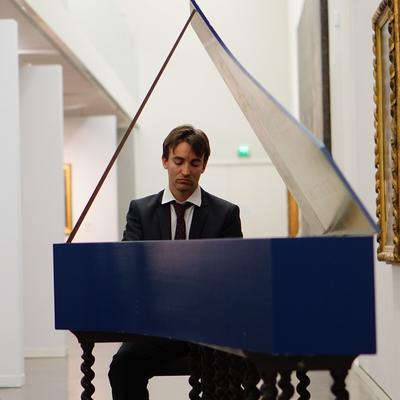
🎹 Harpsichord & Traverso Master Classes
📅 5–8 Feb 2026 | Krefeld, Germany

Delighted to return to Krefeld to teach, play and share music alongside the wonderful Gudrun Knop 🎶
A few inspiring days of 18th-century French & German repertoire, chamber music, deep artistic work — plus daily yoga.

🎓 Limited places – advanced students & professionals
📩 Register here: cscholzkrefeld@arcor.de

#harpsichord #traverso #earlymusic #masterclass #baroquemusic #FranceBaroque #OliGarde

Harpsichord Course with Oli Garde in Krefeld (Germany)Traverso course with Gudrun Knop
2026-01-11

Baroque Sunday Morning, with a short piece from Spain –

Bartolomé de Selma y Salaverde (c. 1595-after 1638), "Canzon Quarta A Doi" (undated)

Recorded by Concierto Ibérico, directed by Juan González Martínez, and released in Nov 2022.

youtube.com/watch?v=CWYaN_diM8o

#Music #BaroqueSundayMorning #BaroqueMusic #BartoloméDeSelmaYSalaverde

2026-01-07

🎶 There’s still time to register for our February classes in Savoie (France)! 🎶

Harpsichord, voice, recorder, traverso, vielle & viola da gamba.

✨ An intensive and inspiring early music workshop (Baroque & Medieval), led by experienced musicians in a supportive environment.

📅 February 23–28

📩 Info & registration:
francebaroque@gmail.com

#EarlyMusic #BaroqueMusic #MedievalMusic #Workshop #Savoie #France

2026-01-06

“[Handel] is the only person I would wish to see before I die, and the only person I would wish to be, were I not Bach.”*…

Westminster Bridge, with the Lord Mayor’s Procession on the Thames, by Canaletto, 1747 (source)

An essay from Charles King, adapted from his recent book, Every Valley: The Desperate Lives and Troubled Times that Made Handel’s Messiah

… In the summer of 1717, as Handel ran through the movements of his Water Music, floating alongside George I’s royal barge on the Thames, he could only have marveled at his own meteoric rise. Yet he would also have been aware of the precariousness of the regime that now sustained him. An outsider dependent on staying on the right side of the powerful, Handel understood the many divisions that snaked through his adopted society. His income, as well as his art, rested on the favor of people who could also easily withdraw it. A generous supporter or advance ticket sales might cover some of the cost of a production, but opening night then hung on the goodwill of a patron or a public violently sensitive to prices. A change in ticket price could spark a riot, with theatergoers storming the stage and tearing apart sets and chandeliers. When shows ran at a loss, the typical course was for a producer simply “to banish himself from the kingdom” and outrun the creditors, an early historian reported, as one of the King’s Theater managers had chosen to do.

Amid the continuing craze for Italian music, in early 1719, a circle of opera enthusiasts proposed a different model. Their concept was to create a new production outfit structured as a joint-stock company. Supporters would be investors rather than donors, expecting a return on their outlay but also bearing the risk should things fail. A who’s who of Handel’s landlords and acquaintances signed on, among them Richard Boyle, Earl of Burlington, who owned the Piccadilly home where Handel had lived for a time, and James Brydges, later Duke of Chandos, under whose patronage Handel had begun his first serious attempt at setting English texts. Their hope was to gain a royal charter—the official imprimatur of the king, which could then be used to pull in further partners and paying audiences. By that summer, they had persuaded King George to grant the charter for what would become the Royal Academy of Music and provide a thousand pounds annually as capital. Other investors added perhaps nineteen thousand pounds in all. The Royal Academy’s board of directors named Handel as “Master of the Orchester with a Sallary” and empowered him to steal away Italian singers and musicians from their European engagements.

Over the previous century, Venetians, Florentines, Neapolitans, and others had together set in motion a revolution in sonic common sense: a profound change in the conventions of musical form, perceptions of beauty, and expectations about what counted as obvious or wrongheaded art.

Living in the artistic realm that Italians had created meant accepting the existing order of the world while also undermining it. You started by imagining a normalcy different from the one outside your window. A woman might sing a man’s part as a travesty—en travesti, meaning literally a change of clothes—a term that would only later come to mean abnormal or an affront. A man could sing from the edges of his vocal cords and leap into a high falsetto, his false voice. He could do so with even greater range as a castrato, someone whose testes had been removed before his voice had hardened in puberty, a procedure practiced in Italy, the Ottoman Empire, and elsewhere for centuries. Onstage he might play a steel-clad knight, soaring above the battlefield with the voice of an angel. Castrati superstars—Nicolini, Pasqualini, Paoluccio, Momo, Farinelli, Senesino, Guadagni—were paid gargantuan fees for a season’s performances. In public they could be swarmed by adoring admirers, both male and female. “Some of them had got it into their Heads, that truly the Ladies were in Love with them,” a lengthy French treatise on Italian castrati reported in 1718, “and fondly flattered themselves with mighty Conquests.”

In a theater, the powerful could sound like women. Ancient gods could walk among men. Wars could end not in gore and death but in communal song. Doing all of this well required intellect and discernment, knowledge of musical form and its effects, and, most important, a sense of sociability. Players and singers were guided by instructions written on a staff, but the notes were suggestions rather than edicts. In a soundscape that allowed uncertainty and impromptu change, musicians had to be both self-aware and neighborly, a skill also necessitated by the technology of the time. A quiet harpsichord could speak comfortably alongside a human voice or a few violins, but not more. A lute-like theorbo, with its gentle strings and absurdly long neck, could manage a coiled horn as a partner, but only if its bell were turned discreetly away from the listener. Even a trumpet could cooperate peaceably with other instruments when played in its upper register, where the physics of its metal tubing gave the player more notes to choose from, its timbre more like a warbling bird than a blaring call to arms. 

No one had yet given music of this type a label. When they did, the one they chose was also a slur, like punk or grunge. It was the French baroque, used in English for the first time in 1765 and perhaps derived from a Portuguese term for a rough pearl or a mouthful of irregular teeth. To its enthusiasts, that was precisely the point. An orchestra of the period was also an intentional community, often assembled for a specific occasion, smaller than in later centuries, and with no need for a conductor—a role covered by the keyboard player or lead violinist and preserved in the modern term concertmaster. The music they made was solicitous and scrappy, risky and intimate. It soared and swerved, thrilling and dangerous, at odds with everything that had come before, and, to the artists who came after, the perfect example of wildness and excess. But to those who lived it, at the core of their work lay the belief that human creativity could best be used to make an intense, weird, and complicated conversation, sloughing off old conventions while manufacturing bold new ones. “We have freed ourselves from the narrow limits of ancient music,” Handel once said…

Baroque music’s glorious revolution: “The Famous Mr. Hendel” from @laphamsquarterly.bsky.social.

* Johann Sebastian Bach (Upon hearing the above statement, Mozart is said to have exclaimed: “Truly, I would say the same myself if I were permitted to put in a word.”)
###

As we conjure creation from chaos, we might send beautiful birthday greetings to Giuseppe Sammartini; he was born on this date in 1695. One of the finest oboe (and flute and recorder) players in London, he was a member of Handel’s orchestra— and a noted composer in his own right. Indeed, his recorder concerto is often performed and recorded in tandem with Handel’s (e.g., here).

source

#Baroque #BaroqueMusic #culturalHistory #culture #Handel #history #London #music #Sammartini
A historical painting depicting the River Thames bustling with boats during a summer event, with a view of the Westminster Bridge and the surrounding architecture of London.Portrait of an 18th-century man with white curly hair and a slightly smiling expression, dressed in a formal outfit with a lace cravat.
2026-01-04

Baroque Sunday Morning, with a short piece from the middle baroque period –

Luigi Rossi (c. 1597-1653), "Sinfonia avanti al prologo" from his opera "Il Palazzo incantato (The Enchanted Palace)" (1642)

Arranged by Christina Pluhar for ensemble, and performed by L'Arpeggiata directed by Christina Pluhar in April and May 2019 at ONDIF, Alfortville, France.

youtube.com/watch?v=mZaIaBSIPEQ

#Music #BaroqueSundayMorning #BaroqueMusic #LuigiRossi

feinstrukturfeinstruktur
2026-01-01

Giovanni Antonio Pandolfi Mealli (1624 – c. 1687):
Sonate à Violino solo, per Chiesa e Camera opp. 3 & 4, publ. in 1660
Eva Saladin (vl), Jonathan Pešek (vcl), Vera Schnider (hrp), Johannes Keller (kb)
youtu.be/AVF3Ty4ZpeM

A Cidade Brancaacidadebranca@masto.pt
2025-12-31

#CB_Music_AI

Preságio do Corpo e da Luz

Ah…
Este nome exala-se no ar,
Suspiro lento, quase um sonho,
Como o apelo secreto do sono
Antes que a noite o encerre.

suno.com/s/fEpqktSbHVeUmQny

#BaroqueMusic #Baroque #FrenchBaroque #AISong #AI_Music
#NowPlaying

2025-12-31

Patrick Stewart was featured in an album of Vivaldi's Four Seasons.

what

#baroque #baroqueMusic #classicalMusic #startrek

[album cover]
[Patrick Stewart standing next to a guy with a violin]
The Compleat Four Seasons
ANTONIO VIVALDI
ARNIE ROTHO
PATRICK STEWART
Musica ANIMA
2025-12-27

Baroque Sunday Morning, with a short piece from the early baroque period –

Giovanni Gabrieli (c. 1554-1612), "Canzon per sonar septimi et octavi toni a 12" Ch. 182 (published 1597)

Performed by Gabrieli Consort & Players, Paul McCreesh conducting, in Brinkburn Priory, Northumberland, UK, in July 1989.

youtube.com/watch?v=rFZ_dyuuu38

#Music #BaroqueSundayMorning #BaroqueMusic #GiovanniGabrieli

2025-12-26

Georg Friedrich Händel, Messiah HWV 56

Accademia Nazionale di Santa Cecilia. Monteverdi Choir. English Baroque Soloists.

Soprano, Ana Vieira Leite. Mezzosoprano, Sarah Connolly. Tenore, Andrew Staples. Basso, William Thomas. Direttore, Christophe Rousset

Registrato il 14 dicembre 2025 al parco della Musica in Roma

@classicalmusic

#classicalmusic #choralmusic #sacredmusic #baroquemusic #radio #rai3

raiplaysound.it/audio/2025/12/

Erik L. Arneson :emacs:pymander@fosstodon.org
2025-12-25

Santa is obviously trying to keep me busy. I'll see y'all in 96 years. #piano #bach #baroquemusic

Bach's "The Well-Tempered Clavier" from Schirmer's
Benjamin GarellyDonGarellos
2025-12-23

Academy of Ancient Music 🇬🇧 / Choir of New College Oxford / Edward Higginbottom
Händel: Messiah (2006)

open.spotify.com/album/4noak57

Benjamin GarellyDonGarellos
2025-12-22

Il Pomo d'Oro 🇮🇹 / Giuseppe Maletto
Natale veneziano (2025)

open.spotify.com/album/0HliAgc

2025-12-22

Last Friday I ticked off an item on my bucket list. I went to see Voices of Music play Vivaldi’s Four Seasons in concert.

I wasn’t expecting to go but a month ago Paul told me he had bought tickets.

Check them out here: voicesofmusic.org/

🥹

#VoicesOfMusic
#BaroqueMusic
#FourSeasons
#Vivaldi

The program for “Voices of Music presents: A Celebration of Vivaldi The Four Seasons”
2025-12-21

Baroque Sunday Morning, with a French sonata from the late baroque period –

Jean-Baptiste Barrière (1707-1747), "Sonata II a Tre, Livre III (Sonata No. 2 in D minor (Trio Sonata)) (published c. 1739)

Performed by UnderStories Ensemble
violoncellos: Clara Pouvreau, Bartolomeo Dandolo Marchesi
violin: André Lislevand
harp: Margherita Burattini
harpsichord: Gabriele Levi

Recorded in Accademia Gualtiero Marchesi, Milan, Italy

Look for UnderStories Ensemble's June 2025 release, "A French Odyssey" (Challenge Records)

youtube.com/watch?v=SBQ6klbvk0E

#Music #BaroqueSundayMorning #BaroqueMusic #JeanBaptisteBarrière

Client Info

Server: https://mastodon.social
Version: 2025.07
Repository: https://github.com/cyevgeniy/lmst