
ELN culpó a Petro de “claudicar ante EEUU” tras bombardeo que dejó siete guerrilleros muertos
#eln

TRUMP Y PETRO CON LA GUERRA
El gobierno del presidente Petro ha decidido claudicar ante las órdenes del imperio de Estados Unidos y ponerse al servicio de la arremetida neo colonial que encabeza Donald Trump. Las políticas de paz y de cambios en favor de las mayorías han quedado lesionadas de manera terminal; pues con la militarización creciente por parte del gobierno, no puede hablarse de...
https://insurgenciaurbana-eln.net/trump-y-petro-con-la-guerra/


Und am Mittwoch und Donnerstag geht unsere #LoveDataWeek 2026 dann weiter:
📅Mi, 11. Feb, 14h00
An #ELN for Thuringian Research Groups: eine #TKFDMCoffeeLectures-Episode über unsere #eLabFTW-Instanz
📅Do, 12. Feb, 10h00
Exklusiv für Dich, falls Du PI oder Projektkoordinator:in in der @unijena bist:
“Research Data Management - Essentials for project coordinators”
Infos zu allen Beiträgen
👉 https://forschungsdaten-thueringen.de/nachricht/das-tkfdm-bei-der-love-data-week-2026.html

Así vivían guerrilleros del ELN bombardeados por orden de Petro: detectaron búnker y cumbres criminales (VIDEOS)

#Kolumbien: In #Catatumbo, nahe der venezolanischen Grenze, griff das kolumbianische Militär gezielt Mitglieder der #ELN-Guerilla an. Mindestens sieben wurden getötet, ein weiteres festgenommen. Mehr dazu auf #amerika21. https://amerika21.de/2026/02/282619/eln-guerilla-kaempfe-kolumbien

Despair Is Not an Option
Comandante Antonio García
“Peoples who do not know each other must hasten to get to know each other, like those who are going to fight together.”
José Martí
With a massive torchlight march on January 27, Cuban youth paid homage to the Latin American hero José Martí, on the eve of his 173rd birthday. This great mobilization took place amidst one of the most violent imperialist aggressions against Cuba, Venezuela, Colombia, Nicaragua, Mexico, and all of Latin America; thus, Martí’s legacy of dignity, freedom, and sovereignty reaffirms its relevance at the heart of our struggles.
Martí’s emancipatory struggle continues to be an ethical and political reference point, a beacon and light for the dark night that envelops our peoples. This is what Fidel taught us, starting in January 1953, when he led the first of these marches to commemorate the centennial of the Cuban hero’s birth. At that time, Martí was a symbol of the struggle against the Batista dictatorship, and the marches aimed to demand freedom for the Cuban people.
Martí taught us through his life that the sovereignty of nations is a right and an obligation of every human being, not the exclusive responsibility of states. It is the right of every person to cultivate and enjoy the fruits and resources that nature’s abundance has bestowed upon our lands for all; but it also implies defending them, even with one’s life if necessary.
This same January 27th, while Cuba was giving us another lesson in dignity and anti-imperialism, the Latin American and Caribbean Economic Forum was beginning in Panama City. Seven presidents from the region and hundreds of business leaders gathered to discuss “the future,” trade, technology, and above all, business, amidst a harsh climate of regional disintegration and the voracious appetite of the United States, which seems to be devouring us.
Auditoriums empty of ordinary people, but full of millionaires. We long for the times when Fidel and Chávez led the integration of a continent that rose up against imperialism and U.S. hegemony. We should remember the Summit of the Americas in Mar del Plata, the ALBA and MERCOSUR meetings, and the sessions of the World Social Forum.
Today, conditions in Latin America are different. The United States, through threats, blackmail, and open aggression, imposes its agenda. Thus, several presidents have opted for subservience. Others, unable to defend themselves militarily and politically, are forced to submissively accept the offenses and humiliations of the northern government under the guise of false cooperation or international diplomacy. Progressive governments in Latin America are attempting to negotiate with a gun to their heads.
Brazilian President Lula da Silva also acknowledged that the region’s risk, given its geographical proximity to the world’s greatest military power, is heightened by the lack of effective regional cooperation mechanisms: “Our summits are empty, with the absence of key regional leaders. CELAC is paralyzed,” he said.
Others are less concerned with dignity and dedicate themselves to flattering the United States and extending its tariff practices. Traitors have always existed.
Despair is not an option for our people. We have Martí. We have the history of our peoples, who struggle and have defeated the fiercest enemies in every historical era: Cuba, Vietnam, Algeria, Bolivarian Venezuela.
Therefore, defending Latin American sovereignty and forging a new regional integration compels us to build from the ground up. To paraphrase Martí, we can say: if some lack the courage, let them not deny it to the people…
When states are incapable of defending sovereignty, it falls to the people to take up that struggle.
Source: https://eln-voces.net/2026/02/02/la-desesperanza-no-es-opcion/
https://abolitionmedia.noblogs.org/?p=28046 #AntonioGarcía #caribbean #colombia #cuba #eln #latinAmerica #southAmerica #usImperialism #venezuela
Out of Touch — ELN
Some commentators have claimed that the ELN is “out of touch” with the proposed National Agreement, when it should be quite the opposite. What should truly be considered “out of touch” is the social, political, and armed conflict that has persisted for over seven decades without resolution. We have stated that the logic and strategies that have been repeatedly applied should be analyzed, as they have ultimately led us to the same impasse.
Einstein would say that stupidity lies in expecting positive results by doing the same things that previously led to failure. All the logic and strategies of the State and governments have been centered on seeking peace through surrender, capitulation, and pacification; these have worked for them in that regard, but not for definitively ending this conflict with its social, political, and economic roots. I remember when the M-19 and part of the EPL demobilized (1990). This event was presented as the “end of armed struggle in Colombia,” and commentators said that all that remained were gangs, just like now. In those years (1993), I met Antonio Navarro in Havana, in the context of the São Paulo Forum. In one of his outbursts of anger, he told me, “You won’t last another year in the guerrilla.”
That euphoria for peace would soon end, and the armed conflict would continue. César Gaviria’s “comprehensive war” failed to eliminate the guerrillas, nor did Pastrana with his Plan Colombia, and then Uribe came to power. Santos would win a Nobel Prize for waging war, something that’s fashionable now, and he would apply the same formula to demobilize and disarm the FARC. It was said back then (2016), ten years ago now—not a week, not a month, but a decade—that the ELN had no other option but to follow the same path. The government acted clumsily, blocking the process with the ELN and dragging it out until the agreement with the FARC was ready, thus forcing its acceptance. “The ELN missed the boat,” commentators said. Today we are at that same point, but with 36 more years of armed struggle than the M-19 and 10 more than the FARC. Essentially, the country continues with its structural crisis: poverty, corruption, political persecution, paramilitarism, and the absence of an economic plan that addresses people’s anxieties.
Are we going to continue enduring so much suffering among the poor at hospital doors and the blatant disregard shown by the EPS (Health Promoting Entities)? Are we going to keep blaming the people for drug trafficking, when at its core lies the lack of responsibility and policies from centers of power, from the United States to the Colombian government and state? It’s up to the population as a whole to help them, because they haven’t been capable of doing so themselves—let’s not kid ourselves. Or are the authorities going to blame the criminals for their own incompetence, perpetuating the vicious cycle of prosecution and repression? This sociological theory can be taught at the Sergio Arboleda University, but the problem is that it’s becoming widespread in public opinion. God save Colombia from this blindness.
The spirit of the National Agreement lies in going to society to seek help, their opinions, their wisdom, their life experiences. Deep down, there are shortcomings among the ruling classes in listening to others, and when we don’t take others into account, we only hear the solitude of words devoid of life. Peace can be real when change ceases to be just a promise. Peace is built along the same path that brings about change.
ADDENDUM 1: With an act of war, Trump won the Nobel Peace Prize and now wants to seize Venezuela’s oil.
ADDENDUM 2: What if Milei followed Trump’s bad example, but with the Falkland Islands?
Commander Antonio García
https://abolitionmedia.noblogs.org/?p=27973 #colombia #eln #guerrilla #southAmerica


HMC FAIR Friday – 1 week to go!
Join our next #HMC_FAIRfriday on Electronic Lab Notebook (#ELN) interoperability. The #HMCproject ELN-DIY-Meta will present ELNdataBridge, a solution enabling metadata exchange between discipline-specific ELNs.
With project members Nicole Jung & Martin Starman from @KIT_Karlsruhe and Martin Held from @hereon
📅 Friday, 13/02/2026 | Online via Zoom
🔗 Registration: https://helmholtz-metadaten.de/events/hmc-fair-friday-with-hmc-project-eln-diy-meta
Looking forward to seing you next week!


Colombia confirmó acuerdo con Estados Unidos para perseguir a jefes de grupos armados y del narcotráfico | vía #UChileRadio
Seven members of the armed rebel group National Liberation Army (ELN) were killed in a targeted security operation, according to the Colombian president Gustavo Petro. https://www.thestatesignal.com/7-members-of-colombian-armed-rebel-group-national-liberation-army-eln-killed-during-operation/
#thestatesignal #news #breakingNews #politics #colombia #eln #gustavopetro #nationalliberationarmy #rebels #crime #gangs #latinamerica #southamerica #usPolitics #government #security #defense

I'm going to be talking at this event next month:
"Online Meeting on Electronic Research Notebooks: Implementation & Adoption Success Stories"
#ERN #ELN #notebook #notebooks #ElectronicResearchNotebooks #ElectronicLabNotebooks
An Unholy Alliance Prepares for War against Colombia’s Guerrillas
Colombian President Gustavo Petro seems to be nervous. As his February 3 meeting with Donald Trump in the Oval Office approaches—with a president who has accused him of being a narco and recently orchestrated the capture of Venezuela’s Nicolás Maduro on similar charges—Petro’s rhetoric has intensified around two themes: national sovereignty and his interpretation of the war on drugs. Maduro’s capture represents an unprecedented act of US intervention in the region, creating immediate pressure on Petro’s administration to balance regional solidarity with its relationship with Washington ahead of the official meeting.
In recent speeches, Petro emphasizes Colombia’s sovereignty while simultaneously highlighting a shared battle against “mafias”—a category that, for both him and his northern counterpart, includes the ELN (Ejercito de Liberación Nacional – National Liberation Army), one of Colombia’s last remaining Marxist guerrilla groups, as a common target.
Maduro’s capture’s impact rippled through Colombia’s armed groups almost immediately. Just nine days later, on January 12, the ELN issued a statement calling for “national unity,” while Iván Mordisco, commander of a dissident FARC (Fuerzas Armadas Revolucionarias de Colombia – Revolutionary Armed Forces of Colombia) faction, proposed an alliance among guerrilla groups. The timing is striking, as groups that have spent years in violent confrontation are suddenly proposing coordination precisely when US intervention has shifted from a rhetorical threat to concrete action.
To understand this moment, we must examine three interconnected developments: First, how Petro’s negotiations with armed groups, called “Total Peace” policy, transformed into fragmentation and warfare; second, what the armed groups actually mean by “unity” in their recent statements; and third, what scenarios may unfold as these dynamics collide amid US military maneuvers in the region.
From Total Peace to Total War
The shift in Petro’s peace politics began with the replacement of the High Commissioner for Peace Danilo Rueda by Otty Patiño in November 2023. Petro, who before taking office in August 2022 had boasted he would make peace with the ELN in three months, changed course with this personnel decision, swapping a recognized human rights defender for an old comrade from his time in the nationalist guerrilla group M-19. The change marked a fundamental transformation in strategy from comprehensive dialogue to selective negotiation backed by military pressure. Since then, nearly every guerrilla group sitting down at the table with the government has experienced internal divisions.
The first to divide were the ELN, the largest expression of Marxist guerrillas in Colombia today, with about 6,500 members in arms and a group that has negotiated with nearly every government over the last 40 years. Even though they always had a more federal structure compared to the hierarchical FARC, they managed to maintain organizational coherence throughout the years. But this time, things went differently. In early 2023, the ELN Central Command opened an internal probe into the “Comuneros del Sur” unit on the Ecuadorian border. Its commander, Gabriel Yepes “HH,” then broke with the ELN leadership and began separate talks with Colombia’s Peace Commissioner. The ELN leadership claimed “HH” and other commanders were undercover agents who staged a regional peace process and demobilization. This process is one of the few that could yield results during the Petro administration, but it comes at a high cost: According to regional sources, a new paramilitary group called “Autodefensas Unidas del Nariño” is emerging in the region.
The next split occurred within the EMC (Estado Mayor Central – Central General Staff), the largest faction of former FARC combatants who rejected the 2016 Havana Peace Agreement with the Colombian government. Currently led by Iván Mordisco, the group commands approximately 2,300 armed fighters. When the old FARC-EP demobilized, several mid-level commanders refused to abandon armed struggle. They continued expanding their ranks amid the peace process’s increasingly evident failures. The EMC’s major internal fracture emerged in late 2023 with the now emerging EMBF (Estado Mayor de Bloques y Frente – General Staff of Blocks and Front), led by alias Calarcá Córdoba. The rupture solidified by 2024 mainly because Calarcá reportedly rejected Mordisco’s attempts at centralized control. While Mordisco’s faction hardened its position against the government, including military operations during a ceasefire, which led to the end of his negotiations with the state, Calarcá’s group maintained discreet contacts to pursue independent negotiations. As of today, they remain at the negotiating table. According to latest estimates, Calarcá commands approximately 1,400 fighters. Meanwhile, Mordisco has recently faced accusations from Indigenous organizations of committing a genocide against the Nasa people in the Cauca region, further complicating the EMC’s already fractured landscape.
The last major split involved a new guerrilla group, the “Segunda Marquetalia,” a rearmed faction founded by former high-level FARC commanders. It is led by Iván Márquez, the chief negotiator at the Havana peace talks, who returned to arms following the arrest of his comrade Jesús Santrich. Due to the high profile of these rearmed guerrilla leaders, they soon faced military operations that significantly weakened their operational capacity. Segunda Marquetalia accused the rival EMC faction of collaborating with Colombian military and intelligence, as well as the employment of “foreign mercenaries” by the military in operations to kill commanders like Santrich. Notably, all these attacks occurred on Venezuelan territory, where the leadership had relocated to reorganize. Due to the new situation of their struggle, Segunda Marquetalia formed an alliance with other structures of former FARC militants who had established groups controlling illegal economies and wielding significant military power. These included the Comandos de la Frontera (Border Commands) and the Coordinadora Guerrillera del Pacífico (Pacific Guerrilla Coordination), operating in different parts of southeastern Colombia. Together, they commanded approximately 1,500 fighters. Segunda Marquetalia established formal dialogue with the government in June 2024, representing a significant advance for the Total Peace policy by bringing the most politically prominent dissident faction into negotiations alongside the ELN and EMC. However, by year’s end, the group experienced its own internal crisis when Iván Márquez publicly disavowed the negotiations in a letter. This rupture led the Border Commands and the Pacific Guerrilla Coordination to break away and form a separate group called CNEB (Coordinadora Nacional Ejército Bolivariano – National Coordinator Bolivarian Army).
These fractures reflect a broader transformation in Colombia’s armed conflict, which has partly shifted from ideological insurgency toward economic interests and regional control. The Petro government has emphasized this strongly, warning, for example, the ELN not to follow “the way of Pablo Escobar” while simultaneously adopting a divide-and-conquer approach—negotiating with some factions and offering benefits while attacking others. Ironically, the Petro administration is implementing its own version of Escobar’s “plata o plomo” (silver or lead) approach. Evidence of this strategy includes the November 2025 bombing of Mordisco’s camps, which resulted in the deaths of underage combatants and marked a clear escalation against non-negotiating factions. In contrast, the Calarcá faction reportedly utilized Colombian state security agencies for safe movement in July 2024 and maintains direct contact with intelligence operatives. Most disturbing are reports of cooperation between different armed groups and the Colombian military in combat operations, with shifting alliances that include Border Commands fighting against Calarcá, Mordisco’s forces confronting Calarcá, and Calarcá engaging the ELN in different regions. These fluid combinations suggest a deliberate strategy of manipulating inter-group rivalries to weaken armed organizations while advancing selective negotiations. The result is a fragmented landscape where former comrades-in-arms now fight each other, sometimes with tacit or explicit state support, blurring the traditional distinctions between counterinsurgency and guerrilla warfare in Colombia’s protracted conflict.
Unity Proposals
In early January 2026, all three major armed factions released political statements in direct response to the kidnapping of Venezuelan President Nicolás Maduro and the expected effects on the Colombian conflict. Despite their internal divisions and mutual antagonisms, these proposals reveal a common thread: Each group frames its struggle within broader regional and geopolitical contexts, articulating visions that extend beyond Colombia’s borders.
The ELN’s National Agreement
The ELN’s January 12 statement contextualizes Colombia’s situation within global geopolitical tensions, particularly emphasizing increased US interventionism in Latin America and threats against Venezuela, Mexico, Cuba, Nicaragua, and Colombia. With Colombia facing parliamentary and presidential elections in the first half of 2026, the ELN proposes using the electoral campaign to debate a National Agreement with these objectives: establishing genuine national and popular sovereignty, eradicating poverty and political persecution, combating corruption and paramilitarism, redesigning economic policy to meet community needs, protecting ecosystems and transitioning to clean energy, and addressing drug trafficking through community participation. The proposal represents an attempt to reframe armed struggle within broader political mobilization and connects with Petro’s proposals. This can be understood as recognition that military confrontation alone cannot achieve their objectives.
Mordisco’s Great Insurgent Bloc
In a video statement released on January 8, Mordisco calls for forming a “great insurgent bloc” to resist military interventions, economic pressure, and imperialist aggression throughout the region. Notably, he addresses all armed groups—including the nearly disappeared Maoist EPL (Ejército Popular de Liberación – Popular Liberation Army)—while conspicuously omitting any mention of Calarcá. Despite historical divisions among these organizations, the statement emphasizes shared revolutionary ideals rooted in Bolívar’s vision of a unified “Patria Grande.” This represents a dramatic shift from recent violent confrontations between these same groups, suggesting that external threats have created a new common ground.
Segunda Marquetalia’s Bolivarian Federation
Through two statements released during these days, Segunda Marquetalia advocates for a “Bolivarian Federation of Sister Republics” based on Simón Bolívar’s 1826 Panama Congress vision, including a supranational government with permanent institutions, joint military capacity to defend regional sovereignty, trade agreements among member states, Hispanic-American citizenship to strengthen regional solidarity, and diplomatic coordination across Latin America. While ambitious to the point of utopian, this vision articulates what this group sees as the stakes—not merely the struggle of individual organizations but the defense of an entire regional political project against US intervention, framing the conflict as Monroeism versus Bolivarianism.
Emerging Scenarios and Strategic Implications
The simultaneous release of these political statements in the context of Trump’s threat against national sovereignty signals a potential inflection point in Colombia’s fragmented armed conflict. Whether these proposals represent genuine ideological repositioning or tactical maneuvering in response to external pressure, they illuminate possible trajectories for the coming period. Understanding these scenarios requires examining both the immediate tactical adjustments armed groups may undertake and the deeper structural dynamics shaping Colombia’s territorial conflicts.
Temporary Reduction of Inter-Insurgent Conflict
Armed groups may temporarily reduce confrontations among themselves to strengthen a collective capacity against state forces and imperialist aggression. The rhetoric of regional unity and anti-imperialism could provide ideological aspects for tactical ceasefires and/or alliances between factions that were recently engaged in lethal combat. However, the economic interests and territorial disputes that drove recent violence, like the control over coca cultivation zones, illegal mining operations, or smuggling routes, will not disappear simply because of external threats. These material foundations of conflict may prove more durable than any ideological rapprochement, making inter-insurgent truces fragile and contingent.
Venezuelan Territory and Border Dynamics
The expected security cooperation between the US, Colombia, and Venezuela following Maduro’s kidnapping will likely force armed groups to reduce their presence in Venezuelan territory, at least temporarily. This shift carries direct consequences for conflict dynamics in Colombia, particularly in strategic border regions like Arauca and Catatumbo, where groups have historically used Venezuelan territory as rear-guard zones for rest, reorganization, and refuge from Colombian military operations. The loss of this territorial depth could intensify competition for Colombian territory as groups compress their operations into more confined areas, potentially escalating violence in border departments as factions compete for diminished safe havens. Particularly, the ELN is cooperating with Venezuelan authorities on a local level. The US think tank Crisis Group describes the ELN as a “binational guerrilla” that has become a fundamental pillar of the Venezuelan government’s stability, at least at a local level, exercising state-like territorial control over large parts of the 2,200 km border corridor. Crisis Group highlights a symbiotic relationship where the ELN acts as a “disorder regulator” alongside Venezuelan security forces, moving away from traditional drug trafficking toward more lucrative and easily laundered mineral extraction, specifically gold, coltan, and diamonds in the Orinoco Mining Arc.
US Military Intervention Prospects
The possibility of US military intervention looms as perhaps the most significant variable. The US may conduct airstrikes or special operations against ELN and Mordisco positions as part of the apparent Trump-Petro agreement, framed as counter-narcotics operations but functioning as direct counterinsurgency. This would mark a dramatic escalation in Colombia’s conflict and could paradoxically strengthen ideological unity among armed groups in their anti-imperialist approach while devastating their operational capacity. The precedent of US military action in Colombia dates back to Plan Colombia, but direct strikes against guerrilla leadership would represent a qualitative shift, transforming the conflict’s political character and regional dimensions.
Extraction Economics and Territorial Reorganization
The above-mentioned case of Nariño and the reemergence of paramilitary groups illustrates ongoing dynamics that extend beyond immediate military considerations. The demobilization of “Comuneros del Sur” has led to territorial reorganization involving emerging paramilitary structures. This pattern, repeated across Colombia’s recent history, suggests that wherever armed groups weaken or withdraw, the resulting power vacuum is filled not by state institutions providing public services but by security arrangements oriented toward economic exploitation, also facilitating the operations of multi-national corporations.
Similar patterns may emerge in other regions where armed groups face military pressure or engage in demobilization processes. Security policy becomes central to struggles over territorial wealth and natural resource exploitation, with “pacification” creating conditions for investment, extraction, and productive reorganization benefiting national and transnational capital. The question is not whether territories will be controlled, but by whom and for what purposes.
Counterinsurgency and the Future of Armed Struggle
Latin American history demonstrates that anti-drug policies have repeatedly functioned as expansive counterinsurgency mechanisms, enabling coordination of military, judicial, economic, and media forces oriented not merely toward neutralizing illegal networks but toward territorial reorganization and population control. Under security rhetoric, control practices extend across social movements, local economies, and community organizations, reframing political dissidence as internal security threats.
Territorial stabilization, presented as a prerequisite for combating drug trafficking, simultaneously creates conditions for investment, resource extraction, and productive reorganization. Security policy becomes inseparable from struggles over territorial and social wealth, oriented toward natural resource exploitation benefiting national and transnational capital. The ongoing electoral process with parliamentary elections in March and presidential elections in May will clarify whether this dynamic continues to unfold or whether Petro’s “Total Peace” policy survives a potential change in administration.
The kidnapping of Maduro and the apparent Trump-Petro alliance create a critical juncture for Colombia’s armed groups. The threat of unprecedented collaboration between US, Colombian, and Venezuelan authorities may temporarily unify insurgent interests around shared survival imperatives. The simultaneous release of political statements emphasizing unity suggests capacity for strategic alignment, even among bitter rivals. However, the regional character of contemporary insurgent structures, territorially dispersed and economically embedded in local illegal economies, means these groups may have lost the tactical and strategic capacity to overwhelm state power that earlier generations of guerrillas possessed. At its height, the FARC commanded perhaps 20,000 combatants with centralized command structures; today’s fragmented groups combined barely reach half of that number, divided among partially antagonistic organizations.
This moment could represent a genuine “window of opportunity” for these groups to overcome internal differences and build shared strategic visions capable of resisting state and US pressure. The ideological coherence of their statements, all invoking Bolivarian anti-imperialism, all framing struggle in international rather than purely national terms, suggests some foundation for cooperation. The coming months will reveal whether external threats can forge lasting insurgent coordination or whether a Petro-Trump deal pushes fragmentation beyond the point of reversal.
source: Comrawire
https://abolitionmedia.noblogs.org/?p=27839 #colombia #eln #farc #guerrilla #resistance #southAmerica

Camilo: democracia, revolución y clase popular
Editorial Revista Insurrección N° 1037
Comando Central (COCE)
El gran líder que es Camilo Torres Restrepo, dejó de ser el desaparecido más escondido que había en Colombia, para recordar su legado como cristiano revolucionario, entregado a la causa emancipadora de la mayoría, que él llamó la clase popular colombiana....
https://insurgenciaurbana-eln.net/camilo-democracia-revolucion-y-clase-popular/

Camilo Torres: memoria, desaparición y verdad
Por: Orlando Cienfuegos, corresponsal de Antorcha Estéreo.
Sesenta años después de la muerte en combate de Camilo Torres Restrepo, el país vuelve a mirarse en un espejo incómodo. El reciente anuncio público del Ejército de Liberación Nacional (ELN) sobre el hallazgo e identificación de sus restos reabre un debate nacional...
https://insurgenciaurbana-eln.net/camilo-torres-memoria-desaparicion-y-verdad/

Upcoming HMC FAIR Friday
Electronic Lab Notebooks are widely used, but interoperability remains a challenge. This FAIR Friday introduces ELNdataBridge, developed within the HMC project ELN-DIY-Meta, enabling metadata exchange between different #ELN platforms.
📅 13 Feb 2026 | Online
🔗 Register here: https://helmholtz-metadaten.de/events/hmc-fair-friday-with-hmc-project-eln-diy-meta
#HMC_FAIRfriday #HMCproject #Interoperability #Metadata #FAIRData

Camilo Always Present – ELN
This year, 2026, marks six decades since the death in combat of our beloved Commander-in-Chief Camilo Torres Restrepo, and his presence is more alive than ever.
We continue to speak of Camilo’s many facets: priest, sociologist, son, brother, friend, comrade, agitator, organizer, researcher, national political leader, guerrilla fighter… but essentially, Camilo was a complete revolutionary; his life was a whirlwind of action and commitment to the people.
Camilo’s memory, his work, his praxis will always be contested, since, depending on the political and ideological perspectives that approach him, some of his dimensions are emphasized. In recent years, a narrative has been constructed by the establishment that presents us with a blurred and bourgeois Camilo; this narrative is also used to justify the counterinsurgency war against the ELN, the insurgent organization that Camilo helped build and where he sealed his commitment to Liberation or Death. This truth cannot be falsified, nor can the battle of Patio Cemento, that tragic February 15th (1966), where the Commander gave his life, be erased from history.
The oligarchy and its state, aware of Camilo’s subversive power, kidnapped his body; but his testimony, his political work, his programmatic proposal, and his commitment to the very end continued to resonate through mountains and cities, in thousands of women and men, in social, community, and revolutionary organizations, in hundreds of battles for national liberation and socialism. Camilo has passed into history and cannot be erased, nor used for purposes contrary to his life.
Today, the National Liberation Army (ELN) learned that his body had been found and its authenticity verified. Word is spreading, and the Colombian people, for whom he fought and gave his life, expect that his remains will be respected and laid to rest on the campus of the National University, where he served as Chaplain, founder of the Faculty of Sociology, and a role model for university students.
This event of such historical significance must not be distorted or used for any political gain.
Eternal glory to Commander-in-Chief Camilo Torres Restrepo.
Colombia… for the workers!
Not one step back… liberation or death!
Central Command
National Liberation Army (ELN)
Mountains of Colombia
January 22, 2026
Source: https://eln-voces.net/2026/01/26/camilo-siempre-presente/
https://abolitionmedia.noblogs.org/?p=27672 #CamiloTorresRestrepo #colombia #eln #southAmerica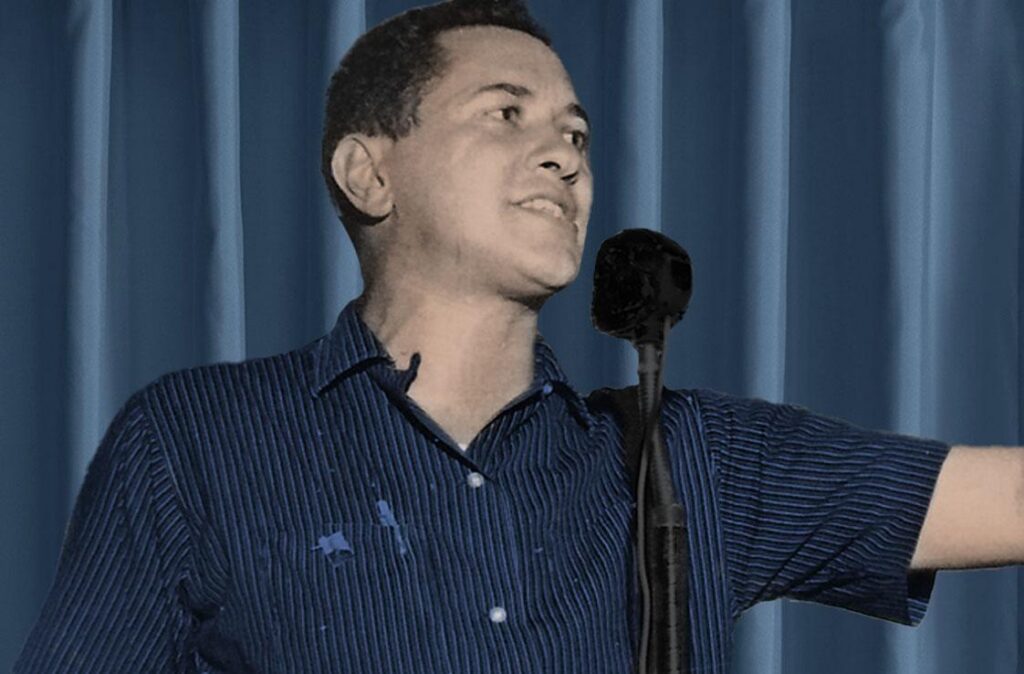


#GutenMorgen, Ihr lieben Fediwesen!
Heute für mich beim #UM26 auf dem Programm (Parallelsitzungen zum FLASH-Plenar):
* 09:00–12:00 #XPCS, in 28c
* 11:00–15:30 @daphne #NFDI in 1b, Raum 4ab
* 13:00–16:30 #XRay #Synchrotron Nano-Imaging in 28c
* Postersitzung (Nummer 168 ist unser snip-#ELN) in 99
Habt 1 wunderbaren Tag!
Der Suchdienst #UBPD meldet in #Kolumbien starke Hinweise auf Überreste von #CamiloTorresRestrepo – Priester, Soziologe und #ELN-Mitglied. Eine finale Bestätigung steht noch aus. Mehr zur Bedeutung von Torres und den laufenden Nachforschungen heute auf #amerika21. https://amerika21.de/2026/01/282171/camilo-torres-kolumbien-fund

📣 News Digest #RDM in #NaturalScience Week 04, 2026!
Today with @punch4nfdi, @NFDI4Cat, @PSDI, #RSpace, @FAIRmat and @nfdi4earth. Enjoy reading!
https://thefairelephant.com/news_digest_archive/news-digest-rdm-in-natural-science-week-04-2026/
#FAIRElephantNews #FAIRdata #RDM #ResearchDataManagement #ELN

Antonio García: ‘A National Agreement Is Required’
In the last week, Antonio García, first comandante of the ELN, gave interviews to journalists from the United Kingdom, France and the United States; Here we present a selection of his responses, about the kidnapping of President Maduro, the resistance to imperialist aggression and the political solution to the conflict.
THE SUNDAY TIMES NEWSPAPER OF THE UNITED KINGDOM
[1] What impact does the arrest of Nicolás Maduro have on the political and military strategy of the National Liberation Army?
AG: The impact is not for the ELN, but for international legislation, since any president of any government, who does not share the policy of the United States, can be attacked and kidnapped by the American military forces. It also sets a precedent for the application of extraterritorial justice, destroying the sovereignty of the judicial systems of other countries, putting an end to the existence of Nation States.
For the ELN it is the reaffirmation of the existence of flesh and blood imperialism and that it does not distance itself from wars, to deal or understand with other States, legitimizing the right to defense and the fight of resistance.
[2] In the case of a direct military intervention by the United States in Venezuela, what would be the position and reaction of the ELN?
AG: The ELN at various times in its history has been linked to international solidarity, the José Antonio Galán National Pro-Liberation Brigade, which would give rise to the ELN, was created to link itself to fighting with the Cuban people, in the October crisis in 1962. We also had comrades supporting the struggle in Nicaragua, El Salvador and other processes.
We are an Organization linked to the struggle of the National Liberation Movements of the world and we listen when they call us, to support the struggle of the people, we are not interventionist, when they call us we support in solidarity and therefore we place ourselves under the orders of those people and processes. We do not direct anything where it does not belong to us.
FRENCH PRESS AGENCY (AFP)
[3] What changes for you as a structure that operates on the border, the fact that Nicolás Maduro is no longer the president of Venezuela? Is it true that you are or were in Venezuelan territory and began your return to Colombia?
AG: The location of the ELN structures is defined by the strategic plan, Colombia’s land borders are 5 and two oceans. Due to its configuration, for each of them there is a definition in the plan, the same with the seas and rivers, no one ‘puts their eggs in one basket’. What happened in Venezuela affects the continent because the American troops kidnapped a President, who even made Petro change his speech.
The ELN is focused with priority on Colombia. The government and the military have always said that I spend my time abroad, that is not new, if I told them now that I was abroad, they would say that I was in Colombia. What I do specify is that there is no exodus in the ELN and it is attentive to threats.
[4] Alias Iván Mordisco proposed a union of guerrillas to fight against the United States, will you accept?
AG: As soon as the demobilization dissident groups began to form, they were told that we agreed to talk when they were unified, so as not to talk to each faction, but they could not join and it became complex. If it is to defend the Homeland against the foreign aggressor, we will find ourselves in the fight.
MAX BEARAK FROM THE NEW YORK TIMES
[5] Has the ELN been increasing its military capabilities in anticipation of offensives by Colombian and US forces?
AG: The generation and creation of capabilities with the application of technology in our weapons is not new, that cannot be improvised, the State military has realized, it is no longer a secret, we have been developing that plan for more than 10 years in our military industry, in various types of weapons.
[6] Are you still open to dialogue with President Petro, or do you feel that he has abandoned the peace process with the ELN?
AG: The ELN speaks to the country, it presents its proposal for a National Agreement to all political and social forces, to all candidates for the next government; Of course, Petro is part of the political game in the composition of forces in the next elections. Now it is about going beyond a dialogue, to build a more in-depth route that allows overcoming both the country’s structural crisis and the social, political and armed conflict.
We have already seen that all governments have fallen short in their peace policies and a national agreement is required that makes this possible, a truly constituent process that has the strength to produce the changes that the regime and the political class block in parliament.
Source: https://eln-voces.net/2026/01/19/antonio-garcia-se-requiere-un-acuerdo-de-pais/
https://abolitionmedia.noblogs.org/?p=27557 #AntonioGarcía #colombia #eln #guerrilla #southAmerica #usImperialism #venezuela

Client Info
Server: https://mastodon.social
Version: 2025.07
Repository: https://github.com/cyevgeniy/lmst