“[They] would think that the truth is nothing but the shadows cast by the artifacts.”*…
How do AI models “understand” and represent reality? Is the inside of a vision model at all like a language model? As Ben Brubaker reports, researchers argue that as the models grow more powerful, they may be converging toward a singular “Platonic” way to represent the world…
Read a story about dogs, and you may remember it the next time you see one bounding through a park. That’s only possible because you have a unified concept of “dog” that isn’t tied to words or images alone. Bulldog or border collie, barking or getting its belly rubbed, a dog can be many things while still remaining a dog.
Artificial intelligence systems aren’t always so lucky. These systems learn by ingesting vast troves of data in a process called training. Often, that data is all of the same type — text for language models, images for computer vision systems, and more exotic kinds of data for systems designed to predict the odor of molecules or the structure of proteins. So to what extent do language models and vision models have a shared understanding of dogs?
Researchers investigate such questions by peering inside AI systems and studying how they represent scenes and sentences. A growing body of research has found that different AI models can develop similar representations, even if they’re trained using different datasets or entirely different data types. What’s more, a few studies have suggested that those representations are growing more similar as models grow more capable. In a 2024 paper, four AI researchers at the Massachusetts Institute of Technology argued that these hints of convergence are no fluke. Their idea, dubbed the Platonic representation hypothesis, has inspired a lively debate among researchers and a slew of follow-up work.
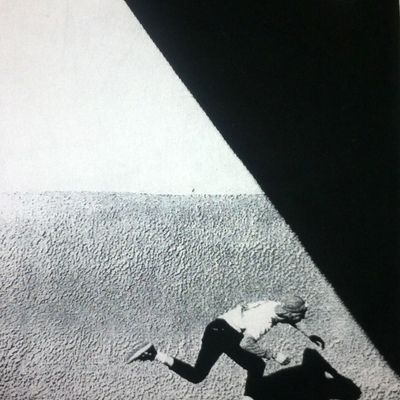
The team’s hypothesis gets its name from a 2,400-year-old allegory by the Greek philosopher Plato. In it, prisoners trapped inside a cave perceive the world only through shadows cast by outside objects. Plato maintained that we’re all like those unfortunate prisoners. The objects we encounter in everyday life, in his view, are pale shadows of ideal “forms” that reside in some transcendent realm beyond the reach of the senses.
The Platonic representation hypothesis is less abstract. In this version of the metaphor, what’s outside the cave is the real world, and it casts machine-readable shadows in the form of streams of data. AI models are the prisoners. The MIT team’s claim is that very different models, exposed only to the data streams, are beginning to converge on a shared “Platonic representation” of the world behind the data.
“Why do the language model and the vision model align? Because they’re both shadows of the same world,” said Phillip Isola, the senior author of the paper.
Not everyone is convinced. One of the main points of contention involves which representations to focus on. You can’t inspect a language model’s internal representation of every conceivable sentence, or a vision model’s representation of every image. So how do you decide which ones are, well, representative? Where do you look for the representations, and how do you compare them across very different models? It’s unlikely that researchers will reach a consensus on the Platonic representation hypothesis anytime soon, but that doesn’t bother Isola.
“Half the community says this is obvious, and the other half says this is obviously wrong,” he said. “We were happy with that response.”…
Read on: “Distinct AI Models Seem To Converge On How They Encode Reality,” from @quantamagazine.bsky.social.
Bracket with: “AGI is here (and I feel fine),” from Robin Sloan and “We Need to Talk About How We Talk About ‘AI’,” from Emily Bender and Nanna Inie.
* from Socrates “Allegory of the Cave,” in Plato’s Republic (Book VII)
###
As we interrogate ideas and Ideas, we might recall that it was on this date that the fictional HAL 9000 computer became operational, according to Arthur C. Clarke’s 2001: A Space Odyssey., in which the artificially-intelligent computer states: “I am a HAL 9000 computer, Production Number 3. I became operational at the HAL Plant in Urbana, Illinois, on January 12, 1997.” (Kubrik’s 1968 movie adaptation put his birthdate in 1992.)
#2001 #2001ASpaceOdyssey #AI #AllegoryOfTheCave #ArthurCClarke #artificalIntelligence #computing #culture #film #HAL #HAL9000 #history #movies #philosophy #Plato #PlatoSAllegoryOfTheCave #RobonSloan #Science #Technology