#onetimepad

Anarchist Radio Relay Leagueanarchistrrl@mastodon.radio
2025-10-28

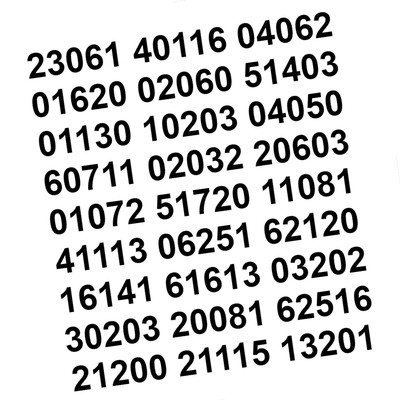
Burn After Reading: One-Time Pad Encryption Using Dice
One day, you may find yourself in the position of not trusting any of your apps or electronic devices, but still needing to send an encrypted message to someone. There are three (3) things you need to accomplish this:

Pen/cil

Paper (graph paper helps)

A random number generator (in this case, 10-sided dice
anarchistrrl.noblogs.org/post/
#onetimepad #encryption

Kevin Karhan :verified:kkarhan@infosec.space
2025-03-17

@FediThing @nicoco @fabiscafe @vkc nodds in agreement

"Perfect" would be #OneTimePad, but that's just not in the cards - period!

#XMPP+#OMEMO & #PGP/MIME are the next-best options that are documented, multi-vendor & multi-provider standardsband offer #SelfCustody of all the keys.

infosec.space/@kkarhan/1141777

2025-03-10

As far as I got today: plaincoding message text. And found a but in the otp-encrypt-js library. Can't plaincode unicode emojis. It'll be quick to fix.

#JavaScript #encryption #onetimepad

Webpage, title: "otp-encrypt-js demo"
6 textarea fields:
1: OTP (one-time pad)
2: Message
3: Plaincode
4: encrypted message
5: decrypted plaincode
6: decrypted message

One-time pad is generated, some message text added and plaincode field shows some numbers.
2025-03-09

Demo for one-time encryption library, otp-encrypt-js, slowly shaping up!

#encrypt #otp #onetimepad #message #Javascript #browser
github.com/eklem/otp-encrypt-j

Webpage, title: "otp-encrypt-js demo"
6 textarea fields:
1: OTP (one-time pad)
2: Message
3: Plaincode
4: encrypted message
5: decrypted plaincode
6: decrypted message
2025-03-01

Gearing up for some more development on encrypting and decrypting messages for kids.

Just renamed my one-time pad encryptio library to something that was possible to remember:

otp-encryption-js

First thing is to make emojis unique over different versions of unicode emoji versions.

Then look at one-time pad exchange between phones.

#onetimepad #encryption #JavaScript #development #messaging #MessagingSecurity

github.com/eklem/otp-encrypt-j

Light green text on dark green background. Shows some text + emojis being converted to plaintext to plaincode (numbers), a generated one-time pad and the text encrypted with that otp. Then decrypted and converted from plaincode back to plaintext.
2024-01-02

Today, someone asked me about my opinion on , after I told, that I am just coming from .
I did not know it, so I did, what everybody shoud do; I did a quick research. Since there is little information on the internet, I consulted the orion website.
They state, that they are providing a secure chat solution, by using encryption. What they are not telling is how they solved the key generation and distribution.

Anthony Collette :donor: / LoistavaAnthonyCollette@infosec.exchange
2023-06-13

WHO DID IT?

One of our information security “ancestors” invented the world’s only completely secure means of communication. And now we’re surrounded — night and day — by the “descendants” of that technology in new forms. It keeps our online transactions safe, and may have a renewed importance as we enter the quantum computing era.

We thought we knew who invented it, but history had a trick or two up its sleeve. It’s a bit like the mystery murder game, Clue.

➡️​ Who?
➡️​ What?
➡️​ When?
➡️​ Where?
➡️​ Why?
➡️​ How?
➡️​ How Secure Was It?
➡️​ Was It Commercially Successful?
➡️​ What Was The Underlying Technology?
➡️​ How Efficient Was Its Use? (always inefficient, or could it be massively efficient?)

Answers to all of these questions have been updated in the past 12 years.

Because of Frank Miller's implementation with a Telegraphic Code book, the use of a One-Time Pad could be, and often was, *outrageously* efficient, compared to the later use (with a cipher) which was painfully *inefficient.* This difference is only now becoming clear, since our understanding of who Frank Miller was and what he did is only about 12-13 years old.

The history of infosec got rewritten and we're all just trying to catch up.

I asked an infographic designer to create a comparison between our Old Understanding (invented in 1917) vs. our New Understanding (happened 35 years earlier, in 1882).

What do you think? Please feel free to offer your suggestions or thoughts to make this infographic more useful.

If you’d like to verify for yourself how efficient the use of a One-Time Pad could be, feel free to take this quick, 4-step challenge:

loistavainfosecurity.com/blog/

#OneTimePad
#Infosec
#infoGraphics
#Cryptography
Colorful infographic depicting our Old vs. New Understanding of who originally invented the One-Time Pad.
Anthony Collette :donor: / LoistavaAnthonyCollette@infosec.exchange
2023-04-21

And the answer to the poll is . . . 1882!

Yup, it’s true. Asking someone to disclose their “mother’s maiden name” as a security technique was first publicly described in 1882.

That’s the year Sacramento, CA banker — Frank Miller — published his book titled "Telegraphic Code: To Insure Privacy and Secrecy In The Transmission Of Telegrams."

This was the same book which described the first concept and implementation of the One-Time Pad.

Frank and his fellow banker buddies conducted high finance over the Internet of their day, the Telegraph, which was considered by many to be completely insecure; about as private as sending a postcard.

How did you transfer loads of your employer’s money securely over an insecure means of communication?

You used a telegraphic code book and combined it with other layers of security. Big $$$$s were involved, and no one wanted — then or now — to be the one who screwed up a transaction.

So “mother’s maiden name” became one of the layers of security used in money transfers.

As they said on Battlestar Galactica: “All this has happened before, and all this will happen again.”

Interesting how things seem to repeat over and over.

Thanks to everyone who voted in the Poll!

#Infosec
#Cybersecurity
#MothersMaidenName
#InfosecTraining
#OneTimePad

Mother's Maiden Name As A Security Technique Was First Described In 1882.
Anthony Collette :donor: / LoistavaAnthonyCollette@infosec.exchange
2023-04-13

WHO DID IT?

One of our information security “ancestors” invented the world’s only completely secure means of communication. And now we’re surrounded — night and day — by the “descendants” of that technology in new forms. It keeps our online transactions safe, and may have a renewed importance as we enter the quantum computing era.

We thought we knew who invented it, but history had a trick or two up its sleeve. It’s a bit like the mystery murder game, Clue.

➡️​ Who?
➡️​ What?
➡️​ When?
➡️​ Where?
➡️​ Why?
➡️​ How?
➡️​ How Secure Was It?
➡️​ Was It Commercially Successful?
➡️​ What Was The Underlying Technology?
➡️​ How Efficient Was Its Use? (always inefficient, or could it be massively efficient?)

Answers to all of these questions have been updated in the past 12 years.

Because of Frank Miller's implementation with a Telegraphic Code book, the use of a One-Time Pad could be, and often was, *outrageously* efficient, compared to the later use (with a cipher) which was painfully *inefficient.* This difference is only now becoming clear, since our understanding of who Frank Miller was and what he did is only about 12-13 years old.

The history of infosec got rewritten and we're all just trying to catch up.

I asked an infographic designer to create a comparison between our Old Understanding (invented in 1917) vs. our New Understanding (happened 35 years earlier, in 1882).

What do you think? Please feel free to offer your suggestions or thoughts to make this infographic more useful.

If you’d like to verify for yourself how efficient the use of a One-Time Pad could be, feel free to take this quick, 4-step challenge:

loistavainfosecurity.com/blog/

#OneTimePad
#Infosec
#infoGraphics
#Cryptography

Colorful infographic depicting our Old vs. New understanding of who first invented the One-Time Pad.
2023-04-09

OOB-Comm is #OneTimePad encrypted messaging and voice communication project. Runs on #Pinephone #reTerminal and various other embedded HW.
#OffTheGrid #Tactical #DFIR #RedTeam

Picture of Pinephone with keyboard case attached. On top of keyboard there is KP/31 jewelry delivered within 'ammo box' casing.
Anthony Collette :donor: / LoistavaAnthonyCollette@infosec.exchange
2023-02-17

And the answer to the poll is . . . 1882!

Yup, it’s true. Asking someone to disclose their “mother’s maiden name” as a security technique was first publicly described in 1882.

That’s the year Sacramento, CA banker — Frank Miller — published his book titled "Telegraphic Code: To Insure Privacy and Secrecy In The Transmission Of Telegrams."

This was the same book which described the first concept and implementation of the One-Time Pad.

Frank and his fellow banker buddies conducted high finance over the Internet of their day, the Telegraph, which was considered by many to be completely insecure; about as private as sending a postcard.

How did you transfer loads of your employer’s money securely over an insecure means of communication?

You used a telegraphic code book and combined it with other layers of security. Big $$$$s were involved, and no one wanted — then or now — to be the one who screwed up a transaction.

So “mother’s maiden name” became one of the layers of security used in money transfers.

As they said on Battlestar Galactica: “All this has happened before, and all this will happen again.”

Interesting how things seem to repeat over and over.

Thanks to everyone who voted in the Poll!

#Infosec
#Cybersecurity
#MothersMaidenName
#InfosecTraining
#OneTimePad

Light bulb illuminating an interesting fact: "Mother's Maiden Name" used as a security technique was first described in 1882.
2023-02-12

It annoys me how many overcomplicated nonsense schemes for #wireless #networking & #bluetooth security there are and how brittle they end-up being.

Why isn't it standard yet to just plug two devices together, generate a few hundred megabytes of #OneTimePad frames for communication and then using that?

Am I missing some glaring flaw in this idea?

#Security #Cryptography #WirelessNetworking #InfoSec

Anthony Collette :donor: / LoistavaAnthonyCollette@infosec.exchange
2023-01-28

WHO DID IT?

One of our information security “ancestors” invented the world’s only completely secure means of communication. And now we’re surrounded — night and day — by the “descendants” of that technology in new forms. It keeps our online transactions safe, and may have a renewed importance as we enter the quantum computing era.

We thought we knew who invented it, but history had a trick or two up its sleeve. It’s a bit like the mystery murder game, Clue.

➡️​ Who?
➡️​ What?
➡️​ When?
➡️​ Where?
➡️​ Why?
➡️​ How?
➡️​ How Secure Was It?
➡️​ Was It Commercially Successful?
➡️​ What Was The Underlying Technology?
➡️​ How Efficient Was Its Use? (always inefficient, or could it be massively efficient?)

Answers to all of these questions have been updated in the past 12 years.

I asked an infographic designer to create a comparison between our Old Understanding (invented in 1917) vs. our New Understanding (happened 35 years earlier, in 1882).

This is the first draft. I’m not a huge fan of the all-caps text. I'm really open to your suggestions or thoughts to make this more useful, so please feel free to chime in.

#OneTimePad
#Infosec
#infoGraphics
#Cryptography
Colorful infographic depicting the difference between our old understanding and our new understanding of the dynamics around the invention of the One-Time Pad.
Anthony Collette :donor: / LoistavaAnthonyCollette@infosec.exchange
2023-01-23

WHO DID IT?

One of our information security “ancestors” invented the world’s only completely secure means of communication. And now we’re surrounded — night and day — by the “descendants” of that technology in new forms. It keeps our online transactions safe, and may have a renewed importance as we enter the quantum computing era.

We thought we knew who invented it, but history had a trick or two up its sleeve. It’s a bit like the mystery murder game, Clue.

➡️​ Who?
➡️​ What?
➡️​ When?
➡️​ Where?
➡️​ Why?
➡️​ How?
➡️​ How Secure Was It?
➡️​ Was It Commercially Successful?
➡️​ What Was The Underlying Technology?
➡️​ How Efficient Was Its Use? (always inefficient, or could it be massively efficient?)

Answers to all of these questions have been updated in the past 12 years.

I asked an infographic designer to create a comparison between our Old Understanding (invented in 1917) vs. our New Understanding (happened 35 years earlier, in 1882).

This is the first draft. I’m not a fan of the all-caps text. If you have any suggestions or thoughts to make this more useful, please feel free to chime in.

#OneTimePad
#Infosec
#infoGraphics
#Cryptography

Colorful infographic depicting the difference between our old understanding and our new understanding of the dynamics around the invention of the One Time Pad.
Anthony Collette :donor: / LoistavaAnthonyCollette@infosec.exchange
2022-12-17

And the answer to the poll is . . . 1882!

Yup, it’s true. Asking someone to disclose their “mother’s maiden name” as a security technique was first publicly described in 1882.

That’s the year Sacramento, CA banker — Frank Miller — published his book titled "Telegraphic Code: To Insure Privacy and Secrecy In The Transmission Of Telegrams."

This was the same book which described the first concept and implementation of the One-Time Pad.

Frank and his fellow banker buddies conducted high finance over the Internet of their day, the Telegraph, which was considered by many to be completely insecure; about as private as sending a postcard.

How did you transfer loads of your employer’s money securely over an insecure means of communication?

You used a telegraphic code book and combined it with other layers of security. Big $$$$s were involved, and no one wanted — then or now — to be the one who screwed up a transaction.

So “mother’s maiden name” became one of the layers of security used in money transfers.

As they said on Battlestar Galactica: “All this has happened before, and all this will happen again.”

Interesting how things seem to repeat over and over.

#Infosec
#Cybersecurity
#MothersMaidenName
#InfosecTraining
#OneTimePad

Interesting Facts: Mother's Maiden Name As A Security Technique Was First Described in 1882.
2022-09-23

Client Info

Server: https://mastodon.social
Version: 2025.07
Repository: https://github.com/cyevgeniy/lmst