#phyllosilicates

Daniel Pomarèdepomarede
2025-06-24

An exciting find at Krokodillen: phyllosilicates

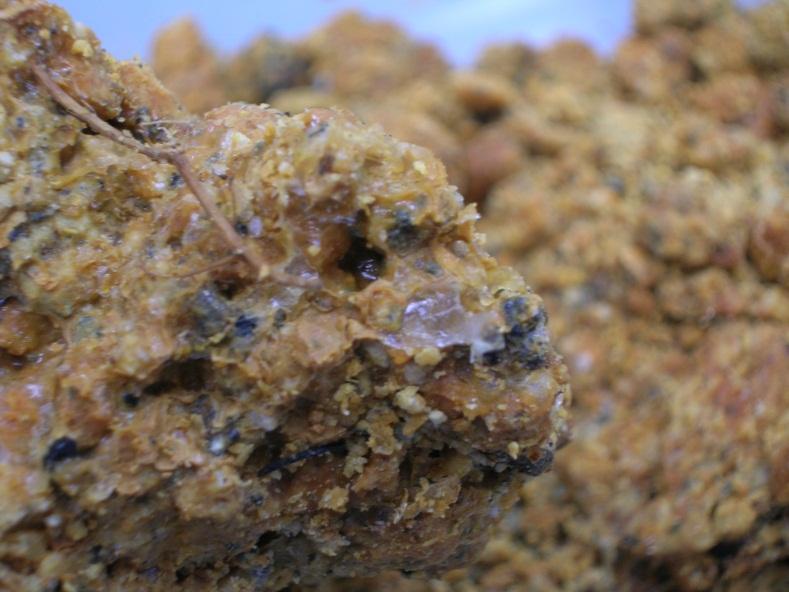
These minerals primarily form by extensive interactions between basaltic rocks and liquid water. They are excellent at preserving organic materials, if present, by adsorbing them or encapsulating them within their mineral structure.

science.nasa.gov/blog/clay-min

Planetary Ecologistplanetaryecologist
2025-06-24

Imogolite (Pedology 🟤)

Imogolite is an aluminium silicate clay mineral with the chemical formula Al2SiO34. It occurs in soils formed from volcanic ash and was first described in 1962 for an occurrence in Uemura, Kumamoto prefecture, Kyushu Region, Japan. Its name originates from the Japanese word imogo, which refers to the brownish yellow soil derived from volcanic ash. It ...

en.wikipedia.org/wiki/Imogolite

Daniel Pomarèdepomarede
2023-08-02

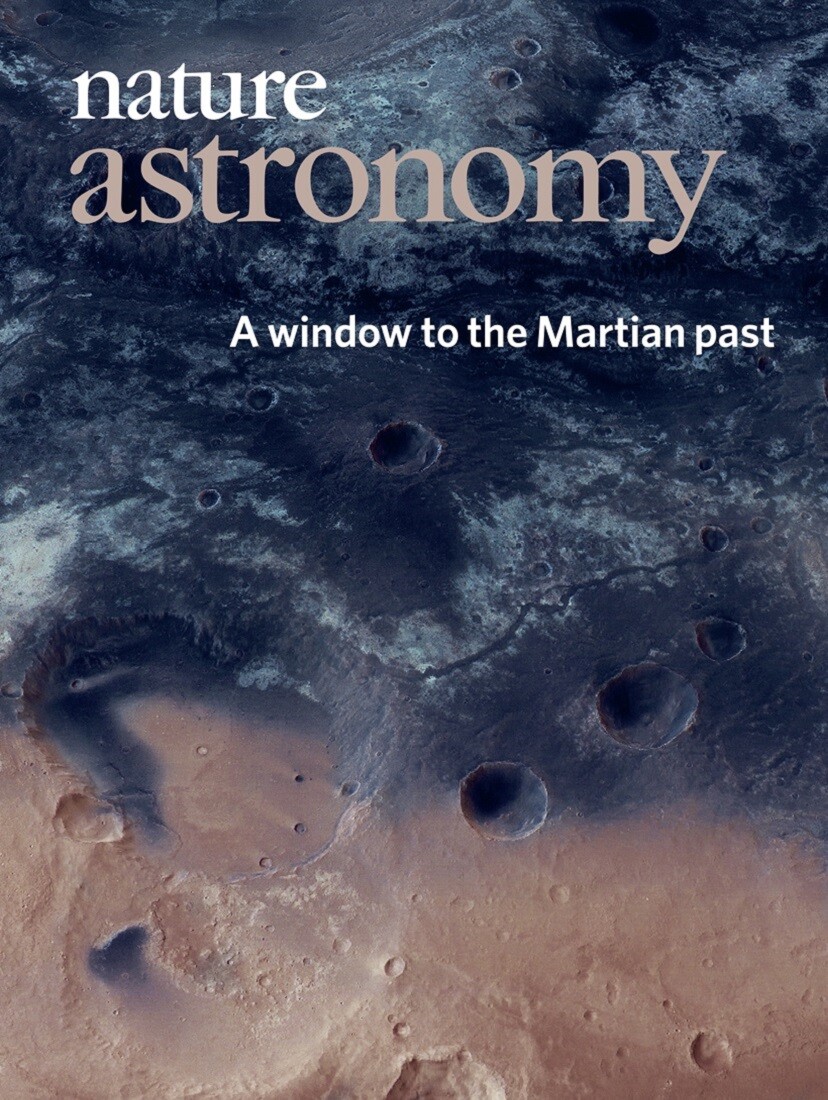
Nature Astronomy covers

A window to the Martian past (2018)

Featuring phyllosilicates (clays) at Mawrth Vallis, seen here as light-toned outcrops, that could form during warm and wet intermittent periods in a generally cold early Mars.

Image: Christoph Gross, Freie Universität Berlin.
Cover Design: Bethany Vukomanovic

nature.com/natastron/volumes/2

A cover of the Nature Astronomy Journal featuring a view of Mawrth Vallis of Mars - a region that holds special interest because of the presence of phyllosilicate (clay) minerals.
Massimo LucianiNetMassimo
2021-05-26

An article published in the journal "Nature Communications" reports a study of the origin of the ammoniated present on the dwarf planet .
english.tachyonbeam.com/2021/0

Client Info

Server: https://mastodon.social
Version: 2025.07
Repository: https://github.com/cyevgeniy/lmst