
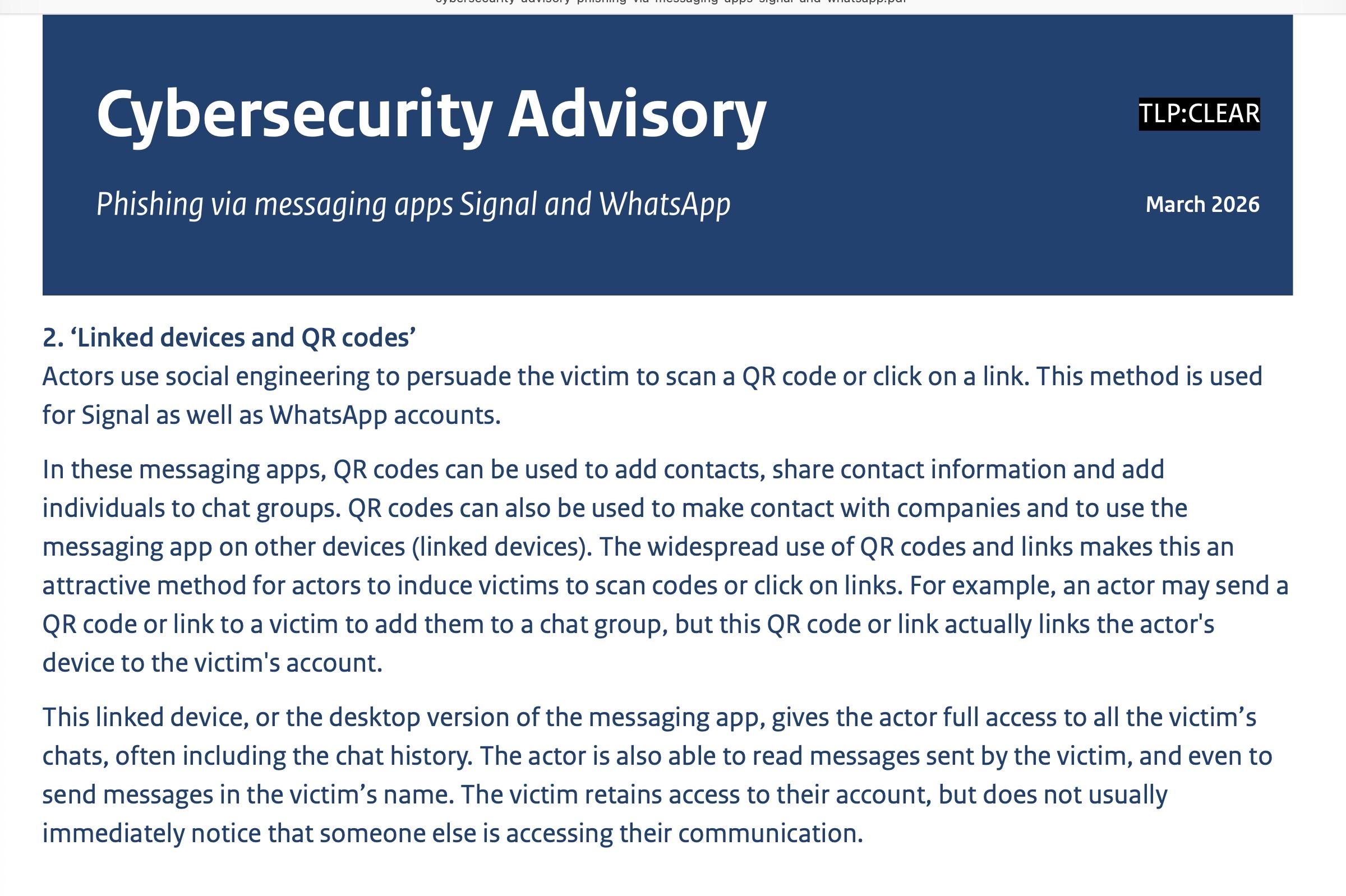
*Poisoned Russian QR codes on Whatsapp and Signal. #cyberwar #advancedpersistentthreat
#AdvancedPersistentThreat

How Quantum Computing Could Change Cybersecurity
1,043 words, 6 minutes read time.
Quantum computing is no longer a distant dream scribbled on whiteboards at research labs; it is a looming reality that promises to disrupt every corner of the digital landscape. For cybersecurity professionals, from the analysts sifting through logs at 2 a.m. to CISOs defending multimillion-dollar digital fortresses, the quantum revolution is both a threat and an opportunity. The very encryption schemes that secure our communications, financial transactions, and sensitive corporate data could be rendered obsolete by the computational power of qubits. This isn’t science fiction—it’s an urgent wake-up call. In this article, I’ll explore how quantum computing could break traditional cryptography, force the adoption of post-quantum defenses, and transform the way we model and respond to cyber threats. Understanding these shifts isn’t optional for security professionals anymore; it’s survival.
Breaking Encryption: The Quantum Threat to Current Security
The first and most immediate concern for anyone in cybersecurity is that quantum computers can render our existing cryptographic systems ineffective. Traditional encryption methods, such as RSA and ECC, rely on mathematical problems that classical computers cannot solve efficiently. RSA, for example, depends on the difficulty of factoring large prime numbers, while ECC leverages complex elliptic curve relationships. These are the foundations of secure communications, e-commerce, and cloud storage, and for decades, they have kept adversaries at bay. Enter quantum computing, armed with Shor’s algorithm—a method capable of factoring these massive numbers exponentially faster than any classical machine. In practical terms, a sufficiently powerful quantum computer could crack RSA-2048 in a matter of hours or even minutes, exposing sensitive data once thought safe. Grover’s algorithm further threatens symmetric encryption by effectively halving key lengths, making AES-128 more vulnerable than security architects might realize. In my years monitoring security incidents, I’ve seen teams underestimate risk, assuming that encryption is invulnerable as long as key lengths are long enough. Quantum computing demolishes that assumption, creating a paradigm where legacy systems and outdated protocols are no longer just inconvenient—they are liabilities waiting to be exploited.
Post-Quantum Cryptography: Building the Defenses of Tomorrow
As frightening as the threat is, the cybersecurity industry isn’t standing still. Post-quantum cryptography (PQC) is already taking shape, spearheaded by NIST’s multi-year standardization process. This isn’t just theoretical work; these cryptosystems are designed to withstand attacks from both classical and quantum computers. Lattice-based cryptography, for example, leverages complex mathematical structures that quantum algorithms struggle to break, while hash-based and code-based schemes offer alternative layers of protection for digital signatures and authentication. Transitioning to post-quantum algorithms is far from trivial, especially for large enterprises with sprawling IT infrastructures, legacy systems, and regulatory compliance requirements. Yet the work begins today, not tomorrow. From a practical standpoint, I’ve advised organizations to start by mapping cryptographic inventories, identifying where RSA or ECC keys are in use, and simulating migrations to PQC algorithms in controlled environments. The key takeaway is that the shift to quantum-resistant cryptography isn’t an optional upgrade—it’s a strategic imperative. Companies that delay this transition risk catastrophic exposure, particularly as nation-state actors and well-funded cybercriminal groups begin experimenting with quantum technologies in secret labs.
Quantum Computing and Threat Modeling: A Strategic Shift
Beyond encryption, quantum computing will fundamentally alter threat modeling and incident response. Current cybersecurity frameworks and MITRE ATT&CK mappings are built around adversaries constrained by classical computing limits. Quantum technology changes the playing field, allowing attackers to solve previously intractable problems, reverse-engineer cryptographic keys, and potentially breach systems thought secure for decades. From a SOC analyst’s perspective, this requires a mindset shift: monitoring, detection, and response strategies must anticipate capabilities that don’t yet exist outside of labs. For CISOs, the challenge is even greater—aligning board-level risk discussions with the abstract, probabilistic threats posed by quantum computing. I’ve observed that many security leaders struggle to communicate emerging threats without causing panic, but quantum computing isn’t hypothetical anymore. It demands proactive investment in R&D, participation in standardization efforts, and real-world testing of quantum-safe protocols. In the trenches, threat hunters will need to refine anomaly detection models, factoring in the possibility of attackers leveraging quantum-powered cryptanalysis or accelerating attacks that once required months of computation. The long-term winners in cybersecurity will be those who can integrate quantum risk into their operational and strategic planning today.
Conclusion: Preparing for the Quantum Era
Quantum computing promises to be the most disruptive force in cybersecurity since the advent of the internet itself. The risks are tangible: encryption once considered unbreakable may crumble, exposing sensitive data; organizations that ignore post-quantum cryptography will face immense vulnerabilities; and threat modeling will require a fundamental reevaluation of attacker capabilities. But this is not a reason for despair—it is a call to action. Security professionals who begin preparing now, by inventorying cryptographic assets, adopting post-quantum strategies, and updating threat models, will turn the quantum challenge into a competitive advantage. In my years in the field, I’ve learned that the edge in cybersecurity always belongs to those who anticipate the next wave rather than react to it. Quantum computing is that next wave, and the time to surf it—or be crushed—is now. For analysts, architects, and CISOs alike, embracing this reality is the only way to ensure our digital fortresses remain unbreachable in a world that quantum computing is poised to redefine.
Call to Action
If this breakdown helped you think a little clearer about the threats out there, don’t just click away. Subscribe for more no-nonsense security insights, drop a comment with your thoughts or questions, or reach out if there’s a topic you want me to tackle next. Stay sharp out there.
D. Bryan King
Sources
NIST: Post-Quantum Cryptography Standardization
NISTIR 8105: Report on Post-Quantum Cryptography
CISA Cybersecurity Advisories
Mandiant Annual Threat Report
MITRE ATT&CK Framework
Schneier on Security Blog
KrebsOnSecurity
Verizon Data Breach Investigations Report
Shor, Peter W. (1994) Algorithms for Quantum Computation: Discrete Logarithms and Factoring
Grover, Lov K. (1996) A Fast Quantum Mechanical Algorithm for Database Search
Black Hat Conference Materials
DEF CON Conference Archives
Disclaimer:
The views and opinions expressed in this post are solely those of the author. The information provided is based on personal research, experience, and understanding of the subject matter at the time of writing. Readers should consult relevant experts or authorities for specific guidance related to their unique situations.
#advancedPersistentThreat #AES #boardLevelCybersecurity #CISO #cloudSecurity #codeBasedCryptography #cryptanalysis #cryptographyMigration #cyberAwareness #cyberDefense #cyberDefenseStrategy #cyberInnovation #cyberPreparedness #cyberResilience #cyberRisk #cyberStrategy #cyberattack #cybersecurity #cybersecurityChallenges #cybersecurityFrameworks #cybersecurityTrends #dataProtection #digitalFortresses #digitalSecurity #ECC #emergingThreats #encryption #encryptionKeys #futureProofSecurity #GroverSAlgorithm #hashingAlgorithms #incidentResponse #ITSecurityLeadership #latticeBasedCryptography #legacySystems #MITREATTCK #nationStateThreat #networkSecurity #NISTPQC #postQuantumCryptography #quantumComputing #quantumComputingImpact #quantumEraSecurity #quantumReadiness #quantumRevolution #quantumThreat #quantumResistantCryptography #quantumSafeAlgorithms #quantumSafeProtocols #RSA #secureCommunications #securityBestPractices #securityPlanning #ShorSAlgorithm #SOCAnalyst #threatHunting #threatIntelligence #ThreatModeling #zeroTrust


F5 Networks' routine security check spiraled into a high-stakes drama when nation-state hackers infiltrated their critical systems and snagged secret source code. How safe is our digital infrastructure now?
#f5networks
#advancedpersistentthreat
#incidentresponse
#cybersecuritybreach
#supplychainsecurity

Two of the Kremlin’s most active hack groups are collaborating, ESET says https://arstechni.ca/NMLz #advancedpersistentthreat #gamaredon #Security #Biz&IT #russia #turla #APT

📬 Kampf um Vertrauen: Cybersicherheit in der Kreditwirtschaft
#Cyberangriffe #Gastartikel #ITSicherheit #AdvancedPersistentThreat #Konditionsanfrage #Kreditplattform #Kreditwirtschaft #RansomwareAttacke #SocialEngineeringTrick https://sc.tarnkappe.info/919e17

North Korea’s ‘Moonstone Sleet’ using fake tank game, custom ransomware in attacks
https://therecord.media/north-korea-moonstone-sleet-ransomware-deception #Microsoft #NorthKorea #AdvancedPersistentThreat #APT #Ransomware #DeTankWar #trackingpixel
FBI and CISA publish guide to Living off the Land techniques
https://www.malwarebytes.com/blog/news/2024/02/fbi-and-cisa-publish-guide-to-living-off-the-land-techniques #security #LOTL #cyberattack #china #russia #AdvancedPersistentThreat
#RansomwareAsAService

"Operation Triangulation: What You Get When Attack iPhones of Researchers"
Analysis of a highly sophisticated spyware that had been around for years without anyone noticing. Very technical talk, but also higher level insights.
#37C3Recommendation #37C3 #OperationTriangulation #iPhone #Smartphone #APT #AdvancedPersistentThreat

@skua so why not support the #reporting by reuters?
#Appin, is a #cybersecurity #startup-turned hacker-for-hire shop. They basically amount to an #AdvancedPersistentThreat (APT) looking for a bounty.
I don't like when governments act this way.
Why would I want to silence reporting on what is basically hacking for the highest bidder for the wealthy and well healed?

Multiple Chinese APTs establish major beachheads inside sensitive infrastructure
Three major campaigns from 3 different Chinese groups are keeping defenders busy.
https://arstechnica.com/security/2023/08/multiple-chinese-apts-establish-major-beachheads-inside-us-infrastructure/ #chinese #APTs #beachheads #infrastructure #Kaspersky #malware #Zirconium #VoltTyphoon #AdvancedPersistentThreat

A sleepless YouTube hole of a night. Went out for a snack at 3 AM and discovered my son asleep on the couch where he’d been sneaking low volume tv all night.
I normally have the tv MAC address blocked between 11 PM and 8 AM but forgot I briefly unblocked for a late movie.
He’s a very cute #advancedpersistentthreat

US-Sicherheitsbehörden melden Advanced Persistent Threat: Organisierte Cyberkriminelle stehlen Zugangsdaten staatlicher Stellen durch Lücken im Fortinet-VPN.
Fortinet: Angreifer nutzen kritische Schwachstellen im VPN für künftige Attacken
Fortinet: Angreifer nutzen kritische Schwachstellen im VPN für künftige Attacken

Malicious Software Infrastructure Easier to Get and Deploy Than Ever - Researchers at Recorded Future report a rise in cracked Cobalt Strike and other open-source advers... https://threatpost.com/malicious-software-infrastructure-easier-deploy/162913/ #advancedpersistentthreat #commandandcontrolserver #cobaltstrike #websecurity #metasploit #opensource #malware #pupyrat #apt #c2
Lazarus Group Hits COVID-19 Vaccine-Maker in Espionage Attack - The nation-state actor is looking to speed up vaccine development efforts in North Korea. https://threatpost.com/lazarus-covid-19-vaccine-maker-espionage/162591/ #advancedpersistentthreat #pharmaceuticalcompany #vaccinedevelopment #supplychainattack #healthministry #lazarusgroup #cyberattack #government #northkorea #espionage #covid-19 #malware #iptheft #vaccine #breach #hacks #apt
Zero-Click Apple Zero-Day Uncovered in Pegasus Spy Attack - The phones of 36 journalists were infected by four APTs, possibly linked to Saudi Arabia or the UA... https://threatpost.com/zero-click-apple-zero-day-pegasus-spy-attack/162515/ #advancedpersistentthreat #spywaremsurveillance #unitedarabemirates #vulnerabilities #sneakykestrel #journalists #saudiarabia #al-jazeera #citizenlab #zero-click #monarchy #nsogroup #malware #pegasus #zeroday #apple #apt
Auf "Sunburst" folgt "Supernova": Sicherheitsforscher berichten von weiterem Schadcode für SolarWinds Orion. Dessen Urheber scheint eine zweite Gang zu sein.
SolarWinds: Zweite, unabhängige Backdoor-Malware für Orion-Plattform entdeckt
SolarWinds: Zweite, unabhängige Backdoor-Malware für Orion-Plattform entdeckt
SideWinder APT Targets Nepal, Afghanistan in Wide-Ranging Spy Campaign - Convincing email-credentials phishing, emailed backdoors and mobile apps are all part of the group... https://threatpost.com/sidewinder-apt-nepal-afghanistan-spy-campaign/162086/ #advancedpersistentthreat #emailcredentials #vulnerabilities #mobilesecurity #cve-2017-11882 #cve-2019-2215 #cyberattacks #websecurity #afghanistan #mediatek-su #sidewinder #trendmicro #espionage #backdoor #phishing #malware #privacy #email
DeathStalker APT Spices Things Up with PowerPepper Malware - A raft of obfuscation techniques turn the heat up for the hacking-for-hire operation. https://threatpost.com/deathstalker-apt-powerpepper-malware/161867/ #advancedpersistentthreat #malwareanalysis #hackersforhire #steganography #deathstalker #obfuscation #powerpepper #espionage #kaspersky #backdoor #malware #hackers #apt
Think-Tanks Under Attack by APTs, CISA Warns - The feds have seen ongoing cyberattacks on think-tanks (bent on espionage, malware delivery and mo... https://threatpost.com/think-tanks-attack-apts-cisa/161807/ #advancedpersistentthreat #covid-19.remoteaccess #dataexfiltration #vulnerabilities #remoteworking #spearphishing #cyberattacks #nationstates #websecurity #government #thinktanks #cisaalert #espionage #exploits #phishing #malware #breach #hacks #apt #vpn
US-Behörden meldeten schon im Oktober Angriffe auf eine (gefixte) Schwachstelle in MobileIron Core & Connector. Nun warnt auch die britische Cyberaufsicht.
Britische Sicherheitsbehörde warnt vor Angriffen auf MobileIron-Schwachstelle
Britische Sicherheitsbehörde warnt vor Angriffen auf MobileIron-Schwachstelle
Client Info
Server: https://mastodon.social
Version: 2025.07
Repository: https://github.com/cyevgeniy/lmst