#C40Cities

Climate Change Solutionsclim8_solutions
2025-11-05

🌍 Exciting developments in the Global South! The C40 Cities Finance Facility is stepping up to help cities like Belo Horizonte, São Paulo, Rabat, and Cartagena fund essential climate solutions.

From green transport to clean energy and nature-based projects, this initiative aims to reduce emissions while creating jobs and boosting resilience in these communities.

Let's support sustainable growth! 🌱✨

En la Cdmx se impulsa un transporte de carga cero emisiones

El evento México por el Clima promovió alianzas estratégicas para descarbonizar el transporte de carga en Cdmx.


Por Gabriela Díaz | Reportera                                                       

En el marco de la Semana de Acción: México por el Clima, el foro Impulsando la descarbonización del transporte de carga en la Ciudad de México, organizado por C40, reunió a autoridades, banca de desarrollo y sector privado. El objetivo central fue acelerar la transición hacia un sistema de transporte de carga cero emisiones. La convocatoria contó con el apoyo de la Secretaría de Medio Ambiente (Sedema) y Nacional Financiera (Nafin), instituciones clave para avanzar en movilidad sustentable.

Los participantes coincidieron en que el cumplimiento de las metas climáticas dependía de la coordinación entre niveles de gobierno, organismos financieros y empresas. En representación del gobierno local asistieron funcionarios de la Sedema y la Secretaría de Desarrollo Económico (Sedeco). Por el gobierno federal, Nafin reafirmó su compromiso con la descarbonización del transporte, junto a C40 y The Climate Pledge, aliados internacionales en esta agenda.

La Iniciativa Laneshift, impulsada por C40 Cities y The Climate Pledge, trabaja desde 2023 en la transformación del transporte de carga en urbes de India, Brasil y México. En la Cdmx, esta iniciativa fortaleció políticas públicas, amplió el acceso al financiamiento y promovió infraestructura de recarga eléctrica, con énfasis en las necesidades de las pequeñas empresas.

Avances hacia la electromovilidad

Durante su intervención, Julia Álvarez Icaza, secretaria de Medio Ambiente de la Ciudad de México, señaló que la capital enfrentaba grandes desafíos en materia de calidad del aire. Afirmó que integrarse a la Iniciativa Laneshift representaba una estrategia esencial para avanzar en electromovilidad. Subrayó que la transición eléctrica permitiría reducir emisiones, mejorar la salud pública y fortalecer la sustentabilidad urbana.

Álvarez Icaza explicó que el liderazgo ambiental de la capital respondía a un compromiso institucional con el planeta y las generaciones futuras. Indicó que el trabajo coordinado entre la administración local y los organismos internacionales era una vía efectiva para acelerar resultados medibles. Reiteró que la movilidad eléctrica debía considerarse un pilar del desarrollo económico y social.

El foro enfatizó que la acción climática requería colaboración intersectorial para garantizar resultados sostenibles. Los ponentes destacaron que la movilidad eléctrica representaba una oportunidad para modernizar las cadenas logísticas y fortalecer la competitividad económica de la ciudad. La descarbonización del transporte se posicionó como una prioridad en las políticas públicas locales.

Financiamiento verde e innovación

El titular de la Unidad de Emisiones y Relaciones Internacionales de Nafin y Bancomext, Ismael Villanueva, explicó que el Plan México marcaba el rumbo hacia un desarrollo sostenible e incluyente. Señaló que la banca de desarrollo tenía un papel estratégico en facilitar financiamiento verde y cooperación internacional. Destacó que estos instrumentos permitían acompañar a empresas y gobiernos en su transición hacia modelos más resilientes.

Villanueva informó que Nafin impulsaba proyectos de energía limpia, eficiencia industrial, economía circular y movilidad sostenible. Detalló que la institución mantenía un enfoque prioritario en el acceso equitativo al financiamiento para pequeñas y medianas empresas. La meta era reducir las barreras económicas que limitaban la adopción tecnológica.

En colaboración con C40 Cities, Nafin diseñó una línea de crédito específica para la electrificación del transporte de última milla. Este esquema incorporó un bono de chatarrización que facilitó la sustitución de unidades contaminantes. La medida buscó generar inclusión y acelerar la renovación del parque vehicular de carga. –sn–

Camion de carga carretera

¡Conéctate con Sociedad Noticias! Suscríbete a nuestro canal de YouTube y activa las notificaciones, o bien, síguenos en las redes sociales: FacebookTwitter e Instagram.

También, te invitamos a que te sumes a nuestro canal de información en tiempo real a través de Telegram.

#NoticiasMX #PeriodismoParaTi #PeriodismoParaTiSociedadNoticias #AmazonMéxico #C40Cities #Cdmx #conciertosMéxico #DesarrolloSustentable #Descarbonización #ElEventoMéxicoPorElClima #electromovilidad #empresasYBancaDeDesarrolloParaPromoverLaDescarbonizaciónDelTransporteDeCargaEnLaCdmxYAvanzarHaciaLaElectromovilidadComoEjeDelDesarrolloSostenible_ #EnergíaLimpia #GrupoBimbo #HeinekenMéxico #Información #InformaciónMéxico #México #Morena #movilidadSostenible #nafin #noticia #noticias #NoticiasMéxico #NoticiasSociedad #organizadoPorC40 #reunióAAutoridades #Sedeco #Sedema #SedemaYNafin #SN #Sociedad #SociedadNoticias #SociedadNoticiasCom #sociedadNoticias #SociedadNoticiasCom #transporteEléctrico #VEMO

Camion de carga carretera
2023-11-28

Mayor #SadiqKhan who also chairs #C40Cities is being threatened, and his family and staff doxxed, as he works to implement the #London #ULEZ Ultra Low Emission Zone

"As combating #climatechange moves from setting targets to implementing them, policymaking is entering an era of messy — and contentious — interventions. To meet emissions goals, governments will have to ... convince voters the cost of making those changes is worth it."

Also, #taxtherich.
Keep going Mayor!

politico.eu/article/london-may

2023-07-30

@christineburns ☝🏽this is BY FAR the best content I have see about the #Paris #bikes #greentransport revolution and how #AnneHidalgo changed #urbandesign in the French capital.
While it doesn’t mention the CONSIDERABLE opposition Hidalgo still faces (#sadiqkhan take note), unlike most other reports it doesn’t gloss over issues and does a great job explaining why a work in progress is better than none. #green #cities #climateaction #c40cities #greenpolicies

dezeen (unofficial)dezeen@ծմակուտ.հայ
2022-03-11

Sustainable living is "not viable outside cities" says Hélène Chartier of C40 Cities

Cities are the only sustainable way to house Earth's growing population – but the importance of protecting them from climate risks has been "totally underrated", according to Hélène Chartier of sustainable urbanism network C40 Cities.

"In terms of reducing emissions, living in cities is the best option we have," said Chartier, who is head of zero-carbon development at C40 Cities.

Chartier spoke to Dezeen following the publication of the latest climate report from the UN's Intergovernmental Panel on Climate Change (IPCC).

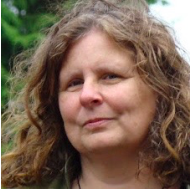
At C40 Cities, Hélène Chartier (above) facilitates low carbon urban developments such as Milan's Piazzale Loreto (top image)

The report shows that cities are key players in the fight against global warming, Chartier said. In the countryside, people are reliant on cars and live in larger buildings that are less efficient to heat and power, she explained.

Urban areas, on the other hand, offer an opportunity to service large swathes of the population with decarbonised public transport, cycling routes and sustainable energy, waste and water management systems.

"We know that to have a more sustainable lifestyle, we need to have access to the right infrastructure," she told Dezeen. "And this is not viable outside cities, let's be honest."

"To develop this kind of infrastructure and make it efficient, you need a certain level of density."

"Architects have a huge responsibility"

The IPPC's latest report found that cities have failed to prepare for the impacts of climate change that are already touching every region of the world – not to mention the more frequent and severe heatwaves, floods, droughts and storms that are to come as temperatures continue to rise.

To fulfil their full climate potential, Chartier said cities will first need to be decarbonised and become greener, more compact and more resilient to the disastrous impacts of global warming.

"In the past, the focus of climate action was mainly on mitigation," she explained. "It is now urgent to also act on adaptation, as the effects of climate change are already here and will amplify quickly."

Studio Gang designed a block in Chicago for C40 Cities' Reinventing Cities competition

Currently, cities house 55 per cent of the global population while being responsible for 60 per cent of emissions. Unless urban areas are fundamentally redesigned, Chartier said this is only set to get worse as the number of people living in cities is set to increase to almost 70 per cent by 2050.

"The report really insists on the fact that poorly planned cities and urban growth have a very significant impact on global warming," she said.

Buildings account for around half of a city's carbon footprint, so the solution is to eliminate operational emissions from heating and energy use as well as embodied emissions from materials and construction.

"Architects have a huge responsibility," Chartier said. "The way we design our building today is going to change the world tomorrow."

Compact cities are more sustainable

C40 Cities aims to encourage a shift to low-carbon cities through projects such as the Reinventing Cities competition, which will see 49 experimental developments built in 19 different cities.

The initiative forms part of C40 Cities' wider mission to help its members, including almost 100 of the world's biggest cities, reach their net-zero goals.

Outside of buildings, the majority of an average city's emissions are down to road transport. So Chartier suggests that local governments should enforce growth boundaries to reduce travel distances and limit urban sprawl.

[

Read:

Built environment must adapt to "widespread and severe" climate change fallout says IPCC report

](https://www.dezeen.com/2022/03/03/ipcc-report-resilient-cities-news/)

Cities should also become more polycentric, so they contain self-sufficient 15-minute neighbourhoods where all daily necessities are accessible via a short walk or cycle.

This would make space to regenerate and protect forests and other ecosystems in and around cities so they can act as carbon sinks.

"We need to ban all construction that will kill or destroy nature," Chartier said.

All buildings must have climate change risk assessment

As urban areas become denser, they will become increasingly vulnerable to the disastrous impacts of climate change due to their growing populations and the urban heat island effect.

To mitigate this, Chartier said all building projects or urban developments should now start with a climate change risk assessment, looking at the hazards that a site will be exposed to under different emissions scenarios over the coming decades.

"That's really something that has been totally underrated," she explained. "A lot of cities haven't actually assessed in detail where there is a risk."

Construction in vulnerable areas such as flood plains and coastal shores should be banned or limited, Chartier said. And any new buildings should incorporate greenery as well as passive cooling and bioclimatic design strategies to protect inhabitants from heatwaves without the need for air conditioning.

Trees provide shading in this Bangkok home by Shma Company. Photo is by Jinnawat Borihankijanan

Nature-based solutions such as green roofs, greenways and belts are particularly effective, as they can both absorb rainwater and lower local temperatures.

"Allocating land-use for green spaces and permeable soil needs to be compulsory for every new project," Chartier said. "There can even be local bylaws to ensure that all roofs or walls over a certain size integrate a certain percentage of green area, which New York is considering."

Dezeen recently rounded up a number of existing projects that incorporate climate resilience strategies, including a floating villa with retractable stilts and a house in Vietnam that accomodates seven people and 120 trees.

Another key way that architects can help to fight climate change is by considering the consumption-based emissions generated by the people living in their buildings, as Chartier outlined during a talk hosted by Dezeen at Dutch Design Week last autumn.

The post Sustainable living is "not viable outside cities" says Hélène Chartier of C40 Cities appeared first on Dezeen.

#all #architecture #news #landscapeandurbanism #cities #climatechange #c40cities #hélènechartier

imageA plaza development in MilanHelene Chartier portrait
dezeen (unofficial)dezeen@ծմակուտ.հայ
2021-11-18

"Cop26 only delivered incremental progress when we clearly need big breakthroughs"

This month's Cop26 climate conference in Glasgow made disappointing progress on the built environment and excluded the voices of ordinary citizens, writes attendee Hélène Chartier, head of zero-carbon development at international network C40 Cities.

It has been quite an exhausting two weeks and in the end, like many, I have quite mixed feelings. I think that despite new momentum (and not only for the nations: cities, businesses, and citizen groups are definitely more mobilised than ever), COP26 only delivered incremental progress when we clearly need big breakthroughs.

Amidst a difficult geopolitical context and the Covid-19 crisis, countries reached an agreement on the outstanding issues of the Paris Rulebook, which sets out how signatories of the 2015 Paris Agreement should achieve their decarbonisation commitments.

They also outlined a process for accelerating ambition on mitigation, adaptation and finance that keep the target of limiting global warming to 1.5 degrees Celsius compared to pre-industrial levels within sight.

However, they fell short of achieving new immediate action in many areas related to climate finance and the phasing out of fossil fuel and coal as well as "loss and damage," which describes compensation paid by richer countries to poorer countries to compensate them for the impact of climate change.

I also personally think that this COP proved that we cannot rely on COPs and nations to save the world. Okay, we already knew that: the five years that followed the Paris Agreement have already proved this and this COP makes it very, very clear.

[

Read:

COP26 was "better than nothing but clearly insufficient" according to architects who were there

](https://www.dezeen.com/2021/11/17/cop26-insufficient-architects-designers-responses/)

First, because the method is not good: an agreement that must be accepted by all cannot be bold; you can only reach a lukewarm consensus and include vague formulation, so in the end, no nation is really forced to change.

Also because it is mainly about nations where we would need the mobilization of all – we would need parallel official negotiations from all the different groups of the society. The nations cannot do everything but also the nations are probably the most conservative entities and so the most complicated ones to move compared to cities or businesses for example, which could be more progressive and more operational in their approach.

In addition, I think it is terrible how citizens were not involved in the discussion. Compare this to the way nations have dealt with the Covid-19 pandemic. In France, president Emmanuel Macron put together a group of scientists to advise the French government on how to deal with Covid-19. Every couple of months, Macron gives solemn speeches to explain the decisions and explain to people how they must adjust. This is not perfect, but at least people are informed and empowered.

Yet on climate change, there is nothing. This is terrible because we know that we need people to change. We won't avoid the climate breakdown using only finance and technology but the nature of the COP discussions made ordinary people think that it is not about them.

Finally, I think the announcements on the built environment at the much-heralded Cities, Regions & Built Environment Day were quite poor compared to transport, for example.

There was also very little on consumption-based emissions and imported emissions [emissions that happen in one place when people consume imported goods and services but which originate somewhere else]. On these two aspects, I am particularly disappointed.

Below are more details on where C40 Cities feels progress was made and what was not achieved.

Where progress was made

All parties are requested to come back with new 2030 emissions reduction pledges (known as Nationally Determined Contributions) that keep us on track for 1.5° degrees Celsius before the end of 2022.

Parties agreed to a finalised Paris Rulebook which, among other provisions, commits countries to report detailed data on emissions by 2024, forming the baseline from which future reductions can be assessed. The Rulebook also includes less than ideal outcomes regarding carbon markets, timeframes for NDC submissions, and transparency regimes, but these elements would have been unthinkable only two years ago.

Parties reached an agreement on 2025 as the date by which developed countries need to double their collective funds for adaptation, based on 2019 pledges. This will not provide the necessary billions for adaptation finance that poorer countries need – with Parties noting the "deep concern" of not having met the US $100 billion goal – but is a major improvement on the state of climate finance.

[

Read:

UK government has "no intention" of delivering on its COP26 pledges, Cambridge scientist tells RIBA climate conference

](https://www.dezeen.com/2021/11/05/julian-allwood-uk-cop26/)

Sector-specific agreements on forests, coal, cars, methane and pledges to stop overseas fossil fuel finance have the potential to make significant inroads into cutting emissions but will require translation from national governments into policies and plans that have to be presented to COP27 in Egypt next year.

The number of local and regional governments taking action for 1.5 degrees Celsius has dramatically expanded and, contrary to national governments, cities and regions showed a united front around action by 2030 to keep 1.5 degrees Celsius within reach.

Despite Covid-19 and high costs preventing the participation of many activist groups, we still saw diverse groups of all ages and from all walks of life come together at this COP, all echoing a strong wave of support for climate action and climate justice.

What was not achieved

Although it includes the first explicit mention of fossil fuels in a UN Climate Agreement, the Glasgow Pact was watered down at the last minute, following a push by India and others, from an ambition to "phase out" unabated burning of coal to a weaker pledge to "phase down" coal This resulted in countries overall only agreeing to reduce but rather than eliminate fossil fuels and coal.

Many vulnerable countries called for national governments to more clearly recognise their needs, in particular in the context of loss and damage, in order to allow them to fully contribute to keeping 1.5 degrees Celsius within reach, decarbonise their economies, and rebuild back after climate impacts.

[

Read:

Norman Foster calls for "higher standards" on embodied carbon at COP26

](https://www.dezeen.com/2021/11/04/norman-foster-cop26-embodied-carbon/)

However, their needs and requests only found partial answers, at best. More promises to achieve the unfulfilled climate finance goals in the future, a failure to agree to a vehicle to provide financial support for loss and damage, and new technocratic processes in the United Nations Framework Convention on Climate Change (UNFCCC) pay significant lip service to the palpable economic hardship vulnerable countries face and which promises to deepen as a result of climate impacts.

Ongoing debates and next steps forward

It is very clear there remains an important divide between efforts of the Global North and Global South to raise ambition to accelerate 1.5 degrees Celsius, promote transparency and increase accountability. The various sectoral pledges will be viewed by the Global North as positive gains.

However, voices from the Global South, youth activists and indigenous peoples will no doubt criticise these efforts on the basis that they pale in comparison to the range and magnitude of immediate actions needed given the ever-alarming urgency of the climate crisis. As with the Covid-19 pandemic, global solidarity to save lives has not been on display in Glasgow.

[

Read:

"There is a lot somebody working in the built environment can do to make a difference"

](https://www.dezeen.com/2021/08/13/joe-giddings-advice-architects-prevent-climate-change-opinion/)

To bridge the disconnect between the inside and the outside, addressing the need for accountability is a clear next priority. COP26 highlighted the need for much clearer transparency, tracking and accountability mechanisms for sectoral commitments that are not yet clearly linked into the UNFCCC reporting system, as well as non-state actor commitments; and to ensure that country promises actually move the needle towards achieving the 1.5 degrees Celsius target.

The Expert Group announced by the UN Secretary-General could help develop these standards, building on the work the Marrakech Partnership for Global Climate Action will complete over its improvement plan in the next five years.

Loss and damage has really gained prominence, thanks to the mobilisation and leadership of vulnerable countries. Despite not ultimately translating into a funding facility to explicitly support loss and damage, it is clear that this major political issue will be carried upfront to the next COP.

This question of loss and damage is extremely important for the cities in both the Global North and Global South who already suffer from intense climate impacts and should start looking at this as a new frontier for city climate leadership in the lead up to COP27.

In this context, an alliance between cities and vulnerable countries to jointly advocate for climate justice and climate ambition could be forged soon.

This work on loss and damage can draw on existing work C40 Cities and its member cities have done to promote a green and just recovery from Covid-19, as both strive to provide a resilience framework.

The photograph is by Toby Parkes via Shutterstock.

Hélène Chartier is head of zero-carbon development at C40 Cities, an organisation coordinating the climate strategies of almost 100 cities around the world.

Her team develops programmes and activities that connect cities and progressive players within the built environment sector to push forward low-carbon and resilient building design, as well as urban regeneration projects.

The post "Cop26 only delivered incremental progress when we clearly need big breakthroughs" appeared first on Dezeen.

#all #opinion #cop26 #c40cities #hélènechartier

imageHélène Chartier on Cop26Globe at COP26Boris Johnson speaking at COP26
dezeen (unofficial)dezeen@ծմակուտ.հայ
2021-10-28

Consumption-based carbon emissions "have not been taken into consideration" by architects

Creating developments that encourage inhabitants to reduce their consumption is the next frontier for low-carbon design, according to Hélène Chartier of sustainable urbanism network C40 Cities.

Chartier said that "a change of mindset" is required to ensure that architects look beyond the carbon footprint of their buildings and also consider emissions generated by the lifestyles of building users.

"As a designer, they don't just build a box," Chartier said during a Dezeen talk about carbon held at Dutch Design Week last week. "They build a place where people live. The design can really empower people to live a more sustainable life and make lower-carbon choices in their daily lives".

Consumption-based emissions "a catastrophe"

Consumption-based emissions are those produced by the consumption of goods and services by building users and include emissions from transport, food, clothing and other goods.

These are "a catastrophe," said Chartier, who is head of zero-carbon development at C40 Cities, a network that helps the world's biggest cities with their decarbonisation goals.

"If we take the city of Copenhagen, which is one of the most ambitious cities in terms of carbon-neutrality objectives and everything, and add the consumption-based emissions today, they are just getting worse and worse," she said.

Consumption-based emissions come on top of the lifecycle emissions of a building itself.

Hélène Chartier made the comments during a Dezeen talk at Dutch Design Week (above and top image)

While operational carbon (emissions caused by a building's use) is widely understood and embodied carbon (emissions caused by the construction supply chain) is becoming better known, consumption-based emissions remain a blind spot, Chartier said.

"Consumption-based emissions are something that has been not taken into consideration enough when they do the carbon calculations," she said.

"When a city or nation says it will be carbon neutral, they totally avoid thinking about all of the consumption of the people, which is a very large problem."

[

Read:

UK industry group calls for new rules to force architects to calculate embodied carbon emissions

](https://www.dezeen.com/2021/07/21/carbon-uk-industry-new-rules-embodied-carbon-emissions/)

Consumption-based emissions can be reduced by encouraging people to walk, cycle or use public transport and by reducing parking provision to discourage car use.

Other moves include encouraging local food networks and local sourcing of goods and materials, sharing facilities including laundries and tools, and prioritising low-carbon businesses such as restaurants and shops.

Two-thirds of consumption-based emissions come from outside cities

A 2018 report by C40 Cities found that two-thirds of consumption-based emissions come from outside the city's boundaries.

"Cities rely heavily on the supply of goods and services from outside their physical boundaries," said the report, which was based on a study of 79 cities within the C40 Cities network.

"The results of this study show that the GHG [greenhouse gas] emissions associated with these supply chains are significant, particularly for C40 cities in Europe, North America and Oceania."

"Over 70 per cent of consumption-based GHG emissions come from utilities and housing, capital, transportation, food supply and government services," it said.

[

Read:

Governments have done "very little" to address climate change says head of zero-carbon development at global cities network

](https://www.dezeen.com/2021/07/13/carbon-government-address-climate-change-helene-chartier/)

"I think today when a city or nation says they are they are going to be carbon-neutral by 2030 or 2050, they basically consider the emission in their producing in their territory," and therefore overlooking consumption-based emissions, Chartier said.

Chartier was one of three panellists at the Dutch Design Week talk, speaking alongside Cambridge University biomaterials researcher Darshil Shah and designer Teresa van Dongen.

The talk, called Good Design for a Bad World: Carbon, explored ways that architects and designers can help remove carbon from the atmosphere.

The session was the latest in the ongoing series of Good Design for a Bad World talks organised by Dezeen and Dutch Design Week.

It built on knowledge gained during Dezeen's Carbon Revolution editorial series, which explored how atmospheric carbon can be captured and put to use on earth.

Cities are "major contributors" of emission

While the built environment is responsible for around 40 per cent of global emissions, cities account for between 50 and 60 per cent of all emissions when additional factors including consumption-based emissions are taken into account, Chartier said.

"Cites are really the major contributors of emissions," she said. "A new city the size of New York is built every month in the world."

[

Read:

"Largest wooden building in Iceland" to occupy landfill site in Reykjavík

](https://www.dezeen.com/2021/10/22/living-landscape-largest-wooden-building-iceland/)

"We know that today that 55 per cent of the world's population is living in cities and it will grow to 70 per cent by 2050. So the way we design and build our cities is going to make a huge difference," Chartier added.

Chartier oversees C40 Cities' Reinventing Cities competition, which will see 49 experimental low-carbon developments built in 19 different cities.

The post Consumption-based carbon emissions "have not been taken into consideration" by architects appeared first on Dezeen.

#carbonrevolution #all #architecture #news #gooddesignforabadworld #dutchdesignweek #c40cities #hélènechartier

imageHelene Chartier portraitEmissions from construction industryPortrait of Helene Chartier
dezeen (unofficial)dezeen@ծմակուտ.հայ
2021-08-19

Arney Fender Katsalidis to transform Tuscolana railway site into low-carbon 15-minute city

Architect Arney Fender Katsalidis will transform a disused railway site in Rome into a low-carbon neighbourhood as part of the Reinventing Cities programme, which encourages cities to strive towards net-zero urban developments.

The Campo Urbano proposal will see 24,000 square metres of former railway infrastructure around Rome's Tuscolana station turned into a mixed-use development.

The car-free project will be self-sufficient in energy, will make use of biomaterials and will feature reversible buildings that can be taken apart at the end of their useful lives.

The Campo Urbano development will regenerate an area of disused railway lines in Tuscolana, Rome

Arney Fender Katsalidis (AFK) is working on the project as part of a consortium led by Italian developer Fresia RE.

It is one of 49 projects that will be built as part of the Reinventing Cities competition organised by the global C40 Cities network to help urban areas meet the goals of the 2015 Paris Agreement on climate change.

C40 Cities launched the competition four years ago "to drive carbon-neutral and resilient urban regeneration".

Projects to be built in 19 cities

In total, 49 projects in 19 different cities will be realised as part of the competition, which called for proposals to develop underutilised spaces into "beacons of sustainability and resiliency".

Winners were chosen on the basis of the ambition of their strategies for reducing whole-lifecycle emissions including both embodied carbon – emissions generated during the production of materials and construction – and operational carbon, which covers emissions caused by the building's use.

The development will include an "Energy Park" that provides both green space and a source of biomass

"The competition said you have to strive for zero carbon," said Hélène Chartier, head of zero-carbon development at C40 Cities. 'They had to make a carbon assessment including a lifecycle analysis of their projects. Some are better than others."

The Rome masterplan is designed around the increasingly popular concept of the 15-minute city, where all the essentials for day-to-day life are within a 15-minute walk or cycle.

It will include residential, office space, retail, a student hotel and an "Energy Park" that provides both green spaces for recreation and a source of biomass for energy production.

Campo Urbano to eventually be carbon-negative

As with all Reinventing Cities projects, a central aim is to achieve the lowest possible carbon footprint across its lifecycle. AFK claims the Campo Urbano project will become carbon negative over a 60-year timeframe.

"In compliance with the LEED Zero standard, Campo Urbano reaches and exceeds the zero-carbon level when the construction and management of the entire development over a time span of 60 years is taken into account," the studio said.

To achieve the LEED Zero energy rating, Campo Urbano will meet its own energy needs through a mix of rooftop photovoltaics and biomass power. For the latter, compost from homes, woody crops from the Energy Park and sustainably obtained wood will be used to generate heating, cooling and electricity through pyro-gasification.

This technique sees waste heated to a high temperature in a low-oxygen environment to produce synthetic gas.

The development will be entirely powered by a circular, renewable system

Campo Urbano will also apply green construction principles to reduce embodied carbon. It will make wide use of low-carbon materials such as timber, including in an 8,000-square-metre glulam building, and will take a "retrofit-first" approach that means renovating existing structures where possible.

"The project is a huge step away from generic 'tabula rasa' urban development in favour of urban repair, which means carefully bringing the site's existing structures back into use and incrementally weaving in new civic spaces and uses within the existing fabric of the city," AFK associate director Tommaso Franzolini told Dezeen.

The full extent of the proposed public realm will be car-free. "We achieved this through a detailed study of future car-parking demand curves and the subsequent optimisation of the parking infrastructure dimensions," Franzolini explained.

"This has, in turn, enabled us to consolidate public and private car parking requirements, Park&Ride, Kiss&Ride, drop-offs and sharing mobility platforms within a compact underground mobility hub on two levels directly connected with both the main residential building and the train station," he added.

Buildings "designed for deconstruction"

New buildings will be designed for deconstruction, using mechanical rather than chemical connections that allow for disassembly, and homogenous materials that are easily recycled.

There is a power purchase agreement in place for renewable electric energy to cover the substantial energy requirements for electric-vehicle charging, and a green infrastructure plan, which aims to create jobs to support the area's economic recovery, is part of the proposal.

Campo Urbano will also partly rely on carbon credits earned by investing in carbon sequestration projects to offset emissions and help it get as close as possible to net-zero.

The scheme aims to improve circulation and create social opportunities for nearby neighbourhoods as well

This will make it the first carbon-negative and car-free urban district in Rome, according to the studio.

"The masterplan aims to align with selected United Nations Sustainable Development Goals and C40's global design priorities while responding to local conditions and what matters to the local community," said Franzolini.

"The result is the first carbon-negative and car-free urban district in Rome which includes the largest urban energy park in Europe — a piece of green infrastructure that integrates the clean energy resources of the site and offers new opportunities for green jobs — as well as a network of diverse buildings designed with the latest modular and timber technologies in mind."

The Reinventing Cities competition for the Tuscalona site was held by city authority Roma Capitale and site owner FS Sistemi Urbani in collaboration with C40 Cities.

It awarded just over half of Tuscolana's 45,000-square-metre disused railway site to the Campo Urbano consortium.

C40 Cities is "a network of the world's megacities committed to addressing climate change". It now has 97 member cities, representing over 700 million people altogether and making up a quarter of the global economy.

Members, which include London, Shanghai, São Paulo and Lagos, pledge to meet the objectives of the Paris Agreement, halving carbon emissions by 2030 and eliminating them altogether by 2050.

In an interview with Dezeen, C40 Cities' Chartier said that cities are "leading the way" in the effort to reach net-zero, adding that national governments had done "very, very little" to deliver the goals of the Paris Agreement.

AFK is a global firm whose previous work includes Brookfield Place East, the tallest building in Calgary, Canada. It is working on Campo Urbano via its London office.

The post Arney Fender Katsalidis to transform Tuscolana railway site into low-carbon 15-minute city appeared first on Dezeen.

#residential #publicandleisure #all #architecture #landscapeandurbanism #news #italy #rome #masterplans #c40cities #reinventingcities #arneyfenderkatsalidis

imageCampo Urbano masterplan for Rome by Arney Fender KatsalidisAerial render of Campo Urbano development by Arney Fender KatsalidisRendering of green space within the Campo Urbano development showing people relaxing among crops
dezeen (unofficial)dezeen@ծմակուտ.հայ
2021-07-13

Governments have done "very little" to address climate change says head of zero-carbon development at global cities network

City leaders are doing more to eliminate global carbon emissions than national governments, according to Hélène Chartier of international network C40 Cities.

Chartier, whose organisation is coordinating the climate strategies of almost 100 cities around the world, said that politicians have made "very, very little" progress on climate since the 2015 Paris Agreement.

"Cities have been really leaders, especially when the nations were stuck with Trump," said Chartier, who is head of zero-carbon development at C40 Cities.

Former US president Trump was a climate sceptic who pulled his nation out of the landmark Paris Agreement, which committed signatories to limit global warming to 1.5 degrees Celsius above pre-industrial temperatures.

C40 Cities is a network of megacities addressing climate change

"It was very inspiring to see the US mayors really accelerate their climate action while Trump was withdrawing the US from the Paris Agreement," added Chartier, who previously worked in the office of visionary Paris mayor Anne Hidalgo.

"Without nations, it's going to be not possible [to reach net-zero] but at least mayors can pave the way." The USA has since rejoined the Paris Agreement under new president Joe Biden.

"Sometimes urban areas are more progressive so they feel that they have more operational capacity," she added. "They have more support from their residents to accelerate the transition and help nations to go in the right direction."

Top image: the Kadans Science Partner building is a Reinventing Cities winner. Above: Hélène Chartier

C40 Cities is "a network of the world's megacities committed to addressing climate change". It now has 97 member cities, which together represent over 700 million people and make up one-quarter of the global economy.

Members, which include London, Shanghai, São Paulo and Lagos, pledge to meet the objectives of the Paris Agreement, which involve halving emissions by 2030 and eliminating them altogether by 2050.

National governments who signed the Paris Agreement will meet in November at the COP26 climate conference in Glasgow to assess progress. But cities are outpacing nations in the race to decarbonise, Chartier said. "All our cities align their strategy to reach net-zero by 2050," she said. "That's their objective."

Among activities coordinated by C40 Cities is the Reinventing Cities competition, which seeks urban developments that strive for net-zero emissions. This means they emit no greenhouse gases into the atmosphere either as embodied carbon during their construction or as operational carbon during their use.

The first tranche of the 49 winning projects from the inaugural competition are about to go on site in cities including Milan, Oslo, Paris and Reykjavik.

Achieving zero emissions in operation at these projects is relatively straightforward since the bulk of energy needs can be provided by renewable sources, Chartier said. However, eliminating embodied emissions generated by materials supply chains and the construction process is "impossible," according to Chartier.

Piazzale Loreto in Milan will turn a traffic hub into a green square

The only way to negate these emissions is via offsetting. "Reaching net-zero on embodied, you cannot do it without offsets," Chartier said. "It's totally impossible. So the question is really to push them to reduce embodied carbon to the maximum and then to offset the last part."

"Each team is really free to develop their own offsetting strategy but the most important thing is to reach net-zero operational emissions, minimise embodied emissions and offset the rest with a good offsetting system."

Opinions on offsetting schemes vary

There is disagreement over what constitutes a "good" offsetting scheme that is compatible with the concept of a net-zero building, for which there is no internationally agreed standard.

The United Nations' Race to Zero campaign defines net-zero as meaning no carbon is added to the atmosphere either directly or indirectly over the entire lifecycle, which includes materials used in a project and emissions caused by customers using a product, service or building.

Where emissions cannot be eliminated, they can be offset. But Race to Zero also states that offsetting schemes must directly capture carbon from the atmosphere, for example via biomass or direct air capture technology. Schemes that reduce or defer emissions, for example by encouraging people to switch to renewable energy or by capturing industrial carbon emissions, do not count.

Winning projects in the Reinventing Cities competition take a variety of approaches to offsetting, although Chartier said that entrants were encouraged to "go for local offsets and not just buy them."

Not all of the approaches are compatible with Race to Zero standards. The Porte de Montreuil project, designed by Atelier Georges, Tatiana Bilbao Estudio, Serie Architects and Bond Society, will be powered by an on-site geothermal power plant and photovoltaics. The L'Innesto project in Milan by Barreca & LA Varra will feature a district heat network.

The next challenge for cities, according to Chartier, is to address emissions generated by people who live in carbon-neutral developments.

"There is one path of emissions that we have to include in the strategy a little bit more," she said. "That is consumption-based emissions." This third category of emissions, after embodied carbon and operational carbon, covers emissions caused by things such as food, transport and consumption of goods.

The L'Innesto project by Barreca & LA Varra in Milan will have a heat system powered by renewable sources

While good progress has been made on understanding and tackling embodied and operational carbon, consumption-based emissions have been overlooked, Chartier feels.

Architects have a big role to play in reducing them, she said. "I think architects have a very important role because they don't just build a building," she explained. "They build a place where people will live."

"If you have segregation of waste, if you have composting, if you have a zero-waste restaurant, if you have parking for bikes you will accelerate your transition to net-zero.

"But if you don't provide access to these types of amenities and services, it's going to be very complicated for people. Consumption-based emissions are really something that we need to integrate into our systems and in the way we count emissions."

Despite heel-dragging by politicians, Chartier feels that there is enough momentum among city leaders, businesses and the public to force change. "The good thing is that now everybody – the businesses and the citizens – is ready to make the change," she said. "We just need to help them to make this possible."

Carbon revolution

This article is part of Dezeen'scarbon revolution series, which explores how this miracle material could be removed from the atmosphere and put to use on earth. Read all the content at: www.dezeen.com/carbon.

The sky photograph used in the carbon revolution graphic is byTaylor van Riper via Unsplash.

The post Governments have done "very little" to address climate change says head of zero-carbon development at global cities network appeared first on Dezeen.

#carbonrevolution #all #architecture #cities #climatechange #c40cities

imagePortrait of Helene ChartierPortrait of Helene ChartierPiazzale Loreto was the winning entry by Ceetrus
2021-05-07

Di lì muoveremo verso il trotto di #SanSiro, dove nuove case per ricchi prendono il posto di alberi e storiche scuderie della città, quindi verso le scuderie #DeMontel, che con la complicità di #c40cities #reinventingcities sono privatizzate per farne terme di lusso.

Client Info

Server: https://mastodon.social
Version: 2025.07
Repository: https://github.com/cyevgeniy/lmst