
Identifican CDG‑2, galaxia casi invisible a 300 M años luz: hasta 99,98% de materia oscura. Se detecta por 4 cúmulos globulares y un tenue halo con Hubble, Euclid y Subaru. https://aidoo.news/noticia/WlNKor
#Euclid

Identifican CDG‑2, galaxia casi invisible a 300 M años luz: hasta 99,98% de materia oscura. Se detecta por 4 cúmulos globulares y un tenue halo con Hubble, Euclid y Subaru. https://aidoo.news/noticia/WlNKor

🪐❄️ El telescopio Euclid confirma que la formación de estrellas en el Universo ya alcanzó su máximo hace miles de millones de años. Ahora el cosmos se enfría y se vuelve cada vez más silencioso. Una mirada al futuro térmico del Universo. #Astronomía #Euclid #cosmos

Euclid, the "Father of Mathematics" taught geometry three hundred years BCE, and for many is also considered one of the Fathers of Freemasonry. He is called such in one of the oldest Masonic manuscripts, the Regius MS, dated about 1390, and also in Anderson's Constitutions.
His work resonates throughout the scientific world to this day, and especially for Masons with the Pythagorean Theorem, or 47th Proposition.
#Freemasonry #Freimaurerei #Masonry #2BE1ASK1 #Euclid #Philosophy #Mathematics

@mjd Obviously the argument falls apart if one is looking at an English translation of Euclid because neither English nor Latin were popular languages then. (The oldest known Ancient Latin inscriptions predate Euclid's elements by a few hundred years.) Going down to the Bodleian we can read a Greek text copied in 888 AD where propositions end with the text (Prop 7 from Book I) ὅπερ ἔδει δεῖξαι corresponding to Q.E.D. (quod erat demonstrandum) or (Prop 10) ὅπερ ἔδει ποιῆσαι which corresponds to Q.E.F. (quod erat faciendum) because Prop 10 is a construction.
https://www.claymath.org/library/historical/euclid/files/elem.1.10.html

Euclid's algorithm for finding the greatest common divisor of two integers has its worst behavior when the input is consecutive Fibonacci numbers. This result is supposedly the first practical application of Fibonacci's sequence. https://en.wikipedia.org/wiki/Euclidean_algorithm#Algorithmic_efficiency #euclid #algorithm #gcd #fibonacci


#Matièrenoire, expansion, fin de l’Univers : #Euclid s’attaque aux plus grandes énigmes du cosmos http://sci3nc.es/TQXmCz


'There's Been a Merger!' - Taggart (allegedly) - podcast 30m30s #Euclid #BlackHoles #ActiveGalacticNuclei #SETI #SETILive https://e291bb65-fce0-4adb-8009-ecc15386b126.libsyn.com/when-galaxies-collide-euclid-reveals-what-triggers-active-black-holes

These are the space-weather conditions right now, the strongest proton storm in over 20 years:


… how a once-maligned reconceptualization of a fundamental mathematics text has come to be understood as an early example of translating abstract knowledge from one form into another (in this case, from linguistic to visual), so as to better serve alternative learning styles. It also examines how that forward-thinking spirit has been carried through into a digitally-remediated form." #Euclid #mathematics

There are many editions of Euclid's Elements, the most beautiful among them might be the 1847-version by Oliver Byrne. We had a great time putting it together as a 1000 piece puzzle.
https://www.c82.net/euclid/puzzles/
https://www.c82.net/images/euclid/puzzle-guide.jpg


We welcome our follower number 2000 – at the start of the #ESAEuclid Data-Release-1-year 2026!
(Let's see when we'll get the next 26 followers!)

L’Univers a déjà passé son pic de naissance d’étoiles : la production ralentit, et le ciel de demain sera dominé par des soleils vieillissants, selon Euclid et JWST https://www.bbc.com/afrique/articles/cp8942e9g0po #Space #Science #Astrophysics #JWSTData #Euclid #CosmicCooling

Euclid richt zich op een visueel sterrenstelselpaar
Deze nieuwe opname van de Euclid Space Telescope toont twee grote sterrenstelsels NGC 646 en NGC 646b. ze lijken buren
#balkspiraal #balkspiraalstelsel #esa #euclid #NGC646 #PGC6014 #spiraalstelsel #sterrenstelsel
https://www.kuuke.nl/euclid-richt-zich-op-een-visueel-sterrenstelselpaar/

Una ghirlanda galattica
La galassia NGC 646 scintilla come una ghirlanda cosmica natalizia in questa nuova immagine del telescopio spaziale Euclide dell’Agenzia Spaziale Europea.
https://umbertogaetani.substack.com/p/una-ghirlanda-galattica

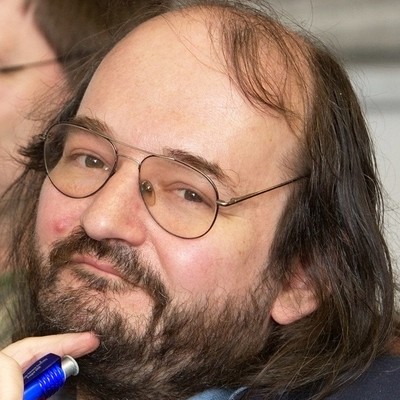
R.I.P. Yannick Mellier (1958-2025)
Last night I received a message via the Euclid Consortium conveying the very sad news of the death, at the age of 67, of the French astrophysicist and cosmologist Yannick Mellier (pictured left). Among many other things, Yannick was the Euclid Consortium Lead in which role he took on enormous responsibility for getting the project started and, with his team, keeping everything running. His loss is incalculable.
Yannick’s research work focussed on cosmology and the search for dark matter using gravitational lensing. Back in 1987 he was part of the observational team that discovered the first giant arc produced by strong gravitational lensing. He also did pioneering work in the field of weaking gravitational lensing with the Canada-France Hawaii Telescope in that regard starting back in 2000.
For well over a decade now Yannick had been involved with the European Space Agency’s Euclid mission. He was a major force right from the beginning, making the proposal, and after it was accepted leading the Consortium assembled to bring the project into being, preparing for launch, and dealing with the first data. The Euclid Consortium is a huge collaboration and it is impossible to overestimate the scale of the task facing the Lead. The first full data release (DR1) from Euclid will take place towards the end of next year (2026). It is sad beyong words that he did not live to see this.
During the period when I was Chair of the Euclid Consortium Diversity Committee I had a number of interactions with Yannick, sometimes dealing with difficult and confidential matters. I found him to be a man of great wisdom and sensitivity. Despite having many other things to deal with, including a long-term illness, he was unfailingly supportive and his advice was always sound.
The following is an excerpt from the message sent out yesterday:
Yannick’s death leaves a huge void within the consortium and our community. Those of us who have been here the longest know how hard he worked to make the Euclid project a success. He became its embodiment, working tirelessly to ensure its success; we owe him an immense debt of gratitude, and we will surely have the opportunity to reflect in detail on all that we owe him.
Indeed. I hope the Euclid Consortium – and the international cosmological community generally – will, at some stage, organize an appropriate tribute to Yannick.
Rest in Peace, Yannick Mellier (1958-2025)
Ar dheis Dé go raibh a anam
#Cosmology #Euclid #EuclidConsortium #GravitationalLensing #YannickMellier

#Euclid et l'IA révèlent enfin l'origine des prodigieux #noyauxactifsdegalaxies http://sci3nc.es/TPddts

Galaxy Zoo: Cosmic Dawn -- morphological classifications for over 41,000 galaxies in the #Euclid Deep Field North from the Hawaii Two-0 Cosmic Dawn survey: https://arxiv.org/abs/2509.22311 -> Cosmic Dawn at the Galaxy Zoo: https://astrobites.org/2025/12/03/galaxy-zoo-cosmic-dawn/
La prima pubblicazione dei dati di Euclid fa luce sull’evoluzione delle galassie
Il telescopio spaziale Euclid è nello spazio da poco più di un anno, impegnato nell’indagine di alcuni dei più profondi misteri del cosmo. Osservando strutture cosmiche fino a una distanza di 10 miliardi di anni luce, l’osservatorio traccerà l’evoluzione dell’universo, tenterà di vincolare l’influenza dell’energia oscura e studierà la morfologia delle galassie.
https://umbertogaetani.substack.com/p/la-prima-pubblicazione-dei-dati-di


The #Glorious #Art of #Overengineering : Medium
The #Euclid #Space #Telescope observed 1.2 million #Galaxies in just 1 year. Here's what we've learned : Space.com
Sponging away phylogenomic incongruence : Science
Latest #KnowledgeLinks


Client Info
Server: https://mastodon.social
Version: 2025.07
Repository: https://github.com/cyevgeniy/lmst