#GeneralRomanCalendar

Charles Borromeo

We’re delving into Charles Borromeo because there’s a church named after him in our founder’s hometown. We hope you enjoy this read.

His name in Italian is: Carlo Borromeo. In Latin, his name: Carolus Borromeus. He was an Italian Catholic prelate who served as the Archbishop of Milan from 1564-1584. He became a cardinal in 1560. A prelate is a high-ranking cleric with special jurisdiction or authority, essentially anyone exercising public power or holding a position of prominence above ordinary clergy.

Charles founded the Confraternity of Christian Doctrine together with St. Ignatius of Loyola & St. Philip Neri. In this role, he was responsible for significant reforms in the Catholic Church. Including the founding of seminaries for the education of priests. He was canonized in 1610 & his feast day is November 4.

Charles was a descendant of nobility. The Borromeo family was 1 of the most ancient & wealthiest in Lombardy. The family coat of arms included the Borromean rings, sometimes taken to symbolize the Holy Trinity.

Charles’ dad, Gilbert, was the Count of Arona. His mom, Margaret, was a member of the Milanese branch of the House of Medici. He was the 2nd son in a family of 6 kids. He was born in the castle of Arona on Lake Maggiore 36 miles from Milan on October 2, 1538.

Charles received the tonsure when he was about 12 years old. At this time, his paternal uncle (dad’s brother), Giulio Cesare Borromeo turned over to him the income from the rich Benedictine abbey of Saints Gratinian & Felin, 1 of the ancient requirements of the family.

Charles let his dad know on no uncertain terms that all revenues from the abbey beyond what was required to prepare him for a career in the church belonged to the poor & couldn’t be applied to secular use.

Charles went to the University of Pavia. He applied himself to the study of civil & canon law. Because of a slight speech impediment, he was thought of as slow but his thoroughness & industry meant that he made fast progress.

In 1554, his dad died. Although he had an older brother, Count Federico, he was requested by the family to take the management of their domestic affairs. After a time, he restarted his studies. On December 6, 1559, he earned a doctorate in canon & civil law.

On December 25, 1559, Charles’ uncle, Cardinal Giovanni Angelo Medici, was elected as Pope Pius IV. The newly elected Pope requested his nephew to go to Rome. On January 13, 1560, Pope Pius IV appointed him as protonotary apostolic. Protonotary apostolic is the title for a member of the highest non-episcopal college of prelates in Roman Curia, or outside Rome.

Shortly after, on January 31, 1560, the Pope made him a cardinal. This made Charles a cardinal-nephew. He was entrusted with both the public & the privy seal of the ecclesiastical state. A cardinal-nephew was a high-ranking Cardinal in the Catholic Church. Usually the pope’s actual nephew or another close relative(s), who served as the pontiff’s chief assistant & confidant. He was also brought into the government of Papal States & appointed a supervisor of the Franciscans, Carmelites, & Knights of Malta.

During his 4 years in Rome, Charles lived in austerity, required the Roman Curia to wear black (The Roman Curia is the administrative arm of the Holy See.), & established an academy of learned persons, the Academy of the Vatican Knights.

Charles organized the 3rd, & last, session of the Council of Trent, in 1562-63. He had a large hand in making the Tridentine Catechism (Catechismus Romanus). In 1561, Charles founded & endowed a college at Pavia. Today the college is known as Almo Collegio Borromeo. Charles dedicated the college to Justina of Padua.

On November 19, 1562, Charles’ older brother, Federico, suddenly died. His family urged Charles to seek permission to return to the laity (laicization), to marry & have kids so that the family name wouldn’t become extinct. But he decided not to leave the ecclesiastic state.

His brother’s death, along with his contacts (with the Jesuits, the Theatines, & the example of bishops such as Bartholomew of Braga) were causes of the conversion Charles towards a more strict & operative Christian life. His aim became to put into practice the dignity & duties of the bishop as drafted by the Council of Trent.

After the death of his uncle, Pope Pius IV (1566), Charles sent a galley (a type of ship) to get Cardinal Ugo Boncompagni, the Nuncio of Spain. The nuncio (or apostolic nuncio) is the Pope’s personal ambassador (like an embassy’s ambassador) to a country & plays a key role in appointing bishops.

But the Cardinal didn’t arrive in time to be considered at the conclave. Charles reached an agreement with Alessandro Farnese, who held a significant number of conclave votes, to support Antonio Ghislieri (who was rumored to have the support of King Philip II of Spain). Ghislieri was elected Pope & took the name: Pius V.

He devoted himself to the reformation of his diocese which had deteriorated in practice owing to the 80-year absence of previous archbishops. Milan was the largest archdiocese in Italy at the time, with more than 3,000 clergy & 800,000 people. Both its clergy & laity had drifted from church teaching. The selling of indulgences & ecclesiastical positions was prevalent.

Charles believed that abuses in the church arose from ignorant clergy. His emphasis on Catholic learning greatly increased the preparation of men for the priesthood & benefited their congregations.

He founded the fraternity of Oblates of St. Ambrose (a society of secular men who didn’t take orders), but devoted themselves to the church & followed a discipline of monastic prayers & study. The new archbishop’s efforts for catechesis & the instruction of youth included the initiation of the 1st Sunday School classes & the work of the Confraternity for Christian Doctrine.

Charles’ diocesan reforms faced opposition from several religious orders. Particularly that of the Humiliati (Brothers of Humility), a penitential order which owned some 90 monasteries. Some members of that society formed a conspiracy against his life.

A shot was fired at him with an arquebus in the archepiscopal chapel. His survival was considered miraculous.

Even though the Diet of Ilanz of 1524 & 1526 had proclaimed freedom of worship in the 3 Leagues, Charles repressed Protestantism in the Swiss valleys. During his pastoral visit to the region, 150 people were arrested for practicing witchcraft. 11 women & the provost were condemned by the civil authorities to be burned alive.

Reacting to the pressure of the Protestant Reformation, Charles encouraged Ludwig Pfyffer in his development of the “Golden League” but didn’t live to see its formation in 1586.

Based in Lucerne, the organization (also called the Borromean League) linked activities of several Swiss Catholic cantons of Switzerland. This became the center of Catholic Counter-Reformation efforts & caused the break-up of Appenzell canton along religious lines.

Following his departure from this mortal coil, devotion to Charles grew quickly & continued to grow. The Milanese memorializes his anniversary as though he were already a saint. Supporters in a number of cities collected documentation to support his canonization.

In 1602, Pope Clement VIII beatified Charles. 2 years later, his “case” was sent to the Congregation of Rites. On November 1, 1610, Pope Paul V canonized Charles. 3 years later, the church added his feast day to the General Roman Calendar for celebration on November 4.

Along with Guarinus of Palestrina & Anselm of Lucca, he’s 1 of only 2-3 cardinal-nephews to have been canonized. Charles Borromeo is the patron saint of bishops; catechists; seminarians; against ulcers; apple orchards; bishops; catechumens; colic; intestinal disorders; Lombardy, Italy; Monterey, California; cardinals; seminarians; spiritual directors; spiritual leaders; starch makers; stomach diseases; & Sao Carlos (Brazil).

Charles’ emblem is the Latin word humilitas (humility), which is a portion of the Borromeo shield. He’s usually represented in art in his robes, barefoot, carrying the cross as archbishop, a rope around his neck and 1 hand raised in blessing. Thus recalling his work during the plague.

A large number of churches dedicated to St. Charles Borromeo exist in: Austria; Sheffield, England; Scotland; Belgium; Italy; Serbia; Poland; Switzerland; Vienna; Ireland; England; Indiana; Louisiana; Canada, California; Florida; Illinois; New York; Texas; Missouri; Minnesota; North Dakota; Ohio; Maryland; Massachusetts; Nebraska; New Jersey; North Carolina; Pennsylvania; Rhode Island; Virginia; Washington; Oklahoma; New Hampshire; Argentina; Brazil; Peru; Uruguay; Venezuela; & Chile.

Make a one-time donation

Your contribution is appreciated.

Donate

Make a monthly donation

Your contribution is appreciated.

Donate monthly

Make a yearly donation

Your contribution is appreciated.

Donate yearly

#1November1610 #13January1560 #1526 #1554 #1560 #1561 #1562 #1563 #1564 #1566 #1584 #1586 #1602 #1610 #19November1562 #2October1538 #25December1559 #31January1560 #6December1559 #AcademyOfTheVaticanKnights #AlessandroFarnese #AlmostCollegioBorromeo #AnselmOfLucca #AntonioGhislieri #ApostolicNuncio #Appenzell #ArchbishopOfMilan #Argentina #Arona #Austria #BartholomewOfBraga #Belgium #BorromeanLeague #Brazil #BrothersOfHumility #Califronia #Canada #CanonLaw #Cantons #Cardinal #CardinalGiovanniAngeloMedici #CardinalUgoBoncompagni #CardinalNephew #CardinalNephews #CarloBorromeo #Carmelites #CarolusBorromeus #Catechesis #CatechismusRomanus #Catholic #CatholicChurch #CatholicCounterReformation #CharlesBorromeo #Chile #CivilLaw #Conclave #ConfraternityForChristianDoctrine #ConfraternityOfChristianDoctrine #CongregationOfRites #CouncilOfTrent #CountFederico #CountOfArona #DietOfIlanzOf1524 #England #Franciscans #GeneralRomanCalendar #GilbertBorromeo #GiulioCesareBorromeo #GoldenLeague #GuarinusOfPalestrina #HolySee #HolyTrinity #Humiliati #Illinois #Indiana #Ireland #Italy #Jesuits #JustinaOfPadua #KingPhilipIIOfSpain #KnightsOfMalta #Laicization #LakeMaggiore #Lombardy #Louisiana #LudwigPfyffer #MargaretBorromeo #Massachusetts #MilaneseHouseOfMedici #Missouri #Nebraska #NewHampshire #NewJersey #NorthCarolina #NorthDakota #November4 #Nuncio #Ohio #Oklahoma #PapalStates #Pavia #Pennsylvania #Peru #PiusV #Poland #PopePaulV #PopePiusIV #Prelate #ProtestantReformation #Protestantism #ProtonotaryApostolic #RomanCuria #Rome #Scotland #Serbia #StAmbrose #StFelin #StGratinian #StIgnatiusOfLoyola #StPhilipNeri #SundaySchool #SwissValleys #Switzerland #Texas #Theatines #ThreeLeagues #Tonsure #TridentineCatechism #UniversityOfPavia #Uruguay #Venezuela #Vienna #Washington

The Most Holy Name of the Blessed Virgin Mary

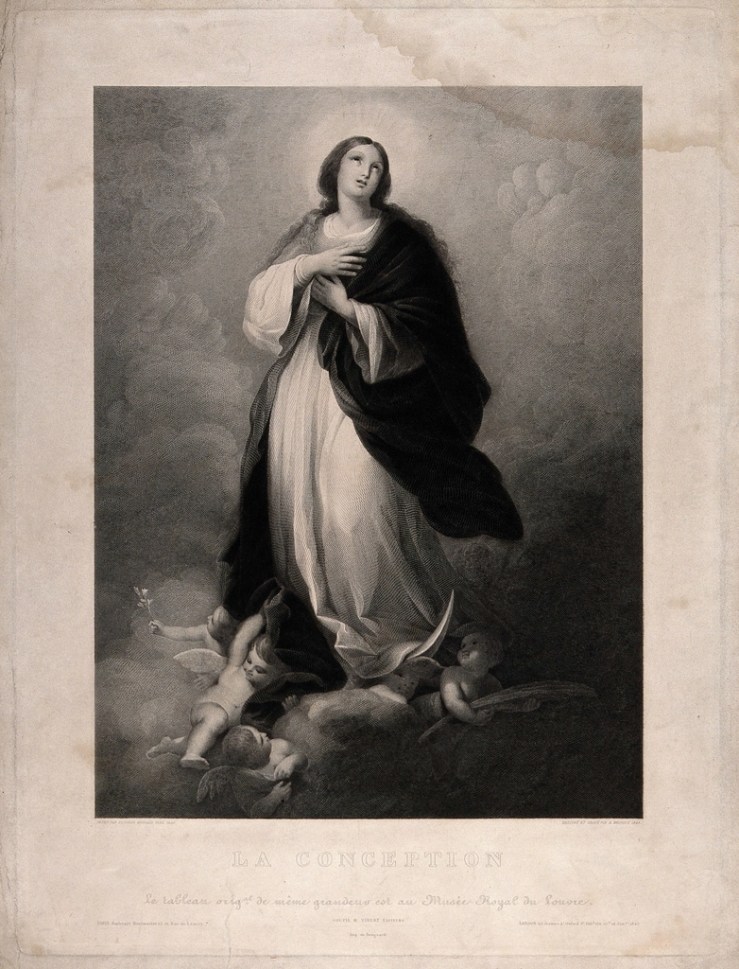
The Feast of the Most Holy Name of the Blessed Virgin Mary is an optional memorial celebrated in the liturgical calendar of the Catholic Church on September 12. It has been a universal Roman Rite feast since 1684, when Pope Innocent XI included it in the General Roman Calendar to commemorate the victory at the Battle of Vienna in 1683.

It was initially removed from the current Church calendar in the liturgical reform following Vatican II. But it was restored by Pope John Paul II in 2002 along with the Feast of the Holy Name of Jesus in January.

In the Eastern Orthodox Church, the feast is celebrated on September 7 in the Antiochian Western Rite Vicariate.

Promoters of veneration of the Holy Name of Mary include St. Anthony of Padua, St. Bernard of Clairvaux, & St. Alphonsus Maria de Liguori. A number of religious orders such as the Cistercian & the Servites, customarily give each member “Mary” as part of their religious name as a sign of honor & of entrustment to the Virgin.

The feast is a counterpart to the Feast for the Holy Name of Jesus on January 3. Its object is to commemorate all the privileges granted upon Mary by God & all the graces received through her intercession & mediation.

The feast day began in 1513 as a local celebration in Cuenca, Spain, celebrated on September 15. In 1587, Pope Sixtus V moved the celebration to September 17. Pope Gregory XV extended the celebration to the Archdiocese of Toledo (Spain) in 1622.

In 1666, the Discalced Carmelites received permission to recite the Divine Office of the Name of Mary 4x a year. In 1671, the feast was extended to the whole Kingdom of Spain. From there, the feast spread. It soon extended to the Kingdom of Naples.

In 1683, the Polish King John Sobieski arrived in Vienna with his army. Before the Battle of Vienna, Sobieski placed his troops under the protection of the Blessed Virgin Mary.

In 1684, to celebrate the victory, Pope Innocent XI added to the Roman calendar, assigning to it the Sunday within the Octave of the Nativity of Mary. An octave, in this case, is the 8th day after a feast, counted inclusively. So this always falls on the same day of the week as the feast itself. The Nativity of Mary refers to a Christian feast day celebrating the birth of the Virgin Mary.

The reform of Pope Pius X in 1911 restored to prominence the celebration of Sundays in their own right, avoiding their being replaced by celebrations from the sanctorale. The sanctorale is 1 of the 2 main cycles that, running concurrently, comprise the Liturgical year in Roman Catholicism, defined by the General Roman Calendar, & used by a variety of Christian denomination.

The celebration of the Holy Name of Mary was moved to September 12. Later in the same century, the feast was removed from the General Roman Calendar in 1969 as part of its reform by Pope Paul VI. As something of a duplication of the September 8 feast of the Nativity of the Blessed Virgin Mary.

But it didn’t cease to be a recognized celebration of the Roman Rite, being mentioned in the Roman Martyrology on September 12. In 2002, Pope John Paul II restored the celebration to the General Roman Calendar.

William Joseph Chaminade chose the Feast of the Holy Name of Mary as the patronal feast of the Society of Mary (Marianists). Rather than a day commemorating a particular dogma or devotion in order to focus on the person of Mary.

One-Time Monthly Yearly

Make a one-time donation

Make a monthly donation

Make a yearly donation

Choose an amount

$1.00 $5.00 $10.00 $1.00 $5.00 $10.00 $5.00 $10.00 $15.00

Or enter a custom amount

$

Your contribution is appreciated.

Your contribution is appreciated.

Your contribution is appreciated.

DonateDonate monthlyDonate yearly

#1513 #1587 #1622 #1666 #1671 #1683 #1684 #1911 #2002 #AntiochianWesternRiteVicariate #ArchdioceseOfToledo #BattleOfVienna #BlessedVirginMary #CatholicChurch #Cistercians #Cuenca #DiscalcedCarmelites #DivineOfficeOfTheNameOfMary #EasternOrthodoxChurch #FeastOfTheHolyNameOfJesus #FeastOfTheMostHolyNameOfTheBlessedVirginMary #GeneralRomanCalendar #GeneralRomanCalender #January #January3 #KingJohnSobieski #KingdomOfNaples #KingdomOfSpain #LiturgicalCalendar #Marianists #NativityOfMary #Octave #Poland #PopeGregoryXV #PopeInnocentXI #PopeJohnPaulII #PopePaulVI #PopePiusX #PopeSixtusV #RomanCatholicism #RomanMartyrology #RomanRite #Sanctorale #September12 #September15 #September17 #September7 #September8 #Servites #SocietyOfMary #Spain #StAlphonsusMariaDeLiguori #StAnthonyOfPadua #StBernardOfClairvaux #TheMostHolyNameOfTheBlessedVirginMary #VaticanII #Vienna #VirginMary #WilliamJosephChaminade

14 Holy Helpers

In German: Vierzehn Nothelfer. In Latin: Quattuordecim auxiliatores.

These are a group of saints venerated together by Catholics because their intercession is believed to be particularly effective. Especially against various diseases.

This group of Nothelfer (“helpers in need”) started in the 14th century as the first in the Rhineland. Largely as a result of the epidemic (probably of bubonic plague) that became known as the Black Death.

Devotion to the 14 Holy Helpers began in Rhineland (now a part of Germany) in the time of the Black Death. Among the 14 were 3 virgin martyrs. There’s a German mnemonic device to remember the 3 virgins. Their names are: Margaret, Barbara, & Catherine. 13 of the 14 were accounted martyrs (Giles is the exception).

While each has a separate feast day, the 14 Holy Helpers, in some places, are celebrated as a group on August 8th. But the celebration never became part of the General Roman Calendar. When that calendar was revised in 1969, the individual celebrations of St. Barbara, St. Catherine of Alexandria, St. Christopher, & St. Margaret of Antioch were dropped.

The individual celebrations of all 14 are included in the General Roman Calendar in 1954, the General Roman Calendar of Pope Pius XII & the General Roman Calendar of 1960.

The 14 saints are:

  • Agathius/Acacius – Feast day: May 7. Patron against headaches.
  • Barbara – Feast day: December 4. Patron against fever & sudden death, against lightning & fire, against sudden & violent death at work, & patron of builders, artillerymen, & miners.
  • Blaise/Blase/Blasius – Feast day: February 3. Patron against illnesses of the throat & for protection of domestic animals.
  • Catherine of Alexandria – Feast day: November 25. Patron against sudden death & diseases of the tongue, philosophers, theologians, maidens, female students, preachers, the dying, wheelwrights, mechanics, potters, & other artisans who work with wheels, invoked by students, orators, preachers, & lawyers for wise counsel & for eloquence.
  • Christopher/Christophorus – Feast day: July 25. Patron against bubonic plague & dangers while traveling.
  • Cyriacus – Feast day: August 8. Patron against temptation on the death-bed, diseases of the eye, & demonic possession.
  • Denis/Dionysius – Feast day: October 9. Patron against headache & against demonic possession.
  • Erasmus/Elmo – Feast day: June 2. Patron against intestinal ailments, for domestic animals, & sailors.
  • Eustace/Eustachius/Eustathuis – Feast day: September 20. Patron against family discord, against fire (temporal & eternal), & the patron of hunters, trappers, & anyone facing trouble.
  • George/Georgius – Feast day: April 23. Patron for the health of domestic animals, against herpetic diseases, & the patron of soldiers.
  • Giles/Aegidius – Feast day: September 1. Patron against plague, mental illness, & nightmares, for a good confession, & patron of the disabled, beggars, blacksmiths, & breast-feeding moms.
  • Margaret of Antioch – Feast day: July 17. Patron of women in childbirth, invoked against backache, & invoked for escape from devils.
  • Pantaleon/Panteleimon – Feast day: July 27. Patron of physicians & midwives, invoked for the protection of domestic animals, & invoked against cancer & tuberculosis.
  • Vitus/Guy – Feast day: June 15. Patron against epilepsy, lightening, the bites of animals (especially those who were venomous or rabid), storms, & for protection of domestic animals.

Half of the saints are seen as actual historic figures (Blaise, Cyriacus, Erasmus, George, Giles, Pantaleon, & Vitus). While the others may be only legends. While the feasts of several of the 14 Holy Helpers were taken off the General Roman Calendar. None were decanonized, or denied to exist & their feasts are still on certain calendars.

One or another in the original set are sometimes substituted with: Anthony the Anchorite, Leonard of Noblac, Nicolas, Sebastian, Oswald the King, Pope Sixtus II, Apollonia, Dorothea of Caesarea, Wolfgang of Regensburg, or Roch. In France, an “extra” helper is added: the Virgin Mary.

The 14 Holy Helpers are honored in Bavaria as the vierzehn Heiligen. This literally translates to “14 Holy Helpers.”

The Basilica of the Vierzehnheiligen is dedicated to these auxiliary saints. It was built between 1743 & 1772 (29 years).

Devotion to these saints begin in this region on September 24, 1445 when Hermann Leicht, a young shepherd of a nearby Franciscan monastery, saw a crying kid in a field belonging to the nearby Cistercian monastery of Langheim.

As he bent down to pick up the kid, it suddenly vanished. A short time later, the kid reappeared at the same spot. This time, 2 candles were burning next to it.

In June 1446, Leicht saw the kid a 3rd time. This time, the kid wore a red cross on its chest & was accompanied by 13 other kids. The kid said: “We are the 14 helpers & wish to erect a chapel here, where we can rest. If you will be our servant, we will be yours!”

Shortly after, Leicht saw 2 burning candles descending to this spot. It’s alleged that miraculous healings soon began, through the intervention of the 14 saints.

The Cistercian brothers to whom the land belonged erected a chapel, which immediately attracted pilgrims. An altar was consecrated as early as 1448. Pilgrimages to the Vierzehnheiligen continue to the present day between May & October.

One-Time Monthly Yearly

Make a one-time donation

Make a monthly donation

Make a yearly donation

Choose an amount

$1.00 $5.00 $10.00 $1.00 $5.00 $10.00 $5.00 $10.00 $15.00

Or enter a custom amount

$

Your contribution is appreciated.

Your contribution is appreciated.

Your contribution is appreciated.

DonateDonate monthlyDonate yearly

#14HolyHelpers #14thCentury #1743 #1772 #1954 #1960 #1969 #24September1445 #Acacius #Aegidius #Agathius #AnthonyTheAnchorite #Apollonia #April23 #August8 #Barbara #BasilicaOfTheVierzehnheiligen #Bavaria #BlackDeath #Blaise #Blase #Blasius #BubonicPlague #CatherineOfAlexandria #Chapel #Christopher #Christophorus #Cistercian #Cyriacus #December4 #Denis #Dionysius #DorotheaOfCaesarea #Elmo #Eustace #Eustachius #Eustathius #February3 #France #Franciscan #GeneralRomanCalendar #George #Georgius #German #Germany #Giles #Guy #HermannLeicht #July25 #July27 #June1446 #June15 #June2 #Langheim #Latin #LeonardOfNoblac #MargaretOfAntioch #May #May7 #Nicolas #Nothelfer #November25 #October #October9 #OswaldTheKing #Pantaleon #Panteleimon #Pilgrims #PopePiusXII #PopeSixtusII #Rhineland #Roch #Saints #Sebastian #September1 #September20 #VierzehnHeiligen #VierzehnNothelfer #VirginMary #Virgins #Vitus #WolfgangOfRegensburg

St. Dorothy/Dorothea of Caesarea

St. Dorothy is a 4th century virgin martyr who was executed at Caesarea Mazaca. She’s called a martyr of the late Diocletianic Persecution. Although her death happened after the resignation of Diocletian himself.

Dorothea & her companion, Theophilus, are mentioned in the Roman Martyrology as martyrs of Caesarea in Cappadocia. Her feast day is on February 6. She’s officially recognized as a virgin martyr.

She was removed from the General Roman Calendar by Pope Paul VI’s motu proprio Mysterii Paschalis, being judged as not having “universal significance.” Her feast day does still remain in some regional calendars & the Tridentine Calendar.

Her early life is unknown. The first record of her, Martyrologium Hieronymianum, only has 3 basic facts: her day of martyrdom, the place where it happened, & her name & Theophilus’ name.

Dorothea of Caesarea, virgin & martyr, was persecuted during the persecution of Diocletian on February 6, 311 at Caesarea in Cappadocia. She was brought before the prefect Sapricius, tried, tortured, & sentenced to death. On the way to the place of execution, the pagan lawyer, Theophilus said, mockingly, “Bride of Christ, send me some fruits from your bridegroom’s garden.”

Before she was executed, she sent him, by a 6 year old boy, her headdress which was found to be filled with a heavenly fragrance of roses & fruits. Theophilus at once confessed himself a Christian, was put on the rack, & suffered death. This is the oldest version of the legend.

In the Western church, Dorothy of Caesarea has been venerated since the 7th century. In the late medieval Sweden, St. Dorothy was considered to be the 15th of the Holy Helpers.

In art, she’s accompanied with Saints Barbara, Catherine, & Margaret. They form a quartet of female virgin martyrs called Quattuor Virgines Capitales, meaning, “The Four Capital Virgins.”

She’s the patroness of gardeners. Because of her virginal attribute of a wreath of roses. On her feast day (February 6), trees are blessed. She’s also the patroness of brewers, brides, florists, midwives, newlyweds, & the village of Pescia, Italy. The Sisters of St. Dorothy is a congregation of sisters/nuns, who are occupied with teaching.

St. Dorothy is often pictured as a virgin carrying a basket of flowers, sometimes with fruit, & also wearing a crown of roses. She has also been pictured as being surrounded by stars as she kneels before an executioner; crowned with palm, referring to the martyr’s palm; in an enclosed garden or an orchard with the Christ Child in an apple tree; leading the Christ Child by the hand; veiled with flowers in her lap; & holding apples from Heaven.

One-Time Monthly Yearly

Make a one-time donation

Make a monthly donation

Make a yearly donation

Choose an amount

$1.00 $5.00 $10.00 $1.00 $5.00 $10.00 $5.00 $10.00 $15.00

Or enter a custom amount

$

Your contribution is appreciated.

Your contribution is appreciated.

Your contribution is appreciated.

DonateDonate monthlyDonate yearly

#4thCentury #6February311 #7thCentury #AppleTree #Brewers #BrideOfChrist #Bridegroom #Brides #Caesarea #CaesareaMazarca #Cappadocia #ChristChild #Christian #DiocletianicPersecution #DorotheaOfCaesarea #EmperorDiocletian #February6 #Florists #FourCapitalVirgins #Gardeners #GeneralRomanCalendar #Heaven #HolyHelpers #Italy #Martyr #MartyrSPalm #Martyrdom #MartyrologiumHieronymianum #Midwives #MotuProprio #MysteriiPaschalis #Newlyweds #Nuns #Pescia #PopePaulVI #QuattuorVirginesCapitales #RomanMartyrology #Roses #Sapricius #SistersOfStDorothy #StBarbara #StCatherine #StDorothy #StMargaret #Sweden #Theophilus #TridentineCalendar #Virgin #VirginMartyr #WesternChurch #WreathOfRoses

Client Info

Server: https://mastodon.social
Version: 2025.07
Repository: https://github.com/cyevgeniy/lmst