Happy to finally have my last results of my PhD project published in #CarbohydratePolymers: Ionic agarose derivatives as polyelectrolytic additives for controlled drug release.
Key highlights:
⚗️ Developed anionic and cationic agarose derivatives with tuneable degrees of substitution.
💧 Integrated these materials into hydrogels and alginate micro beads to enhance drug delivery performance.
⏱️ Achieved sustained and low-burst drug release over up to 14 days with advanced kinetic modelling for accurate release characterisation.
This research contributes to the development of biocompatible and efficient drug delivery systems with customisable release profiles. It now marks an end of this part of journey, where I have learned so much!
🔗 Read more: https://doi.org/10.1016/j.carbpol.2025.124622
#ControlledRelease #DrugDelivery #Biomaterials #AgaroseDerivatives #Hydrogels #Chemistry #Polysaccharides #Science
#Hydrogels

Chitosan-Based Hydrogels with N-Stearoylethanolamine for Acceleration of Healing of Acute Cutaneous Wounds: Cytological and Histological Examination - #chitosan #hydrogels #Nstearoylethanolamine #wounddressing #woundhealing #Cytology #Histology - https://link.springer.com/article/10.3103/S0095452725010086

Cornell University: Plants you wear: LivingLoom weaves seeds into textiles. “Humans’ relationships with plants is largely utilitarian, serving our needs. We generally either eat them or make things out of them. Researchers in the College of Human Ecology (CHE) have developed a design and fabrication approach that treats these living things as companions to humans, with seeds woven into […]

Here's everything that we covered at Lab Horizons, re-caped for you! Read all this and more only on our website: https://labhorizons.co.uk/


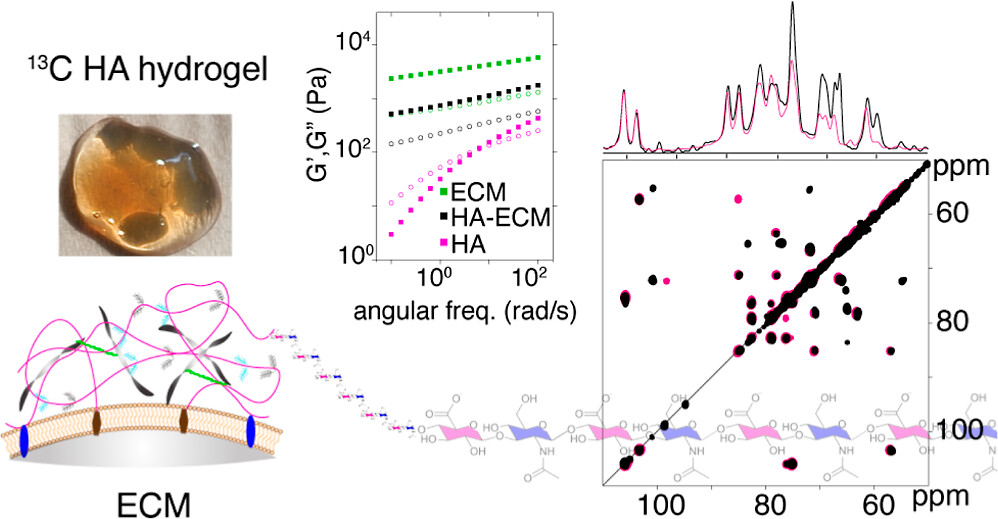
Slightly delayed due to my holidays, but excited to share this new paper that came out online a little while ago in ACS Applied Materials and Interfaces: https://doi.org/10.1021/acsami.4c08428 In it, PhD student Pushpa Rampratap spearheaded our effort to use MAS #NMR to study ECM-like #hydrogels. In a prior publication (https://doi.org/10.1016/j.carbpol.2023.121063) she described methods for preparing 13C enriched version of the polysaccharide hyaluronic acid…. #glycotime #nmrchat #ssnmr

From 22 Aug: Hydrogels can learn to play Pong - This electroactive polymer hydrogel “learned“ to play Pong. Credit: Cell Reports Phys... https://arstechnica.com/science/2024/08/hydrogels-can-learn-to-play-pong/ #active-matter #chemistry #hydrogels #materials-science #physics #polymers #pong #science #smart-materials
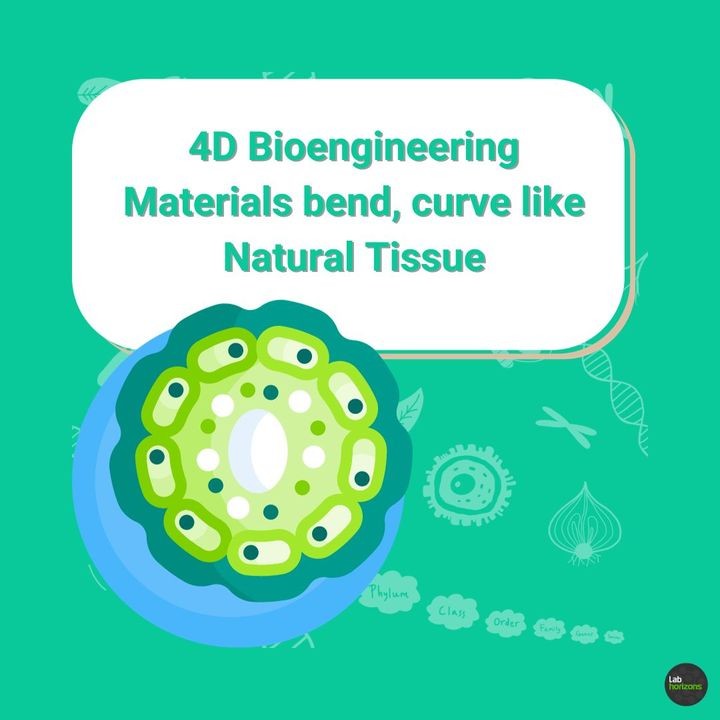
Researchers have developed new 4D hydrogels -- 3D materials that have the ability to change shape over time in response to stimuli -- that can morph multiple times in a preprogrammed or on-demand manner in response to external trigger signals.
#biology #labhorizons #4d #bioengineering #tissue #tissueengineering #science #research #hydrogels
Have you ever seen a chemistry paper with a pancake recipe in it before?
Some of the materials chemists once mixed pancake batter with an edible, heat-resistant hydrogel. It's technically edible, but the authors did not report a taste test in the paper.
https://pubs.rsc.org/en/content/articlelanding/2017/fo/c7fo00867h

Referenced link: https://phys.org/news/2023-04-simple-revolutionary-modular-organoids-hydrogels.html
Discuss on https://discu.eu/q/https://phys.org/news/2023-04-simple-revolutionary-modular-organoids-hydrogels.html
Originally posted by Phys.org / @physorg_com: http://nitter.platypush.tech/physorg_com/status/1644320887867359232#m
Simple but revolutionary modular organoids created with #hydrogels @riken_en @CommsBio https://onlinelibrary.wiley.com/doi/10.1002/admt.202201660 https://phys.org/news/2023-04-simple-revolutionary-modular-organoids-hydrogels.html

Gel-like materials that can be #injected into the body hold great potential to #heal injured #tissues or manufacture entirely new tissues. Many researchers are working to develop these #hydrogels for biomedical uses, but so far very few have made it into the clinic.
#Medical #Biology #Engineering #sflorg
https://www.sflorg.com/2023/01/med01312303.html

Just Published!
"Advanced 3D In Vitro Models to Recapitulate the Breast Tumor Microenvironment"