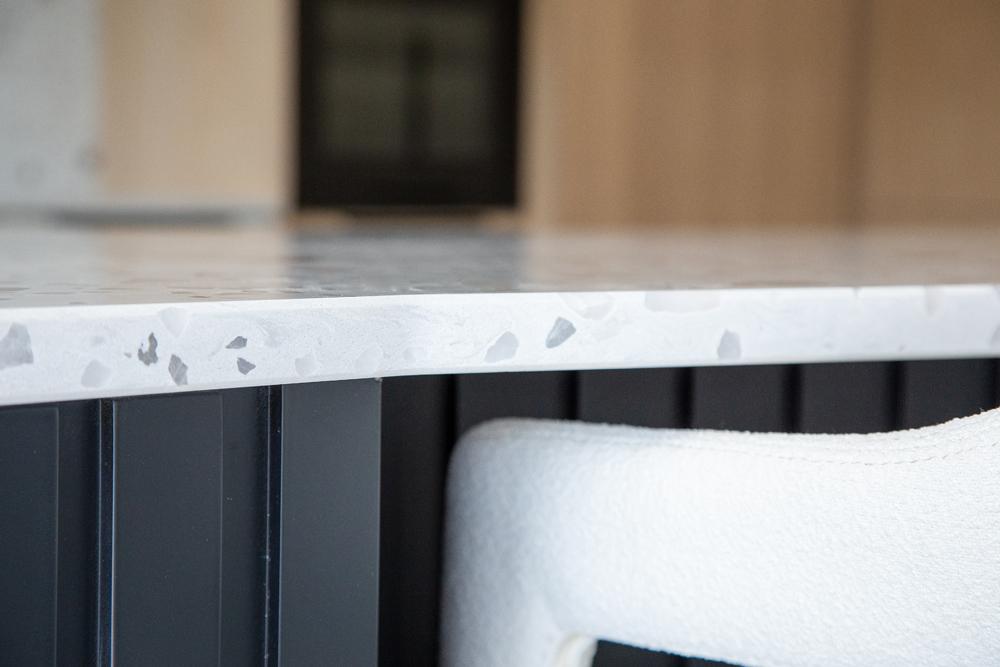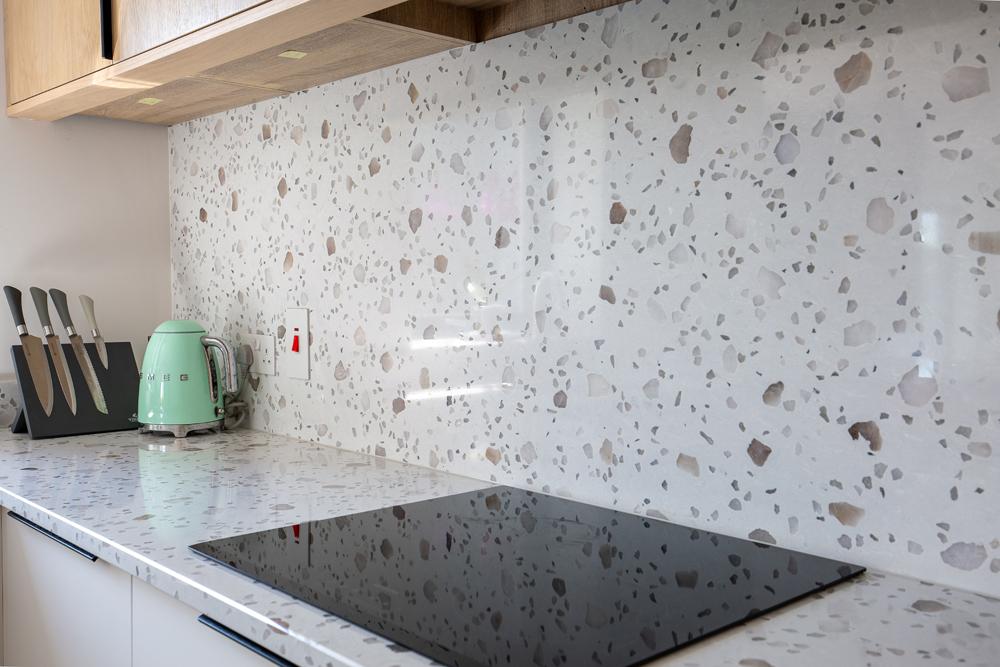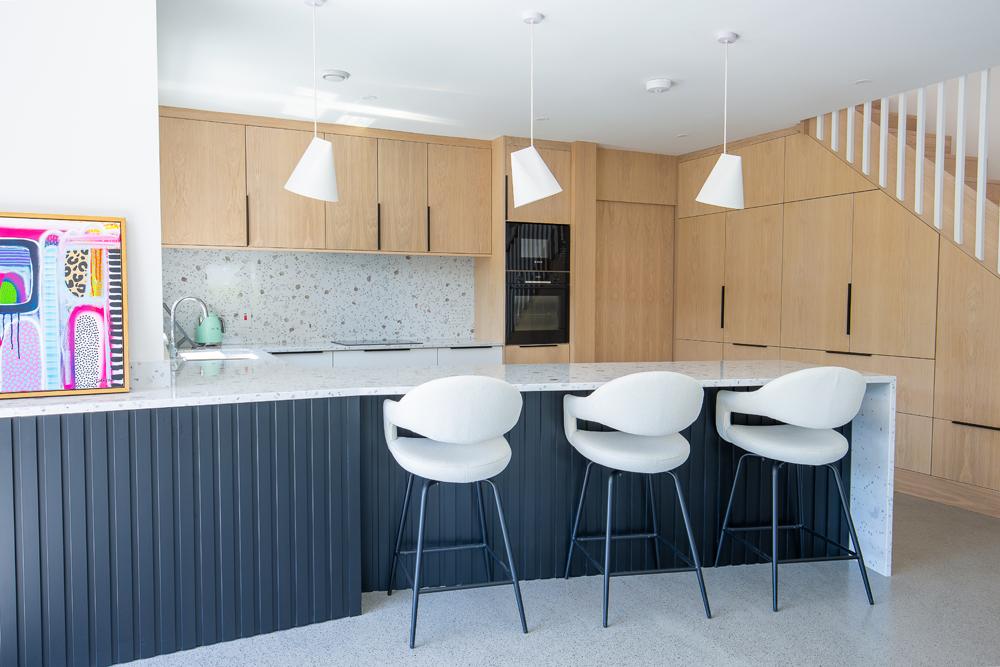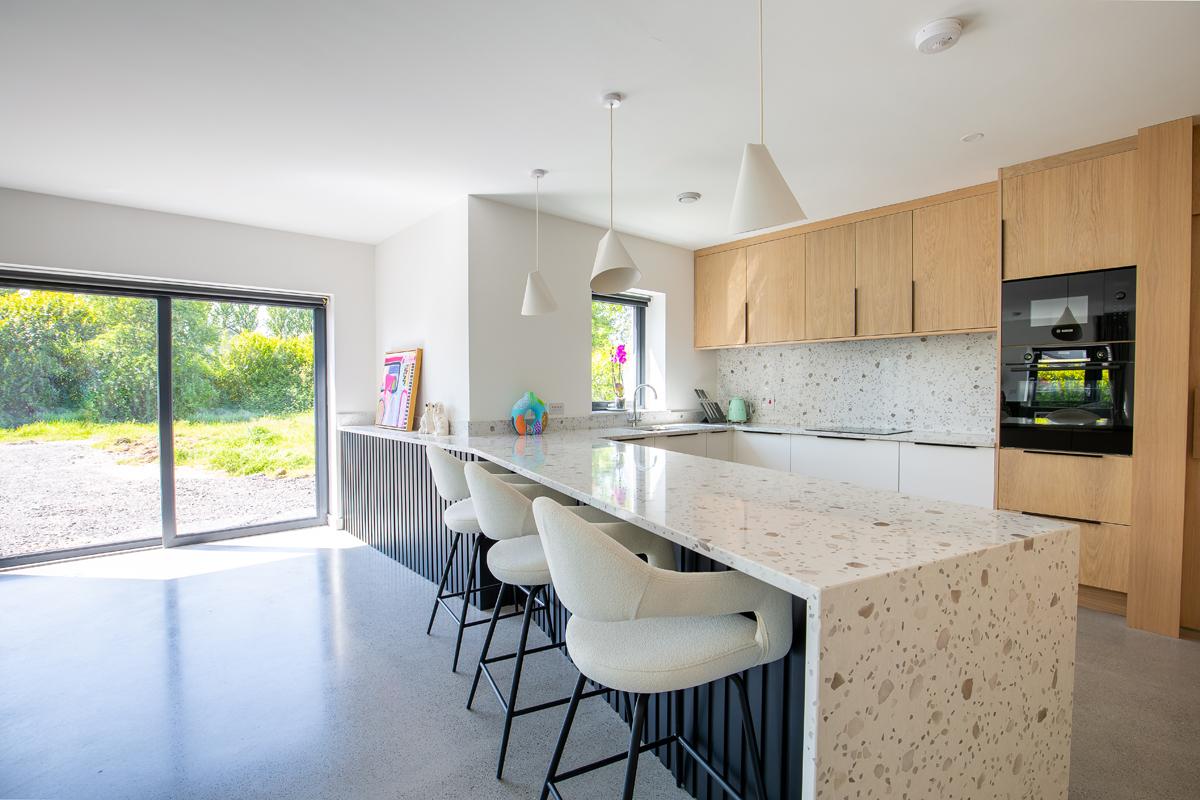
Looking at a few videos & likely will some more because so far I'm just getting superbly confused as to why aparently some people use the entirety of their kitchen countertops as cutting boards, mixing bowls, cooling racks, trivets & hammering practice spots...
Overall in my kitchen redesign/repair project set I'm not sure yet if I'll even keep any cabinets, nevermind counters/countertops but I'm still looking around to see what might actually work & hope I find something sensible soon.









![This black and white photograph depicts a kitchen scene with multiple individuals working on food preparation tasks. The environment appears to be an industrial or institutional setting, likely from the early 20th century based on clothing style and technology visible.
There are several people dressed in what looks like standard uniforms of that time: long-sleeved shirts for males and sleeveless dresses for females, all predominantly white with neat hairdos. They stand at a large stainless steel table or countertop equipped with various utensils, dishes, and possibly food processing equipment. A conveyor belt-like apparatus is on the left side of the image, suggesting some form of mass production in the kitchen.
The background reveals more industrial features such as shelving units filled with containers, likely for storage purposes. The lighting comes from overhead lamps or fixtures typical of early 20th-century interiors. There's a sense of organized labor and systematic workflow evident through their tasks and positioning at the workstation.
Notably absent are modern amenities like automated dispensers or advanced commercial kitchen appliances that have become commonplace in contemporary settings, pointing towards an older timeframe for this setting. The photograph might be part of historical documentation related to industrial practices during early 20th-century Am [...]](https://files.mastodon.social/cache/media_attachments/files/115/837/331/102/811/995/original/ab0978929393228a.jpeg)




![The image is a black and white photograph depicting an outdoor scene, presumably taken in the early 1920s. It appears to be part of Edward S. Curtis's work on Native American life as documented in "The North American Indian." The central focus shows remnants of what seems like a traditional structure or shelter made from natural materials such as branches and stones.
In the foreground, there is an assortment of rocks scattered across a barren landscape that extends into the distance with minimal vegetation visible. A collection of twigs or dry branches lies on the ground forming a rough framework, possibly part of a dwelling or fortification.
Adjacent to this structure are larger pieces of wood, including what looks like crossbeams and supports made from large tree trunks cut down for construction purposes.
The overall atmosphere is bleak with overcast skies suggesting an environment that might be prone to harsh conditions such as droughts or seasonal changes typical in the American Southwest during Curtis's time. The lack of modernity indicates a scene preserved in history, likely documenting how indigenous peoples lived and adapted their environments long before European colonization arrived on North America.
This particular snapshot captures not only architectural remnants but also provides insight into survival techniques used by Native Americans to build makeshi [...]](https://files.mastodon.social/cache/media_attachments/files/115/816/369/674/887/970/original/465c5601438551fe.jpeg)