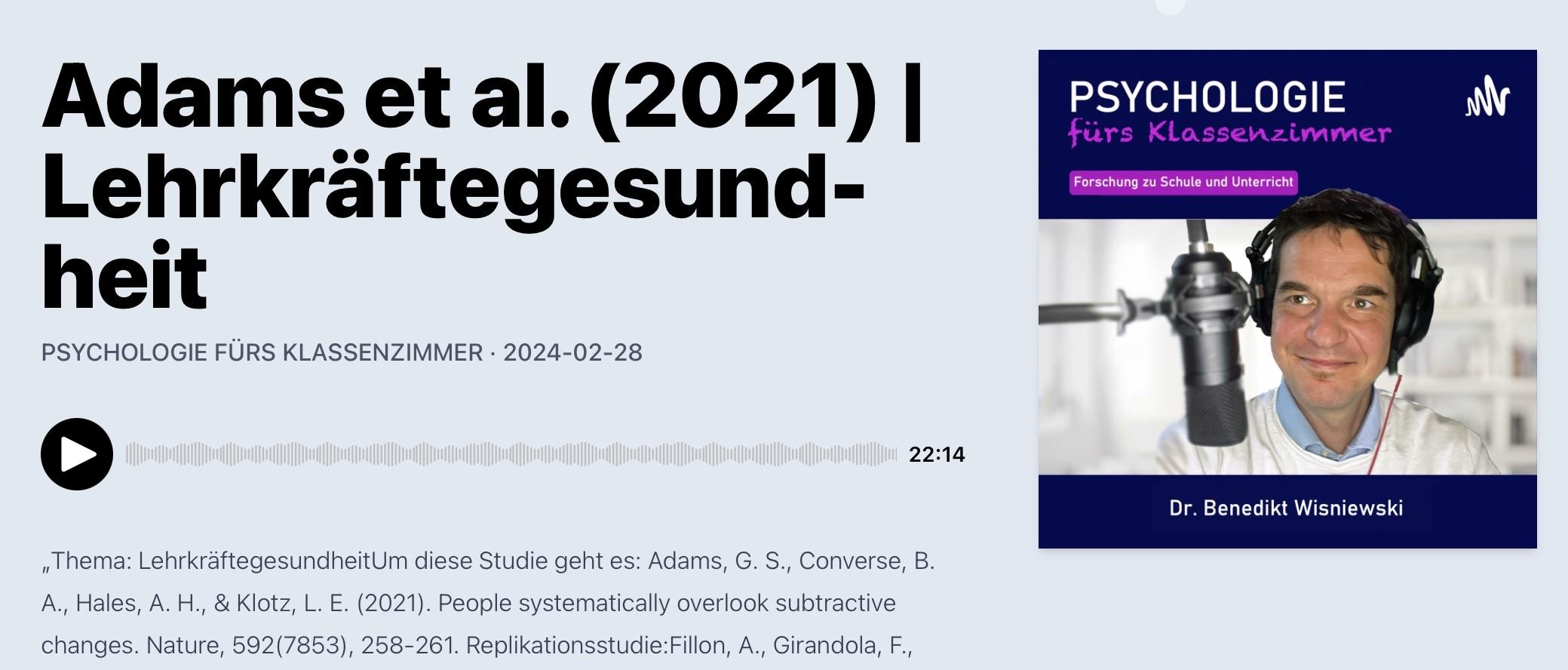
Regarding the ideological nature of what's at play, it's well worth looking more into ecological rationality and its neighbors. There is a pretty significant body of evidence at this point that in a wide variety of cases of interest, simple small data methods demonstrably outperform complex big data ones. Benchmarking is a tricky subject, and there are specific (and well-chosen, I'd say) benchmarks on which models like LLMs perform better than alternatives. Nevertheless, "less is more" phenomena are well-documented, and conversations about when to apply simple/small methods and when to use complex/large ones are conspicuously absent. Also absent are conversations about what Leonard Savage--the guy who arguably ushered in the rise of Bayesian inference, which makes up the guts of a lot of modern AI--referred to as "small" versus "large" worlds, and how absurd it is to apply statistical techniques to large worlds. I'd argue that the vast majority of horrors we hear LLMs implicated in involve large worlds in Savage's sense, including applications to government or judicial decisionmaking and "companion" bots. "Self-driving" cars that are not car-skinned trains are another (the word "self" in that name is a tell). This means in particular that applying LLMs to large world problems directly contradicts the mathematical foundations on which their efficacy is (supposedly) grounded.
Therefore, if we were having a technical conversation about large language models and their use, we'd be addressing these and related concerns. But I don't think that's what the conversation's been about, not in the public sphere nor in the technical sphere.
All this goes beyond AI. Henry Brighton (I think?) coined the phrase "the bias bias" to refer to a tendency where, when applying a model to a problem, people respond to inadequate outcomes by adding complexity to the model. This goes for mathematical models as much as computational models. The rationale seems to be that the more "true to life" the model is, the more likely it is to succeed (whatever that may mean for them). People are often surprised to learn that this is not always the case: models can and sometimes do become
less likely to succeed the more "true to life" they're made. The bias bias can lead to even worse outcomes in such cases, triggering the tendency again and resulting in a feedback loop. The end result can be enormously complex models and concomitant extreme surveillance to acquire data to feed data the models. I look at FORPLAN or ChatGPT, and this is what I see.
#AI #GenAI #GenerativeAI #LLM #GPT #ChatGPT #LatentDiffusion #BigData #EcologicalRationality #LessIsMore #Bias #BiasBias