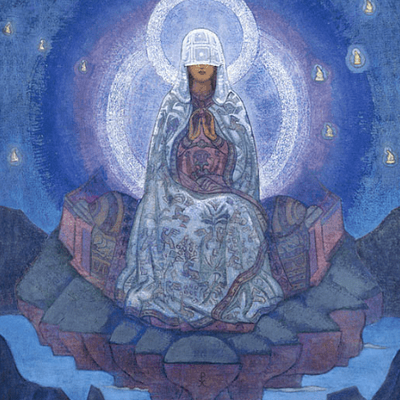
#Malintzin

La Llorona

Also called: The Crying Woman, the Weeping Woman, or the Wailer. She’s a vengeful ghost in Hispanic American folklore who’s said to roam near bodies of water mourning her kids whom she drowned in a jealous rage after discovering her husband was unfaithful to her. Whoever hears her crying either suffers misfortune, death, or their life becomes unsuccessful in every field.

The Full Story:

A beautiful but poor woman (often named Maria) falls in love with a wealthy man (either a Spanish conquistador or a nobleman). After bearing him some kids, the man rejects her. This was either to marry a woman of his own high social class or because he had grown tired of her.

Well, our girl Maria didn’t handle this too well. In a fit of blind rage, & despair, Maria drowns her kids in a river to hurt the man who abandoned them. Immediately realizing what she’d done, she spends the rest of her life (& afterlife) wandering the riverbanks, dressed in white, wailing: “Ay, mi hijos!” (“Oh, my children!”)

Before the Spanish arrived, Aztec mythology spoke of Cihuacoatl, a goddess who abandoned her son at a crossroads. She was often heard at night, wailing, & shrieking through the streets of Tenochtitlan. The earliest documentation of La Llorona is traced back to 1550 in Mexico City.

The legend of La Llorona is traditionally told throughout Mexico, Central America, & northern South America. Many scholars link La Llorona to Malintzin (La Malinche), the indigenous woman who served as an interpreter & mistress to Hernan Cortes.

In Mexican history, she’s a complicated figure. She’s seen by some as the “mother” of the Mestizo race & by others as a traitor. La Malinche is considered both the mother of the modern Mexican people & a symbol of national treachery for her role in aiding the Spanish.

La Llorona is a soul denied entry into Heaven until she finds her kids. She serves as a “living” (or undead, depending on how you look at it) example of the Stations of the Cross gone wrong. A figure of eternal penance who cannot find the absolution of the Church. Because her sin (infanticide) is so grievous.

Unlike the Lavandieres, who are often punished for working on a holy day (the Sabbath. Also check out our post about the Lavandieres.), La Llorona is punished for her passions. She’s a more visceral, emotional figure, representing the “shattering family” rather than “forbidden labor.”

Make a one-time donation

Your contribution is appreciated.

Donate

Make a monthly donation

Your contribution is appreciated.

Donate monthly

Make a yearly donation

Your contribution is appreciated.

Donate yearly #1550 #AztecMythology #CentralAmerica #Cihuacoatl #Crossroads #HernanCortes #HispanicAmericanFolklore #Infanticide #LaLlorona #LaMalinche #LesLavandieres #Malintzin #Mestizo #Mexico #MexicoCity #NorthernSouthAmerica #Spain #Spanish #SpanishConquistadors #StationsOfTheCross #Tenochtitlan


Sheinbaum anuncia actividades por Año de la Mujer Indígena

La presidente Claudia Sheinbaum presentó actividades culturales y educativas para reconocer a mujeres indígenas.


Por Paola Ramírez | Reportera                                                       

La presidente Claudia Sheinbaum Pardo anunció un ciclo nacional de actividades culturales y educativas. El programa marcó el cierre del Año de la Mujer Indígena bajo el lema “Mujeres del Maíz”.

Durante su tradicional conferencia de prensa desde Palacio Nacional, dijo que el calendario comenzó este martes 30 de septiembre y se extenderá hasta diciembre. La propuesta incluye, dijo, foros, exposiciones, muestras artísticas y emisiones especiales en televisión pública para fortalecer la memoria de los pueblos originarios.

La mandataria indicó que las actividades buscaron visibilizar el papel de las mujeres indígenas. Además, subrayó la importancia de reivindicar su identidad y aportes en la historia nacional como parte de la agenda cultural del gobierno federal.

Calendario de “Mujeres del Maíz”

De acuerdo con María del Carmen Álvarez Juárez, representante chichimeca-guachichil, el programa incluyó foros educativos, presentaciones musicales, muestras de danza y exposiciones colectivas. Todos los eventos fueron de acceso abierto al público.

Entre las actividades principales destacó la “Muestra de Danzas de la Malinche”, programada para el 12 de octubre en el Zócalo de la Cdmx, organizada por el Instituto Nacional de los Pueblos Indígenas (INPI).

También se incluyó el foro “¡Qué traidora ni qué la chingada! ¿Quién es Malintzin?”, celebrado el 19 de octubre. Este encuentro se realizó en el Zócalo durante la Feria Internacional del Libro de la capital.

El 27 de noviembre se programó el Coloquio Internacional “Malintzin: Mujer Palabra”, en el Palacio de Bellas Artes, bajo la coordinación de la Secretaría de Cultura. Asimismo, se difundió el folleto digital “Las 400 mujeres”.

Difusión en medios públicos

El Canal 22, Radio Educación y las radios comunitarias del INPI transmitieron cápsulas especiales. Estos materiales narraron la vida de Malintzin y la relevancia de las mujeres indígenas como agentes de memoria y resistencia histórica.

El 30 de septiembre, Día Internacional de la Interpretación, se estrenó un video sobre “Mujeres en la Historia”. El material se centró en Malintzin, conocida como La Malinche, considerada figura clave durante la invasión española.

La cápsula recordó que Malintzin fue intérprete y negociadora entre pueblos originarios y españoles. Su papel consistió en facilitar acuerdos mediante traducciones, lo que le permitió convertirse en un puente cultural de gran alcance.

Los pueblos nahuas la llamaron “Malintzin”, con el sufijo reverencial “tzin”, que significa “respetada”. A partir del siglo XIX, su figura fue distorsionada y se le atribuyó un carácter de traición.

Reconocimiento a Malintzin

En la presentación, Álvarez afirmó que fueron los españoles quienes no cumplieron acuerdos con los pueblos. Señaló que la imagen negativa de Malintzin fue producto de narrativas ajenas a la historia real.

La representante indígena aseguró que este año se honró la memoria de Malintzin como símbolo de resiliencia. Resaltó que la figura fue reinterpretada en clave de dignidad, resistencia cultural y reconocimiento histórico.

https://sociedad-noticias.com/2025/09/30/conferencia-presidencial-de-claudia-sheinbaum-de-este-martes-30-de-septiembre-2025/

La presidente Sheinbaum confirmó que las actividades de cierre del Año de la Mujer Indígena se realizaron en diversas sedes culturales. El objetivo fue consolidar un programa integral de visibilidad para las mujeres indígenas del país.

El ciclo “Mujeres del Maíz” concluyó como una estrategia cultural y educativa con alcance nacional. Con este esfuerzo, el gobierno federal integró a las comunidades indígenas en un programa de memoria y reconocimiento colectivo. –sn–

Sociedad Noticias

¡Conéctate con Sociedad Noticias! Suscríbete a nuestro canal de YouTube y activa las notificaciones, o bien, síguenos en las redes sociales: FacebookTwitter e Instagram.

También, te invitamos a que te sumes a nuestro canal de información en tiempo real a través de Telegram.

#NoticiasMX #PeriodismoParaTi #AñoDeLaMujerIndígena #actividadesCulturales #atenciónInmediata #BellasArtes #Cdmx #ClaudiaSheinbaum #coloquiosYExposicionesEnLaCdmxYRecintosCulturalesNacionalesParaVisibilizarAMujeresIndígenasEnLaHistoria_ #GobiernoFederal #Información #InformaciónMéxico #INPI #LaMalinche #Malintzin #México #Morena #mujeresIndígenas #noticia #noticias #NoticiasMéxico #NoticiasSociedad #SN #Sociedad #SociedadNoticias #SociedadNoticiasCom #sociedadNoticias #SociedadNoticiasCom #Zócalo

Sociedad Noticias

Client Info

Server: https://mastodon.social
Version: 2025.07
Repository: https://github.com/cyevgeniy/lmst