
🇺🇸 Mỹ lần đầu dùng máy bay hỗ trợ hỏa lực AC‑130J tấn công tàu nghi chở ma túy, đánh dấu bước tiến mới trong chiến dịch chống ma túy toàn cầu. #Mỹ #AC130J #ChốngMaTúy #QuânSự #USA #Gunship #Narcotics #Military #News #Vietnam
#Narcotics

#OTD (Dec 23) in 1948, John #Stoppelli is charged with violating federal #narcotics laws.

#OTD (Dec 16) in 1942, Eugene #Giannini of #NewYork is sentenced to 15 months in prison for #narcotics peddling.

Gần 1kg ma túy được ngụy trang tinh vi trong khối bê tông, phủ sơn phản quang, do 5 người vận chuyển từ Quảng Trị vào Huế. Tang vật bị lực lượng chức năng phát hiện và thu giữ.
#MaTúy #BêTông #QuảngTrị #Huế #ChốngMaTúy #Narcotics #Trafficking #Hue #QuangTri #DrugSmuggling
US military strikes 3 more boats in the Pacific Ocean, killing 8 | CNN Politics
#unitedstates #boatstrikes #pacificocean #warondrugs #trumpadministration #USMilitary #currentaffairs #narcoterrorists #narcotics
https://edition.cnn.com/2025/12/15/politics/us-military-strikes-three-boats-pacific
#OTD (Dec 10) in 1954, a federal jury convicts a dozen racketeers from #Cleveland, #NewYork, #Philadelphia and #Buffalo of participating in a #narcotics ring.

Bipartisan inquiries are emerging amid reports that the U.S. military fired twice on a suspected drug boat, killing survivors. The strike may violate rules of war, some legal experts say. #drugs #narcotics #Hegseth
Posted into The American Story @the-american-story-csmonitor
Bipartisan inquiries are emerging amid reports that the U.S. military fired twice on a suspected drug boat, killing survivors. The strike may violate rules of war, some legal experts say. #drugs #narcotics #attacks
https://www.csmonitor.com/USA/Military/2025/1203/hegseth-second-drug-boat-strike
Trump says US land action against alleged drug trafficking networks in Venezuela will start ‘very soon’ | CNN Politics
https://www.cnn.com/2025/11/27/politics/trump-says-us-land-action-in-venezuela-very-soon
#unitedstates #venezuela #drugtrafficking #trumpadministration #narcotics #narcoterrorists #donaldtrump #currentaffairs

Daily Times - Latest Pakistan News, World, Business, Sports, Lifestyledailytimes.com.pk@web.brid.gy
2025-11-27Khurd police seize 43 kg hashish, foiling major narcotics smuggling attempt


Colombian President #GustavoPetro Says Venezuela Oil ‘At Heart’ of Trump Aggression
“He’s not thinking about the democratization of Venezuela, let alone the narco-trafficking,” said the #LatinAmerican leader. “In general, all of the wars of this century had to do with #oil.”
https://www.commondreams.org/news/trump-venezuela-war-for-oil
from #CommonDreams
Jon Queally
Nov 26, 2025
“What lies behind this,” said #Petro, “is the same thing behind the war in Ukraine... #petroleum,” noting the size and quality of #Venezuela’s reserves. “In general, all of the wars of this century had to do with oil.”
If #Trump were to get the upper hand, Petro suggested, the US would get Venezuela’s oil “almost for free,” predicting that—“based on the evidence so far”—that the #US will go to war over the resources.
...adding that Venezuela is not considered a major drug producer or transit point for most #narcotics headed to the US.
#USHandsOffVenezuela
#news #politics #USpol #Colombia #USA #war #military #Caribbean

#narcotics #narcotrafic #marseille #nunez #Darmanin #lutte #stupefiants #drogues #gangs #DessinDePresse #dessin

the interesting definition of #legal when dealing with #armedconflict and #globalcrime -
When #law bends: What the #narcotics boat debate misses - Breaking Defense https://breakingdefense.com/2025/11/venezeula-strikes-legal-southcom-when-the-law-bends-what-the-narcotics-boat-debate-misses/
#OTD (Nov 18) in 1959, Joseph #Valachi, wanted in #NewYork on #narcotics charges, is arrested in #Connecticut.


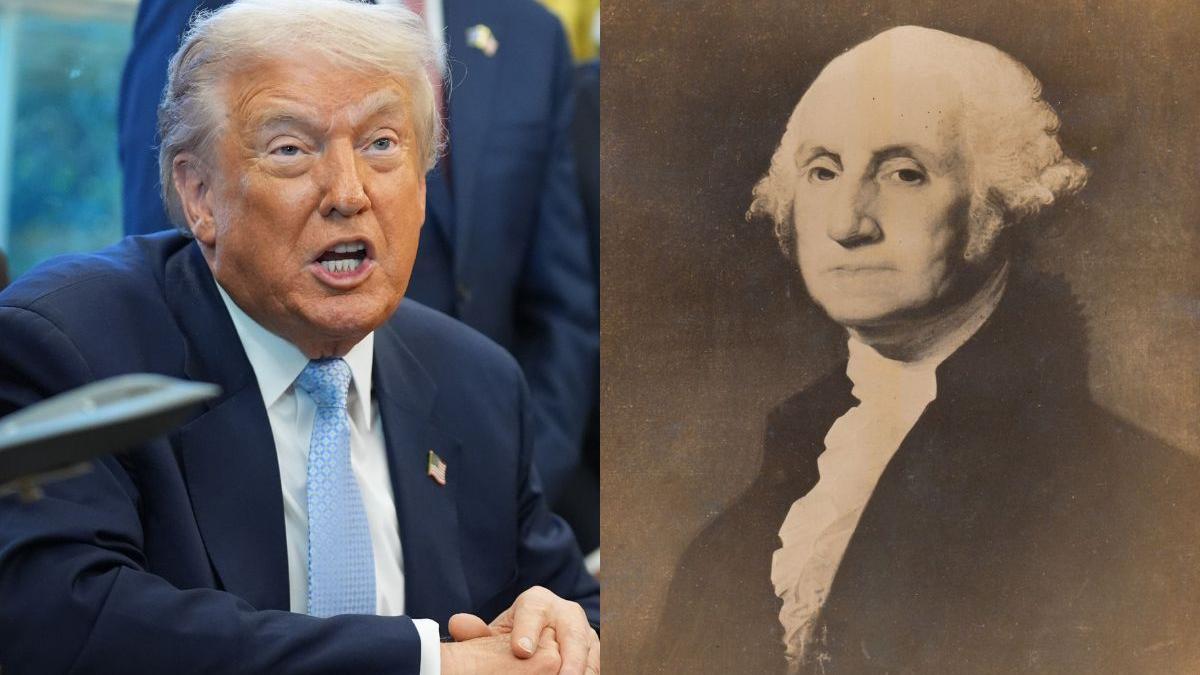
As the Trump administration expands its Caribbean campaign, a long-circulated legend about George Washington’s doomsday prophecy is gaining new traction among commentators. https://english.mathrubhumi.com/news/world/george-washington-doomsday-prophecy-trump-caribbean-operations-yn6ee0yz?utm_source=dlvr.it&utm_medium=mastodon #DonaldTrump #GeorgeWashington #Caribbean #Prophecy #Narcotics
Trump hints at possible talks with Maduro. “We may be having some discussions with Maduro, and we’ll see how that turns out…They would like to talk,” Trump told reporters in West Palm Beach, Florida. Story: https://www.thestatesignal.com/trump-hints-at-possible-talks-with-venezuelas-nicolas-maduro/ #thestatesignal #nicolasmaduro #donaldtrump #trump #maduro #venezuela #narcotics #uspolitics #usPolitics #us #usaolitics #breakingNews #news #dailynews #politics #politicalnews #caribbean #international #local
US military carried out 21st strike on alleged drug boat, killing 3 | CNN Politics
https://edition.cnn.com/2025/11/16/politics/us-military-drug-boat-strike-21
#USMilitary #narcotics #politics #caribbean #venezuela #unitedstates #trumpadministration #donaldtrump #drugtrade #narcoterrorists #boatstrikes #allegeddrugsmuggling
Opium Collapse In Afghanistan: Exposing 40 Years Of US Intelligence Complicity
Opium Collapse In Afghanistan: Exposing 40 Years Of US Intelligence Complicity
By Uriel Araujo
UN confirms poppy cultivation crashed 20% in 2025, reshaping drug routes across Asia. With US intelligence long accused of profiting from Afghan heroin, the ban exposes a shadow economy that may simply relocate rather than disappear.
Afghanistan’s opium fields are withering, and with them a major pillar of the global narcotics economy. According to the latest United Nations Office on Drugs and Crime (UNODC) survey, poppy cultivation has fallen drastically since the Taliban’s nationwide ban, reshaping regional trafficking patterns and driving price volatility across South and Central Asia.
The Taliban, for its part, has hailed this collapse as proof of restored order and moral discipline. If the ban holds, it will represent in fact one of the most effective counternarcotics measures in modern history — something the NATO occupation never managed, in two decades.
However, sudden contraction in the world’s most profitable illicit commodity may have unintended effects, considering that, within the narcotics economy, a parallel system exists — one partly controlled by external actors, intelligence networks, and private contractors. Here some context is needed.
One may recall that Afghanistan’s entanglement with the opium trade did not begin with the Taliban nor end with their fall in 2001. Rather, it is intertwined with decades of war, covert operations, and intelligence patronage. Allegations have long persisted that elements of the US intelligence apparatus — chiefly the CIA — have tolerated, abetted, or profited, directly or indirectly, from Afghan narcotics flows.
These claims, far from being mere propaganda or conspiracy theories, have been substantiated by Western sources such as The New York Times, historian Alfred McCoy, and even congressional testimony. Organized crime remains a key link in the Western intelligence apparatus, as I’ve written.
For one thing, during the Soviet-Afghan War (1979–1989), Operation Cyclone —the CIA’s largest covert mission — channelled billions in weapons to the mujahideen via Pakistan’s Inter-Services Intelligence (ISI). Opium production, meanwhile, exploded from roughly 100 tons a year in the 1970s to nearly 2,000 tons by 1990. McCoy’s “The Politics of Heroin” documents how CIA-backed warlords like Gulbuddin Hekmatyar used American-supplied logistics to protect heroin refineries in Pakistan, while trucks loaded with US weapons reportedly returned carrying opium.
This dynamic effectively transformed South Asia into the world’s heroin hub. Suffice to say, the “side effects” of that covert war were global: by the late 1980s, Afghan-sourced heroin accounted for a major share of the US street market.
Be as it may, the pattern resurfaced after 2001, when Washington invaded Afghanistan under the banner of liberation. Opium cultivation, which had collapsed during the Taliban’s previous ban in 2000, surged once again — tripling by 2004 and eventually reaching 224,000 hectares in 2020. The UNODC estimated the sector’s annual value at over $3 billion, representing half of Afghanistan’s GDP.
During those years, the CIA’s local allies included notorious figures like Ahmed Wali Karzai (AWK), the half-brother of President Hamid Karzai. A New York Times story revealed, in 2009, that AWK had been on the CIA payroll for nearly a decade, receiving payments for intelligence and paramilitary operations while allegedly overseeing opium smuggling networks in Kandahar.
The Guardian later noted that the CIA, both in the 1980s and the post-2001 era, routinely turned a blind eye to the narcotics trade of its local proxies, reasoning that drug lords were “useful” in securing intelligence and maintaining order. No wonder then that eradication campaigns launched by the Pentagon and USAID — costing tens of billions — failed so spectacularly. They often targeted small farmers while sparing high-level traffickers linked to Western-backed militias.
A 2010 GAO report bluntly stated that pervasive corruption among Afghan officials and contractors facilitated “drug activities” and that officials benefited “from revenue streams produced by the drug trade.”
Private actors, too, play a part. US firms like DynCorp, paid over $2.5 billion for counternarcotics and police training, became synonymous with scandal — from corruption to “dancing boys” exploitation rings: prostitution is also profitable enough, as I’ve noted before.
According to Vanda Felbab-Brown (senior fellow in the Strobe Talbott Centre for Security, Strategy, and Technology), the war economy’s construction and security sectors thrived on drug money, while eradication failures kept prices high. Thus far, few of these contractors have faced any accountability.
As Afghanistan’s poppies disappear today, cultivation is already rising across the border in Pakistan’s Balochistan province and parts of Central Asia. The UNODC’s own data show that, despite the 20 percent drop in output, prices have paradoxically fallen — an indicator of stockpiling and substitution. As the Financial Times recently observed, the “geographic relocation” of narcotics processing may be well underway.
In this context, considering that parts of the US intelligence-industrial ecosystem — or its private appendages — have benefited from Afghan narcotics in the past, as seen above, the implications of the Taliban ban are profound. Reduced local supply could mean increased centralization of profits among transnational actors, the same “deep state” networks that operate with little oversight.
In an extreme scenario, Afghan farmers, stripped of livelihood, become disposable, and local warlords lose leverage. The vacuum, thereby, invites a new model —perhaps via synthetic drugs, new transit corridors, or other covert funding schemes.
The point is that West’s twenty-year occupation not only failed to eradicate narcotics; it entrenched them within the very machinery of war and reconstruction. The sudden fall in cultivation, enforced by the Taliban’s religious authority rather than foreign aid, exposes that hypocrisy more clearly than any NGO report could.
Simply put, the so-called “War on Drugs” has long been a war with drugs — a shadow economy underpinning black budgets, private contractors, and the geopolitics of endless conflict.
The Taliban’s poppy ban deprives local elites and foreign intelligence networks alike of a reliable revenue stream. It may also shift the locus of the trade. Whether this transformation leads to increased instability depends on various factors, including how far those interests will go to preserve their share of the pie.
Uriel Araujo, Anthropology PhD, is a social scientist specializing in ethnic and religious conflicts, with extensive research on geopolitical dynamics and cultural interactions.
Disclaimer: The views expressed in this article are author’s own and do not necessarily reflect the editorial policy of Voice of East.
#Afghanistan #CentralAsia #CIA #Geopolitics #narcotics #NATO #UN #USA

Client Info
Server: https://mastodon.social
Version: 2025.07
Repository: https://github.com/cyevgeniy/lmst