Images shared by Anne Hidalgo on Linkedin
#Urbanism #Regeneration #Paris #ClimateAction #OWGF
#OWGF


Where does this leave the Mad Max plotline? When everyone is zipping around outback Australia in EVs powered by the sun. #Solar #SolarPunk #Australia #OWGF


Following in the footsteps of Polish cities embracing adaptions of the Dutch woonerf ("living street"; see also Kraków, Łódź, and Sopot), Warsaw's Chmielna is undergoing a people-, planet-, and profit-friendly makeover that restores its function as a lively spine running through the capital’s core.
Via Chris Bruntlett https://bsky.app/profile/modacitylife.com
#Urbanism #Trees #OWGF #ClimateAction
Via Chris Bruntlett https://bsky.app/profile/modacitylife.com
#Urbanism #Trees #OWGF #ClimateAction



Gid vi kunne gøre det sammen foran Christiansborg...
https://mastodon.world/@OWGF/115063450072149914
OWGF@mastodon.world - #Paris has removed the paving from its city hall square and transformed it into an #Urbanforest
#Urbanism #OWGF #SolarPunk #ClimateAction
Why we need more trees in our cities...
#ClimateChange #Biodiversity #Trees #Pollution #ClimateAction #SolarPunk #HopePunk #OWGF #Urbanism
https://owgf.org/wp-content/uploads/2025/08/more-trees.pdf
#ClimateChange #Biodiversity #Trees #Pollution #ClimateAction #SolarPunk #HopePunk #OWGF #Urbanism
https://owgf.org/wp-content/uploads/2025/08/more-trees.pdf


#Paris has removed the paving from its city hall square and transformed it into an #Urbanforest
#Urbanism #OWGF #SolarPunk #ClimateAction
Biophilia refers to the innate human tendency to seek connections with nature and other living beings. It reflects the inherent bond humans have with the natural world, which positively impacts both our physical and mental health.
#Biodiversity #Biophilia #climateChange #Environment #Nature #OWGF #Regeneration #SolarPunk #StrongTowns #Sustainability #Urbanism
https://owgf.org/2025/07/26/bioplhilia-and-the-need-to-fill-our-cities-with-nature/
#Biodiversity #Biophilia #climateChange #Environment #Nature #OWGF #Regeneration #SolarPunk #StrongTowns #Sustainability #Urbanism
https://owgf.org/2025/07/26/bioplhilia-and-the-need-to-fill-our-cities-with-nature/

Bioplhilia and the need to fill our cities with nature.
The one giant living ecosystem we are all part of on planet Earth has given birth to us human beings. Our DNA comes from this ecosystem. Our cell structures, our shapes, and our brains are what they are today because we inherited them from our “Mother Earth.” To be human is to be from planet Earth and its living ecosystem.
Humanity has known this truth for millennia, and many cultures throughout history had some way of expressing it. The Greeks created Gaia, the earth goddess, who symbolises the living spirit of nature and embodies our deep, instinctive connection to the natural world. Australia’s Indigenous peoples believed in Dreamtime, which represents the sacred connection between people, land, and nature—echoing a recognition of humans’ innate bond with the living world. Humans have long known this connection with nature on a spiritual level, and modern science has only amplified that understanding further.
Biophilia
Biophilia, which literally means “love of life” or “love of living systems,” acknowledges how we recognise our connection to nature on an emotional level. Being surrounded by the natural world feels like a mother’s embrace—a deep connection to our heritage and our very essence. This is why, when immersed in nature, we experience a profound affinity with our environment. Biophilia refers to the innate human tendency to seek connections with nature and other living beings. It reflects the inherent bond humans have with the natural world, which positively impacts both our physical and mental health. Biophilia is linked to reduced stress, enhanced cognitive function, and an overall greater sense of well-being.
Our broken connection with nature
It’s clear to see that this connection has been broken. As more and more people move into our industrialised and mechanised cities, a growing number of people experience this broken connection. The noise from our machines, the pollution they create, the giant freeways, speeding cars, hard surfaces, and toxic smells in our cities all disconnect us from that inherent sense of belonging to the environment. All these unnatural elements create tension, unease, and anxiety within us. Perhaps not all the time, and usually to a greater or lesser degree, but that uneasy feeling is there, just beneath the surface. While we distract ourselves with our jobs, gadgets, entertainment and leisure activities, the need for connection with nature always lives below the surface.
Unnatural and hostile Urban environmentsNature connectedness
All over the world, people are noticing this broken connection. People are writing books about Biophilia, [Links] blogging about it, creating academic courses, [Link] and making videos on the subject. [Link] Nature Therapy and Nature Bathing have become business opportunities, with people paying to reconnect with nature. [Link] The theory of Nature Connectedness is now well established and attracting research interest. [Link] As more and more people recognise these broken connections in our cities, the rise of a movement in response should come as no surprise.
Modern day deserts – Loneliness
Our cities have become modern-day deserts to humanity’s Biophilic needs. They can feel completely alien to us, both physically and emotionally. In urban environments, it is often only our shared connection with other people that keeps us feeling grounded and happy. For hundreds of years, our relationships with each other have fulfilled many of our innate “nature-connected” needs—but even that is now breaking down. As we organise ourselves into increasingly disconnected and individual spheres, we are losing that vital human-to-human connection. As more people drive everywhere, that sense of connection fades. As more people move to suburbs—especially those without local parks, town squares, or corner shops where we naturally bump into other people—things only get worse. Is it any wonder that we’re now facing a loneliness epidemic? [Link]
In the Countryside
While this post is mostly about cities, it would be wrong to think that this disconnection exists only in urban areas. Our countryside has suffered significant ecological degradation. It’s crisscrossed by asphalt roads and divided by fences, with fields ravaged by heavy agricultural machinery, leaving behind vast, artificial monocultures. While we can still find pockets of nature, they are like small islands—similar to parks in our cities. Is it any wonder that farmers commit suicide in such high numbers? Yes, this has much to do with the pressures of modern agriculture, but a disconnect from nature clearly plays a role as well.
I still think of that scene in Trainspotting, the movie, where the protagonists leave their squalid urban surroundings to enjoy a walk in the countryside. When they get there, they find a cold, wind-swept, barren place that in no way feels welcoming. It may be the countryside, but it’s been stripped of almost all life. Our anti-heroes quickly scurry back to their squalid urban life, which they see as the preferable option. I wonder if they had gone to the countryside and been surrounded by lush green forests and spent time sitting under giant trees with the sun on their faces, perhaps the film would have ended a bit differently. [Link]
Both urban and rural environments suffer from invisible toxins permeating the air, soil, and water, disrupting nature’s delicate balance. These pollutants and petrochemicals break fundamental ecological bonds, causing widespread environmental damage. Though their effects remain unseen, these toxins are making our planet and its farmers increasingly ill. [Link] While Biophilia focuses on humanity’s connection to nature, when we damage nature’s internal connections on a large scale, we ultimately harm ourselves as well.
“Oil Fields #19a,” Belridge, California, U.S.A., 2003.Photographs by Edward Burtynsky / Courtesy International Center of PhotographyThese problems are well known by farmers, yet few are willing to acknowledge them or make the necessary changes. Charles Massey, a Monaro woolgrower, in his book The Reed Warbler, explores the profound connection between humans and nature, emphasising that this bond is essential for our well-being and spiritual health. He argues that the natural world is not just a backdrop for human activity but a living, interconnected system of which we are deeply part of. Massey highlights how reconnecting with nature helps restore a sense of belonging and meaning, countering the alienation many feel in modern, technology-driven society. [Link]
The Wealthy
Wealthy individuals throughout history have leveraged their financial resources and influence to immerse themselves in natural surroundings. This practice spans from the meticulously designed gardens of 18th-century European nobility to the verdant landscapes of affluent suburbs and sprawling country estates. What began as a display of status has evolved into a means of creating personal green sanctuaries amidst our increasingly industrialised urban environments and altered landscapes. In contrast, the poorest people have always been denied access to nature in cities. From the Manchester terraces, of the Industrial Revolution, to the favelas of South America, greenery and nature have consistently been withheld from the urban poor by developers and planners.
With the impacts of climate change worsening, phenomena like the urban heat island effect highlight some of the many other issues that arise from a lack of nature. While many cities are finally beginning to address the issue of limited green space in the poorest neighbourhoods, available resources are nowhere near enough to meet the scale of the problem. Much of the work is still often left to small not-for-profit organisations like North East Trees in LA. [Link]
Creature Comforts
While we do love our connection to nature, we also love the creature comforts that our cities offer. We don’t enjoy being surrounded by nature when we are uncomfortably cold and wet. We appreciate what our homes and cities provide: roofs over our heads, mud-free streets, temperature-controlled environments, running water, access to a myriad of services and more. Nobody wants to give up their creature comforts, but in order to have many of them, we end up destroying nature. Nobody is saying we should all go live in forests—so the question remains: what is the compromise? How can we have more nature in our cities, that we can connect with, especially when “free” space is in such short supply?
Bringing nature back
Our aim should be to restore as much nature as possible to both our cities and the countryside. We need to look at the quickest and easiest ways to do this and get started on those first. For me, the absolute simplest way is by removing a modest 10% of on-street parking and replacing it with native trees and plants. This would absolutely transform our cities. Streets are one of the most important parts of our cities and should be part of our commons that we all have the right to change—within reason and with full consultation.
Yimby Melbourne produced this excellent report, looking at the feasibly and benefits of this approach and even did some costs too. http://trees.yimby.melbourne
There are many ways we can swap parking for greenery that are quick, reasonably cheap, and would have an immediate effect on our cities. Paris is leading the way on this. Mayor Anne Hidalgo’s plan for removing 70,000 of the city’s 140,000 on-street parking spaces to make Paris greener and more people-friendly is well under way.
Participatory Urbanism.
It’s 2025, and it is long past time that everyone in our cities had the same access to greenery that the wealthiest residents enjoy. Yes, there is a cost to this, but there is an even greater human health cost for those living in nature-deprived spaces. Fortunately, there are ways to achieve greening objectives more quickly, more cheaply, and more easily through participatory urbanism—by inviting people to shape their own streets and giving residents who want to get hands-on a way to do so, as Emma Cutting has done with her Pollinators Corridor project. [Link]
All over the world we are seeing citizen De-paving movements springing up. [https://en.wikipedia.org/wiki/Depaving] Where local residents go out into the community and looking for opportunities to rip out hard surfaces and replacing them with nature. There are groups all over the world, from Portland to Berlin now doing this. Once the paving has gone they plant trees and bushes and return a little more space back to nature. De-paving also allows for opportunities to bringing back natural hydrological systems that capture stormwater run off. De-paving projects often include Sustainable Urban Stormwater Design. (SuSD) This is an approach to managing rainwater and runoff in urban areas that prioritises environmental sustainability, aiming to mimic natural hydrological processes to reduce pollution, improve water quality, and enhance urban resilience. I wrote about a project like this [HERE]
The Melbourne Regen Network has recently launched its 300,000 Streets initiative, which aims to transform the city’s streets into vibrant, community-centered spaces that promote social interaction, environmental sustainability, and economic vitality. This project seeks to engage residents in shaping their neighbourhoods, addressing issues like walkability and green space to enhance overall liveability. [Link]
Wrapping up…
Biophilia is something that exists in all of us to a greater or lesser degree. Though we may block it out with endless distractions, it’s always there in the background. For many people, this need for connection with nature—and with others—is much more pronounced, much clearer and more obvious. For some, the disconnection from nature contributes to a general feeling of unease, a background anxiety they just can’t quite put their finger on.
As our cities and countryside have become more industrialised and mechanised, the backlash against our disconnection with nature has grown stronger and stronger. We are now at a point where thousands of movements around the world recognise Biophilia and are actively seeking to do something about it. This is very much part of what I see as the Re-Growth Revolution. [Link] And this author, for one, thinks this is bloody marvellous!
#Biodiversity #Biophilia #climateChange #Environment #nature #OWGF #Regeneration #SolarPunk #StrongTowns #sustainability #Urbanism
"Who doesn't love Grassy Tram Tracks!?"
@notjustbikes@notjustbikes.com
#Urbanism #Trams #ClimateChange #OWGF #Biophilia
Images via modacitylife.com
@notjustbikes@notjustbikes.com
#Urbanism #Trams #ClimateChange #OWGF #Biophilia
Images via modacitylife.com


Is this a template for the Solar Punk City of the future?
https://owgf.org/2025/07/18/is-this-a-template-for-the-solar-punk-city-of-the-future/
#Architecture #ClimateChange #OWGF #SolarPunk
#Sustainability #Urbanism
https://owgf.org/2025/07/18/is-this-a-template-for-the-solar-punk-city-of-the-future/
#Architecture #ClimateChange #OWGF #SolarPunk
#Sustainability #Urbanism


Is this a template for the Solar Punk City of the future?
We should all be deeply skeptical about anyone promising to create a perfect city or society. A lot has been written about how it is not desirable, or even possible, to create a “Utopia,” where everyone lives in harmony. Erik Olin Wright, the prominent sociologist, extensively discussed the concept of “real utopias” in his influential book Envisioning Real Utopias, where he outlines the potential dangers of idealism over practicality. Real Utopias dismisses the idea of perfect societies and instead advocates for practical, achievable alternatives rooted in existing social practices. His work serves both as a critique of capitalism and as a guide for envisioning a more equitable future. [Envisioning Real Utopias]
The word Utopia literally translates as “no place”, coming from the Greek: οὐ (“not”) and τόπος (“place”), and refers to any non-existent society. So it makes sense to look at Utopias as inspirational ideas and principles and not some perfect city or society that we are trying to create. A Utopia can therefore be seen as a set of ideas, principles, and goals aimed at improving people’s quality of life, without expecting perfection—this is the essence of SolarPunk.
When it comes to applying the right principles and goals, Gelephu Mindfulness City, a new city being built in the Kingdom of Bhutan, has a lot of good ideas. Gelephu Mindfulness City, announced in December 2023 by Bhutan’s King, is a 2,500 km² Special Administrative Region designed to integrate Gross National Happiness (GNH) principles with sustainable urban planning. The project aims to house over one million residents across eco-friendly infrastructure and diverse economic clusters, and is being built on these six principles.
1. Mindfulness and Well-being at the Core
At its heart, GMC is designed to cultivate mindfulness—an awareness of the present moment, both individually and collectively. This principle extends beyond meditation or spiritual practices into urban planning, community design, and daily life. Public spaces and neighbourhoods are created to encourage social interaction, reflection, and connection to nature, supporting mental and emotional well-being.
2. Integration of Tradition and Modernity
Rather than replicating a generic modern city, GMC is deeply rooted in Bhutanese culture, spirituality, and values. The city’s design is inspired by the sacred Mandala geometry, symbolising harmony and balance. This approach ensures that while embracing innovation and technology, the city preserves and honors Bhutan’s rich Buddhist heritage and cultural identity.
3. Environmental Sustainability
Gelephu Mindfulness City places ecological stewardship at the forefront. It aims to be carbon-neutral by leveraging renewable energy sources such as hydropower and incorporating green building materials like bamboo and timber. The city integrates natural landscapes, including paddy fields and river corridors, which act as biodiversity sanctuaries and natural stormwater management systems.
4. Economic Diversity and Resilience
The city is planned to foster seven economic clusters, including spirituality, health and wellness, education, green technology, finance, agriculture, and aviation. This diversification promotes economic stability, job creation, and innovation, supporting Bhutan’s broader development goals while attracting international investment.
5. Community-Centered Urban Design
GMC’s unique “ribbon” layout connects neighborhoods with inhabitable bridges, creating micro-communities linked by shared amenities. This fosters a strong sense of belonging and encourages interaction among residents. Public spaces are designed to be interactive and inclusive, supporting cultural exchange and lifelong learning.
6. Holistic Healthcare
The city envisions integrating Eastern and Western medicine to provide holistic healthcare. Facilities will focus not only on physical health but also on mental and spiritual well-being, reflecting Bhutan’s comprehensive approach to health.
If every city and local government in the world considered at least some of those principles in their decision making, our cities would be much nicer places to live in. Ideas like Community-Centered Urban Design are not too different from what 15-Minute Cities are trying to achieve. Retrofitting our cities so that we all have access to shops and amenities, that fulfill our basic needs, within our local communities.
“Gelephu Mindfulness City layout connects neighborhoods with inhabitable bridges, creating micro-communities linked by shared amenities. This fosters a strong sense of belonging and encourages interaction among residents. Public spaces are designed to be interactive and inclusive, supporting cultural exchange and lifelong learning.”
What is potentially an issue with Gelephu Mindfulness City is the fact it has been initiated by a King, and therefore it is hard to know how much the people of Bhutan were consulted. Gross National Happiness, the renowned economic model from Bhutan, was developed with significant input from the Bhutanese people and reflects a deeply rooted cultural and philosophical foundation rather than being a purely top-down concept. So hopefully this was the same. Ultimately, projects that deeply and genuinely consult the people who inhabit a space or will inhabit a space have a much better chance of being a success.
As a project that signposts to a Wonderful Green Future, I do think this is noteworthy. And certainly, a lot better than most other new cities that are being developed. (Telosa – America’s $400 Billion Dystopia) I look forward to watching this project progress, and hopefully, it’s a success and inspires cities everywhere to try some of its ideas. While this project may be more HydroPunk than SolarPunk, 😏 there are a lot of ideas in it that will appeal to fans of the genre.
To find out more about those principles and other information, check out the official website here: www.gmc.bt. There are lots of really interesting ideas in the project, including a temple built into a hydroelectric dam.
This post was created in #WordPress and can be viewed in the #Fedivers at: @owgf.org@owgf.org
OWGF has a Fediverse companion profile at: https://mastodon.world/@OWGF
OWGF is also on #Pixelfed here: https://pixelfed.social/OWGF
#Architecture #climateChange #OWGF #SolarPunk #StrongTowns #sustainability #Urbanism
Here Comes the Sun by, Bill McKibben
Bill McKibben has a new book coming out on the 19th of August, 2025, called Here Comes the Sun: A Last Chance for the Climate and a Fresh Chance for Civilization
It tells the story of the sudden spike in power from the sun and wind―and the desperate fight of the fossil fuel industry and their politicians to hold this new power at bay. From the everyday citizens who installed solar panels equal to a third of Pakistan’s electric grid, in a year, to the world’s sixth-largest economy―California―nearly halving its use of natural gas in the last two years, Bill McKibben traces the arrival of plentiful, inexpensive solar energy. And he shows how solar power is more than just a path out of the climate crisis: it is a chance to reorder the world on saner and more humane grounds.
I have pulled together a number of the most inspiring quotes from Bill’s book, that were recently published in The New Yorker.
“People are now putting up a gigawatt’s worth of solar panels, the rough equivalent of the power generated by one coal-fired plant, every fifteen hours. Solar power is now growing faster than any power source in history, and it is closely followed by wind power—which is really another form of energy from the sun, since it is differential heating of the earth that produces the wind that turns the turbines.”
“Last year, ninety-six per cent of the global demand for new electricity was met by renewables.”
“In May, China had installed a record ninety-three gigawatts of solar power—amounting to a gigawatt every eight hours. In the first quarter of the year, total carbon emissions in China have decreased with emissions linked to producing electricity falling nearly six per cent, as solar and wind have replaced coal.“
“In South America, where a decade ago there were plans to build fifteen new coal-fired power plants, as of this spring there are none.“
“Over the past fifteen years, the Chinese became so skilled at building batteries—first for cellphones, then cars, and now for entire electric systems—that the cost of energy storage has dropped ninety-five per cent.”
“Instead of relying on scattered deposits of fossil fuel—the control of which has largely defined geopolitics for more than a century—we are moving rapidly toward a reliance on diffuse but ubiquitous sources of supply. The sun and the wind are available everywhere, and they complement each other well; when sunlight diminishes in the northern latitudes at the approach of winter, the winds pick up.”
“The sun, pours out daily more than a quadrillion kilowatt hours of energy, greater than the energy contained in all the reserves of coal, oil, natural gas and uranium in the earth’s crust.”
“Burning oil to power a car or burning coal to produce electricity is at best slightly more than thirty per cent efficient—or seventy per cent inefficient. For that reason, it takes two to three times more energy to run a standard car than to run an E.V. E-biking may prove to be an even more important innovation. The e-bike is almost unbelievably efficient: to fully charge a five-hundred-watt e-bike costs about eight cents. That charge provides some thirty miles of range, so it costs about a penny to travel five miles.”
“In Pakistan, as 2024 began, demand for electricity on the national grid started falling—not because the economy was in decline but because so many Pakistanis were putting up solar panels. As one Lahore-area corn farmer, Mohammad Murtaza, said, “I have never seen such a big change in farming. Ninety-five percent of farmland has switched to solar in this area.” If you have travelled through rural Asia, you know the sound of diesel generators pumping the millions of deep tube wells. Now solar electricity is pumping the water—diesel sales in Pakistan fell thirty per cent in 2024. If you’re a farmer, that’s kind of a miracle; fuel, one of your biggest costs, is simply gone. As Waqas Moosa, a Pakistani solar entrepreneur told journalist David Roberts, in February, “a three-kilowatt inverter with, you know, maybe four or five panels is now routinely included in a bride’s dowry.”“
“How did Pakistanis learn to put up all those panels?
Training programs, tips, and tricks hotlines and such sprang up, as people around the country started sharing notes, so that tens of thousands of electricians and others could get into the game. TikTok videos set to Punjabi music, showing electricians unboxing inverters and comparing Chinese panel brands.
The Pakistan example is particularly significant because the sale of Chinese solar panels is cannibalizing demand from the very coal plants China financed in that nation just a few years ago, as part of its New Silk Road, making it a litmus test for China’s global climate leadership. By treating Pakistan as a proving ground for managing stranded fossil assets while scaling renewable ecosystems, China has the opportunity to develop and validate transition models that could be exported across the Global South.”
“The current predictions for Solar are that by 2026, solar will generate more electricity than all the world’s nuclear plants combined. By 2029, it will generate more than all the hydro dams. By 2031, it will have outstripped gas and, by 2032, coal. According to the I.E.A., solar is likely to become the world’s primary source of all energy, not just electricity, by 2035.”
“According to a 2023 report from the Energy Transitions Commission, all the materials needed to reach net zero by 2050 will be less than the amount of coal consumed in a year. Lithium, once mined, does its job for decades; coal just gets burned, which means you have to mine more. And, when batteries or solar panels degrade, the minerals in them remain valuable enough that they will almost certainly be recycled—large-scale recycling operations are appearing around the world. A report from the Rocky Mountain Institute predicted that by 2050 we will have done all the mining we’ll need to do for battery minerals; after that, we’ll just recycle them, over and over again.”
“A one-acre solar farm produces as much energy as 100 acres of corn-based ethanol.” In April, researchers at Cornell University’s College of Agriculture and Life Sciences noted that all the corn grown for ethanol in the U.S. takes up about thirty million acres, an area roughly the size of New York State. If forty-six per cent of that land were converted to producing solar energy, they found, it would generate enough electricity for the U.S. to decarbonize its system by 2050.”
“It’s possible that renewables will see yet another acceleration, driven not just by climate worries but by security fears, as nations seek some insulation from geopolitical, macro, and financial risks. A 2023 poll by the market research firm Glocalities, of twenty-one thousand respondents in twenty-one countries, found that sixty-eight per cent favored solar energy, five times more than public support for fossil fuels. And surveys conducted by the communications and research firm Global Strategy Group in the fall of 2024 found that eighty-seven per cent of Americans—and almost eighty per cent of people planning to vote for Trump—favored the clean-energy tax credits in the I.R.A. “Solar power remains the most popular source of electricity in America,” Global Strategy Group partner Andrew Baumann said, “with broad support across the political spectrum. If we can make the transition affordable and easy, the will is there.“
Here Comes the Sun: A Last Chance for the Climate and a Fresh Chance for Civilization is available to buy or reserve in your local Library on the 19th August. Just don’t buy it on Amazon!
You can read the full article from Bill in The New Yorker
Photos via The Atlantic :
#China #climateChange #OWGF #Solar #SolarPunk #sustainability #WindPower

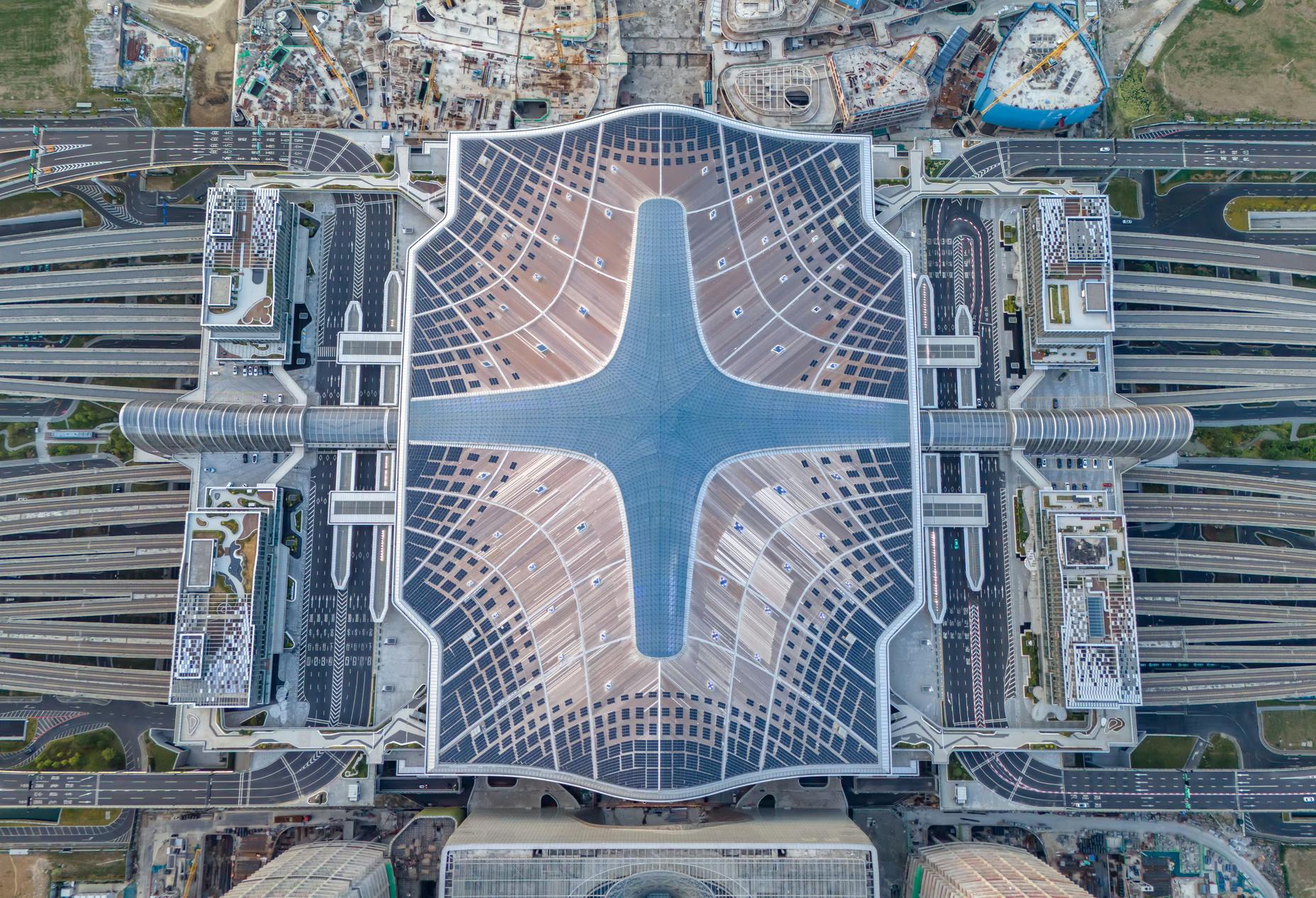


A few more recent photos of this Solar Punk masterpiece in Turin.
Thanks Bro!
#SolarPunk #Urbanism #OWGF #Architecture #Trees
Thanks Bro!
#SolarPunk #Urbanism #OWGF #Architecture #Trees


Damon Gameau takes eight kids on the ultimate school excursion: a road trip across Europe to challenge powerful leaders and find solutions to our greatest ecological challenges. This is a coming - of - age journey that dares to imagine a brighter future. #OWGF #ClimateChange #Regeneration
Coming to Australian cinemas August 7, with a special Q&A Tour starting in July.
https://www.youtube.com/watch?v=sLPQxANfoxo&t=2s
Some good #SolarPunk vibes here. The project is currently under Construction. #Bogota #Columbia #OWGF #Urbanism #Architecture
https://heatherwick.com/projects/buildings/bogota-ean-university/
https://heatherwick.com/projects/buildings/bogota-ean-university/


I am blown away by this photo of a dialysis clinic in Japan. Isn't this how all hospitals should be, connected to nature? Yet we are forced to settle for the industrial factory hospitals we have today. How has capitalism killed our imagination and connection to nature that we scarcely believe in the possibility of creating a Wonder Green Future for all.
Read more about the The Economics of Biophilia
https://www.terrapinbrightgreen.com/wp-content/uploads/2023/09/EOB2-Terrapin-2023-p.pdf
#Japan #Healthcare #Biophilia #OWGF
Read more about the The Economics of Biophilia
https://www.terrapinbrightgreen.com/wp-content/uploads/2023/09/EOB2-Terrapin-2023-p.pdf
#Japan #Healthcare #Biophilia #OWGF

Participatory Urbanism: A beginners guide
I recently did a speech to my local Rotary Club about a Participatory Urbanism project I am working on. To my surprise, the audience appeared equally interested in the whole Participatory Urbanism concept, as much as the project itself. So I thought it would be good to put together a quick explainer, which I can point people to, if they are interested.
Participatory Urbanism is an approach to city planning and development that actively involves citizens in the decision-making processes, right from the start, to create more inclusive, responsive, and sustainable urban environments.
Urban planning, once the exclusive domain of architects, developers, and policymakers, is slowly opening its doors to the people who live in the neighbourhoods they are shaping. This movement—known as Participatory Urbanism—is about putting residents at the centre of urban change. Unlike what we see right now, where residents are on the periphery of any decision making.
Participatory Urbanism invites community members to co-create the future of their cities. It moves beyond consultation into real collaboration, where local knowledge, lived experiences, and collective imagination become essential tools in the planning process. Whether it’s redesigning a park, rethinking traffic flow, or creating more inclusive public spaces, the goal is to make cities not just more efficient—but more just, vibrant, and responsive to human needs.
This approach goes by many names. You might hear it called “collaborative urbanism”, “community-led planning”, or “co-design”. In digital spaces, it intersects with “civic tech” and the “smart citizen” movement, where data and tools empower residents to advocate for better services. In the physical world, it often overlaps with “tactical urbanism”—those DIY, grassroots projects that temporarily transform urban spaces to test new ideas.
What unites all these threads is a simple but powerful belief: the people who live in a place are experts in their own right. By making space for their voices, we build not just better cities—but stronger communities.
Right now we get community participation really, really wrong. Most civic systems are hierarchical, with decisions made by a few “experts” behind closed doors. Public participation is often tokenistic—last-minute, limited, and on the civic leaders’ terms. It feels disingenuous, formal, and uninspiring, excluding genuine input and creativity. The same voices dominate, while people are sidelined and are not truly at the centre of decision-making.
Participatory Urbanism ultimately means reimagining our cities as places shaped by the people who live in them. It shifts power from top-down planning to collaborative processes where residents have a real say in decisions that affect their daily lives. This approach fosters more inclusive, equitable, and responsive urban environments by valuing local knowledge, creativity, and lived experience. When communities co-create their neighbourhoods—whether through planning, design, or stewardship—cities become more vibrant, just, and resilient. Participatory urbanism is about putting people at the heart of urban change, ensuring cities are not just built for communities, but built with them.
There is no one single way to implement Participatory Urbanism. Lots of cities are trying to do it right now and we see lots of different ideas and models emerging. In reality there never should be one single approach/method/model because that flies in the face of the whole idea of consulting local residents. An approach that suits one city may not work in another. Fortunately there are lots of examples we can look at from around the world, and take inspiration from. I wrote about Bologna, Italy’s approach here: https://owgf.org/2024/08/02/should-we-follow-bolognas-model-for-participatory-urbanism/ There is also the Transition Network working on providing ideas for communities that want to organise, which I posted about here: https://owgf.org/2024/08/04/transition-togethers-free-step-by-step-guide/ Also a quick web search for “Participatory Urbanism Tools” will deliver more results than you can poke a stick at.
Our Wonderful Green Future will be a co-designed by the people, for the people.
This post was created in #WordPress and can be viewed in the #Fedivers at: @owgf.org@owgf.org
OWGF has a Fediverse companion profile at: https://mastodon.world/@OWGF
OWGF is also on #Pixelfed here: https://pixelfed.social/OWGF
#Environment #OurWonderfulGreenFuture #OWGF #Regeneration #SolarPunk #StrongTowns #sustainability #Urbanism


Client Info
Server: https://mastodon.social
Version: 2025.07
Repository: https://github.com/cyevgeniy/lmst