The #SyrianDemocraticCouncil was founded on #ThisDayInHistory in 2015. Having sat out the first stages of the #SyrianCivilWar, #Kurds of #Rojava got involved to create a better system. #SDC is the political arm of #SDF in #DAANES, working for a decentralized #pluralistic society.
#Rojava


Documentary about People’s Resistance in Kobanê: Life in War https://internationalistcommune.com/documentary-about-peoples-resistance-in-kobane-life-in-war/
![Woman from Kobanê, sitting, says [translated]: "We have been fighting for our lives since the end. Just as our children have drop by drop spilled their blood on the mountains of Qandil, we are ready"](https://files.mastodon.social/media_attachments/files/115/692/263/099/237/964/original/fb48d7a20d276f37.png)
Documentary about People's Resistance in Kobanê: Life in War
🔸 Following Assad's fall in December 2024, the Turkish state and its mercenaries intensified its attacks on the autonomous administration of north-eastern Syria.
🔸The situation was uncertain, but the people were prepared for anything. This was particularly evident in Kobanê, where the Tishreen Dam had been attacked, leaving the city without a water and electricity supply for several months.
🔸This documentary reflects on the situation and the people's resistance, led particularly by women, young people, and the people's self-administered structures. With fewer opportunities, but with a collective spirit, the people employed the strategy of a Revolutionary People's War.
📍Watch Documentary with English or French Subtitles on our website:
https://internationalistcommune.com/documentary-about-peoples-resistance-in-kobane-life-in-war/

*Don't hesitate to boost if you enjoy reading the reports!*
Weekly highlight from your anarchist comrades in #NES
01.12.25 - 07.12.25
-----------------------------------------------------------------
(1/2)
# ABDULLAH ÖCALAN PROPOSAL FOR SDF DISARMAMENT
On November 24, Abdullah Ocalan proposed a plan for the integration of the Syrian Democratic Forces (SDF) into the Syrian Ministry of Defense (MoD) to Turkish parliament members engaged in the PKK disarmament dialogue. This plan stipulates that the SDF should join the Syrian military while retaining its own internal security apparatus.
This announcement represents the first call from Ocalan for the SDF to assimilate into the Syrian military structure while preserving its internal security forces. In February 2025, Ocalan asserted that “all [PKK] groups must lay [down] their arms,” a statement interpreted by Turkish officials as a directive for the SDF to disarm and integrate into the Syrian transitional government under the MoD.
SDF Commander Mazloum Abdi asserted that it “applies solely to the PKK [and is not] applicable to our situation in Syria.” Ocalan’s newly articulated vision aligns more closely with Abdi’s advocacy for a decentralized Syrian state, allowing the SDF to maintain local security governance in northeastern Syria.
# AKP PUSH FOR SDF TO HAND OVER STRATEGICAL ASSETS
On December 2, an AKP spokeperson indicated that Turkey may reassess its classification of the SDF as a “terrorist organization,” at the condition that SDF hands over critical resources and infrastructure to the Syrian government as part of its reintegration into the Syrian state.
The spokesperson also stated that the SDF would effectively “cease to be a threat to Turkey and a terrorist organization” if it submits control of strategic assets—including airports, border crossings, and oil fields—to the Syrian government.
This transfer of pivotal resources and infrastructure is a strategic maneuver to undermine the SDF's influence in NES, as it would restrict it's access to the Turkish border and curtail its revenue streams from oil operations. Both Turkey and the Syrian government have asserted that the SDF must fully integrate into the Syrian state by year’s end. A potential shift in Turkey’s threat assessment could imply that Turkey may be anticipating the SDF's adherence to the March 10 agreement.
# SUWEIDA NATIONAL GUARD CARRIES OUT POLITICAL ARRESTS, KILLINGS AND TORTURE OF PROMINENT DRUZE FIGURES
On November 28, the Suwayda National Guard executed a series of arrests and killings targeting notable Druze figures within Suweida Province. The Druze militia coalition apprehended ten individuals, accusing them of organizing a “conspiracy” in cooperation with the Syrian transitional government. Among those arrested were several influential figures of the Druze community.
On November 29, members of the Suweida National Guard recorded acts of torture against Sheikh Matni. His corpse, displaying evident signs of torture, was delivered to the entrance of Suweida City Hospital on December 2. Sheikh Matni had played a pivotal role in establishing the Suweida Military Council in February 2025, a Druze militia that confronted transitional government forces amid the intercommunal violence of July 2025. Matni maintained a close relationship with Sheikh Hikmat al-Hijri; however, tensions arose following Matni's opposition to Hijri’s initiative to form the Suweida National Guard. Pro-government sources claim that Matni was arrested for advocating a negotiated settlement with the Syrian transitional government.
# ONE YEAR AFTER THE FALL OF BASHAR AL-ASSAD
December 8 will mark one year since the fall of the Assad regime. Many celebrations have already taken place in Syria. On December 6, the Autonomous Administration of North and East Syria (AANES) issued a decree forbidding celebrations on the 7th and 8th of the month. The decree stipulated that the decision was made for security reasons, citing the recent rise in terrorist attacks.
While it is true that the recent decision of the Syrian transitional government to join the anti-ISIS coalition has bolstered Islamist group activities, it is likely that the AANES's decision to forbid celebrations for the first anniversary of the fall of Assad is motivated by a desire to maintain public order. The deadline for the negotiations regarding AANES and SDF integration into the Syrian state is approaching. In these times of tension, the AANES might be attempting to avoid protests that would oppose its governance in Northeast Syria, thereby impacting its capacity to defend its right to autonomy.
# CONTINUOUS DEVELOPMENTS
- Former senior Assad regime officials are funding and equipping clandestine networks in Syria to conduct insurgent activity against the Syrian transitional government. Many of the fighters organized by those senior Assad regime officials are "ghost soldiers," lacking genuine loyalty and primarily seeking financial support.
- On December 3, the Syrian General Security Service (GSS) confiscated multiple improvised explosive devices (IEDs) and various munitions from an ISIS safe house located near Damascus. This operation is part of ongoing counter-ISIS efforts of the syrian government, which have dismantled several ISIS IED manufacturing sites in the region.
- On November 27 and 28, ISIS claimed responsibility for three attacks within Syrian government-controlled territory. This marks the group's first acknowledgment of attacks in this region since May 2025, likely answering to Syria's recent decision to join the Global Coalition Against ISIS.
-----------------------------------------------------------------
READ COMMENT FOR PART (2/2)
-----------------------------------------------------------------
#Syria #NES #SDF #DAANES #AANES #SNA #SDF #PYD #YPJ #YPG #HTS #Rojava #Kurdistan #Revolution #DefendRojava #Anarchy #Anarchism #Comrades #Internationalism #AbdullahOcalan #Öcalan #PKK #WomenLifeFreedom #TekosinaAnarsist

Faits marquants de la semaine du 1er au 7 décembre 2025
Proposition d'Abdullah Öcalan pour le désarmement des FDS:
Le 24 novembre, Abdullah Öcalan a présenté aux parlementaires turcs engagés dans le dialogue sur le désarmement du PKK un plan d'intégration des Forces démocratiques syriennes (FDS) au sein du ministère syrien de la Défense. Ce plan prévoit l'intégration des FDS à l'armée syrienne tout en préservant leurs propres forces de sécurité intérieure.
Cette annonce constitue le premier appel lancé par Öcalan à l'assimilation des FDS à la structure militaire syrienne, tout en maintenant leurs forces de sécurité intérieure. En février 2025, Öcalan avait affirmé que « tous les groupes [du PKK] doivent déposer les armes », une déclaration interprétée par les autorités turques comme une injonction faite aux FDS de désarmer et de s'intégrer au gouvernement de transition syrien sous l'égide du ministère de la Défense.
Le commandant des FDS, Mazloum Abdi, a quant à lui affirmé que cette déclaration « ne concerne que le PKK et n'est pas applicable à notre situation en Syrie ». La vision nouvellement formulée par Öcalan s'aligne davantage sur le plaidoyer d'Abdi en faveur d'un État syrien décentralisé, permettant aux FDS de maintenir leur gouvernance sécuritaire locale dans le nord-est de la Syrie.
L'AKP fait pression sur les FDS pour qu'elles cèdent leurs actifs stratégiques:
Le 2 décembre, un porte-parole de l'AKP a indiqué que la Turquie pourrait reconsidérer sa classification des FDS comme « organisation terroriste », à condition que ces dernières cèdent des ressources et infrastructures essentielles au gouvernement syrien dans le cadre de leur réintégration à l'État syrien.
Le porte-parole a également déclaré que les FDS cesseraient de fait de « constituer une menace pour la Turquie et d'être une organisation terroriste » si elles remettaient le contrôle d'actifs stratégiques – notamment des aéroports, des points de passage frontaliers et des champs pétroliers – au gouvernement syrien.
Ce transfert de ressources et d'infrastructures vitales est une manœuvre stratégique visant à saper l'influence des FDS dans le nord-est de la Syrie, car il restreindrait leur accès à la frontière turque et réduirait leurs revenus issus de l'exploitation pétrolière. La Turquie et le gouvernement syrien ont tous deux affirmé que les FDS devaient être pleinement intégrées à l'État syrien d'ici la fin de l'année. Un changement potentiel dans l'évaluation de la menace par la Turquie pourrait indiquer que celle-ci anticipe le respect par les FDS de l'accord du 10 mars.
La Garde nationale de Soueïda procède à des arrestations politiques, des assassinats et des actes de torture contre des personnalités druzes:
Le 28 novembre, la Garde nationale de Soueïda a procédé à une série d'arrestations et d'assassinats visant des personnalités druzes importantes dans la province de Soueïda. La coalition de milices druzes a appréhendé dix personnes, les accusant d'avoir organisé un « complot » en coopération avec le gouvernement de transition syrien. Parmi les personnes arrêtées figuraient plusieurs personnalités influentes de la communauté druze.
Le 29 novembre, des membres de la Garde nationale de Soueïda ont enregistré des actes de torture contre le cheikh Matni. Son corps, portant des traces évidentes de torture, a été déposé à l'entrée de l'hôpital municipal de Soueïda le 2 décembre. Cheikh Matni avait joué un rôle déterminant dans la création du Conseil militaire de Soueïda en février 2025, une milice druze qui s'était opposée aux forces du gouvernement de transition lors des violences intercommunautaires de juillet 2025. Matni entretenait des relations étroites avec Cheikh Hikmat al-Hijri ; toutefois, des tensions sont apparues suite à l'opposition de Matni à l'initiative de Hijri visant à former la Garde nationale de Soueïda. Des sources progouvernementales affirment que Matni a été arrêté pour avoir plaidé en faveur d'un règlement négocié avec le gouvernement de transition syrien.
Un an après la chute de Bachar el-Assad:
Le 8 décembre marquera le premier anniversaire de la chute du régime d'Assad. De nombreuses célébrations ont déjà eu lieu en Syrie. Le 6 décembre, l'Administration autonome du Nord et de l'Est de la Syrie (AANES) a publié un décret interdisant les festivités les 7 et 8 décembre. Le décret stipulait que cette décision était motivée par des raisons de sécurité, notamment la recrudescence des attaques terroristes.
S'il est vrai que la récente décision du gouvernement de transition syrien de rejoindre la coalition anti-Daech a renforcé les activités des groupes islamistes, il est probable que la décision de l'AANES d'interdire les commémorations du premier anniversaire de la chute d'Assad soit motivée par le souci du maintien de l'ordre public. L'échéance des négociations concernant l'intégration de l'AANES et des FDS à l'État syrien approche. Dans ce contexte tendu, l'AANES pourrait chercher à éviter les manifestations qui contesteraient son autorité dans le nord-est de la Syrie et compromettraient ainsi sa capacité à défendre son droit à l'autonomie.
Évolution de la situation :
- D'anciens hauts responsables du régime d'Assad financent et équipent des réseaux clandestins en Syrie pour mener des activités insurrectionnelles contre le gouvernement de transition syrien. Nombre de combattants organisés par ces mêmes responsables sont des « soldats fantômes », dépourvus de loyauté véritable et recherchant avant tout un soutien financier. Le 3 décembre, les services de sécurité généraux syriens (GSS) ont saisi plusieurs engins explosifs improvisés (EEI) et diverses munitions dans une planque de l'EI située près de Damas.
#Syrie #Rojava #AANES #DAANES #Kurdistan #YPG #YPJ #FDS #SDF
Weekly Highlights 01.12.25 - 07.12.25
Abdullah Ocalan proposal for SDF disarmament
On November 24, Abdullah Ocalan proposed a plan for the integration of the Syrian Democratic Forces (SDF) into the Syrian Ministry of Defense (MoD) to Turkish parliament members engaged in the PKK disarmament dialogue. This plan stipulates that the SDF should join the Syrian military while retaining its own internal security apparatus.
This announcement represents the first call from Ocalan for the SDF to assimilate into the Syrian military structure while preserving its internal security forces. In February 2025, Ocalan asserted that “all [PKK] groups must lay [down] their arms,” a statement interpreted by Turkish officials as a directive for the SDF to disarm and integrate into the Syrian transitional government under the MoD.
SDF Commander Mazloum Abdi asserted that it “applies solely to the PKK [and is not] applicable to our situation in Syria.” Ocalan’s newly articulated vision aligns more closely with Abdi’s advocacy for a decentralized Syrian state, allowing the SDF to maintain local security governance in northeastern Syria.
AKP push for SDF to hand over strategical assets
On December 2, an AKP spokeperson indicated that Turkey may reassess its classification of the SDF as a “terrorist organization,” at the condition that SDF hands over critical resources and infrastructure to the Syrian government as part of its reintegration into the Syrian state.
The spokesperson also stated that the SDF would effectively “cease to be a threat to Turkey and a terrorist organization” if it submits control of strategic assets—including airports, border crossings, and oil fields—to the Syrian government.
This transfer of pivotal resources and infrastructure is a strategic maneuver to undermine the SDF's influence in NES, as it would restrict it's access to the Turkish border and curtail its revenue streams from oil operations. Both Turkey and the Syrian government have asserted that the SDF must fully integrate into the Syrian state by year’s end. A potential shift in Turkey’s threat assessment could imply that Turkey may be anticipating the SDF's adherence to the March 10 agreement.
Suweida National Guard carries out political arrests, killings and torture of prominent Druze figures
On November 28, the Suwayda National Guard executed a series of arrests and killings targeting notable Druze figures within Suweida Province. The Druze militia coalition apprehended ten individuals, accusing them of organizing a “conspiracy” in cooperation with the Syrian transitional government. Among those arrested were several influential figures of the Druze community.
On November 29, members of the Suweida National Guard recorded acts of torture against Sheikh Matni. His corpse, displaying evident signs of torture, was delivered to the entrance of Suweida City Hospital on December 2. Sheikh Matni had played a pivotal role in establishing the Suweida Military Council in February 2025, a Druze militia that confronted transitional government forces amid the intercommunal violence of July 2025. Matni maintained a close relationship with Sheikh Hikmat al-Hijri; however, tensions arose following Matni's opposition to Hijri’s initiative to form the Suweida National Guard. Pro-government sources claim that Matni was arrested for advocating a negotiated settlement with the Syrian transitional government.
One year after the fall of Bashar Al-Assad
December 8 will mark one year since the fall of the Assad regime. Many celebrations have already taken place in Syria. On December 6, the Autonomous Administration of North and East Syria (AANES) issued a decree forbidding celebrations on the 7th and 8th of the month. The decree stipulated that the decision was made for security reasons, citing the recent rise in terrorist attacks.
While it is true that the recent decision of the Syrian transitional government to join the anti-ISIS coalition has bolstered Islamist group activities, it is likely that the AANES's decision to forbid celebrations for the first anniversary of the fall of Assad is motivated by a desire to maintain public order. The deadline for the negotiations regarding AANES and SDF integration into the Syrian state is approaching. In these times of tension, the AANES might be attempting to avoid protests that would oppose its governance in Northeast Syria, thereby impacting its capacity to defend its right to autonomy.
Continuous developments:
- Former senior Assad regime officials are funding and equipping clandestine networks in Syria to conduct insurgent activity against the Syrian transitional government. Many of the fighters organized by those senior Assad regime officials are "ghost soldiers," lacking genuine loyalty and primarily seeking financial support.
- On December 3, the Syrian General Security Service (GSS) confiscated multiple improvised explosive devices (IEDs) and various munitions from an ISIS safe house located near Damascus. This operation is part of ongoing counter-ISIS efforts of the syrian government, which have dismantled several ISIS IED manufacturing sites in the region.
- On November 27 and 28, ISIS claimed responsibility for three attacks within Syrian government-controlled territory. This marks the group's first acknowledgment of attacks in this region since May 2025, likely answering to Syria's recent decision to join the Global Coalition Against ISIS.
#Syria #Rojava #AANES #DAANES #Kurdistan #YPG #YPJ #FDS #SDF
Die Welt ruft wieder nach der „Zwei-Staaten-Lösung“ im Nahen Osten
als würde mehr Staat automatisch mehr Frieden bedeuten.
Doch Staaten lösen keine Widersprüche; sie zementieren Grenzen,
identitär, territorial, historisch.
Vielleicht liegt die Alternative längst vor uns:
der kurdische Weg des Demokratischen Konföderalismus.
Keine Trennung, keine ethnische Logik, kein Souverän über Menschen,
sondern Selbstverwaltung, Föderationen von unten,
Gemeinschaft statt Mauer, Autonomie statt Herrschaft.
Nicht zwei Staaten nebeneinander,
sondern viele Gesellschaften miteinander.
Rojava zeigt:
Frieden ist kein Vertrag,
sondern eine Praxis.
#Nahost #ZweiStaatenLösung #Konföderalismus #Rojava #Kurdistan
#israel #Palästina #fuckhamas

@IngridAusOL Das finden wir spitze! 💛❤️💚 Wir haben dieses Jahr in #Darmstadt auch schon zwei Mal für @solardarity_rojava Spenden gesammelt.
#Rojava #Solardarity #RiseUpForRojava #Syrien #AANES #Nachhaltigkeit #Photovoltaik

@da_soli_rojava @medicointernational
Ich hab gerade gespendet - für #Rojava.
RE: https://systemli.social/@solardarity_rojava/115627394411279798
Rojava — zwischen Ruinen, Wunden und Linien der Gewalt — lässt etwas entstehen, das Staaten verlernt haben: Versöhnung, Zuhören, gemeinsame Verantwortung. Nicht laut, nicht heroisch, sondern im Stillen – und real.
Für viele ist Rojava längst mehr als ein Ort: eine Alternative zur Logik der Herrschaft, ein Raum, in dem Konflikte ausgehalten werden, statt vererbt. Ein Alltag, der zeigt, dass Zusammenleben Mut braucht, nicht Staat.
Der Kampf der Kurd:innen — ihre Selbstorganisation und Beharrlichkeit — kann uns Vorbild sein: nicht perfekt, aber entschlossen, trotz Krieg und Verrat Neues zu wagen.
Rojava erinnert: Zukunft wird nicht versprochen, sondern erarbeitet. Von unten. Gemeinsam!
#Rojava #Kurdistan #Selbstverwaltung #Konföderalismus #Solidarität #Freiheit
Évaluation :
L’échéance du 10 mars pour le cessez-le-feu approche à grands pas, mais l’enlisement des négociations n’inspire guère confiance quant à une résolution diplomatique des tensions entre le Nouveau Gouvernement Syrien et l’Administration Autonome des Forces Démocratiques Syriennes (DAANES). La population manifeste, la DAANES rejette en conséquence l’idée d’une Syrie arabe unifiée proposée par Jolani, et le gouvernement lui-même n’est pas prêt à accepter les notions de fédéralisation et de coexistence des peuples et des cultures sur la base de l’égalité et de l’émancipation des femmes.
La stratégie de la puissance hégémonique pour une résolution pacifique du « problème kurde » se révèle manifestement inefficace en Syrie. Les pourparlers de paix entamés début 2025 pouvaient paraître naïfs et peu fiables, mais ils ont donné aux FDS le temps d’analyser la situation et de préparer leurs actions, et ils ont considérablement réduit la marge de manœuvre de Jolani. Le gouvernement syrien est dos au mur : il doit se comporter de manière appropriée pour ne pas perdre la reconnaissance des grandes puissances internationales. Le système néolibéral mondial impose ses propres règles, selon lesquelles tout soutien ouvert au djihadisme radical est inacceptable, ce qui limite considérablement les options de Jolani, le contraignant à de vaines provocations armées contre les FDS et à des déclarations vagues. Pendant ce temps, les populations syriennes qui ne disposent pas des moyens de se défendre de manière indépendante subissent les attaques brutales des forces gouvernementales. Le manque persistant d'autonomie et de moyens de défense pour les Druzes et les Alaouites conduit à leur assassinat systématique.
Dans ce contexte, le nord-ouest apparaît comme une région bien plus stable de Syrie que les autres. Bien sûr, la situation y est également diverse, mais en général, l'Administration autonome et les autres organes d'autogestion parviennent à créer les conditions nécessaires à la poursuite des changements révolutionnaires, malgré les tensions militaires constantes, les menaces d'invasion de la Turquie, du gouvernement syrien et de Daech, et les difficultés économiques.
Et, bien sûr, il est impossible de ne pas mentionner une date importante cette semaine : le 27 novembre, jour de la fondation du PKK. Tout au long de l'année, l'histoire s'est déroulée sous nos yeux : la dissolution du parti qui a rendu possible la révolution dans le nord-est de la Syrie, l'ajustement du paradigme d'Öcalan, le retrait des guérilleros des montagnes du Kurdistan du Nord. Nous souhaitons ici souligner comment la capacité d'analyser la réalité et le changement avec un regard critique peut contribuer à la réalisation d'un projet révolutionnaire. L'histoire du PKK est longue et comporte des pages sombres, mais en tant qu'anarchistes, nous ne pouvons qu'admirer cette capacité à reconnaître ses erreurs, à abandonner le paradigme marxiste-léniniste pour embrasser le socialisme libertaire et le confédéralisme démocratique, et à concevoir le parti comme un instrument au service du changement révolutionnaire, et non comme une fin en soi.
Ce jour-là, des célébrations ont eu lieu dans tout le nord-est de la Syrie. Pour les habitants de cette région, le PKK n'est pas qu'une simple organisation, c'est un symbole de libération et d'unité entre les peuples. Avec la dissolution du PKK, l'étendard de la liberté passe enfin du parti devenu symbole aux mains d'une multitude de révolutionnaires dans cette région et à travers le monde.
Salutations révolutionnaires ! 🖤
#Syrie #Syria #NES #SDF #DAANES #AANES #SNA #SDF #PYD #YPJ #YPG #HTS #Rojava #Kurdistan #Revolution #DefendRojava #Anarchy #Anarchism #Comrades #Internationalism
Faits marquants de la semaine du 24 au 30 novembre 2025
Par des Anarchistes au Nord-Est Syrien
Manifestations dans les villes alaouites des zones côtières syriennes :
Mardi, des manifestations ont éclaté dans la région côtière de Syrie, majoritairement peuplée par la communauté alaouite. Ces protestations ont été déclenchées par un appel de Ghazal Ghazal, chef spirituel du Conseil suprême alaouite de Syrie, qui a exhorté les citoyens à revendiquer « le fédéralisme et la décentralisation politique, la fin du nettoyage ethnique, des meurtres, des enlèvements et des séquestrations, ainsi que la libération des prisonniers ».
Des manifestations coordonnées se sont déroulées dans des villes et villages tels que Jableh, Tartous, Baniyas et les régions environnantes. Les forces de sécurité sont intervenues à plusieurs endroits pour disperser les rassemblements, ce qui a entraîné des affrontements avec les manifestants.
L'Administration autonome du Nord et de l'Est de la Syrie (AANES) a publié un communiqué avertissant que les civils et les manifestants pacifiques sont « pris pour cible ». Il a été affirmé que les agressions contre les manifestants défendant leurs droits légitimes, conjuguées au déploiement de factions armées, constituent des « pratiques systématiques visant à saper la paix civile et à alimenter la discorde entre les Syriens ».
Mercredi, les habitants de la ville de Soueïda ont organisé des rassemblements de solidarité en soutien aux manifestations. Les militants souiidaviens ont affirmé que ce rassemblement s'inscrit dans la continuité d'un mouvement qui dure depuis plus de deux ans.
Tensions croissantes entre la communauté alaouite et une tribu bédouine sunnite à Homs :
Le 23 novembre, des assaillants non identifiés ont assassiné un couple bédouin sunnite de la tribu des Bani Khaled dans la banlieue ouest de Homs. Avec le sang des victimes, ils ont inscrit des slogans sectaires sur les murs de la maison. Parmi ces inscriptions figurait « Ya Hussein », une expression associée aux communautés chiites et également utilisée par les Alaouites. En représailles aux meurtres, des membres de la tribu des victimes ont pris pour cible des habitations du quartier de Muhajreen, majoritairement alaouite. Le Service général de sécurité (SGS) a établi un cordon de sécurité afin de contenir les violences. Les membres de la tribu Bani Khaled ont franchi ce cordon et attaqué des résidences alaouites et sunnites. Le SGS n'a repris le contrôle de la zone qu'après le déploiement de renforts par le ministère syrien de la Défense.
Suite à ces événements, le SGS a instauré un couvre-feu temporaire à Homs. La Direction de la santé de Homs a fait état de 18 blessés le 23 novembre, sans toutefois confirmer de décès. On observe une escalade notable des violences sectaires visant les communautés alaouites dans l'ouest de Homs : quatre civils alaouites ont été tués lors d'attaques à caractère sectaire entre le 25 octobre et le 22 novembre. En mai 2025, des hommes armés et masqués non identifiés ont ciblé spécifiquement les Alaouites dans l'ouest de Homs, perpétrant une série d'attaques sectaires depuis le début de l'année 2025.
Opération des FOI à Beit Jinn :
Le 28 novembre, les Forces d'occupation israéliennes (FOI) ont bombardé le village de Beit Jinn, situé au sud de Damas, près de la région de Quneitra. Ce bombardement faisait suite à une opération terrestre visant à appréhender des membres d'al-Jamaa al-Islamiyya, une faction ayant déjà eu des affrontements militaires avec les FOI au Sud-Liban. Au cours de l'opération de détention, les forces israéliennes ont rencontré une résistance. Les médias syriens ont indiqué que l'opération avait fait 13 morts parmi les villageois et 20 blessés, ainsi que six soldats israéliens blessés. Suite à ces événements, le ministre syrien des Affaires étrangères a condamné les opérations militaires israéliennes en cours en Syrie, affirmant que de telles activités mettent en péril la stabilité et la sécurité régionales.
Le ministre israélien de la Défense a déclaré que le pays n'est actuellement « pas sur la bonne voie » pour parvenir à la paix avec la Syrie. Il a précisé que diverses factions armées, dont les Houthis, opèrent dans le sud de la Syrie, laissant présager d'éventuels préparatifs en vue d'une offensive terrestre sur le plateau du Golan occupé par Israël.
Syrie – RPC :
Le 17 novembre, le ministre syrien des Affaires étrangères a rencontré pour la première fois son homologue de la République populaire de Chine (RPC) à Pékin.
M. Shaibani a réaffirmé l'engagement de la Syrie à empêcher toute entité d'utiliser le territoire syrien comme base pour des activités susceptibles de compromettre les intérêts de la RPC. En réponse, M. Wang a indiqué que Pékin envisageait de participer à la reconstruction économique de la Syrie. Il a également évoqué le Mouvement islamique du Turkestan oriental (MITO), un groupe militant ouïghour anti-RPC.
L'intégration officielle de militants ouïghours dans les rangs de la nouvelle armée syrienne inquiète la RPC. Nombre d'entre eux aspirent à retourner en RPC, forts de leur expérience du combat et de leurs réseaux, afin de lancer une insurrection contre le pays.
Historiquement, la RPC a étroitement coopéré avec le régime d'Assad sur les initiatives antiterroristes visant le MITO. Il est probable que la politique de la RPC à l'égard du nouveau gouvernement syrien conditionne toute participation économique à la reconstruction de la Syrie au maintien de la coopération antiterroriste avec la Syrie, ciblant spécifiquement les militants ouïghours opérant dans la région. À la suite de la réunion, une source diplomatique syrienne a indiqué que le gouvernement de transition syrien « entend remettre 400 combattants ouïghours à la Chine, à la demande de cette dernière et en plusieurs lots ». Le gouvernement syrien a démenti cette information.
Suite des événements :
- Des affrontements ont éclaté à Soueïda, les forces gouvernementales faisant état de pertes. La « Garde nationale » de Soueïda a affirmé que les forces gouvernementales avaient violé le cessez-le-feu dans la campagne ouest de la ville.
- Le Conseil national kurde syrien (ENKS) a annoncé samedi soir suivre « avec une profonde inquiétude » les récentes célébrations organisées par Al-Charia, avertissant que les propos tenus lors de ces événements « ont pris une tournure raciste et sectaire ».
#Syrie #Syria #NES #SDF #DAANES #AANES #SNA #SDF #PYD #YPJ #YPG #HTS #Rojava #Kurdistan #Revolution #DefendRojava #Anarchy #Anarchism #Comrades #Internationalism #AbdullahOcalan #Öcalan #PKK #WomenLifeFreedom #TekosinaAnarsist
*Don't hesitate to boost if you enjoy reading the reports!*
Weekly highlight from your anarchist comrades in #NES
24.11.25 - 30.11.25
-----------------------------------------------------------------
# DEMONSTRATIONS IN SYRIA'S COASTAL AREAS ALAWITE CITIES
On Tuesday, demonstrations erupted in Syria’s coastal region, primarily inhabited by the Alawite community. These protests were catalyzed by a call from Ghazal Ghazal, the spiritual leader of the Supreme Alawite Council in Syria, who urged citizens to advocate for "federalism and political decentralization, an end to ethnic cleansing, killing, kidnapping, and captivity, as well as the liberation of prisoners from detention facilities."
Coordinated demonstrations unfolded in cities and towns including Jableh, Tartus, Baniyas, and surrounding regions. Security forces intervened in several locations to disperse the gatherings, resulting in clashes with protestors.
The Autonomous Administration of North and East Syria (AANES) issued a statement warning that civilians and peaceful demonstrators are experiencing "direct targeting,".
It asserted that assaults on protesters advocating for their legitimate rights, coupled with the deployment of armed factions represent “systematic practices aimed at undermining civil peace and fueling discord among Syrians.”
On Wednesday, the residents of the city of Suwayda organized a solidarity stands in support of the protests. Suweidawi activists affirmed that the gathering comes as “a continuation of the movement that has been ongoing for more than two years.”
# RAISING TENSIONS BETWEEN ALAWITE COMMUNITY AND SUNNI BEDOUIN TRIBE IN HOMS
On November 23, unidentified assailants murdered a Sunni Bedouin couple from the Bani Khaled tribe in the western outskirts of Homs City. These assailants inscribed sectarian slogans in the victims' blood on the home's walls. One of these inscriptions included “Ya Hussein,” a phrase associated with Shia communities and utilized by Alawites as well.
In retaliation for the murders, members of the tribe of the victims targeted homes in the predominantly Alawite Muhajreen neighborhood. The General Security Service (GSS) established a cordon, attempting to inhibit the outbreak of violence. The Bani Khaled tribesmen breached the GSS cordon and conducted assaults on both Alawite and Sunni residences. The GSS reasserted control only after the Syrian Ministry of Defense (MoD) deployed additional personnel to the area.
Following the events, the GSS instituted a temporary curfew over Homs City. The Homs Health Directorate reported 18 injuries in Homs City on November 23 but did not confirm any fatalities.
There has been a notable escalation in sectarian violence targeting Alawite communities in Western Homs City: four Alawite civilians have been killed in sectarian-motivated assaults between October 25 and November 22. In May 2025, unidentified masked gunmen have specifically focused on Alawites in Western Homs City, executing a series of sectarian attacks since the onset of 2025.
# IOF OPERATION IN BEIT JINN
On November 28, the Israel Occupation Forces (IOF) bombed the village of Beit Jinn, located at the south of Damascus, near Quneitra region. The bombing followed a ground operation aiming at apprehending some members of al Jamaa al Islamiyya, a faction that has a history of military engagement with IOF in southern Lebanon. During the course of the detainment operation, Israeli forces encountered resistance. Syrian media indicated that the operation resulted in the deaths of 13 villagers and injuries to 20 others, with six injured Israeli soldiers.
Following the events, the Syrian Foreign Minister condemned the ongoing Israeli military operations in Syria, asserting that such activities jeopardize regional stability and security.
The Israeli Defense Minister stated that the nation is currently “not on track” toward achieving peace with Syria. He elaborated on the presence of various armed factions, including the Houthis, operating in southern Syria, signaling potential preparations for a ground offensive into the Israeli-occupied Golan Heights.
# SYRIA-PRC
On November 17, Syrian Foreign Affairs Minister met for the first time with People's Republic of China (PRC) Foreign Affairs Minister in Beijing.
Minister Shaibani affirmed Syria's commitment to preventing any entity from utilizing Syrian territory as a base for activities that could compromise PRC interests. In response, Minister Wang indicated that Beijing is considering the involvement in the economic reconstruction of Syria. He also referenced the East Turkestan Islamic Movement (ETIM), an anti-PRC Uyghur militant group.
The formal integration of Uyghur militants into the ranks of the new Syrian army poses concerns for the PRC. Many of these militants have aspirations of returning to PRC armed with combat experience and networks, aiming to launch an insurgency against the PRC.
Historically, the PRC has cooperated closely with the Assad regime on counterterrorism initiatives targeting the ETIM. It is likely that PRC policy towards the new Syrian government will condition economic involvement in Syria’s reconstruction on the continuation of counterterrorism cooperation with Syria, specifically targeting Uyghur militants operating within the region.
Following the meeting, a diplomatic Syrian source told that the Syrian Transitional Government “intends to hand over 400 Uyghur fighters to China based on a Chinese request and in several batches.” This information was denied by the Syrian government.
# CONTINUOUS DEVELOPMENT
- Clashes erupted in Suwayda as government forces report casualties. The “National Guard” in Suweida claimed that the government forces had violated the ceasefire in the western countryside of the city.
- The Syrian Kurdish National Council (ENKS) announced on Saturday night that it is following “with deep concern” recent celebrations called on by Al-Sharaa, warning that the rhetoric expressed at these events “took on racist and sectarian dimensions.”
-----------------------------------------------------------------
# EVALUATION
The 10 March deadline for the ceasefire is drawing ever closer, but the stalled negotiations do not inspire confidence that the tensions between the New Syrian Government and the Autonomous Administration of the Syrian Democratic Forces will be resolved through diplomatic means. The people are protesting, the DAANES consequentially rejects the idea of a unified Arab Syria proposed by Jolani, and the government itself is not ready for the ideas of federalisation and coexistence of peoples and cultures on the basis of equality and women's liberation.
The hegemonic force’s strategy for peaceful resolution of the ‘Kurdish problem’ is clearly ineffective in Syria. The peace talks that began in early 2025 may have seemed naive and untrustworthy, but they gave the SDF enough time to analyse the situation and plan their steps, and they significantly reduced Jolani's ability to act. The Syrian government has been backed into a corner: it must behave appropriately in order not to lose the recognition of the world's leading powers. The global neoliberal system dictates its own rules, according to which open support for radical jihadism is unacceptable, which significantly limits Jolani's options, leaving him with only minor armed provocations against the SDF and vague statements. Meanwhile these peoples in Syria who currently don’t have the tools for independent self-defense, face brutal attacks of government fighters. Ongoing lack of autonomy and self-defense for Druze and Alawite peoples leads to their systematic murder.
Against this backdrop, the northwest appears to be a much more stable region of Syria than any other. Of course, the situation here is also diverse, but in general, the Autonomous Administration and other self-governing bodies manage to ensure conditions for the continuation of revolutionary changes, despite constant military tension, threats of invasion from Turkey, the Syrian government and ISIS, and economic difficulties.
And, of course, we cannot fail to mention an important date this week — 27 November, the day the PKK was founded. All year long, history has been unfolding before our eyes: the dissolution of the party that made the revolution in North-East Syria possible, the adjustment of Öcalan's paradigm, the guerrillas' exit from the mountains of North Kurdistan. Here we would like to note how the ability to critically assess reality and change can help in the realisation of a revolutionary project. The history of the PKK is long and has its dark pages, but as anarchists, we cannot help but respect this ability to acknowledge mistakes, to shift from the Marxist-Leninist paradigm towards libertarian socialism and democratic confederalism, and to understand the party as a tool for achieving revolutionary change, rather than an end in itself.
On this day, celebrations were held throughout north-eastern Syria. For the people here, the PKK is not just an organization, it is a symbol of liberation and unity among peoples. With the dissolution of the PKK, the banner of freedom is finally passing from the party that became a symbol into the hands of a huge number of revolutionaries in this region and around the world.
Revolutionary greetings! 🖤
-----------------------------------------------------------------
#Syria #NES #SDF #DAANES #AANES #SNA #SDF #PYD #YPJ #YPG #HTS #Rojava #Kurdistan #Revolution #DefendRojava #Anarchy #Anarchism #Comrades #Internationalism #AbdullahOcalan #Öcalan #PKK #WomenLifeFreedom #TekosinaAnarsist

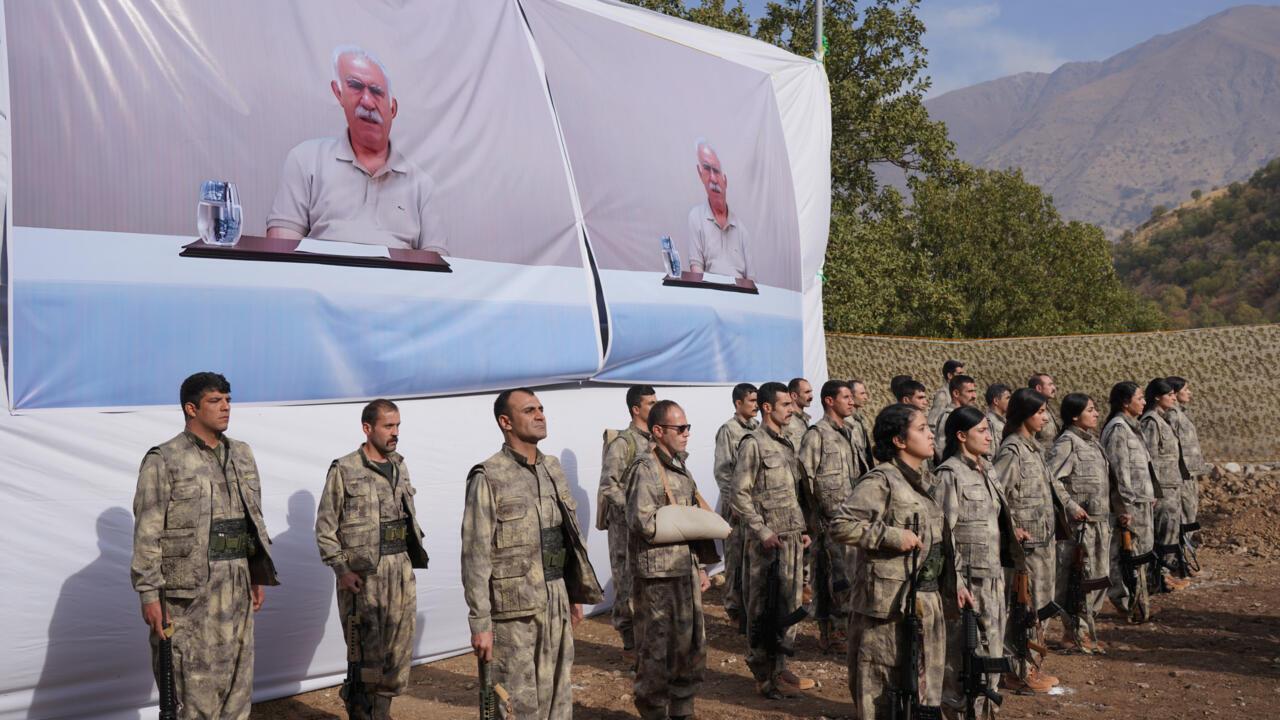
PKK urges Turkey to free Ocalan, warns peace process will halt
> The Kurdistan Workers’ Party (PKK) will take no further steps in indirect talks with Turkey as long as its founder Abdullah Ocalan remains imprisoned, said a senior commander.

✨ 1. Advent – Zeit für Licht, Hoffnung & #Solidarität 💛❤️💚
In den nächsten Adventswochen stellen wir unsere bisherigen Projekte in #Rojava vor.
☀️ Die ersten #Solarprojekte laufen bereits seit 2024: Drei Schulen in der Stadt #Qamishli wurden mit Solarpanels ausgestattet — für rund 1.035 Schüler:innen und 75 Lehrkräfte. Damit ist für sie wieder 💡 Licht, 🔌 Strom und eine 🚰 stabile Wasserversorgung gesichert.
#Advent #Weihnachten #Solardarity #Qamişlo #Energiewende #Nachhaltigkeit
✊ Starke Reportage von Anita Starosta und Timo Dorsch von @medicointernational über leise Versöhnungsarbeit in #Rojava – zwischen den Trümmern von Assad, IS und türkischen Angriffen entsteht vorsichtig eine neue gemeinsame Zukunft in #Nordostsyrien.
Wie Aktivistinnen und der Kurdische Rote Halbmond in Workshops trotz Blockaden und gekürzter Hilfe weiter für Gerechtigkeit, Alltag und eine demokratische Gesellschaft kämpfen:
📢 Im neuen @medicointernational Rundschreiben 04/2025 ist ein unbedingt lesenswerter Artikel über den komplizierten Weg zum Frieden in #Rojava und #Syrien.
Die Autor*innen Anita Starosta @starostaanita und Timo Dorsch @tid00r waren im Land unterwegs 🚗 und schreiben über die aktuelle Situation und Workshops, die den Versöhnungs-, Aufklärungs- und Gerechtigkeitsprozess vorantreiben.
🔗 https://www.medico.de/blog/versoehnung-im-stillen-20269
#medicointernational #SupportRojava #AANES #NorthEastSyria #Kurdistan
Erneute bewaffnete Auseinandersetzungen in #Syrien: “Nach Berichten der Syrischen Beobachtungsstelle für Menschenrechte eskaliert die angespannte Lage in Syrien erneut. So eröffneten am 25. November Kräfte der Übergangsregierung das Feuer auf friedliche Demostrationen in Homs, Jableh und Latakia. Die Beobachtungsstelle berichtet, dass es große Truppenbewegung in Richtung der syrischen Küstenregionen gibt, wo viele Alawiten leben. Bereits im März verübten Truppen der Übergangsregierung Massaker an Alawiten, bis zu 1000 Menschen starben. Auch in der Provinz Suweida, wo viele Drusen leben, gab es am gestrigen Tag erneut Kämpfe, mindestens ein Zivilist starb.” In dieser Situation ruft die Selbstverwaltung von Nord- und Ostsyrien #Rojava die Übergangsregierung in Damaskus zu einem Ende der Gewalt:
https://nordundostsyrien.de/angriffe-zivilisten-kueste/
Beobachtungsstelle der Menschenrechte finden Sie hier:
syriahr.com/en/373927/
syriahr.com/en/374018/
syriahr.com/en/374021/

DKP/BÖG Commemorates Fallen Fighter Robin Agiri!
Robin Agiri, born Michael Israel, fell fighting ISIS in Rojava participating in the war, and now being commeorated by DKP/BÖG — the Communist organization he joined. The organization was part of the International Freedom Battalion, the coalition of Communists and anarchists who found unity in armed struggle. In an interview in 2015 Michael stated he came to Rojava not to simply fight against the fascism of ISIS but primarily to “struggle against capitalism and Turkish imperialism in the region.”It was this same imperialist force, a NATO military, that murdered Michael and many others in a customary act of aggression against revolutionary forces in the region.
DKP/BÖG shared a video in rememberance of the comrade.
Video posted: HERE
https://abolitionmedia.noblogs.org/?p=24023
#dkpBog #ifb #kurdistan #michaelIsrael #repression #rojava #syria #turkey


https://www.newarab.com/analysis/fractured-front-autonomy-or-integration-syrias-kurds
Different perspectives on the recent clashes between the SDF and the govt in Damascus and the role of thr US in it all...
“The Pentagon placed substantial money in its new budget for the SDF, which suggests that it is not ready to abandon its alliance with the Kurds just yet.”
Client Info
Server: https://mastodon.social
Version: 2025.07
Repository: https://github.com/cyevgeniy/lmst