#ScillyIsles

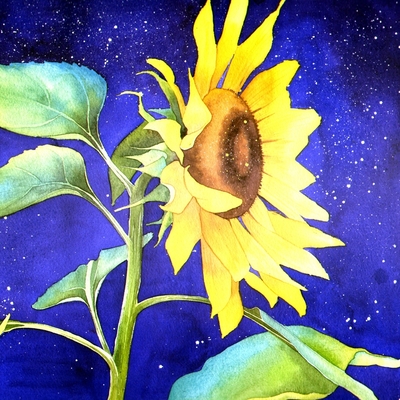
Do you love the #Scillies as I do? I'm taking pre-orders again for my hugely popular #IslesOfScilly #jigsaw #puzzles🧩
Go here: https://bit.ly/IoSjigsaw
1000 pieces - made in UK of sustainable materials - hand painted #map by me.
#scilly #scillyisles #scillyjigsaw #painting #maps #jigsawpuzzle #puzzle


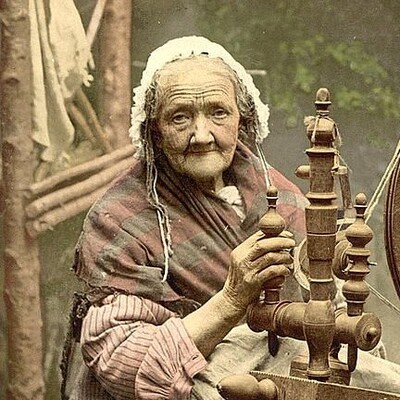
Scilly Isles, Tresco Abbey, old arches, Cornwall, England between ca. 1890 and ca. 1900. Views of the British Isles England Cornwall (County)
#ScillyIsles #TrescoAbbey #Cornwall #England #Britain #ScillysIsles #TrescoAbbeyGardens #Tresco #LandsEnd #photography #historicalPhotos #photochrom
![The image depicts a serene and picturesque garden scene with an arched stone gateway as its focal point. The archway is partially covered in lush green foliage, giving it the appearance of being integrated into the surrounding vegetation seamlessly. Flanking the entrance are tall palm trees with long slender leaves that add height to the composition and create a sense of enclosure for what lies beyond.
The garden itself is teeming with various plants, including yucca-like species and other exotic-looking flora. The greenery appears meticulously maintained, suggesting regular care by skilled horticulturists or gardeners. A stone path meanders through the space from which we are viewing it, inviting exploration of what lies further down.
In the background, a hint of an elevated landscape can be seen beyond the foliage and trees, possibly indicating that this location is part of a larger estate with additional grounds to explore. The overall atmosphere conveyed by the image is one of tranquility and natural beauty, evoking the charm of historical gardens in Britain during its peak as a colonial power.
This vintage postcard likely dates back between ca. 1890 and ca. 1900, judging from its style and subject matter. The inclusion of "Scilly Isles" suggests that this garden is situated on one or more islands within the British Virgin Islands known by various names including S [...]](https://files.mastodon.social/cache/media_attachments/files/115/726/421/117/831/354/original/fda6019beb41294f.jpeg)
Scilly Isles, Tresco Abbey, Cornwall, England between ca. 1890 and ca. 1900. Views of the British Isles England Cornwall (County)
#ScillyIsles #TrescoAbbey #Cornwall #England #photography #historicalPhotos #photochrom

Scilly Isles, St. Mary's. Pulpit Rock, Cornwall, England between ca. 1890 and ca. 1900. Views of the British Isles England Cornwall (County)
#ScillyIsles #PulpitRock #Cornwall #England #theScillyIsles #BritishIsles #SCILLYISLES #theScillyIslands #photography #historicalPhotos #photochrom
![The image depicts a rugged coastal landscape, likely taken during the late 19th century judging by its style. The scene shows an extensive rocky outcrop jutting into the sea on what appears to be St Mary's in the Scilly Isles of Cornwall, England.
On top of the highest rock formation, there are several individuals who seem to be exploring or possibly fishing, standing with a sense of precariousness over the edge where waves crash against the rocks. The water is a deep blue-green color and churns energetically as it strikes the jagged outcrops.
The land in the background appears flat and covered with grasses and shrubs indicative of coastal vegetation that withstand salty conditions, stretching into what looks like a horizon line suggesting an open expanse beyond. This could be part of another island or simply distant coastline seen from this rocky formation's perspective.
There is no visible sky as it seems to blend seamlessly with the water at the horizon due possibly to atmospheric lighting effects common in such prints during that era, which often used photographic techniques like colorization to enhance certain features for artistic effect. The image carries a sense of isolation and natural beauty typical of remote British Isles coastal scenes.
The photo is marked '1064: SCILLY ISLES ST MARY'S PULPIT ROCK' along with an identification number, which suggests it's p [...]](https://files.mastodon.social/cache/media_attachments/files/115/725/465/757/890/679/original/522bc4501f75d0e1.jpeg)
Scilly Isles, Houghtown, i.e., Hugh Town, from St. Mary's, Cornwall, England between ca. 1890 and ca. 1900. Views of the British Isles England Cornwall (County)
#ScillyIsles #Houghtown #HughTown #StMarys #Cornwall #England #photography #historicalPhotos #photochrom

Scilly Isles, Hughtown, i.e., Hugh Town, from Garrison, Cornwall, England between ca. 1890 and ca. 1900. Views of the British Isles England Cornwall (County)
#ScillyIsles #Hughtown #HughTown #Garrison #Cornwall #England #Scilly #photography #historicalPhotos #photochrom
![The image depicts a picturesque coastal town with an array of houses and buildings spread across the landscape, viewed from a high vantage point. The architecture varies in style but predominantly features gabled roofs and traditional construction materials such as stone or brickwork visible on many structures. A significant historical landmark stands prominently atop a hill to the right side of the scene, suggesting its importance within this setting.
A beach is discernible along the coastline with gentle waves lapping against it. The sea meets land in the distance where a harbor can be faintly observed, adding to the scenic beauty and hinting at local maritime activities. Greenery blankets much of the lower slopes leading up to the hilltop structure, indicating cultivated fields or perhaps pasturelands.
The overall coloration suggests an early 20th-century photograph with muted yet naturalistic tones; greens from vegetation, grays and browns on buildings, a turquoise sea, and pale blues in the sky. There is no visible modern infrastructure such as cars or contemporary clothing styles to provide precise dating but its historical context is implied by architectural design.
The image appears aged, possibly a century old given the photochrom process typically used during that era for color printing from black-and-white negatives. The upper left corner of the photograph c [...]](https://files.mastodon.social/cache/media_attachments/files/115/724/357/199/104/265/original/27e6fabeb8ce7cd5.jpeg)
I have just ONE #IslesofScilly #jigsawpuzzle 🧩 available to pre-order from here:
https://bit.ly/IoSjigsaw
Order now and you'll have it by the end of Oct. Price INCLUDES P&P to UK addresses.
If your family loves the #Scillies, it'll be fun to tackle it together over Christmas.
#scilly #scillyisles #scillyjigsaw #painting #mappuzzle #maps #cartography #giftideas #birding #birdwatching
#jigsawpuzzles #jigsawpuzzlelover #jigsawpuzzler

It's the LAST CHANCE to order your #IslesofScilly, #Mull or #Pembrokeshire #jigsawpuzzle! 🧩I'm taking pre-orders for these hugely popular #jigsaw #puzzles until Monday 15 Sept 2025. You'll get yours in late Oct / early Nov.
Fancy one? Go here: https://janetomlinson.com/collections/jigsaw
Thanks for looking 🙏
#scilly #Scillyisles #Scillyjigsaw #MullJigsaw #pembrokeshirejigsaw
#painting #mapPuzzle #maps #cartography #xmasgiftideas #giftideas #wildlife #birding #birdwatching
#jigsawpuzzle #jigsawpuzzlelover #jigsawpuzzler
#WalesArt #scotland

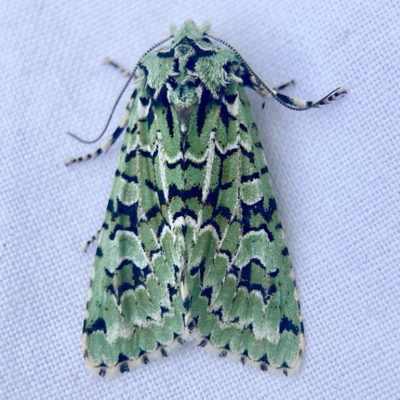
Mothman is currently not mothing owing to being on holiday on the Scilly Isles with Mr Mothman Spouse. Mothman did some rock posing and we found some rather stunning shells.


Old Abbey, Tresco, Isles of Scilly, 1913 - C King Postcard
https://www.ebid.net/uk/for-sale/old-abbey-tresco-isles-of-scilly-1913-c-king-postcard-221410213.htm

Great Bay, St Martin's, Isles of Scilly, c.1975 - Gibson Postcard
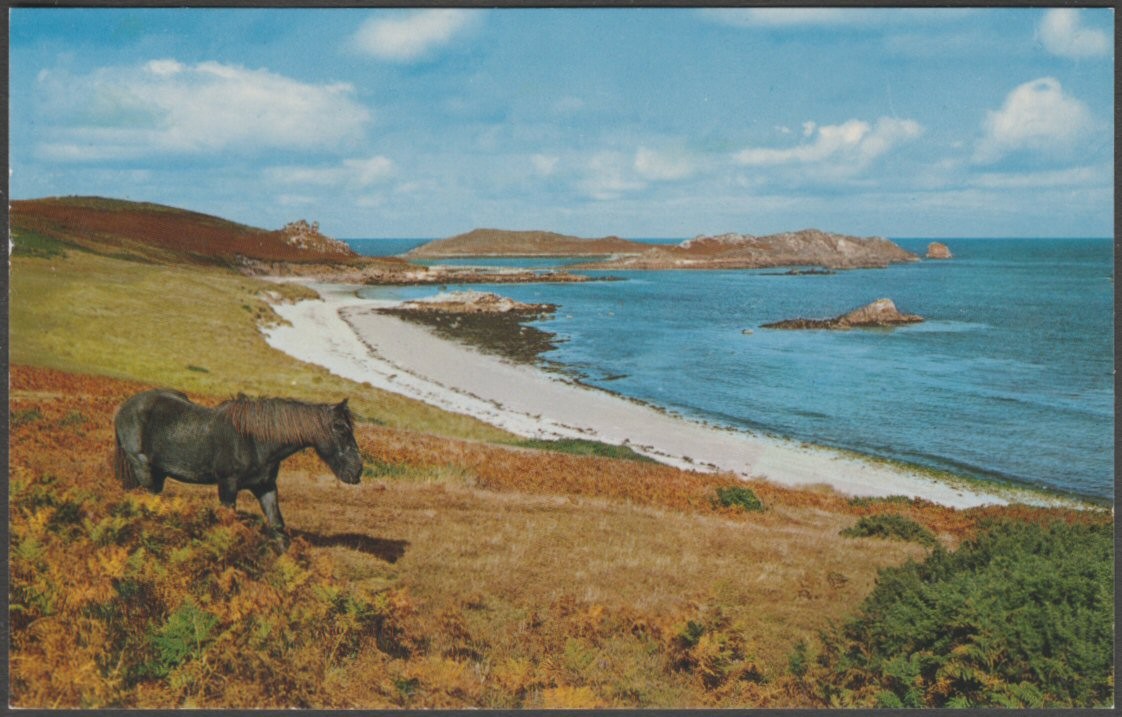
Peninnis, Isles of Scilly, 1958 - Douglas Postcard
https://www.ebid.net/uk/for-sale/peninnis-isles-of-scilly-1958-douglas-postcard-221349843.htm

Post Office, St Mary's, Scilly Isles, 1908 - Peacock Postcard

The Czar near Cromwell's Castle, Tresco, Scilly, c.1980s - Gibson Postcard
#Tresco #Scilly #IslesOfScilly #ScillyIsles #GigRacing #Postcard #Postcards

Tresco Gardens, Isles of Scilly, c.1920s - Rogers Postcard
#Tresco #Scilly #IslesOfScilly #ScillyIsles #Postcard #Postcards

Town Hall, Hugh Town, St Mary's, Scilly Isles, 1908 - Peacock Postcard
#HughTown #Scilly #IslesOfScilly #ScillyIsles #Postcard #Postcards

The Gardens, Tresco, Isles of Scilly, c.1970 - Gibson Postcard
#Tresco #Scilly #ScillyIsles #IslesOfScilly #Postcard #Postcards

The Tooth Rock, St Mary's, Isles of Scilly, c.1905-10 - Peacock Postcard

Palm Trees in Tresco Abbey Gardens, Isles of Scilly, c.1960s - Jarrold Postcard
#Tresco #Scilly #IslesOfScilly #ScillyIsles #Postcard #Postcards
