#bres

Tuatha De Danann

This “name” is usually translated as “folk of the goddess Danu.” They are also known by the earlier name: Tuath De (“tribe of the gods” or “divine tribe”). They’re a supernatural race in Irish mythology. Many of them are thought to represent deities of pre-Christian Gaelic Ireland.

The Tuatha De Danann are often pictured as kings, queens, druids, bards, warriors, heroes, healers, & craftsmen who have supernatural powers. They live in the Otherworld but interact with humans & the human world. They’re associated with sidhe.

Their traditional rivals are the Fomorians (Fomoire), who might represent the destructive powers of nature, & whom the Tuatha De Danann defeated in the Battle of Mag Tuired.

Prominent members include the Dagda (“the great god”), The Morrigan (“the great queen” or “phantom queen”), Lugh, Nuada, Aengus, Brigid, Manannan, Dian Cecht the healer, & Goibniu the smith, 1 of the Tri De Dana (“three gods of craft”).

They’re immune to ageing & sickness, & who have magic powers. The powers most often attributed to them are control over the weather & the elements, & the ability to shape shift themselves & other things.

They’re also said to control the fertility of the land. The tale De Gabail in t-Sida says the 1st Gaels had to establish friendship with the Tuatha De Danann before they could raise crops & herds.

They live in the Otherworld, which is described as either a parallel world or a heavenly land beyond the sea or under the earth’s surface. Many of them are associated with specific places in the landscape, especially the sidh mounds.

These are the ancient burial mounds & passage tombs which are entrances to Otherworld realms. The Tuatha De Danann can hide themselves with a feth fiada (“magic mist”) & appear to humans only when they wish to.

In euhemerized accounts, the Tuatha De Danann were descended from Nemed, leader of a previous wave of inhabitants of Ireland. In non-euhemerized accounts, they’re descended from Danu/Anu, a mother goddess. They came from 4 cities to the north of Ireland (Falias, Gorias, Murias, & Finias), where architecture, the arts, & magic.

According to Lebor Gabala Erenn, they came to Ireland “in dark clouds” & “landed on the mountains of the Conmaicne Rein in Connachta.” Otherwise Sliabh an Iarainn, “and they brought a darkness over the sun for 3 days & 3 nights.”

Sliabh an Iarainn (anglicized Slieve Anierin) is a mountain in County Leitrim, Ireland. It’s part of the Cuilcagh Mountains.

They immediately burnt the ships “so that they should not of retreating to them, & the smoke & the mist that came from the vessels filled the neighbouring land & air. Therefore it was conceived that they had arrived in clouds of mist.”

Led by King Nuada, they fought the First Battle of Magh Tuireadh on the west coast, in which they defeated & displaced the native Fir Bolg, who then inhabited Ireland. In the battle, Nuada lost an arm to their champion, Sreng.

Since Nuada was no longer “unblemished,” he couldn’t continue as king & was replaced by the half-Fomorian Bres, who turned out to be a tyrant.

The doctor Dian Cecht replaced Nuada’s arm with a working silver 1. (Think Bucky from Captain America.) He was reinstated as king. Back in those days, if a king wasn’t physically whole, then he wasn’t fit to be king.

However, Dian Cecht’s son, Miach, was dissatisfied with the replacement. So he recited the spell, “adult fri halt do and feith fri feth” (joint to joint of it & sinew to sinew), which caused flesh to grow over the silver over the course of 9 days & nights.

In a fit of jealous rage, Dian Cecht killed his own son. Because of Nuada’s restoration as king, Bres whined to his family & dad, Elatha, who sent him to look for help from King Balor of the Fomorians.

The Tuatha De Danann fought the Second Battle of Magh Tuireadh against the Fomorians. King Nuada was killed by King Balor’s poisonous eye. But KIng Balor was killed by Lugh (who was the champion of the Tuatha De Danann), who then took over as king.

A 3rd battle was fought against a wave of invaders, the Milesians, from the northwest of the Iberian Peninsula (present-day Galicia & Northern Portugal). These were descendants of Mil Espaine (who are thought to represent the Goidelic Celts).

The Milesians encountered 3 Tuatha De Danann goddesses, Eriu, Banba, & Fodla, who asked that the island be named after them. Eriu is the origin of the modern name Eire (which is the Irish language name for Ireland), & Banba & Fodla are still sometimes used as poetic names for Ireland.

Their 2 husbands (Mac Cuill, Mac Cecht, & Mac Greine) were kings of the Tuatha De Danann and created a magical storm in an attempt to drive them away. The Milesian poet calmed the sea with his verse, then his people landed & defeated the Tuatha De Danann at Tailtiu.

When Amergin was called upon to divide the land between the Tuatha De Danann & his own people, he cleverly allotted the portion above ground to the Milesians & the portion underground to the Tuatha De Danann.

The Tuatha De Danann were led underground into the Sidhe mounds by Manannan mac Lir & Tir na nOg onto a flowery plain/plain of honey attested to in the Voyage of Bran.

The Tuatha De Danann brought 4 magical treasure with them to Ireland, 1 a piece from their 4 cities: Dagda’s Cauldron, The Spear of Lugh, Lia Fail (The Stone of Fal), & Claiomh Solais (The Sword of Light).

One-Time Monthly Yearly

Make a one-time donation

Make a monthly donation

Make a yearly donation

Choose an amount

$1.00 $5.00 $10.00 $1.00 $5.00 $10.00 $5.00 $10.00 $15.00

Or enter a custom amount

$

Your contribution is appreciated.

Your contribution is appreciated.

Your contribution is appreciated.

DonateDonate monthlyDonate yearly

#aengus #amergin #anu #banba #battleOfMagTuired #bres #brigid #captainAmerica #celts #christian #claiomhSolais #conmaicneRein #connachta #countyLeitrim #cuilcaghMountains #dagda #dagdasCauldron #danu #deGabailInTSida #dianCecht #elatha #eriu #fethFiada #finais #firBolg #firstBattleOfMaghTuireadh #fodla #fomoire #fomorians #gaelic #gaels #galicia #goibniu #goidelic #gorias #iberianPeninsula #ireland #irish #irishMythology #kingBalor #kingNuada #leborGabalaErenn #liaFail #lugh #macCecht #macCuill #macGreine #manannan #manannanMacLir #miach #milEspaine #milesians #nemed #northernPortugal #otherworld #sidh #sidhe #sliabhAnIarainn #slieveAnierin #sreng #tailtiu #theMorrigan #theSpearOfLugh #theStoneOfFal #theSwordOfLight #tirNaNog #triDeDana #tuathDe #tuathaDeDanann2 #voyageOfBran
The Dagda

Considered the great God of Irish Mythology. He’s the chief God of the Tuatha De Danann. The Dagda are portrayed as a father-figure, king, & druid. He’s associated with fertility, agriculture, masculinity, & strength. As well as magic, druidry, & wisdom. He can control life & death (with his staff), the weather & crops, as well as time & the seasons.

He’s often portrayed as a large bearded man or a giant wearing a hooded cloak. He owns a magic staff (lorc) of a dual nature: it kills with 1 end & brings to life with the other. He also owns a cauldron (the coire ansic), which never empties, & a magic harp (Uaithene, this may be the name of the harpist/player.).

The harp can’t be played unless called by its 2 bynames. The harp can fly itself to the Dagda when called. Think Thor’s hammer in the Marvel movies. He just sticks his hand out & the hammer comes to him. This is what happens with the Dagda & the harp.

He’s said to live in Bru na Boinne (Newgrange). Other places associated with or named after him include: Uisneach, Grianan of Aileach, Lough Neagh, & Knock Iveagh. The Dagda is said to be the husband of the Morrigan & the lover of Boann. His kids include: Aengus, Brigit, Bodb Derg, Cermait, Aed, & Midir.

The Dagda has several other names/epithets, that reflect aspects of his character:

  • Eochu or Eochaid Ollathair, “horseman, great father” or “horseman, all-father”
  • Ruad Rofhessa, “mighty one/Lord of great knowledge”
  • Daire, “the fertile one”
  • Aed, “the fiery one”
  • Fer Benn, “horned man” or “man of the peak”
  • Cera, “creator”?
  • Cerrce, “striker”?
  • Easal
  • Eogabal

The Dagda was 1 of the kings of the Tuatha De Danann. The Tuatha De Danann are the race of supernatural beings who overcame the Fomorians, who inhabited Ireland previously, prior to the coming of the Milesians.

The Morrigan is depicted as his wife, his daughter was Brigit, & his lover was Boann, after whom the River Boyne is named. Though she was married to Elcmar & with whom he had the Aengus. Before the battle with the Fomorians, he was coupled with the goddess of war, the Morrigan, on Samhain.

In the tract found in the Yellow Book of Lecan, there were 3 items the Dagda named together, his staff (lorc), the shirt (leine) of protection from sickness, & the cloak (lumman) of shape-shifting color-changing.

The “great staff” (lorg mor) had a smooth end that brought the dead back to life. He resuscitated his son, Cermait Milbel with the smooth end of the staff. But the staff’s rough end caused instant death. The staff/club is also described in the Ulster Cycle narrative, Mesca Ulad. Where it was called the “terrible iron staff” (lorg aduathmar iarnaidi).

The Cauldron of the Dagda is 1 of the Four Treasures of the Tuatha De Danann. It was said “an assembly used not to go unsatisfied from it.” The cauldron “signified plenty.” His magic cauldron was otherwise known as the coire ansic (“the un-dry cauldron”).

After Uaithne, the Dagda’s Harper was abducted by the Fomorians, the Dagda went to the enemy’s hall & received his magic harp, which had 2 names. When the Dagda called upon his harp by its 2 names (Daur Da Blao & Coir Cetharchair), the harp leapt off the wall & came to him.

The harp was forbidden by the Dagda from supplying any sound. Unless it was called upon by the names, which translated to “Oak of Two Meadows” & “the Four Angled Music.” Hence, the harp was a richly ornamental magic harp made of oak which, when the Dagda played it, put the seasons in their correct order.

The Dagda had the skillet to play the “Three Strains” (joy, sorrow, sleep) which he used to immobilize the Fomorians & escape.

He had 2 pigs. 1 of which was always growing whilst the other was always roasting & ever-laden fruit trees. He is also described as being the owner of a black-maned heifer that was given to him from his labors prior to the Second Battle of Moytura. When the heifer calls her calf, all the cattle of Ireland are taken by the Fomorians as a tribute graze.

The Dagda is said to be the husband of the Morrigan, who’s called his “envious wife.” His kids include: Aengus, Cermait, & Aed (often called the 3 sons of the Dagda), Brigit, & Bodb Derg. He’s said to have 2 brothers, Nuada & Ogma. But this may be an instance of the tendency to triplicate deities. Elsewhere, the Dagda is linked exclusively with Ogma. The 2 are called “the 2 brothers.”

In the Dindsenchas, the Dagda is given a daughter named Ainge, for whom he makes a twig basket or tub that always leaks when the tide is in & never leaks when it’s going out. The Dagda’s dad is named Elatha, son of Delbeath.

Englec, the daughter of Elcmar, is named as a consort of the Dagda & the mom of his “swift son.” Echtgi the loathsome is another daughter of the Dagda’s named in the Banshenchas. Before the Second Battle of Mag Tuired, the Dagda builds a fortress for Bres called Dun Brese & is also forced y the Fomorian kings Elatha, Indech, & Tethra to build raths.

Raths (also called ringforts/ring forts) are small circular fortified settlements built during the Bronze & Iron Age & early Middle Ages up to about the year 1000 AD. They’re found in Northern Europe, especially in Ireland.

In the lead up to the Second Battle of Mag Tuired, when Lugh asks Dagda what power he’ll wield over the Fomorian host, he responds that he “will take the side of the men of Erin both in mutual smiting & destruction & wizardry. Their bones under my club will be as many hailstones under the feet of herds of horses.”

The Dagda has an affair with Boann, the goddess of the River Boyne. She lives at Bru na Boinne with her husband, Elcmar. The Dagda impregnates her after sending Elcmar away on a 1-day errand.

To hide the pregnancy from Elcmar, the Dagda casts a spell on him, making “the sun stand still” so he will not notice the passing of time. Meanwhile, Boann gives birth to Aengus, who’s also known as Maccan Og (“the young son”). Eventually, Aengus learns that the Dagda is his true dad & asks him for a portion of land.

In some versions of the tale, the Dagda helps Aengus take ownership of the Bru from Elcmar. Aengus asks & is given the Bru for laa ocus aidche. Because in Old Irish, this could mean either “a day & a night” or “day & night,” Aengus claims it forever. Other versions have Aengus taking over the Bru from the Dagda himself by using the same trick.

The Tochmarc Etaine tells the story of how Boand conceives Aengus by the Dagda. In the Aislinge Oengusso or Dream of Aengus, the Dagda & Boand help Aengus to find a mysterious woman who he has fallen in love with his dreams.

In a poem about Mag Muirthemne, the Dagda banishes an octopus with his “mace of wrath” using the words: “Turn thy hollow head! Turn thy ravening body! Turn thy resorbent forehead! Avaunt! Begone!” The Sea receded with the creature & the plain of Mag Muirthemne was left behind.

In the Dindsenchas, the Dagda is described as swift with a poison draught & as a justly dealing lord. He’s also called a king of Erin with hosts of hostages, a noble, slender prince, & the dad of Cermait, Aengus, & Aed.

He’s credited with a 70 or 80-year reign over the Tuatha De Danann. This was before dying at Bru na Boinne, finally succumbing to a wound inflicted by Cethlenn during the battle of Mag Tuired. The Dagda has similarities with the later harvest figure Crom Dubh.

He also has similarities with the Gaulish god, Sucellos, who’s depicted with a hammer & a pot, & the Roman god, Dis Pater. Dis Pater (a.k.a. Rex Infernus or Pluto) is a Roman god of the underworld. Dis was originally associated with fertile agricultural land & mineral wealth.

Make a one-time donation

Your contribution is appreciated.

Donate

Make a monthly donation

Your contribution is appreciated.

Donate monthly

Make a yearly donation

Your contribution is appreciated.

Donate yearly

#1000AD #Aed #Aengus #Ainge #AislingeOengusso #Banshenchas #Boann #BodbDerg #Bres #Brigit #BronzeAge #BruNaBoinne #CauldronOfTheDagda #Cera #Cermait #CermaitMilbel #Cerrce #Cethlenn #CoirCetharchair #CoireAnsic #CromDubh #Daire #DaurDaBlao #Delbeath #Dindsenchas #DisPater #DreamOfAengus #Druid #Druidry #DunBrese #Easal #Echtgi #Elatha #Elcmar #Englec #Eochaid #Eochu #Eogabal #Erin #FerBenn #Fomorians #FourAngledMusic #FourTreasuresOfTheTuathaDeDanann #Gaul #Grianan #GriananOfAileach #Ireland #IrishMythology #IronAge #KingElatha #KingIndech #KingTethra #KnockIveagh #LaaOcusAidche #Leine #Lorc #LorgAduathmarIarnaidi #LorgMor #LoughNeagh #Lugh #Lumman #MaccanOg #MagMuirthemne #MescaUlad #MiddleAges #Midir #Milesians #Newgrange #NorthernEurope #Nuada #OakOfTwoMeadows #Ogma #OldIrish #Pluto #Raths #RexInfernus #RingForts #RiverBoyne #Rome #RuadRofhessa #Samhain #SecondBattleOfMagTuired #SecondBattleOfMoytura #Staff #Sucellos #TheDagda #TheMorrigan #TheTwoBrothers #ThreeSonsOfTheDagda #ThreeStrains #TochmarcEtaine #TuathaDéDanann #Uaithne #Uisneach #UlsterCycle #Underworld #Wizardy #YellowBookOfLecan

Lugh

He’s also known as Lug, or in modern Irish, Lu. He’s the Irish manifestation of the Pan-Celtic god, Lugus. His Welsh equal is Lleu Llaw Gyffes. The Roman & Greek equals are Mercury & Hermes.

He’s a member of the Tuatha De Danann. The Tuatha De Danann is a group of supernatural beings. He’s shown as a warrior, a king, a master craftsman, & a savior. He’s also associated with skill & mastery in multiple disciplines, including the arts.

Lug also has connections with oaths, truth & the law, & rightful kingship. He’s got an association with intelligence. Lugh is linked with the harvest. The harvest festival was named after him: Lughnasadh.

His most common titles are: Lamfada (Modern Irish: Lamhfhada; “long hand” or “long arm,” probably because of his skill with a spear or his ability as a ruler.) & Samildanach (Modern Irish: Samhaildanach, “equally skilled in many arts”). Sometimes this has been anglicized as “Lew of the Long Hand.”

Lugh was/is the son of Cian & Ethniu (or Ethliu). He’s the material grandson (meaning through his mother’s line) of the Fomorian tyrant, Balor. Lugh kills Balor in the Battle of Mag Tuired. Lugh’s son, the hero Cu Chulainn, was believed to be an incarnation of Lugh.

Lugh has a few magical items. He has an unstoppable fiery spear, & a sling stone. He owns a hound named Failinis. Failinis was given to Lugh by the sons of Tuireann.

Lugh is said to have invented ball games, horse racing, & fidchell. Fidchell is a board game popular with the ancient Celts. It’s played with 2 people who move an equal number of pieces across a board.

Lugh is usually pictured as a youthful warrior, being very large, very beautiful, & being a spear-wielding horseman. He’s also described as a tall young man with bright red cheeks, white sides, a bronze-colored face & blood-colored hair. His appearance is compared to the sun in 1 version of the story.

Lugh’s dad, Cian, was also a member of the Tuatha De Danann. His mom, Ethniu, was the daughter of Balor, of the Fomorians. The Fomorians are a supernatural race, often pictured as hostile, monstrous beings. In 1 story, Cian & Ethniu’s union is a dynastic marriage. This followed an alliance between the Tuatha De Danann & the Fomorians.

In another tale, Cian gives a boy Lugh to Tailtiu, queen of the Fir Bolg, to foster Lugh. The Fir Bolg are the 4th group of people to settle in Ireland. Lugh, the foster-son of Tailtiu, is described as the “son of the Dumb Champion.”

In a folktale recounted in 1835 tells of the birth of a grandson of Balor would grow up to kill his grandfather. The grandson is unnamed, his dad is named Mac Cinnfhaelaidh. The manner of Balor’s death is different. But it has been taken as a version of the death of Lugh. This was adapted by such as Lady Gregory.

In this tale, Baldor hears a druid’s prophecy that he’d be killed by his own grandson. To attempt to stop this from happening, he imprisons his only daughter in the Tor Mor (Great Tower) of Tory Island. She was cared for by 12 women. These 12 women were to prevent her from EVER meeting or even learning of men’s existence.

On the mainland, Mac Cinnfhaelaidh owns a magic cow, who gave such abundant milk that everyone, including Balor, wanted it for themselves. While the cow was in the care of Mac Cinnfhaelaidh’s brother, Mac Samthainn, Balor shows up in the form of a little boy with red hair.

Balor, as the boy, tricks him into giving Balor the cow. Looking for revenge, Mac Cinnfhaelaidh calls on a fairy woman (Leanna Sidhe) called Birog. Birog transports him, by magic, to the top of Balor’s tower, where he seduces Ethniu.

In a matter of time, she gives birth to triplets. Baldor gathers up the triplets in a sheet & puts them in a whirlpool to drown. 2 of the babies drown but 1 baby unwittingly gets dropped into the harbor. The harbor baby is rescued by Birog. She takes him (the baby) to his dad. The baby daddy gives the surviving baby to his uncle (baby daddy’s brother, Gavida the Smith, as a foster kid.

As a young man, Lugh travels to Tara to join the court of King Nuada of the Tuatha De Danann. The doorkeeper won’t let him in unless he has a skill he can use to serve the king. He offers his services as a wright, hero, smith, champion, swordsman, harpist, poet, historian, sorcerer, & craftsman.

Each time, he was rejected because the Tuatha De Danann already had someone with those skills. Lugh asked the doorkeeper if they had anyone with all those skills simultaneously. The doorkeeper had to admit defeat. Lugh joins the court & is appointed Chief Ollam of Ireland. He wins a flagstone-throwing contest against Ogma, the champion. He entertains the court with his harp.

At this time, the Tuatha De Danann are oppressed by the Fomorians. Lugh was amazed at how they meekly accepted their oppression. King Nuada wonders if Lugh could lead them to freedom. Light is given command over the Tuatha De Danann. Lugh begins making preparations for war.

Cian, Lugh’s dad, & Tuireann are old enemies. One day, Tuireann’s sons, Brian, Iuchar, & Iucharba spotted Cian in the distance & they decided to kill him. They find him, but in the form of a pig. But Cian tricked the brothers into letting him transform back into a person before they killed him.

This gave Lugh the legal right to claim recompense for a father rather than just a pig. When they try to bury him, the ground spits his body out 2x before keeping him down, finally. Eventually confessing that it’s a grave to Lugh.

Lugh holds a feast & invites the brothers. During it, he asks them what they would order as compensation from the unaliveing of their dad. They say that leaving this mortal coil would be the only just demand. Lugh agrees. Then he accuses them of the murder of his dad, Cian.

Lugh sends them on a series of seemingly impossible quests/tasks. Like our old friend, Hercules. The brothers go on an adventure. They get through all the quests, except 1. This last quest will surely kill them. Tuireann tries to stop it, but Lugh demands they go ahead with this final quest.

Lugh uses the magical items that Tuireann sons gathered to lead the Tuatha De Danann in the Second Battle of Mag Tuireadh against the Fomorains. Before the battle, Lugh asked every person (men & women) in his army what they brought to the fight exactly. He then did his Braveheart speech. This speech was SO motivating that everyone’s spirit was elevated to that of a king or lord.

King Nuada was unalived by Balor in the ensuing battle. Lugh then faces Balor. Balor opens his poisonous eye that also kills any who look upon it. But Lugh is ready, he shoots a sling. The slung rock/stone drives Balor’s eye out the backside of his head, like all the way out, through his skull. This ends up unaliveing Balor & starts causing chaos on the Fomorian army behind.

After this victory, Lugh finds Bres. Bres was a half-Fomorian former king of the Tuatha De Danann. Bres was alone & unprotected on the battlefield. He begs for his life. If he was spared, he promised that the cows of Ireland always gave milk.

The Tuatha De Danann passed on that offer. He counter-offers with promising 4 harvests in 1 year. But the Tuatha De Danann lets him know that 1 harvest a year was cool with them. However, Lugh spares his life on the condition that he teaches the Tuatha De Danann how & when to plough, sow, & reap.

One of his (Lugh’s) wives, Buach, had an affair with Cermait (the son of the Dagda). Lugh unalived him in revenge. But Cermait’s sons (Mac Cuill, Mac Cecht, & Mac Greine) unalived Lugh in return. They speared him through the foot. Then drowning him in Loch Lugborta in County Westmeath. He ruled for 40 years. Cermait was revived, later, by his dad, the Dagda, who used the smooth, or healing, end of his staff to bring Cermait back to life.

One-Time Monthly Yearly

Make a one-time donation

Make a monthly donation

Make a yearly donation

Choose an amount

$1.00 $5.00 $10.00 $1.00 $5.00 $10.00 $5.00 $10.00 $15.00

Or enter a custom amount

$

Your contribution is appreciated.

Your contribution is appreciated.

Your contribution is appreciated.

DonateDonate monthlyDonate yearly

#1835 #Balor #Birog #Bres #Brian #Buach #Celts #Cermait #ChiefOllamOfIreland #Cian #CuChulainn #DruidicProphecy #DynasticMarriage #Ethliu #Ethniu #Failinis #Fidchell #FirBolg #Fomorian #Fomorians #FosterKid #GravidaTheSmith #Greek #Hermes #Hound #Ireland #Irish #Iuchar #Iucharba #KingNuada #LadyGregory #Lamfada #Lamhfhada #LeananSidhe #LewOfTheLongHand #LleuLlawGyffes #LochLugborta #Lu #Lug #Lugh #Lughnasadh #Lugus #MacCecht #MacCinnfhaelaidh #MacCuill #MacGreine #Mercury #OgmaTheChampion #PanCeltic #PoisonousEye #QueenTailtiuOfTheFirBolg #Reincarnation #Roman #Samhaildanach #Samildanach #SecondBattleOfMagTuireadh #SonsOfTuireann #Tara #TheDagda #TorMor #ToryIsland #TuathaDéDanann #Tuireann #Welsh

1. Neu-Kelte 🌻💙💛🌻NeuKelte@hear-me.social
2025-04-09

#Wyrdnesday #LegendaryWednesday: Eri, daughter of Delbaith, told #Bres that his father was a king of the Fomor, Elathan, son of Dalbaech, and that he came to her one time over a level sea in some great vessel that seemed to be of silver, but she could not see its shape.` #Celtic
Source: Gods and Fighting Men by Lady Gregory - Project Gutenberg eBook

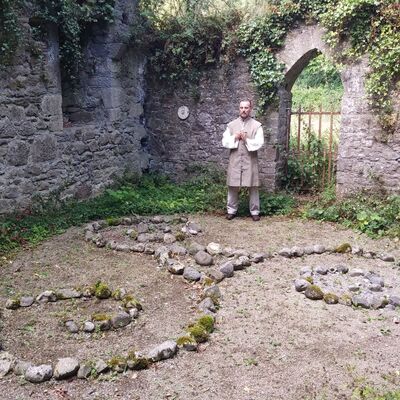
Bres, The Old Church Visitor Centre, Carrownamaddy, photocredit 1. Neu-Kelte
1. Neu-Kelte 🌻💙💛🌻NeuKelte@hear-me.social
2025-01-06

#MythologyMonday: Before the introduction of coinage in Ireland and Wales, the slave (oldir. cumal) was the highest unit of account (H. Birkhan).
`The newly elected king, #Bres, proved to be a tyrannical, power-crazed maniac. After enduring seven years of his rule, during which Bres reduced the Danann to little more than slaves and forced them to pay hefty tribute to his father’s people, the Fomori, the Danann finally rebelled and deposed him.`
Source: Ali Isaac | Substack

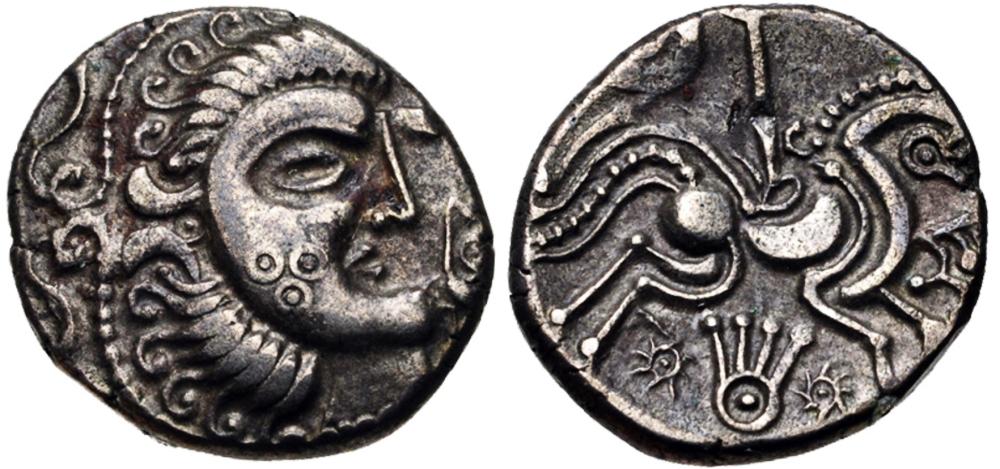
Classical Numismatic Group, Inc., www.cngcoins.com, Celtic Stater Armorica Moon Head, CC BY-SA 3.0
1. Neu-Kelte 🌻💙💛🌻NeuKelte@hear-me.social
2024-10-15

#FairyTaleTuesday: `The difficult labours king #Bres demanded of people such as the Dagda and #Ogma, all the while depriving them of proper food, prompted angry talk. He didn`t supply feasts, entertainments and other expected gifts to his visitors.
The villain was so stingy that he would not light a fire in the great hall nor feed visitors anything but unbuttered crackers.` #Celtic
Source: Wolf, Casey June “The Mythical Pairing of Brig and Bres”

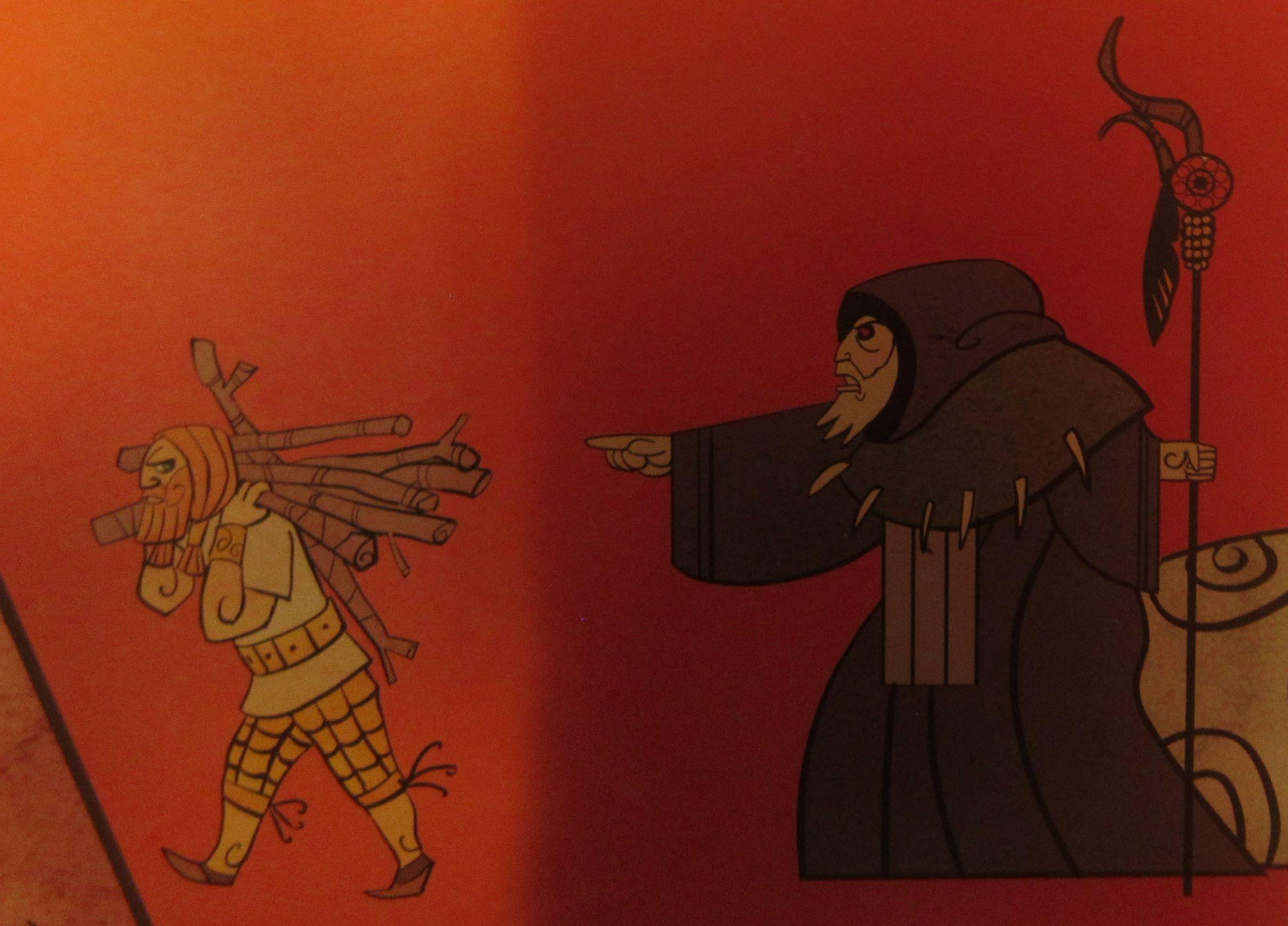
Ogma was forced by Bres to carry firewood, The Old Church Visitor Centre, Carrownamaddy, photocredit 1. Neu-Kelte.JPG
Juan Luis Reciojuanluisrecio@masto.es
2024-09-25

En #Hitball hay que elegir bate, situarse en la base del box con estilo y buena técnica, pedir bola, y a la cuenta de 5, ¡mandarla fuera del estadio! Previamente se elige en... periodistadigital.com/elbuenvi #Beisbol #Madrid #bres #restaurantes #bateo

1. Neu-Kelte 🌻💙💛🌻NeuKelte@hear-me.social
2024-09-09

#MythologyMonday: As #Bres refused beer to #Cairbre mac Éadoine, the bard paid him back in kind, leveling a (literally) blistering satire at the king, which forced him to step down: “Without food upon a dish, without a cow’s milk on which calves grow, without a house in the gloomy night, without storytellers to entertain him, let this be Bres’s future.” Stung by the satire, Bres felt his face break out in boils.`
Source: P. Monaghan `Encyclopedia of #Celtic #Mythology and #Folklore`

Bres, The Old Church Visitor Centre, Carrownamaddy, photocredit 1. Neu-Kelte
2024-08-29

Lees alles over: "Jojanneke Tesselaar springt in de bres voor mensen in de bijstand of WSNP" op Medemblik Praat | ENKHUIZEN - Jojanneke Tesselaar van Jo's crazy cuts&colors trekt zich het lot van mensen die | #bres #bijstand #wnsp #kapster #knippen #mensen

medemblikpraat.nl/jojanneke-te

2023-06-26

Vier muzikanten speelden in de jaren ‘80 in verschillende Utrechtse bands, zoals Het Goede Doel. Nu spelen ze in Bres in een nieuw programma ‘Gemis’. Met hun luisterliedjes, pop, een beetje poëzie, een vleugje jazz, en dat alles om gemis te delen, staan ze met hun try-out op vrijdag 7 juli in het Torenlaan Theater.

Zie zeistermagazine.nl/gemis

#zeist #zeistermagazine #torenlaantheater #band #hetgoededoel #goededoel #gemis #bres #tryout #jazz #poezie #pop #luisterliedjes

Client Info

Server: https://mastodon.social
Version: 2025.07
Repository: https://github.com/cyevgeniy/lmst