
CAW Term of the Week - Anaphora
#CAW #CartersvilleAreaWriters #CAWTofW #CAWTermOfTheWeek #TermoftheWeek #TofW #WritingCommunity #Writers #Authors #WritingTips #WritingLife #WritersOfMastodon #WritersOnMastodon #AuthorsOfMastodon #AuthorsOnMastodon #MastoWriters #Anaphora
#Anaphora

Annals of animals which get ‘who’
In a local newspaper some time ago I read about ‘dormice . . . who nest in shrubs and hedgerows’. The grammar of this phrase struck me enough to write a brief post on the different kinds of antecedent for which we use the relative pronouns who, that, and which.
When referring to animals we usually use that or which, reserving who for people, or entities that comprise people. But who may also be used for animate entities with personality or the implication thereof, and this includes non-human animals – even dormice, I was pleased to see.
As the table below shows, who is especially likely to be used with pets, companion animals, or domesticated or very familiar animals. If the creature has been personalized with a name or by establishing its sex, there’s a good chance it will warrant who.
I read a couple of nice examples recently in Claire Keegan’s short story ‘Men and Women’, from her debut collection Antarctica:
She watched the sudden, fast shadows of swallows who flew past her window in fleeting pairs, subtracting light from her room, and marvelled how living things could suspend themselves in mid-air.
I sit by the window and keep an eye on the sheep who stare, bewildered, from the car.
And two more in Luis Bunuel’s autobiography My Last Breath, translated by Abigail Israel:
At one time or another, we had monkeys, parakeets, falcons, frogs and toads, grass snakes, and a large African lizard who the cook killed with a poker in a moment of terror.
Luis also had a hatbox filled with tiny gray mice whom he allowed us to look at once a day
The second of these is from an article by Bunuel’s sister Conchita that was published in the French magazine Positif and reproduced in My Last Breath. Both pronoun choices can presumably be attributed to the translator. The inconsistency in selecting whom is a little curious too.
For a more thorough treatment of attitudes to the use of who with animals, see Gaëtanelle Gilquin and George M. Jacobs’ paper ‘Elephants Who Marry Mice are Very Unusual: The Use of the Relative Pronoun Who with Nonhuman Animals’. It opens with an interesting story about Jane Goodall’s research in Tanzania:
When Goodall submitted her first scientific paper for publication, it was returned to her by the editor to be amended. In every place where she had written (he) or (she) to refer to chimpanzees, the words had been replaced with (it). Similarly, every (who) had been replaced with (which). In an effort to rescue the chimpanzees from “thing-ness” and restore them to “being-ness,” Goodall stubbornly changed the words back.
Gilquin and Jacobs review dictionaries, grammars, style guides and the British National Corpus to examine attitudes towards the usage and to analyse its different motivations and contexts. This table is from their survey of the BNC and shows the degree of familiarity, intelligence, and perhaps other characteristics likely to earn an animal the privilege.
Update:
I’ve since come across many interesting examples of this broad phenomenon, including a dog being called a ‘person’, and who being applied to a tree, which may warrant another post on the topic.
#anaphora #animals #grammar #JaneGoodall #language #LuisBuñuel #nature #pronouns #relativePronouns #that #usage #which #who
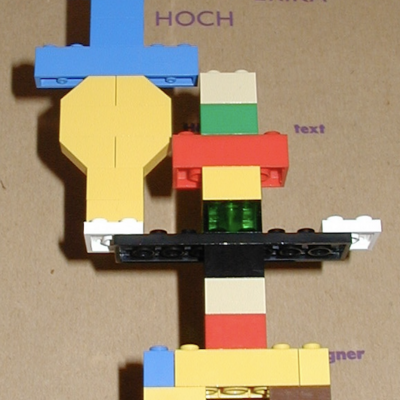
And all this time the side doors unlocked
Romanticism 101
Dean Young
#Poetry #DeanYoung #Romanticism #Repetition #Anaphora #Texas #Rockabilly
https://www.poetryfoundation.org/poetrymagazine/poems/57049/romanticism-101

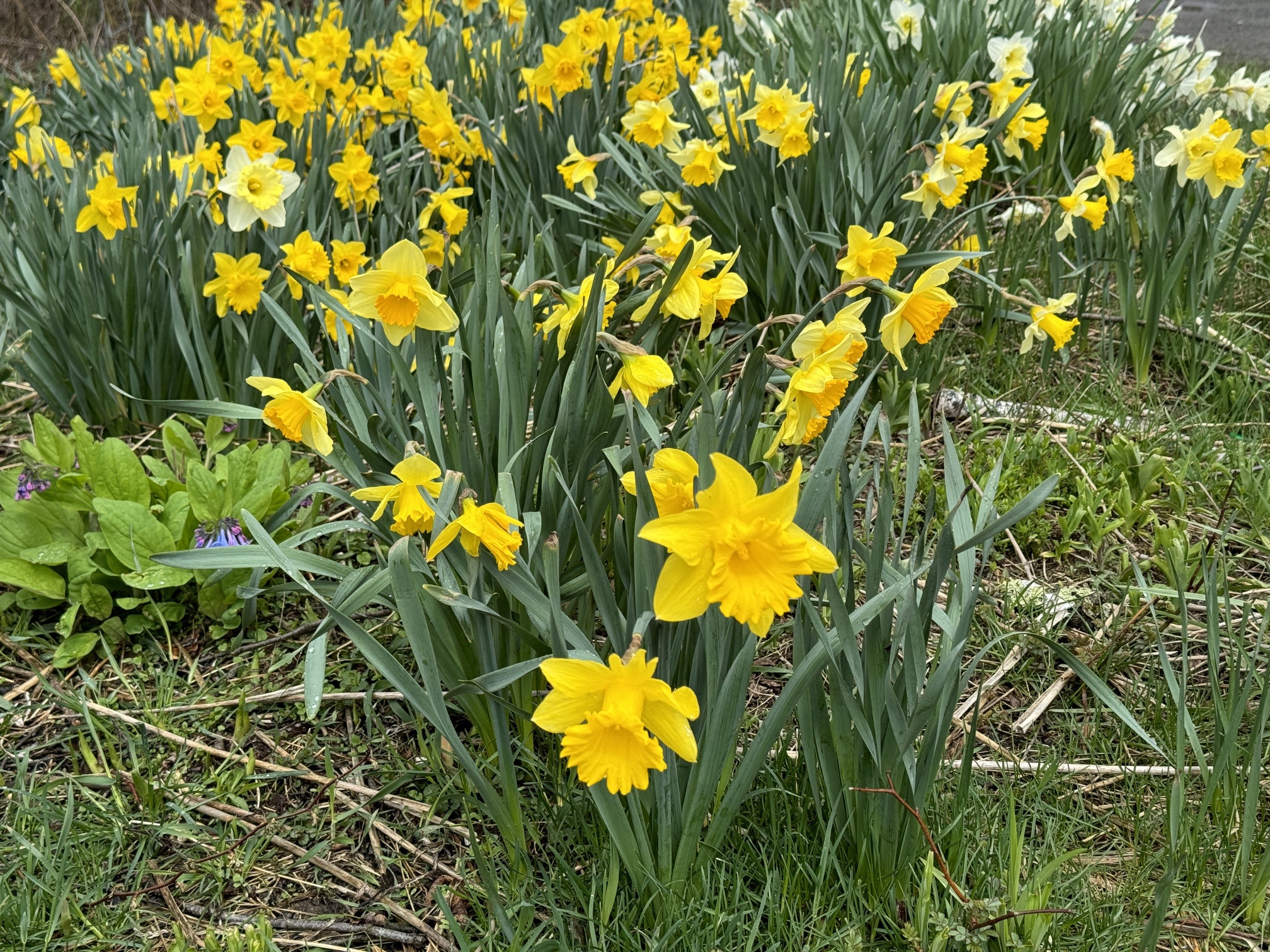
NaPoWriMo 2024 Day 14 https://quiltr.com/?p=24488 don’t forget the rain • don’t forget the rain makes things grow… … #anaphora #daffodils #dothework #garden #NaPoWriMo #poem #poetry #process #weather


We know this might have been a better prompt for Groundhog Day at the beginning of the month, but your fourth and final lycial challenge for FAWM 2024 is: ANAPHORA (or REPETITION).
Repeat a word or phrase at the start of successive lines (or song parts) for emphasis. Examples: "Ain't Got No" (Hair), "Ima Be" (Black Eyed Peas), "Suddenly I See" (KT Tunstall), "Add It Up" (Violent Femmes)
Happy fawming!
#fawm #fawm2024 #lyrics #lyricchallenge #anaphora #repetition


Anaphora and Discourse Structure
(2003) : Webber, Bonnie et al
DOI: https://doi.org/10.1162/089120103322753347
#adverbs #NLP #anaphora #discourse #language #my_bibtex
Evaluating Discourse Processing Algorithms
(1989) : Walker, Marilyn A
url: http://acl.ldc.upenn.edu/P/P89/P89-1031.pdf
#pronouns #evaluation #anaphora #algorithm #NLP #my_bibtex
An intense, emotional, angry “pile”, “ziploc”, or “hammer” in a poem by Terrance Hayes. #111Words #Poetry #TerranceHayes #AmericanSonnetsForMyPastAndFutureAssassin #Anaphora https://andrewjshields.blogspot.com/2023/10/an-intense-emotional-angry-pile-ziploc.html
Evaluating Discourse Processing Algorithms
(1989) : Walker, Marilyn A
url: http://acl.ldc.upenn.edu/P/P89/P89-1031.pdf
#pronouns #algorithm #NLP #anaphora #evaluation #my_bibtex
Discourse Deixis
(1988) : Webber, Bonnie Lynn
DOI: https://doi.org/10.3115/982023.982037
#discourse #anaphora #pronouns #my_bibtex
Static Semantics for Dynamic Discourse
(2002) : Cresswell, M J
DOI: https://doi.org/10.1023/A:1020834910542
#dialogue #anaphora #semantics #discourse #linguistics #pragmatics #my_bibtex
Static Semantics for Dynamic Discourse
(2002) : Cresswell, M J
DOI: https://doi.org/10.1023/A:1020834910542
#anaphora #pragmatics #dialogue #discourse #linguistics #semantics #my_bibtex
Evaluating Discourse Processing Algorithms
(1989) : Walker, Marilyn A
url: http://acl.ldc.upenn.edu/P/P89/P89-1031.pdf
#NLP #anaphora #evaluation #pronouns #algorithm #my_bibtex

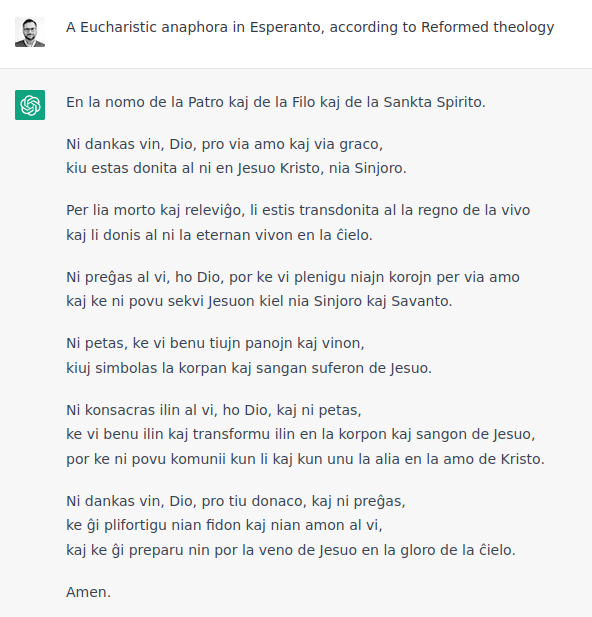
I just asked #OpenAI #ChatGPT for "a #Eucharistic #anaphora in #Esperanto, according to Reformed theology" and what it gave, I experted that to be obscure, but I would gladly use it (sound theology, good Esperanto) when presiding.
Should I be happy about that?
Quantifiers, Anaphora and Intensionality
(1997) : Dalrymple, Mary and Lamping, John and Pereira, Fernando and Saraswat, Vijay
DOI: https://doi.org/10.1023/a:1008224124336
#NLP #anaphora #grammar #intention #intentsional_verbs #linear_logic #quantific
#my_bibtex
Client Info
Server: https://mastodon.social
Version: 2025.07
Repository: https://github.com/cyevgeniy/lmst