Béatitudes : Philippe Madre définitivement renvoyé de l’état clérical
#Beatitudes

Bienvenue sur Riposte Catholique - La réinformation catholique au quotidienriposte-catholique.fr@web.brid.gy
2026-02-13

Unlock the timeless wisdom of the Beatitudes—Jesus’ guide to a truly blessed life. How do these teachings inspire you today? #Beatitudes #BibleStory #Faith #Inspiration #Jesus #Blessed #Wisdom

Are Jesus’ Teachings Weak?
When I was in seminary, I took a two week intensive in interfaith ministry. We heard a few speakers from an interfaith youth organization. One of those speakers, an atheist, told a story that went something like this:
I was talking with an Evangelical Christian who asked me “If you don’t believe in an afterlife, what’s keeping you from killing me right now?”
His position was that, without a threat of punishment in an afterlife, there’s no real reason from mistreating other people, including murdering them.
That made me uncomfortable, and a little scared.
Let’s go to God in prayer.
God of wisdom, may the words that I speak, and the ways they are received by each of our hearts and minds, to help us to continue to grow into the people, and the church, that you have dreamed us to be.
Amen.
The other day I was thinking of two major moral systems.
One of these is rules-based, or what I called “Statutory Morality.” This morality – based on codes, laws, rules, or statutes – is mostly do this and don’t do that.
The ten commandments are an example of this, although there are several versions of the ten commandments based on translations of Exodus and Deuteronomy.
Judaism expanded this into 613 Mitzvot, 248 positive or “do this” commandments and 365 negative or “do not do this” commandments.
Judaism and Christianity aren’t the only faiths with lists of rules, and governments obviously have decrees, laws, and regulations to determine how citizens should live.
Rules are a great way to win an argument. When someone does something you don’t want them to do, and you know a rule against it, you can just say “that is wrong because of this rule.” So rules sound strong, especially when there are associated punishments like fines, jail time, death, and eternal punishment after death.
And then we get someone like Jesus, preaching what we heard in today’s Gospel reading.
As I’ve mentioned before, Russell Moore – editor-in-chief of Christianity Today magazine, former leader in the Southern Baptist Convention, and author of the book Losing Our Religion: An Altar Call for Evangelical America, had an interview with National Public Radio’s Scott Detrow in which he said the idea for the book
“was the result of having multiple pastors tell me essentially the same story about quoting the Sermon on the Mount parenthetically in their preaching – turn the other cheek – to have someone come up after and to say, where did you get those liberal talking points? And what was alarming to me is that in most of these scenarios, when the pastor would say, I’m literally quoting Jesus Christ, the response would not be, I apologize. The response would be, yes, but that doesn’t work anymore. That’s weak. And when we get to the point where the teachings of Jesus himself are seen as subversive to us, then we’re in a crisis.”
– https://www.npr.org/2023/08/05/1192374014/russell-moore-on-altar-call-for-evangelical-america
And in today’s reading, Jesus tells us some things that might seem alarming:
- Blessed are the poor in spirit
- Blessed are those who mourn
- Blessed are those who are persecuted for the sake of righteousness,
- Blessed are you when people revile you and persecute you
and utter all kinds of evil against you falsely on my account.
– Matthew 5:3-4, 10-11, NRSVue
It’s almost as if Jesus says “Blessed are the miserable.” What kind of morality lifts up the dispirited as an example?
The counter to the kind of rules-based morality I called “statutory morality” is what I call “empathic morality.” Empathic morality is a morality that puts us in the shoes of the other. It’s the idea behind Jesus’ “do to others as you would have them do to you” in Matthew 7:12 and Luke 6:31. It’s the idea behind Hillel the Elder’s “That which is hateful to you do not do to another; that is the entire Torah, and the rest is its interpretation.” in the Babylonian Talmud, Shabbat 31a.
It’s what keeps the atheist from killing someone, even though he doesn’t believe in divine retribution.
And it’s in our reading today, because the struggles are balanced with benefits:
“Blessed are the poor in spirit, for theirs is the kingdom of heaven.
“Blessed are those who mourn, for they will be comforted.
“Blessed are those who are persecuted for the sake of righteousness, for theirs is the kingdom of heaven.“Blessed are you when people revile you and persecute you and utter all kinds of evil against you falsely on my account.
Rejoice and be glad, for your reward is great in heaven, for in the same way they persecuted the prophets who were before you.
- Matthew 5:3-4, 10-12, NRSVue
The Beatitudes call us into trying to understand what it’s like to be among the less-privileged, and to see things from their perspective. And that kind of morality can be applied even where no one has thought to create a law yet.
Empathy requires a kind of vulnerability. While sympathy calls us to say “wow, I’ll bet that’s hard,” empathy calls us to try to understand the depth and quality of how hard something is.
Empathy has us looking at the last slice of pizza, realizing Terry will be here in a minute to eat that slice, and realizing how that person may remain hungry if we take that additional slice for ourselves. There may be no rule that says “don’t take another slice if there’s only one left and Terry will want it” but empathic morality calls us into a relationship with Terry and understand Terry’s need for a slice.
Empathic morality is not weak.
Jesus’ teachings are not weak.
They require us to have the strength of self to be vulnerable to the situations of others, to feel into their needs, and to act in ways to satisfy those needs.
This month – beginning today – is Black History Month. It was created to lift up the stories of Black people who have made real contributions to our nation and to our world.
Many of these stories had been glossed over, minimized, or ignored. Some of this has been intentional, but some is entrenched and embedded in systems.
Let me give you a non-race-based illustration of systemic bias:
Most people – roughly 90% – are right-handed. About 10% are left-handed, and a small number are ambidextrous, meaning equally adept with either hand.
Dexterity is based on the word Dexter, meaning on the right side. Sinister means on the left side. Adroit comes from the French “droit” meaning right. Gauche is French for left.
So the language we use for capability is associated with “right” and words for evil and lacking grace are associated with “left.”
But beyond that, right-handed people make things for right-handed people. If you’re right-handed, you may not realize that some items are more difficult for left-handed people to use.
For example, in most Western languages we write left to right, and most of us don’t think about it. But left-handed people using a pen or pencil may find their hands smudge the ink or graphite. It’s why left-handed Galileo often wrote right-to-left.
And if you’ve ever tried to use a pair of scissors with your left hand, you probably noticed they didn’t work well, because of the way your fingers put pressure on the blades to keep them separated rather than together.
There are left-handed scissors. They cost more.
But most right-handed people don’t have a clue about what it’s like to be left-handed in a right-handed dominant world.
Now feel into what it would mean to be part of a group of people whose achievements were not taught and whose stories were not told.
Now understand what it means to have your group represented in teaching, and having a month where those achievements are highlighted.
Representation matters.
This is why our banner out front this month will be Black Lives Matter: not because it lifts up our church, but because it lifts up people who are too often ignored or dismissed.
You may have heard “All lives matter.” That saying would not be controversial, except that it is in response to “Black lives matter.”
“Black lives matter” asserts something that might not be apparent. It rebukes the possibility that someone’s life has less value because of the color of their skin.
To answer with “All lives matter” is to dismiss the cry of those whose value is ignored. It’s not empathic. It doesn’t feel into the hurt of people who are thought of as simultaneously less capable and more dangerous.
So my challenge this week is to lean less on a statutory morality of laws and rules, and to lean into an empathic morality of feeling into the lives of the people our choices will affect.
And for this month, to take some time to learn about the vibrant and powerful history of Black people, especially in the United States.
Empathy isn’t weak.
It’s a sign of strength.
Amen.
Let’s sing NCH 180 Blessed Are the Poor in Spirit
* Scripture quotations marked NRSVue are taken from the New Revised Standard Version Updated Edition. Copyright © 2021 National Council of Churches of Christ in the United States of America. Used by permission. All rights reserved worldwide. https://www.friendshippress.org/pages/about-the-nrsvue
* Scripture quotations marked KJV are taken from the King James version of the Bible.
#beatitudes #BlackLivesMatter #empathy #HillelTheElder #Shabbat31a #strength #weakness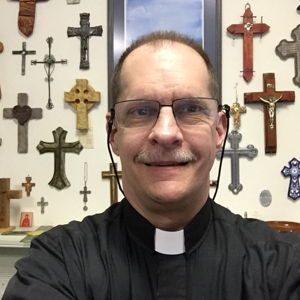
It’s #AnnualMeeting Sunday here in my little parish. As with any parish, finances are an issue, but they aren’t terrible.
We have a single service at 9:00 followed by breakfast and then the meeting. This lets as many people as possible attend.
I’m preaching a short sermon on the #Beatitudes and trying to live into that ideal.
And hopefully there won’t be any surprises at the meeting.
#Episcopal #SLECBuffalo #PriestLife

"How Are You Living?"
Devotional Thoughts and Prayers for Sunday, February 1, 2026
https://youtu.be/e3sfM2gzWTs
#Jesus #GoodNews #Gospel #Beatitudes #Sermon

Bonjour
.
Pour vivre cette messe en communion avec tous nos frères et sœurs ce dimanche avec les textes, les chants et les prières du jour qui sont sur le site.
Cliquez sur le lien ci-dessous,
• Traductions LSF des textes et prières
• des chants en vidéos,
• textes enregistrés (pour les malvoyants)…les prières
sont publiés pour vous aider à vivre ce moment de chez vous en communion avec tous nos frères et sœurs
https://www.saintvincentdepaul-saintmalo.fr/pages/messes-st-preparation/messe-des-dimanches/messe-dominicale.html #messe #Béatitudes #messedominicale #bible #Evangile


Quote of the day, 1 February: OCDS Constitutions
Christ is the center of our lives and of Christian experience. Members of the Secular Order are called to live the demands of following Christ in union with Him, by accepting His teachings and devoting themselves to Him. To follow Jesus is to take part in His saving mission of proclaiming the Good News and the establishment of God’s Kingdom (Mt 4:18-19). There are various ways of following Jesus: all Christians must follow Him, must make Him the law for their lives and be disposed to fulfil three fundamental demands: to place family ties beneath the interests of the Kingdom and Jesus himself (Mt 10:37-39; Lk 14:25-26); to live in detachment from wealth in order to show that the arrival of the Kingdom does not depend on human means but rather on God’s strength and the willingness of the human person before Him (Lk 14:33); to carry the cross of accepting God’s will revealed in the mission that He has confided to each person (Lk 14:33; 9:23).
Following Jesus as members of the Secular Order is expressed by the promise to strive for evangelical perfection in the spirit of the evangelical counsels of chastity, poverty and obedience and through the Beatitudes. By means of this promise the member’s baptismal commitment is strengthened for the service of God’s plan in the world. This promise is a pledge to pursue personal holiness, which necessarily carries with it a commitment to serving the Church in faithfulness to the Teresian Carmelite charism. The promise is taken before the members of the community, representing the whole Church and in the presence of the Delegate of the Superior of the Order.
Discalced Carmelite Secular Order
Constitutions, 10–11
Order of Discalced Carmelites, Secular (OCDS) (2003) Constitutions of the Secular Order of Discalced Carmelites. Rome: Order of Discalced Carmelites. Available at: https://www.ocdswashprov.org/s/OCDSconstitutions.pdf (Accessed: 30 January 2026).
Featured image: Snapshots of Brazilian OCDS members are featured, showing the participation of many during the 2019 World Youth Day in Panama. Image credit: OCDS Brasil (by permission).
#beatitudes #Constitutions #DiscalcedCarmeliteSecularOrder #followingJesus #OCDS


This Beatitudes lesson plan helps youth rethink what success means. Jesus points to humility, kindness, and trust in God instead of status or praise. 🌱
Through reflection and discussion, youth explore their own goals and values. They learn that following Jesus does not promise ease, but it leads to peace, purpose, and lasting hope. ✨
https://young-catholics.com/83367/jesus-success-beatitudes-lesson-plan/

The Litany of the Beatitudes is a prayer shaped by Jesus’ teaching on blessedness. It reminds us that God sees the humble, the merciful, and those who seek justice. By calling on Jesus for help, we ask for strength to live these values each day.
This prayer helps faith move from words into action. 🙏🌿


ICE agents have raided Downey Memorial Christian Church, St. Adelaide, and Our Lady of Lourdes, CA; Christ Fellowship WA; Central UMC, and a Baptist church, NC; Iglesia Fuente de Vida, GA; and others.
So forgive me if I don't clutch my pearls that peaceful protestors disrupted a worship service at Cities Church, MN, where a pastor is also acting director of the ICE St. Paul field office responsible for brutal, cruel, inhumane, and illegal acts.

Composer Vladimir Martynov: ‘The sweetest moment is when you get a bright idea’
In April the Noord Nederlands Orkest (North Netherlands Orchestra, NNO) will present the brand new piano concerto Pastiche, composed by Vladimir Martynov at the request of Ralph van Raat. On 2 April I will talk to the composer and the pianist during a free rehearsal in Muziekgebouw aan ‘t IJ in Amsterdam, where Pastiche will be premiered on 4 april. I interviewed Martynov for the magazine of NNO, this is the English translation.
The Russian composer Vladimir Martynov (Moscow, 1946) had colourful development. He was the son of a musicologist, was taught piano as a matter of course and soon became interested in composing. He enrolled at the Moscow Conservatory, where he studied piano and composition. Already during his studies he wrote his first pieces, chamber music, small-scale solo concertos and choral music, in the atonal tradition of composers such as Arnold Schönberg and Anton Webern.
From Schönberg to electronics and rock music
In 1973 he joined the electronic music studio of the Alexander Skrjabin Museum in Moscow. For Soviet composers this was a welcome meeting place for avant-garde musicians; celebrities such as Gubaidulina and Denisov also experimented with electronics here. In the same period Martynov studied musicology, with a particular interest in ethnomusicology. He specialised in the folklore of Caucasian peoples, Tajikistan and other ethnic groups in Russia, about which he published extensively.
Martynov also studied medieval Russian liturgical music and European polyphony from the Renaissance. He has published several collections of works by such composers as Guillaume de Machaut, Andrea Gabrieli, Heinrich Isaac and Guillaume Dufay. He also wrote about theology, religious philosophy and history. During this time he embraced the form of minimalism so typical of the former Eastern Bloc: a static, spiritually inspired style without the exhilarating pulse of American minimalism. With its slow pace and lack of bars, this music breathes the same timeless quality as early music.
From rock music to Gregorian chant
As if all this wasn’t adventurous enough, Martynov also formed the rock group Boomerang, for which he composed the rock opera Seraphic visions of St. Francis in 1978. Around this time he became a teacher at the Academy for Trinity Lavra of St. Sergius in Sergiev Posad, a city about 75 kilometers north of Moscow. In the eighties he wrote a lot of church music and after the fall of the Soviet Union in 1991 he initially continued to concentrate on Christian themes, such as in Apocalypse (1991), the Stabat Mater (1994), and the Requiem (1998).
Nowadays he composes secular music again, although his bent for spirituality floats unabated through his notes. In 2009, the London Philharmonic Orchestra premiered Vita Nuova, an opera about opera inspired by Dante’s book of the same name. In this book Dante describes the transformation from earthly to heavenly love. In his version, Martynov says he investigates the question of whether it is still possible to write ‘opera in our modern age’. From his conviction that there is nothing new to say, in Vita Nuova he combines Gregorian chant with style quotes by Mozart, Wagner, Mahler and Strauss.
La Grande Bellezza
In 2014 Martynov composed Beatitudes for the Kronos Quartet, which was used in the Academy Award winning film La Grande Bellezza. Now we have the brand new Piano Concerto Pastiche, which he composed for Ralph van Raat and the Noord Nederlands Orkest. The title refers to the opera genre of the same name, says the composer. ‘In a pastiche arias from all kinds of famous operas were glued together. According to some, this would show a lack of respect for the composers concerned, but nowadays such a method is very common. The principle of a pastiche is to give the listener a kind of déjà vu. I don’t use literal but style quotations, for example of romantic and classical music.
While composing he listened to CD recordings by Ralph van Raat: ‘I did not know him, but had been considering the idea of writing a new Piano Concerto for years. By listening a lot I tried to find out what his taste is, how he plays, what he likes and what he doesn’t like. I took his preferences and possibilities into account and tried to use the sound of the piano as authentically as possible. I have the feeling that we have in common our great love for the pure piano sound.’ There was no personal contact, composer and soloist meet for the first time in April, when rehearsals begin. Martynov: ‘Of course I did consult with the orchestra about the lineup and the duration of the piece.’
No struggle but peaceful coexistence
Martynov wrote Pastiche with the general sound of piano and symphony orchestra from the nineteenth century in mind. Yet the piece has only one movement instead of the usual three. Moreover, there is no traditional ‘struggle’ between orchestra and soloist. ‘Of course the piano and the orchestra each have their own material and function, but it is rather a question of peaceful coexistence than of mutual competition.’ In his new concerto we search in vain for elements from folklore or old liturgical chants. ‘That would not be fitting, it is performed in a concert hall intended for symphonic music.’
He finds it difficult to assess whether his piece was successful: ‘The most important moment in the composing process is when you have an incursion that you can work out further. There is nothing like this wonderful, sweet moment – not even a good performance or a nice review. When you finish a piece you are always satisfied with it, but only when it actually sounds you can ascertain if it meets what you originally had in mind. That always remains exciting.’
The public rehearsal on 2 April and the premiere of Pastiche on 4 April are part of the Minimal Music Festival in Muziekgebouw aan ‘t IJ. The concert is repeated on 5 April in Oosterpoort Groningen, and 6 April in De Doelen Rotterdam
#Beatitudes #LaGrandeBellezza #MinimalMusicFestival #MuziekgebouwAanTIJ #NoordNederlandsOrkest #RalphVanRaat #VladimirMartynov

🌐🌏🗣️👄🫂🛐✝️👑🕊️💦❤️🔥💒🏩🤍🩵💛🩷💗☁️🌈☁️[JESUS]*& he opened his mouth!*& taught them!*saying!*The Beatitudes!☁️🌈☁️🤍🩵💛🩷💗🌐🌏🗣️👄🫂🛐✝️👑🕊️💦❤️🔥💒🏩👉
🌏🛐😭💔🗣️*“Blessed are you when others revile you!*& persecute you!*& utter all kinds of evil against you falsely on my account!*Rejoice!*& be glad!*for your reward is great in heaven!*for so they persecuted the prophets who were before you!☁️🌈☁️❤️🔥✝️👑💦🕊️🪽😇🪽❤️🔥✝️👑💦🕊️💛🕊️☁️🌈☁️☺️🥳💒✝️❤️🔥👑💦🕊️☺️👉
#Jesus #Teaching #Beatitudes #World #GOD #Heaven #Christ #Holy #Spirit #Savior #Light #Love #Hope #Christian

🌐🌏🗣️👄🫂🛐✝️👑🕊️💦❤️🔥💒🏩🤍🩵💛🩷💗☁️🌈☁️[JESUS]*& he opened his mouth!*& taught them!*saying!*The Beatitudes!☁️🌈☁️🤍🩵💛🩷💗🌐🌏🗣️👄🫂🛐✝️👑🕊️💦❤️🔥💒🏩👉
🌏🌐🛐😭💔💛🩵🩷☁️🌈☁️🗣️*“Blessed are those who are persecuted for righteousness' sake!*for theirs is the kingdom of heaven!🤗🌏🌐💔😭☁️🌈☁️🛐❤️🔥✝️👑💦🕊️🪽😇🪽🫂🛐❤️🔥✝️👑💦🕊️💛🕊️🪽😇🪽☁️🌈☁️👉
#Jesus #Sermon #Mount #Crowds #Deciples #Teaching #Beatitudes #World #People #Today #GOD #Heaven #Christ #Holy #Spirit #Savior #Light #Love #Goodness #Kindness #Hope #Pray #Believe #Christian #Faith
🌐🌏🗣️👄🫂🛐✝️👑🕊️💦❤️🔥💒🏩🤍🩵💛🩷💗☁️🌈☁️[JESUS]*& he opened his mouth!*& taught them!*saying!*The Beatitudes!☁️🌈☁️🤍🩵💛🩷💗🌐🌏🗣️👄🫂🛐✝️👑🕊️💦❤️🔥💒🏩👉
🌏🌐✌🏿✌️✌🏻🛐💛🩵🩷🗣️*“Blessed are the peacemakers!*for they shall be called sons of God!🤗🏩☮️🫂🕊️✌🏿✌️✌🏻🌏🌐🌏💛🩵🩷☁️🌈☁️🪽😇🪽👁️👁️🫂🛐❤️🔥✝️👑💦🕊️✌🏿✌️✌🏻💗💛🩵🩷🤍💗💛🩵🩷🤍🏩☮️🫂🫂🕊️✌🏿✌️✌🏻🪽😇🪽👉
#Jesus #Sermon #Mount #Crowds #Deciples #Teaching #Beatitudes #World #People #Today #GOD #Heaven #Christ #Holy #Spirit #Savior #Light #Love #Goodness #Kindness #Hope #Pray #Believe #Christian #Faith

🌐🌏🗣️👄🫂🛐✝️👑🕊️💦❤️🔥💒🏩🤍🩵💛🩷💗☁️🌈☁️[JESUS]*& he opened his mouth!*& taught them!*saying!*The Beatitudes!☁️🌈☁️🤍🩵💛🩷💗🌐🌏🗣️👄🫂🛐✝️👑🕊️💦❤️🔥💒🏩👉
🌏🌐✌🏿✌️✌🏻🛐💛🩵🩷🗣️*“Blessed are the pure in heart!*for they shall see God!🤗🌏🌐🌏💛🩵🩷☁️🌈☁️🪽😇🪽👁️👁️🫂🛐❤️🔥✝️👑💦🕊️✌🏿✌️✌🏻💗💛🩵🩷🤍💗💛🩵🩷🤍🪽😇🪽👉
#Jesus #Sermon #Mount #Crowds #Deciples #Teaching #Beatitudes #World #People #Today #GOD #Heaven #Christ #Holy #Spirit #Savior #Light #Love #Goodness #Kindness #Hope #Pray #Believe #Christian #Faith

🌐🌏🗣️👄🫂🛐✝️👑🕊️💦❤️🔥💒🏩🤍🩵💛🩷💗☁️🌈☁️[JESUS]*& he opened his mouth!*& taught them!*saying!*The Beatitudes!☁️🌈☁️🤍🩵💛🩷💗🌐🌏🗣️👄🫂🛐✝️👑🕊️💦❤️🔥💒🏩👉
🌏🌐✌🏿✌️✌🏻🛐💛🩵🩷🗣️*“Blessed are the merciful!*for they shall receive mercy!🤗🌏🌐🌏💛🩵🩷☁️🌈☁️🪽😇🪽🫂🛐❤️🔥✝️👑💦🕊️✌🏿✌️✌🏻💗💛🩵🩷🪽😇🪽👉
#Jesus #Sermon #Mount #Crowds #Deciples #Teaching #Beatitudes #World #People #Today #GOD #Heaven #Christ #Holy #Spirit #Savior #Light #Love #Goodness #Kindness #Hope #Pray #Believe #Christian #Faith

🌐🌏🗣️👄🫂🛐✝️👑🕊️💦❤️🔥💒🏩🤍🩵💛🩷💗☁️🌈☁️[JESUS]*& he opened his mouth!*& taught them!*saying!*The Beatitudes!☁️🌈☁️🤍🩵💛🩷💗🌐🌏🗣️👄🫂🛐✝️👑🕊️💦❤️🔥💒🏩👉
🌏🌐✌🏿✌️✌🏻⚖️💛🩵🩷🗣️*“Blessed are those who hunger!*& thirst for righteousness!*for they shall be satisfied!🤗❤️🔥✝️👑💦🕊️🌐🌏🤗
#Jesus #Sermon #Mount #Crowds #Deciples #Teaching #Beatitudes #World #People #Today #GOD #Heaven #Christ #Holy #Spirit #Savior #Light #Love #Goodness #Kindness #Hope #Pray #Believe #Christian #Faith

🌐🌏🗣️👄🫂🛐✝️👑🕊️💦❤️🔥💒🏩🤍🩵💛🩷💗☁️🌈☁️[JESUS]*& he opened his mouth!*& taught them!*saying!*The Beatitudes!☁️🌈☁️🤍🩵💛🩷💗🌐🌏🗣️👄🫂🛐✝️👑🕊️💦❤️🔥💒🏩👉
🌐🌏✌🏿✌️✌🏻💛🩷🩵🗣️*“Blessed are the meek!*for they shall inherit the earth!🤗💛🩷💗🩵🌏☁️🌈☁️
#Jesus #Sermon #Mount #Crowds #Deciples #Teaching #Beatitudes #World #People #Today #GOD #Heaven #Christ #Holy #Spirit #Savior #Light #Love #Goodness #Kindness #Hope #Pray #Believe #Christian #Faith

🌐🌏🗣️👄🫂🛐✝️👑🕊️💦❤️🔥💒🏩🤍🩵💛🩷💗☁️🌈☁️[JESUS]*& he opened his mouth!*& taught them!*saying!*The Beatitudes!☁️🌈☁️🤍🩵💛🩷💗🌐🌏🗣️👄🫂🛐✝️👑🕊️💦❤️🔥💒🏩👉
🕊️☮️✌🏿✌️✌🏻🗣️*“Blessed are those who mourn!*for they shall be comforted!😭💔🌐🌏🪽😇🪽🫂☁️🌈☁️👉
#Jesus #Sermon #Mount #Crowds #Deciples #Teaching #Beatitudes #World #People #Today #GOD #Heaven #Christ #Holy #Spirit #Savior #Light #Love #Goodness #Kindness #Hope #Pray #Believe #Christian #Faith

🛖🏡🏠🏚️🪵🪵🪵🩵🩶🧡🤎💚🤍🪵🪵🪵🛖🏡🏠🏚️*The Beatitudes!🛖🏡🏠🏚️🪵🪵🪵🩵🩶🧡🤎💚🤍🪵🪵🪵🛖🏡🏠🏚️
[JESUS]*& he opened his mouth!*& taught them!*saying!*The Beatitudes!*👉
*“Blessed are the poor in spirit!*for theirs is the kingdom of heaven!👉
#Jesus #Sermon #Mount #Crowds #Deciples #Teaching #Beatitudes #World #People #Today #GOD #Heaven #Christ #Holy #Spirit #Savior #Light #Love #Goodness #Kindness #Hope #Pray #Believe #Christian #Faith

Client Info
Server: https://mastodon.social
Version: 2025.07
Repository: https://github.com/cyevgeniy/lmst