#Domke

Kaiser :donor: :opensuse: 📷 🎞️ 💿 :usasos:kaiser_franz@infosec.exchange
2025-10-25

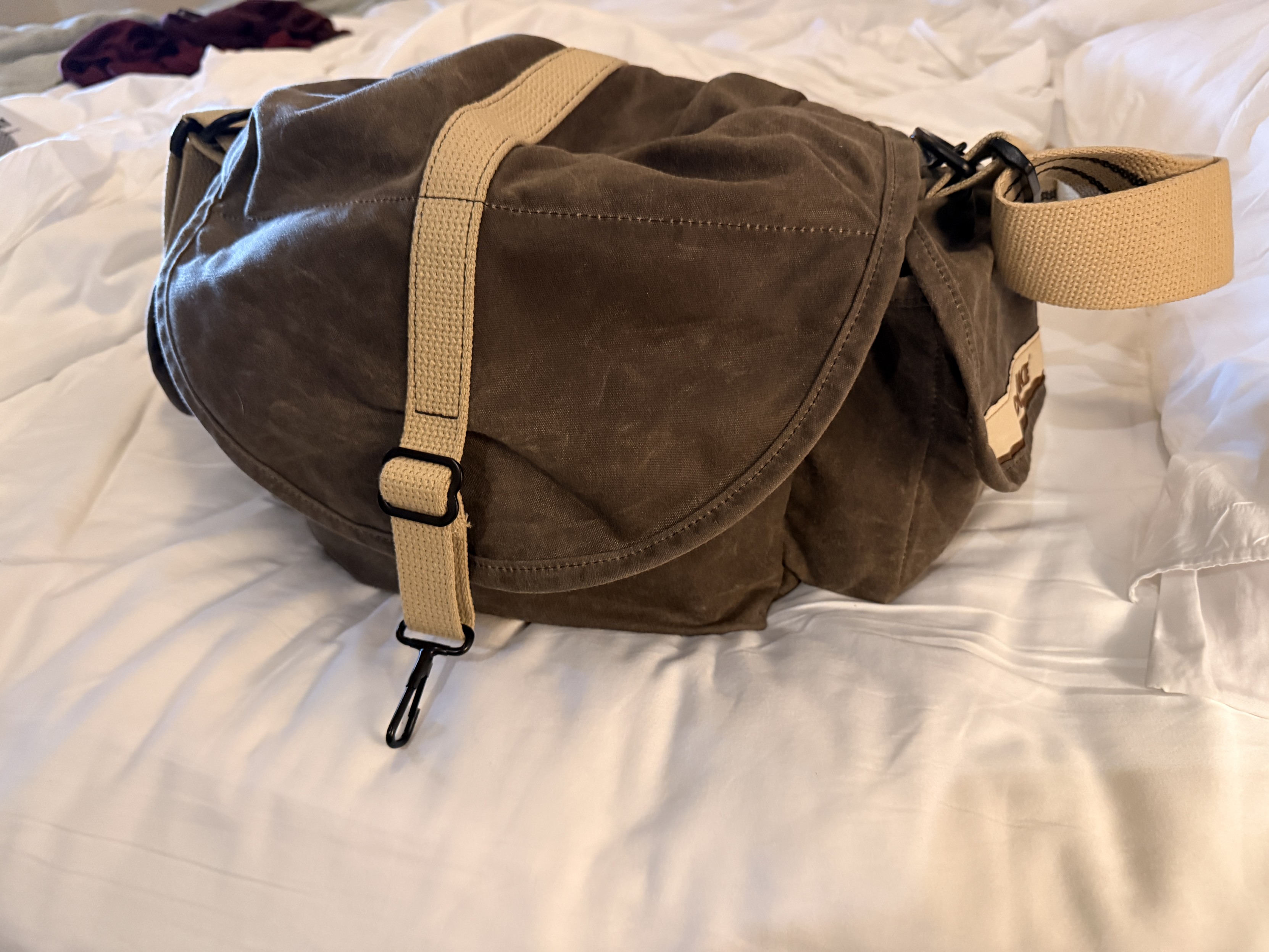
I was a bit skeptical when after reading many reviews, I ordered this bag. I didn’t like how floppy it was. I went back and forth between this and a backpack for the Scotland trip, ultimately settling on the #PeakDesign bag. (Which performed beautifully, by the way.)

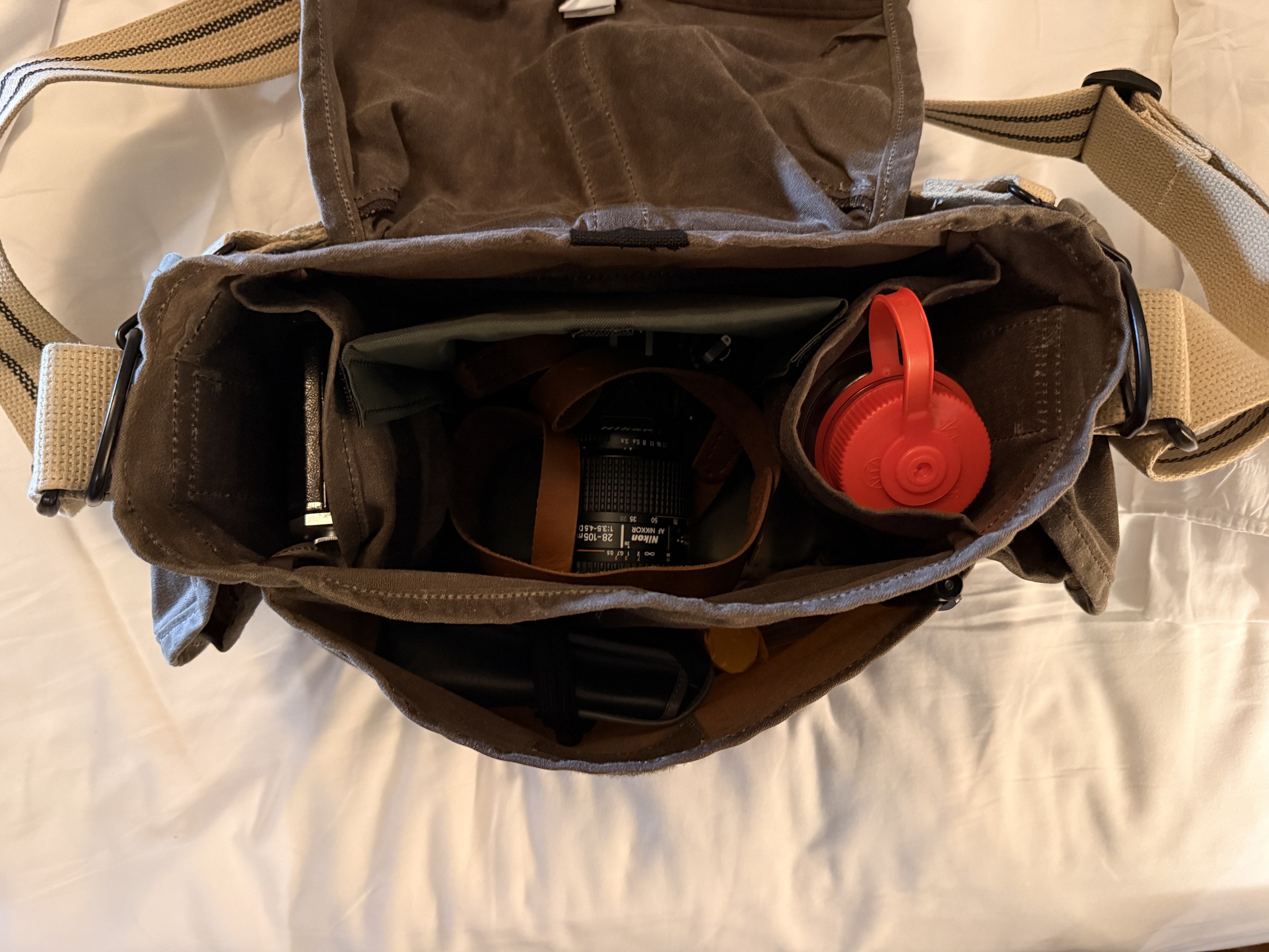
So this is the first trip I’ve used the #Domke bag on, and despite it not feeling like any other bag I’ve used I’m kind of sold on it. It fits my #FM3a, 50mm and 28-105 lenses, bottle of water, Mamiya 6, and more film than I am likely to shoot in a day with ease. Carrying it cross-body with the clasp connected feels pretty safe even in a crowded subway station. Thankfully it’s not raining on this trip (so far) but the waxed canvas is a nice touch for dealing with moisture.

The exterior of a domke bag with flap closedThe same bag looking into the interior, showing the minimal compartmentalization
2023-01-18

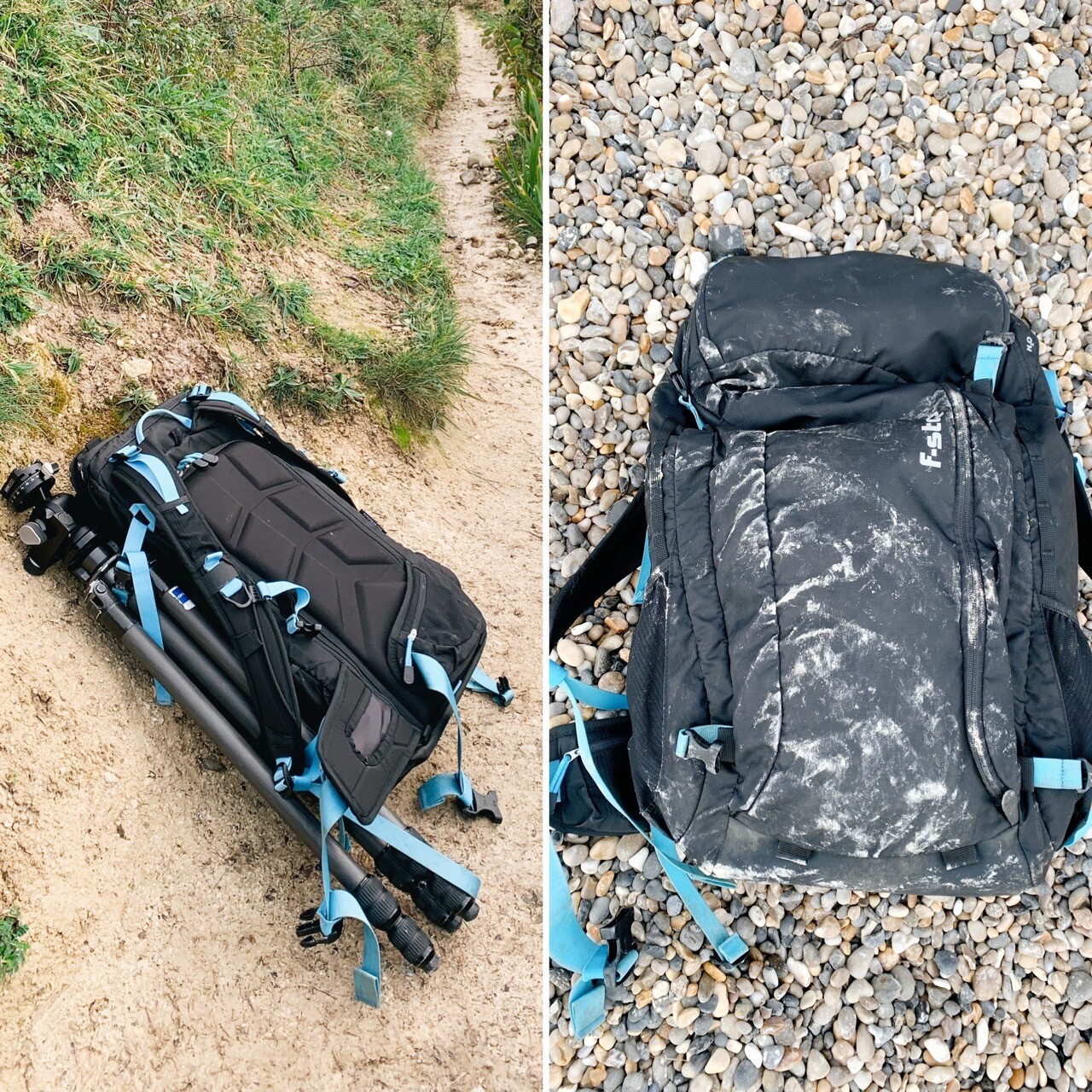
Aside from my Domke shoulder bags I use this @fstopgear backpack with an insert. Love it as it opens from back so safe but mainly the back doesn’t get wet! I’ve carried everything from 5x4 film cameras to my current fuji gfx kit in it.
#fstopgear #gitzo #fujifilm #arcaswiss #domke

2023-01-11

My 10 year old Domke and my 1 day old Domke.
New bag, new journeys.
Without doubt my favourite shoulder bags.
#domke

2 Domke camera bags. One very old, one new.
johnny martyr rss (unofficial)johnnymartyr@ծմակուտ.հայ
2022-04-19

The Final Moments of 9/11 Photographer, Bill Biggart

*I originally published the following article onPetapixel on September 11th, 2020, it is reproduced here in honor of the 20th anniversary

_“With a press pass around his neck and a camera bag over his shoulder, in the middle of a crossfire – Bill was in heaven.” --_Wendy Doremus

September 11, 2001 was a sunny Tuesday morning. Bill Biggart and his wife Wendy Doremus were walking their dogs in downtown Manhattan. At about 8:45am, the couple noticed clouds of grey smoke forming against the clear blue New York City skyline. A passing taxi driver informed the couple that an airplane had crashed into the World Trade Center.

Biggart, a seasoned press photographer, cut the serene walk short and quickly returned to his Union Square apartment. He gathered his Canon D30, two Canon EOS-1n's, Domke camera bag and six rolls of Fuji Sensia 35mm slide film.

The $3,000, 3.1 megapixel prosumer D30 had just been released in 2000 and was Biggart's first DSLR. His EOS-1n 35mm SLR's were among the last professional film cameras that Canon would make but Biggart had been turning out important news images with them since the mid 1990's -- and shooting in general, since the 1970's.

Biggart began his two mile, twenty block trek toward the destruction from which everyone around him was fleeing. He shot film and digital images, cameras swinging from his shoulders, as he approached the unfolding scene.

For years, Biggart denounced color and then digital photography, working exclusively in 35mm b&w. Eventually, he saw that the news was going digital so he took up the new technology and switched to color film to match.

At 9:03 am, while still en route, Biggart observed a commercial airplane slamming into the South Tower. He lifted the D30 to his eye. Likely with his 80-200mm lens, he captured a brilliant orange and red fireball exploding out of the second tower.

Bill Biggart had moved to New York City in the early 1970's, when the World Trade Center opened. He witnessed its construction and now he watched as the South Tower burned like a torch.

This was the moment when the same poignant thought crossed the minds of all Americans who were able to tune into television news that day. Two plane crashes in the same spot, on the same day - this couldn't have been an accident. But Biggart knew that whatever was going on, it needed to be photographed.

Biggart drew closer and closer until his shots of the towers were near fully vertical. Emergency rescue workers and even other photojournalists cautioned that he was getting too close. At 9:59 a.m., Biggart captured the South Tower disintegrating as it came crashing down, blanketing him and his Canons in dust and debris. Shrugging it off, he continued to shoot, taking several frames of the North Tower still standing, amidst the remains of the South. Then he began documenting the efforts of rescue workers, ignoring the smoking North Tower.

Being that the D30 was a crop sensor body which multiplied the length of the lenses mounted to it, Biggart seems to have primarily used digital for long shots such as the towers themselves and film for closer/wider shots such as people. He seems to have covered everything before him with all three bodies though, probably using a 50mm and two zoom lenses. Basically, he shot with everything he had available, in every way he could.

Biggart photographed rescue workers and victims coated in grey brown dust. Yellow reflective stripes of firefighters' clothing and red emergency lights pierce foggy scenes of disorder. A well clad man striding through a field of strewn office papers, fractured drywall and miscellaneous pulverized material. People with ashen faces gasping for air through dirty towels. Strangers helping strangers. Arms around shoulders. Coughing. Crying.

Most of Biggarts shots were, of course, thoughtfully composed and carefully timed. Others, I'd argue, appear to be made more frantically, yielding evidence that even this hard-nosed, road-worn news vet had been shaken.

Then Biggart's flip-phone rang. It was his wife, Wendy. “I’m safe, I’m with the firemen.” he comforted her. Bill said that he would meet Wendy at his studio in about twenty minutes. At this point, we can speculate that Biggart concluded that the height of the action was over and that he needed to process his film and dump his cards in prep for immediate media release of the images.

But the twenty minutes in which Biggart planned to meet his wife passed.

And he was still shooting.

Biggart seems to have been in search of the hero shot to wrap with. The intrepid photographer began snapping some wide shots of the demolished South Tower, presumably with his back towards the North Tower.

Bolivar Arellano, a shooter for the New York Post who was also covering the terrible event, witnessed colleague Bill Biggart on the scene. Arellano stated that Biggart was closer to the towers than any other photographer, and in fact, closer than many firefighters.

Bill Biggart was vocal about his love for New York City. He often commented that it was the greatest city on earth. And his commitment to the city was evident with every shutter cycle that Tuesday morning.

At 10:28:22 am, the weakened support finally gave out beneath the impact zone of the North Tower, and the massive structure began imploding.

At 10:28:24 Bill Biggart took a beautiful photo of the ruins of the South Tower and the still-standing base of the North Tower. The scene was a tapestry of repetitive industrial lines fractured and softened by dust and smoke. The image is near colorless and muted, solemn and grim as the day.

Bill was probably still looking through the viewfinder of his Canon D30 when 500,000 tons of glass, concrete and steel suddenly came crashing down on him at 120 miles per hour.

Wendy waited at the studio. And waited. She spent desperate but hopeful days searching overwhelmed hospitals for her husband. Fellow photographers shared their accounts of where they last saw Biggart.

Four days after the tragedy, rescue crews were finally able to remove Biggart's body from beneath the dense rubble that once comprised the World Trade Center. Biggart was the only pro photog who covered 9/11 and did not make it out alive. But his images were possibly the most personal.

©2002 Johnny Martyr, please contact JohnnyMartyr@Hotmail.com for use

©2002 Johnny Martyr, please contact JohnnyMartyr@Hotmail.com for use

A friend and colleague, photographer Chip East was tasked with recovering any images from Biggart's belongings. The lens elements had been sheared off or blasted out of all three Canon bodies. The film compartment doors had been ripped off both EOS-1n film bodies, exposing the last two complete rolls within them to bare light and erasing Biggart's last film shots. The metal cassettes holding the other four rolls of film had been badly deformed which also admitted light, scarring many images with light leaks. Of the approximate 144 possible film images Biggart may have taken, only a handful survived. The compact flash card within the D30, however was cradled safely inside the camera's magnesium alloy body. When Chip East first inserted the card into his reader, nothing happened. He rebooted his computer and miraculously, the card fired up and yielded its precious contents; 154 complete files, with accurate timestamps.

Biggart's final photograph, the taken at 10:28:24 capturing the remains of the South Tower was featured in countless publications and exhibited at the International Center of Photography in New York City, then at the National Museum of American History in 2002. Bill Biggart's equipment and belongings were also on display there and in 2008 at the Newseum in Washington DC.

Biggart's 35mm film images are mostly damaged by light and heat. They are discolored and feature large, chaotic blotches, which, themselves are physical imprints of the destruction of the Twin Towers. Today, the film images exist as a kind of forensic artwork, expressing an incredibly unique and meaningful account of the disaster.

As a young photography student, I was fortunate enough to catch a glimpse of Bill Biggart's work and personal effects during one of his posthumous exhibits. I took my photos on Kodak bw400cn with my Pentax K1000 and 40-80mm lens. I recently dug those photos out of my archive for this article on the anniversary of the September 11th attacks.

I will never forget.

You can see Bill's photos of 9/11 and his b&w 35mm photo essays at www.BillBiggart.com

_Follow, Favorite, Like, Add, Insult, ContactJohnny Martyr _

#filmphotography #martyrmusings #news #1wtc #2wtc #35mm #911 #911photographer #911photographers #alqaeda #attack #bigapple #biggart #billbiggart #bolivararellano #canon80200mm #canond30 #canoneos1 #canoneos1n #chaos #collapse #death #debris #destruction #devastation #digital #domke #dust #emergency #fall #freelancephotographer #fujisensia #georgebush #hero #history #murder #newyorkcity #northtower #nyc #osamabinladen #photog #photography #photojournalist #presspass #pressphotographer #rescue #sdcard #september11 #september11th #september11th2001 #slidefilm #slr #southtower #taliban #terrorism #timeless #twintowers #unitedairlines #wendydoremus #williambiggart #worldtradecenter #worldtradetowers #wtc1 #wtc2

imageimg_1056img_1055
johnny martyr rss (unofficial)johnnymartyr@ծմակուտ.հայ
2022-04-19

My New Daily Carry Camera Bag – ONA Prince Street

I've never been one to care very much about stylish camera bags. As long as I had something durable that I could organize neatly, that has been fine. I justified my position by thinking that a cheaper, more tatty looking bag was less likely to attract attention and get stolen. And hey, cheaper camera bag, more budget for film, right?

That was my position until my last wedding shoot anyway.

The groom, who I know to have impeccable taste, greeted my wife and I when we arrived. He took one look at my wife's decade-old Kelly Moore full grain leather bag and said "Hey, nice looking camera bag!" Clearly he was impressed and it was a nice way to kick off our evening photo shoot. But then I saw his eyes scan over to my tattered and faded olive canvas Domke F-6. It has some sentimental value because it was gifted to me by photographer Joey Pasco and is pushing 20 years old. The shoulder strap is ragged and frayed along the edges, as are some corners of the bag. There are even a few holes and threadbare spots on the bottom. I could see my client's face drop with a quick and obvious assessment as he politely swallowed his disapproval and steered the conversation elsewhere.

A few dire details of my two-decade-old Domke F-6

It's possible that I read too much into his reaction, but it wasn't the first time that I felt a little underdressed with the Domke, walking into a nice restaurant with a frayed and threadbare camera bag while wearing wingtips and a button-up does exactly the opposite of why I use this worn bag - it actually draws, rather than deflects attention. The Domke just isn't consistent with my look or environment much of the time. And it doesn't really reflect the person I want the outside world to see. But worse, I was beginning to wonder if my beloved, tried and true Domke F-6 was making me look unprofessional to clients. Could my appearance even cost me work?

Where a brassed Leica might look storied, a tattered camera bag just looks like you need a new camera bag!

Recently, I got drinks with photographer Ben Eisendrath. He was carrying an ONA Bowery Street bag and told me that he has several ONA brand camera bags, of varying sizes and styles and he really loves and endorses them. He even made an appearance on their website. What I liked about the look of Ben's bag and the other ONA bags I'd seen is that they have a simple, rugged, masculine style about them, yet they also look refined enough to command the respect that my faded and frayed old Domkes seem unable to cull.

ONA makes some compact daily carry bags like the Bond Street and Bowery Street. But my real goal was to replace the mid-size bag that I use for paid shoots but that I can also walk around downtown with. Something that would be good for family photos, engagement sessions, concerts, or anything like that where I would be taking one or two cameras and one or two lenses with ten or twenty rolls of film. And then go out for drinks afterwards.

ONA Prince Street olive canvas with dark truffle full grain leather and solid brass fasteners

I decided to order ONA's Prince Street bag in waxed olive canvas and dark truffle full grain leather. It's very similar to the large Brixton bag but a bit smaller - something that seems to walk the line between serious shoot and daily carry. A capable but low profile street photo bag. It's a little taller but not as wide and deep as my Domke F-6 and shares its same basic form and some of its features.

What I am liking about the ONA vs. the Domke so far is that the ONA does not stick out from my body nearly as much as the Domke did. The ONA holds a little less volume, doesn't look, and is not as physically bulky. This is because the ONA's dimensions favor height instead of width. The difference does make a tighter fit for my usual belongings and the bag is better suited for rangefinders and compact SLR's as opposed to full sized SLR's, DSLR's or medium format SLR's. Typically, if I'm using two cameras, one is in my hand or around my neck and needn't be bagged anyway. So this arrangement is fine. What is in the bag also fits more snugly than other bags I use. The ONA's slimness seems to encourage bringing only the essential items and caring for them well. I like that.

Two ten-roll film cases + 1930 Leica w/ 50mm Elmar + M6 TTL + 50mm Summicron

Two ten-roll film cases + Nikon F2sb w/ 105mm 1.5 AIS

One ten-roll film case + four Zuiko lenses + Olympus OM-1n

The canvas of the ONA is more heavily waxed than the Domke. Whereas the Domke is very soft and pliable, the ONA is stiff and rigid. While I used to enjoy the softness of the Domke bag, which is often touted as a selling point, this lack of "structure" causes the bag to deform and sag when loaded up and carried. Almost as if it's got the space but not the strength. The ONA's rigidity seems to aid carrying somehow. Though the ONA is heavier than the Domke, it feels lighter and more agile on my shoulder, more a part of my person and less a heavy extra thing to carry. I've noticed that I forgot that I was even wearing it a few times. I think this is because the connecting points of the shoulder strap remain at a single distance on the ONA thanks to it's rigid shape, instead of flexing back and forth as they do on the the Domke bag whose contents always also seem to be shifting slightly. The rigidity and height-oriented shape also keep the ONA looking more stately and proper to me. Whereas a loaded up Domke can look slouchy, lazy and fat.

The Domke is a slouch!

It must be said that with all that wax sealant in the ONA canvas, the material very easily takes on scratches and rub marks. Some may like the easily created "patina," or aging effect while others may not. To this point though, one thing I've found that I don't like about any of my Domke bags is that the dyes that they use seem to fade very unevenly and harshly with UV exposure. The marks that show on the ONA tell a story of how the bag is touched and used. The fading of the Domke just looks unkept to me. Only time will tell how the ONA canvas and leather ages but it seems designed to wear like and old pair of jeans or cowboy boots, gathering character.

Both bags feature some lined and unlined panels. The Domke is lined with a thin nylon fabric, which, on occasion has soaked through with rain. This could very well be due to my lack of attention to reapplying any kind of sealant to it, but it has happened. The lined panels of the ONA are lined with more canvas, or in the case of the main interior pocket, a soft, fuzzy material that holds its Velcro dividers as well as provides some cushion for gear and structure to the bag that the Domke doesn't offer. There are images on the ONA website of their canvas bags being completely soaked on the outside and everything dry inside. I think the Domke could do this on its better days also but weather protection will likely last longer with the ONA. And the additional padding, while reducing space for equipment, of course, better absorbs hits and bumps than a single layer of canvas like the Domke.

Domke hardware close-up

ONA hardware close-up

While both bags are made of canvas, much of the "hardware" on the Domke is PVC plastic with some steel alloy but with the ONA, everything is solid brass. I've never had any issues with the plastic parts of the Domke cracking, bending or even showing any wear. In fact, only the steel hardware on the F-6 shows any wear (paint) but the plastic parts look brand new, 20 years later. The brass on the ONA, of course, looks classier but it also feels smoother in operation. It's corny but I also like that I've got a bag holding brass cameras that is also fitted with brass. There is just something congruent about this.

One thing I've come to love about Domke is the accessory US Post Office Shoulder Pad. I primarily use it with my F1-X but wondered if I might want to use it with the ONA since the bag is technically heavier. Again, though ONA won me over. While the longest shoot that I've taken the ONA on so far was only about 4 hours of wearing the bag, I am very happy with its shoulder strap as well as the seemingly inferior and thin all leather shoulder pad that is built into the Prince Street bag. The Domke shoulder straps seem to be made out of a thicker canvas than the type used for the the panels of the bags. Their straps also feature several rubber threads that run the length of the strap and supposedly assist in gripping the strap onto ones shoulder without slipping. All this sounds fine but what I've found is that the straps have or perhaps develop some amount of elasticity to them.

ONA dark truffle full grain leather shoulder strap

ONA shoulder strap and logo close-up

What this means is that as I'm walking, the bag itself is not only flexing due to the soft nature of the canvas but the strap itself is stretching and retracting back and forth with my steps too. It's slight but I find it annoying. And again, I didn't realise how annoying it was until I wore the ONA. Their canvas bags are equipped with a strap that appears to be similar or perhaps even the same material as that of a car safety belt. How rad is that?! There is absolutely zero flex in this strap and feels as secure and unbreakable as a goddamn automotive quality strap. This might be my favorite practical feature of the bag. And that thin leather shoulder pad that I thought I'd be replacing, I don't see that happening. I don't know what it is, though the leather is a good inch thinner than the Domke accessory pad (which is made of foam rubber and of course, doesn't look as nice), the ONA pad is very absorbent and comfortable. I do have to say that it's somewhat difficult to slide the shoulder pad along the strap to change its position but it's not annoyingly so.

One major criticism that I have for the ONA Prince Street is the design of the main cover flap. The interior corners have these "webs" that fold into the bag when you close the flap and straighten up when you when open the flap. These appear to be included to both help the front flap open fully to the contents of the bag while perhaps offering some weather protection, but I have my doubts about how they're implemented. I fear that they could potentially guide water into the bag like little funnels during a heavy downpour.

ONA front flap "webs"

At the rear corners of the main flap, three panels of fabric, the flap, the liner for the flap and the web are all stitched together at this point. I'm sure that whoever sewed the bag did as clean a job as possible given this complex intersection of fabrics, but the otherwise clean, straight stitching lines of the flap are compromised here, on a visual level.

Strangely the front flap is just not wide enough to fully cover the opening of the bag. Whereas the Domke front flap covers this to the point of almost being excessive and imprecise, the ONA is just slightly too conservative to fully enclose its contents in some cases. Depending on how the flap sits, it sometimes creates little open areas to the main compartment of the bag. No amount of wax sealant will stop water from entering a direct, open hole of course.

Likely, the webs would actually protect the contents of the bag in any light precipitation and if I were concerned about water getting in at any point, the webs can be inverted so that they stick out of the bag, ridiculous as this may look on a cosmetic level. I am also finding that there are ways that I can fold and press the top of the bag, as well as tighten the front adjusting snaps, in order to mitigate my concerns about the width of the front flap. I've been out in the snow and rain a couple times with the ONA and haven't observed any instances of my concerns actually occurring. The canvas sheds water keenly and snow hasn't stuck. It may also just be an unlikely set of obstacles for weather to make its way into the bag. I feel that the design of the front flap could use some improvement if for no other reason than to instill stronger confidence though. A design more like the ONA Sedona might be wiser for photographers expecting to use their bag in trying weather conditions.

ONA Prince Street bag with a typical payload

Overall, I'm very happy with the ONA Prince Street messenger style camera bag. My wife likes it and while I've yet to receive any compliments from anyone else, that is kind of the point. I opted for the understated canvas version instead of a flashy all leather one precisely because I want to keep a lower key look that is still respectable. It's debatable as to if I could have achieved the same effect by just picking up a new Domke F-6 sans holes and frayed edges. But I think the ONA is a better investment and will still look and function well in 20 years instead of requiring another replacement. Also, anyone who actually takes the time to give the ONA a second look will be likely to notice that it is indeed finely crafted. I may even pick up a couple of matching ONA dark truffle leather neckstraps for the two Leica's that I pretty much leave in the ONA Prince Street at all times. And that brings me to the real takeaway of my review.

Whatever camera bag you choose, and whatever your reasons for choosing it, to me, the mark of a good camera bag is that it feels like something more than just another place to stow your equipment, but that it feels like the home of your equipment. And that is exactly what the ONA Prince Street bag has quickly become - a home for my favorite Leica cameras, where they are safe, easily accessed and well-presented.

Many thanks to Ben Eisendrath for the recommendation

And thank you for reading. Happy shooting.

_Follow, Favorite, Like, Add, Insult, ContactJohnny Martyr _

#accessoryreviews #filmphotography #martyrmusings #reviews #35mmfilm #brass #camerabag #camerastorage #canvas #carry #comfort #craftsmanship #dailycarrycamerabag #darktruffle #darktruffleleather #domke #domkef6 #film #fullgrainleather #leather #leica #masculine #nikon #olive #olympus #ona #onaprincestreet #onecamerabag #organize #pack #princestreet #protection #quality #refined #review #rugged #safe #simple #smallcamerabag #solidbrass #stitching #storage #style #stylish #stylishcamerabag #twocamerabag #understated #vintage

image
johnny martyr rss (unofficial)johnnymartyr@ծմակուտ.հայ
2022-02-15

My New Daily Carry Camera Bag – ONA Prince Street

I've never been one to care very much about stylish camera bags. As long as I had something durable that I could organize neatly, that has been fine. I justified my position by thinking that a cheaper, more tatty looking bag was less likely to attract attention and get stolen. And hey, cheaper camera bag, more budget for film, right?

That was my position until my last wedding shoot anyway.

The groom, who I know to have impeccable taste, greeted my wife and I when we arrived. He took one look at my wife's decade-old Kelly Moore full grain leather bag and said "Hey, nice looking camera bag!" Clearly he was impressed and it was a nice way to kick off our evening photo shoot. But then I saw his eyes scan over to my tattered and faded olive canvas Domke F-6. It has some sentimental value because it was gifted to me by photographer Joey Pasco and is pushing 20 years old. The shoulder strap is ragged and frayed along the edges, as are some corners of the bag. There are even a few holes and threadbare spots on the bottom. I could see my client's face drop with a quick and obvious assessment as he politely swallowed his disapproval and steered the conversation elsewhere.

A few dire details of my two-decade-old Domke F-6

It's possible that I read too much into his reaction, but it wasn't the first time that I felt a little underdressed with the Domke Walking into a nice restaurant with a frayed and threadbare camera bag while wearing wingtips and a button-up does exactly the opposite of why I use this worn bag - it actually draws, rather than deflects attention. The Domke just isn't consistent with my look or environment much of the time. And it doesn't really reflect the person I want the outside world to see. But worse, I was beginning to wonder if my beloved, tried and true Domke F-6 was making me look unprofessional to clients.

Where a brassed Leica might look storied, a tattered camera bag just looks like you need a new camera bag!

Recently, I got drinks with photographer Ben Eisendrath. He was carrying an ONA Bowery Street bag and told me that he has several ONA brand camera bags, of varying sizes and styles and he really loves and endorses them. He even made an appearance on their website. What I liked about the look of Ben's bag and the other ONA bags I'd seen is that they have a simple, rugged, masculine style about them, yet they also look refined enough to command the respect that my faded and frayed old Domkes seem unable to cull.

ONA makes some compact daily carry bags like the Bond Street and Bowery Street. But my real goal was to replace the mid-size bag that I use for paid shoots but that I can also walk around downtown with. Something that would be good for family photos, engagement sessions, concerts, or anything like that where I would be taking one or two cameras and one or two lenses with ten or twenty rolls of film. And then go out for drinks afterwards.

ONA Prince Street olive canvas with dark truffle full grain leather and solid brass fasteners

I decided to order ONA's Prince Street bag in waxed olive canvas and dark truffle full grain leather. It's very similar to the large Brixton bag but a bit smaller - something that seems to walk the line between serious shoot and daily carry. A capable but low profile street photo bag. It's a little taller but not as wide and deep as my Domke F-6 and shares its same basic form and some of its features.

What I am liking about the ONA vs. the Domke so far is that the ONA does not stick out from my body nearly as much as the Domke did. The ONA holds a little less volume, doesn't look, and is not as physically bulky. This is because the ONA's dimensions favor height instead of width. The difference does make a tighter fit for my usual belongings and the bag is better suited for rangefinders and compact SLR's as opposed to full sized SLR's, DSLR's or medium format SLR's. Typically, if I'm using two cameras, one is in my hand or around my neck and needn't be bagged anyway. So this arrangement is fine. What is in the bag also fits more snugly than other bags I use. The ONA's slimness seems to encourage bringing only the essential items and caring for them well. I like that.

Two ten-roll film cases + 1930 Leica w/ 50mm Elmar + M6 TTL + 50mm Summicron

Two ten-roll film cases + Nikon F2sb w/ 105mm 1.5 AIS

One ten-roll film case + four Zuiko lenses + Olympus OM-1n

The canvas of the ONA is more heavily waxed than the Domke. Whereas the Domke is very soft and pliable, the ONA is stiff and rigid. While I used to enjoy the softness of the Domke bag, which is often touted as a selling point, this lack of "structure" causes the bag to deform and sag when loaded up and carried. Almost as if it's got the space but not the strength. The ONA's rigidity seems to aid carrying somehow. Though the ONA is heavier than the Domke, it feels lighter and more agile on my shoulder, more a part of my person and less a heavy extra thing to carry. I've noticed that I forgot that I was even wearing it a few times. I think this is because the connecting points of the shoulder strap remain at a single distance on the ONA thanks to it's rigid shape, instead of flexing back and forth as they do on the the Domke bag whose contents always also seem to be shifting slightly. The rigidity and height-oriented shape also keep the ONA looking more stately and proper to me. Whereas a loaded up Domke can look slouchy, lazy and fat.

The Domke is a slouch!

It must be said that with all that wax sealant in the ONA canvas, the material very easily takes on scratches and rub marks. Some may like the easily created "patina," or aging effect while others may not. To this point though, one thing I've found that I don't like about any of my Domke bags is that the dyes that they use seem to fade very unevenly and harshly with UV exposure. The marks that show on the ONA tell a story of how the bag is touched and used. The fading of the Domke just looks unkept to me. Only time will tell how the ONA canvas and leather ages but it seems designed to wear like and old pair of jeans or cowboy boots, gathering character.

Both bags feature some lined and unlined panels. The Domke is lined with a thin nylon fabric, which, on occasion has soaked through with rain. This could very well be due to my lack of attention to reapplying any kind of sealant to it, but it has happened. The lined panels of the ONA are lined with more canvas, or in the case of the main interior pocket, a soft, fuzzy material that holds its Velcro dividers as well as provides some cushion for gear and structure to the bag that the Domke doesn't offer. There are images on the ONA website of their canvas bags being completely soaked on the outside and everything dry inside. I think the Domke could do this on its better days also but weather protection will likely last longer with the ONA. And the additional padding, while reducing space for equipment, of course, better absorbs hits and bumps than a single layer of canvas like the Domke.

Domke hardware close-up

ONA hardware close-up

While both bags are made of canvas, much of the "hardware" on the Domke is PVC plastic with some steel alloy but with the ONA, everything is solid brass. I've never had any issues with the plastic parts of the Domke cracking, bending or even showing any wear. In fact, only the steel hardware on the F-6 shows any wear (paint) but the plastic parts look brand new, 20 years later. The brass on the ONA, of course, looks classier but it also feels smoother in operation. It's corny but I also like that I've got a bag holding brass cameras that is also fitted with brass. There is just something congruent about this.

One thing I've come to love about Domke is the accessory US Post Office Shoulder Pad. I primarily use it with my F1-X but wondered if I might want to use it with the ONA since the bag is technically heavier. Again, though ONA won me over. While the longest shoot that I've taken the ONA on so far was only about 4 hours of wearing the bag, I am very happy with its shoulder strap as well as the seemingly inferior and thin all leather shoulder pad that is built into the Prince Street bag. The Domke shoulder straps seem to be made out of a thicker canvas than the type used for the the panels of the bags. Their straps also feature several rubber threads that run the length of the strap and supposedly assist in gripping the strap onto ones shoulder without slipping. All this sounds fine but what I've found is that the straps have or perhaps develop some amount of elasticity to them.

ONA dark truffle full grain leather shoulder strap

ONA shoulder strap and logo close-up

What this means is that as I'm walking, the bag itself is not only flexing due to the soft nature of the canvas but the strap itself is stretching and retracting back and forth with my steps too. It's slight but I find it annoying. And again, I didn't realise how annoying it was until I wore the ONA. Their canvas bags are equipped with a strap that appears to be similar or perhaps even the same material as that of a car safety belt. How rad is that?! There is absolutely zero flex in this strap and feels as secure and unbreakable as a goddamn automotive quality strap. This might be my favorite practical feature of the bag. And that thin leather shoulder pad that I thought I'd be replacing, I don't see that happening. I don't know what it is, though the leather is a good inch thinner than the Domke accessory pad (which is made of foam rubber and of course, doesn't look as nice), the ONA pad is very absorbent and comfortable. I do have to say that it's somewhat difficult to slide the shoulder pad along the strap to change its position but it's not annoyingly so.

One major criticism that I have for the ONA Prince Street is the design of the main cover flap. The interior corners have these "webs" that fold into the bag when you close the flap and straighten up when you when open the flap. These appear to be included to both help the front flap open fully to the contents of the bag while perhaps offering some weather protection, but I have my doubts about how they're implemented. I fear that they could potentially guide water into the bag like little funnels during a heavy downpour.

ONA front flap "webs"

At the rear corners of the main flap, three panels of fabric, the flap, the liner for the flap and the web are all stitched together at this point. I'm sure that whoever sewed the bag did as clean a job as possible given this complex intersection of fabrics, but the otherwise clean, straight stitching lines of the flap are compromised here, on a visual level.

Strangely the front flap is just not wide enough to fully cover the opening of the bag. Whereas the Domke front flap covers this to the point of almost being excessive and imprecise, the ONA is just slightly too conservative to fully enclose its contents in some cases. Depending on how the flap sits, it sometimes creates little open areas to the main compartment of the bag. No amount of wax sealant will stop water from entering a direct, open hole of course.

Likely, the webs would actually protect the contents of the bag in any light precipitation and if I were concerned about water getting in at any point, the webs can be inverted so that they stick out of the bag, ridiculous as this may look on a cosmetic level. I am also finding that there are ways that I can fold and press the top of the bag, as well as tighten the front adjusting snaps, in order to mitigate my concerns about the width of the front flap. I've been out in the snow and rain a couple times with the ONA and haven't observed any instances of my concerns actually occurring. The canvas sheds water keenly and snow hasn't stuck. It may also just be an unlikely set of obstacles for weather to make its way into the bag. I feel that the design of the front flap could use some improvement if for no other reason than to instill stronger confidence though. A design more like the ONA Sedona might be wiser for photographers expecting to use their bag in trying weather conditions.

ONA Prince Street bag with a typical payload

Overall, I'm very happy with the ONA Prince Street messenger style camera bag. My wife likes it and while I've yet to receive any compliments, that is kind of the point. I opted for the understated canvas version instead of a flashy all leather one precisely because I want to keep a lower key look that is still respectable. It's debatable as to if I could have achieved the same effect by just picking up a new Domke F-6 sans holes and frayed edges. But I think the ONA is a better investment and will still look and function well in 20 years instead of requiring another replacement. Also, anyone who actually takes the time to give the ONA a second look will be likely to notice that it is indeed finely crafted. I may even pick up a couple of matching ONA dark truffle leather neckstraps for the two Leica's that I pretty much leave in the ONA Prince Street at all times. And that brings me to the real takeaway of my review.

Whatever camera bag you choose, and whatever your reasons for choosing it, to me, the mark of a good camera bag is that it feels like something more than just another place to stow your equipment, but that it feels like the home of your equipment. And that is exactly what the ONA Prince Street bag has quickly become - a home for my favorite Leica cameras, where they are safe, easily accessed and well-presented.

Many thanks to Ben Eisendrath for the recommendation

And thank you for reading. Happy shooting.

_Follow, Favorite, Like, Add, Insult, ContactJohnny Martyr _

#accessoryreviews #filmphotography #martyrmusings #reviews #35mmfilm #brass #camerabag #camerastorage #canvas #carry #comfort #craftsmanship #dailycarrycamerabag #darktruffle #darktruffleleather #domke #domkef6 #film #fullgrainleather #leather #leica #masculine #nikon #olive #olympus #ona #onaprincestreet #onecamerabag #organize #pack #princestreet #protection #quality #refined #review #rugged #safe #simple #smallcamerabag #solidbrass #stitching #storage #style #stylish #stylishcamerabag #twocamerabag #understated #vintage
image
johnny martyr rss (unofficial)johnnymartyr@ծմակուտ.հայ
2021-10-22

The Final Moments of 9/11 Photographer, Bill Biggart

*I originally published the following article onPetapixel on September 11th, 2020, it is reproduced here in honor of the 20th anniversary

_“With a press pass around his neck and a camera bag over his shoulder, in the middle of a crossfire – Bill was in heaven.” --_Wendy Doremus

September 11, 2001 was a sunny Tuesday morning. Bill Biggart and his wife Wendy Doremus were walking their dogs in downtown Manhattan. At about 8:45am, the couple noticed clouds of grey smoke forming against the clear blue New York City skyline. A passing taxi driver informed the couple that an airplane had crashed into the World Trade Center.

Biggart, a seasoned press photographer, cut the serene walk short and quickly returned to his Union Square apartment. He gathered his Canon D30, two Canon EOS-1n's, Domke camera bag and six rolls of Fuji Sensia 35mm slide film.

The $3,000, 3.1 megapixel prosumer D30 had just been released in 2000 and was Biggart's first DSLR. His EOS-1n 35mm SLR's were among the last professional film cameras that Canon would make but Biggart had been turning out important news images with them since the mid 1990's -- and shooting in general, since the 1970's.

Biggart began his two mile, twenty block trek toward the destruction from which everyone around him was fleeing. He shot film and digital images, cameras swinging from his shoulders, as he approached the unfolding scene.

For years, Biggart denounced color and then digital photography, working exclusively in 35mm b&w. Eventually, he saw that the news was going digital so he took up the new technology and switched to color film to match.

At 9:03 am, while still en route, Biggart observed a commercial airplane slamming into the South Tower. He lifted the D30 to his eye. Likely with his 80-200mm lens, he captured a brilliant orange and red fireball exploding out of the second tower.

Bill Biggart had moved to New York City in the early 1970's, when the World Trade Center opened. He witnessed its construction and now he watched as the South Tower burned like a torch.

This was the moment when the same poignant thought crossed the minds of all Americans who were able to tune into television news that day. Two plane crashes in the same spot, on the same day - this couldn't have been an accident. But Biggart knew that whatever was going on, it needed to be photographed.

Biggart drew closer and closer until his shots of the towers were near fully vertical. Emergency rescue workers and even other photojournalists cautioned that he was getting too close. At 9:59 a.m., Biggart captured the South Tower disintegrating as it came crashing down, blanketing him and his Canons in dust and debris. Shrugging it off, he continued to shoot, taking several frames of the North Tower still standing, amidst the remains of the South. Then he began documenting the efforts of rescue workers, ignoring the smoking North Tower.

Being that the D30 was a crop sensor body which multiplied the length of the lenses mounted to it, Biggart seems to have primarily used digital for long shots such as the towers themselves and film for closer/wider shots such as people. He seems to have covered everything before him with all three bodies though, probably using a 50mm and two zoom lenses. Basically, he shot with everything he had available, in every way he could.

Biggart photographed rescue workers and victims coated in grey brown dust. Yellow reflective stripes of firefighters' clothing and red emergency lights pierce foggy scenes of disorder. A well clad man striding through a field of strewn office papers, fractured drywall and miscellaneous pulverized material. People with ashen faces gasping for air through dirty towels. Strangers helping strangers. Arms around shoulders. Coughing. Crying.

Most of Biggarts shots were, of course, thoughtfully composed and carefully timed. Others, I'd argue, appear to be made more frantically, yielding evidence that even this hard-nosed, road-worn news vet had been shaken.

Then Biggart's flip-phone rang. It was his wife, Wendy. “I’m safe, I’m with the firemen.” he comforted her. Bill said that he would meet Wendy at his studio in about twenty minutes. At this point, we can speculate that Biggart concluded that the height of the action was over and that he needed to process his film and dump his cards in prep for immediate media release of the images.

But the twenty minutes in which Biggart planned to meet his wife passed.

And he was still shooting.

Biggart seems to have been in search of the hero shot to wrap with. The intrepid photographer began snapping some wide shots of the demolished South Tower, presumably with his back towards the North Tower.

Bolivar Arellano, a shooter for the New York Post who was also covering the terrible event, witnessed colleague Bill Biggart on the scene. Arellano stated that Biggart was closer to the towers than any other photographer, and in fact, closer than many firefighters.

Bill Biggart was vocal about his love for New York City. He often commented that it was the greatest city on earth. And his commitment to the city was evident with every shutter cycle that Tuesday morning.

At 10:28:22 am, the weakened support finally gave out beneath the impact zone of the North Tower, and the massive structure began imploding.

At 10:28:24 Bill Biggart took a beautiful photo of the ruins of the South Tower and the still-standing base of the North Tower. The scene was a tapestry of repetitive industrial lines fractured and softened by dust and smoke. The image is near colorless and muted, solemn and grim as the day.

Bill was probably still looking through the viewfinder of his Canon D30 when 500,000 tons of glass, concrete and steel suddenly came crashing down on him at 120 miles per hour.

Wendy waited at the studio. And waited. She spent desperate but hopeful days searching overwhelmed hospitals for her husband. Fellow photographers shared their accounts of where they last saw Biggart.

Four days after the tragedy, rescue crews were finally able to remove Biggart's body from beneath the dense rubble that once comprised the World Trade Center. Biggart was the only pro photog who covered 9/11 and did not make it out alive. But his images were possibly the most personal.

©2002 Johnny Martyr, please contact JohnnyMartyr@Hotmail.com for use

©2002 Johnny Martyr, please contact JohnnyMartyr@Hotmail.com for use

A friend and colleague, photographer Chip East was tasked with recovering any images from Biggart's belongings. The lens elements had been sheared off or blasted out of all three Canon bodies. The film compartment doors had been ripped off both EOS-1n film bodies, exposing the last two complete rolls within them to bare light and erasing Biggart's last film shots. The metal cassettes holding the other four rolls of film had been badly deformed which also admitted light, scarring many images with light leaks. Of the approximate 144 possible film images Biggart may have taken, only a handful survived. The compact flash card within the D30, however was cradled safely inside the camera's magnesium alloy body. When Chip East first inserted the card into his reader, nothing happened. He rebooted his computer and miraculously, the card fired up and yielded its precious contents; 154 complete files, with accurate timestamps.

Biggart's final photograph, the taken at 10:28:24 capturing the remains of the South Tower was featured in countless publications and exhibited at the International Center of Photography in New York City, then at the National Museum of American History in 2002. Bill Biggart's equipment and belongings were also on display there and in 2008 at the Newseum in Washington DC.

Biggart's 35mm film images are mostly damaged by light and heat. They are discolored and feature large, chaotic blotches, which, themselves are physical imprints of the destruction of the Twin Towers. Today, the film images exist as a kind of forensic artwork, expressing an incredibly unique and meaningful account of the disaster.

As a young photography student, I was fortunate enough to catch a glimpse of Bill Biggart's work and personal effects during one of his posthumous exhibits. I took my photos on Kodak bw400cn with my Pentax K1000 and 40-80mm lens. I recently dug those photos out of my archive for this article on the anniversary of the September 11th attacks.

I will never forget.

You can see Bill's photos of 9/11 and his b&w 35mm photo essays at www.BillBiggart.com

_Follow, Favorite, Like, Add, Insult, ContactJohnny Martyr _

#filmphotography #martyrmusings #news #1wtc #2wtc #35mm #911 #911photographer #911photographers #alqaeda #attack #bigapple #biggart #billbiggart #bolivararellano #canon80200mm #canond30 #canoneos1 #canoneos1n #chaos #collapse #death #debris #destruction #devastation #digital #domke #dust #emergency #fall #freelancephotographer #fujisensia #georgebush #hero #history #murder #newyorkcity #northtower #nyc #osamabinladen #photog #photography #photojournalist #presspass #pressphotographer #rescue #sdcard #september11 #september11th #september11th2001 #slidefilm #slr #southtower #taliban #terrorism #timeless #twintowers #unitedairlines #wendydoremus #williambiggart #worldtradecenter #worldtradetowers #wtc1 #wtc2

imageimg_1056img_1055
johnny martyr rss (unofficial)johnnymartyr@ծմակուտ.հայ
2021-09-10

The Final Moments of 9/11 Photographer, Bill Biggart

*I originally published the following article onPetapixel on September 11th, 2020, it is reproduced here in honor of the 20th anniversary

_“With a press pass around his neck and a camera bag over his shoulder, in the middle of a crossfire – Bill was in heaven.” --_Wendy Doremus

September 11, 2001 was a sunny Tuesday morning. Bill Biggart and his wife Wendy Doremus were walking their dogs in downtown Manhattan. At about 8:45am, the couple noticed clouds of grey smoke forming against the clear blue New York City skyline. A passing taxi driver informed the couple that an airplane had crashed into the World Trade Center.

Biggart, a seasoned press photographer, cut the serene walk short and quickly returned to his Union Square apartment. He gathered his Canon D30, two Canon EOS-1n's, Domke camera bag and six rolls of Fuji Sensia 35mm slide film.

The $3,000, 3.1 megapixel prosumer D30 had just been released in 2000 and was Biggart's first DSLR. His EOS-1n 35mm SLR's were among the last professional film cameras that Canon would make but Biggart had been turning out important news images with them since the mid 1990's -- and shooting in general, since the 1970's.

Biggart began his two mile, twenty block trek toward the destruction from which everyone around him was fleeing. He shot film and digital images, cameras swinging from his shoulders, as he approached the unfolding scene.

For years, Biggart denounced color and then digital photography, working exclusively in 35mm b&w. Eventually, he saw that the news was going digital so he took up the new technology and switched to color film to match.

At 9:03 am, while still en route, Biggart observed a commercial airplane slamming into the South Tower. He lifted the D30 to his eye. Likely with his 80-200mm lens, he captured a brilliant orange and red fireball exploding out of the second tower.

Bill Biggart had moved to New York City in the early 1970's, when the World Trade Center opened. He witnessed its construction and now he watched as the South Tower burned like a torch.

This was the moment when the same poignant thought crossed the minds of all Americans who were able to tune into television news that day. Two plane crashes in the same spot, on the same day - this couldn't have been an accident. But Biggart knew that whatever was going on, it needed to be photographed.

Biggart drew closer and closer until his shots of the towers were near fully vertical. Emergency rescue workers and even other photojournalists cautioned that he was getting too close. At 9:59 a.m., Biggart captured the South Tower disintegrating as it came crashing down, blanketing him and his Canons in dust and debris. Shrugging it off, he continued to shoot, taking several frames of the North Tower still standing, amidst the remains of the South. Then he began documenting the efforts of rescue workers, ignoring the smoking North Tower.

Being that the D30 was a crop sensor body which multiplied the length of the lenses mounted to it, Biggart seems to have primarily used digital for long shots such as the towers themselves and film for closer/wider shots such as people. He seems to have covered everything before him with all three bodies though, probably using a 50mm and two zoom lenses. Basically, he shot with everything he had available, in every way he could.

Biggart photographed rescue workers and victims coated in grey brown dust. Yellow reflective stripes of firefighters' clothing and red emergency lights pierce foggy scenes of disorder. A well clad man striding through a field of strewn office papers, fractured drywall and miscellaneous pulverized material. People with ashen faces gasping for air through dirty towels. Strangers helping strangers. Arms around shoulders. Coughing. Crying.

Most of Biggarts shots were, of course, thoughtfully composed and carefully timed. Others, I'd argue, appear to be made more frantically, yielding evidence that even this hard-nosed, road-worn news vet had been shaken.

Then Biggart's flip-phone rang. It was his wife, Wendy. “I’m safe, I’m with the firemen.” he comforted her. Bill said that he would meet Wendy at his studio in about twenty minutes. At this point, we can speculate that Biggart concluded that the height of the action was over and that he needed to process his film and dump his cards in prep for immediate media release of the images.

But the twenty minutes in which Biggart planned to meet his wife passed.

And he was still shooting.

Biggart seems to have been in search of the hero shot to wrap with. The intrepid photographer began snapping some wide shots of the demolished South Tower, presumably with his back towards the North Tower.

Bolivar Arellano, a shooter for the New York Post who was also covering the terrible event, witnessed colleague Bill Biggart on the scene. Arellano stated that Biggart was closer to the towers than any other photographer, and in fact, closer than many firefighters.

Bill Biggart was vocal about his love for New York City. He often commented that it was the greatest city on earth. And his commitment to the city was evident with every shutter cycle that Tuesday morning.

At 10:28:22 am, the weakened support finally gave out beneath the impact zone of the North Tower, and the massive structure began imploding.

At 10:28:24 Bill Biggart took a beautiful photo of the ruins of the South Tower and the still-standing base of the North Tower. The scene was a tapestry of repetitive industrial lines fractured and softened by dust and smoke. The image is near colorless and muted, solemn and grim as the day.

Bill was probably still looking through the viewfinder of his Canon D30 when 500,000 tons of glass, concrete and steel suddenly came crashing down on him at 120 miles per hour.

Wendy waited at the studio. And waited. She spent desperate but hopeful days searching overwhelmed hospitals for her husband. Fellow photographers shared their accounts of where they last saw Biggart.

Four days after the tragedy, rescue crews were finally able to remove Biggart's body from beneath the dense rubble that once comprised the World Trade Center. Biggart was the only pro photog who covered 9/11 and did not make it out alive. But his images were possibly the most personal.

©2002 Johnny Martyr, please contact JohnnyMartyr@Hotmail.com for use

©2002 Johnny Martyr, please contact JohnnyMartyr@Hotmail.com for use

A friend and colleague, photographer Chip East was tasked with recovering any images from Biggart's belongings. The lens elements had been sheared off or blasted out of all three Canon bodies. The film compartment doors had been ripped off both EOS-1n film bodies, exposing the last two complete rolls within them to bare light and erasing Biggart's last film shots. The metal cassettes holding the other four rolls of film had been badly deformed which also admitted light, scarring many images with light leaks. Of the approximate 144 possible film images Biggart may have taken, only a handful survived. The compact flash card within the D30, however was cradled safely inside the camera's magnesium alloy body. When Chip East first inserted the card into his reader, nothing happened. He rebooted his computer and miraculously, the card fired up and yielded its precious contents; 154 complete files, with accurate timestamps.

Biggart's final photograph, the taken at 10:28:24 capturing the remains of the South Tower was featured in countless publications and exhibited at the International Center of Photography in New York City, then at the National Museum of American History in 2002. Bill Biggart's equipment and belongings were also on display there and in 2008 at the Newseum in Washington DC.

Biggart's 35mm film images are mostly damaged by light and heat. They are discolored and feature large, chaotic blotches, which, themselves are physical imprints of the destruction of the Twin Towers. Today, the film images exist as a kind of forensic artwork, expressing an incredibly unique and meaningful account of the disaster.

As a young photography student, I was fortunate enough to catch a glimpse of Bill Biggart's work and personal effects during one of his posthumous exhibits. I took my photos on Kodak bw400cn with my Pentax K1000 and 40-80mm lens. I recently dug those photos out of my archive for this article on the anniversary of the September 11th attacks.

I will never forget.

You can see Bill's photos of 9/11 and his b&w 35mm photo essays at www.BillBiggart.com

_Follow, Favorite, Like, Add, Insult, ContactJohnny Martyr _

#filmphotography #martyrmusings #news #1wtc #2wtc #35mm #911 #911photographer #911photographers #alqaeda #attack #bigapple #biggart #billbiggart #bolivararellano #canon80200mm #canond30 #canoneos1 #canoneos1n #chaos #collapse #death #debris #destruction #devastation #digital #domke #dust #emergency #fall #freelancephotographer #fujisensia #georgebush #hero #history #murder #newyorkcity #northtower #nyc #osamabinladen #photog #photography #photojournalist #presspass #pressphotographer #rescue #sdcard #september11 #september11th #september11th2001 #slidefilm #slr #southtower #taliban #terrorism #timeless #twintowers #unitedairlines #wendydoremus #williambiggart #worldtradecenter #worldtradetowers #wtc1 #wtc2

imageimg_1056img_1055
resurrected camera (unofficial)resurrectedcamera@ծմակուտ.հայ
2021-03-28

Out with the old, Pt.II

I've had this vintage Lowepro bag for nearly a decade now, it was a gift from a family at church, along with their Minolta X-700; I got more use out of the bag. While it was with them it made a trip to India and God knows where else; certainly it saw a lot of use with me over the years. I really loved how well-made the bag was, and started buying other vintage Lowepro bags when I could find them for a reasonable price. I originally thought this particular bag had been used as an impromptu diaper bag at some point as it did rather tend to smell like a used diaper, but as I acquired more bags and encountered others at thrift stores, I smelled it a lot; it must just be something in the materials. I also dropped this bag in a pile of horse shit once, but that's another story (and honestly there isn't much to tell, but it happened during this outdoor Katy Graves concert). Anyway, the zipper stopped zipping and that was the last straw for me. So here's my new Domke Viewfinder Series photojournalist bag alongside for comparison:

It's not quite the same but at least Domke still manufactures in America, something the brand formerly known as the Colorado-based Lowe Alpine Systems can't claim anymore. I loved the aesthetics of old Lowepro so much that I found a duffel bag with a lot of the same characteristics, from BAD Bags: hand-sewn seams, 1000D Cordura nylon, seatbelt webbing, Fastex fasteners, and YKK zippers (supposedly the best). But in my case the zipper was the weak link:

YKK Zippers, you're trying my patience…my jacket that I've worn for years is starting to misbehave now too! I've used my new Domke bag for the last 6 months and have been quite happy with it, though I wonder if its being open to the elements will allow more dust than with the old Lowepro. Of course, the alternative is a lot more zippers…

This is me also trying out the 55mm f/2.8 Micro-Nikkor lens that I bought last Summer.

#life #rants #singles #35mm #domke #filmphotography #kodak #kodakgold200 #lowepro #nikkor #nikonf2a #photography #ykkfastening

image
resurrected camera (unofficial)resurrectedcamera@ծմակուտ.հայ
2021-03-27

Out with the old, Pt.II

I've had this vintage Lowepro bag for nearly a decade now, it was a gift from a family at church, along with their Minolta X-700; I got more use out of the bag. While it was with them it made a trip to India and God knows where else; certainly it saw a lot of use with me over the years. I really loved how well-made the bag was, and started buying other vintage Lowepro bags when I could find them for a reasonable price. I originally thought this particular bag had been used as an impromptu diaper bag at some point as it did rather tend to smell like a used diaper, but as I acquired more bags and encountered others at thrift stores, I smelled it a lot; it must just be something in the materials. I also dropped this bag in a pile of horse shit once, but that's another story (and honestly there isn't much to tell, but it happened during this outdoor Katy Graves concert). Anyway, the zipper stopped zipping and that was the last straw for me. So here's my new Domke Viewfinder Series photojournalist bag alongside for comparison:

It's not quite the same but at least Domke still manufactures in America, something the brand formerly known as the Colorado-based Lowe Alpine Systems can't claim anymore. I loved the aesthetics of old Lowepro so much that I found a duffel bag with a lot of the same characteristics, from BAD Bags: hand-sewn seams, 1000D Cordura nylon, seatbelt webbing, Fastex fasteners, and YKK zippers (supposedly the best). But in my case the zipper was the weak link:

YKK Zippers, you're trying my patience…my jacket that I've worn for years is starting to misbehave now too! I've used my new Domke bag for the last 6 months and have been quite happy with it, though I wonder if its being open to the elements will allow more dust than with the old Lowepro. Of course, the alternative is a lot more zippers…

This is me also trying out the 55mm f/2.8 Micro-Nikkor lens that I bought last Summer.

#life #rants #singles #35mm #domke #filmphotography #kodak #kodakgold200 #lowepro #nikkor #nikonf2a #photography #ykkfastening

image

Client Info

Server: https://mastodon.social
Version: 2025.07
Repository: https://github.com/cyevgeniy/lmst