#Feb25

2025-03-28

Mitochondrial Sun – Machine Dialectics Review

By sentynel

I am woefully, woefully late with this review. My excuse is that I wanted to avoid a repeat of my embarrassing under-rating of Mitochondrial Sun’s self-titled first album. In truth, though, it’s mostly because I’ve found it difficult to straighten out how I feel about Machine Dialectics. This is a sparse and purely electronic album; the modern classical piano and cello stylings of the self-titled don’t make a re-appearance. It’s also far from the black metal of Sju Pulsarer. There’s not even much percussion here, leaving almost entirely melodic synths of varying tones and textures. At first blush, I liked it, but felt like there was something missing.

Elements of earlier Mitochondrial Sun are certainly here. Songs like “To Those that Dared to Dream” and “The Fate of Animals” are moody, melancholy, or ominous. But it’s far sparser. Songs are very often a lead synth, a little rhythm or ambiance, and not much else. As an exploration of what you can achieve with nothing but a synthesizer and a knack for writing melodies, Machine Dialectics is quite impressive. Avoiding anything that might be described as even slightly dancy puts this in an unusual corner of electronic music. Working to constraints can produce interesting results, and that’s true here. At its best, the minimalism enhances the impact of the big melody lines when they happen, and Sundin really is an excellent songwriter.

As a title, Machine Dialectics suggests the experience of attempting to understand something a computer is doing and getting, well, largely inscrutable results. I am professionally deeply familiar with this feeling, and the record does as it portends. It wanders, and sometimes interesting things happen, but very often I’m still left scratching my head. I keep thinking – as this review grows later and later – that I’m on the cusp of getting it, but it hasn’t happened. I’m not getting the emotional impact I did from Mitochondrial Sun. There are long passages that only barely climb above ambient. The song construction is so sparse that the success of the entire album hinges on those moments when the melodic leads hit. They’re good, but they’re not quite good enough to carry the whole thing.

Despite that, I do enjoy listening to Machine Dialectics. On “The Fate of Animals,” melody and ambiance lines twist around each other, and the piece progresses from contemplative through ominous to a prettier, almost woodwind-like final movement. Closing track “The Child Sleeps in the Machine” is a bit longer than the others at 8 minutes, which gives it a bit more space to develop. “Trilobite Dreams” is the most immediate track, more urgent than the rest of the album, with a catchy, guitar-like melodic lead. But even here, the couple of different themes are all there really is to the track. I struggled to write much at all of note on some of the most ambient interludes (“Kepler-138 E,” Vast Expanses”).

I’ve regularly—and appropriately—reached for Machine Dialectics as a soundtrack when I’m working and need to think. As work music, it’s wormed its way into my head, and I find myself anticipating my favorite moments even when I don’t quite think I’m paying attention. But that lack of attention is a problem, and that makes it challenging to recommend. It’s slow and contemplative to a fault and there are few big payoffs. It ends with its questions left unanswered and me left largely unmoved.

Rating: Mixed
DR: 7 | Format Reviewed: 320 kb/s mp3
Label: Inertial Music
Websites: mitochondrialsun.bandcamp.com | mitochondrialsun.net | facebook.com/mitochondrialsun
Releases Worldwide: February 21st, 2025

#25 #2025 #Electronic #Feb25 #InertialMusic #MachineDialectics #MitochondrialSun #Review #Reviews #SwedishMetal

2025-03-09

Ritual Ascension – Profanation of the Adamic Covenant Review

By Dear Hollow

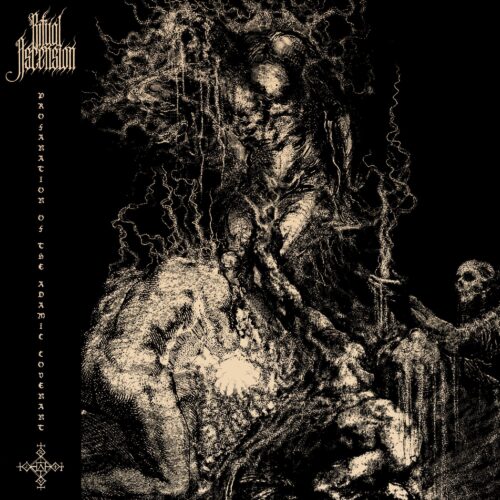
Profanation of the Adamic Covenant represents catacombs dripping with putridity and filth, the blasphemy called against the heavens from far below ground. It’s an upheaval from beneath our feet, the crawling and coagulant rot that spreads from abyss to abyss. The filth and blood clots our eyes, hearts, and minds, driving us deeper and deeper into the madness until our lungs are filled with mud. Ritual Ascension is transcendence and enlightenment achieved through the reveling and swallowing of the grime-soaked entrails through a vicious and ancient ritual, the lumbering deity whose mammoth footfalls and cloud of plague require payment in full. It’s a ritual to the god of the mud and disease, and a fist slammed into the underside of heaven.

Death/doom has many heads, but the one Ritual Ascension rears may be the ugliest. The Denver collective, alongside sharing all three members with Aberration, is comprised of members of Suffering Hour, Void Rot, Feral Light, and Annihilation Cult, promising a psychedelic affair inspired just as much by the classic death/doom acts of yore as the more experimental devastators. You’ll certainly find homages to Incantation, diSEMBOWELMENT, and Winter in its ten-ton doom hammers, but atop it is an opaque and occult breed of dissonant insanity reminiscent of Portal and a palpable filth only touched by the likes of Stenched or Rotpit, only kept in the realm of humanity by a palpable groove that reminds me of Ataraxie. Ritual Ascension offers the depths in ways few can, a collective far greater than the sum of its parts.

Crawling, slimy chaos is one hell of a first impression. Overload of down-tuned and filthy tremolo guide mammoth processions, whose dissonant constructions and atonal dirges provide a hypnotic otherworldliness. As displayed lumbering out of the gates, its attack is slimy, slow, and devastating, ultimately a feeling or a place rather than a collection of highlights – as any good doom album ought to be. From the subtle and simple chord progressions that dominate more minimalist pieces (“Womb Exegesis”) to the groovy and monolithic chugs that grace the climaxes of lengthy runtimes (“Pillars of Antecedence,” “Cursed Adamic Tongues”), interspersed by passages of blastbeats ranging from blazing to contemplative. DH’s vocals are a crucial element to the album’s subterranean and blasphemous atmosphere, ranging from the commanding chthonic bellows you expect from this breed of devastation to the tortured howls and groans more indicative of black metal.

If the first half of Profanation is subtle and crawling, then the second exists as utterly filthy slow-motion violence. I was initially disappointed that the Portal-isms were not as handily felt among the tracks of the first half, only gleaming in sporadic moments and within traditionally ominous diminished chord progressions. However, crossing into the second half with the scalding “Consummation Rites” and “Kolob (At the Throne of Elohim),” caustic slow-motion Ulcerate leads collide with the filthiest riffs Impetuous Ritual could muster, with DH’s most charismatic performances of the album. Unhinged and cutthroat are not words typically associated with doom, but the layers of overwhelm and dissonance meet the criteria with a bloodthirstiness and underlying craving for brutality. Looking back, it would have been relatively easy to incorporate the dissonant intensity in the first couple of tracks, but their later full fruition after a crawling crescendo makes them feel even more painful and overwhelming.

Even though the dissonance was not as immediate as I anticipated and the necessity for the patience required for this kind of beast goes without saying for its atmosphere – rather than a collection of songs – Profanation of the Adamic Covenant is transcendent. Encapsulating that crawling dread and ritualistic weight, monolithic groove, and dissonant layers in a tidy forty-eight minutes and held together by the dedication to unholy filth, it offers bounties aplenty for those willing to wade through the offal and mire. Bolstered by impressive performances in unpredictable percussion, riffs both mammoth and caustic, and vocals tortured and menacing, Ritual Ascension offers one hell of a debut. Get swallowed by the filth.

Rating: 4.0/5.0
DR: 7 | Format Reviewed: 320 kb/s mp3
Label: Sentient Ruin Laboratories
Website: instagram.com/ritualascension
Releases Worldwide: February 28th, 2025

#2025 #40 #Aberration #AmericanMetal #AnnihilationCult #Ataraxie #AvantGardeMetal #DeathDoomMetal #diSEMBOWELMENT #DissonantDeathMetal #Feb25 #FeralLight #ImpetuousRitual #Incantation #OldSchoolDeathMetal #Portal #ProfanationOfTheAdamicCovenant #Review #Reviews #RitualAscension #Rotpit #SentientRuinLaboratories #Stenched #SufferingHour #Ulcerate #VoidRot #Winter

2025-03-07

Stress Test – Stress Test Review

By Dolphin Whisperer

Just as much as any genre that’s been around for 40-plus years, hardcore is not a monolith, not by a long stretch. As an unleashing of rough-and-tumble punk energy with an extra flash of sharpness and swagger, its permutations can run the gamut of high-tempo riffage, ragged vocal attitude, and instrumental histrionics, all while wearing the speed-loaded label. With a classic thrash attack and a dash of grind spirit, Stress Test wears the genre like a tattered and patched denim vest befitted with snappy pull-off runs, d-beat anthemics, and short bursts fit for a moshing audience. No one needs to reinvent the urge to start up the pit to have a good time.

Featuring the rhythm section of Unto Others, with Brandon Hill assuming guitar and vocals instead of bass for Stress Test, Stress Test lands with a polish and focus not typical of acts whose songs frequent the sub-two minute range. Though that energy presents in some of the harder-hitting cuts that Unto Others has to offer, Stress Test shares little but members in the kind of drive that this debut holds. Hill and co.’s understanding of the studio helps Stress Test find smart and punchy pockets for deep bass propulsions (“Coward,” “Bastard Behavior,” “Stress Test”), which go a long way in adding color to the snarl and shifty riffcraft that perpetuates its eighteen-minute run. And with colors that range from the early 90s death/grind of Napalm Death to the meatheaded aggro-crossover of Terror, Stress Test uses their experience to travel familiar paths with a skanking stride that sounds urgent.

Even though time-tested riffs and a cadence rooted in thrash history defines the simple appeal of Stress Test, its tracks flow with healthy variation to maintain a momentum that remains unbreakable and memorable. Embracing the smooth and sliding Exodus stomp with the brevity of Municipal Waste party bangers spells, on its own, an easy-to-enjoy, never-ending circle of punky abandon (“Coward,” “Bastard Behavior”). But that p-word attitude, alongside the other important p’s of pummel and political edge, also serves as its hissing core, fueling snarky sample punches (“Degrees of Violence,” “It Isn’t Real,” “God Sucks”) and unrelenting layered vocal assaults—a barking fervor and accompanying caveman-frenzied bellow—color the bouncing intensity as Stress Test progresses. Nothing that Stress Test rips from the sweat and beer-stained pages of thrash reads as new, but its in-and-out groove remains difficult to deny.

The choice to keep Stress Test svelte hinders how high it can fly, though. Stress Test knows their way around a whiplash tune and quick guitar hero cut-in to let accelerating tempos breathe (“Degrees of Violence,” “It Isn’t Real,” “Gullible”). And while these bite-size ragers take up a small percentage of runtime in this already low-commitment affair, they also make for the most interesting guitar parts that Stress Test can muster. Of course, it would be hard to call longer cuts like mid-album “Suffer” and “Bastard Behavior” slouching, as their vocal bite and rhythmic overload ensure swinging arms and cracking necks from start to finish. However, in their self-similar nature, along with “Stress Test,” they allow fewer avenues for Stress Test to leave a stronger identifying mark.

Yet, as a feisty debut, Stress Test makes for a powerful, practiced statement. It doesn’t take a virtuoso to make music that is fast, loud, and angry. But, as Stress Test shows, steady (enough) hands and an ear looking for the right accents and accelerations will find a grace in wild tempos that mimics the fury of an untethered mind. With a varied pool of legacy influences, these Portland-based punks hold the potential to develop their low-frills sound in just about any way that they choose. And though Stress Test lacks in extreme choices that could hoist this fledgling act to a loftier status, Stress Test has taken aim at becoming a primary form of relief for those in need of boiled-over thrash madness.

Rating: 3.0/5.0
DR: 5 | Format Reviewed: 320 kbps mp3
Label: Transylvanian Recordings
Websites: stresstest.us | stresstestpdx.bandcamp.com | facebook.com/stresstestpdx
Releases Worldwide: February 28th, 2025

#2025 #30 #AmericanMetal #CrossoverThrash #CrustPunk #Exodus #Feb25 #Hardcore #MunicipalWaste #NapalmDeath #Review #Reviews #StressTest #Terror #TransylvanianRecordings #UntoOthers

2025-03-05

Hirax – Faster than Death Review

By Dr. A.N. Grier

When Hirax’s newest record dropped, I thought, “These guys are still around?” That’s not me being a dick. They haven’t released a new album since 2014. I suppose that’s on par with the band considering they’ve been on and off since 1984—this year’s Faster than Death only being their sixth full-length release. With vocalist Katon W. de Pena being the only remaining original member of the band, it appears that once a record is complete, that lineup leaves, and the wait begins for a new one to pen another release. The same can be said for Faster than Death. Not only do we see a new lineup to support de Pena but a dedicated roster for live events. This is a shame because I feel the success of 2014’s Immortal Legacy was due to the crew’s performances and songwriting abilities. Because, believe it or not, Immortal Legacy is one of the band’s strongest releases. But Faster than Death proves that once Hirax gets onto something, they revert to their past and mess it up.

Case in point, this new record returns to the band’s days of yore where you can’t tell if a release is an EP or LP. Unlike the thirty-eight-minute Immortal Legacy—which provided plenty of breathing room to explore a riff or idea—Faster than Death lives up to its name with a nearly twenty-two-minute runtime. Not that I’m quite in a place to discover if I can die in that time, but I do know that my morning coffee shits take longer than it takes to listen to this record. With songs one to two minutes in length, even Hirax’s traditional speed-meets-thrash-meets-borderline-hardcore style struggles to provide a memorable and meaningful track. They were better at it in the olde days with Raging Violence and Hate, Fear and Power,1 but those who feel Hirax made a significant impact on the Bay Area scene are kidding themselves. That said, what they worked so hard for on Immortal Legacy is gone on Faster than Death.

“Drill into the Brain” kicks the album off with a standard Hirax thrash lick and de Pena’s classic cleaner vocal style that brings to mind the Anthraxes and Metal Churches of the scene. But it’s nothing more than a simple chorus and blistering solo in a one-minute expanse. So, naturally, I’m worried. Thankfully, there are some stellar tracks on Faster than Death, specifically “Drowned Bodies,” “Psychiatric Ward,” and “Revenant.” The first is a chugtastic piece with an Anthraxy riff and vocal performance. As the riff changes occur and the nifty blastbeats build the back half of the song back to Chugger Town, the band finds that raw intensity that makes their better songs so good. “Psychiatric Ward” is similar in approach but for all my disappointments with these shorter track lengths, it delivers the goods and brings some hefty shit to it’s mere minute-and-a-half runtime. “Revenant” is the longest track on the record and the most unique. Displaying some slick fretboard work and a sinister, eerie atmosphere, the track is the album’s pleasing black sheep—specifically when it ventures into Testament-like territories and the massive build to the end.

But that’s about all I can return to without getting annoyed. The opener flies by so fast that you can’t get a grip on what’s going on, “Armageddon” is forgettable, the title track is boring, and, while the closing “Worlds End” has its moments, the vocals feel uninspired and I’m already done with the album because of the closer’s predecessor. Why do you ask? Because it’s a re-recording of their 1985 classic, “Warlord’s Command.” The album is only nine tracks long. Did they really run out of ideas that require re-recording a song like “Warlord’s Command?” I have no idea but all it does here is disrupt the flow, cripple the closer—all for a heavier version of a track that few remember.2

Outside the handful of songs that I enjoy, the only redeeming quality of Faster than Death is that it’s short and dynamic as fook. If it were rawer, the master’s openness would make it feel like it came from the ’80s. But that feeling doesn’t last long because Faster than Death is pretty one-dimensional. While their older material and even Immortal Legacy displayed some original guitar, bass, and drum work, Faster than Death is centered predominately on chugging trash riffs. It works with some of the stronger tracks, but others become predictable and begin to blend. I wanted to like this new release because the previous one felt like a step in the right direction. But now we are pulled back down the rungs, and I’m too tired to climb the latter again.

Rating: 2.0/5.0
DR: 9 | Format Reviewed: 320 kb/s mp3
Label: Armageddon Label | Bandcamp
Websites: hirax.bandcamp.com | facebook.com/hiraxthrashmetal
Releases Worldwide: February 28th, 2025

#20 #2025 #AmericanMetal #Anthrax #ArmageddonLabel #FasterThanDeath #Feb25 #Hirax #MetalChurch #Review #Reviews #SpeedMetal #Testament #ThrashMetal

2025-03-04

Act of Impalement – Profane Altar Review

By Dear Hollow

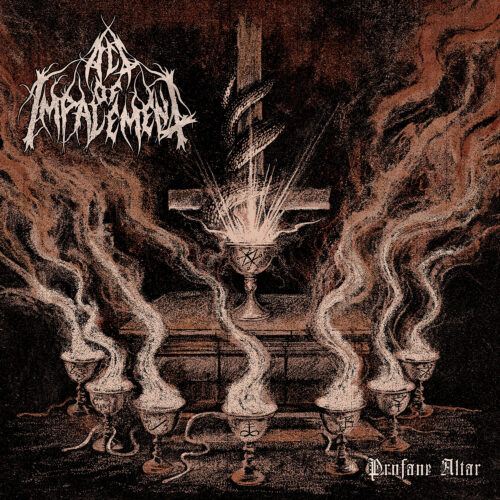
Nashville trio Act of Impalement’s sophomore release Infernal Ordinance, in spite of the low-hanging HOA jokes, was badass. Its unfuckwithable blend of death and crust styles led to a sore neck from endless headbanging, while its passages of doom tempos and thick weight did the sludge and doom influences justice. I still spin the likes of “Summoning the Final Conflagration” and “Erased,” reliving that pummeling that hurts so good again and again. You can imagine how excited I was, then, to discover Act of Impalement has a new album.

To accurately sum up Act of Impalement’s musical arsenal is an exercise in futility, and Profane Altar amps the obscurity – although the trademark groove remains stalwart. While Ethan Rock remains the band’s pivot point as primary songwriter, vocalist, and guitarist, a revamped lineup replacing bassist Jimmy Grogan and longtime drummer Zack Ledbetter emerges with its own streamlined take. As such, while Infernal Ordinance felt almost entirely like the one-man Ethan Rock show, Profane Altar finds bassist Jerry Garner adding more rumbling weight to the riffs while drummer Aaron Hortman brings a newfound manic energy and mania to the rhythms. While the influences remain the same in death metal royalty Bolt Thrower, Incantation, Entombed, and Asphyx – and the sound is deceptively straightforward – the streamlined approach, more pronounced black metal influence, and filthier riffs offer new planes for Act of Impalement.

Act of Impalement’s biggest change is a more cohesive fusing of its sludge and death metal influences alongside its newfound obscure black metal bleakness. While opener “Summoning the Final Conflagration” from its predecessor set a precedent of buzzsaw riffs driven to a sludgy end, Profane Altar opens with “Apparition” – while the groove and riffs are similar, they are absolutely suffocating, a swampy tar filling every crevice of the sound. Act of Impalement is down with the thickness, and it grants them a fluidity that kept the disjointedness of its predecessor from truly soaring. From ten-ton bruisers dripping with patient swagger (“Apparition,” “Final Sacrifice”), filthy 6/8 death metal waltzes (“Sanguine Rites,” “Gnashing Teeth”) to vicious crust punk-influenced black metal beatdowns laden with blastbeats and shred (“Piercing the Heavens,” “Deities of the Weak”), their potentially disconnected collection of blasting and bruising is blessedly woven together by its all-consuming weight.

Brevity is the name of Act of Impalement’s game, and it no longer feels like a one-man show. No track exceeds five minutes for a total of thirty-one minutes, which is absolutely reasonable and almost necessary for this breed of intensity. While the professed styles don’t feel particularly unique, Act of Impalement manages to lay them atop the incredibly sturdy foundation of groove, which serves the brevity extremely well – the album hits hard and fast and never overstays its welcome. Better still, Garner’s bass shines throughout and Hortman’s percussion feels both unhinged in its blastbeats and steadfastly reliable in its plodding groove – both members shining alongside Rock’s riffs and hellish roars. That being said, Act of Impalement offers a brutal riff-fest with elements borrowed from death, death/doom, crust punk, and black metal, a tribute to the hallowed halls of metal history – but the product is remarkably straightforward in its punishing groove.

If you’re looking for a nuanced album that showcases a rich and layered approach to its songwriting, Profane Altar is not for you. However, if you’re okay seeing all its influences as riders of the one-trick pony called groove, it doesn’t get much better than Act of Impalement’s breed of pummeling. Profane Altar is fucking heavy, simultaneously a more in-your-face and obscure release for a band renowned for their breakneck intensity. Balance and the bravery to embrace its disparate blend of influences sets it apart from its already formidable predecessor, even though the shortsighted groove makes it blackened, deathened, crusty, doomy ear candy. Infectiously groovy ear candy.

Rating: 3.5/5.0
DR: 6 | Format Reviewed: 320 kb/s mp3
Label: Caligari Records
Websites: instagram.com/actofimpalement | facebook.com/ActOfImpalement
Releases Worldwide: February 28th, 2025

#2025 #35 #ActOfImpalement #AmericanMetal #Asphyx #BlackMetal #BlackenedDeathMetal #BoltThrower #CaligariRecords #CrustPunk #DeathMetal #DeathDoomMetal #DoomMetal #Entombed #Feb25 #Incantation #ProfaneAltar #Review #Reviews

2025-03-04

Grave Infestation – Carnage Gathers Review

By Steel Druhm

With so much classic heavy metal clogging up my review queue lately, I’ve been neglecting the baser caveman side of my reptilian brain. Canada’s Grave Infestation are back to fix that with their sophomore platter, Carnage Gathers. When they last slimed my doorstep in 2022 with the gruesome Autopsy and early Death worship on Persecution of the Living, they left a mucilaginous impression on my thick skull. Their grizzled and nasty take on old school death was exactly the kind of filth I love to wallow in. Not much has changed on Carnage Gathers, which is another putrid scuzzbucket full of grotesque sounds, primitive riffs, and an IQ below that of rudimentary tool users. It revels in the early days of the genre while fetishizing the lo-fi sound of Hellhammer. It’s all about ear abuse and carnal debasement, and I refuse to be threatened by a good time in the rot pit. Prepare to embrace the sump.

This is not a varied and complex work of art. It’s a tug of war between extremities as the band tries to crush your chestal cavity with ghastly doom segments and then shake your brain stem with bursts of speed and punky d-beats. The whiplash is intended to induce nausea, and it often does. Opener “Living Inhumation” has the bona fides to have appeared on Death’s Leprosy or Autopsy’s Severed Survival and fit right in like a bowel leech. It’s scabby, poo-encrusted offal of a high caliber loaded with jangled, discordant riffs and abysmal vocals. The guitar tone is absolute sewage, and everything is dank and reeking. The only downside is the length. At nearly 6 minutes, it overextends its welcome by the end. This is an unfortunately common trend here, with multiple songs of good construction outliving their trust funds of attention. I love many things about “Ritualized Autopsy,” especially the slimy riffs that ooze everywhere and make you feel unclean. I also appreciate its relentless, unstoppable assault. At points, the guitar work even reminds me of Destruction’s immortal debut EP, Sentence of Death, which is a very good thing. But it too plods on too long, losing some of its visceral impact.

Every track has things going on that I love. Grave Infestation have that sound I’m hopelessly drawn to, and the way they layer nerve-flaying fretboard abuse, bone-breaking grooves, stupid chuggs, and atmospheric noodling gets me every time. Lay some vomitous vocals and pounding drums over that shit and Steel comes to your yard for the gutshake. However, the band doesn’t know when enough is enough, and quality cuts with righteous moments like “Black Widow” and “Drenched in Blood” refuse to stop when they should. There are some absolute ball breaking though, like primal closer “Murder Spree” which just fucks up your shit with insane, panic-inducing riffs that won’t leave you alone. It’s like they took the best moments from Possessed’s timeless classic Seven Churches and sutured them roughly to early Autopsy demos. What more could you want? At 39:56 minutes, Carnage Gathers doesn’t feel too long, though certain tracks do. The production is perfectly mucky and raw, and the guitar sound is exactly the kind of abrasive my rusty metal heart wants.

I’m a big fan of the guitar work from Graham Christofferson and “BC.” It’s their horrific string mutilation that makes the material throb, and they have a knack for skin-removing riffs and twisted flourishes. They create the soundtrack to a madman’s nightmare while paying homage to classic early death albums we all know and love. At times, their riffs sound like those on Bathory’s The Return, which makes me unreasonably giddy. Graham Christofferson’s vocals are a match made in Hell – horrid, repulsive, and full of gut-busting throat exertions. He reminds me of Chris Reifert (Autopsy) at times and, at others, Jeff Beccera (Possessed), but he’s always disgusting. The entire band is solid, but the lack of editing is a nagging defect.

I desperately wanted to give Carnage Gathers a higher rating because I dig so much of what Grave Infestation does. They play exactly the kind of death metal I love, and their commitment to appalling excess speaks to my crude ape brain. If they trimmed the blubber off the best cuts, this would rise in the ranking considerably. As it stands, Carnage Gathers is a quality death metal album sure to please the sick and deranged. It could have been MOAR though!

Rating: 3.0/5.0
DR: 6 | Format Reviewed: 320 kbps mp3
Label: Invictus Productions
Websites: graveinfestation.bandcamp.com | facebook.com/graveinfestation | instagram.com/graveinfestation
Releases Worldwide: February 28th, 2025

Kenstrosity

Formed from members of Canadian antifascist crust/sludge metal outfit Ahna and known death filthifiers Ceremonial Bloodbath, Grave Infestation helped pull me out of a skull pit intent on suffocating me under a mountain of bullshit and dumped me right back into a different skull pit entirely—this one teeming with rot and cadaveric bouquets. I suppose I should be thankful, as this is the kind of thing that fills my pores with what some might consider the scent of WICTORY. So, without further ado, I dive deeper into the corpse pile that is Grave Infestation’s sophomore record, Carnage Gathers.

Death metal is a known quantity. We all know it when we hear it, and can describe it without much conflict or confusion. Such is the case for Grave Infestation. Carnage Gathers represents death metal at its most rank, channeling equal parts Asphyx and Incantation, with a membrane of slick Autopsy sleaze surrounding its diseased skin. It’s a combination that works wonders for those who search tirelessly for the nastiest of the nasty, and in that respect, Grave Infestation don’t disappoint. Buzzing and boisterous riffs abound, slammed into the earth below by the crushing heft of doom-laden chugs and yanked back upright by a relentless barrage of squealing solos. Cheering on these deadly antics, a vomitous wretch, brutally projected from afar, echoes its sickening cry across Carnage Gathers’ necrotic scenery. Drawing the line just shy of the caverns from whence Tomb Mold’s early work spawned, Carnage Gathers boasts a sound that exudes old school death at its prime.

Of course, that means that I’m drawn to Carnage Gathers almost by instinct, an animal magnetism against which mental fortitude and willpower crumbles at the slightest breeze. Choice cuts “Inuman Remains,” “Black Widow,” and “Drenched in Blood” take full advantage of my weakness here. Bridging the gap between Incantation’s sheer heft with the vicious onslaught of Autopsy’s violent ways, these songs juggle riffs and grooves engaging enough to motivate the necks of even the staunchest death dissident. “Black Widow,” in particular, marks Grave Infestation’s high water mark, boasting a punky d-beat swagger in conjunction with screeching dive bombs that make an instant memory. Songs like these show that Grave Infestation not only understand the kind of songwriting that made death metal an international underground phenomenon but also identify and implement subtle ways to invigorate that well-worn, comfortable style for a modern audience.

However, Carnage Gathers demonstrates understanding and implementation inconsistently. Pulling from many of its doomier segments, Grave Infestation’s writing outside of their ravenous tears and mid-paced stomps leaves a lot on the table. “Ritualized Autopsy,” “The Anthropophagus,” and “Murder Spree,” among a couple others, routinely inject slower passages characterized by generic chugs and repetitive solos, thereby undermining Carnage Gathers’ strongest material with filler. Considering several tracks reach past five minutes with the inclusion of these insubstantial sections of languid doom death, it seems a clear weak point in Grave Infestation’s repertoire. The undeniable fact that their ripping, death-focused outbursts regularly demolish everything in their path each time they rear their ugly heads only further illuminates the flat, featureless nature of their doom-laden dalliances.

As I surface from the Carnage that Gathers to breathe deep of stale, putrid air, I rest easy knowing that despite its flaws, Carnage Gathers isn’t half bad. Its best moments are a ten-ton anvil of repugnant fun, and the doomed detours that fail to resonate in any meaningful way also don’t derail the experience entirely. Instead, these flawed moments serve as an opportunity for growth. Grave Infestation are still young and have a ton of potential. It wouldn’t take much for them to further refine and empower their sound, launching the quality of their output into higher echelons. For the moment, though, Carnage Gathers is a simple, fun platter of filth, and that’s fine with me.

Rating: Mixed

#25 #2025 #30 #Ahna #Asphyx #Autopsy #CanadianMetal #CarnageGathers #CeremonialBloodbath #Death #DeathDoom #DeathMetal #DoomMetal #Feb25 #GraveInfestation #Hellhammer #Incantation #InvictusProductions #Leprosy #Obituary #PersecutionOfTheLiving #Possessed #Review #Reviews #ScreamBloodyGore #TombMold
2025-03-03

Havukruunu – Tavastland Review

By Dr. A.N. Grier

For a band that’s only been releasing full-lengths for ten years, Havukruunu has been hella prolific, not only with releases in general but with great releases. Also, each album seems to be better than the next. The coolest part about their sound is that they’ve proved more can be milked from bands like Bathory and Immortal.1 Be it the melodic interludes, big Viking choirs, or endless riff changes, Havukruunu continues to bring inspiration with each new record. Which, as hinted at, is difficult to do with a style that has been around since the ’80s and ’90s. And it’s no different for this year’s Tavastland. It’s a fifty-plus-minute journey of Viking and metal culture that’ll have you banging your head, swimming in oceans of melodic beauty, and barking out anthems of an ancient time never forgotten.

The most unique aspect of Tavastland is that the band’s original vocalist and bassist has returned. But, by the time the debut record, Havulinnaan, landed in 2015, Humö only played a minor role in the band. Years later, he’s back to offer up his bass to the crushing riffs of Havukruunu’s sound. Never a band to dismiss the bassist when writing and mixing releases, Humö displays perhaps the strongest bass performance of Havukruunu’s career. Rumbling like a fucking madman, songs like “De miseriis fennorum” are made even more impactful by his bass performance. That is quite the feat with a band that’s always had stellar dual guitar performances and drum work that’s every bit as meaningful to the band’s success as the other instruments. So, crank up them cans and prepare to be blugdeoned to death by Tavastland.

As with most of the band’s output, Tavastland contains a specific theme in the lyrics and the track layout. Case in point, the opener and closer begin with spoken introductions before the chaos ensues. These two tracks are also the longest and, without a doubt, the album’s epics. The opening track, “Kuolematon laulunhenki,” invokes more Immortal than the rest of the album as an icy, black metal lick kicks into high gear before the inevitable riff changes begin. When it comes, it comes with a dual fretboard display that erupts into a heavy fucking riff supported with a vicious vocal performance. Immediately, you understand the bass influence as Humö tears the fucking roof down. When the Viking choirs arrive, the Bathoryisms creep in and get stronger with each iteration. “De miseriis fennorum” similarly closes the album but with stronger Bathory influences and some old-school metal elements. When it settles in, the punchy vocals emphasize the riffs as voice and instruments work together. One of the coolest transitions comes when the bass abandons the guitars in favor of blastbeating along with the drums. Fucking goosebump inducing. As the song builds, we are treated with old-school Mercyful Fate dueling guitar work and a soothing Viking outro that would make Quorthon smile from ear to ear.

Between these bookmarks, you’ll find even more to love about Tavastland. Be it black metal assaults, impressive solos, melodic passages, Viking choirs, or even thrash, Havukruunu is here to take you for a fucking ride. “Havukruunu ja talvenvarjo” fires out the gates with a bass-heavy, blistering-fast black metal charge that transitions into another surprising twist. This time, it comes with a slick build-up that includes alternating acoustic and distorted guitars that somehow work. As the relentless bass pushes on, another twist arrives in the form of layered growls that hit harder than ever. The title track is another fantastic song with a lot of heart—lyrically and instrumentally. Using the same layered vocal style as the previous track, it tramps along before the envelope cracks open to reveal gorgeous strings and Viking choirs, cementing this beauty into your brain. “Unissakävijä” is another unique piece for its odd combination of thrashy riffs, melodic wonderness, and massive Viking choirs that set up the track before the blitzkrieg hits—though it’s a bit on the long side.

Not only does Tavastland continue to show a band that never disappoints—and continues to get better—but it’s one of their best-produced records. While 2020’s Uinuos syömein sota still gets a lot of spins in the Grier household, the compressed master is my biggest complaint. Now that Havukruunu is with Svart Records, maybe that will change. Because Tavastland is quite dynamic, allowing all the elements I’ve mentioned to rise to the top and slip to the background as needed. In an album completely submersed in killer tracks, some, like “Yönsynty,” aren’t as strong as others. Though it’s still a strong song, it can’t stand up with the rest of the incredible tracks on the album. That said, Tavastland is an AotY contender (again), and fans of the group will love it.

Rating: 4.0/5.0
DR: 8 | Format Reviewed: 320 kb/s mp3
Label: Svart Records
Websites: havukruunu.bandcamp.com | facebook.com/havukruunu
Releases Worldwide: February 28th, 2025

#2025 #40 #Bathory #BlackMetal #Feb25 #FinnishMetal #Havukruunu #Immortal #MercyfulFate #PaganMetal #Review #Reviews #SvartRecords #Tavastland #VikingMetal

2025-03-02

Marrowomb – Phisenomie Review

By Tyme

While you might not be familiar with the name Frank Lato, you may have heard some of the Chicagoan’s work. Contributing bass duties to the now defunct Polyptych in addition to the ongoing concern Headshrinker—the former was praised here in 2016 by Eldritch Elitist for Defying the Metastasis, while the latter’s Callous Indifference received a rare 4.0 from Steel in 2021—Mr. Lato has decided to slide out of the shadowy rhythm sections of his other projects to stand in the blazing light of judgment as a solo act with his new venture, Marrowomb. Alongside session drummer Kevin Paradis (ex-Benighted), who covers all the kit work, and a few friends contributing guest guitar solos, Marrowomb readies to independently release Phisenomie, a debut album nearly five years in the making. Reminiscing on many of the things I enjoyed from his previous contributions, Lato’s metal credentials excited me, but that doesn’t mean Marrowomb would get a pass. So I dove into Phisenomie with some reserved anticipation, ready to pounce if things went south.

If Benighted had gotten pregnant during some ancient Anaal Nathrakhian sex rite, the child of that ceremony would share audial DNA with Marrowomb. While at first blush this might sound intriguing, ultimately, Marrowomb lacks the histrionic technicality of Benighted and the all-out, brain-searing intensity of Anaal Nathrakh. Still, it’s blast furnace riffs scourged over machine gun blast beats (“Sickness unto Life,” “Black Gossamer”) that primarily serve as the sonic foundation for Phisenomie’s hierarchy of blackened death. Marrowomb‘s slight forays into bass-moody interludes (“Vicarious Visage”), experiments with tech-twitchy riff patterns (“Veil of Cold”) and full-on deep dives into doom pools (“Despairloom”) combine with sparse synth work to bring atmospheric variation but ultimately fall short, a result of Phisenomie‘s most significant flaws, which are its construction and the mix.

Like its digitally assembled cover art,1the music on Phisenomie sounds cut and pasted together. Dissonant leads come out of nowhere (“Phantasia Kataleptike”) as do awkwardly incorporated solos (“Black Gossamer,” “The Mirror”) like tin-eared tails mistakenly pinned to a riff donkey’s neck. This immature cohesion and lack of integrality enshrine Marrowomb‘s guitar performances as weak, a negative further spotlighted by the mix. Phisenomie is pretty loud, and as a result, much of the bass and guitar work is left muddied. Solo work at the beginning of “Despairloom” suffers most from this mud-bog mix as much of the interesting guitar runs garble as if played through a wet towel.

As a general liker of things,2 I’ve perhaps been overly harsh with Marrowomb, but not everything here is as dire as I’ve portrayed. A case in point is Lato’s vocal performance. I’m not sure if he ever contributed vocals on any of his other projects, but he’s got a decent ability to spit growls and rasps alike. I hear more of Dave V.I.T.R.I.O.L. Hunt’s grunts and shrieks in Lato’s delivery than I do the “Reee Reee” stylings of Julien Trouchan, but suffice to say, the man’s voice is compelling. Paradis’ kit performance, another highlight, is full of pummeling double bass bashing, frolicking fills, and enough snare abuse to remind you that, yeah, this guy played on Ekbom. These things give me hope that not everything about Marrowomb is lost.

Marrowomb‘s debut album, Phisenomie, is not what you’ve been waiting for. I enjoyed Polyptych‘s output and look forward to hearing the next Headshrinker for sure, but Marrowomb hasn’t done enough to sell me, and I can’t recommend this album as a result. I am, however, a fan of Frank Lato’s ability, which is inarguable, and I respect him for taking this project on and getting more of his work out there. With a more fleshed-out guitar vision and the chops to back it up, there could be a promising release in Marrowomb‘s future; Phisenomie just isn’t it.

Rating: 2.0/5.0
DR: 6 | Format Reviewed: 320 kbps mp3
Label: Self-Released
Websites: Bandcamp | Facebook
Releases Worldwide: February 21, 2025

#20 #2025 #AmericanMetal #AnaalNathrakh #Benighted #BlackMetal #DeathMetal #Feb25 #Independent #Marrowomb #Phisenomie #Review #Reviews

2025-03-01

Arion – The Light that Burns the Sky Review

By El Cuervo

One of the multitude of European power metal bands flying relatively low to the ground, Finland’s Arion (pronounced like Orion or carrion?) have seen coverage just once previously at AngryMetalGuy.com. The late, great Huck n’ Roll1 opined that their third record was competent but generic, seeking hits rather than their own sound. 2025 has arrived, and with it comes a successor release entitled The Light that Burns the Sky. Pitched as a “highly anticipated symphonic masterpiece,” and with a growing well of experience underpinning the band, I set appropriate expectations as I hit play.

Arion’s strongest quality is a legitimate chunkiness they boast in the face of Europower competitors that I usually find saccharine. Their compositions are appropriately maximalist, with reasonably dense layers of metal instrumentation fused with strings and faux choirs. But the songwriting and production generally elevate the impact of the guitars and drums in the mix above the symphonic elements; in particular, the guitars and drums benefit from a robust, battering tone while subjugating the keyboard elements. Likewise, the vocalist is sufficiently acrobatic to hit the necessary notes but prioritizes a gritty, shouting personality above a wailing vibrato. Finally, The Light that Burns moves at a quick pace, which, when paired with the compositions, coalesces into a sound that’s pretty heavy for power metal. The title track is an early highlight and exemplifies the qualities described above. Its speed and heft sounds something like Symphony X, with an appreciable brevity resulting in a song that passes instantaneously.

However, I find that The Light that Burns struggles to keep itself fresh. Despite its beefier-than-most style, the album becomes more repetitive and generic by side B. It contains ten proper songs (not including the short opener), and they all sound fairly similar. I find that my initial enthusiasm only persists for the first few songs; beyond this, the spark is extinguished. For example, “Blasphemous Paradise” is a pale imitation of the title track as it features stylistically similar but less enjoyable melodies. I query the purpose of songs that are simply lesser renditions of others. And the further into the album ventured, the more I struggled to maintain my focus; I was hard pressed to write any notes at all about the penultimate track called “In the Heart of the Sea.” I’ll happily listen to some bands doing the same thing ten times over, but only where they produce great music. By contrast, Arion merely produce serviceable music.

Where Arion attempt to generate the quality through variety I find myself craving, they still don’t quite achieve this. “Wings of Twilight” uses a female vocalist in its chorus who offers an ear-catching change of tone, but she’s ultimately less effective because her style is more generic than the main vocalist. This song also leans more heavily into synths. These two factors contribute to the song diluting the band’s personality and heaviness. Likewise, the closer runs for longer in an effort to reach something more epic. But what this practically entails is nearly two minutes of a repetitive introduction, extending what should be a sub-five-minute song to one that approaches seven minutes. By contrast, and despite my general enjoyment of the heavier songs here, a mid-album ballad might have worked better to refresh the sound of The Light that Burns for its second half.

There are substantial strengths in the core sound of The Light that Burns, and there are a couple of strong songs, but Arion are just not compelling enough to warrant anything more than a neutral award. While I admire the trend towards heavier material, the songs are insufficiently distinct to carry a 45-minute album. And though this release may not be quite as generic as the last, my overall summary can still go no further than “competent”.

Rating: 2.5/5.0
DR: 6 | Format Reviewed: 320 kbps MP3
Label: Reigning Phoenix Music
Websites: arion.com | facebook.com/arion
Releases Worldwide: February 28th, 2025

#25 #2025 #Arion #Feb25 #FinnishMetal #Review #Reviews #SymphonicPowerMetal #SymphonyX #TheLightThatBurnsTheSky

2025-02-28

Ruinous Power – EXTREME DANGER: Prototype Weaponry Review

By Kenstrosity

As I get older, I grow ever more tired of labels. Yes, it’s helpful to have a baseline frame of reference for what something is, but lately, I find myself abandoning these kinds of single-use terms in favor of something more substantial and descriptive. So, when Canada’s Ruinous Power entered my review rotation, I allowed myself more room than ever before to interpret what they craft outside of the multitudinous boxes in which they could fit. A newer outfit comprised by members of Egregore and Mitochondrion (among many other bands) in 2021, Ruinous Power incubated their debut record EXTREME DANGER: Prototype Weaponry until its inevitable escape from the confines of twisted minds into meatspace, where it corrupts all who would encounter it.

Based on the lore and aesthetics of the Warhammer 40k franchise, Prototype Weaponry takes what on the surface sounds like blackened death metal, endows it with a raucous thrall of thrash, and imbues within it an eerie, synth-woven atmosphere. Comparisons to both Mitochondrion and Egregore are apt, placing Ruinous Power comfortably inside that family tree of skronked-up up blackened death pedigree. However, that extra dose of mutated thrash allows a twist of The Outer Limits Voivod to pulse beneath the skin, while Ulthar‘s unearthly, necrotic limb hovers just over Ruinous Power’s writhing flesh. Juggling long-form excursions into the murky abyss with violent expulsions of a much more expeditious nature, Ruinous Power embodies Prototype Weaponry with a restless, anxious energy and equips it with lethal armaments liable to destroy us all.

Prototype Weaponry wields those armaments with aplomb despite its unpredictable nature, expertly balancing impenetrable discordance with highly accessible rhythms and infectious repetition. Ten-minute opening epic “But What of Sacred Mars?” takes tumbling, scraping riffs in stride, sticking the landing with a proggy companion motif that ripples with lean power. Pumping that momentum for five minutes, this track takes its rest and allows a bass-led, Mare Cognitum-esque second act to immerse the listener with lush instrumental developments. In doing this, Ruinous Power prepare the listener for what’s to come, and what’s to come is unchecked destruction. “The Long Game,” “Kneel,” and album highlight “+++ Engine Kill +++” represent Prototype Weaponry’s most vicious salvos. All three toss the listener clear across a dystopian battlefield with tearing leads evoking a sooty and scrawled Portal-ish visage (“The Long Game”), relentless riffs that refuse to adhere to either death metal or thrash metal conventions while still inheriting many of their physical traits (“Kneel,” “+++ Engine Kill +++”), and an uncanny sense of melody that defies Ruinous Power’s inhuman lust for aural obliteration (“The Long Game”). So as to not deprive the listener of a cohesive experience, Ruinous Power stitches these divergent anatomies together with strange, but never unfamiliar, connective tissue in such a way that transitions between seemingly incompatible segments provide the context necessary to justify their positioning at every joint.

In this way, Prototype Weaponry proves that Ruinous Power’s experience with the weird and wild pays dividends even when crafting more straightforward material than their more notable main projects. However, a few nagging concerns remain. Though its myriad riffs and motifs feel fresh and vital in the context of the greater metalverse, Protoype Weaponry also toys with self-plagiarism a little too closely in its album-wide microcosm. “The Descent of the Host” inherits an assortment of its constituent building blocks from the motifs introduced by “But What of Sacred Mars?” and “+++ Engine Kill +++,” and some of the arpeggiated wiggles and runs featured on “Cerebrum Malefice” feel all too familiar to those on earlier cuts like “Kneel.” On a separate note, with an album as tight as Prototype Weaponry—a mere thirty-one minutes, rounding up—instrumental interludes like the title track provide very little outside of superficial atmosphere, taking away from the whole rather than bolstering it.

As the dust clears and the bodies are counted, Prototype Weaponry stands strong and victorious, but the battle left a few weak points exposed. Not to be deterred by mere flesh wounds, Ruinous Power used their extensive past experience crafting dense, oppressive extreme metal to make a bold statement inside a more accessible framework. Thus, Prototype Weaponry earns my overall recommendation. Its riffs break necks as easily as they invite spirited imagination. Its dynamic structures immerse as readily as they immolate. Its presence enthralls as deeply as it terrifies. If that entices you even in the slightest, and you crave EXTREME DANGER, secure yourself some Prototype Weaponry today!

Rating: Very Good
DR: 8 | Format Reviewed: 192 kbps mp3
Label: I, Voidhanger Records
Website: Too Kvlt for Webz
Releases Worldwide: February 28th, 2025

#2025 #35 #BlackMetal #CanadianMetal #DeathMetal #DissonantBlackMetal #DissonantDeathMetal #Egregore #EXTREMEDANGERPrototypeWeaponry #Feb25 #I #MareCognitum #Mitochondrion #Portal #Review #Reviews #RuinousPower #ThrashMetal #Ulthar #VoidhangerRecords #Voivod

2025-02-27

Aspaarn – Oblations in Atrocity Review

By Dear Hollow

Shockingly, raw black metal isn’t really known for its accessibility. Its cult utilizes the most discordant of black metal’s already discordant approaches, but its worshipers may notice the range of barbed noise to cloaks of fuzz that populate lo-fi productions. Switzerland’s one-man raw black show Aspaarn utilizes both clarity and opacity alike to cast shadows of a dark wilderness worthy of its cover, with just enough reverb to lend a ghostly presence wandering amid the thickets and pines. While the stereotype lands in moonlit purple castles and catacombs of dust and shadows, there’s a distinctly wild and uncharted feeling about Aspaarn.

The phrase “raw black” doesn’t always wrap up neatly in a Nattens Madrigal-shaped box, and Aspaarn’s sound reflects this complexity. While reveling in that classic barbed clarity of Ildjarn, its ghostly haze recalls the likes of Revenant Marquis, adding to the disorientation. It ultimately ends up sounding a bit like Kryatjurr of Desert Ahd or El-Ahrairah: classically bleak and morbid black metal chord progressions wildly transfigured into a psychedelic and otherworldly visage. Composed of multi-instrumentalist Solaris Lupus, also of the likeminded Lord Valtgryftåke and Svartokunnighet, the Aspaarn project’s fourth full-length Oblations in Atrocity oscillates between second-wave frigid rawness and atmospheric wherewithal that never forsakes its teeth.

In spite of the genre of choice, Aspaarn’s instrumental attack is surprisingly clear, and Lupus’ grasp on songwriting is very firm. Layers of tremolo and bass lead the attack, with the inherent dissonance and minor keys giving Oblations in Atrocity a disorienting feeling (“Duty in Hecatomb,” “Boundless Hunger”), further emphasized by shifting tempos and rhythms, often taking a mad waltz reminiscent of Grave Pilgrim. Drums anchor this sound with precision and reliability, but a sharper trash-can-lid snare graces it a nimbleness that adds a distinct insanity to it as well (“The Order of Fear,” “Memories in Suffering”). Chord progressions are the backbone of every track and are directly rooted in classic Darkthrone’s permafrost soil, allowing its morbid and morose atmosphere to shine in the best possible way. The balance between clarity and opacity is key, as rawness and noise can tend to overwhelm basic musical movement, but Aspaarn’s deft hand manages to keep it surprisingly restrained.

While clarity adds that kvlt intensity and relentless attack, the tools guiding opacity in Oblations in Atrocity give it its supernatural lean. Vocals are most obvious right off the bat, with Lupus’ shrieks and roars cloaked in a thick veil of reverb, giving it a far more haunting feeling than many raw black metal stereotypes. When clean vocals are utilized, they take on a choral quality, nearly liturgical, driving home the album’s blasphemous atmosphere (“Silence of the Gods,” “All Reaching Misery”). One thing that puts Aspaarn in distinction is its ability to sound atmospheric without an overreliance on synths or keys, like genre greats Paysage d’Hiver or Lunar Aurora. In fact, there are very few obvious occurrences of “ambient” vestiges apart from the closer, which just drives home the second-wave worship that pervades Oblations in Atrocity.

For all the balance and atmospheric prowess Aspaarn offers with Oblations in Atrocity, it remains raw black metal, a particularly divisive and unfriendly take on an already divisive and unfriendly style. The vocals, while contributing to the otherworldly and supernatural feel in ways I saw as a clear highlight, are quite loud and can overwhelm the sound. The jarring tempo and rhythm changes, guided by the feral drumming, are an acquired taste but ultimately guide the labyrinthine panic and uncharted wilderness that course through the album. The first half of closer “All Reaching Misery” feels painfully directionless until the atmospheric passages give them purpose. What can I say, it’s raw black metal. Ultimately, Aspaarn has created an album that won’t change your mind about the style, but offers treats and bounties aplenty for those who like their music more with a generous side of pain.

Rating: 3.0/5.0
DR: 10 | Format Reviewed: PCM
Label: Self-Released
Website: töö kvlt för v
Releases Worldwide: February 15th, 2025

#2025 #30 #Aspaarn #AtmosphericBlackMetal #BlackMetal #Darkthrone #ElAhrairah #Feb25 #GravePilgrim #Ildjarn #KryatjurrOfDesertAhd #LordValtgryftåke #LunarAurora #OblationsInAtrocity #PaysageDHiver #RawBlackMetal #RevenantMarquis #Review #Reviews #SelfReleased #Svartokunnighet #SwissMetal #Ulver

2025-02-27

Grima – Nightside Review

By Carcharodon

Siberia’s Grima and I are old friends. Even though I only managed to snaffle reviewing rights on their last outing, 2022’s Frostbitten, each of their three releases since I started my indeterminate sentence here at AMG Industries has made my year-end Lists. From the raw, folksy, accordion-driven black metal charms of Will of the Primordial (2019), through the more grandiose (if ever so slightly tropey) atmoblack of Rotten Garden (2021) to pick-of-the-pack Frostbitten, Grima has my number. Keeping runtimes tight (apart from their 2015 debut, always in that 43-48 minute sweetspot), accordions high and temperatures close to absolute zero, brothers Vilhelm and Morbius (also of Second to Sun1) just know how to construct great albums. Since we last saw them, however, Grima has moved away from the great black metal label Naturmacht Productions, to join Napalm Records. While no doubt very good for the band, and deserved recognition of their labors, this left me doing infuriating battle with Napalm’s stream-only version of latest outing, Nightside. Have the repeated pauses and refusals to play2 dented my enjoyment?

At this point, it feels like Grima’s songwriting is quite deliberate. That may feel like an odd thing to say. Isn’t songwriting always deliberate? Well, yes. And no. Perhaps “reflective” would be a better descriptor. What I mean is that it seems like the brothers take time to digest their last work before tweaking the dials to lock in what worked while refining other parts. We saw the ‘atmoblack’ dial being cranked for Rotten Garden, while it was nudged back down again and the ‘speed’ knob twizzled for Frostbitten. For Nightside, the dial marked “accordion/bayan” has had a damn good thrashing (courtesy of Sergey Pastukh, once again) and, if there were an adjustment labelled “urgency,” that has also hit 11. Nightside feels vibrant, alive and dripping atmosphere (“The Nightside”), with guest drummer Vlad in propulsive gear (“Beyond the Dark Horizon”), while Vilhelm and Morbius’ dual guitar attack channels every crystalline, hoarfrost encrusted tremolo we could want (“Where We Are Lost”).

Taking everything that was great about Frostbitten, Grima has circled back to sweep up some of the more traditional influences on Will of the Primordial, combining them with liquid smooth pacing that shifts perfectly track to track. It seems unnecessary at this point to note that Vilhelm’s harsh vox are among the best black metal rasps available today, marshalling the iciest of tundra winds to shred your eardrums. On “Impending Death Premonition” and “Curse of the Void,” he is joined by guests Savely Nevzorov and Ilya Panyuko, who contribute deep, clean backing vocals that elevate the sound further. Echoing this vocal feel, in the slower moments of Nightside, there’s something teetering on the edge of a symphonic doom sound (the opening to “Flight of the Silver Storm” and mid-sections of “Skull Gatherers”). While, in the faster passages (including the accordion … riff? … that rears up during instrumental “Intro (Cult)”), there is a sort of rabid intensity that hits peak Grima (front half of “The Nightside” and back half of next track “Where we are Lost,” forming a great arc).

Mixed and mastered, as before, by Second to Sun guitarist Vladimir Lehtinen, Grima sound just as good on Nightside as they did on Frostbitten (subject to the caveats around only having a stream, yada yada, etc.). The guitars are quite forward in the mix but their crystalline tone means they don’t dominate, while the accordion is given a lot of space to do its wonderful thing. Vilhelm’s vocals are well-balanced and cut through like the proverbial icy wind, giving the whole an extra bite. Grima’s songwriting continues to progress, and Nightside feels like the most nuanced and best-paced outing to date. If I have one criticism of this record, it’s that I’d like it to just go a little harder in a few places. The one-two of mid-album cuts “The Nightside” and “Where we are Lost” is some of, if not the, best material Grima has ever written, and that is because they go hard.

So, did the stream ruin Nightside for me? Well, no, but it tried its bloody hardest. And I do think that, if I’d been able to enjoy this record’s obvious flow without it constantly stopping, refusing to play, and so on, the score could have been even higher than it is. While that may see Steel celebrating, and I hope the new deal serves Grima well, I don’t know why it’s so hard for labels—if they insist on sharing stream-only promo—to make those streams, I don’t know how to put this, um, work? Since it tends to be higher profile bands that are impacted by this, the labels are only harming their most valuable assets.

Rating: 4.0/5.0
DR: N/A | Format Reviewed: Stream only
Label: Napalm Records
Websites: grima.bandcamp.com | facebook.com/grimablackmetal
Releases Worldwide: February 28th, 2025

#2025 #40 #AtmosphericBlackMetal #BlackMetal #Feb25 #FolkMetal #Grima #NapalmRecords #Nightside #Review #Reviews #RussianMetal #SecondToSun

2025-02-27

Venomous Echoes – Dysmor Review

By Grymm

I’ve told many friends, both online and in-person, that for death metal to connect with me these days, it’s got to go for my throat in unflinching, unapologetic ways, and that usually involves taking one of two avenues. Either the artist in question has to go all-out musically in a way that’s memorable yet uncompromisingly heavy, brutal, technical, chaotic, or all of the above, or the music has to come from a place of personal sincerity and experience. With Venomous Echoes, the project of sole mastermind Ben Vanweelden, it’s a maelstrom of frightening proportions brought on by Vanweelden’s personal struggles with body dysmorphia.1 Dysmor, the project’s third album, further explores a topic that far too many people experience in silence with unfaltering intensity.

In just a hair under 46 minutes, Dysmor tells the tale of an unfortunate soul trapped in a hell of their own mental and physical image. Riffs swirl and undulate like slimy, breathing walls trapping you within its calculating vortex, with Vanweelden snarling and screaming in a barely hinged fashion, recalling both The Curator (Portal) and Peter Benjamin (Voices) in delivery and intensity. Programmed blastbeats pummel you into and through the shattered earth. Even the saxophone that opens up “Walls of Memories and Despair” warns you that things aren’t going to be okay going forward. But these things alone, while all good and everything that metalheads love and crave, aren’t going to be enough to make a lasting impact.

No, the real prize here is how well everything ties together thematically. It’s not easy to write music that’s barely tied together with the most frayed of twine, yet have it get its message across, but Vanheelden made it flow somehow. The odd groove that happens in the middle of “Walls of Memories and Despair” would have easily derailed the insanity that precedes and follows it, but it works. “Broken” starts of with a tranquil-enough piano melody before even that warps and distorts into something sinister and uncomfortable. Speaking of uncomfortable, the sad, subdued sobbing that punctuates just past the halfway mark of closing highlight “The Begetter” indicates that something terrible is going to happen, with the following riffs and closing atmospherics that would make The Great Old Ones proud pretty much confirming all suspicions.

Dysmor sounds appropriately grimy and discommoding, barely kissing against aural cacophony but not quite going beyond that line. With riffs slicing and julienning and a pissed-off drum machine laying waste to everything, anyone could see Dysmor getting swallowed up by a cyclone of its own design, but somehow it’s barely constrained enough to keep it together for the listener to hear. What can be a bit fatiguing is the length of some of the more atmospheric passages. By trimming some of the endings a bit (like the keyboard swirls that occur in the last almost two minutes of “Deafeated and Withered Creation”),2 it would help out a little with the overall impact.

But an impact this definitely made. I often worry whenever an artist writes music detailing a rather personal struggle, as it could very easily be heavy-handed or horribly delivered. But like An Isolated Mind before him, Vanweelden crafted an album that simultaneously crushes skulls and slices nerves. Ask anyone who’s ever experienced body dysmorphia, and they’ll tell you that no amount of external body shaming can compare to the hell of those who are beating themselves up,3 and Dysmor lays that all out to bare with amazing results. I sincerely both applaud Vanweelden for his bravery, intensity, and honesty in communicating his battles with body dysmorphia through his art, but I’m also pulling for his continued efforts in overcoming a silent, yet all-too-common, struggle.

Rating: 3.5/5.0
DR: 5 | Format Reviewed: 256 kbps mp3
Label: I, Voidhanger Records
Websites: Ampwall | Bandcamp | Facebook
Releases Worldwide: February 28th, 2025

#2025 #35 #AmericanMetal #AnIsolatedMind #BlackMetal #DeathMetal #Dysmor #Feb25 #IVoidhangerRecords #Portal #Review #Reviews #TheGreatOldOnes #VenomousEchoes #Voices

2025-02-26

Arkaist – Aube Noir Review

By Doom_et_Al

A few years ago, my girlfriend and I went to a well-renowned barista in Paris. He was amicable and efficient, and when he handed my girlfriend her latte she enquired if she could have it with some sugar. “No,” he cheerfully rejoined. And that was the end of the conversation. I still smile when I think about this event because it sums up a lot of what I love about the French: quirky and uncompromising. Don’t fuck up their beautiful drink with your primitive sugar. The same attitude is what makes their black metal so endearing and interesting. So much of it is original and avant-garde and just… French. So I was intrigued to review Aube Noir, the debut of a new metal outfit, Arkaist, formed in 2023 by two stalwarts of the French underground scene, Beobachtan and Maeror. It also arrives on the well-regarded label Antiq. Much to be excited about. Lord knows I could do with some strong French coffee…

The first thing to note is that French may be, but Arkaist’s sound is much more closely related to their second-wave Norwegian counterparts. This is very straight-down-the-line black metal that borrows heavily from Immortal and Darkthrone. And this is where we hit the first snag. Aube Noir is so poker-faced and derivative that very little of it stands out. Arkaist surely have an identity, but you would be hard-pressed to find it on their debut. The music suggests they are aiming for something raw and scary, but the lyrics – focused as they are on the philosophy of a decaying society – muddy the waters by proposing introspective and intellectual ideas. The songs themselves are neither riffy enough to count as catchy black metal, nor fuzzy and distorted for a more atmospheric vibe. The result is an album that is unsure of what it is, and as a result, plays things far too safe.

This “safety first” approach is further evidenced in the compositions themselves. Beyond some nice moments here and there, they’re entirely formulaic. Chords move up and down with the unpredictability of a porn film. The structure is rigid with very few explorations beyond the most banal and unadventurous (“Ode à la haine” sounds like it lives and breathes its entire 4-minute run time in 5 notes). The whole endeavor can perhaps best be summed up by Maeror’s vocal performance. It is repetitive and one-note, lacking any real feeling or variation. Inexplicably, it is brought to the front of the mix, perhaps to hide the dearth of music ideas backing it.

It’s not all doom and gloom, of course. These are seasoned musicians, so there are some good moments here and there. “Terre ancestrale” has an interesting chant to begin proceedings, before launching into crunchy, mid-paced black metal that hits the spot. “Puer Aeternus” injects some feeling into a satisfying close. These moments paradoxically frustrate because they show what Arkaist are capable of, but so haphazardly deliver. The whole album has an authentically malevolent sheen, lending it an aura of authenticity. The downside is that the guitars are muddied at the expense of the unexciting vocals, creating a nondescript blur.

Aube Noir, then, is ultimately hugely disappointing. An exciting project from seasoned musicians on a discerning label? Combined with the fact that French metal is usually chock-full of character and personality? This thing checks so many interesting boxes. What we have instead is bland and lacklustre; music devoid of any sense of direction or personality. Songs that can’t decide what they’re going for beyond sounding kvlt. Arkaist need to inject some personality and drive into their material fast. In the meantime, there’s better coffee to be found elsewhere.

Rating: 1.5/5.0
DR: 9 | Format Reviewed: 320 kbps mp3
Label: Antiq Records
Websites: arkaist.bandcamp.com/album/aube-noire | www.facebook.com/p/Arkaist
Releases Worldwide: February 24th, 2025

#15 #2025 #AntiqRecords #Arkaist #AubeNoir #BlackMetal #Darkthrone #Feb25 #FrenchMetal #Immortal #Review #Reviews

2025-02-26

Avantasia – Here Be Dragons Review

By Steel Druhm

2025 finds Tobias Sammet still toiling away as his generation’s version of Jim Steinman, creating metalized fanfic versions of Bat Out Hell with his Avantasia passion project. As we land on 10th album Here Be Dragons, we welcome aboard another star-studded gaggle of guests to help Toby flesh out his visions of overindulgent yacht rock. I’ve been an avid fan of Avantasia since 2008s The Scarecrow and when the man finds his muse, he can craft ginormous songs that stick like a tar-encrusted facehugger. Albums like The Scarecrow, The Wicked Symphony, and Ghostlights were full of oversized bombastic tunes you could imagine Meat Loaf owning circa 1979, and it was nearly impossible to resist what Tobias was selling. I was a little less enamored with 2022s A Paranormal Evening with the Moonflower Society but the good vibes kept the ship afloat. On Here Be Dragons, Mr. Sammet invited fewer guests to the party, and as an affront to the entire metalverse, Lord Jørn is not among them.1 The songs are short and fairly direct, with only one epic excursion on the agenda. Could this be a more restrained and serious version of Avantasia? Has our boy Tobias given up chasing unicorn dreams and candy-coated rainbows to focus on the bottom line?

Not entirely, but the album does have an “Avantasia on a budget” feeling about it, like you booked into Economy Class by mistake and you’re only entitled to attend a few of the masquerade cotillions. Opener “Creepshow” is a typically overblown, pop-infused Sammet product similar to the material off Edguy’s Rocket Ride. It feels forced though and a touch too lightweight and corny. From there, you’re dropped directly into the album’s big set piece title track where Tobias and Geoff Tate trade vocals over a nearly 9-minute ride that’s more like the Avantasia I love. It’s a good song offering both singers the chance to strut their stuff (Tate sounds especially good), but it’s not quite top-shelf Avantasia. Michal Kiske shows up for the very Helloween-y “The Moorlands at Twilight” and does the song proud. There’s a decent amount of classic Euro-power energy oozing from the peat moss and the chorus has some staying power.

Other quality moments include “The Witch,” where Tommy Karevik of Kamelot shows off his dramatic pipes on one of the most infectious tracks. I’m also partial to “Phantasmagoria” which features Ronny Atkins of Pretty Maids on a tough, gritty rocker that perfectly suits his rough-edged voice. Unfortunately, the second half of Here Be Dragons is less memorable. Over the last 25 minutes, only “Unleash the Kraken” gets me engaged with its mixtures of power metal and pseudo-thrash. The album winds out with three songs that do little to stoke my interest despite the presence of the mighty Roy Kahn (Conception, ex-Kamelot) and Adrienne Cowan (Seven Spires), both of whom are underutilized. Although the 50-minute runtime is concise by Avantasia stands, the glaring lack of ace material on the back half makes things both long in the tooth and toothless. It feels like Tobias lost his fastball this time and only showed up with half an album’s worth of gourmet cheese sauce and illegal fireworks. Worse still, the good stuff is mostly just…good. No track qualifies as a top moment in their extensive catalog and it’s a second-fiddle release at its core.

While the writing is a letdown, Tobias sounds good vocally. At various times over his career, he fell into the habit of forcing himself into higher registers his voice couldn’t quite handle. He doesn’t do that here and keeps his vocals controlled and enjoyable. His mötley crüe of guest stars do an adequate job, though some don’t get the good fortune to appear on especially memorable songs. Geoff Tate and Ronnie Atkins win the day for me, with Tommy Karevik close behind. The absence of Jørn Lande is disappointing, to say the least. His gravitas and machismo are sorely missed and it’s not the same without him on the H.M.S. Overkill. The backing music is pleasant and mostly safe with a few hot guitar moments (mostly on “Unleash the Kraken”), but the blaring orchestrations and symphonics don’t always add value to the material and can become irritating.

Though his patented success via excess formula comes up short this time, even when Tobias Sammet whiffs you’ll still get entertaining moments. Here Be Dragons is my least favorite Avantasia album thus far, but it isn’t awful, and it wasn’t painful to replay a bunch of times. Your mileage may vary. Here’s to better days and smoother sailing for this pirate-beshirted yacht club.

Rating: 2.5/5.0
DR: NA | Format Reviewed: Fuckin’ Stream
Label: Napalm
Websites: avantasia.com | facebook.com/avantasia | instagram.com/tobiassammetofficial
Releases Worldwide: February 28th, 2025

#25 #2025 #AParanormalEveningWithTheMoonflowerSociety #Avantasia #Edguy #Feb25 #GermanMetal #Ghostlights #HeavyMetal #HereBeDragons #MeatLoaf #NapalmRecords #PowerMetal #Review #Reviews #TheWickedSymphony

2025-02-25

Brainstorm – Plague of Rats Review

By Steel Druhm

Another Brainstorm album is upon us, and that means another opportunity for me to blather on about how they’re the most consistent heavy metal band out there. Since I found them back in 2000 by stalking frontman extraordinaire Andy B. Franck from his Ivanhoe and Symphorce projects, they’ve regularly impressed me with their hyper-hooky and punchy take on the classic heavy metal formula. Their sound is similar to Primal Fear and Mystic Prophecy with nods to Tad Morose and the catchier eras of Iced Earth, and albums like Ambiguity, Mentus Mortis, Soul Temptation, Firesoul, Midnight Ghost and 2021s Wall of Skulls offer so much catchy, beefy metal with such high levels of replay addiction, it almost seems unfair. Even their “lesser” albums are stocked with huge high points. That brings us to the 14th album, Plague of Rats. Brainstorm are seasoned and savvy enough to know they shouldn’t fix what isn’t broken, so this is another platter full of Andy’s powerful vocals soaring forcefully over crunchy riffs. They always possessed a supernatural ability to craft huge choruses and that crucial skill continues to bear juicy fruit with a collection of large and in-charge tunes designed to jack you up like a honey badger on diesel meth. Ready to brave the Ratnado?

As per usual for Brainstorm, they come out swinging after an obligatory intro. “Beyond Enemy Lines” is a big song with an epic chorus that you’ll remember after just one exposure. It’s got everything Brainstorm is known for, namely Andy’s huge voice and Torsten Ihlenfeld’s and Milan Loncaric’s ace riffs that pave the road and flatten resistance. It also has that feeling of BIGness that Brainstorm always delivers, getting your blood up and angry. “Garuda (Eater of Snakes)” finds the band revisiting their love of Indian culture and mythology as they did so famously on Soul Temptation, and they’re once again blessed with massive success by Shiva and Company. This is such a simple song structure-wise but it’s just so damn badass and Andy sells it like he just heard the motivational speech from Glengarry Glen Ross. You simply cannot hear this and not love it. “The Shepard Girl (Gitavoginda)” is another massive tune with more hooks than a Bass Pro Super Shop and it’s everything I love about Brainstorm in one sharp 3-plus minute explosion with a chorus you can’t unhear or forget.

Song after song arrives, delivers, and departs, and though not every selection has the scope and power of the high points, nothing falls flat. “Masquerade Conspiracy” is all about the thick, beefy riffs and a Primal Fear-esque attack, and “The Dark of Night” inspires the spirit with an ever so slightly Gothic shade and a ginormously epic chorus that stabs your brain like an ice pick. What are the downsides? The back half is less titanic than the front, though no song feels unworthy of inclusion. At a crisp 45 minutes, Plague of Rats is a dynamic ride, and if forced to pick a song to drop, I’d go with “From Hell.” It’s a solid enough cut with decent death metal guest vocals by Alexander Krull, but it’s the weakest monkey in the barrel of greater apes. One could also argue there are traces of self-plagiarism creeping in at times, and several riffs do sound a lot like those from the Ambiguity and Mentus Mortis platters. These are small concerns though when an album is as entertaining as Plague of Rats.

Every few years I go on a rant about how underappreciated Andy B. Franck is among metal vocalists, so here’s the next installment. Andy is one of the very best vocalists in all of metal and he’s aging like the finest of expensive vintages. He’s not a high-pitched wailer and bases his delivery around a burly mid-range but the man can stretch to great heights when needed and knows exactly how to place his vocal lines for maximum effect. I’ve been a huge fan since I heard him on the old Ivanhoe albums and he’s still blowing my mind 27 years later. Give this man some love already! The rest of Brainstorm are masters of their craft too. Torsten Ihlenfeld and Milan Loncaric are one of the best guitar tandems in metal, consistently churning out fist-pumping, ass-kicking riffs to drive songs through the wall like an Adamantium Kool-Aid Man. They bring power and poise to the game and know how to keep interest levels high. Dieter Bernert’s been there since the beginning bringing down the thunder with furious anger, creating the stable foundation for the larger-than-life songcrafting.

Another Brainstorm release and another victory for this hard-working crew of Teutonic Titans. You need never worry about whether they’ll deliver the goods and you always end up loving what you get. Plague of Rats is another in a long line of Brainstorm albums I’ll be playing and replaying for years and maybe decades. If you haven’t gotten into this band yet, you’re a daft punk. Be like Brainstorm and do the right thing. Even the rats know the deal.

Rating: 3.5/5.0
DR: 5 | Format Reviewed: 320 kbps mp3
Label: Reigning Phoenix
Websites: brainstorm-web.net | facebook.com/officialbrainstorm | instagram.com/official.brainstorm
Releases Worldwide: February 28th, 2025

#2025 #35 #Ambiguity #Brainstorm #Feb25 #GermanMetal #HeavyMetal #IcedEarth #MentusMortis #MysticProphecy #PlagueOfRats #PrimalFear #ReigningPhoenixMusic #Review #Reviews #SoulTemptation #WallOfSkulls

2025-02-25

Fell Omen – Invaded by a Dark Spirit Review

By Thus Spoke

If you’re especially in the know, you might already be familiar with the artist behind Fell Omen, Spider of Pynx. Having contributed hurdy-gurdy and electronica skills to two different Spectral Lore records under this moniker, he has also created cover art for Auriferous Flame, Cirkeln, and Μπατουσκα, under the name Gilded Panoply. After years of lurking about the black metal scene, with Invaded by a Dark Spirit, the Spider has the chance to step out of the background and begin their officially ‘metal’ musical arc as Fell Omen.1 Here for a good time, and not a long time, with a runtime barely surpassing 20 minutes,2 Invaded by a Dark Spirit is a lightning round in Fell Omen’s raucous take on black metal.

Invaded by a Dark Spirit is characterized by two main facets: punky attitude and crusty sound—though it’s not exactly crust-punk stylistically. While there are hints of Wormwitch here and there, this is combined with an old Immortal vibe about the riffs and vocals, as well as frequent use of hurdy-gurdy. Rambunctious rhythms and refrains abound (“Dungeon Metal Punks Besieging Digital Castles,” “Warrior Jar,” “In the Poison Swamp”). The record maintains this rough and ready tone throughout: while there is a subtly different flair to individual tracks, there’s not a lot to actually distinguish them. Opener “Don’t Go Hollow, You Have Steel,”3, showcases everything you will hear for the rest of the record, with the exception of vocals, which here are restricted to the occasional snarled “eaaaagh!” The low-fi production which brings the fuzz and distortion, and that faraway washy quality to the vocals, contributes to the album’s coarseness and the sense of a gutsy spirit. But it equally brings the above uniformity into the realm of the problematic, as well as generating some problems of its own.

Rawness itself is not the issue, it’s how this rawness negatively affects Fell Omen’s compositions. Good raw black metal is a biting assault that can be beautiful or brutal. But in the case of Invaded by a Dark Spirit, the grittiness makes everything bland or bothersome. Hurdy-gurdy, sitting right at the front of the mix, wailing its refrain through the cellophane wrapping of the master, like a fucking kazoo, is jarring in a way I had not experienced before. And it is used a lot. That being said, the actual guitar is also prone to flights of wobbly fancy that imitate the hurdy-gurdy’s mannerisms in a way that blurs the line between them. This guitar sound could be cool, and in fact sometimes actually is (“Dungeon Metal…,” “In the Poison Swamp”), but the milquetoast package it comes in saps that coolness away. Programmed and acoustic drums alike sound akin to a stock keyboard ‘drum’ noise and are thus indistinguishable. Pointlessly brief flashes of synth get thrown in for no identifiable reason other than a whim (“Dungeon Metal…,” “Forlorn Knights and Strange Flasks”, tricking the listener into thinking that something interesting might be about to happen. Even setting aside particular noises that might be personal triggers, the songs are boring: monotonous in their vaguely repetitious way and stultified by the veil of grime.

While there are some admittedly catchy grooves sprinkled around Invaded by a Dark Spirit, the above problems block proper enjoyment of them. “In the Poison Swamp” is the closest thing to a “banger” with its infectious rhythms and well-timed “rawwrr”s working well off of the bendy guitar lines. It’s a shame it comes last. Others (“Don’t Go Hollow…,” “Warrior Jar”) can get your head bobbing well enough, and if you strain your ears just right, the whining melodies (hurdy-gurdy or otherwise) sound almost gnarly. Yet nothing is gripping; nothing is sufficiently slick, raw, or savage enough to capitalize on the low-fi sound and make this the rollicking riot it could so easily have been. Rather, it all feels anodyne, distant, and placid.

For an album that only lasts around 20 minutes, Invaded by a Fell Spirit is a drag to get through; unless, that is, you just ignore it, which is relatively easy to do. Fell Omen can craft some fun grooves, and there is some cool stuff going on with the guitar distortion and hurdy-gurdy, but these are superseded by the monotony and paradoxical blandness of it all. You can have a good time with selected tracks, but it doesn’t diminish the fact that Invaded by a Dark Spirit is nothing like the boisterous, epic tale it pretends to be.

Rating: Disappointing
DR: 5 | Format Reviewed: 320 kb/s mp3
Label: True Cult Records
Websites: Bandcamp | Facebook
Releases Worldwide: February 14th, 2025

#20 #2025 #BlackMetal #Crust #CrustPunk #DungeonSynth #Feb25 #FellOmen #GreekMetal #Immortal #InvadedByADarkSpirit #RawBlackMetal #Review #Reviews #TrueCultRecords #Wormwitch

2025-02-21

Kryptan – Violence, Our Power Review

By Tyme

Atmospheric black metal band Kryptan is the brainchild of multi-instrumentalist and thirty-plus-year Swedish metal scene veteran Mattias Norrman. Having spent a decade (1999-2009) as the bassist for Katatonia, Norrman is now most known for his guitar work in October Tide and Moondark. Long influenced and fascinated by black metal, however, especially the Norwegian and Swedish scenes of the nineties, Kryptan represents a passion project, providing Norrman an outlet for yet another avenue of extreme exhibition. Formed in 2020 with fellow October Tide and Moondark vocalist Alexander Högbom, Kryptan released a 2021 self-titled EP with Debemur Morti Productions. Blurbily described by new label Edged Circle Productions as ‘children of the plague and enthusiasts of the sinister,’ Kryptan prepares to offer an official statement of intent with its debut album, Violence, Our Power. Having covered Moondark‘s thirty-years-in-the-making debut album,1 I was excited to write my first review with some connective tissue on the bone, which left me with only one question: is Kryptan any good?

Kryptan‘s black metal comes draped in the heaviest of Swedish shrouds. Full of dissonantly lilting strums that float and sway among trilly leads and punk-edgy riffs (“Det är döden som krävs”), Norrman tosses in a dash of speedy Dissection (“Violence, Our Power”) here and a sprinkle of Shining (“Vägen til’ våld”) there to spice up the chalice of blood you’ll drink from during the full-on Watainic rite that is Violence, Our Power. Leave the noisome, Rabid Death’s Curse-like rawness in the basement, Kryptan wears its Sworn to the Dark heart on its sleeve, reveling in Lawless Darkness levels of sonic worship. A deftly injected dose of keyboards rounds out Kryptan‘s sonic palette, adding compelling synth-phonics without ever spilling over into complete Ihsahn-mode. And while Christian Larsson’s mix doesn’t leave much room for Norrman’s bassinations to surface,2 there’s a bottom-heavy warmth to the sound on Violence, Our Power that works, allowing Victor Parri’s capable session drum work to drive the synth-infused riffastation.

Mattias Norrman’s trachea-crushing grip on conjuring a swanky Swedish black metal sound means Violence, Our Power is an album full of highlights, and still, Alexander Högbom’s vocal performance elevates the package with voracious variety.3 Högbom manifests his inner Erik Danielsson effectively across the entire Violence, Our Powerscape, lending extra menace to the guttural growls of the chorus from “I Hope They Die” to the Kvarforthian wailings of “Vägen til’ våld,” the pain emoted in his languished shouts and howls (“The Miracle Inside” and “Purge”) is all but undeniable.

Violence, Our Power is a strong enough album that it would have held its own against anything released in the Swedish scene from 2005 to 2010. While this indicates, nearly fifteen years later, that Kryptan is not at all interested in pushing the boundaries of black metal to new heights, I give them points for executing at such a high level. From the just-enough-to-leave-me-wanting-more runtime of forty minutes to the cover art, a beautifully rendered ink illustration by German occult artist Ikosidio, Violence, Our Power is the total package and would have had me dropping cold hard cash sight unheard back in the day. My critiques, though minor, lie mainly with the unnecessary intro, “The Unheard Plea from Thousands of Broken Hands,” and the sheer derivative veneration of Watain worship on display, which could turn some listeners off.4

I was so impressed by Violence, Our Power that I wondered why it took Norrman so long to execute his black metal vision. Kryptan has not produced anything so groundbreaking as to land at the top of any year-end lists, but I’ll be damned if it’s not worth your time. Those yearning for that pre The Wild Hunt era Watain sound would be well-advised to listen to Kryptan‘s Violence, Our Power. The super catchy chorus of album closer “Let Us End This” will cling to the synapses of your brain long after the album has ended and what better way to end this review than by citing my favorite song, my eyes and ears sharply peeled for what Kryptan does next.

Rating: 3.5/5.0
DR: 7 | Format Reviewed: 320 kbps mp3
Label: Edged Circle Productions | Bandcamp
Websites: kryptan.bandcamp.com | kryptan.net
Releases Worldwide: February 14, 2025

#2025 #35 #AtmosphericBlackMetal #BlackMetal #Dissection #EdgedCircleProductions #Feb25 #Kryptan #Review #Shining #SwedishMetal #ViolenceOurPower #Watain

2025-02-21

Scare – In the End, Was It Worth It? Review

By Dear Hollow

Hardcore is usually pretty one-note, a hard-and-fast genre for white young ‘uns to unleash their anti-establishment rage against the machine, and it can be difficult to create anything that contains even a mere smidge of memorability. Scare embodies all the vigor of hardcore but attempts to fuse it with the bitter vinegar of sludge metal, making the sound of being beaten by police batons more like being showered by bricks. In the spirit of hardcore brevity and bleak nihilism, indeed: In the End, Was It Worth It?

Scare embodies what you love or hate about hardcore and nihilism of more extreme styles. Embodying the grindcore brevity in thirty-three minutes in thirteen tracks, Quebecois collective Scare brings the hard-and-fast attack with chuggy riffs, hardcore barks, and wailing solos, recalling a more sludge-inclined version of province-mates Apes. However, while density is certainly there, the sludge influence is less about the swampy soup-bubbling tone-abusers and more about the classic bluesy riff-and-solo approach of Crowbar or Down. While In the End, Was It Worth It? features the hallmarks of an enjoyable hardcore record with a misanthropic tone reminiscent of The Hope Conspiracy, it’s “inconsistent when it matters and consistent when it’s boring” quality makes Scare more of a yawn.

To their credit, Scare manages to fashion an effective blend of riff and solo. When the songwriting is fluid and the track identity secure, it achieves two approaches within this framework: a metallic hardcore darkness that feels as dark and foreboding as its artwork, and a kickass stew of groovy riffs that doesn’t let up. The fusion of chuggy riffs and diminished tremolo picking offers its trademark nihilism alongside creative drumming and blastbeats (“The Black Painting,” “Crowned in Yellow”), while a more sprawling and layered creepy placidity adds punch where it matters most (“Doomynation” 1 and 2, “Jeanne Dark”). Full-throttle riffs that don’t let up are the feature of the second approach, chunky and blazing leads with hardcore progressions giving way to wild solos and throat-shredding vocals (“Thrash Melrose,” “Midnight Ride,” “Reality of Death in the Maze of Hope”). To Scare’s credit, the decision to make In the End, Was It Worth It? less sludge-fucked tonally allows it a fluidity that allows both approaches to work – on paper.

The main problem with In the End, Was It Worth It? is Scare’s awkward songwriting. In spite of song lengths being capped at a very reasonable three-and-a-half minutes, they each nonetheless feel far too long for their own good. Heartfelt ascending major chord progressions shoehorned amid diminished tremolo passages (“Drifted Away,” “Harakiri Ton Industrie”), grindy intensity leading to awkward transitions within brief songs (“Nevermind If It All Explodes, I’ll Die Anyway,” “PMA – Pessimistic Mental Attitude”), excessive repetition (“Harakiri Ton Industrie,” “Jeanne Dark”), and shrieking vocal monotony throughout (variety only appears as growls in the identical two parts of “Doomynation”) are all killjoys in this reckless album. Tracks are also grouped thematically, leading to massive inconsistency: for instance, while “The Black Painting” and “Crowned in Yellow” offer a tastefully dark vibe (that is never addressed again), the hardcore-focused three-song marathon of “Jeanne Dark” to “Turbograine” wears thin way too fast. What’s ultimately frustrating about Scare is that even the best tracks aboard In the End, Was It Worth It? feel only partially formed, with neat riffs vanishing too soon and nothing sticking as a defining moment for that band.

Scare has a lot of good ideas but few solid executions. In the End, Was It Worth It? poses a yearning question and the answers are surprisingly disappointing, with hardcore intensity vanishing abruptly, bluesy sludge feeling halfhearted, and bleak nihilism being communicated only in sporadic moments. Even though the album is brief and track lengths reasonable, it feels far longer and I feel wearier having gone through it. In the End, Was It Worth It? Not really.

Rating: 1.5/5.0
DR: 11 | Format Reviewed: 320 kb/s mp3
Label: Self-Release
Websites: scareqc.bandcamp.com | facebook.com/scareqc
Releases Worldwide: February 21st, 2025

#15 #2025 #Apes #CanadianMetal #Crowbar #Down #Feb25 #Grindcore #HardcorePunk #InTheEnd #Review #Reviews #Scare #SelfRelease #SludgeMetal #TheHopeConspiracy #WasItWorthIt_

Client Info

Server: https://mastodon.social
Version: 2025.07
Repository: https://github.com/cyevgeniy/lmst