Morrn 🤘🏻
It's #MisanthropicMonday!
Time for a #BlackMetal classic.
#NowPlaying #TheMetalDogIsNowPlaying
#Dissection
Storm of the Light's Bane
Elisabeth Bathori
🎸 Live Stream:
https://nowplaying.themetaldog.net/
YouTube Search:
https://youtube.com/results?search_query=Dissection+Storm%20of%20the%20Light%27s%20Bane+Elisabeth%20Bathori
LastFM:
https://www.last.fm/music/Dissection/_/Elisabeth+Bathori
Lyrics:
https://genius.com/Dissection-elisabeth-bathori-lyrics
Listen on major platforms:
https://song.link/s/2F7vw7bVYU3OFXRb012Xw2
#Dissection #JonNodteidt #AndersBjoller #BlackMetal #MelodicBlackMetal #SwedishBlackMetal #Metal90s

Oh joy, another article dissecting #SaaS with the subtlety of a sledgehammer ⚒️. It’s a tangled web of acronyms and #buzzwords that makes even a Rubik’s Cube look straightforward. Spoiler: throw enough letters like #AI, #ARR, and #GTM, and maybe no one will notice the emperor's #new #clothes 🕵️♂️.
https://oswarld.com/eng/insight/250816_ai-arr-illusion-gmv-vs-arr #Dissection #HackerNews #ngated
Illustration by Friedrich Lehmann, Ludwig Heinrich Bojanus, from Anatome Testudinis Europaeae (1821).
Source: Harvard University / Biodiversity Heritage Library
https://pdimagearchive.org/images/564f9d97-9986-4f22-9bec-fe438babe877
#anatomy #zoology #dissection #turtles #bojanus #art #publicdomain

I opted out of dissecting owl pellets today which for some reason was super offputting to me despite the fact I'm known to frequently inspect (without touching it, ew) and take pictures of roadkill in my neighborhood at various states of decomp cause I find the skeleton in particularly very interesting and someday want to buy like a cat skeleton for my apartment.
New House (1708) by Tobias Cohen, from Ma’aseh Tuviyah.
Source: Wellcome Collection
Available to buy as a print.
https://pdimagearchive.org/images/e9e65996-9b73-434c-85e5-84025c33226d
#judaism #anatomy #dissection #buildings #architecture #scrolls #art #publicdomain

#TheMetalDogArticleList
#BraveWords
Today In Metal History 🤘 November 17th, 2025 🤘 DISSECTION, JETHRO TULL, IRON MAIDEN, BLACK SABBATH, BLOODBATH
#DISSECTION #JETHROTULL #TodayInMetalHistory #November #newrelease #EP #BraveWords #metal #music
Withering Soul – Passage of the Arcane Review
By Andy-War-Hall
Much has changed in the decade since Withering Soul last graced this website. I was in high school when Madam X placed a scarlet 2.5 on Adverse Portrait, a scoring I would agree with wholeheartedly.1 It was an enjoyable but unfocused work, and its Moonspell-akin gothic tendencies didn’t mesh well with the band’s Dissection worship. But in a development not covered here, Withering Soul leveled up with 2021’s Last Contact, dropping the Type O Negative vocals almost entirely and amping up their blackened core with beefier riffs and more engaging compositions. Some gothic elements remained, and what did felt far better integrated into their style than before. Withering Soul continue down this stylistic path through their fifth album Passage of the Arcane, centered on the theme of “human experiences traversing into cursed oblivion.” Have Withering Soul really discovered a path of subliminal qualities, or will Passage of the Arcane only lead to disappointment?
Passage of the Arcane is a sensible progression from Last Contact for Withering Soul. Sporting Dark Fortress atmospheres brute-forced to life through death-influenced Dissection riffage, Withering Soul have departed even further from goth rock than Last Contact in favor of even more blistering melodic black metal. Gone are the low, clean croons of Withering Soul’s past, with lead man Christopher2 relying entirely on his powerful, hoarse screams for vocals. But the songs remain snappy with strong, hooky riffs and seamless transitions between various musical ideas. Death metal grime stains Withering Soul’s sonic tapestry on “Grievance Eludes the Light” and “Among Covetous Eyes,” while the sheen of synthesizers coats “Gallery of the End” and “Burden of the Valiant.” Withering Soul are clearly a talented bunch and everyone gets a chance to shine on Passage of the Arcane; with guitarist Frank G. layering “Gallery of the End” with a bright, melodic solo; drummer Rick hitting slick fills on “Grievance Eludes the Light” and bassist Joel dropping fat, sneaky lines on “Trajectory.” Withering Soul don’t break the mold with Passage of the Arcane, but they did craft an album better than their last.
There’s real dirt in Passage of the Arcane. The opening one-two-three punch of “Attrition Horizon,” “Grievance Eludes the Light,” and “The Monolith Embodied” sees Withering Soul swing with heavyweight might as Christopher and Frank G.’s guitars pummel through power chord abusive, tremolo-heavy riffs of winding, thrashy and frost rimed-natures. Things get more exploratory as Passage of the Arcane progresses, but Withering Soul never let off that initial intensity. Passage of the Arcane’s punchy production makes Rick’s kick drums really thump, and Joel’s bass comes through big time in Withering Soul’s chuggier, groovier moments (“Trajectory”). There’s an embarrassment of good riffs here, and everything clear of fat until, unfortunately, the closer “Burden of the Valiant,” but even that song picks up eventually. Like the blackened counterpart to Dormant Ordeal from earlier this year, Withering Soul more often than not embody aggression, dealing out some truly cut-throat metal on Passage of the Arcane.
But Withering Soul is held back from greatness by a lack of variety in certain areas. Riffs are multitudinous, but almost every guitar lead on Passage feels identical, usually consisting of basic eighth note arpeggios overtop tremolo riffs that don’t really do much to spruce up the chords (“Attrition Horizon,” “Gallery of the End,” “Burden of the Valiant”). It just stinks that Withering Soul couldn’t bring the creativity they have for rhythm guitar to lead. Similarly (and a bit ironically), vocal monotony is an issue, as Christopher only uses one style of scream across Passage of the Arcane’s 41 minutes. Perhaps a little goth bass singing wouldn’t go amiss, as a treat? These complaints may verge on nitpicks, but they are prominent and persistent enough to somewhat sully my enthusiasm for Passage of the Arcane.
Withering Soul assembled Passage of the Arcane out of common ingredients to the sub-genre, but tight songwriting and strong performances elevate the material. Though an immediate album in many ways, Passage was a grower for me, as repeat listenings revealed little details and how the pieces move. If you like your black metal riff-centric and melodic, this is an easy recommendation. Withering Soul may have reduced their sonic palette over the years, but the downsizing only made them leaner and meaner, and Passage of the Arcane is a lean, mean listen.
Rating: Very Good
DR: 7 | Format Reviewed: 320 kb/s mp3
Label: Liminal Dread Productions
Websites: witheringsoul.bandcamp.com | facebook.com/witheringsoulband | instagram.com/witheringsoul_77
Releases Worldwide: November 14th, 2025
#2025 #35 #americanMetal #blackMetal #darkFortress #deathMetal #dissection #dormantOrdeal #liminalDreadProductions #melodicBlackMetal #moonspell #nov25 #passageOfTheArcane #review #reviews #typeONegative #witheringSoul
By Grin Reaper
For the uninitiated, German quintet Thron peddles black metal in the vein of Dissection and Naglfar. They’ve had a sporadic history with AMG, where their self-titled debut and third outing Pilgrim earned very good marks, while sophomore album Abysmal never made it to the promo sump. In 2023, fourth record Dust put Thron on my radar with their seemingly effortless skill to fuse hooky leads and traditional black metal with snatches of black ‘n’ roll. After two-and-a-half years, Thron returns with Vurias, their fifth platter in a decade. In his review of Pilgrim, Eldritch Elitist noted that Thron continues to get better with each release. I agree that Dust improved on Pilgrim, but does the trend hold true for Vurias, and if so, is it enough to crack the barrier into greatness?
While black metal comprises the bedrock of Thron’s core sound, it never burdens them with tired genre tropes. Since their 2017 debut, Thron has artfully constructed slow-burn builds into ferocious second-wave hostility, bestowing their albums with a distilled dynamism uncommon in a genre largely known for direct, unencumbered aesthetics. The sophisticated approach to songwriting creates music bursting with lush layers and ample replayability. Thron imbues their melodies with a plaintive ache that touches the coldest and deadest of hearts, and their prowess in evoking open, desolate atmospheres and interweaving them with blast beats and trem picking collides like Wayfarer and Necrophobic. Vurias picks up where Dust left off, taking elements that distinguished Thron and advancing them with an even bolder vision.
Though still unmistakably Thron, Vurias incorporates new components for an even broader sonic footprint. The most noticeable enhancements are the expanded synth presence, courtesy of guitarist PVIII, and the addition of saxophone.1 Drummer and presumed cephalopod J (from Aard, Malphas, and Ghörnt, among others) pummels the skins with menacing single-mindedness (“A Paradox”) and exacting fills (“One Truth, One Light”), while also supplying texture with deft cymbal work (“Griefbearer”). PVIII’s and Ravendust’s guitars emote tones dulcet and cruel, painting profound soundscapes with dramatic depth. And though the axe-work is intricate, it’s rarely showy, making the solo from “Hubris’ Crown” a ripping good moment. Meanwhile, SXIII’s rumbling bass slinks near the bottom of the mix, unobtrusive yet complimenting the rest of the band (“The Metamorph’s Curse”). Through it all, Samca rasps with grating clarity, driving songs forward and commanding attention despite the whirling maelstrom of instrumental might. Thron excels at establishing an identity for each of Vurias’s tracks. From the Opethian retro synth in “Ungemach (Stilles Ende)” to the sultry sax swagger in “The Hunter and the Prey,” every song is punctuated with standout moments.
Vurias is a calculated slab of meloblack that thwarts the criticisms of albums past. Every instrument gleams with vibrance thanks to the balanced production and mix, which afford the requisite space for each part without drowning the others out. Besides Thron’s debut, this is their shortest album, clocking in at forty-seven minutes with nary a moment of bloat. I’ve listened through Vurias many times seeking gripes and derailers, and each time I come away compelled to appreciate it even more—to love it, even. The only thing holding Vurias back is that a couple of songs don’t reach the same exquisite heights as others. Rest assured, this is a minor quibble, as there are no bad or unessential songs. In fact, Thron has assembled a record that is more than the sum of its parts, boasting a streamlined cohesion that falls apart if the tracks are reordered or a select track is removed.2
It should come as no surprise to fans that Thron has written their best album yet, as every new record they release ascends to the top. Vurias, by the way, translates from Latin to English as ‘You Are Beautiful.’ The rationale behind the name is a mystery to me, but the album seethes with an inevitable beauty that transcends genre labels and deserves a spin from any fan of extreme metal. I’m dozens of listens in and continue to discover aspects I previously overlooked. That’s alright, though, because it reinforces the addictiveness that makes Vurias so accessible in the first place. In fact, I think I’ll spin it again.
Rating: Great!
DR: 6 | Format Reviewed: 320 kbps mp3
Label: Listenable Records
Websites: Bandcamp | Facebook
Releases Worldwide: October 31st, 2025
#2025 #40 #Aard #BlackMetal #Dissection #GermanMetal #Ghornt #ListenableRecords #Malphas #MelodicBlackMetal #Naglfar #Necrophobic #Oct25 #Opeth #Review #Reviews #Thron #Vurias #Wayfarer


By Angry Metal Guy
The occupational hazard of reviewing music is a fixation on novelty. At a certain point, you have heard the same riffs so many times that you can fall asleep to even the most unhinged blast attack. This bias should raise problems for a band like Ofermod, known for playing black metal of the most orthodox variety. This two-man Swedish black metal act stands tall as a beacon of Luciferian black metal in the tradition of Ondskapt, Watain, and the legendary Dissection. Back in 2012,1 Madam X heaped praise upon the band’s sophomore release Thaumiel, which I made the Record o’ the Month. Again in 2017,2 Grier was overjoyed to heap more praise on Sol Nox. And now, 13 years after the release of Thaumiel,3 Ofermod is back with Drakosophia, testing once again what’s more important: novelty or execution.
Black metal hasn’t changed much, and neither has Ofermod. Minimalist and kinetic, Drakosophia is the vision of second-wave black metal. Blasting drums, tremelo-picked guitars, with every guitar melody descending in sinister half steps. There’s something almost meditative about this music when it hits its stride, and listening to it feels like sitting in the eye of a hurricane, watching the twisting wind and water around you. Ofermod is a two-man band, driven almost entirely by Belfagor, who, despite forming the band in the 90s, put out his debut full-length in 2008 due to ongoing periods in prison. There has been a rotating cast of band members, but current vocalist Adeptus makes his debut appearance here on Drakosophia. Together, Ofermod’s sound is not so different from what it was on Thaumiel. And therefore, it relies almost entirely on strong songs and convincing performances to demonstrate quality.
Drakosophia shows its strength as it unfolds, gaining momentum the deeper it goes. My least favorite song on the record may be the opener “Aichah Kandisha,” which grinds like 1349 rather than grooves like Ofermod. But as the album progresses, things start to feel more familiar: there’s groovy riffs that beg for synchronized guitar swinging (“Drakosophia,” “Belialistic Gra’al Codex”); there’s lightning-picked melodies that no one could ever describe as “slick” or “melodic,” but that nonetheless burrow into your brain and stick there (“The Painful Movers,” “Vinyards of Gomorrah”); there’s Adeptus’ vocal performance, which has a Dim Mak-like rhythmic tendency to at once feel like it’s in line with the music and also slightly detached from it, lending a sense of chaos. And despite a good A-side, the real quality kicks off with “Zazas Zazas Nasatanada Zazas,” which is a partially hilarious and partially entrancing track with a chorus that is unforgettable.4 It’s here, and in “Belialistic Gra’al Codex” and “Sister Acolyte,” where the sense of what it means to be “orthodox” in black metal comes through. Melodic chanting sets the table in a way that gives Ofermod a unique—and slightly disconcerting—ritualistic feel.
The result is a record where everything flows towards an epic conclusion (“The Painful Movers”) while sounding great. Drakosophia clocks in at 45 minutes, almost exactly—perfect for the Angry Metal Attention Span—and leaves you wanting more. But the other thing that truly stands out about Drakosophia is that it sounds genuinely good. The drums from the Austrian guest drummer Florian Musil sound as good as any drums I’ve heard in black metal in a long time. Not only can Florian really play, Devo Andersson—who has produced every Ofermod record5—has clearly mastered the art of producing black metal that sounds acoustic. Drakosophia sounds natural and live, while still being punishingly heavy. Nothing feels re-amped or replaced, even though that’s almost certainly not true in 2025. It’s worth noting that Andersson also played bass on the album, and in that, he did himself a disservice by mixing it a bit low.
Ofermod’s Drakosophia feels like a proof of concept that what matters is how well you execute your vision, not how much you push the envelope. While I do think that Ofermod’s sound is unique—embracing the ritualistic choirs and chanting and living in groove rather than grind, are things that not a lot of bands are doing in black metal—they have not remade black metal. And yet, Belfagor has riffs and a feel for black metal orthodoxy that reminds me of the execution of the first three Taake records. And while other bands play black metal, Ofermod feels different. Like dinner with Hannibal Lecter, there’s something both deadly serious and disarmingly charming about Drakosophia. Combine that unease with riffs, excellent production, and perfect pacing, and you’ve got yourself a recipe for success.
Rating: Very Good!
DR: 8 | Format Reviewed: 320 kb/s CBR MP3
Label: Shadow Records
Websites: Bandcamp | facebook.com/OfermodOfficial | instagram.com|ofermodofficial
Releases Worldwide: October 3rd, 2025
#1349 #2025 #35 #BlackMetal #DimMak #Dissection #DrakosophiaReview #KingOfAsgard #Oct25 #Ofermod #Ondskapt #OrthodoxBlackMetal #RegainRecords #ShadowRecords #SolNox #SwedishBlackMetal #SwedishMetal #Taake #Thaumiel #Watain


By Owlswald
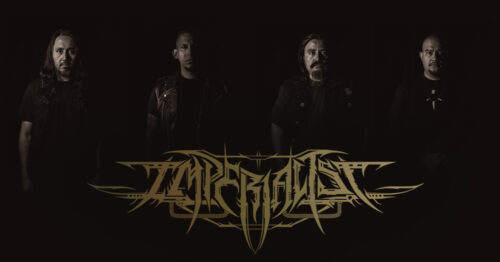
Crafting a great or excellent record is a remarkable feat. But it’s another challenge entirely to consistently churn out banger after banger. This kind of consistency is the not-so-secret sauce that can launch bands into the upper echelons. While examples are numerous, California’s Imperialist is poised to demonstrate their potential for genuine longevity with third LP, Prime. Having already broken the Score Safety Counter with 2018’s Cipher, the sci-fi black metal quartet returned to impress our Elitist on staff again in 2021 with follow-up, Zenith. Now, four years later and with an EP in between, Imperialist sets its crosshairs on Prime to deliver their third quality record in a row.
Longtime followers of Imperialist’s cosmic flight path will notice that the foursome has stayed true to its blackened foundation. Sergio Soto and Bryant Quinones’ trem-picked guitars and stylish shredding—á la Dissection and Immortal—fuse with Rod Quinones’ explosive blast beats and Soto’s callous snarls to power their apocalyptic and space-faring narrative. However, on Prime, Imperialist updates their design, discarding the “loose screws” of previous albums for a meaner, more streamlined edge. The quartet’s songwriting has become more refined, featuring fluid transitions, engaging leads and solos, and strong, memorable riffs that anchor their high-energy sound. Everything about Prime is bigger, better, and more powerful than before, from the intense and technical performances to Eliran Kantor’s stunning cover art and Dan “The Man” Swanö’s excellent mix. The result is a full-force attack that hits with all its might, making Prime Imperialist’s most impressive effort to date.
Through years of dedication, Imperialist has weaponized its proven blueprint, transforming into a razor-sharp cohesive assault. Soto and Quinones’ guitars lead the charge, delivering a terrestrial invasion of light-speed tremolo runs and hooky, head-banging riffs packed full of cataclysmic energy perfectly suited for Prime’s apocalyptic premise. Imperialist prominently evolved its sound by adding melodic leads and solos that are both tasteful and technical, prioritizing emotion and phrase over showmanship to give Prime’s nine tracks greater punch and charisma. Their solos—with harmonic fluency (“A Ghost Abandoned,” “Beneath the Sands of Titan”), wah accents (“Starstorm,” “A Ghost Abandoned”), and expressive feel (“Final Hours,” “Nocturnal Eon”)—balance technicality with musical intuition while also contributing to Imperialist’s saga. Serving as the main force behind Prime’s storytelling, Soto’s vocal performance immerses the listener into the album’s vast narrative, as his tone, delivery and lyrical content perfectly marry Prime’s musical aggression with their thematic vision. His delivery has a great thrashy snarl that is flat-out mean, sounding like a mix between David DiSanto (Vektor) and Abbath (Immortal) while still retaining sharp and clear enunciation.
Prime hits hard from the start with “Starstorm” and sustains that high-energy approach for most of its forty-five-minute runtime. Bolstering Prime’s sound, Swanö’s mix forgoes the sterile feel of past albums for a lively and organic one, allowing each instrument room to breathe while pushing Soto’s vocals to the forefront. Interlude, “Heavens Sunder,” fits into the album’s arc perfectly and makes the return to Prime’s aggressive final half feel even heavier. The decision to include an interlude at the album’s midpoint was a smart move, especially given that a lack of song variation has historically been Imperialist’s Achilles’ heel. And yet, the back half of Prime still falters as its momentum wanes. “Union of the Swarm” and “Nocturnal Eon” are solid but feel less compelling, lacking the memorability of the album’s stronger tracks. Prime could have improved its staying power with greater differentiation between these songs and the album’s other material or by trimming one altogether. Fortunately, the triumphant “A Ghost Abandoned” breaks this pattern. With its sauntering rhythm, it provides a welcome change of pace before its satisfying, drifting outro delivers a sense of a completed journey, from initial onslaught to a final, fading resolution.
While it just misses greatness, Prime is without a doubt Imperialist’s most cohesive and powerful album to date. The group has successfully addressed nearly all the lingering issues from their past work while adding new depth to their sound. With Prime, these Californians are operating near the apex of their craft, having now released three consecutive quality black metal albums that cement them as one of the genre’s premier acts. No one knows where Imperialist go from here, but Prime is a journey that deserves your attention.
Rating: Very Good!
DR: 6 | Format Reviewed: 320 kb/s mp3
Label: Transcending Obscurity
Websites: imperialistus.bandcamp.com/music | imperialistofficial.com | facebook.com/Imperialistofficial
Releases Worldwide: September 5th, 2025
#2025 #35 #AmericanMetalMetal #BlackMetal #Dissection #Immortal #Imperialist #Prime #Review #Reviews #Sep25 #TranscendingObscurity #Vektor

#TheMetalDogArticleList
#BraveWords
Today In Metal History 🤘 August 13th, 2025 🤘 TWISTED SISTER, DISSECTION, LYNYRD SKYNYRD, DIO, IRON MAIDEN, VARGA
#TWISTEDSISTER #DISSECTION #TodayInMetalHistory #August #BraveWords #metal #music
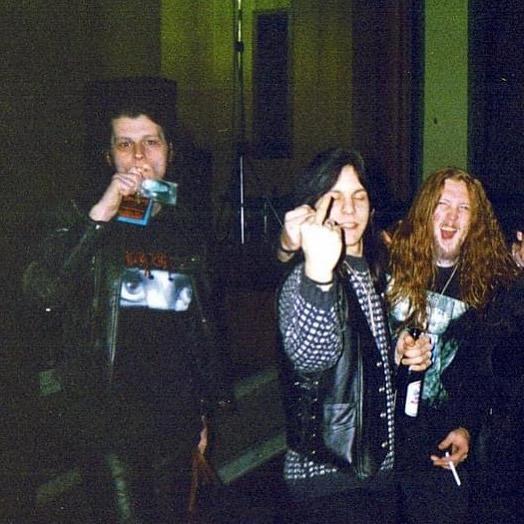
JON NÖDVEIDT (DISSECTION) WITH STUART ANSTIS (CRADLE OF FILTH) & ASTENNU (DIMMU BORGIR) (1997)
Backstage on the “Gods of Darkness” tour with Dissection and Dimmu Borgir, circa 1997. Stuart Anstis is on the left, Jon Nödtveidt is in the middle and Astennu is on the right.
CHECK OUT OUR BLOG FOR MUCH MORE!
https://defendersofoldschoolmetal.blogspot.com/
REPULSIVE RECORDS Cool to find this on Facebook. I was the store owner, and had it between 2005-2010. ...
READ THE WHOLE STORY HERE: https://defendersofoldschoolmetal.blogspot.com/2025/05/repulsive-records-2005-2010.html




😁 Souris ! La banane !
→ https://danstonchat.com/quote/%f0%9f%98%81-souris-la-banane.html
eska: Franchement, je suis sur que 80% des gens ne travaille pas dans ce qu’ils voulaient faire initialement, ou dans ce quoi ils ont fait leurs études
CherryWingNLR: Techniquement, j’ai finit par travailler dans ce que je voulais en étant petit, sur un hasard total ^^
Magus: Je voulais être vétérinaire. Puis en SVT on a disséqué une souris. Mon estomac ma subtilement fait comprendre de changer d’idée
eska: Nous on avait disséqué une banane
eska: C’est moins sensationnel
🎸 Ah, "Nevermind," the album where we all pretended to be #music connoisseurs while actually just nodding along to distorted noise. Fast forward to 2025, and we're still dissecting #grunge like it's Beethoven's 9th—because who wouldn't want to waste time on major chords? 🎤🔍
https://farina00.github.io/essays/nevermind/ #Nevermind #Dissection #MusicConnoisseurs #MajorChords #HackerNews #ngated
By Mark Z.
As a U.S. government employee, I’ve spent way too much time lately thinking about RIFs and not enough time thinking about riffs. Fortunately, Finland’s Urn is here to change that. Helmed by vocalist, bassist, and former guitarist Jarno Hämäläinen (a.k.a. “Sulphur”), this black/thrash troupe raised hell throughout the 2000s via albums like 666 Megatons and Dawn of the Devastation, both of which blasted with reckless abandon and hit with all the subtlety of a hand grenade. After years of silence following 2008’s Soul Destroyers, the group returned with a revamped lineup and more melodic sound on 2017’s The Burning, resulting in a rousing collection of blackened thrash anthems that was bogged down a bit by songwriting that often felt too cut-and-paste. With 2019’s Iron Will of Power, another revamped lineup helped Sulphur better combine the group’s newfound melodic tendencies and more raucous sensibilities, making for a career-high that sounded like the forgotten little brother of Deströyer 666. On their sixth album, Demon Steel, Urn returns after six years to continue down that same path, mixing the black/thrash of yore with melodies even a folk metal fan could enjoy. But have they taken things too far?
FUKK NO! Rather, Demon Steel is one of those rare late-career albums that shows an extreme band maturing into something more complex, interesting, and catchy, all while still remaining vicious enough to satisfy those poser-crushers in our midst. The basic sound here largely remains the same: frantic and rushing guitars combined with fast and pummeling drums, tossed together with snarled vocals and a sense of epic fury. The soaring melodies that often appeared in the choruses of Iron Will remain; yet here, the addition of a second guitarist has allowed Urn to craft compositions that are more intricate than ever. Early highlight “Are You Friends With Your Demons” proves that it needs neither a question mark nor a decent title to succeed, commanding attention with the layered guitars of its chorus and the supreme melody that appears after that refrain’s second and third iteration.
And fortunately, plenty of the other nine tracks are just as strong. “Heir of Tyrants,” “Burning Blood’s Curse,” and “Ruthless Paranoia” offer perhaps the best example of Urn’s heightened maturity, as each song combines fierce riffing worthy of Aura Noir with sugary lead guitars that could have appeared on a Children of Bodom album. Turning the throttle further into overdrive, “Iron Star” and “Turbulence of Misanthropy” charge forward on bouts of galloping, heavy-as-fuck riffs that sound like Iron Maiden dipped in molten steel, with the latter even offering some melodic black metal moments that recall Dissection. Even the album’s introduction, “Retribution of the Dead,” is a winner, creating an effective buildup with immense chords, pounding drums, and snarls of “Rise!”
Overall, there’s little to complain about here. In addition to delivering plenty of swirling solos, returning guitarist “Axeleratörr” works alongside new axeman “Pestilent Slaughter” to absolutely stuff these 44 minutes with great ideas, resulting in a record that probably contains more unique leads and riffs than the band’s first two albums combined. Sulphur once again sounds venomous and commanding, though perhaps a bit more croaky and aged than before. That doesn’t stop him from pushing himself, however, by embellishing songs like “Wings of Inferno” and “Heir of Tyrants” with powerful clean wails that make things feel extra mighty. The only real downside is that, with every track trying to be a big epic fist-raiser, things get a tad tiresome eventually. The closer, “Predator of Spiritforms,” feels a bit overshadowed by its predecessors, and while the mid-paced stomp of “Wings of Inferno” offers a bit of late-album variety, I’d still love to have just one straight-ahead rager in the second half. Fortunately, the production is great, with a clear, balanced, and powerful sound that emphasizes the crystalline leads while giving the riffs plenty of bite.
It’s been exciting to watch Urn grow from a pretty basic black/thrash band to one of the few older groups left in the style still producing worthwhile music. While I’ll always love the hammering and explosive sound of their early stuff, Demon Steel shows the band crafting songs that are more exciting, memorable, and well-written than anything they’ve done before. The result is a truly fantastic release that’s sure to please everyone from diehard Desaster fans to casual blogreaders just looking for some good fukkin music to distract themselves from all the bullshit out there today. Push play, crank that volume, and BANG YOUR FUKKIN HEADS!
Rating: 4.0/5.0
DR: 7 | Format Reviewed: 320 kbps mp3
Label: Osmose Productions | Bandcamp
Websites: facebook.com/urnofficial | instagram.com/urnmetal
Releases Worldwide: March 28th, 2025
#2025 #40 #AuraNoir #BlackMetal #ChildrenOfBodom #DemonSteel #Desaster #Destroyer666 #Dissection #FinnishMetal #IronMaiden #Mar25 #OsmoseProductions #Review #Reviews #ThrashMetal #Urn