Her groundbreaking sea floor discovery was dismissed as 'girl talk.' But science proved her right.
https://fed.brid.gy/r/https://www.upworthy.com/marie-tharp-tectonic-discovery
Her groundbreaking sea floor discovery was dismissed as 'girl talk.' But science proved her right.
https://fed.brid.gy/r/https://www.upworthy.com/marie-tharp-tectonic-discovery

Preserving 135 years of media at the Library of Congress Packard Campus – WTOP News
Home » Matt About Town » Preserving 135 years of…
Preserving 135 years of media at the Library of Congress Packard Campus
By Matt Kaufax | matt.kaufax@wtop.com
February 10, 2026, 4:59 AM
Preserving 135 years of media at the Library of Congress Packard Campus
Imagine you had access to the original reels of film for your favorite movies of all time.
It’s better than streaming; it’s the world’s largest physical media collection, and it’s located right in the D.C. area.
In today’s episode of “Matt About Town,” we’re heading to Culpeper, Virginia, for an exclusive behind-the-scenes look at the Library of Congress Packard Campus.
Also known as the National Audio-Visual Conservation Center, the state-of-the-art 45-acre campus with mountain views is dedicated to collecting, preserving and providing access to the United States’ history and culture through 135-plus years of media.
The facility is a staggering achievement to media preservation, with one of its largest wings housing over 144,000 nitrate film reels in a storage vault. Built into the side of a hill, it comprises 124 individual climate-controlled pods (to prevent nitrate fires) and the largest collection of original studio negatives from giants like Paramount, Universal, Disney, Columbia Pictures, and more.
But it isn’t just movies.
The 415,000-square-foot space at Packard, complete with 90 miles of shelving, is also home to the most comprehensive repository of television programs, radio broadcasts, archival news footage, and other sound recordings in the world.
If all of this isn’t fascinating enough, you might also be surprised to learn that this facility didn’t start operating until 2007. When the original building in Culpeper was first constructed in 1969 during an era of Cold War nuclear paranoia, it was built as a cash vault by the Federal Reserve.
In the event of a nuclear disaster, the building was supposed to replenish the money supply of the entire Eastern Seaboard. There were even dormitories for up to 300 people to live inside the walls.
It was only after American corporate giant Hewlett Packard’s co-founder, David Packard, acquired the building from the government in the 1990s — then renovated and donated it back through his philanthropic organization — that the building transitioned into to what it is today.
In the coming weeks, we’re going to take you through our extensive exploration of Packard, giving you an in-depth look at what staff here are doing to preserve — and make available to the public — generations of history.
At Packard, they’re not just preserving films and media. They’re preserving the living proof of the very fabric of America, democracy, and the highs and lows all laid bare for the historical record.
Tune in every Tuesday and Thursday through March 10 on “Matt About Town” for episodes exploring every nook and cranny here. This all-access tour is one you won’t see anywhere else! Learn more about the Library of Congress’ Audio-Visual Conservation program online.
Hear “Matt About Town” first every Tuesday and Thursday on 103.5 FM! If you have a story idea you’d like Matt to cover, email him or chat with him on Instagram and TikTok. Check out all “Matt About Town” episodes here! Get breaking news and daily headlines delivered to your email inbox by signing up here.
Continue/Read Original Article Here: Preserving 135 years of media at the Library of Congress Packard Campus – WTOP News
Tags: 135 Years of Media, America, Culpeper, DC Area, democracy, February 10 2026, Library of Congress, Matt Kaufax, Media, Movies, National Audio-Visual Conservation Center, Packard Campus, Repository, TV Programs, U.S. History, Virginia, WTOP, WTOP News

Fabulous Library of Congress Photos Show The Beatles Arriving for First US Concert in 1964 https://petapixel.com/2026/02/12/fabulous-library-of-congress-photos-show-the-beatles-arriving-for-first-us-concert-in-1964/ #libraryofcongress #historicphotos #thebeatles #Features #archive #fabfour #1960s
Resources for African American History Month: Selected Digital Collections – Teaching with the Library
Teaching with the Library Primary Sources & Ideas for Educators
ISSN 2691-6916
Share & Subscribe to this blog
Resources for African American History Month: Selected Digital Collections
February 10, 2026, Posted by: Colleen Smith
Share this post:
This is the second post in a series that looks at different resources from the Library that support teaching and learning about the achievements and contributions of African Americans throughout U.S. history. The first post highlighted several primary source sets from Teaching with the Library; today’s post brings attention to the Library’s digital collections.
More than twenty-five of the Library’s digital collections relate to the rich histories, cultures, traditions, and contemporary experiences of African Americans. A few are highlighted below, along with ideas for using collection items in the classroom.
Selected Collections
African American Photographs Assembled for the 1900 Paris Exposition
W. E. B. Du Bois compiled a series of photographs for the “American Negro” exhibit at the 1900 Paris Exposition. His goal was to show the diversity and successes of African Americans as a counter to common stereotypes. The Library of Congress holds approximately 220 mounted photographs reportedly displayed in the exhibition.
By Popular Demand: Jackie Robinson and Other Baseball Highlights, 1860s-1960s
To honor the remarkable life and legacy of Jackie Robinson, Library staff put together this collection featuring sources from across many different divisions of the Library.
This collection features digitized plays by Hurston (1891-1960), an author, anthropologist, and folklorist.
Frederick Douglass Newspapers, 1847 to 1874
Douglass, a leader in the black press, used the medium to communicate and persuade the public on the abolition of slavery and women’s rights. With this collection, students can explore newspapers edited by Frederick Douglass.
We hope this overview is helpful for considering how you might bring some of the Library’s digital collections to your classroom. If you are interested in more ways for students to engage with materials from the Library, you might check out the latest transcription campaign from By the People: the papers of Christian Fleetwood an African American Union soldier during the Civil War.
Do you enjoy these posts? Subscribe! You’ll receive free teaching ideas and primary sources from the Library of Congress.
Categories
Continue/Read Original Article Here: Resources for African American History Month: Selected Digital Collections | Teaching with the Library
Tags: 1900 Paris Exposition, 25 Collections, African American History Month, American Negro, Blogs, By the People, Christian Fleetwood, Colleen Smith, Frederick Douglass Newspapers, History of Black Americans, Jackie Robinson, Library of Congress, Selected Digital Collections, Teaching with the Library, W.E.Ba. Du Bois, Zora Neal Hurston
Library of Congress: From Print Volumes to Digital Scholarship: The Handbook of Latin American Studies Web Archive. “Since the 1930s, the Handbook of Latin American Studies has documented scholarship on Latin America and the Caribbean. In this interview, Tracy North describes how that long-standing mission now extends to web archiving, ensuring long-term access to web-based research materials. […]
https://rbfirehose.com/2026/02/09/from-print-volumes-to-digital-scholarship-the-handbook-of-latin-american-studies-web-archive-library-of-congress/Does Donald Trump have dementia or another cognitive issue? – Slate
Photo illustration by Slate. Photo by Alex Wong / Getty Images.Is Trump Losing It?
It’s time to seriously ask the question.
By Anna Gibbs, Jan 26, 20265:45 AM
Photo illustration by Slate. Photo by Alex Wong/Getty Images.Sign up for the Slatest to get the most insightful analysis, criticism, and advice out there, delivered to your inbox daily.
Donald Trump has been acting a little weird lately, even for him. During a speech he gave in Davos, Switzerland, last week, he kept mixing up Iceland and Greenland. Mistaking one country for another is far from abnormal for him, but it is a touch odd, considering his current obsession with Greenland.
An obsession which, as he very publicly wrote to the Norwegian prime minister, is related to the fact that he wasn’t awarded the Nobel Peace Prize—a bizarre conflation, given that Greenland is a Danish territory, not a Norwegian one. During a recent meeting with oil executives, he spontaneously stood up, walked over to the window to gaze at his ballroom construction project, then returned to his seat.
When someone fainted in the Oval Office in November, he barely reacted. He’s been dozing off in meetings, which led Dick Cheney’s doctor to call for a medical evaluation. (Then again, it’s hardly the first time he’s slept in public.) He recently underwent advanced imaging of either an MRI or CT scan, neither of which is standard preventive care. And his speech continues to descend into gobbledygook.
Some of the recent episodes have reinvigorated the conversation of whether it’s just Trump being his unfiltered, unbothered Trump self or if it’s possible that, at 79 years old, he’s showing signs of cognitive decline or even dementia. Joe Biden faced similar speculations during his run for a second term (which, it later came out, were well founded: Biden had been declining due to his age more than was let on). It’s impossible to diagnose a person without a personal examination and full medical history. But I called up some experts to learn more about what behaviors tell them that a patient could be losing their mental faculties, and whether Trump might—perhaps—be displaying them.
In general, people follow three different trajectories of aging, explains Carolyn Aldwin, an aging researcher at Oregon State University. There’s normal aging, in which a little cognitive decline happens: The right word is often on the tip of your tongue, or you sometimes forget why you walked into a room.
It becomes more concerning when these memory and attentional problems interfere with day-to-day functioning, like if you can’t remember how to get home, or you leave the stove on. That’s the second trajectory: mild cognitive impairment.
Lots of factors can cause this impairment, and depending on the underlying factor, it won’t always be progressive or permanent. (For instance, urinary tract infections, certain medications, and vitamin B12 deficiency are all common treatable causes of cognitive impairment in aging adults.) If the cause of the mild cognitive impairment is neurodegenerative disease, though, that tends to be the start of progressive decline, says Stephen Gomperts, a neurologist who specializes in dementia at Massachusetts General Hospital.
Continue/Read Original Article Here: Does Donald Trump have dementia or another cognitive issue?
#America #DonaldTrump #History #LibraryOfCongress #Resistance #Trump #TrumpAdministration #TrumpBrain #TrumpCognitiveIssues #TrumpHealth #UnitedStates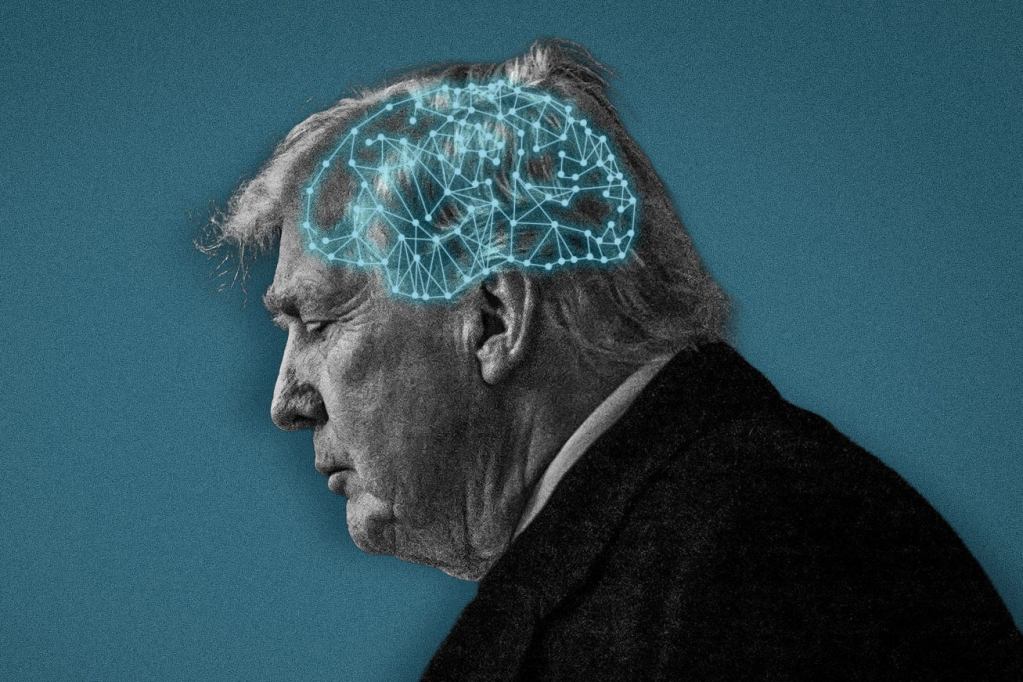
Opinion: The Golden Dome, a Trumpian con job, is a waste of money for Canada – The Globe and Mail
Editor’s Note: The Canadians are on board with no Kings, no Trump.. I like their reporting, the honest posts, and no hiding the Trump Administration’s wrongdoings. — DrWeb
#America #Books #DonaldTrump #Education #History #Libraries #Library #LibraryOfCongress #Opinion #Resistance #Television #Trump #TrumpAdministration #UnitedStatesOpinion: The Golden Dome, a Trumpian con job, is a waste of money for Canada https://t.co/efsFS8tVE8
— The Globe and Mail (@globeandmail) January 28, 2026


Trump can be bad all on his own – The New York Time
Credit: Ben WisemanIf you missed the previous newsletter, you can read it here.
The president’s advisers stink. That’s not the problem.
By Frank Bruni
Given President Trump’s habitual insistence that he’s a victim — of partisan prosecutors, incompetent pollsters, the Federal Reserve, Norway — it’s a tribute to him that Republicans are identifying yet another clique of malefactors doing him wrong: He’s being undermined by his own accomplices. They’re doling out “bad advice.”
That was the precise phrase — the exact verdict — rendered by Gov. Kevin Stitt of Oklahoma in an interview on CNN about the killing of Alex Pretti and the brutality of ICE agents in Minneapolis. Stitt acknowledged “deep concerns over federal tactics and accountability.” But he also insisted that the president’s priorities regarding immigration and border security were right. It’s just that Trump was “getting bad advice right now.”
Other Republicans delivered the same message by focusing intently on the sins of Kristi Noem, the nation’s homeland security secretary, and the callousness of Gregory Bovino, the senior Border Patrol official who egged on the government’s masked gunmen — until he was given a timeout last week. They botched the mission. Debased the president.
What a joke. You can’t dishonor someone who has no honor to begin with. You can’t humiliate someone who so consistently and thoroughly humiliates himself.
But that’s just the start of the “bad advice” bunk.
Continue/Read Original Article Here: Trump can be bad all on his own
#Accomplices #Advisors #America #BadAdvice #DonaldTrump #History #Libraries #Library #LibraryOfCongress #Opinion #Resistance #Science #TheNewYorkTimes #Trump #TrumpAdministration #TrumpAsVictim #TrumpBadOnHisOwn #UnitedStates
Library of Congress: The 2025 National Film Registry: “The Thing,” “Inception,” “Clueless” and More!. “The Library’s annual addition to the list of films to be preserved for their cinematic and cultural heritage starts with the 1896 silent film, ‘The Tramp and the Dog,’ and stretches to the 2014 Wes Anderson picture, ‘The Grand Budapest Hotel.’ Also included are modern […]
https://rbfirehose.com/2026/02/02/the-2025-national-film-registry-the-thing-inception-clueless-and-more-library-of-congress/Library Names 25 Films to the National Film Registry for Preservation – Library of Congress
Library Names 25 Films to the National Film Registry for Preservation
Release Date: 29 Jan 2026
Library Names 25 Films to the National Film Registry for Preservation
‘Glory,’ ‘The Karate Kid,’ ‘Philadelphia,’ ‘Frida,’ ‘Inception,’ ‘The Grand Budapest Hotel,’ ‘The Incredibles’ and ‘Clueless’ Among Titles Selected for Recognition
The Library of Congress has selected 25 films for the National Film Registry due to their cultural, historic or aesthetic importance to preserve the nation’s film heritage, the Library announced today.
The selections for 2025 date back to the silent film era with six silent films dating from 1896 to 1926 – a significant number of films in this class. The newest film added to the registry is from 2014 with filmmaker Wes Anderson’s “The Grand Budapest Hotel,” which included meticulous historical research at the Library of Congress to create visually striking scenery.
Iconic Hollywood films from the last 50 years selected for the registry this year include “The Karate Kid,” “Glory,” “Philadelphia,” “Inception,” and the teen comedy “Clueless.” Classic Hollywood selections include the 1954 musical “White Christmas” that enshrined the chart-topping song of the same name in American popular culture, and perhaps the last great musical of the Golden Age of Hollywood, “High Society” from 1956 featuring Bing Crosby, Frank Sinatra, Louis Armstrong and Grace Kelly in her last movie.
Four documentaries were selected for the registry this year, including Ken Burns’ “Brooklyn Bridge,” Nancy Buirski’s “The Loving Story,” George Nierenberg’s “Say Amen, Somebody” and Danny Tedesco’s “The Wrecking Crew.”
“When we preserve films, we preserve American culture for generations to come. These selections for the National Film Registry show us that films are instrumental in capturing important parts of our nation’s story,” said Acting Librarian of Congress Robert R. Newlen. “We are proud to continue this important work, adding a broad range of 25 films to the National Film Registry as a collective effort in the film community to protect our cinematic heritage.”
The selections for 2025 bring the number of titles in the registry to 925. Some of the film titles are among the 2 million moving image collection items held in the Library of Congress. Others are preserved in coordination with copyright holders or other film archives.
Looking back on “The Karate Kid,” actor Ralph Macchio said the characters were key to cementing the film in pop culture history.
“The magic of Pat Morita as Mr. Miyagi and me as the Daniel LaRusso character, that sort of give and take, that instant soulful magic was happening from our first meeting, Macchio told the Library of Congress. “Those scenes in Miyagi’s yard, the chores, the waxing on of the car, the painting the fences, the sanding the floor, all of that is now a part of cinematic pop culture. For me, the heart and soul of the film is in those two characters.”
Writer and director Amy Heckerling recalled how she made the 1995 teen comedy and satire “Clueless,” which has been called a modern retelling of Jane Austen’s classic novel “Emma.”
“I’m often asked, how did I decide to make ‘Emma’ into an updated film, which is kind of backwards because what I wanted was to write the kind of characters that really amused me, people that were very comfortable, ardent and optimistic. I would get up, read the news and then just want to cry and be depressed. So, I thought, what if you really were always positive? How would that be? And what if you were doing things and you just knew that you were right?” Heckerling told the Library of Congress. “I remembered reading ‘Emma’ when I was in college, so I re-read it. It was like Jane Austen was pulling up from the grave and saying I already got it!”
Turner Classic Movies (TCM) will host a television special Thursday, March 19, starting at 8 p.m. ET to screen a selection of films named to the registry this year. TCM host and film historian Jacqueline Stewart, who is chair of the National Film Preservation Board, will introduce the films.
Stewart leads the board in studying and recommending films across a wide variety of genres and eras for the Librarian of Congress to consider for the registry.
“It is very meaningful that the National Film Registry is adding six silent film titles, showing the range of topics and styles in the earliest years of American filmmaking,” Stewart said. “And it is especially exciting to see that the top title nominated by the public for this year, ‘The Thing,’ has been added to the National Film Registry, along with ‘The Truman Show’ and ‘The Incredibles’ which also had very strong public support.”
Films Selected for the 2025 National Film Registry
(chronological order)
Public Nominations for the National Film Registry
The public submitted 7,559 titles for consideration this year. The public can submit nominations throughout the year on the Library’s web site. Nominations for next year will be accepted until Aug. 15, 2026. Cast your vote at loc.gov/film.
Ken Burns’ First Major Film Joins National Film Registry
“Brooklyn Bridge” is the first documentary by Ken Burns to join the National Film Registry. Burns recently discussed his inspiration for the film and his process with the Library of Congress.
“My best friend was a book distributor and he gave me a copy of David McCullough’s, ‘The Great Bridge,’ the epic story of the building of the Brooklyn Bridge. I devoured it in one sitting. And I said, oh, we should make a story about what this book is about, not just about the construction, which that book was, but this century as a symbol of strength, ingenuity, vitality and promise. I had no idea that that it would take so many years of my time to do it,” Burns said. “I was just drawn to the story and the idea that you could wake the past up with old photographs and first-person voices, as well as a traditional third-person narrator.
“The ‘Brooklyn Bridge’ film was my first film that had sort of widespread distribution. And I can’t think of a day where I didn’t learn something new. I felt in some ways like every first film is reinventing the wheel. You can be influenced by other people, but you really, in the end, have to do it. Everything was how you wake the story up, how you take a photograph. And in those days it was all analog. We were hand shooting all of the archives. That was a very long process, traveling to them in person. There was no digitization. There was no getting it over the internet. It was all firsthand. We filmed for the ‘Brooklyn Bridge’ at 163 different sources.”
Coincidentally, the Library of Congress has been an important resource for nearly all of Burns’ films for archival footage and historical accuracy.
“With the exception of ‘The American Revolution,’ which is a subject that predates photography, we’ve used the Library of Congress in every single film we’ve worked on. I spent between eight and nine weeks, Monday through Friday, 8:30 to 4:30 in the paper print collection, filming on an easel with gloves and magnets,” Burns said.
“When I think about the National Film Registry and all the films that are contained in it, I think of it as a giant mirror of the United States, reflecting back all of the complexity, all of the intimacy, all of the variety of the people and ideas and forces and movements that have taken place over our history. And you realize what an extraordinary repository it is.”
Wes Anderson Draws on Library for ‘The Grand Budapest Hotel’
Similarly, Anderson uses significant historical research to create visually striking stories and scenery, as displayed by “The Grand Budapest Hotel.” He too used the Library’s collections to create his film.
“There’s a specific set of postcards in the Library of Congress Photochrome Prints collection. They’re photographs from the turn of the century and hand-tinted. When we were first starting to figure out how to tell this story, the views and images that we were looking for, the architecture and the landscapes that we wanted, they don’t exist anymore,” Anderson said. “We went through the entire Photochrome collection, which is a lot of images. We made our own versions of things, but much of what is in our film comes directly from that collection from the Library of Congress.”
The 2025 National Film Registry
(descriptions in chronological order)
“The Tramp and the Dog” (1896)
“The Tramp and the Dog,” a silent film from Chicago’s Selig Polyscope Company, is considered director William Selig’s most popular early work. Filmed in Rogers Park, it is recognized as the first commercial film made in Chicago. Previously a lost film, it was rediscovered in 2021 at the National Library of Norway. The film depicts a tramp who attempts to steal a pie from a backyard windowsill, only to be met by a broom-wielding housewife and her dog, who foils the crime. The film is one of the first known as “pants humor,” where a character loses (or almost loses) his pants during an altercation. This scene inspired future comedy gags showing drifters and tramps losing their pants to dogs chasing them.
“The Oath of the Sword” (1914)
A three-reel silent drama, “The Oath of the Sword” depicts the tragic story of two young lovers separated by an ocean. Masao follows his ambitions, studying abroad at the University of California, Berkeley, while Hisa remains in Japan, caring for her ill father. This earliest known Asian American film production featured Japanese actors playing Japanese characters and was produced by the Los Angeles-based Japanese American Film Company. Made at a time when Hollywood studios were not yet the dominant storytellers of the American film industry, “The Oath of the Sword” highlights the significance of early independent film productions created by and for Asian American communities. James Card, the founding curator at the George Eastman Museum, acquired “The Oath of the Sword” in 1963. The museum made a black and white photochemical preservation in 1980. In 2023, a new preservation reproducing the original tinting was done in collaboration with the Japanese American National Museum, and the film has since become widely admired.
“The Maid of McMillan” (1916)
Known to be the first student film on record, this whimsical, silent romance film was shot on campus in 1916 by students in the Thyrsus Dramatic Club at Washington University in St. Louis, Missouri. Club members Donald Stewart (Class of 1917) and George D. Bartlett (Class of 1920) wrote the screenplay. The original nitrate print of “The Maid of McMillan” was rediscovered in 1982, and two 16mm prints were made; the original nitrate was likely destroyed at this time. In 2021, with funding from the National Film Preservation Foundation, one of those 16mm prints was scanned at 4k and reprinted onto 35mm helping to secure the film’s survival and legacy.
“The Lady” (1925)
When “The Lady” debuted in theaters in 1925, the silent film era had hit its stride, and this movie represents a powerhouse of artists at their peak. Director Frank Borzage was a well-established expert in drawing out intense expressions of deep emotion and longing in his actors. He did just that with the film’s lead actress, Norma Talmadge, also at the height of her career, both in front of and behind the camera. Talmadge produced “The Lady”through her production company and commissioned one of the most prolific screenwriters, Frances Marion, to deliver a heartfelt story of a woman seeking to find the son she had to give up, to protect him from his evil grandfather. “The Lady” was restored by the Library of Congress in 2022.
“Sparrows” (1926)
As a silent actress, producer and key founder in the creation of the American film industry, Mary Pickford’s performance in “Sparrows” represents her ability to master the genre she helped nourish: sentimental melodramas full of adventure and thrills, with dashes of comedy and heartfelt endings. Pickford plays Molly, the eldest orphan held within the swampy squalor of the Deep South, who moves heaven and earth to save the other orphan children from a Dickensian world of forced labor. The film takes some departures from the visual styles found in Pickford’s other films, invoking an unusual tone of despair while deploying camera angles and lighting akin to German Expressionist cinema. “Sparrows” was preserved by the Library of Congress in collaboration with the Mary Pickford Company in 2020.
“Ten Nights in a Barroom” (1926)
Featuring an all-Black cast, “Ten Nights in a Barroom” was produced in 1926 by the Colored Players Film Corporation of Philadelphia and is the earliest of only two surviving films made by the company. This silent film is based on the stage melodrama adapted from the 1854 novel “Ten Nights in a Bar-Room and What I Saw There” by Timothy Shay Arthur. Released in 2015 by Kino Lorber as part of the five-disc set “Pioneers of African-American Cinema,” the compilation was produced by the Library of Congress, in association with the British Film Institute, George Eastman Museum, Museum of Modern Art, National Archives, Smithsonian’s National Museum of African American History and Culture, Southern Methodist University and the UCLA Film & Television Archive. Preserved by George Eastman Museum.
“White Christmas” (1954)
While the chart-topping song “White Christmas” was first performed by Bing Crosby for the 1942 film “Holiday Inn,” its composer, Irving Berlin, was later inspired to center the song in the 1954 musical “White Christmas.” Crosby, along with Danny Kaye, Rosemary Clooney, Vera-Ellen Rohe and director Michael Curtiz, embedded “White Christmas” in American popular culture as a best-selling single and the top-grossing film of 1954, as well as regular holiday viewing throughout the decades. The story of two World War II veterans-turned-entertainers and a singing sister act preparing a show for a retired general, the film and its grand musical numbers were captured in VistaVision, a widescreen process developed by Paramount Pictures and first used for “White Christmas.”
“High Society” (1956)
Often referred to as the last great musical of the Golden Age of Hollywood, “High Society” features an all-star cast including Bing Crosby, Grace Kelly, Frank Sinatra and Louis Armstrong (and his band), along with a memorable score of Cole Porter classics. Set in Newport, Rhode Island, the film showcases the Newport Jazz Festival (established in 1954) and features a remarkable version of Cole Porter’s “Now You Has Jazz.” It includes the first big-screen duet by Frank Sinatra and Bing Crosby, singing “Well, Did You Evah?” This was Grace Kelly’s last movie before she retired from acting and married the Prince of Monaco; she wore her Cartier engagement ring while filming.
“Brooklyn Bridge” (1981)
With “Brooklyn Bridge,” Ken Burns introduced himself to the American public, telling the story of the New York landmark’s construction. As with later subjects like the Civil War, jazz and baseball, Burns connects the building of the Brooklyn Bridge to American identity, values and aspirations. Released theatrically and nominated for an Academy Award for Best Documentary Feature, “Brooklyn Bridge” marked the beginning of Burns’ influential career in public media. More than just a filmmaker, Burns has become a trusted public historian. His storytelling presents facts, but maybe more importantly, invites reflection on what America is, where it’s been, and where it’s going. His influence is felt not only in classrooms and through public broadcasting, but across generations who see history as something alive and relevant.
“Say Amen, Somebody” (1982)
George Nierenberg’s documentary is a celebration of the historical significance and spiritual power of gospel music. With inspirational music, joyful songs and brilliant singers, the movie focuses on the men and women who pioneered gospel music and strengthened its connections to African American community and religious life. Prior to production, Nierenberg, who is white, spent over a year in African American churches and communities, gaining the trust of the performers. Restored by the Smithsonian’s National Museum of African American History and Culture in 2020, the film features archival footage, photographs, stirring performances and reflections from the father of gospel Thomas A. Dorsey and its matron Mother Willie Mae Ford Smith. Nierenberg shows the struggles and sacrifices it takes to make a living in gospel, including criticism endured by women who sought to pursue careers as professional gospel singers while raising their families.
“The Thing” (1982)
Moody, stark, often funny and always chilling, this science fiction horror classic follows Antarctic scientists who uncover a long-dormant, malevolent extraterrestrial presence. “The Thing” revolutionized horror special effects and offers a brutally honest portrait of the results of paranoia and exhaustion when the unknown becomes inescapable. “The Thing” deftly adapts John W. Campbell’s 1938 novella “Who Goes There?” and influenced “Stranger Things” and “Reservoir Dogs.” It remains a tense, thrilling and profoundly unsettling work of cinema. — DrWeb adds, a long-time favorite.
“The Big Chill” (1983)
Lawrence Kasdan’s best picture-nominated “The Big Chill” offers an intimate portrait of friends reunited after the suicide of one of their own and features actors who defined cinema in the 1980s – Glenn Close, William Hurt, Jo Beth Williams, Kevin Kline, Jeff Goldblum and Meg Tilly. This powerful ensemble portrays American stereotypes of the time – the yuppie, the drug dealer, the TV star – and deftly humanizes them. Through humor, tenderness, honesty and an amazing soundtrack, it shows formerly idealistic Americans making and dealing with the constant compromises of adulthood, while buoying one another with uncompromising love and friendship. –DrWeb adds, proud of his film, helped work on it years ago, in South Carolina.
“The Karate Kid” (1984)
An intimate story about family and friendship, “The Karate Kid” also succeeds as a hero’s journey, a sports movie and a teen movie – a feel-good movie, but not without grit. The film offers clearly defined villains, romance and seemingly unachievable goals, but also an elegant character-driven drama that is relatable and touching. A father who has lost his son meets the displaced son of a single mother and teaches him about finding balance and avoiding the pitfalls of violence and revenge. Race and class issues are presented honestly and are dealt with reasonably. Our hero practices a lot, gets frustrated, gets hurt, but still succeeds. It’s as American as they come, and it’s a classic.
“Glory” (1989)
“Glory,” described by Leonard Maltin as “one of the finest historical dramas ever made,” portrays a historical account of the 54th Regiment, a unit of African American soldiers who fought for the North in the Civil War. Authorized by the Emancipation Proclamation of 1863, the regiment consisted of an all-Black troop commanded by white officers. Matthew Broderick plays the young colonel who trains the troop, and Denzel Washington (in an Academy Award-winning performance) is among an impressive cast that includes Morgan Freeman, Cary Elwes and Andre Braugher. American Civil War historian James M. McPherson said the film “accomplishes a remarkable feat in sensitizing a lot of today’s Black students to the role that their ancestors played in the Civil War in winning their own freedom.”
“Philadelphia” (1993)
“Philadelphia” stars Tom Hanks in one of the first mainstream studio movies to confront the HIV/AIDS crisis. In the film, law partner Andrew Beckett (Hanks) is fired from his firm when they discover that he is gay and has AIDS. He hires personal attorney Joe Miller (Denzel Washington) to help him with litigation against his former employer. Director Jonathan Demme is quoted as saying, “The film is not necessarily just about AIDS, but rather everyone in this country is entitled to justice.” The film won two Oscars: one for Hanks and the other for Bruce Springsteen’s original song, “The Streets of Philadelphia.” Through the song’s mainstream radio and MTV airplay, it brought the film and its conversation around the HIV/AIDS pandemic to a wider audience.
“Before Sunrise” (1995)
Richard Linklater has explored a wide range of narrative storytelling styles while consistently capturing ordinary, everyday American life. However, his innovative use of time as a defining and recurring cinematic tool has become one of his most significant accomplishments. As the first film in his “Before” trilogy – three films, each shot nine years apart – “Before Sunrise” unfolds as one of cinema’s most sustained explorations of love and the passage of time, highlighting the human experience through chance encounters and conversation. With his critically acclaimed 12-year production of the film “Boyhood” (2014) and a new 20-year planned production underway, his unique use of the medium of film to demonstrate time passing demonstrates an unprecedented investment in actors and narrative storytelling.
“Clueless” (1995)
A satire, comedy and loose Jane Austen literary adaptation dressed in teen movie designer clothing, “Clueless,” directed by Amy Heckerling, rewards both the casual and hyper-analytical viewer. It’s impossible to miss its peak-1990s colorful, high-energy, soundtrack-focused on-screen dynamism, and repeated viewings reveal its unpretentiously presented and extraordinarily layered and biting social commentary about class, privilege and power structures. Heckerling and the incredible cast never talk down to the audience, creating main characters that viewers root for, despite the obvious digs at the ultrarich. The film centers on Cher (Alicia Silverstone) as a well-intentioned, fashion-obsessed high school student who is convinced she has life figured out. In the age of MTV, the film’s popularity launched Paul Rudd’s career and Silverstone’s iconic-1990s status. The soundtrack, curated by Karyn Rachtman, helped solidify the film as a time capsule of clothing, music, dialogue and teenage life.
“The Truman Show” (1998)
Before social media and reality television, there was “The Truman Show.” Jim Carrey breaks from his usual comedic roles to star in this dramatic film about a man who, unbeknownst to him, is living his life on a soundstage filmed for a popular reality show. Adopted at birth by the television studio, Truman Burbank (Carrey) grew up in the (fictitious) town of Seahaven Island with his family and friends playing roles (paid actors). Cameras are all over the soundstage and follow his activities 24/7. Almost 30 years since its release, the film continues to be a study in sociology, philosophy and psychology, and has inspired university classes on media influence, the human condition and reality television.
“Frida” (2002)
Salma Hayek produced and starred in this biopic of Frida Kahlo, adapted from the book “Frida: A Biography of Frida Kahlo” by Hayden Herrera. The film explores Kahlo’s rise as an artist in Mexico City and the impact disability and chronic pain from an accident as a young adult had on her life and work. The film centers around her tumultuous and passionate relationships, most significantly with her husband, painter Diego Rivera (Alfred Molina). Directed by Julie Taymor, the film was nominated for six Academy Awards, including Best Actress. It won awards for Best Makeup and Best Original Score for Elliot Goldenthal, who also won a Golden Globe in the same category.
“The Hours” (2002)
Director Stephen Daldry’s “The Hours” weaves the novel “Mrs. Dalloway” into three women’s stories of loneliness, depression and suicide. Virginia Woolf, played by Nicole Kidman (who won an Oscar and a Golden Globe for her performance), is working on the novel while struggling with what is now known as bipolar disorder. Laura, played by Julianne Moore (nominated for Best Actress in a Supporting Role), is unfulfilled in her life as a 1950s housewife and mother. Clarissa (played by Meryl Streep) is – like Mrs. Dalloway – planning a party, but for her close friend who is dying of AIDS. The film is based on Michael Cunningham’s Pulitzer Prize-winning novel. It earned nine Academy Award nominations, including Best Picture, and won a Golden Globe for Best Picture.
“The Incredibles” (2004)
With an all-star cast and memorable soundtrack, this Academy Award-winning Pixar hit uses thrilling action sequences to tell the story of a family trying to live normal lives while hiding their superpowers. For the first time, Pixar hired an outside director, Brad Bird, who drew inspiration from spy films and comic books from the 1960s. The animation team developed a new design element to capture realistic human anatomy, hair, skin and clothing, which Pixar struggled with in early films like “Toy Story.” The film spawned merchandise, video games, Lego sets and more. The sequel, “Incredibles 2,” was also a huge hit, and together, both films generated almost $2 billion at the box office.
“The Wrecking Crew” (2008)
“The Wrecking Crew” is a documentary that showcases a group of Los Angeles studio musicians who played on many hit songs and albums of the 1960s and early 1970s, including “California Dreamin’,” “The Beat Goes On,” “You’ve Lost That Lovin’ Feeling” and “These Boots Are Made for Walkin’.” Through interviews, music, footage and his own narration, director Denny Tedesco reveals how the Wrecking Crew members – including his father, guitarist Tommy Tedesco – were the unsung heroes of some of America’s most famous songs. Production for the film began in 1996, and the film was completed in 2008. Due to the high cost of song licenses, the official release was delayed until 2015, when a successful Kickstarter campaign raised over $300,000 to pay for the music rights.
“Inception” (2010)
Writer and director Christopher Nolan once again challenges audiences with multiple interconnected narrative layers while delivering thrilling action sequences and stunning visual effects. “Inception” asks the question, “Can you alter a person’s thoughts by manipulating their dreams?” Taking almost 10 years to write, the film was praised for its aesthetic significance and Nolan’s ability to create scenes using cameras rather than computer-generated imagery. A metaphysical heist film with an emotional core driven by grief and guilt, “Inception” offers a meditation on how dreams influence identity, and it resonates deeply in an age of digital simulation, blurred realities and uncertainty. The film earned $830 million at the box office and won four Academy Awards.
“The Loving Story” (2011)
Nancy Buirski’s acclaimed documentary gives an in-depth and deeply personal look at the true story of Richard Loving (a white man) and Mildred Loving (a Black and Native American woman), who were forbidden by law to marry in the state of Virginia in the 1960s. Their Supreme Court case, Loving vs. Virginia, was one of the most significant in history, and paved the way for future multiracial couples to marry. The movie captures the immense challenges the Lovings faced to keep their family and marriage together, through a combination of 16mm footage, personal photographs, accounts from their lawyers and family members, and audio from the Supreme Court oral arguments.
“The Grand Budapest Hotel” (2014)
“The Grand Budapest Hotel” stands as one of Wes Anderson’s most successful films and demonstrates his own brand of unique craftsmanship, resulting in a visually striking and emotionally resonant story. As one of the most stylistically distinctive American filmmakers of the last half-century, Anderson uses historically accurate color and architecture to paint scenes to elicit nostalgia and longing from audiences, while at the same time weaving in political and social upheaval into the film. The film is an example of Anderson as a unique artist who uses whimsy, melancholy, innovative storytelling and a great deal of historical research, which is on display in this visually rich gem of a movie.
About the National Film Registry
Congress established the National Film Preservation Board in 1988 to advise the Librarian of Congress on national preservation policies and annual selections for the National Film Registry, and the Library was given a mandate to preserve the mint record of America’s cinematic heritage.
Under the terms of the National Film Preservation Act, each year the Librarian of Congress names 25 motion pictures to the National Film Registry that are “culturally, historically or aesthetically” significant. The films must be at least 10 years old. More information about the National Film Registry can be found at loc.gov/film.
The Librarian makes the annual registry selections after conferring with the distinguished members of the National Film Preservation Board and a cadre of Library specialists. Also considered were 7,559 titles nominated by the public. Nominations for next year will be accepted through Aug. 15, 2026, at loc.gov/film.
Many titles named to the registry have already been preserved by the copyright holders, filmmakers or other archives. In cases where a selected title has not already been preserved, the Library of Congress National Audio-Visual Conservation Center works to ensure the film will be preserved by some entity and available for future generations, either through the Library’s motion picture preservation program or through collaborative ventures with other archives, motion picture studios and independent filmmakers.
The National Audio-Visual Conservation Center is located at the Library’s Packard Campus in Culpeper, Virginia, a state-of-the-art facility where the nation’s library acquires, preserves and provides access to the world’s largest and most comprehensive collection of films, television programs, radio broadcasts and sound recordings (loc.gov/avconservation). It is home to more than 10.8 million collection items.
About the Library of Congress
The Library of Congress is the world’s largest library, offering access to the creative record of the United States — and extensive materials from around the world — both on-site and online. It is the main research arm of the U.S. Congress and the home of the U.S. Copyright Office. Explore collections, reference services and other programs and plan a visit at loc.gov; access the official site for U.S. federal legislative information at congress.gov; and register creative works of authorship at copyright.gov.
# # #
Media Contacts: Brett Zongker, bzongker@loc.gov | Deb Fiscella, dfiscella@loc.gov
PR 26-008, 01-29-26. ISSN 0731-3527
Continue/Read Original Article Here: Library Names 25 Films to the National Film Registry for Preservation
#25FilmsEachYear #LibraryOfCongress #NationalAudioVisuaConservationCenter #NationalFIlmPeservationBoard #NationalFilmRegistry #TheBigChill #TheThing #USCongress #WorldSLargestLibrary


‘The Thing,’ ‘Before Sunrise,’ and ‘Inception’ Among 25 Films Added to Library of Congress by National Film Registry

‘The Big Chill,’ ‘Philadelphia,’ ‘The Wrecking Crew!’ & More Added to National Film Registry: Full List

‘Clueless,’ ‘Inception,’ ‘The Incredible’ Join the Library of Congress’ Film Registry

National Film Registry Adds ‘Karate Kid’, ‘Glory’, ‘Clueless’, ‘The Incredibles’, ‘Inception’, ‘Philadelphia’ & More In Latest Class
#News #Clueless #LibraryofCongress #NationalFilmRegistry #TheGrandBudapestHotel #TheKarateKid
https://deadline.com/2026/01/national-film-registry-2025-karate-kid-clueless-inception-1236697189/
‘The Thing,’ ‘Before Sunrise,’ and ‘Inception’ Among 25 Films Added to Library of Congress by National Film Registry
#IndieWire #BreakingNews #News #Film #LibraryofCongress #NationalFilmRegistry
One Source, Multiple Versions, Many Perspectives: Teaching Key Documents in U.S. History – Teaching with the Library
Teaching with the Library Primary Sources & Ideas for Educators
ISSN 2691-6916
Share & Subscribe to this blog
One Source, Multiple Versions, Many Perspectives: Teaching Key Documents in U.S. History
Posted by: Colleen Smith, January 27, 2026
This blog post is by Lee Ann Potter, director of Professional Learning and Outreach Initiatives at the Library of Congress.
At the recent annual meeting of the American Historical Association (AHA) in Chicago, I presented a K-16 teacher workshop titled “Revolutionary History Teaching.” As the title suggested, I engaged participants with primary sources and teaching strategies related to the American Revolution.
To introduce an activity focused on the Declaration of Independence, I asked the participating teachers if they invited their students to read the founding document. They all said yes, doing so was part of their regular approach in both history and civics classes.
“Which version?” I asked, to which I received few responses and many quizzical looks.
I proceeded to divide the teachers into smaller groups and provided each with a facsimile of a different version of the Declaration. The versions I shared included:
I encouraged the teachers to read their versions, to consider their students’ capabilities and background knowledge, as well as their course objectives, and to discuss within their small groups the associated pros and cons of inviting students to read their version rather than simply the document’s text.
Then we engaged in a larger group discussion about each version. The group with The Pennsylvania Evening Post was particularly interested in the advertisements that also ran in the edition and discussed how news was shared and spread in the 1770s; the group with the Dunlap Broadside also discussed the sharing of information and noted that the names of most of the delegates to the Second Continental Congress were missing, but they were present on the Goddard Broadside; the Goddard Broadside also prompted curiosity about Mary Katharine Goddard; those reading the rough draft commented on the value of sharing rough drafts with students and suggested that the section related to slavery, that was not included in the final document, would be of particular interest to their students; and the Journal was described as providing an interesting play-by-play of the document and other events and issues from the perspective of Congress.
Our conclusion after a rich discussion: Sharing multiple versions of the Declaration with students may encourage knowledge of its contents to transform into curiosity about its context.
Have you tried a similar approach with other seminal documents? If so, what have the results been? Please share your experience in the comments!
Do you enjoy these posts? Subscribe! You’ll receive free teaching ideas and primary sources from the Library of Congress.
Categories
Continue/Read Original Article Here: One Source, Multiple Versions, Many Perspectives: Teaching Key Documents in U.S. History | Teaching with the Library
#AmericanHistory #classrooms #democracy #IdeasForEducators #LibraryOfCongress #LibraryOfCongressBlog #ManyPerspectives #MultiplesVersions #OneSource #PrimarySources #Teaching #TeachingWithTheLibrary

Plunder, Mystery, and Intrigue: Visiting the British Museum and the British Library
After leaving the Lake District, I traveled to London by train, for the third part of my trip. This was where I saw the most libraries during my trip. On my last day in London, August 3rd, I visited the British Museum, located in London’s West End, which was overcrowded with tourists. This made viewing the so-called “chronicle of Western collection,” which was acquired through extensive plunder and theft, as American tour guide Rick Steves describes the museum, very uncomfortable. Even so, there were two highlights. The first was the stately and round reading room. English writers Virginia Woolf and Beatrix Potter, Chinese revolutionary Sun Yat-sen, radical thinkers Karl Marx and Vladimir Lenin, Black nationalist Marcus Garvey, women’s rights campaigner Sylvia Pankhurst, independence activist Mohandas K. Gandhi, and Irish author Bram Stoker all studied there.
Note: This serves as second part of my series on this blog about my library tourism last year, with the first part, about my attempted and successful library tourism in Edinburgh and Northern England, posted on this blog last week. The series begins, chronologically, with my guest post on Reel Librarians, on February 11th, in a post entitled “Edinburgh and the National Library of Scotland: Library tourism redux.” It will be reposted on here over a month later. There will be one more parts of this series, focusing on my continued library tourism in Belgium coming next week.
Arthur Conan Doyle’s Sherlock Holmes, as noted in Doyle’s “The Complete Sherlock Holmes,” studied in the reading room. In the 1893 short story “The Adventure of the Musgrave Ritual” (sometimes abbreviated as “The Musgrave Ritual”), he studied “those branches of science which might make me more efficient” in the reading room. He learned other information from the British Museum in chapter 15 of 1902 novel The Hound of the Baskervilles and “The Tiger of San Pedro” chapter, within a 1917 collection entitled His Last Bow: Some Reminiscences of Sherlock Holmes (sometimes abbreviated as “His Last Bow”). There are mentions of libraries in the short stories “The Five Orange Pips”, “The Adventure of the Engineer’s Thumb”, and “The Adventure of the Beryl Coronet” in the 1892 short story collection The Adventures of Sherlock Holmes.
The same is the case for “The Musgrave Ritual,” “The ‘Gloria Scott’”, and “The Reigate Squires” all within the 1893 short story collection The Memoirs of Sherlock Holmes, and the stories “The Adventures of the Three Students” and “The Adventure of the Golden Pince-Nez” in the 1905 short story collection The Return of Sherlock Holmes. Apart from that, chapter 10 of The Hound of the Baskervilles, chapter 7 of the 1915 novel The Valley of Fear, and the story “The Problem of Thorn Bridge” in the 1927 set of short stories The Case-Book of Sherlock Holmes feature libraries as well. Lastly, there’s a mention of a London Library in St. James’s Square and Lomax, who is said to be a “sublibrarian,” in “The Illustrious Client.” This is another short story within The Case-Book of Sherlock Holmes.
In an email communication, Nathalie Belkin, an archivist who works for the London Library, told me that Doyle was a library member, joining in 1896 after his friend, and fellow writer, Arthur Griffith, nominated him. According to Belkin, Doyle was an active library user, even serving on the library’s committee. In fact, it is believed that The Illustrious Client, also entitled The Adventure of the Illustrious Client, was written in the library’s main reading room. While the borrowing history from the time has been lost, he was a “well-known fixture” of the library.
Otherwise, Karl Marx formulated ideas on communism, including within Das Kapital (also known as Capital), in the aforementioned reading room within the British Museum. Displays within the room describe it as a place for diverse thought. Many patrons left behind their mark in the visitors log. It was even one of the first places in London to have electric light (in 1879)! The room could, at maximum, hold 302 readers sitting at 38 tables, sitting across from each other, and was heated from underneath. Readers would consult a catalogue of printed books in the room’s center, then fill out a request form. In some ways, this makes this room similar to the Library of Congress’s Reading Room, since books for the British Library could be accessed there until they were moved to their current location in 1997. In fact, 62,000 people came when this reading room opened in 1857. A sign, when looking into the reading room, tells visitors to be quiet, feeding into the common conception of libraries as quiet places, which is not always the case for all libraries anymore.
Compilation of four photographs of the Reading Room within the British Library, taken on August 3, 2025 (Photographs by me. Sorry for the blurriness in one of these photos)What Rick Steves didn’t mention is that the historic reading room only re-opened to the public in 2024 after being closed for eleven years. The room was designed by Sydney Smirke, inspired by Rome’s domed Pantheon, and opened in 1857. It first re-opened to visitors in 2000 (after it stopped being an active reading room in 1997), then closed in 2013, when it was used for archival storage. The room, described by some as “legendary,” “stunning,” and an impressive sight for bibliophiles (protagonist and book-defender Elianna Bernstein of Bibliophile Princess would be right at home there) is not technically a library anymore. You can’t borrow any of the 25,000 books, and photography is now permitted (it wasn’t previously). Even so, it is still a marvel to see. You can even go on a twenty-minute tour there and there is currently a plan to completely transform the galleries and reading room.
The second highlight was the Enlightenment Gallery, formerly known as the King’s Library. It once held the British Library’s treasures when it was founded in 1753. Today it holds objects about the Age of Enlightenment, as Rick Steves notes. A display board, when you enter the room, says that it was developed in partnership with the House of Commons Library and the Natural History Museum. The current books on display are being loaned from the House of Commons Library. The aforementioned display notes that those who lent non-book artifacts to the gallery included the British King, the Science Museum in London, King’s College in London, Wellcome Collection, Society of Antiquities of London, Victor and Albert Museum, the Linnean Society of London, and the Royal Asiatic Society (also in London). Of these institutions, most have their own libraries. In fact, the D. Leonard Corgan Library at Kings College, the college’s main library, served as a location in Dan Brown’s controversial novel The Da Vinci Code. The building’s exterior appeared in the 2020 film Enola Holmes, a mystery film about Sherlock Holmes’ teenage sister.
The room itself was originally created, in 1823, to house King George II’s library, hence the original name. It was designed by architect Robert Smirke, known for the British Museum’s main facade and block, along with various clubs and houses within London. Of these, the Inner Temple, for which he did some work on, has a library, which continues to operate to this day, as did Bickley Hall. Smike also completed building restoration of the Bodleian Library’s Upper Reading room, which is part of the “old library.” As for the Enlightenment Gallery, it has a Greek Revival design, with neoclassical decoration. It’s said to be in keeping with the “styles of libraries in grand houses all over Britain” at the time, with claims it has echoes of “ancient wisdom and learning.” In 1998, the British Library moved to a new location across from the current St. Pancras station. The latter is not to be confused with pancreas or the Japanese anime film which centers on libraries and librarians, entitled I Want to Eat Your Pancreas. It is far too easy to call it “pancreas” by mistake, a name that almost stuck with me.
This gallery is where thousands of objects can be viewed and serves as an introduction to the British Museum’s collections. Even so, for me, I visited it at the end of my time at the overcrowded museum. I was inspired to visit this room by one particular scene in the December 2011 anime film, K-On! the Movie, a spinoff from the 2009-2010 anime series, K-On!. It features two episodes with libraries, including one about studying in the library and featuring a student librarian at an information desk. In fact, I rewatched this film before my trip to London, just for this scene. During the film, Yui Hirasawa, Ritsu Tainaka, Mio Akiyama, Azusa Nakano, and Tsumugi Kotobuki bop around London, visiting many sites, including walking through the strangely empty Great Court of the British Museum. They make their way into the gallery. During a short scene, Azusa points out that the Rosetta Stone (she put it on their itinerary) is also a replica. In fact, they used a replica in a school play as the death stone for a Romeo & Juliet play, because the fake tombstone they wanted to use had been misplaced.
My photograph on the left on August 3, 2024, of the Rosetta Stone replica in the Enlightenment Gallery, and image of the replica from K-On! the Movie on the right.The British Museum also has the actual Rosetta Stone in the Egyptian sculpture room, but like Yui, Ritsu, Mio, Azusa, and Tsumugi, I only looked at and touched the replica. The aforementioned gallery likely would have been overcrowded, as the gallery rooms I visited were extremely overcrowded and not suited for visitors. They had inadequate airflow and no overhead fans. As for the film, there were a few other short library scenes in the private all-girls school the protagonists attend, Sakuragaoka High School.
The same day I visited the British Museum, I visited the British Library. It sits across from St. Pancras station, and would be the last library I visited in the U.K. As Rick Steves put it, the British empire built its “greatest monuments out of paper.” The library holds every publication within the U.K. and Northern Ireland, with over 170 million items, such as sacred texts, maps, the Magna Carta, Leonardo Da Vinci’s notebook, plays by William Shakespeare, and lyrics of songs by the Beatles. This library, established by an act of Parliament in July 1972 and opened in July 1973, is one of the biggest in the world. It’s only rivaled by the Library of Congress, Russian State Library in Moscow, or Shanghai Library in China. Many such institutions are the legal deposit libraries for their respective countries. Anyone is open to explore the British Library reading rooms and peruse exhibits. You can get a readers registration pass if you are over 18, allowing you to enter the reading rooms.
When I visited, on August 3rd, the reading rooms for humanities, manuscripts, rare books, music, science, maps, and Asian and African studies, were not open. I even saw rooms reserved for the sole purpose of prayer, and went through the “Treasures of the British Library” exhibit in the St. John Ritblat Gallery. It contained many of the artifacts I noted in the previous paragraph. Perhaps because they have the space, the British Library holds the library collections of the British Museum. Rare books fill the middle of the library in a massive climate-controlled column, allowing the upper floors to only be accessed by stairs or elevators, and affecting the structure of each floor. There was also a fascinating collection of foreign currency, stamps, and other postage from former British colonies, called the Philatelic Collection. It could be easily overlooked, but was fun to look through, especially in the way it was displayed.
Like the British museums I visited during my travels, they asked for a donation, but they were free to enter, without payment or restriction. The number of visitors using the study area made clear that they were open to all, in line with library ethical principles, as did the books in their bookshop, some of which would likely be on banned books lists of in U.S. libraries. In the next part of this series, I’ll talk briefly about the university library I visited in Belgium.
© 2025-2026 Burkely Hermann. All rights reserved.
Sources used
#AncientEgypt #archives #ArthurConanDoyle #artifacts #BeatrixPotter #Belgium #BibliophilePrincess #BlackPatrons #BlackPeople #BramStoker #BritishLibrary #BritishMuseum #China #ChinesePatrons #colonialism #communism #electricity #EnolaHolmes #HouseOfCommonsLibrary #JapanesePatrons #JenniferSnoekBrown #KOn #KOnTheMovie #KarlMarx #LibraryOfCongress #libraryStereotypes #libraryTourism #LondonLibrary #MarcusGarvey #MohandasKGandhi #quiet #railroads #reading #ReelLibrarians #restrictions #RickSteves #RosettaStone #royalLibraries #royalty #Russia #RussianStateLibrary #ShanghaiLibrary #SherlockHolmes #SunYatSen #SylviaPankhurst #TheBeatles #TheDaVinciCode #TheIllustriousClient #trains #VirginiaWoolf #WhiteLibrarians #WhiteMen #WhitePatrons


On this Martin Luther King, Jr. Day, from The Glen Pearcy Collection at the Library of Congress. A rare, unguarded public moment of Dr. King smiling at a March 1965 Student Nonviolent Coordinating Committee meeting—a snapshot of joy amid a historic civil rights struggle-is a highlight.
Images: Dr. Martin Luther King, Jr. at SNCC rally at Beulah Baptist Church, Montgomery, Alabama, March 16, 1965.
Photographed by Glen Pearcy.
#martinlutherkingjr #martinlutherkingjrday #LibraryOfCongress

New UNC policy requiring syllabi be posted online takes effect – The Carolina Journal
UNC System President Peter Hans addresses the universitys Board of Governors. (Screen shot from the BOG’s live video stream).Education, State Government, Universities
New UNC policy requiring syllabi be posted online takes effect
By David N. Bass, January 16, 2026
Listen to this story (4 minutes)
University of North Carolina System president Peter Hans is implementing a new policy that requires instructors to post course descriptions and syllabi to an online searchable database. The move is designed to increase public transparency, with recent polling showing growing skepticism toward institutions of higher education.
Under the directive from Hans that took effect Jan. 15, the syllabi must include:
The directive also mandates that syllabi be posted to an online searchable database “no later than one week prior to the first day of classes for the applicable semester or session.” If the materials are not available due to operational limitations, they must be posted by the first day of classes.
“There is no question that making course syllabi publicly available will mean hearing feedback and criticism from people who may disagree with what’s being taught or how it’s being presented,” Hans told the News & Observer. “That’s a normal fact of life at a public institution, and we should expect a vibrant and open society to have debates that extend beyond the walls of campus.”
The move has garnered opposition from the NC American Association of University Professors.
“This policy will stifle academic freedom, chill free inquiry, and expose educators and students to politically motivated attacks and targeted harassment. At its core, this new directive is an effort to intimidate instructors whose research and teaching delves into subject matter that some politicians don’t want to see explored,” said AAUP President Todd Wolfson in a statement.
“Dark money–funded right-wing activists and their allies in the UNC System’s leadership are attempting to strangle critical thought and the free exchange of academic thought by harassing faculty, disrupting student learning, and threatening the pursuit of truth,” Wolfson added. “Ultimately, Peter Hans’ regulation amounts to a doxxing database that will further empower those attempting to censor teaching and learning in the UNC System.”
Jenna Robinson, president of the James G. Martin Center for Academic Renewal, wrote a letter praising the decision by Hans but cautioned that more needs to be done.
“The UNC System’s decision to make syllabi public is a significant step towards greater transparency,” Robinson said. “It’s disappointing that not all reading materials will be listed in syllabi. I hope this can be addressed in a subsequent policy revision.”
A Pew Research Center poll from October found that seven-in-10 Americans now say higher education is generally headed in the wrong direction. That’s an increase from 56% who said the same in 2020.
Topics on this page
University of North Carolina System University of North Carolina at Chapel Hill The News & Observer James G. Martin Center for Academic Renewal Pew Research Center
DrWeb’s Response to This at UNC campuses and elsewhere…
This is overly zealous, over-reaching policy, exposure to negative reactions, lawsuits, professors critized publicly and more, no good reason. Anyone can request the materials. That’s a valid policy. Have them available on demand. Prevents trolling and Internet “wackos” from causing schools and teachers major issues.
Hidden in all this is what this is all about. DEI. Diversity. Equity. Inclusion. Right-wing Trump and other supporters view that DEI is bad, discriminates against “white people,” and so on. Though hidden in these outcomes, this is what is causing this shift and change in academic freedoms and public information about higher education. Isn’t it the University’s goal to offer broad, diverse views? Isn’t it the University’s goal to empart valuable modern views about society, its groups, its economy, its education? By your process, you prevent those philosphies and views from having a chance to be voiced in your institutions. That is a hidden kind of “censorship,” and violates our freedoms in America.
Online invites unintended consequences, harm, or legal challenges. Your attempted “social experiment” will harm your students, faculty, and higher education. No good reason to boldly go where no one needs to go –and put up a red flag –here’s what we teach, if you don’t like it, complain, sue, argue, post publicly and so on.
Your thinking is stone age. This is 2026, and not everything needs total full public disclosure. Show me your tax returns next? Did you accept any gifts or income last year to teach this or that? And so on.. Broaden your thinking and your values. Public disclosure has many harmful consequences, and no added benefit. –DrWeb, my views…
See Also: ACLU about this type of action by Trump in 2nd term: https://www.aclu.org/trump-on-dei-and-anti-discrimination-law
Here’s the other schools and actions like the one at UNC, as developed for me and this post by Gemini.
Other Major Schools Doing Similar Public Disclosure…
The January 16, 2026, report from the Carolina Journal confirms that the UNC System’s mandate, directed by President Peter Hans, officially took effect on January 15. This policy (Regulation 400.1.6[R]) requires all 16 campuses to maintain an online, searchable database accessible to the public.
For your post on DrWeb’s Domain, here is the specific list of institutions and systems where similar public-facing mandates have been implemented. These databases are explicitly designed to allow external parties to monitor course content, reading lists, and faculty credentials.
U.S. Public Institutions with Searchable Syllabus Databases
Institution / SystemStateStatus / MandateLegal/Policy MechanismUNC System (16 Campuses)NCActive (Jan 2025/2026)UNC Policy 400.1.6: Mandates searchable public databases for all undergraduate courses.Texas Public UniversitiesTXActive (Since 2009)HB 2504: Requires “one-click” public access to all syllabi and instructor CVs on university homepages.Florida State Univ. SystemFLActive (Since 2022)HB 7 / SB 7044: Requires searchable databases of all materials 45 days before classes start.Indiana UniversityINActive (July 2025)SB 202: Mandates all public institutions publish syllabi via official web portals.Purdue UniversityINActive (July 2025)SB 202: Part of the same state mandate as Indiana University.University System of GeorgiaGAActive (Fall 2025)Board of Regents Policy: Requires online posting for all courses via centralized platforms (e.g., Simple Syllabus).Arizona State UniversityAZActiveInstitutional Policy: Maintains a fully indexed public class search with mandatory syllabus and textbook icons.University of South CarolinaSCActiveInstitutional Policy: Maintains a “Faculty Syllabus Archive” for public and legislative review.Key Findings for DrWeb’s Domain
Continue/Read Original Article Here: New UNC policy requiring syllabi be posted online takes effect
#America #Censorship #DEI #Diversity #Equity #Faculty #History #Inclusion #LibraryOfCongress #Opinion #OtherUniversities #PublicOnlineSearchableDatabases #ReadingMaterials #RightWing #Syllabuses #TheCarolinaJournal #UNC #UNCSystem #UnitedStatesGPO: GPO And The Library Of Congress Digitize 10,000 Volumes Of The United States Serial Set. “U.S. Government Publishing Office (GPO) achieved a major milestone by uploading and making available its 10,000th volume of the United States Congressional Serial Set on GPO’s GovInfo. Those volumes contain more than 185,000 individual Government documents and reports.”
https://rbfirehose.com/2026/01/16/gpo-gpo-and-the-library-of-congress-digitize-10000-volumes-of-the-united-states-serial-set/