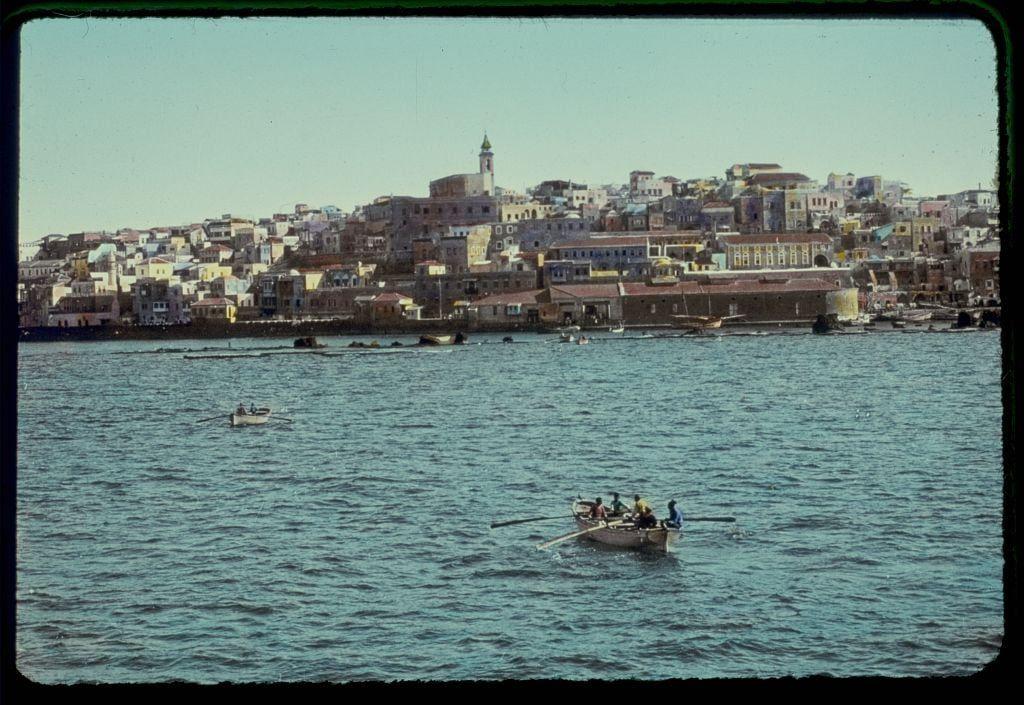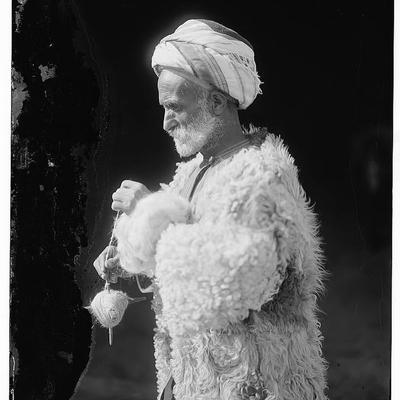
Jewish factories in Palestine and on Plain of Sharon & along the coast to Haifa. Tel Aviv. Diamond Works. Cut & polished diamonds ready for sale 1939 March.
Matson Photo Service
1 negative : glass, dry plate ; 5 x 7 in.
#Jewish #Palestine #PlainofSharon& #Haifa #TelAviv #DiamondWorks #MatsonPhotoService #HaifaTelAviv #Israel #TelAviv #photography

![The image depicts a black and white photograph of an urban street scene. It shows the corner view of a multi-story building with architectural features such as arched windows, balconies, and decorative balustrades on its upper floors. The facade has several rectangular panels with various inscriptions in script that might be Arabic or Hebrew.
In front of the building stands a tall flagpole bearing an unfurled flag at the top. There's a signboard hanging from one corner stating "St Andrew’s" along with what appears to be an emblem, likely related to St Andrew's House, which is identified as such in archival information provided for this image.
On the street level, there are two pedestrians walking past; onlookers can see their figures but not discernible details. A person riding a bicycle crosses the intersection from left to right, and another figure appears closer towards the foreground of the photo, possibly crossing or waiting at the corner.
In front of the building is parked an older model car indicative of mid-20th-century design aesthetics. Street infrastructure such as utility poles and cables are visible on the sidewalk beside a road with asphalt pavement leading into the frame from below out-of-sight to the bottom left of this image.
The scene suggests historical context, possibly during or around World War II given the timeframe mentioned in archival notes (1940 [...]](https://files.mastodon.social/cache/media_attachments/files/115/720/722/738/430/436/original/ed3f33a59c6730b7.jpeg)
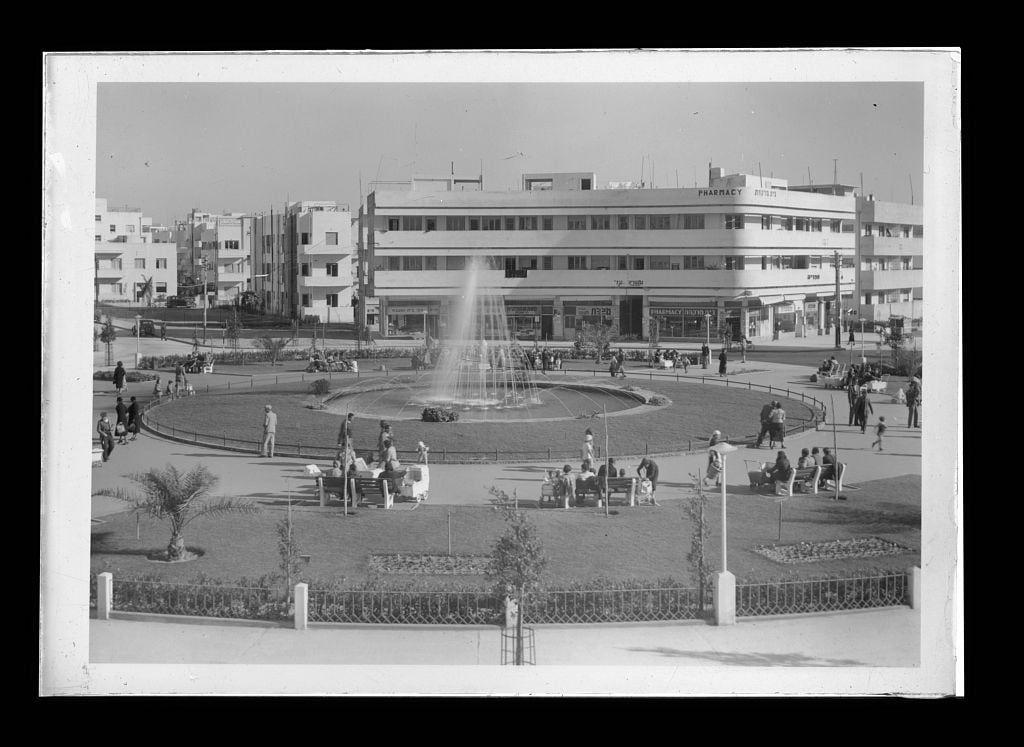
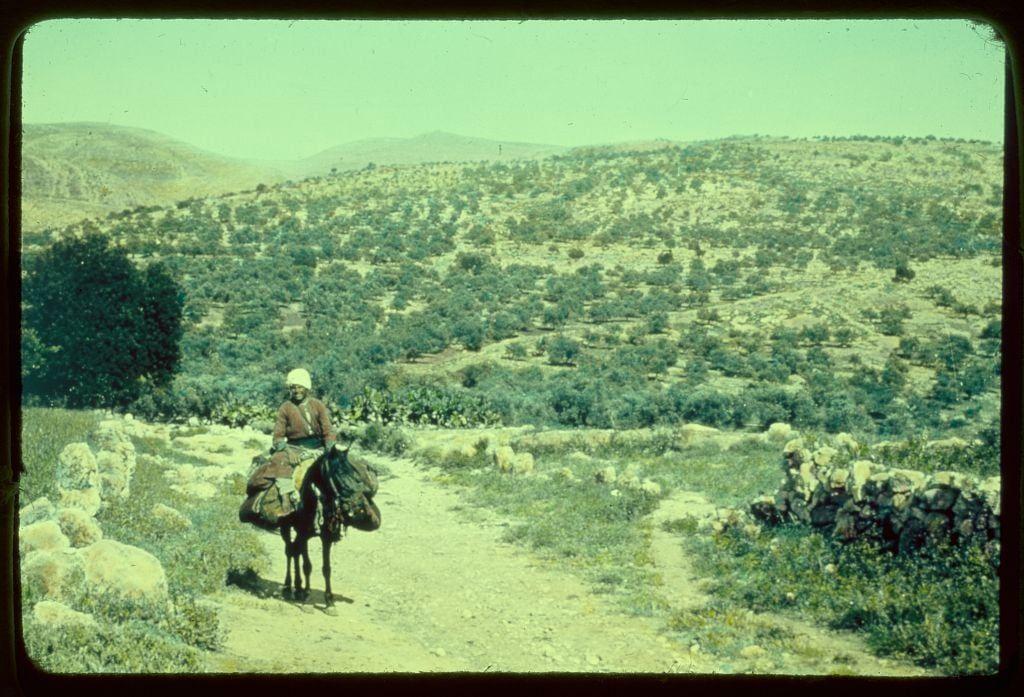
![This image depicts a rural landscape, possibly from the Middle East or North Africa. The scene shows a rugged terrain with rocky outcrops and sparse vegetation, including trees that appear to be olive groves scattered across the fields. There is a winding path cutting through the middle of the photo, suggesting access for people or animals.
The background reveals a series of small buildings or houses in what could be a village setting, with some larger structures possibly indicating storage facilities like silos or barns. The sky above has a hazy quality, perhaps due to atmospheric conditions or photographic processing, and gives an overall impression that the image is somewhat old-fashioned, likely from mid-20th century.
The coloration of the photo leans towards cooler tones with a greenish tint, which might be indicative of film stock used at the time. The presence of this particular landscape in "Jaffa to Jerusalem" suggests it could have been taken during an archaeological or anthropological expedition between 1950 and 1977.
The photograph is credited to Matson Photo Service, indicating that they were responsible for capturing such images as part of their work. The specific image dimensions are provided in the alt text reference ("Matson Photo Service" with "2 x 2 in"), which may be relevant information if you're looking at this within a larger collection or databa [...]](https://files.mastodon.social/cache/media_attachments/files/115/708/985/649/490/833/original/be9f44dd44ffa1ba.jpeg)
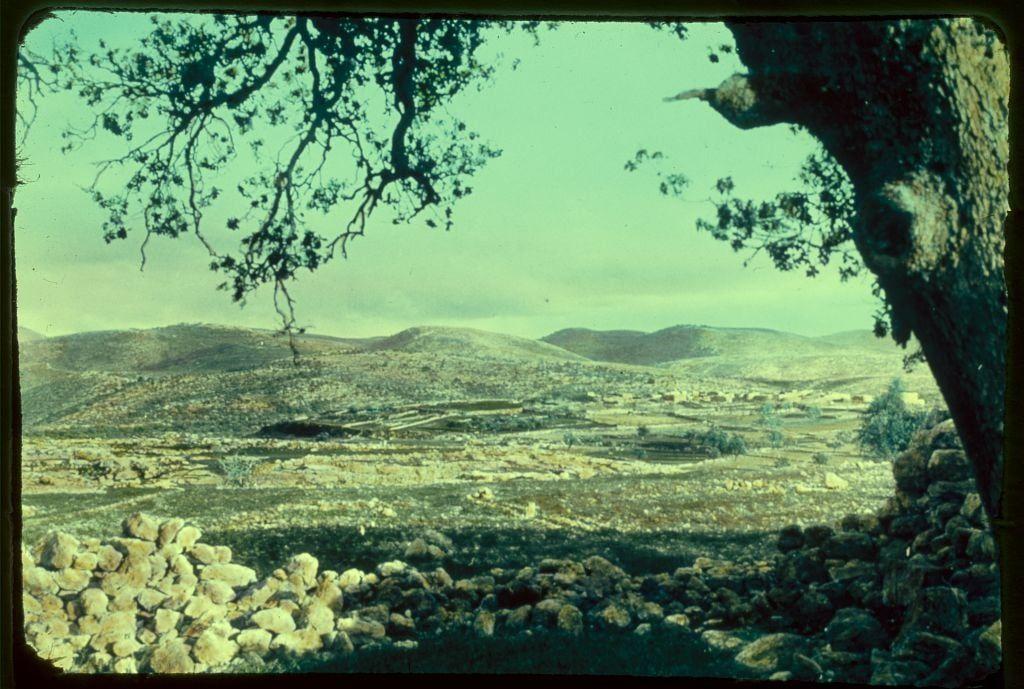
![The image depicts a pastoral scene with two individuals and their animals in an open, rural landscape. In the foreground stands a camel adorned with colorful baskets on its back, suggesting it is used for carrying goods or water during travel across arid regions. A person sits atop one of these baskets, reinforcing this interpretation.
Adjacent to the camel, another individual rides a dark-colored donkey equipped with simple saddle gear. This person appears to be engaged in grazing, as they have their foot on the ground and are bending down slightly towards the dry grass covering the terrain.
The background is dominated by vast expanses of flat land under a bright blue sky, indicating an arid environment that might typically occur in Middle Eastern or North African regions. The horizon features gentle hills or low mountains, adding depth to the landscape but providing no significant landmarks for precise location identification.
Overall, this image captures a moment from everyday life where individuals rely on camels and donkeys as modes of transportation across open land, likely reflecting historical agricultural practices before motorized vehicles became prevalent in such regions. The color tones are naturalistic with hints of faded reds, greens, blues, and browns contributing to the earthy palette.
The caption "Jaffa to Jerusalem. Gezer." suggests that this image m [...]](https://files.mastodon.social/cache/media_attachments/files/115/707/463/957/367/785/original/3848380b90a28037.jpeg)
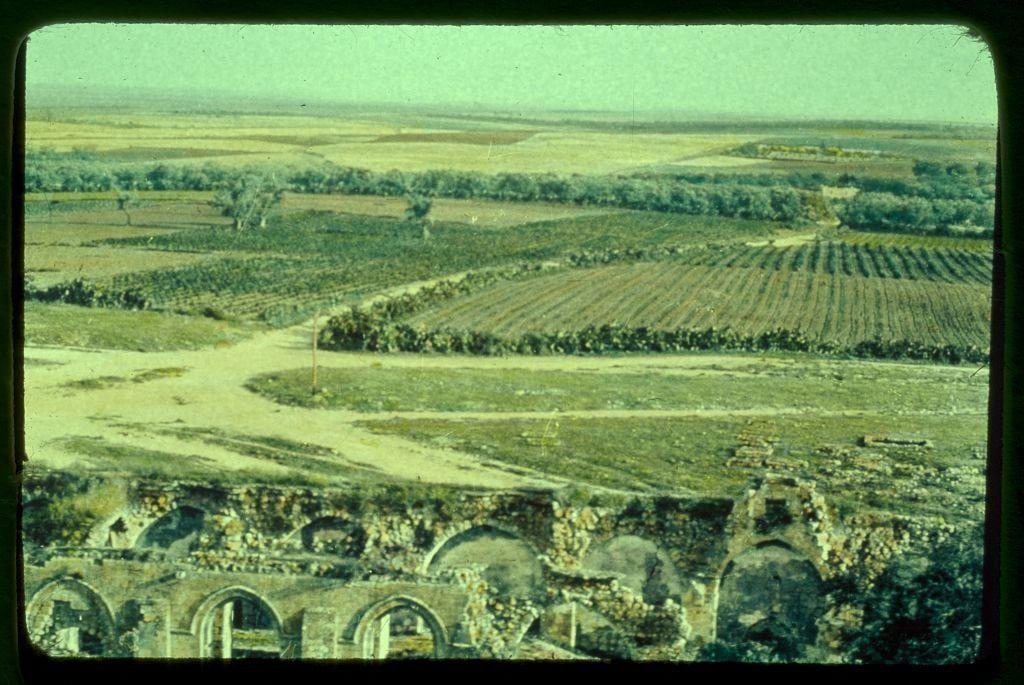
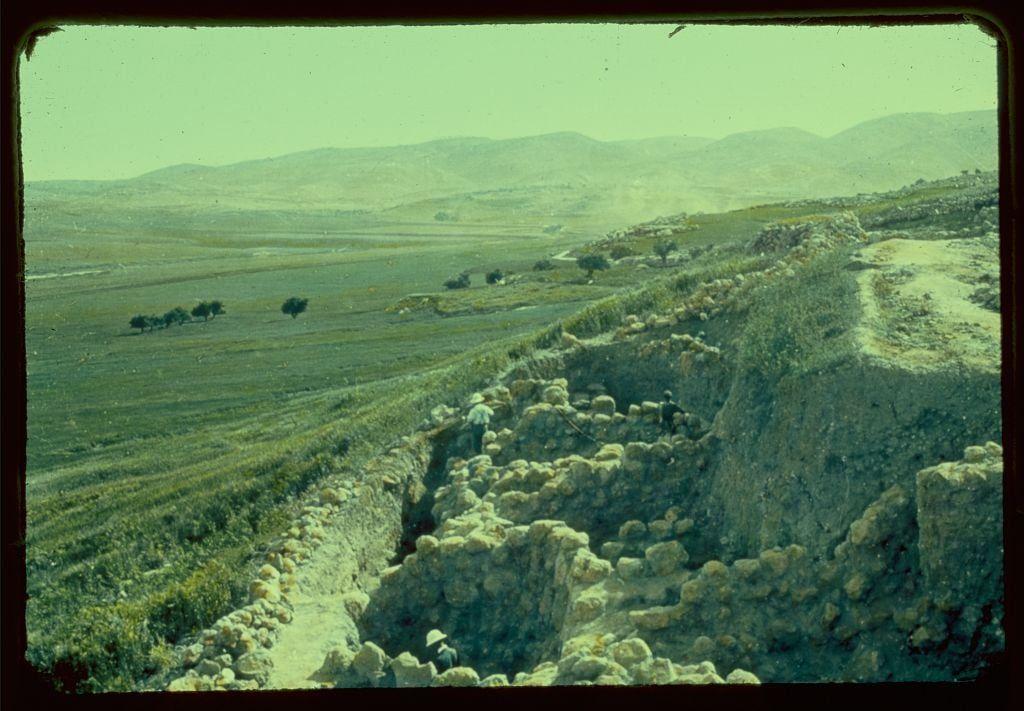
![The image depicts a vast, arid landscape with rolling hills and wide-open plains. The terrain appears dry and sparsely vegetated, suggesting an environment that is likely to be subject to limited rainfall or drought conditions.
A winding dirt road cuts through the center of the photograph from left to right, which indicates human activity in this otherwise desolate area. Alongside the road are what appear to be small settlements with structures clustered together, possibly indicating rural communities living on these lands for agricultural purposes.
The overall color palette consists of muted earth tones such as yellow, brown, and greenish-yellow hues that dominate due to sunlight's effect on the landscape. The photograph has a vintage look, likely from an early 20th-century archive or documentary collection capturing scenes in various regions across Israel during significant historical periods.
This particular image is part of Jaffa to Jerusalem: Beth Shemesh from Beit Jamal between 1950 and 1977 by the Matson Photo Service. The photograph's dimensions are listed as a slide measuring approximately two inches on each side, indicating its compact size typical for vintage photo archives.
The source attribution is linked through an image URL that directs to a larger collection of similar photographs from Eric & Edith Matson, showcasing their extensive coverage in capturi [...]](https://files.mastodon.social/cache/media_attachments/files/115/704/397/441/955/822/original/aafe7149c264d69e.jpeg)
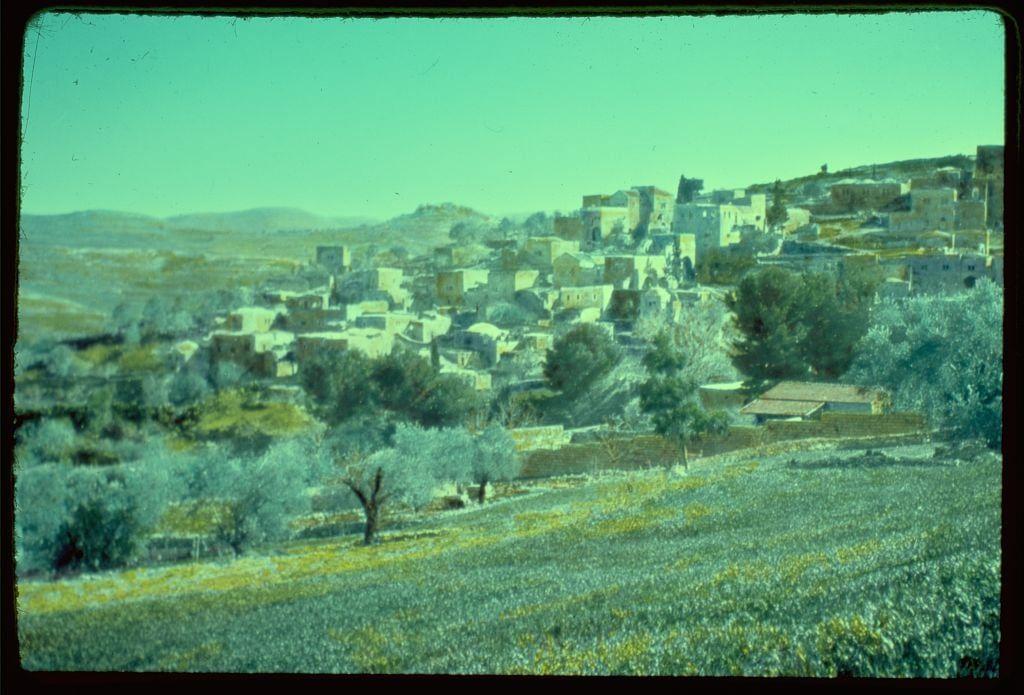
![The image depicts a scene with several people standing outdoors, dressed in traditional Middle Eastern clothing. The setting appears to be an arid landscape, possibly on the edge of a historical site or ruins, given the presence of ancient architecture and a palm tree.
There are seven individuals visible: four women wearing long robes covered by head coverings (hijabs), two young boys standing nearby, and another woman with her back turned. The group is spread out across what looks like rocky terrain, possibly on elevated ground overlooking an expanse that could be the Mediterranean Sea or a similar body of water.
In the background stands a large dome structure, which might suggest a religious site such as a mosque. A palm tree sways in the wind behind this building, adding to the sense of arid climate and historical context. The overall colors are muted with earthy tones dominating the scene, complemented by a hazy sky.
The image is marked with greenish-yellow tint across it, which could be due to aging or processing effects on the photograph itself. At the bottom right corner, there's text that reads "Jaffa to Jerusalem Zorah Home of Samson Judges 13:2 between 1950 and 1977 Matson Photo Service" suggesting a possible connection to biblical themes from those regions during this time period.
The image is credited as belonging to the Eric & Edith Matson Photographs, sp [...]](https://files.mastodon.social/cache/media_attachments/files/115/703/087/305/451/691/original/6e4c9371de857275.jpeg)
![The image depicts a coastal scene with the sea taking up most of the background, showing several ships at varying distances from each other. In the foreground and middle ground, there are structures that appear to be part of an old town or cityscape near the seaside. These include domed buildings possibly indicating historical architecture, which could suggest Islamic influences given their shape resembling those found in places like Jaffa in Israel.
The sky is clear with a hint of haze over one of the ships on the horizon, and there's visible activity at sea as indicated by splashes or waves near some boats. The color palette has an aged quality to it, which could be due to fading effects from age but also adds character to the photograph giving hints that this might not have been taken in recent times.
The photo seems to capture a moment of daily life and commerce along what appears to be Jaffa's coastline, as mentioned in its caption. This scene is rich with historical connotations, suggesting it could serve as an important cultural or educational reference point for understanding the maritime activities and urban landscape around this specific location during mid-20th-century period.
The photograph has a size specification of 2 x 2 inches, implying that while it may have been taken on film given its age indicated by color saturation and clarity, such photographs we [...]](https://files.mastodon.social/cache/media_attachments/files/115/701/565/239/808/094/original/d8e696494530e466.jpeg)