
Mécanisme de Peaucellier #MetaPost #TeXLaTeX
https://metapost.gutenberg-asso.fr/?page=exemples&id=484
#MetaPost
Animation du Mécanisme de Peaucellier avec #MetaPost #TeXLaTeX
https://fougeriens.org/~mc/?page=exemples&dir=peaucellier

This was an excellent week for boxes and glue.
* the textshape Text shaper is now usable and passes almost all harfbuzz tests (still working on the last ones)
* mpgo - a Go MetaPost code is now pretty much feature complete (an bug free, of course)
* hobby, a Lua frontend for mpgo works fine
* glu, a boxes and glue Lua frontend is getting more and more functionality
* boxes and glue can now render SVGs in PDF and is font aware. it uses the textshape engine to render fonts in SVG.
* Merged some pull requests for textshape and boxesandglue.
Illustration de l’algorithme de gradient avec #MetaPost #TeXLaTeX
https://metapost.gutenberg-asso.fr/?page=exemples&id=482

Gavin Polhemus published a new ConTeXt module to include a globe, centered on some geo coordinates:
https://github.com/Sophias-Compass/Luageo
https://modules.contextgarden.net/luageo
There’s a manual in doc/…
With the next ConTeXt update, it will be installable with mtxrun.

Courbe du dragon par @notezik d’après le live de @mickaellaunay en #MetaPost #TeXLaTeX
https://metapost.gutenberg-asso.fr/?page=exemples&id=480

New software in the boxes and glue universe: mpgo and hobby. mpgo is a MetaPost library (re-)written in Go and hobby is a Lua frontend which uses the library and adds a Lua layer for programming.
See https://boxesandglue.dev/hobby/, https://github.com/boxesandglue/mpgo and https://github.com/boxesandglue/hobby
Fresh from the workshop:
Inspired by a variable font that follows curves (https://www.futurefonts.com/hex/shop-sans), Hans & Mikael implemented a MetaFun function* that can adapt type to curves.
*) ATM “lmt_oscillated”, might change.
Un ensemble de pavages par poursuites de polygones avec #MetaPost #TeXLaTeX, reprise du live de
@mickaellaunay
sur le sujet, par
@notezik
Les triangles, carrés et hexagones sont explorés, avec ou sans couleurs.
https://metapost.gutenberg-asso.fr/?page=groupe&groupe=Pavages+avec+des+poursuites+de+polygones
Un arbre de Pythagore avec #MetaPost par @notezik d'après le live et le code de @mickaellaunay #TeXLaTeX
https://metapost.gutenberg-asso.fr/?page=exemples&id=466

Como o GDiscovery se saiu na última grande atualização do Google #metapost



Federated!
You can now follow this site in the Fediverse.


I couldn't figure out #Luuse 's #Plancton font editor for a second, so I wrote my own little very shabby script to generate a set of #SVG from #MetaPost files and show them in an HTML document. I just haven't figured out the 'making it into a font' part yet.

Un peu de géométrie plane avec #MetaPost et le package mp-geom2d #TeXLaTeX :
https://metapost.gutenberg-asso.fr/?page=package&package=mp-geom2d

Various Things in MetaPost (2019)
https://habr.com/en/articles/454376/
#ycombinator #metapost #tex #illustrations

Various Things in MetaPost (2019)
https://habr.com/en/articles/454376/
#HackerNews #MetaPost #MetaPost2019 #Habr #Articles #Programming
Petite illustration #mathématique suite à la vidéo de @mickaellaunay sur l'inversion avec #MetaPost #TeXLaTeX
https://metapost.gutenberg-asso.fr/?page=exemples&id=446

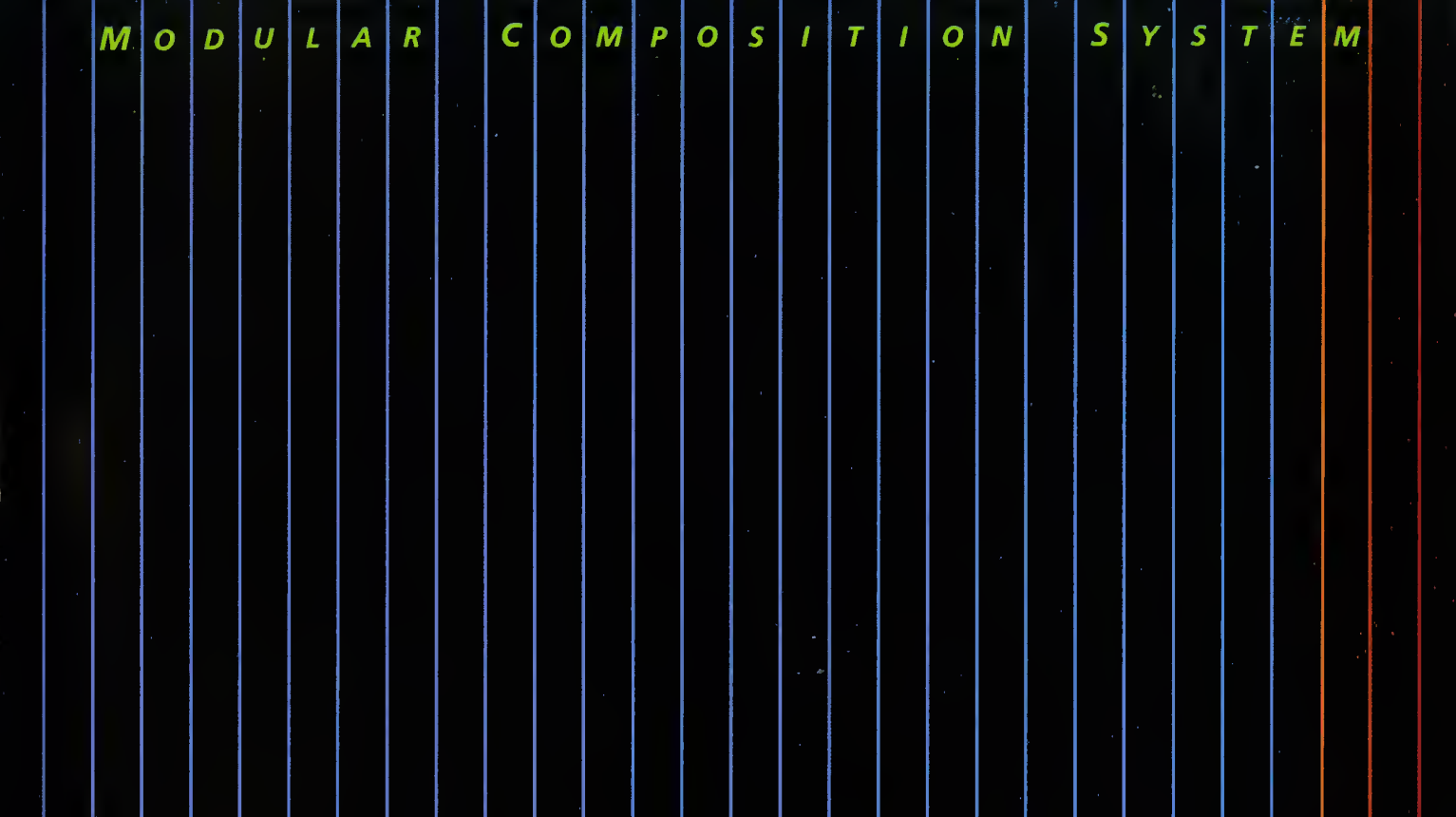
Partly because of our #MetaPost workshop of next week at #AutomaticType #anrt @ANRT https://automatic-type-design.anrt-nancy.fr with @Ludi @eugbidaut @AntoineGelgon I'm reading an old brochure on (the always incredibly rich) archive.org about the "#Compugraphic Modular Composition System"
https://ia801000.us.archive.org/29/items/bitsavers_compugraphphicModularCompositionSystemBrochure_14979239/Compugraphic_Modular_Composition_System_Brochure_text.pdf
#photocomposition #typography
(lot of text in the alt of pictures)
According to the Compugraphic page on wikipedia "Following the success of the EditWriter, Compugraphic introduced [somewhere in the 70's] the Modular Composition System, known as the "MCS". The entire system was modular, including the software, which was delivered on 5" floppy disks. As the product matured, a "#WYSIWYG" (what-you-see-is-what-you-get) display was added (the PreView) so that a user could see a "soft" view of a job before it was typeset. This was followed up by the PowerView whereby the user worked directly on a "WYSIWYG" display. The MCS was a huge success, and also marked a change in technology from 8bit to 16bit (Intel 8086) cpu hardware."


![Part of a page with photo of a computer system and on the vertical screen a zoom on a promotional media with blocks of ads with various sizes of text reading "* \ \biers= SCBAALL
ADD IT 2 .407 n-.....-ALL UP. gigues C-7.: vc)Rt VALUES • MORE SAVINGS • • • :47:7.74Z.S."14 • 7 NM PACK WHOLE Q!
CHICKENSCOCSIRLI • ua.STE/
t FAN %HORS SHANK
FRESH Fi
s_s_rALI._.t " and the cropped brochure text says "The MCS 5 Input System - The MCS 5 is a desktop, state-of-the-art input system that can be used either as an online workstation to power an MCS typesetter or as a remote ter-minal for an MCS 10, MCS 100, or PowerView.
The MCS 10 Input System - The MCS 10 input system is the ideal choice for those who antici-pate significant expansion into the broad range of MCS options. By increasing the memory of this input system you can expand your capacity to two workstations sharing the same database. The MCS 100 Input System - This input system is the most powerful in the MCS family. Expanding the basic capabilities [...]
system from any workstation, and the MCS 100 can perform most functions faster than any other input system in the MCS product line. This system's 100-foot cables allow you to position [...] The MCS PowerView 10 Terminal - With its interactive, what-you-see-is-what-you-get screen, this latest addition to the MCS line of input systems lets you see coded text"](https://files.mastodon.social/cache/media_attachments/files/113/984/310/764/224/474/original/7b6e04ddb578dd8d.png)
Client Info
Server: https://mastodon.social
Version: 2025.07
Repository: https://github.com/cyevgeniy/lmst