neuromapr 0.2.1 has been accepted and published on CRAN!
Very excited to get this out to users in the simplest way possible, and hope the #rstats #neuroimaging community finds it useful!
neuromapr 0.2.1 has been accepted and published on CRAN!
Very excited to get this out to users in the simplest way possible, and hope the #rstats #neuroimaging community finds it useful!

🧠 From setup to real-time decoding: how fNIRS-BCIs actually work. In Part 1 of our #fNIRS #BCI: Methodology and (clinical) application possibilities" webinar series, Dr. Bettina Sorger from Maastricht University & Dr. Franziska Klein from OFFIS guide you through system setup, experimental design, and the fundamentals of online analysis.
They also discuss the strengths & limitations of fNIRS compared to other BCI modalities.
▶️ https://zurl.co/pemtc
#Neuroscience #Neuroimaging
Excited to announce another publication in #CommunicationsBiology looking at theta/gamma activity during a semantic priming task in #MEG, particularly hippocampal oscillations! #neuroscience #hippocampus #neuroimaging
New neuromapr #rstats package is available from GitHub! Highly experimental, early adopters and bug identifiers are super welcome to report issues!
It implements the framework from Markello et al. (2022, Nature Methods) and is aligned with the neuromaps Python reference implementation. Co-developed with Claude Code.
https://netneurolab.github.io/neuromaps/index.html


Using a mega-analysis of 16 fMRI studies with 572 participants and 739 persuasive messages, the article reports that activity in reward-related and mentalizing brain networks predicts both individual judgments of message effectiveness and population-level outcomes, suggesting a common neural currency for persuasion. Exploratory results also indicate roles for language and emotion processing, with limitations and calls for broader samples and standardized methods.
These findings illuminate how neural mechanisms of value evaluation and social understanding underlie persuasive messaging across contexts, bridging neuroscience and social psychology. They suggest that brain signals can forecast collective responses beyond self-reported attitudes, offering a cross-domain perspective on attitude change and behavior.
Article Title: Neuroimaging data reveals a “common currency” for effective communication
Link to PsyPost Article: ift dot tt/91Vxcau
Copy and paste broken link above into your browser and replace "dot" with "." for link to work. We have to do it this way to avoid displaying copyrighted images.
#Neuroimaging #Persuasion #Neuroforecasting #BrainNetworks #SocialCognition
Rapid interpretation of brain MRI scans and automatic emergency flags hold relevance for psychotherapists, social workers, and other mental health professionals by supporting assessments where neurobiological factors influence mood, cognition, or behavior.
With training on hundreds of thousands of real-world scans and patient histories and an accuracy reportedly up to 97.5%, the tool demonstrates potential to inform clinical decisions and referrals in fast-paced care environments.
Article Title: AI reads brain MRIs in seconds and flags emergencies
Link to Science Daily Mind-Brain News: https://ift dot tt/Q5ybLa3
#BrainMRIs
#AIinHealthcare
#Neuroimaging
#MentalHealth
#ClinicalDecisionSupport
Copy and paste broken link above into your browser and replace "dot" with "." for link to work.
We have to do it this way to avoid display of copyrighted images.
The ggseg ecosystem finally has a proper home! 🧠
For those who don't know, ggseg is an R package ecosystem for visualizing brain atlas data. Think ggplot2, but for brains.

New research uses a 7 Tesla MRI to examine brain connectivity during a cognitively demanding task in people with Long COVID and ME/CFS. The findings show that healthy brains increase connectivity under fatigue, whereas these patient groups exhibit disrupted or weaker connections among deep brain regions, the nucleus accumbens, cerebellum, hippocampus, and prefrontal areas during and after mental effort. The study uses a Stroop task with pre and post fatigue sessions to reveal how neural communication differs in these conditions.
This article is of interest to psychology because it links subjective experiences of brain fog and cognitive difficulties to observable changes in brain networks involved in executive function, motivation, and autonomic regulation. It illustrates how neuroimaging can uncover compensatory or maladaptive connectivity patterns that underlie cognitive fatigue and inform theories of cognitive control.
Article Title: Brain scans reveal neural connectivity deficits in Long COVID and ME/CFS
Link to PsyPost Article: ift dot tt/c57Ntia
Copy and paste broken link above into your browser and replace "dot" with "." for link to work. We have to do it this way to avoid displaying copyrighted images.
#LongCOVID #ME/CFS #BrainConnectivity #CognitiveFatigue #Neuroimaging
The article reports on a study examining whether inhaling a specific essential oil blend called Genius can boost cognitive performance in healthy adults. It uses a double-blind design with three conditions (Genius blend, sage essential oil, and no aroma) and measures cognitive performance with memory and attention tasks while monitoring brain metabolism with near-infrared spectroscopy. Results show improvements in memory and executive function for the Genius condition, greater alertness, and less fatigue, though the increased brain activity did not directly account for the performance gains.
This study is of interest to psychology readers because it investigates how olfactory stimuli can influence cognition and mood, and it uses neuroimaging to explore possible mechanisms beyond subjective experience. It also discusses the idea of synergy in aroma blends and highlights methodological challenges in delivering standardized aromas.
Article Title: Novel essential oil blend may enhance memory and alertness
Link to PsyPost Article: ift dot tt/UCIzKQm
Copy and paste broken link above into your browser and replace "dot" with "." for link to work. We have to do it this way to avoid displaying copyrighted images.
https://www.cell.com/cell/fulltext/S0092-8674%2825%2901305-4
{December 05, 2025}
Open access
#Psilocybin triggers an activity-dependent #rewiring of large scale #cortical #networks
Hemodynamic initial-dip reflects local spiking activity.
🧠 Initial-dip: transient HbR increase.
🔍 More spatially specific than hemodynamic response.
📉 HbT decrease leads to capping HbR.
🔄 Biphasic HbR with early decrease, late rebound.
#fNIRS #Neuroimaging #Hemodynamics #Neuroscience #Pub2Post https://tnyp.me/l3nndrWk/m
Another reason why you really can't beat yourself up over mistakes in the past -
Human #brains have 5 distinct 'epochs' in a lifetime, study finds https://www.nbcnews.com/science/science-news/human-brains-5-epochs-development-rcna245663
#braindevelopment #research #neuroimaging #neuralnetwork #mentalhealth #brainarchitecture
New post out! 🚀 Dive into R's `apply()` function with me. I'm breaking down `MARGIN` from basic matrices to complex 5D fMRI neuroimaging data, showing how to avoid messy loops. Essential for anyone working with arrays! #RStats #Neuroimaging #DataAnalysis
https://drmo.site/k40xD5

Machine learning analysis of fNIRS-derived hemodynamics revealed distinct cortical patterns distinguishing post-COVID-19 from controls (AUC=0.91) 🧠🦠
Read the publication at: https://www.mdpi.com/2504-4990/7/4/129

Chen et al. explored the temporal dynamics of cortical activation during cognitive tasks using a multimodal fNIRS–EEG approach. By integrating hemodynamic and electrophysiological signals, the team achieved a comprehensive view of both the where and when of brain activation.
The findings highlight how simultaneous fNIRS and EEG measurements complement each other to paint a richer picture of brain function.
🔗 Read the full article here: https://publications.artinis.com/publication/chen-temporal-2024/

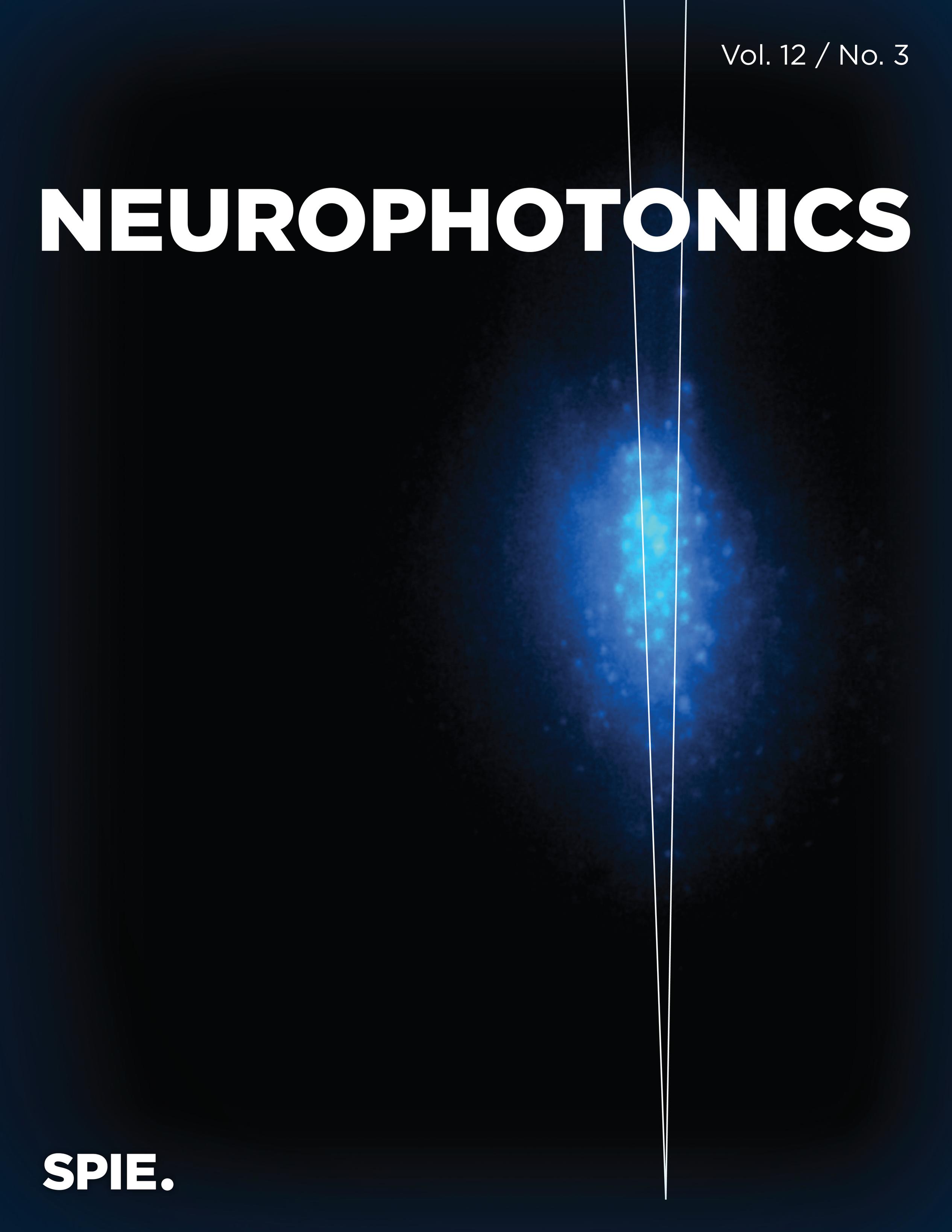
Neurophotonics gets a cool new cover! Inside, depth-resolved fiber photometry @ferruccio-phc.bsky.social and much more!
#Neurophotonics #Neuroscience #Neuroimaging #BrainImaging #OpticalImaging #Microscopy
#studyBRAIN
In a recent study, Tahir et al. explored the potential of combining fNIRS with EEG as a diagnostic tool for bipolar disorder.
The team used the OxyMon to record brain hemodynamics alongside neural electrical activity, offering a more comprehensive picture of brain function than either modality alone.
Their findings highlight how multimodal fNIRS-EEG could pave the way for improved diagnostic detection in psychiatric disorders.
🔗 https://publications.artinis.com/publication/tahir-multimodal-2025/

We are pleased to announce that BIDS Extension Proposal 42 - Electromyogrpahy is open for community review!
https://github.com/bids-standard/bids-specification/discussions/2219
The review period is open from September 29 - October 10.
#bids #neuroimaging #electromyography #emg
We are pleased to announce that BIDS Extension Proposal 20 - Eye Tracking is open for community review!
https://github.com/bids-standard/bids-specification/discussions/2218
The review period is open from September 29 - October 10.
#bids #neuroimaging #eyetracking
Chris Xu talks to Neurophotonics about the 'toy land of optics' and how to channel positive vibes! Thank you Tianyu Wang for conducting this fantastic interview!
https://www.spiedigitallibrary.org/journals/neurophotonics/volume-12/issue-03/030402/Exploring-the-depths-of-light--a-conversation-with-Professor/10.1117/1.NPh.12.3.030402.full
#Neurophotonics #Neuroscience #Neuroimaging #BrainImaging #OpticalImaging #Microscopy