#STEMeducation

2026-02-11

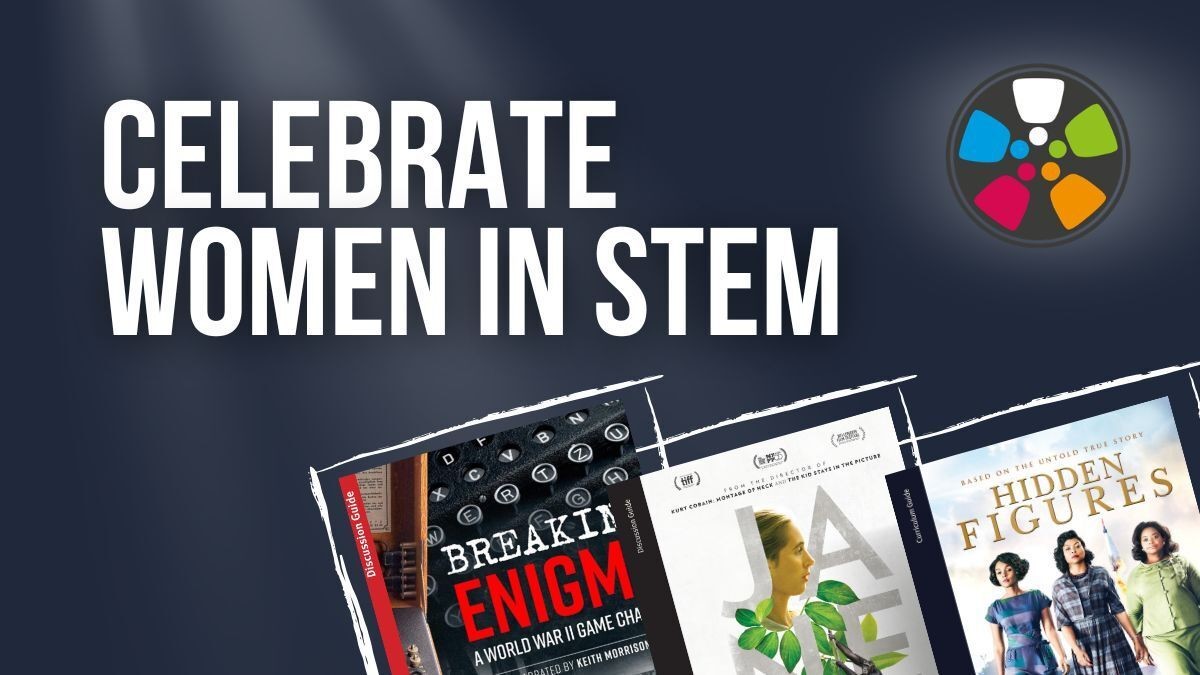
🎉 Happy International Day of Women & Girls in Science! Celebrate with with hit films that get students of all genders excited about science and STEM careers.

Get our free teaching guides with classroom-ready lesson plans for grades 3-12 and adult/higher ed. 📚🎬

What are your favorite films about women and girls in STEM fields?

journeysinfilm.org/teach-about

#WomenInScience #WomenInStem #GirlsInStem #StemEducation #Stem #Education #Homeschooling #Movies #BletchleyPark #JaneGoodall #AskFedi

Text at the top says: "Celebrate Women in STEM:" At the bottom, there are Journeys in Film teaching guides for Breaking Enigma, Jane (about Dr. Jane Goodall), and Hidden Figures. The Journeys logo is in the top right corner.
mirobo Technologymirobotech@techhub.social
2026-02-11

Roses are red, 🌹
This robot is too,
And, you can 3D-print your own...
in any colour you like, including blue! 🤖

I'm sharing my love of robotics by giving you 20% off when you purchase two or more ARPS-2, BEAPER Nano, or BEAPER Pico kits using code 'SHARETHELOVE': mirobo.tech/

#STEMEducation #robotics #robots #electronics #programming

A red 3D-printed BEAPER Bot robot chassis controlled by a BEAPER Pico circuit. BEAPER Pico uses a Raspberry Pi Pico microcontroller (green circuit) to connect to pushbuttons, LEDs, a piezo speaker, potentiometers, a light sensor, a motor driver, servo connectors, and even a full-colour LCD display! This robot uses two optical sensor modules to detect the floor and an IR time-of-flight (ToF) module to detect obstacles.
Michael | VoltPaperScissorsVoltPaperScissors@chaos.social
2026-02-11

I often see educational materials where illustrations of light bulbs light up or fans spin. I like to introduce kids to the joy of electronics by turning simple circuits into something unique. I often look at nature for inspiration. A variation of my glowing mushrooms are these jelly fish.

All my educational material is available on my webpage: voltpaperscissors.com/rgb-jell

#stem #stemeducation #mint #creativetoots #kids #diy #education #papercraft

BabyYumYumBabyYumYum
2026-02-11

💡 Today is International Day of Women and Girls in Science! 🌍✨
We celebrate the brilliant minds shaping our world and inspire the next generation of young girls to dream big in STEM.
Science is for everyone and every girl can shine! 💛

💡 Today is International Day of Women and Girls in Science! 🌍✨ We celebrate the brilliant minds shaping our world and inspire the next generation of young girls to dream big in STEM.  Science is for everyone and every girl can shine! 💛  #BabyYumYum #BYY #GirlsInScience #WomenInSTEM #STEMEducation #InspireYoungMinds #FutureScientists #ParentingSA #GirlPower
mirobo Technologymirobotech@techhub.social
2026-02-10

Roses are red, 🌹
to me, Raspberry Pi Pico is new!
I’m so old, I blinked my first LED…
on the good ol’ MC6802!

It's much easier now. 🤣

Go from blinking LEDs to autonomous robots with my BEAPER Pico circuit: hackster.io/mirobotech/beaper-

#STEMeducation #robotics #robots

mirobo Technologymirobotech@techhub.social
2026-02-10

It's teacher Tuesday!!

Hey #STEMEducation teachers, I'm building a beginner microcontroller curriculum for you... one new programming activity a week!

Welcome to week 3 – input.

See the curriculum overview here: docs.google.com/document/d/1Da

Get the program code here: github.com/mirobotech

2026-02-09

While the live courses include team projects, TAs, & learning pods, the content itself is always open. You can dive into #ClimateScience #neuroscience #MachineLearning & #OpenScience at your own pace!

➡️ Check out the resources: neuromatch.io/open-education-r

#AsynchronousLearning #STEMEducation

"Want to see what a Neuromatch Academy course is like? See our free open source resources!" People sitting with notebooks and laptops looking at an iPad screen.
mirobo Technologymirobotech@techhub.social
2026-02-07

Roses are red 🌹
Raspberry Pi Pico is green,
BEAPER Pico takes you from nothing to robot 🤖
Without all the detours in between!

Save 20% when you purchase 2 or more BEAPER Pico kits using code 'SHARETHELOVE': lectronz.com/products/beaper-p

#robotics #robots #electronics #STEMEducation

mirobo Technologymirobotech@techhub.social
2026-02-06

It's freebie Friday!!

Free* #robots for #education! 🤖

* Ok, almost free. 😊

I've shared my beginner #Arduino #robot #PCB on @PCBWay enabling schools to order APRS-2 circuits at the lowest possible cost. Find it here: pcbway.com/project/shareprojec

#STEMEducation

2026-02-06

🙋 How do you assess whether applicants meet the prerequisites? Is there a test or proof required?

➡️ We do not require formal tests, transcripts, or certifications to verify prerequisites. We operate on an honor system.

🤓 Applications for Climatematch Academy open 16 February! Learn more about our Computational Tools for Climate Science course and get ready to apply: neuromatch.io/courses/

#ClimatematchAcademy #STEMEducation #SummerSchool #VirtualSummerSchool #OnlineLearning

How do you assess whether applicants meet the prerequisites?
Michael | VoltPaperScissorsVoltPaperScissors@chaos.social
2026-02-05

Next saturday (Feb. 15) there will be a free DIY Book Lamp workshop in ZLB (Berlin)! 🥳
zlb.de/veranstaltungsuebersich
In case you don't life in Berlin check out my video tutorials: voltpaperscissors.com/diybookl

#berlin #diy #mint #stemeducation

A teaser image of my DIY book lamp showing a book cover that unfolds a lampshade. The lamp lights up blue. A text below says "Simple DIY Book Lamp"
Zoomers of the Sunshine Coast 🇨🇦SCZoomers@mstdn.ca
2026-02-04

Applications could transform:
* Weather forecasting (actual storm accuracy)
* Climate modeling (real cloud physics)
* Financial risk (capturing black swans)
* Turbulence at scales we thought impossible
The philosophy: trade precision for truth.
#ClimateScience #STEMeducation

Westport ObservatoryWestportObservatory@vmst.io
2026-02-04

🚀🔬 New STEM alert!

We’re launching an exciting new STEM class for students in grades 9–12, starting soon at the Westport Observatory. This is a hands-on, real science program—perfect for curious minds who want to go beyond the textbook. Limited spots. Big brains encouraged. Please share!

👉 Details & signup: was-ct.org/programs/introducin

#STEMEducation #HighSchoolSTEM #NEON #FutureScientists #Astronomy #ScienceClass #WestportCT #HandsOnLearning #WestportObservatory

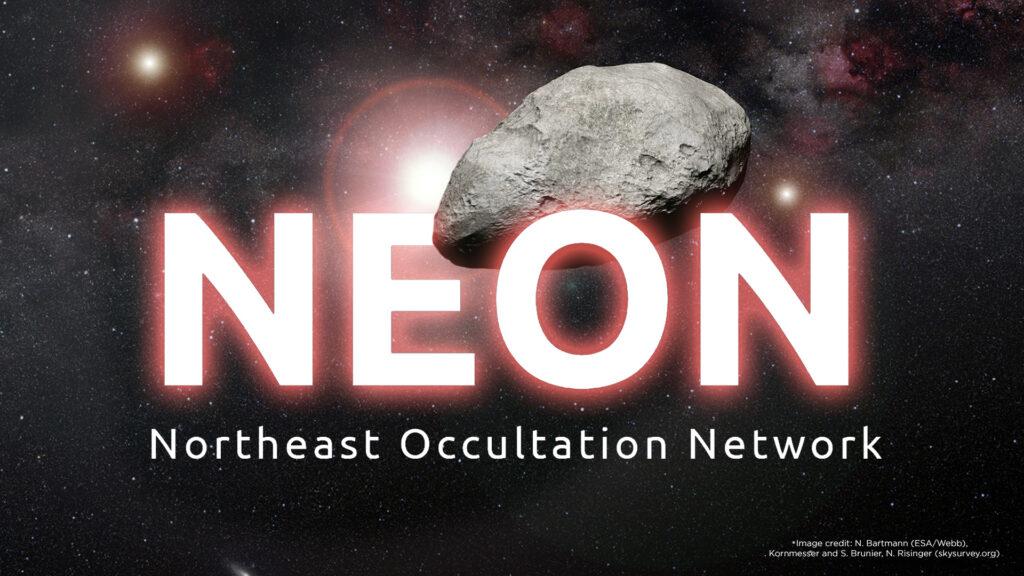
NEON logo with a glowing white neon effect behind a large asteroid against a starry space background.
mirobo Technologymirobotech@techhub.social
2026-02-03

It's teacher Tuesday!!

Happy start of second semester to everyone starting this week! 🎉

If you teach #STEMEducation or #microcontroller programming, I'd like to help you with your homework. 😉

Follow me as I build a beginner microcontroller curriculum – one week at a time. Week 2 is timing. 👇

mirobo Technologymirobotech@techhub.social
2026-01-31

RE: techhub.social/@mirobotech/115

Here it is!

I've shared the ARPS-2 Gerbers on @PCBWay as part of their 8th circuit contest: pcbway.com/project/shareprojec

This lets #STEMEducation schools and makerspaces order bare boards at the lowest cost and make inexpensive #Arduino #robots. I'd love it if you gave it a boost. 😊

mirobo Technologymirobotech@techhub.social
2026-01-30

It's freebie Friday!!

Hey #STEMeducation teachers, I'm going to share my #Arduino ARPS-2 circuit with you!

It's designed for beginner microcontroller education and for building #robots! Watch this space for details and follow along as I develop a full set of beginner programming activities for it!

A KiCad screen shot of the ARPS-2 circuit board layout showing all of its component outlines and wiring layers.A simple wooden robot controlled by an Arduino UNO R4 Minima (lower circuit) with an attached ARPS-2 shield (upper circuit) interfacing the Arduino to the motors, floor sensors, and SONAR module. The robot is powered by 4AA batteries and driven by inexpensive yellow gear motors. Blue 3D-printed mounts are used to attach the circuits and gear motors to the white-painted wooden chassis.
WOW3D Learningwow3dlearning
2026-01-30

At WOW3D Learning, we're transforming classrooms for grades 1-8 and higher education institutions, sparking creativity in students and educators alike. Whether prototyping sustainable models or custom tools, 3D Printer turns "what if" into "watch this."

Ready to print the future? Join our programmes at zurl.co/W2jRe or DM for workshops, drop email at namaste@wow3dlearning.in ! 🚀

2026-01-30

🙋 Is there a cost to apply?
➡️ No! No payments are needed to apply. Application decisions come out Mid-April. You have until Early-May to enroll and pay your tuition and a small processing fee to secure your spot.

🤓 Applications for Neuromatch Academy open 16 February! Learn more about our Computational Neuroscience, Deep Learning, and NeuroAI courses and get ready to apply: neuromatch.io/courses/

#NeuromatchAcademy #Neuromatch #STEMEducation #SummerSchool #VirtualSummerSchool

Is there a cost to apply?
2026-01-30

🙋 Is there a cost to apply?
➡️ No! No payments are needed to apply. Application decisions come out Mid-April. You have until Early-May to enroll and pay your tuition and a small processing fee to secure your spot.

🤓 Applications for Climatematch Academy open 16 February! Learn more about our Computational Tools for Climate Science course and get ready to apply: neuromatch.io/courses/

#ClimatematchAcademy #STEMEducation #SummerSchool #VirtualSummerSchool #OnlineLearning #ResearchTraining

Is there a cost to apply?
2026-01-29

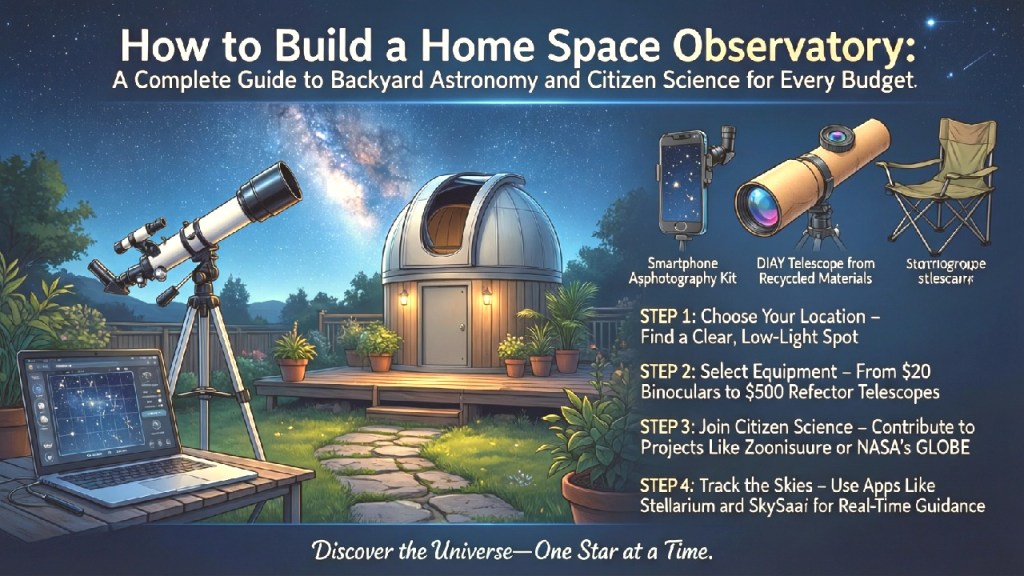
How to Build a Home Space Observatory: A Complete Guide to Backyard Astronomy and Citizen Science for Every Budget

Touching the Infinite: A Comprehensive Guide to Building Your Home Space Observatory | The Boreal Times

The universe is no longer the exclusive playground of government agencies and billionaire-backed aerospace firms. We are living in a golden age of “democratized space,” where the line between a hobbyist and a researcher is increasingly blurred. Building a home observatory is more than just a weekend project; it is the act of establishing a personal laboratory for the study of our cosmic origins. Whether you are peering through a cardboard tube or operating a remote-access robotic dome, you are participating in a tradition of inquiry that stretches back to Galileo.

This article serves as a blueprint for transforming your curiosity into a structured scientific pursuit. By following these empirical guidelines, you can contribute to actual scientific datasets while fostering a lifelong passion for the stars.

The Philosophy of the Backyard Observer

Before buying hardware, one must understand that an observatory is a system, not just a tool. It consists of three pillars: the site, the optics, and the data.

Empirical observation requires stability and consistency. In professional astronomy, “seeing” refers to the atmospheric stability above your site. While you cannot control the weather, your home observatory’s success depends on your ability to minimize light pollution and thermal turbulence (heat rising from buildings). The goal of a home setup is to provide a “ready-to-observe” environment that reduces the friction between thinking about the stars and actually seeing them.

A Guide for Every Budget: The Three Tiers

How to Build a Home Space Observatory: Infographic Guide

Astronomy is often perceived as expensive, but scientific value is found in the methodology, not the price tag.

Tier 1: The Explorer (Budget: $0 – $200)

Focus: Visual Literacy and Wide-field Observation. At this level, your goal is to learn the “geography” of the sky. Equipment: A pair of 7×50 or 10×50 binoculars. Binoculars offer a wider field of view than telescopes, making them superior for spotting star clusters and the Andromeda Galaxy. The Observatory: A reclining lawn chair and a steady tripod adapter. Scientific Contribution: Recording meteor counts during major showers and contributing data to the International Meteor Organization (IMO).

Tier 2: The Researcher (Budget: $500 – $2,000)

Focus: High-Resolution Imaging and Solar System Studies. Equipment: An 8-inch Dobsonian telescope (for visual depth) or a Small Aperture Refractor on a German Equatorial Mount (GEM). The mount is the most critical piece here; it must track the Earth’s rotation to allow for long-exposure photography. The Observatory: A dedicated pier or a specialized equipment cover that allows the setup to stay outside safely. Scientific Contribution: Lunar impact monitoring and planetary transit timing.

Tier 3: The Astrophysicist (Budget: $5,000+)

Focus: Deep Space Research and Automated Data Collection. Equipment: A cooled CMOS astronomy camera, a Schmidt-Cassegrain telescope (SCT) with a focal reducer, and an automated dome or “Roll-Off Roof” shed. The Observatory: A permanent structure with climate control and remote operation capabilities. Scientific Contribution: Photometry of variable stars for the AAVSO (American Association of Variable Star Observers) and hunting for exoplanets using transit methods.

Step-by-Step: Setting Up Your Station

Step 1: Light Pollution Assessment Use a tool like the Bortle Scale to identify your sky quality. If you live in a “Bortle 8” (city), focus on the Moon, planets, and double stars. If you are in a “Bortle 2” (rural), deep-sky nebulae are your targets.

Step 2: The Foundation Vibration is the enemy of clarity. If you are building a permanent station, sink a steel or concrete pier directly into the ground, isolated from the floor of your deck or shed. This ensures that walking near the telescope doesn’t cause the image to shake.

Step 3: Software Integration Modern observatories run on software. Use Stellarium (Open Source) for planning and specialized sequencing software like N.I.N.A. (Nighttime Imaging ‘N’ Astronomy) for hardware control.

Activities for Students and Enthusiasts

Astronomy is a multi-generational bridge. Here are activities categorized by age and skill level:

For Young Learners (Ages 5-12): The Moon Journal Activity: Observe the Moon every night for one full cycle (29.5 days). Goal: Sketch the “terminator” line (the line between light and shadow). This teaches the physics of light and the orbital mechanics of the Earth-Moon system.

For Teens and Students (Ages 13-18): Citizen Science Activity: Join the Zooniverse “Galaxy Zoo” project. Goal: Classify the shapes of distant galaxies using real data from the Hubble and James Webb telescopes. This introduces data categorization and the scale of the universe.

For Enthusiasts and Adults: Variable Star Monitoring Activity: Use a DSLR or dedicated astro-camera to measure the brightness of a star over several weeks. Goal: Upload your data to the AAVSO. Amateur data is frequently used by professional astronomers to schedule time on large observatories like the Keck or VLT.

The Empirical Importance of Amateur Observation

You might wonder what a small telescope can do that a multi-billion dollar instrument cannot. The answer is time. Professional telescopes are oversubscribed; they can only look at a specific point for minutes. Amateurs have the luxury of time. We are the “sentinels” of the sky. Amateurs are often the first to discover supernovae, new comets, and unexpected changes in stellar brightness.

By building a home observatory, you are not just buying a hobby; you are commissioning a node in a global network of scientific sentries.

Resources and Valid References

👉 Share your thoughts in the comments, and explore more insights on our Journal and Magazine. Please consider becoming a subscriber, thank you: https://borealtimes.org/subscriptions – Follow The Boreal Times on social media. Join the Oslo Meet by connecting experiences and uniting solutions: https://oslomeet.org

#astronomy #BackyardAstronomy #CitizenScience #DIYSpace #HomeObservatory #SpaceResearch #STEMEducation #TelescopeGuide

How to Build a Home Space Observatory: A Complete Guide to Backyard Astronomy and Citizen Science for Every BudgetHow to Build a Home Space Observatory: A Complete Guide to Backyard Astronomy and Citizen Science for Every BudgetHow to Build a Home Space Observatory: A Complete Guide to Backyard Astronomy and Citizen Science for Every BudgetHow to Build a Home Space Observatory: A Complete Guide to Backyard Astronomy and Citizen Science for Every Budget

Client Info

Server: https://mastodon.social
Version: 2025.07
Repository: https://github.com/cyevgeniy/lmst