
#UML ist nicht tot – aber statisch reicht nicht mehr. Erfahre von Sven Reinck, warum interaktive Abhängigkeitsvisualisierung eher wie Google Maps für Code funktioniert & Teams beim Verstehen massiv entlastet: https://javapro.io/de/beyond-uml-saubere-software-architektur-im-zeitalter-von-ki‑generiertem-code/
#UML


From a #KnowledgeGraph to a running application. All for free. All with BESSER

In a discussion I was perceived as a #UML-Evangelist and there are a some people in my past who would consider this quite an unexpected development.
The lost is leading the headless :-)

Membre du groupe de travail du CNIG sur la Structuration des Règlements d'Urbanisme (SRU), Antoine Moriceau nous explique comment ce projet collaboratif va changer la donne pour l'écosystème de l'urbanisme.
Du PDF à la base de données, une histoire vue, revue mais à voir et revoir !
https://geotribu.fr/articles/2026/2026-01-20_CNIG-SG6-Structuration-des-reglements-d-urbanisme/
#GISTribe #Cerema #CNIG #GPU #IGN #modélisation #PLU #UML #urbanisme

📐 Los diagramas UML son fundamentales para diseñar software de calidad. Aprende sus tipos, simbología y ejemplos prácticos para tus proyectos de desarrollo 💻
Lee más 👉 https://www.soloingenieria.org/ingenieria-en-sistemas/diagramas-uml/
#DiagramasUML #IngenieriaEnSistemas #DesarrolloDeSoftware #UML #ModeladoDeSoftware

Un buen diagrama UML puede ahorrarte semanas de código mal estructurado. Diseñar antes de programar no es perder tiempo, es invertirlo 📐
#DiagramasUML #IngenieriaEnSistemas #DesarrolloDeSoftware #UML #ModeladoDeSoftware

Построение иерархии классов для множества объектов информационной модели
Привет, Хабр! ИТ-проекты – это далеко не только создание новых систем с нуля. Существенная часть специалистов занята поддержкой и сопровождением действующих систем. А когда в состав ИТ-системы добавляется новое ПО (или заменяется какой-то из её компонентов), актуальной задачей является перенос архивных данных и настройка взаимодействия нового софта с окружающим ландшафтом. При этом задачей-максимум является добавление новых свойств для системы, улучшающих пользовательский опыт или процессы администрирования и сопровождения. Ниже я расскажу, как мы провели классификацию объектов информационной модели при интеграции действующей системы расчета производственных показателей с внешней, вновь создаваемой системой управления НСИ.
https://habr.com/ru/articles/982728/
#анализ_данных #анализ_и_проектирование_систем #наследование #иерархические_данные #uml #кластеризация
Как я навайбкодил сервис генерации диаграмм: 2 недели от идеи до реализации
За две недели я собрал бесплатный веб-сервис, который генерирует диаграммы по текстовому описанию — без ручного рисования и без мучений с кривыми картинками от ИИ. Ключевая идея: вместо генерации изображений — генерация PlantUML-кода, затем серверный рендеринг в PNG и выдача пользователю. В статье рассказываю, как я проектировал сущности и сервисы, строил микросервисную архитектуру с очередями, поднимал PlantUML-server и MinIO, настраивал мониторинг и деплой, а также танцы с бубнами вокруг локальной LLM — и как меня спас старый ноутбук с GPU. Отдельно — про боль вайбкодинга: где ИИ-агенты помогают, а где требуют жёсткого микроменеджмента и шаблонов промптов.
https://habr.com/ru/articles/980282/
#plantuml #вайбкодинг #проектирование #ииагенты #искусственный_интеллект #uml #llm #личный_опыт #микросервисная_архитектура #очередь_сообщений

Me ofrezco de profesor particular, presencial o remoto. Mis áreas de conocimiento son:
* Programación: (estructurada y Orientada a Objetos) en C, C++, Python, Java como lenguajes principales, pero podría ser otros también (consultar). UML, diseño de software, SOLID, Patrones de Diseño, etc.
* Sistemas Embebidos: Arduino, ESP, STM32 y Cortex-M en general.
* Electrónica digital: técnicas digitales, fpga, entre otras cosas por el estilo. Diseño de PCBs con KiCAD.
* Física y Matemática (nivel secundario e ingreso universitario)
Y muchas otras cosas que pueden sentirse libres de consultarme...
Si alguno está interesado en la aplicación con herramientas de software libre de todas estas tecnologías, especialmente es mi área de conocimiento más específica. Para el que no me conoce: https://tute-avalos.com/ (pueden ver mi blog también).
Se agradece la difusión.
#profesorparticular #educacion #electronica #iot #embebidos #arduino #stm32 #esp #linux #digital #pcb #uml #solid #diseñodesoftware #cpp #java #python #softwarelibre #kicad #POO


Про использование самого по себе UML идёт на разных фазах процесса разработки программных систем.
Сперва идёт анализ требований, чаще всего через определение use cases, иногда называемых user stories — т.е. всё это ещё ни разу не функциональные требования. Этот анализ даёт модель предметной области (domain model), нечто иллюстрируемое набором определённых диаграмм. Более известное как conceptual object model. Описывает не программные объекты, а через термины реального мира представляет понятия.
На второй фазе идёт уже проектирование через определение программных объектов. Которым назначаются обязанности и описываются способы\варианты взаимодействия между ними.
Для чего используется dynamic view, это делается через UML sequence diagram (частный случай interaction diagram).
В дополнение к чему создаётся static view проектируемого решения через design class diagram.
Основное отличие второй фазы от первой в том, что диаграммы описывают уже классы используемые в исходном коде. И не обязаны соответствовать целиком и полностью модели предметной области.
Каков удел UML в этих раскладах?
Используется и для conceptual perspective описывая сущности реального мира, предметной области.
И как средство для specification perspective как способ выразить программные абстракции (описать компоненты с интерфейсами).
А так же и для implementation perspective — описания конкретной программной реализации, применимой к коду на определённом языке программирования.
Т.е. один и те же фигуры (диаграммы) #UML служат для самых разных уровней отражения и представления систем. В том числе и для разных фаз создания\проектирования создаваемых решений.
И всё это реально нужно перед тем, как получится применить познания подчерпнутые из #DDD или какого-то иного подхода.
#OOP #OOA #OOD #softwaredevelopment #softdev
RE: https://shitpost.poridge.club/notes/afh0dzhunr
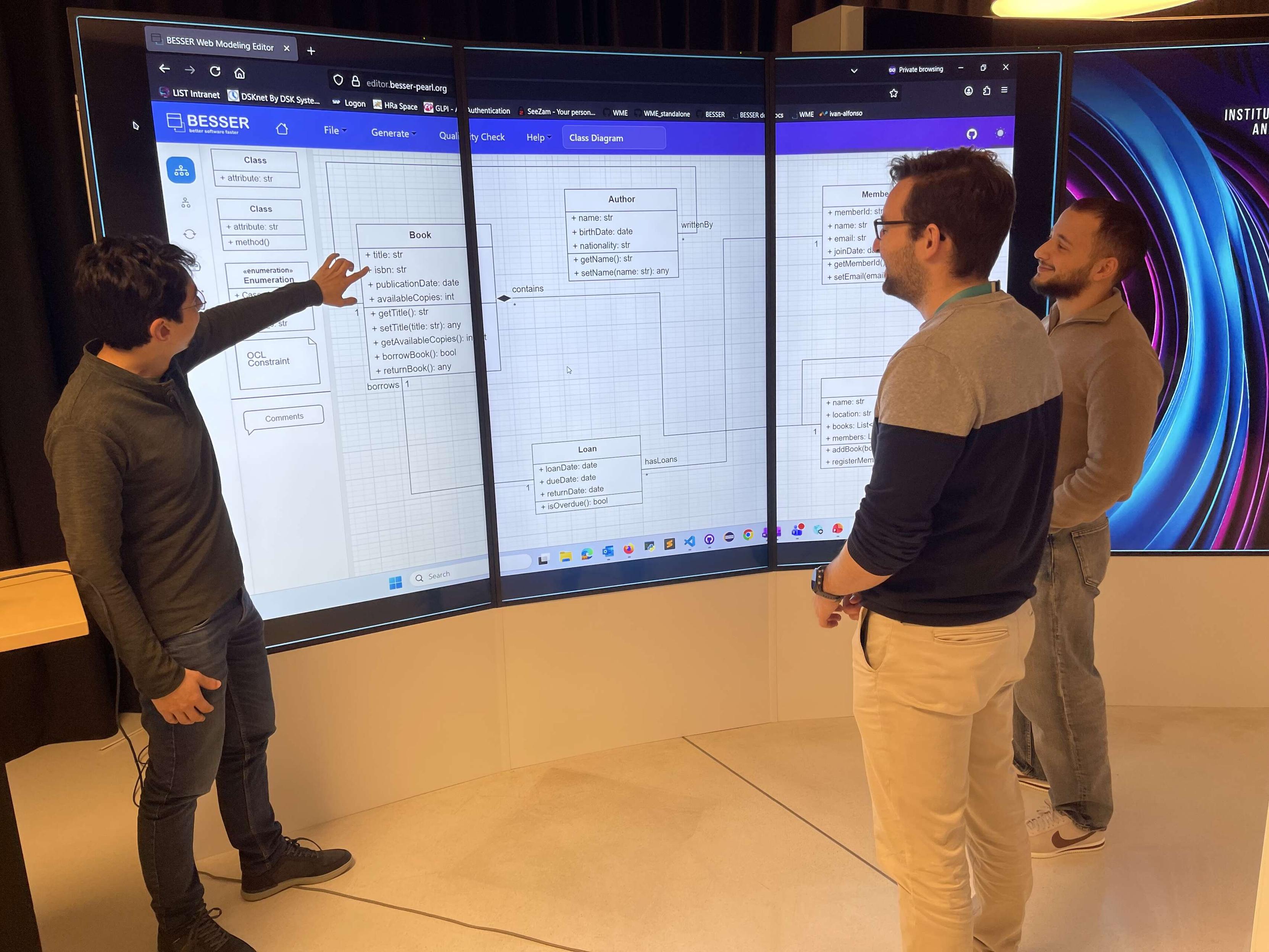
🏆LARGEST #UML #modeling and #lowcode #editor in the world 🏆
I'm sure you've never seen a larger UML model in your life. Grab BESSER to draw your own models (and generate full applications from them) for free (big screens not included 😉).
You'll need to wait a little bit to get more context on this picture. Don't want to spoil the surprise!
Thanks to the best #unpaid #supporting #actors Iván Alfonso Aaron David Conrardy Armen Sulejmani for helping
December 3 #FreeSoftwareAdvent
Papyrus: A Systems Engineering / MBSE tool for modeling in SysML, UML, etc. Basically a java-based FOSS replacement for Sparx Enterprise Architect. It's part of the Eclipse ecosystem.
I decided to give Papyrus a shot this year for a small work project and it has been pretty good. It's a large and sprawling tool that can be used a whole bunch of ways and I'm barely scratching the surface.
There aren't many tutorials available on youtube but my "just try things and figure it out" approach has been reasonably successful. Worth a look if you're in the market for such things: https://eclipse.dev/papyrus/ #SystemsEngineering #MBSE #SysML #UML
Лучшие практики в Sequence-диаграммах для системных аналитиков
В данной статье я хочу поделиться опытом и рассказать о том, как системным аналитикам улучшить Sequence-диаграммы (диаграммы последовательностей) с помощью лучших практик. Я покажу, как некоторые подходы из мира программирования (те самые best practices и идеи из Clean Code ) помогают рисовать sequence-диаграммы чище и понятнее.
https://habr.com/ru/articles/969192/
#clean_code #plantuml #sequence_diagram #системный_анализ #системный_аналитик #best_practices #документация_проекта #диаграммы_последовательности #uml #umlпроектирование
Прежде чем станет получаться DDD применять надо осилить ОО-анализ и ОО-проектирование, например, по книжке:
Ларман К. – Применение UML 2.0 и шаблонов проектирования (3-е издание)
Никакие другие публикации по DDD не учат подобному, а лишь знакомят с последующими тактическими приёмами. Т.к. изначально полагают, что построение модели предметной области читающий уже освоил и ему нужно классическое «а что дальше».
Есть изрядное количество литературы по DDD и вообще, и по отдельным аспектам с нюансами. И утверждение сделано на основании знакомства с такими как:
Вот ни одна из этого перечня книгу Лармана не заменит.
Поскольку применяться DDD может лишь после освоения работы с требованиями и use case'ами и user stories. Т.е. после выявления модели предметной области через разбор прецендентов и последующего проектирования (распределения обязанностей с ролями, поведением и взаимосвязями между обнаруженными сущностями. И вот только после этого уже может).
#DDD #books #UML #книги #lang_ru @Russia
Ларман К. – Применение UML 2.0 и шаблонов проектирования (3-е издание)
Никакие другие публикации по DDD не учат подобному, а лишь знакомят с последующими тактическими приёмами. Т.к. изначально полагают, что построение модели предметной области читающий уже освоил и ему нужно классическое «а что дальше».
Есть изрядное количество литературы по DDD и вообще, и по отдельным аспектам с нюансами. И утверждение сделано на основании знакомства с такими как:
- Эванс Э. – Предметно-ориентированное проектирование
- Аниче М. – Простое объектно-ориентированное проектирование
- Вернон В. – Предметно-ориентированное проектирование — самое основное
- Вернон В. – Реализация методов предметно-ориентированного проектирования
- Миллетт С. – Предметно-ориентированное проектирование
- Наир В. – Предметно-ориентированное проектирование в Enterprise Java
- Нильссон Дж. – Применение DDD и шаблонов проектирования
- Хононов В. – Изучаем DDD - предметно-ориентированное проектирование
Вот ни одна из этого перечня книгу Лармана не заменит.
Поскольку применяться DDD может лишь после освоения работы с требованиями и use case'ами и user stories. Т.е. после выявления модели предметной области через разбор прецендентов и последующего проектирования (распределения обязанностей с ролями, поведением и взаимосвязями между обнаруженными сущностями. И вот только после этого уже может).
#DDD #books #UML #книги #lang_ru @Russia

Tác giả khoe website đầu tay: Code2UML, công cụ chuyển đổi code thành sơ đồ lớp UML! 💻 Hiện hỗ trợ C#, mục tiêu là tương thích với nhiều ngôn ngữ hơn. Mong nhận được feedback về tính năng, lỗi và cải tiến!
#webdev #UML #Csharp #typescript #lậptrình #website
https://www.reddit.com/r/SideProject/comments/1os36jm/built_my_first_website_code2uml_uml_generator/

but tbh with this #UML #MERMAID diagram you have some limits.
I'm not sure if that is the best way to show such complex events.
I'm happy if someone has a better way of showing such things.
feel free to tell me how this could be done with #mermaid

Fediverse + interoperability
pls repost:
Interoperability between all the fediverse software is for me the best thing about thefediverse.
At the moment I'm trying to track it using #mermaid. With this I want to show some problems.
any one of you UI & #mermaids experts have a better way of showing it?
(code will be published on codeberg and help will be really appreciated but I will announce that separately)
#peertube #pixelfed #mastodon #fediverse #interoperability #ui #uml



It has always been my stance that the proper way to teach children the fundamentals of computing is to start with how computers work at the bare metal level, teaching, of course, with all due-care, delicacy, and depth the process demands. Indeed, this was how many, if not most, children learned computing, in the early 1980s 8-bit home PC era.
A close, long-time friend of mine taught himself basic 6800 assembly out of books, when he was eight or nine, in the mid 1970s. Sure, he did not master this 8-biter, until he got to high school. But by then, he was way ahead of his peers who were just being introduced BASIC by a non-geek high school teacher. In due course, he got a PhD in EE, and he now designs radar DSP and radar simulators for the Navy.
The idea that children should be taught general-purpose #programming using visual programming languages (VPLs) irks me to no end.
There are appropriate uses of VPLs, or their lower-dimensional projections, composable GUIs: Smalltalk Etoy teaching tool, audio engineer's console, combat mission planner, search and rescue grid plotter, mechanical design CAD system, circuit design teaching tool, and the like. But these VPLs are highly specialised DSLs, not GPL-pretenders like #Scratch or #UML (as used in MDA code-generation, not as visual documentation).
I am certainly not suggesting that kids today should start learning computing with assembly programming. But what I am saying, loudly, is that kids of all eras are way smarter than the archetypal, self-described intellectual believes them to be. Let us not "Scratch" their eyes out, before they even get to see the code.
Client Info
Server: https://mastodon.social
Version: 2025.07
Repository: https://github.com/cyevgeniy/lmst