
I made the annual #Vaonis retrospective 2025 post. You may call me Mr April 😉
Also, mine is the only Southern Hemisphere image.
#Vaonis
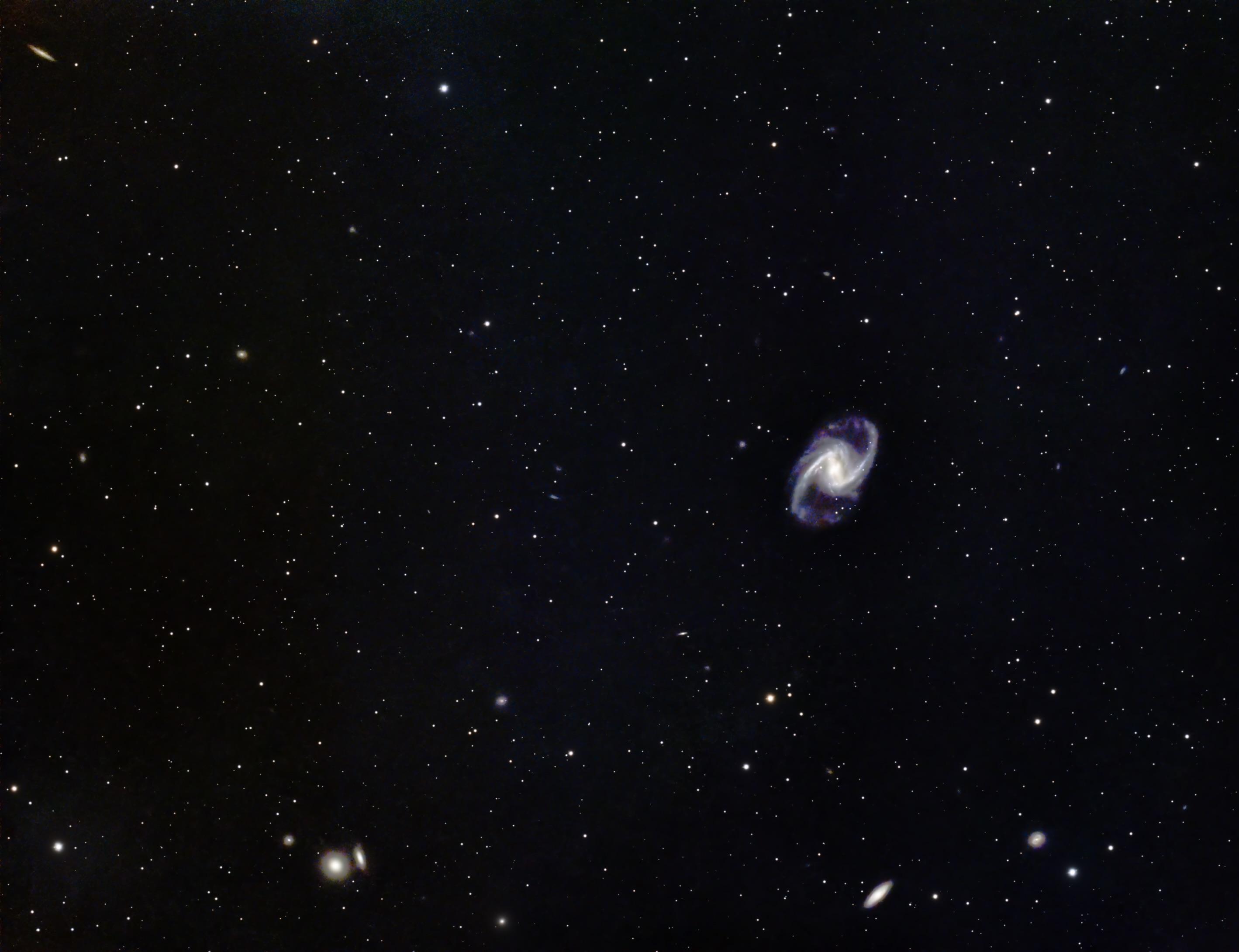
NGC 1365, also known as the Great Barred Spiral Galaxy or Fornax Propeller Galaxy, is a double-barred spiral galaxy located approximately 56 million light-years away in the constellation Fornax. #astronomy #galaxy #astrophotography #vespera #vaonis #fornax
Captured on Vespera II under Bortle 4 skies over 13 hours and edited in PixInsight

The New Vaonis Vespera II X_Edition Smart Telescope Looks Stellar https://petapixel.com/2025/09/29/the-new-vaonis-vespera-ii-x_edition-smart-telescope-looks-stellar/ #vesperaiixedition #vaonisvesperaii #astrophography #smarttelescope #Equipment #astronomy #telescope #vesperaii #nightsky #Vaonis #Space #astro #space #stars #News
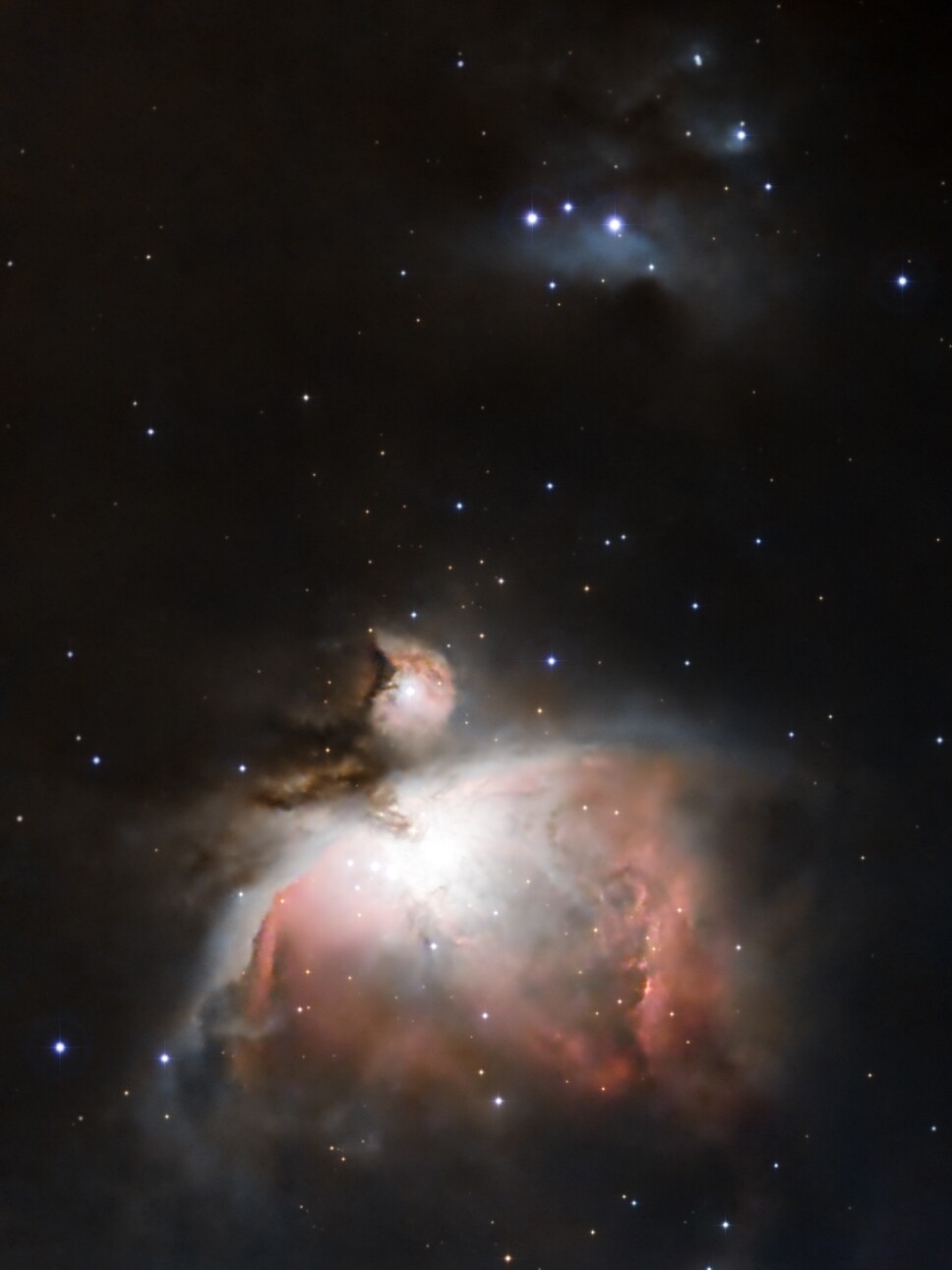
Captured over many nights with 25 hours of data, this is the largest mosaic image I could capture with my Vespera II. It contains the Flame Nebula, Horse Head Nebula, Running Man Nebula and the Orion Nebula.
Painstakingly edited in PixInsight using SetiAstro and Xterminator plugins. #astronomy #astrophotography #vespera #vaonis #nebula

I'm finally putting my Hestia from #Vaonis to good use.
Sunspots Oct 5, 2024 5:41pm CEST
Vaonis Hestia Review: (Sort of) Turning Phones into Telescopes https://petapixel.com/2024/10/03/vaonis-hestia-review-sort-of-turning-phones-into-telescopes/ #vaonishestiareview #telescopereview #vaonishestia #smartphone #Equipment #astronomy #telescope #Reviews #Mobile #review #Vaonis
Here are some of my "standard" observations of the summer. Photos were taken with #Vaonis #Vespera2 and the resulting image slightly enhanced with Lightroom.
M20 known as "the Trifid Nebulae" is a young (300 000 years old) red emiting nebulae surrounded by a cloud of gaz that shows in blueish tones. It's above the Sagittarius constellation starting at about 2600 light-years front us.
196 photos stacked in less than 33 min.
Here are some of my "standard" observations of the summer. Photos were taken with #Vaonis #Vespera2 and the resulting image slightly enhanced with Lightroom.
M13 Hercules Great Globular Cluster regroups in the eponymous constellation between 400 000 and 1 million stars, some almost as old as the universe itself, at the border of our galaxy at about 26 000 light-years.
122 photos stacked in less than 21 min.
Here are some of my "standard" observations of the summer. Photos were taken with #Vaonis #Vespera2 and the resulting image slightly enhanced with Lightroom.
M27 known as "the Dumbbell Nebulae" is a planetary nebulae created from the collapsing core of a Sun like star. It's located in Vulpecula's constellation ("the little fox") at about 1400 light-years. A glimpse of the solar system in 5 billion years ?
176 photos stacked in less than 30 min.
Here are some of my "standard" observations of the summer. Photos were taken with #Vaonis #Vespera2 and the resulting image slightly enhanced with Lightroom.
M31 Andromeda's Galaxy located in the eponymous constellation. It's our closest neighbor galaxy at only 2.5 million light-years. It's potentially on a collision course with the Milky Way which could end up with both galaxies merging in a few hundred million years.
505 photos stacked over 1h24.
Here are some of my "standard" observations of the summer. Photos were taken with #Vaonis #Vespera2 and the resulting image slightly enhanced with Lightroom.
M101 known as "the Pinwheel galaxy" is located in Ursa Major at about 23 million light-years. It's about 1.5 times larger than our Milky Way with a diameter of 180 000 ly (versus 120 000 ly for our galaxy).
202 photos stacked over less than 34 minutes.
Nouvelle soirée d'observation, au programme : M27 la nébuleuse de l'haltère, M57 la nébuleuse de l'anneau et M13 l'amas d'Hercule
#Vaonis #Vespera



Eclipse – My Best Few Shots
What I would do differently, in hindsight.
Firstly, I wouldn’t use the supplied tripod. Way too flimsy and wiggly. I mean, stupid as it is, to take a photo, you have to touch the iPhone with your finger. …
Capture the Cosmos in Ultra HD With the Vaonis Vespera II Smart Telescope https://petapixel.com/2024/01/09/capture-the-cosmos-in-ultra-hd-with-the-vaonis-vespera-ii-smart-telescope/ #astrophotography #vaonisvesperaii #smarttelescope #Equipment #astronomy #telescope #ces2024 #Vaonis #Space #News #CES
The Vaonis Hestia Smartphone Telescope Has a Clever New App https://petapixel.com/2023/12/15/the-vaonis-hestia-smartphone-telescope-has-a-clever-new-app/ #portabletelescope #gravitybyvaonis #smarttelescope #smartphoneapp #telescopeapp #vaonishestia #Mobile #Vaonis #Space #News

#Vaonis Hestia transforms your smartphone into a powerful smart telescope, capturing stunning images of stars and solar eclipses
https://gadgetbond.com/vaonis-hestia-smart-telescope-kickstarter-launch/

Was able to get a quick image of the Orion Nebula before it fell below the horizon. What a sight! 🤩
#astrophotography #astronomy #vaonis #vespera

Vaonis Launches the 1050mm, 61MP Hyperia Telescope Camera
Vaonis has announced the Hyperia telescope camera, a 165-pound personal observatory that leverages a 61-megapixel sensor and sets it behind a massive 1050mm lens that is mechanically driven to allow for stunning photos of astronomical objects.
Vaonis has been producing telescope and camera hybrids for some time and is perhaps best known for its Vespera and Stellina smart telescopes launched in 2018 and 2021 respectively. Both of those prior telescopes were smaller and therefore used smaller sensors, but with the Hyperia, Vaonis super-sized the whole package.
It weighs a hefty 165 pounds (75 kilograms), which is nearly seven times as heavy as the Stellina telescope, and offers more than twice the focal length throw with its 1050mm f/5 apochromatic triplet lens. The 61-megapixel sensor is the full-frame Sony IMX455 monochrome sensor. This backside-illuminated sensor boasts what Vaonis says is enhanced sensitivity with "91% quantum efficiency."
Hyperia is made of Zicral, an alloy that Vaonis says is used in the aerospace industry for its outstanding mechanical performance and exceptional resistance to extreme conditions.
Combining the most recent components on the market with the constantly improving technology that Vaonis has been developing since its creation in 2016, Hyperia offers exceptional observation quality, like a domestic Hubble, as well as a small footprint, enhanced protection against hazards exterior and unparalleled ease of use.
Vaonis designed the Hyperia to be modular and upgradeable over time, so even though the 61-megapixel sensor is excellent now and should be for many years, the company says that its "evolutionary system" means that users can replace the existing sensor with the latest technology on the market as it becomes available.
Hyperia is equipped with Direct Drive motorization, which the company says is the same as those used in the major professional observatories. This technology allows for unmatched pointing speeds and perfect sidereal tracking.
When closed, the Hyperia stands five feet, six inches tall. When open, it extends to a massive six feet, nine inches tall.
Below are a few example photos taken with the Hyperion system. They have been scaled down for veiwing online, but the largest file is 9,450 x 6,102 pixels in size.
Clearly designed to appeal to the most discerning astronomical photographers, the fully modular Hyperion is available in three colors, made to order and designed to a customer's specific requests.
Buyers will be able to closely follow the manufacture of the "mini-observatory" with the Vaonis team. Orders will only be available through the Vaonis website and will start at €45,000 (about $52,760). Each telescope system will involve an estimated waiting period of between 12 and 18 months.
#equipment #news #1050mm #61megapixel #huge #hyperia #observatory #telescope #telescopecamera #vaonis #vaonishyperia
The $4,000 Stellina Smart Telescope Makes Shooting the Stars a Snap
The Stellina is a new smart telescope from Vaonis that works alongside a phone or tablet with the app and helps users to find and share the sights of the universe instantly.
It is a telescope that has no eyepiece and is completely automated through the use of a smartphone or tablet. In fact, you can link several phones or tablets to it so they can all view it at the same time.
According to the company, all users have to do with the Stellina smart telescope is choose what they want to look at via the app and watch the image build on their phone or tablet’s screen, which is both exciting and rewarding especially for beginners and enthusiasts who lack the large and expensive gear normally involved in astrophotography like this.
This device, oddly resembling a turret from the video game Portal, features a 400mm focal length an 80mm aperture with a resolution of 6.4 million pixels (3096 x 2080), and would fit right in on a sci-fi movie set. Once set up, the block opens up from the center to reveal the refractor telescope hidden away in the middle of the casing.
At the simple push of a button, the fully computerized telescope will open up and calibrate in tandem with the Stellinaapp (available on the Apple App Store or Google Play) allowing up to ten users to zero in on over 100 pre-programmed deep sky targets as well as getting an easy look at the moon's surface without any of the guess work.
Anyone who has ever used a telescope in the past will know that while it is possible to see amazing things through them, there are a lot of micro-adjustments to be made, and typically, only one person using one eye can see through them at a time. The company says the Stellina turns astronomy into a truly social activity letting users easily share what is captured through the lens on their mobile devices in full HD.
Here are some sample photos shot using the Stellina:
The Stellina weighs about 25 pounds and can fit in a standard backpack (19 x 15 x 4.7 inches), making it pretty portable for those looking to bring it on overnight camping trips, or even travel internationally in carry-on luggage. The system can capture images in jpeg, tiff, and fits (16 bit raw), has an alt-azimuth tripod mount on the base, boasts up to 100x digital zoom, and packs a CLS light pollution filter to help ensure the images captured are as sharp and detailed as possible.
The telescope has a built-in battery life for up to 5 hours but can be extended to up to 10 hours of life by connecting a 20,000 mAh battery pack using a USB-C connection that can be stored in a small compartment that is IP53 certified for weather protection.
While the system may seem expensive compared to other "automated" telescopes on the market, it does make things much easier for amateur astrophotographers and stargazing enthusiasts to find some challenging and unique deep sky objects. Eliminating this guesswork may be worth the entry price for anyone thinking of going deeper into that side of the astrophotography world until they get up to speed on how to capture it all manually.
The Stellina telescope is now available for $3,999 from the Vaonis website.
#equipment #news #astrophotography #mobile #smart #smartphone #smarttelescope #stargazer #startracking #stellina #tablet #telescope #vaonis
Client Info
Server: https://mastodon.social
Version: 2025.07
Repository: https://github.com/cyevgeniy/lmst