
Canon Partners With Vaonis to Make $99,000 Observatory-Grade Telescope https://petapixel.com/2026/01/06/canon-partners-with-vaonis-to-make-99000-observatory-grade-telescope/ #smarttelescope #vaonishyperia #Equipment #astronomy #education #telescope #ces2026 #Vaonis #Space #Canon #space #News
#vaonis

Andromeda galaxy (M31) 2.54 million light years away. Possibly on a collision course with the Milky Way. With a width of 220 000 light years, it’s almost twice as big as our own galaxy.
694 photos stacked worth 1h56 of exposition. Shot with #Vaonis #Vespera II. This is the direct output from the telescope. First time that I get to shoot under a bortle 4 sky 😃


Kosmos w wersji Smart Home. Jak inteligentne teleskopy sprawiły, że nie musisz marznąć pod gwiazdami
Kiedyś amatorska astronomia oznaczała dwie rzeczy: walkę ze skomplikowanym montażem i odmrażanie sobie palców przy minus dziesięciu stopniach, by zobaczyć szarą plamkę.
Dziś? Stawiasz teleskop na tarasie, wracasz do ciepłego salonu i oglądasz kolorowe mgławice na iPadzie, popijając gorącą herbatę. Witajcie w erze „astrofotografii obliczeniowej”.
Tradycyjni astronomowie pewnie kręcą nosem. Dla nich patrzenie w okular i ręczne szukanie Gwiazdy Polarnej to rytuał. Ale dla reszty z nas, próg wejścia w ten świat był zawsze zbyt wysoki. I tu wchodzi technologia, która robi z teleskopem to, co iPhone zrobił z fotografią – automatyzuje magię.
Robot, który „widzi” więcej
Urządzenia takie jak Unistellar czy Vaonis Vespera/Stellina to nie są zwykłe lunety. To w zasadzie roboty wyposażone w czułe matryce i potężne komputery. Działa to tak: wynosisz sprzęt na zewnątrz, naciskasz przycisk, a on sam, dzięki GPS i analizie mapy nieba, wie, gdzie jest. Nie musisz wiedzieć, gdzie jest Wielka Mgławica w Orionie. Wpisujesz to w aplikacji, a teleskop sam na nią najeżdża.
Magia „Live Stacking”
To, co dzieje się później, to prawdziwy „game changer”. Ludzkie oko w nocy widzi słabo i w czerni-bieli. Matryca teleskopu zbiera światło przez minuty i godziny. Oprogramowanie nakłada na siebie kolejne klatki w czasie rzeczywistym (tzw. live stacking). Na ekranie tabletu szara mgła powoli zmienia się w szczegółową, kolorową strukturę galaktyki, a algorytmy odszumiające (coraz częściej wspierane przez AI) wyciągają detale, których nie zobaczyłbyś przez tradycyjny teleskop o średnicy lustra wielkości studni.
Niebo do dzielenia się
Najpiękniejsze w tej „smart-astronomi” jest jednak to, że przestaje być ona samotna. Obraz z teleskopu można rzucić na telewizor w salonie. W Święta, zamiast oglądać „Kevina”, cała rodzina może oglądać na żywo rodzącą się gwiazdę oddaloną o 1300 lat świetlnych.
To technologia, która paradoksalnie, patrząc w ekran, pozwala nam zobaczyć Wszechświat lepiej, niż gdybyśmy patrzyli bezpośrednio w niebo. A przy obecnych mrozach – funkcja sterowania z kanapy jest nie do przecenienia.
#astrofotografia #astronomia #CitizenScience #gadżety #hobby #inteligentnyTeleskop #iPad #smartHome #Unistellar #Vaonis


I made the annual #Vaonis retrospective 2025 post. You may call me Mr April 😉
Also, mine is the only Southern Hemisphere image.
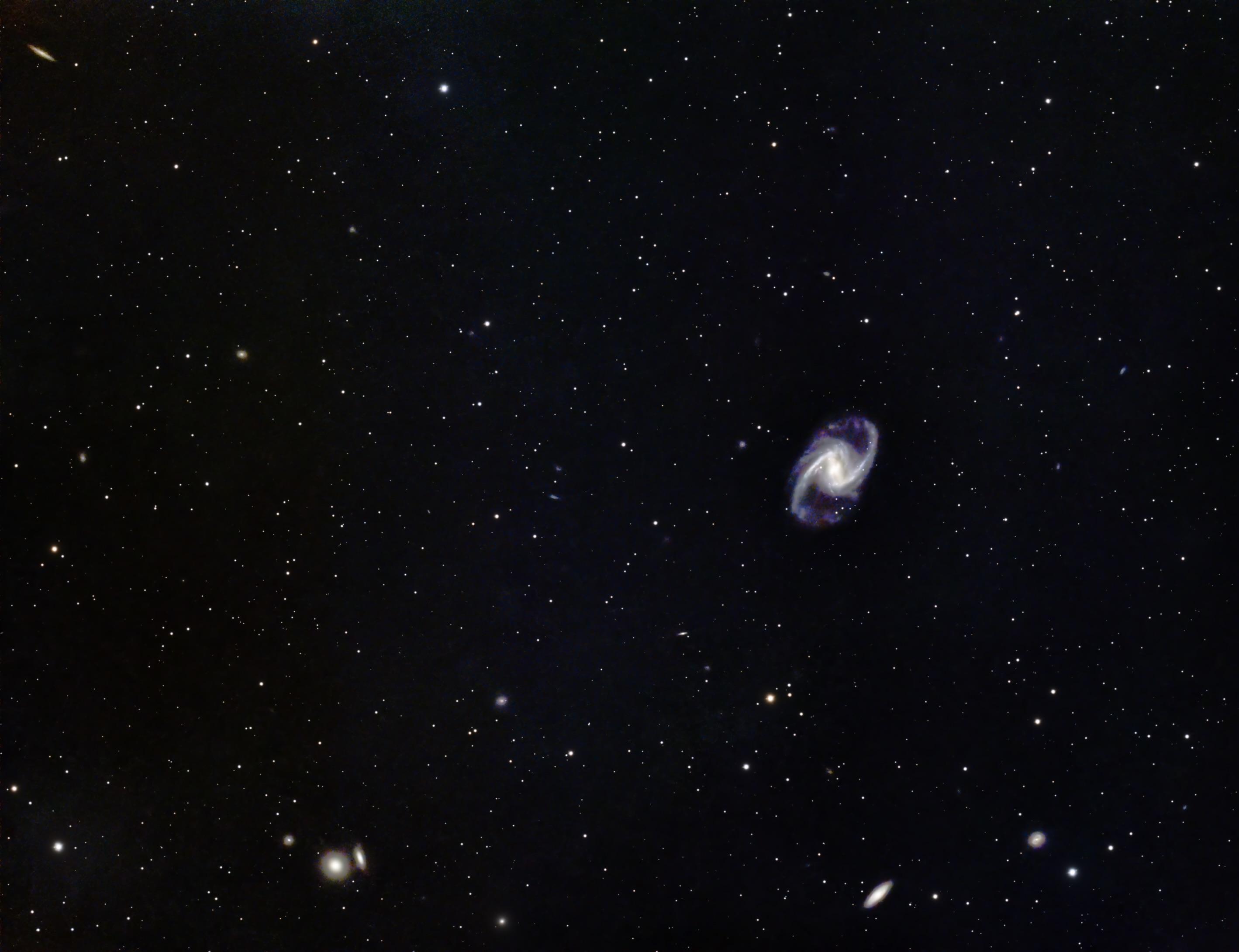
NGC 1365, also known as the Great Barred Spiral Galaxy or Fornax Propeller Galaxy, is a double-barred spiral galaxy located approximately 56 million light-years away in the constellation Fornax. #astronomy #galaxy #astrophotography #vespera #vaonis #fornax
Captured on Vespera II under Bortle 4 skies over 13 hours and edited in PixInsight
The New Vaonis Vespera II X_Edition Smart Telescope Looks Stellar https://petapixel.com/2025/09/29/the-new-vaonis-vespera-ii-x_edition-smart-telescope-looks-stellar/ #vesperaiixedition #vaonisvesperaii #astrophography #smarttelescope #Equipment #astronomy #telescope #vesperaii #nightsky #Vaonis #Space #astro #space #stars #News
Captured over many nights with 25 hours of data, this is the largest mosaic image I could capture with my Vespera II. It contains the Flame Nebula, Horse Head Nebula, Running Man Nebula and the Orion Nebula.
Painstakingly edited in PixInsight using SetiAstro and Xterminator plugins. #astronomy #astrophotography #vespera #vaonis #nebula

I'm finally putting my Hestia from #Vaonis to good use.
Sunspots Oct 5, 2024 5:41pm CEST

Vaonis Hestia Review: (Sort of) Turning Phones into Telescopes https://petapixel.com/2024/10/03/vaonis-hestia-review-sort-of-turning-phones-into-telescopes/ #vaonishestiareview #telescopereview #vaonishestia #smartphone #Equipment #astronomy #telescope #Reviews #Mobile #review #Vaonis
Here are some of my "standard" observations of the summer. Photos were taken with #Vaonis #Vespera2 and the resulting image slightly enhanced with Lightroom.
M20 known as "the Trifid Nebulae" is a young (300 000 years old) red emiting nebulae surrounded by a cloud of gaz that shows in blueish tones. It's above the Sagittarius constellation starting at about 2600 light-years front us.
196 photos stacked in less than 33 min.
Here are some of my "standard" observations of the summer. Photos were taken with #Vaonis #Vespera2 and the resulting image slightly enhanced with Lightroom.
M13 Hercules Great Globular Cluster regroups in the eponymous constellation between 400 000 and 1 million stars, some almost as old as the universe itself, at the border of our galaxy at about 26 000 light-years.
122 photos stacked in less than 21 min.
Here are some of my "standard" observations of the summer. Photos were taken with #Vaonis #Vespera2 and the resulting image slightly enhanced with Lightroom.
M27 known as "the Dumbbell Nebulae" is a planetary nebulae created from the collapsing core of a Sun like star. It's located in Vulpecula's constellation ("the little fox") at about 1400 light-years. A glimpse of the solar system in 5 billion years ?
176 photos stacked in less than 30 min.
Here are some of my "standard" observations of the summer. Photos were taken with #Vaonis #Vespera2 and the resulting image slightly enhanced with Lightroom.
M31 Andromeda's Galaxy located in the eponymous constellation. It's our closest neighbor galaxy at only 2.5 million light-years. It's potentially on a collision course with the Milky Way which could end up with both galaxies merging in a few hundred million years.
505 photos stacked over 1h24.
Here are some of my "standard" observations of the summer. Photos were taken with #Vaonis #Vespera2 and the resulting image slightly enhanced with Lightroom.
M101 known as "the Pinwheel galaxy" is located in Ursa Major at about 23 million light-years. It's about 1.5 times larger than our Milky Way with a diameter of 180 000 ly (versus 120 000 ly for our galaxy).
202 photos stacked over less than 34 minutes.
Nouvelle soirée d'observation, au programme : M27 la nébuleuse de l'haltère, M57 la nébuleuse de l'anneau et M13 l'amas d'Hercule
#Vaonis #Vespera



Eclipse – My Best Few Shots
What I would do differently, in hindsight.
Firstly, I wouldn’t use the supplied tripod. Way too flimsy and wiggly. I mean, stupid as it is, to take a photo, you have to touch the iPhone with your finger. …
Capture the Cosmos in Ultra HD With the Vaonis Vespera II Smart Telescope https://petapixel.com/2024/01/09/capture-the-cosmos-in-ultra-hd-with-the-vaonis-vespera-ii-smart-telescope/ #astrophotography #vaonisvesperaii #smarttelescope #Equipment #astronomy #telescope #ces2024 #Vaonis #Space #News #CES
The Vaonis Hestia Smartphone Telescope Has a Clever New App https://petapixel.com/2023/12/15/the-vaonis-hestia-smartphone-telescope-has-a-clever-new-app/ #portabletelescope #gravitybyvaonis #smarttelescope #smartphoneapp #telescopeapp #vaonishestia #Mobile #Vaonis #Space #News

#Vaonis Hestia transforms your smartphone into a powerful smart telescope, capturing stunning images of stars and solar eclipses
https://gadgetbond.com/vaonis-hestia-smart-telescope-kickstarter-launch/
Client Info
Server: https://mastodon.social
Version: 2025.07
Repository: https://github.com/cyevgeniy/lmst