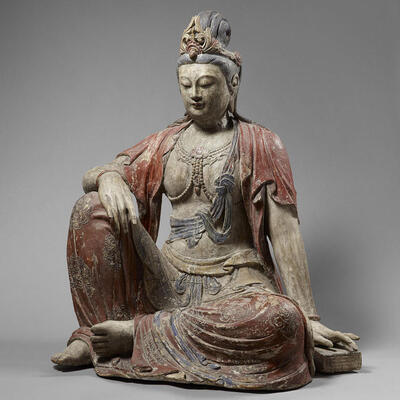
#Vishnu

Angkor Wat

This is a Theravada Buddhist temple complex & the largest religious complex in the world. It means “Temple City” or “City of Temples” in the Khmer language. It is located on a site measuring 162.6 hectares (401.8 acres; 1.6 km squared) within the ancient capital of Angkor. It was built between 1113 & 1150 during the reign of the Khmer King Suryavarman II. It originally was dedicated to the Hindu god, Vishnu.

From the late 13th century forward, the complex was/is a Buddhist temple & has remained an active center of Buddhist worship for centuries, specifically Theravada Buddhism. It’s a national symbol of Cambodia & shows up on the Cambodian flag. It’s also a UNESCO World Heritage Site, in 1992.

The temple’s architecture is a literal map of the Hindu universe. It’s commonly interpreted as a symbolic representation of Mount Meru. The 5 central towers represent the peaks of Mount Meru, the home of gods. While the massive moat represents the cosmic ocean surrounding the world.

Most Khmer temples face east. Angkor Wat faces the opposite way: west. In Hindu iconography, west is the direction associated with Vishnu. But it’s also the direction of the setting sun & death.

By the end of the 12th century, King Jayavarman VII was at the helm. Angkor Wat was then dedicated to Buddhism. Because the queen, Indradevi, was a devout Mahayana Buddhist. She encouraged the king to convert.

In the 20th century, a considerable effort was launched to clear the plant overgrowth & restore the Temple following centuries of disrepair. Conservation d’Angkor (Angkor Conservancy) was established by the Ecole Francaise d’Extreme-Orient (EFEO) in 1908. This organization was disbanded in 1975.

The Conservation d’Angkor was responsible for the research, conservation, & restoration carried out at Angkor until the early 1970s. Major restoration works were undertaken in the 1960s.

Cambodia gained independence from France on November 9, 1853 & has controlled the Angkor Wat site ever since.

Make a one-time donation

Your contribution is appreciated.

Donate

Make a monthly donation

Your contribution is appreciated.

Donate monthly

Make a yearly donation

Your contribution is appreciated.

Donate yearly #1113 #1150 #12thCentury #1908 #1960s #1975 #1992 #20thCentury #9November1953 #Angkor #AngkorWat #Buddhism #Buddhist #Cambodia #CityOfTemples #ConservationDAngkor #Early1970s #EcoleFrancaiseDExtremeOrient #France #Hindu #KhmerLanguage #KingJayavarmanVIII #KingSuryavarmanII #Late13thCentury #MahayanaBuddhism #MountMeru #QueenIndradevi #Temple #TempleCity #TheravadaBuddhism #UNESCOWorldHeritageSite #Vishnu
aparatorulaparatorul
2026-02-10

Minunea prin care Sfântul Gavriil Georgianul a demonstrat unitatea Sfântei Treimi "În același fel, Sfânta Treime este împărțită în trei Persoane: Tatăl, Fiul și Duhul Sfânt" 👉 c.aparatorul.md/by8bz 👈
c.aparatorul.md/by8bz

Balinese Hinduism

Officially known as Agama Hindu Dharma. Balinese Hinduism is a deeply localized blend of Shaivite Hinduism, Buddhism, & indigenous Austronesian animism.

This is practiced by the majority of the population of Bali. This is particularly associated with the Balinese people residing on the island. It represents a distinct form of Hindu worship incorporating local animism, ancestor worship (Pirtu Paksha), & reverence for Buddhist saints (Bodhisattava).

Hindu influences reached the Indonesian Archipelago as early as the 1st century CE. Java legends refer to Saka-era, traced to 78 CE. Stories from the Mahabharata have been traced in Indonesian islands to the 1st century. This version mirrors those found in Tamil Nadu.

Ancient Chinese records of Fa Hien on his return voyage from Ceylon to China in 414 CE mentioned 2 schools of Hinduism in Java. while Chinese documents from the 8th century refer to the Hindu kingdom of King Sanjaya as Holing, calling it “exceedingly wealthy,” & say that it coexisted peacefully with the Buddhist people & Sailendra ruler in the Kedu Plain of the Java island.

Upon independence from Dutch colonial rule, Article 29 of the 1945 Constitution of Indonesia guaranteed freedom of religion to all its citizens. In 1952, the Indonesian Ministry of Religion came under the control of Islamists who severely constrained the acceptable definition of a “religion.” To be acceptable as an official Indonesian religion, the ministry defined “religion” as 1 that’s monotheistic, has codified religious law, possesses a prophet & a Holy Book, among other requirements.

Balinese Hindus were declared as “people without religion,” & available to be converted. Balinese Hinduism disagreed, debated, adapted, & declared their form of Hinduism to be monotheistic, & presented it in a form to be eligible for the status of “agama” under the 1952 amended articles.

The central pillar of Balinese life is the philosophy of Tri Hita Karana. This dictates that prosperity & harmony can only be achieved through 3 specific relationship:

  • Parhyangan:
    • Harmony between humans & the Divine
  • Pawongan:
    • Harmony between humans & fellow humans
  • Palemahan:
    • Harmony between humans & nature

This governs the island’s physical layout. Every village, home, & rice filled is organized according to a sacred axis between the mountains (the realm of the gods) & the sea (the realm of spirits).

Balinese Hinduism is an amalgamation of Hinduism with elements from Buddhism & the indigenous customs that imbued in the Indonesian archipelago before Hinduism’s arrival.

It combines many of the core beliefs of Hinduism with the arts & rituals of the Balinese people. In modern times, Hinduism in Bali is officially referred to by the Indonesian Ministry of Religion as: Agama Hindu Dharma. But the religion was called by many names: Tirta, Trimurti, Hindu, Agama Tirta, Siwa, Buda, & Siwa-Buda.

A major distinction in Balinese Hinduism in the spotlight on Acintya (a.k.a. Sang Hyang Widhi Wasa). While Hinduism based in India has a vast pantheon, the Balinese system was codified in the 20th century to emphasize a monotheistic foundation to align with Indonesia’s state philosophy (Pancasila).

A belief that all of the gods are manifestations of this supreme being. This belief is the same as the belief of Smartism. This also holds that the different forms of gods & goddesses (Vishnu, Siva, Shakti (Devi)) are different aspects of the same Supreme Being. Shiva is also worshipped in other forms such a as “Batara Guru” & “Maharaja Dewa” (Mahadeva).

Acintya represents the “Unthinkable” or the “Void.” All other deities (including the Trimurti) are viewed as manifestations of this single, supreme entity. In Balinese temples, you’ll see an empty stone called the Padmasana, which is dedicated specifically to Acintya.

Balinese Hinduism includes the Indian Trinity called Trimurti. In Balinese Hindu texts, the alternate tripartite concept of Shiva of Indian Shaivism is also found. This is usually referred to in Balinese as “Siwa-Sadasiwa-Paramasiwa,” where Shiva is the creator, the maintainer, & the destroyer of cyclic existence.

Along with the traditional Hindu Trinity, Balinese Hindus worship a range of gods & goddesses (Hyang, Dewata, & Batara-Batari). As well as others that are unique & not found in Indian Hinduism. Sang Hyang Widhi (literally meaning “Divine Order”), a.k.a. Acintya or Sang Hyang Tunggal (“Divine Oneness”), is the concept parallels the metaphysical concept of Brahman among Indian Hindus.

To understand Balinese Hinduism, 1 must look at the figure who shaped its modern form: the 16th century Javanese priest Dang Hyang Nirartha. As the Majapahit Empire in Java collapsed under the rise of Islamic sultanates, Nirartha fled to Bali.

He didn’t just bring Javanese Hinduism. He refined it. He established the Padmasana architecture & the priesthood system that existed today. He’s credited with founding many of Bali’s iconic “Sea Temples,” (Including Uluwatu & Tanah Lot) strategically placed to create a spiritual “chain” of protection around the island.

There are a total of 13 ceremonies concerned with life from conception until, but not including death, each of which has 4 elements: placation of evil spirits, purification with holy water, wafting of the essence, & prayer. These ceremonies mark major events in a person’s life, including birth, puberty, grain feeding, & marriage.

A newborn baby is believed to represent the soul of an ancestor & is regarded as a god for the 1st 42 days of life. The mom, however, is regarded as impure & isn’t allowed to participate in any religious activities during this period. A baby can’t touch the “impure” ground until its 105 days old, which is half-way to the celebration of its 1st birthday, according to the 210-day Balinese Pawukon calendar.

Once it reaches its 1st birthday, the family will celebrate the Otonan birthday ceremony. Once the kid reaches puberty, the 6 upper canine teeth are filed until they’re even.

Religious life in Bali is defined by Rua Bineda, the idea of “Two Opposites.” It’s the belief that the world exists in a state of equilibrium between opposing forces: good/evil, joy/sorrow, clean/unclean.

The Balinese seek balance. That’s why you see:

  • The Barong & Rangda:
    • A ritual dance-drama showing the battle between the Barone (a lion-like creature representing health/good) & Rangda (the demon queen). The battle never truly ends, an eternal stalemate.
  • Canang Sari:
    • The ubiquitous daily offerings of flowers, rice, & incense placed on the ground & on shrines. These are meant to appease both the gods & lower spirits to maintain the cosmic balance.

The Saka is a solar calendar from India. This calendar determines Nyepi, the “Day of Silence.” On Nyepi, the entire island (including the airport) shuts down. No lights, no work, no travel, & no sound is permitted. This is to trick passing demons into thinking the island is uninhabited.

The most important ceremonies happen after death & result in the soul being freed to be eventually reincarnated. The physical body isn’t the focus. It’s seen as a temporary container of the soul & fit only for expedient disposal. In fact, the body must be cremated/burned before the soul can leave the body completely.

The cremation ceremony can be VERY expensive because an elaborate ceremony is a way of showing respect for a soul destined to become a god with considerable powers over those left behind. So sometimes the deceased’s body is buried, temporarily, until the family can get together enough $$$ for the cremation ceremony. However, the bodies of priests, or high-class, families are preserved above ground (Think like in New Orleans.).

Balinese Hindus, under no circumstances, may eat the flesh of people, cats, monkeys, dogs, crocodiles, mouse(s), snakes, frogs, certain poisonous fish, leeches, stinging insects, crows, eagles, owls, or any other bird of prey.

Chicken, fruits, veggies, & seafood are widely eaten. Hindus, especially those of varna (caste) of Brahmin & Kshatriya, are forbidden to eat/consume, or even touch, beef. Rarely pork is touched. Also, they mustn’t eat on the street, drink alcohol, or taste offerings of such items.

One-Time Monthly Yearly

Make a one-time donation

Make a monthly donation

Make a yearly donation

Choose an amount

$1.00 $5.00 $10.00 $1.00 $1.00 $10.00 $5.00 $10.00 $15.00

Or enter a custom amount

$

Your contribution is appreciated.

Your contribution is appreciated.

Your contribution is appreciated.

DonateDonate monthlyDonate yearly

#1945 #1952 #1stCentury #20thCentury #414CE #78CE #8thCentury #Acintya #Agama #AgamaHinduDharma #AgamaTirta #AncestorWorship #Animism #AustronesianAnimism #Bali #BalineseHinduism #Barong #BataraGuru #BataraBatari #Bodhisattava #Brahman #Brahmin #Buda #Buddhism #CanangSari #Caste #Ceylon #China #ConstitutionOfIndonesia #Cremation #DangHyangNirartha #Dewata #DietaryRestrictions #Dutch #FaHien #Hindu #HinduTrinity #Hinduism #Holing #India #IndianHinduism #IndianShaivism #IndonesianArchipelago #IndonesianIslands #IndonesianMinsitryOfReligion #IslamicSultanates #Java #JavaneseHinduism #KeduPlain #KingSanjaya #Kshatriya #Mahabharata #Mahadeva #MaharajaDewa #MajapahitEmpire #monotheistic #NewOrleans #Nirartha #Nyepi #OtonanBirthdayCeremony #Padmasana #Palemahan #Pancasila #Parhyangan #Pawongan #PawukonCalendar #PitruPaksha #Rangda #Reincarnation #RuaBineda #Sailendra #Saka #SakaEra #SangHyangTunggal #SangHyangWidhi #SeaTemples #ShaiviteHinduism #ShaktiDevi #Siva #SiwaBuda #SiwaSadasiwaParamasiwa #Smartism #SolarCalendar #TamilNadu #TanahLot #Tirta #TriHitaKarana #Trimurti #Uluwatu #Varna #Vishnu
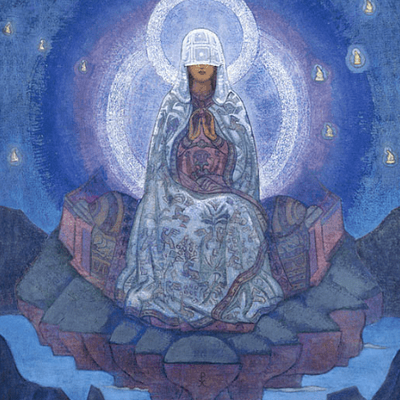
Ashraya 🪔🪷 (SRJ)ashraya_srj@mas.to
2026-02-07

🎙️ Rama accepts exile without protest, joined by Sita and Lakshman in a journey of sacrifice. But what awaits them in the shadowy forests beyond Ayodhya’s gates? 🌳🌲

📡 podcasts.apple.com/us/podcast/

#Ayodhya #BigFM #BigFMIndia #BigRamayan #epics #Hindi #HinduEpics #Hinduism #India #Lakshman #Lakshmi #podcasts #radio #Ram #Rama #Ramayan #Ramayana #Sita #SourabhRaajJain #Vishnu

Ashraya 🪔🪷 (SRJ)ashraya_srj@mas.to
2026-01-24

🎙️ Just as Rama’s coronation nears, fate twists through the whispers of Manthara and the forgotten boons of Kaikeyi. Will duty bind a king’s word tighter than love for his son? 👑💕

📡 podcasts.apple.com/us/podcast/

#BigFM #BigFMIndia #BigRamayan #Dashrath #Dasharatha #epics #Hindi #HinduEpics #Hinduism #India #Kaikeyi #Lakshmi #Manthara #podcasts #radio #Ram #Rama #Ramayan #Ramayana #Sita #SourabhRaajJain #Vishnu

Angelic Ranks Across Religions

This is about the different ranks amongst different religions. We hope you enjoy!

Christianity:

The most famous ranking in Western culture comes from Pseudo-Dionysius the Areopagite in his 5th century work, The Celestial Hierarchy. He divided angels into 9 “choirs” organized into 3 “triads.”

The First Triad (Comtemplators of God):

Seraphim: The “Burning Ones” They have 6 wings & surround the throne of God, perpetually chanting the Trisagion (“Holy, Holy, Holy”).

Cherubim: Known as the “Plenitude of Knowledge.” In Scripture, they’re guardians of sacred space (like Eden or the Ark of the Covenant).

Thrones: Also called Ophanim (Wheels). They represent divine justice & the “chariot” of God.

The Second Triad (Cosmic Governors):

Dominions (Dominations): They regulate the duties of lower angels & represent the authority of God over the universe.

Virtues: Known as the “Brillant” or “Shining Ones.” They’re associated with miracles & bestowing grace & valor.

Powers: These are “warrior” angels who protect the world from demonic interference & maintain the laws of nature.

The Third Triad (Messengers to Humanity):

Principalities: The “Chief Messengers.” Though common tradition lists many, only Michael, Gabriel, & Raphael are officially recognized in most Catholic & Orthodox canons.

Angels: The lowest rank, most concerned with the affairs of individual humans (including Guardian Angels).

Judaism: The Maimonidean Hierarchy

In Judaism, the ranking of angels is primarily used to explain the different levels of “closeness” to the Divine Essence. The most widely cited list is from Maimonides (the Rambam) in his Mishneh Torah.

Chayot Ha-Kodesh: “Holy Living Creatures.” The highest possible rank.

Ophanim: “Wheels.” Associated with Ezekiel’s vision of the Chariot.

Erelim: “The Valiant Ones.” Linked to the concept of peace.

Chashmalim: “The Glowing/Amber Ones.”

Seraphim: “The Burning Ones.”

Malachim: “Messengers.” The general term for angels.

Elohim: “Godly Beings.” Referring to their divine reflection.

Bene Elohim: “Sons of God.”

Cherubim: Guardians & attendants

Ishim: “Person-like Beings.” They’re the closest to the human intellect.

Islam:

Islam doesn’t use a numbered “1 to 9” hierarchy in the same way Christianity does. Instead, angels (Mala’ika) are categorized by their by their functions.

The Four Archangels:

Jibril (Gabriel): The Angel of Revelation

Israfil (Raphael): The Angel of the Trumpet. This signals the Day of Judgment.

Mikail (Michael): The Angel of Mercy & Providence (weather & sustenance).

Azrael (Malak al-Mawt): The Angel of Death.

The Bearers of the Throne (Hamalat al-Arsh): 8 massive angels who carry the Throne of Allah.

The Cherubim (Al-Karubiyyun): Angels who are perpetually lost in the praises of God, unaware of anything else.

The Recording Angels (Kiraman Katibin): Every human has 2 (Raquib & Atib) who record good & bad deeds.

Munkar & Nakir: The interrogators of the soul in the grave.

Maalik & Ridwan: The guardians of Hell & Paradise, respectively.

Zoroastrianism: The Amesha Spentas:

In Zoroastrianism, the “angels” are emanations of the supreme God, Ahura Mazda. They’re known as the Amesha Spentas (Holy Immortals).

Vohu Manah: Good Mind/Purpose

Asha Vahishta: Best Righteousness/Truth

Khshathra Vairya: Desirable Dominion/Power

Spenta Armaiti: Holy Devotion/Piety

Haurvatat: Wholeness/Health

Ameretat: Immortality

Below these entities are the Yazatas. These are entities/beings “worthy of worship,” like Mithra.

Buddhism: The 26 Heavenly Realms

In Buddhist cosmology, “angels” are called Devas. Rather than a hierarchy, they’re ranked by the level of the Heaven they inhabit.

The 6 Sensual Heavens: Devas here still experience desire (like the Four Great Kings who guard the world).

The 16 Fine-Maternal Heavens (Arupa-loka): Beings of pure consciousness with no physical form at all, existing in states like “Infinite Space” or “Neither Perception nor Non-Perception.”

Hinduism: Celestial Classes

Hinduism features a vast array of celestial beings. While not always called “angels,” they function as intermediaries between the Trimurti (which we’ve covered in another post. Check it out!): Brahma, Vishnu, & Shiva, & humanity.

Devas: The benevolent “shining ones” who govern natural forces (Indra, Agni, Vagu).

Gandharvas: Celestial musicians & messsengers.

Apsaras: Celestial dancers & spirits of the clouds & waters.

Yakshas: Nature spirits & guardians of the earth’s treasures.

Vidyadharas: “Knowledge holders” or magical beings of the air.

Make a one-time donation

Your contribution is appreciated.

Donate

Make a monthly donation

Your contribution is appreciated.

Donate monthly

Make a yearly donation

Your contribution is appreciated.

Donate yearly

#16FineMaternialHeavens #26HeavenlyRealms #3Triads #4GreatKings #5thCentury #6SensualHeavens #9Choirs #AhuraMazda #AlKarubiyyun #Ameretat #AmeshaSpentas #Angels #Apsaras #ArchangelGabriel #ArchangelMichael #Archangels #ArkOfTheCovenant #ArupaLoka #AshaVahishta #Atib #Azrael #BeneElohim #Brahma #Buddhism #Canons #Catholic #Chashmalim #ChayoteHaKodesh #Cherubim #Christianity #DayOfJudgment #Devas #Dominations #Dominions #Eden #Elohim #Erelim #Ezekiel #Gandharvas #GuardianAngel #HamalatAlArsh #Haurvatat #Hell #Hinduism #HolyImmortals #Indra #Islam #Israfil #Jibril #Judaism #KhshathraVairya #KiramanKatibin #MaimonideanHierarchy #MalaIka #Malachim #MalakAlMawt #MalikRidwan #Mikail #MishnahTorah #Mithra #MunkarNakir #Ophanim #Orthodox #Paradise #Powers #Pricipalities #PseudoDionysiusTheAreopagite #Rambam #Raphael #Raquib #Seraphim #SpentaArmaiti #TheCelestialHierarchy #ThroneOfAllah #ThroneOfGod #Thrones #Trimurti #Trisagion #Vagu #Vidyadharas #Virtures #Vishnu #VohuManah #Yakshas #Yazatas #Zoroastrianism

Buddhist Artbuddhistart
2026-01-11

God astride his mount, , 1601.

God #Vishnu astride his mount, #Garuda, 1601.
#BuddhistArt #Buddhism
aparatorulaparatorul
2025-12-20

Minunea prin care Sfântul Gavriil Georgianul a demonstrat unitatea Sfântei Treimi "În același fel, Sfânta Treime este împărțită în trei Persoane: Tatăl, Fiul și Duhul Sfânt" 👉 c.aparatorul.md/r9ddr 👈
c.aparatorul.md/r9ddr

aparatorulaparatorul
2025-11-20

Minunea prin care Sfântul Gavriil Georgianul a demonstrat unitatea Sfântei Treimi "În același fel, Sfânta Treime este împărțită în trei Persoane: Tatăl, Fiul și Duhul Sfânt" 👉 c.aparatorul.md/msoe4 👈
c.aparatorul.md/msoe4

Ashraya 🪔🪷 (SRJ)ashraya_srj@mas.to
2025-11-16

🎙️ At Sita’s swayamvar, princes fail before Shiva’s unbreakable bow — until Rama steps forward. What power lies in the hands of the one who can bend the will of gods? 🪷💕

📡 podcasts.apple.com/us/podcast/

#BigFM #BigFMIndia #BigRamayan #epics #Hindi #HinduEpics #Hinduism #India #Lakshman #Lakshmana #Lakshmi #Parashuram #Parashurama #podcasts #radio #Ram #Rama #Ramayan #Ramayana #Ravan #Ravana #Sita #SourabhRaajJain #Vishnu

2025-11-06
The last Hindu temple built in the greatest Buddhist kings’ capital

That time a hidden temple revealed itself in green season livery. A misty morning at East Top Temple, Angkor Thom.
Prasat Top Khang Kaeut (Eastern Prasat Top), ប្រាសាទតុប ខាងកើត or Mangalartha temple is a small Hindu temple with several images of the God Vishnu. The temple is mostly unvisited and very peaceful.

Green temple
The vegetation has taken over most of the surroundings. That makes for some stunning photo opportunities. During or just after green season this gets extraordinary, with deep, green moss and fresh green all around this temple.

Top Khang Kaeut was built during the reign of Jayavarman VII, the great Buddhist god king, and was initiated in 1295CE. It was built in honour of Mangalartha, a son of a Hindu Brahmin priest/guru kept in high regard by the god king. That gives a glimpse into the religious tolerance and structures in the Khmer Empire.

Small temple, large importance
This is the last significant Hindu Temple built in the Khmer Empire before the major change to Buddhism as State religion. It was built during the era of the most powerful of the Buddhist kings of Angkor. It is the last temple built in the high Angkor time frame with a definitive known initiating date.

The “Hidden Temple”-name is because anyone who wants to explore this small temple and site needs to actively go looking for it. It is not on any of the ordinary visiting trips in Angkor Park. If not biking, the visitor needs to walk some hundred meters into the thick forest. Tuk Tuks or cars cannot drive there.

It is a nice 12 km ride from central Siem Reap.

https://drzinasia.wordpress.com/2024/05/15/the-secret-temple-in-angkor-thom/

#angkor #greenseason #AOTBT #offthebeatentrack #KhangKaeut #Mangalartha #vishnu #green #hinduism #jayavarmanvii #angkorthom #1295CE #hindu #temple #Park #ricefield #visitsiemreap #visitcambodia #ancient #architecture #Cambodia #KhmerEmpire #southeastasia #worldculturalheritage
Photo shows a small one tower temple in high Angkor Architectural style. It is in a small opening in the forest. Due to the monsoon season, it is covered of fresh green moss, and the trees has a thick foliage. The open stone structure of the temple is high contrast and clean washed night humidity. The scene is framed by trees. In front remains of a stone wall covered in thick green moss.
Ashraya 🪔🪷 (SRJ)ashraya_srj@mas.to
2025-11-05

🎙️ King Dasharatha's prayers are answered with four sons — Rama, Lakshmana, Bharata and Shatrughna — destined for greatness. As Rama and Lakshmana grow into fierce warriors, could their arrows pierce the heart of evil itself? 🏹✨

📡 podcasts.apple.com/us/podcast/

#BigFM #BigFMIndia #BigRamayan #epics #Hindi #HinduEpics #Hinduism #India #Lakshmi #podcasts #radio #Rama #Ramayana #Ravana #Sita #SourabhRaajJain #Vishnu

Trimurti

This is the triple deity of supreme divinity in Hinduism, in which the cosmic functions of creation, preservation, & destruction are personified as a triad of deities. Usually, they’re Brahma the creator, Vishnu the preserver, & Shiva the destroyer. The word “trimurti” means “3 forms.”

The Om symbol of Hinduism is considered to have an allusion or the Trimurti, where the A, the U, & the M phonemes of the word are considered to indicate creation, preservation, & destruction. Adding up to represent Brahman.

There’s a difference between Brahman (with an ‘n’), which refers to Ultimate Reality & Brahma (without the ‘n’), which refers to the creator god.

According to the Shaiva Agama, Shavities believe that Shiva performs 5 actions: creation, preservation, dissolution, grace, & illusion. The first 3 actions are associated with Shiva as Sadyojata (akin to Brahma), Vamadeva (akin to Vishnu), & Aghora (akin to Rudra).

Braham, Vishnu, & Rudra aren’t deities different from Shiva. But rather forms of Shiva. As Brahma/Sadyojata, Shiva creates. As Vishnu/Vamadeva, Shiva preserves. As Rudra/Aghora, Shiva dissolves. Shiva is the supreme god & performs all actions, destruction is only but 1. Ergo, the Trimurti is a form of Shiva himself for Shaivas.

Shaivites believe that Shiva is the supreme. Shiva assumes various critical roles & assumes appropriate names & forms, also stands transcending all these.

Despite the fact that the Vishnu Parana describes that Vishnu manifest as Brahma in order to create & as Rudra (Shiva) in order to destroy.

Vaishnavism generally doesn’t acknowledge the Trimurti concept. Instead, they believe in the avatars of Vishnu like Narashimha, Rama, Krishna, etc.

Also they believe that Shiva & Brahma are both forms of Vishnu. The Dvaita school, for example, holds Vishnu alone to be the supreme god. Shiva is the subordinate & interprets the Puranas differently.

Vijayindra Tirtha, a Dvaita scholar, interprets the 18 Puranas differently. He interprets the Vaishnavite puranas as satvic & Shaivite Puranas as tumasic. Only the satvic Puranas are considered authoritative.

Satvic is 1 of the 3 gunas (modes of existence). This is the quality of goodness, purity, positivity, truth, serenity, balance, peacefulness, & virtuousness. Tamasic is another of the 3 gunas. This is the quality of inertia, inactivity, dullness, or lethargy.

Sri Vaishnavism tradition, in the south, holds that all major deities that are hailed in the puranas are in fact forms of Vishnu & that the Scriptures are dedicated to him alone.

The female-centric denomination of Shaktidharma puts the dominant roles of the 3 forms (Trimurti) of the Supreme Divinity not to the male gods. But to the female goddesses: Mahasarasvati (Creatrix), Mahalaxmi (Preservatrix), & Mahakali (Destructrix).

This girl version of the Trimurti is called Tridevi (“3 goddesses”). The boy gods (Brahma, Vishnu, & Shiva) are then relegated as auxiliary agents of the supreme feminine Tridevi.

Smartism is a denomination of Hinduism that places emphasis on a group of 5 deities rather than just a single 1. The “worship of the 5 forms” (pancayatana puja) system, which was made popular by the 9th century philosopher, Sankaracarya among Orthodox Brahmins of the Smarta tradition, invokes the 5 deities: Shiva, Vishnu, Brahma, Shakti, & Surya. Sankaracarya later added Kartikeya to these 5, making 6 in total.

This reformed system was promoted by Sankaracarya primarily to unite the principal deities of the 6 major sects on an equal status. The monistic philosophy preached by Sankaracarya made it possible to choose 1 of these as a preferred principal deity & as these same time worship the other 4 deities as different forms of the same all-pervading Brahman.

One-Time Monthly Yearly

Make a one-time donation

Make a monthly donation

Make a yearly donation

Choose an amount

$1.00 $5.00 $10.00 $1.00 $5.00 $10.00 $5.00 $10.00 $15.00

Or enter a custom amount

$

Your contribution is appreciated.

Your contribution is appreciated.

Your contribution is appreciated.

DonateDonate monthlyDonate yearly

#3Forms #3Goddesses #9thCentury #Aghora #Brahma #Brahman #Brahmins #Creatrix #Destructrix #DvaitaSchool #Gunas #HinduMythology #Hinduism #HinduismPantheon #Kartikeya #Krishna #Mahakali #Mahalaxmi #Mahasarasvati #Monistic #Narasimha #OmSymbol #PancayatanaPuja #Preservatrix #Puranas #Rama #Rudra #Sadyojata #Sankaracarya #Satvic #Shaivas #Shaivites #Shakti #Shaktidharma #Shavities #Shiva #ShivaAgama #SmartaTradition #Smartism #Surya #Triad #Tridevi #Trimurti #Tumasic #Vaishnavism #VaishnavitePuranas #Vamadeva #VijayindraTirtha #Vishnu #VishnuPurana

Client Info

Server: https://mastodon.social
Version: 2025.07
Repository: https://github.com/cyevgeniy/lmst