#WelshGovernment

Plans for giant Y Bryn wind farm near Port Talbot refused after landscape concerns

The Y Bryn Wind Farm would have seen up to 18 turbines, each rising to 250 metres from base to tip, constructed on the Welsh Government Woodland Estate northeast of Port Talbot. At that scale, the turbines would have been more than twice the height of Swansea’s Meridian Quay Tower, and visible across much of South Wales.

A project promising power for thousands of homes

Developers Coriolis Energy and ESB argued the scheme could generate enough electricity to power more than 85,000 homes each year, offsetting over 137,000 tonnes of carbon emissions. They said the project would contribute towards Wales’ 2030 renewable energy target, while also offering a £1 million annual community benefit fund and opportunities for local ownership.

Concerns that the turbines would dominate the skyline

Despite those potential benefits, the inspector concluded the turbines would cause “unacceptable adverse impacts” on the landscape and visual amenity. Both Neath Port Talbot and Bridgend councils warned the sheer size of the structures would dominate the skyline and affect historic sites.

The inspector acknowledged the climate and energy security advantages but ruled that the harm to the landscape outweighed them. The decision noted that while the impacts would eventually end when the turbines were decommissioned, they would be felt for decades.

Relief for campaigners after years of opposition

Local residents in Bryn and nearby communities, who had opposed the plans since 2021, welcomed the refusal.

Resident Rhodri Williams said:

“We’re over the moon with this decision and so happy to see that common sense has prevailed. After fighting it for years, we’re pleased to have saved our local landscape so that future generations can enjoy what we have now.”

The Campaign for the Protection of Rural Wales (CPRW) also praised the outcome, describing the project as “industrial‑scale in an entirely inappropriate landscape” and warning it would have threatened valued forests, wildlife and community wellbeing.

Developers say Wales has missed an opportunity

Project manager Trevor Hunter said Coriolis and ESB were “bitterly disappointed” by the refusal, calling it a setback for Wales’ renewable energy ambitions. He highlighted the inspector’s concerns about long‑distance impacts on the Gower National Landscape and cumulative effects on heritage assets.

Hunter added that the developers would review the decision with legal and technical teams before deciding on next steps, but stressed the project had promised significant community benefits and investment.

What happens next for Y Bryn

For now, campaigners say they are relieved the project has been halted, while developers consider whether to appeal or resubmit revised plans. The debate over how Wales balances renewable energy targets with protecting sensitive landscapes is likely to continue.

#bryn #coriolisEnergy #energy #esb #landscapeImpact #maesteg #planning #planningPermission #portTalbot #renewableEnergy #welshGovernment #windFarm #yBrynWindFarm


Conceptual image of a wind farm with tall turbines across forested hills, representing the proposed Y Bryn site near Port Talbot

Fifth daily train to run on Heart of Wales line from December

From 14 December, passengers travelling between Swansea and Shrewsbury via the Heart of Wales line will have access to a fifth daily train.

Transport for Wales is adding a new midday service in both directions, increasing the number of trains from four to five per day. The Heart of Wales line runs through Llanelli, Llandeilo, Llandrindod Wells and Knighton, connecting rural towns with Swansea and Shrewsbury.

The change is part of the UK-wide December rail timetable update. Journey planners have already been updated, and passengers can now check times for travel after 14 December.

Passengers at a busy station on the Wales and Borders network. The new timetable will add flexibility for travellers across the region.
(Image: TfW)

Funding and political agreement

The extra service is being funded through the Welsh Government’s 2025–26 Budget deal with Welsh Liberal Democrat Leader Jane Dodds.

In a statement, Cabinet Secretary for Transport and North Wales Ken Skates said:

“The Heart of Wales line provides a spectacular and scenic journey for tourists but is also a vital link for rural communities in Mid Wales, so this will be welcome news for residents and visitors alike.”

“Railway connections are vital in driving prosperity. These changes will make a real difference to customers, who will benefit from more services across Wales and the Borders.”

“This has been made possible by our £800m investment in brand-new trains for the Wales and Borders network.”

Transport for Wales said the new service would give passengers more flexibility for day trips and essential journeys, and help support the local tourism economy.

What it means for passengers

The new train will run midday every day, giving people more choice when planning journeys.

Passengers are being advised to check journey planners for travel after 14 December to see the updated timetable.

#additionalTrains #heartOfWales #janeDoddsMs #kenSkatesMs #llandeilo #llanelli #swansea #trains #transportForWales #welshGovernment

A single train crosses a stone viaduct over a green valley on the Heart of Wales line.Passengers wait and board a train at a busy station on the Wales and Borders network.

Councils warn £6.4bn Welsh Government funding plan still leaves schools and care services under pressure

The provisional figures, published today, promise an average 2.7% increase in funding for local authorities, with a guaranteed minimum uplift of 2.3%. Newport receives the largest rise at 4.3%, reflecting growth in its school‑age population. But the Welsh Local Government Association (WLGA) says the overall £169m cash increase falls far short of the £560m shortfall councils expect to face next year.

Education and social care at the sharp end

Education already accounts for nearly 40% of council spending in Wales, and the strain is visible locally. Carmarthenshire, which will receive £384.8m next year — up £8.9m, or 2.3% — has embarked on a programme of school closures and mergers in recent years, citing rising costs and falling pupil numbers.

Swansea, meanwhile, will receive £494.1m, an increase of £16.1m, also at the minimum 2.3% uplift. Neither council has yet commented publicly on the draft settlement, but WLGA modelling suggests that even a 3% increase would still leave councils hundreds of millions short, raising the prospect of further cuts or tax hikes across Wales.

Leaders warn of structural pressures

WLGA Labour Group Leader Andrew Morgan OBE said the settlement “offers a degree of stability” but warned that “social care, homelessness, education and workforce costs continue to rise faster than resources can keep up.”

Independent Group Leader Mark Pritchard described the gap between demand and resources as “untenable,” warning redundancies would be inevitable without additional support. Plaid Cymru’s Gary Pritchard said many councils were already operating at the limits of what is safe or sustainable, and called for reform of the funding formula. Liberal Democrat Group Leader Jake Berriman added that rural and semi‑rural areas face higher delivery costs that a flat percentage uplift “simply doesn’t reflect.”

Political pressure mounts

Plaid Cymru’s Heledd Fychan MS warned the settlement could lead to “council tax increases of 22% or 14,000 job losses,” while Welsh Conservative shadow local government secretary Joel James said the figures showed the need for “fundamental change” to the funding system.

The Welsh Government said the draft budget marked only the start of negotiations. Cabinet Secretary for Housing and Local Government Jayne Bryant said the settlement was designed to give councils “the stability they need to set budgets which protect and deliver core frontline services.” Finance Secretary Mark Drakeford added that ministers would work closely with councils and opposition parties to ensure the final budget “safeguards jobs and protects frontline services.”

The final settlement is expected in January following consultation and Senedd negotiations.

#budget #cllrAndrewMorgan #councilBudget #councilTax #garyPritchard #heleddFychanMs #jakeBerriman #markDrakeford #markPritchard #welshGovernment #welshLocalGovermentAssociation #wlga

Teacher in a Primary School classroom

Welsh Government says South West Wales bathing waters rated ‘excellent’ – but sewage and pollution issues cast shadow

The 2025 results, published this week, show that 98% of bathing waters across Wales met strict environmental standards following monitoring by Natural Resources Wales (NRW). Officials say the findings demonstrate the resilience of Wales’s beaches and the success of ongoing efforts to protect water quality.

Deputy First Minister Huw Irranca‑Davies said the results reflected “our commitment to protecting water quality” and praised communities and partners for working together towards a cleaner Wales.

Mary Lewis, Head of Natural Resource Management at NRW, added:

“Our wonderful beaches and bathing waters are an important part of Wales’s identity and culture… The results reflect the dedication of our teams, partners, environmental groups and communities who protect and care for our environment.”

Local results at a glance

AreaBeaches rated ‘Excellent’Other classificationsSwanseaLangland, Caswell, Bracelet Bay, RhossiliSwansea Bay – GoodNeath Port TalbotAberafan Beach–CarmarthenshirePembrey, Pendine Sands–PembrokeshireTenby South, Castle Beach, Freshwater West, Barafundle, Newgale, Whitesands (plus many more)–Bridgend CountyTrecco Bay, Sandy Bay, Rest Bay (Porthcawl)–

Sewage spills and enforcement fines temper the good news

While the classifications are positive, they come against a backdrop of ongoing public concern about water quality.

Residents in Gower have repeatedly voiced frustration over sewage spills affecting popular beaches, saying they feel “pooped off” by the frequency of incidents. Campaigners argue that these spills undermine public confidence in official bathing water ratings.

💧 What do bathing water ratings mean?

Excellent
The highest standard. Water quality is consistently very good, giving strong reassurance for swimmers and visitors.

Good
Meets high standards but with occasional dips in quality. Still safe for bathing, though less consistent than ‘excellent’ sites.

Sufficient
Passes the minimum EU and UK requirements. Bathing is permitted, but water quality may be variable and less reliable.

Poor
Fails to meet the required standards. Official advice is against bathing due to risks to health.

Who sets the ratings?
Natural Resources Wales monitors designated bathing waters during the season (May–September) and classifies them under Welsh Government regulations.

Why it matters:
Ratings guide public health advice, tourism confidence and environmental management. They reflect long‑term monitoring, not just daily conditions.

Rivers and coastlines under pressure

Beyond the beaches, rivers in South West Wales have also been highlighted as pollution hotspots. The River Tawe was recently ranked among the most sewage‑affected in the UK, raising questions about how inland water quality connects to coastal bathing standards.

In Pembrokeshire, warnings have been issued about sewage pollution at popular beaches, prompting local MPs to challenge regulators and water companies during Welsh Affairs Committee hearings.

Calls for reform and a sewage action plan

The wider debate has led to growing political pressure. Campaigners and politicians, including Welsh MPs, have called for a national sewage action plan to tackle pollution at its source. At the same time, Welsh Government has outlined plans to overhaul water regulation, promising reforms that put “people, the environment and future generations at its heart.”

Deputy First Minister Huw Irranca‑Davies acknowledged that climate change and heavy rainfall — including 170% of average levels in September — can significantly affect water quality. He said maintaining standards will require “sustained investment, innovation, and partnership working across all sectors.”

A mixed picture for South West Wales

The headline figures show South West Wales beaches performing strongly, with almost all rated ‘excellent’. But the wider context of sewage spills, enforcement fines and river pollution means the story is more complex.

For swimmers and visitors, the classifications provide reassurance about water quality at designated sites. Yet campaigners insist that behind the ratings lies a system under strain, with regulators, water companies and government facing mounting pressure to deliver lasting improvements.

Related stories from Swansea Bay News

Welsh Water under pressure as sewage pollution incidents hit ten‑year high
Regulators report a surge in sewage discharges, sparking calls for tougher enforcement across Wales.

Residents say they’re ‘pooped off’ with Gower sewage spills
Locals express frustration over repeated sewage incidents affecting popular beaches on the Gower peninsula.

Welsh Water fined £1.35m for over 800 breaches to sewage discharge permits
The company faces a record penalty after failing to control pollution at treatment sites across Wales.

River Tawe one of the most sewage‑filled in the UK
New analysis ranks the Tawe among Britain’s most polluted rivers, raising concerns for downstream bathing waters.

#aberafanBeach #aberavonBeach #barafundle #bathingWaterQuality #beaches #braceletBay #caswellBay #cefnSidanBeach #dwrCymru #freshwaterWest #huwIrrancaDaviesMs #langlandBay #naturalResourcesWales #newgale #pembrey #pendineSands #pollution #porthcawl #restBay #rhossiliBay #sandyBay #sewage #swanseaBay #tenby #treccoBay #waterQuality #welshGovernment #welshWater #whitesandsBeach

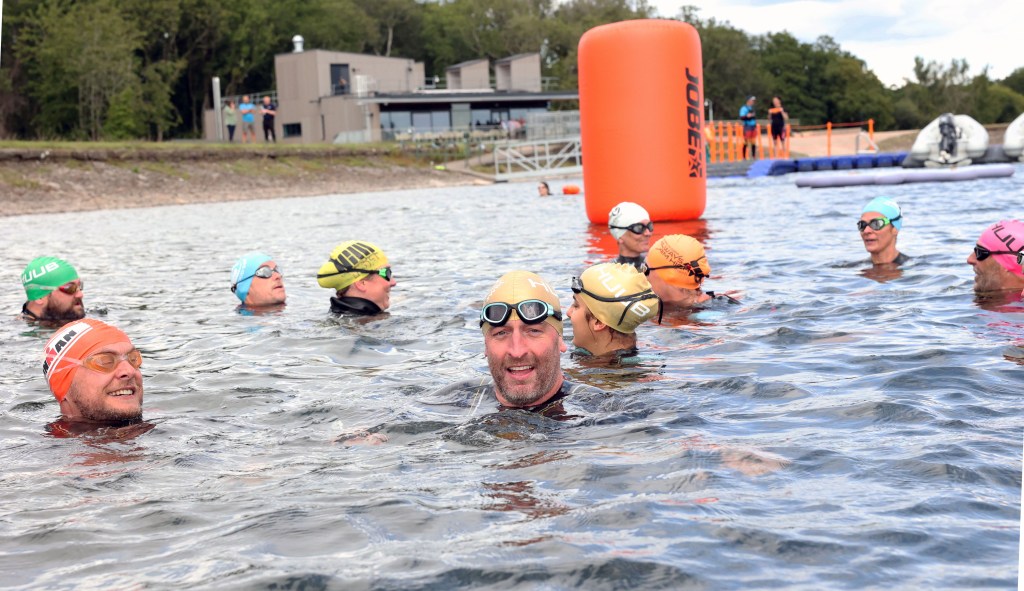
A group of swimmers in Lisvane and Llanishen Reservoir, Cardiff, with clear water and surrounding greenery, reflecting its new ‘excellent’ bathing water status.

New community hub opens in Llwynhendy as old library gets fresh lease of life

The renovated facility, now named Canolfan Llwynhendy, is open to the public following completion of works funded by the Welsh Government, Carmarthenshire County Council, Llanelli Rural Council, and Our Llwynhendy. Furnishing costs were supported by the UK Shared Prosperity Fund.

The centre includes meeting rooms, a café, an automated library service, housing and employment advice, training opportunities, and a programme of events delivered through Pro-Vision Llwynhendy and Our Llwynhendy. Ownership of the building has officially transferred from Carmarthenshire County Council to Llanelli Rural Council.

The venue will operate Monday to Friday, with facilities available for hire seven days a week. An official opening ceremony is being planned, subject to ministerial availability, and a series of community events will be held to mark the launch.

“A fantastic venue for the community”

Council Leader and Chairman, Cllr Sue Lewis, said:

“Canolfan Llwynhendy is a fantastic venue for the community. It’s a fresh, light and welcoming space that has completely transformed the old library building. We’re proud to offer a place where people can access vital services locally and enjoy a wide range of activities.”

She added that the centre’s integration with outdoor improvements at Parc Y Gwili — including new play areas and landscaping — creates a seamless environment that encourages wellbeing and community use.

Cllr Deryk Cundy, Chairman of the Recreation and Welfare Committee, said:

“This is a real asset for Llwynhendy. The automated library service means longer opening hours and greater accessibility — no more part-time library services. But it’s not just about books; Canolfan Llwynhendy brings together a range of vital services under one roof.”

“The addition of a café creates a welcoming social space for residents to meet, relax, and engage with others, helping to build a stronger sense of community. Combined with the new play provisions and landscaping at Parc Y Gwili, the centre offers a seamless indoor-outdoor experience that makes the area a true destination for all ages.”

#canolfanLlwynhendy #carmarthenshireCountyCouncil #cllrDerykCundy #cllrSueLewis #llanelli #llanelliRuralCouncil #llwynhendy #llwynhendyLibrary #ourLlwynhendy #proVisionLlwynhendy #sharedProsperityFund #welshGovernment

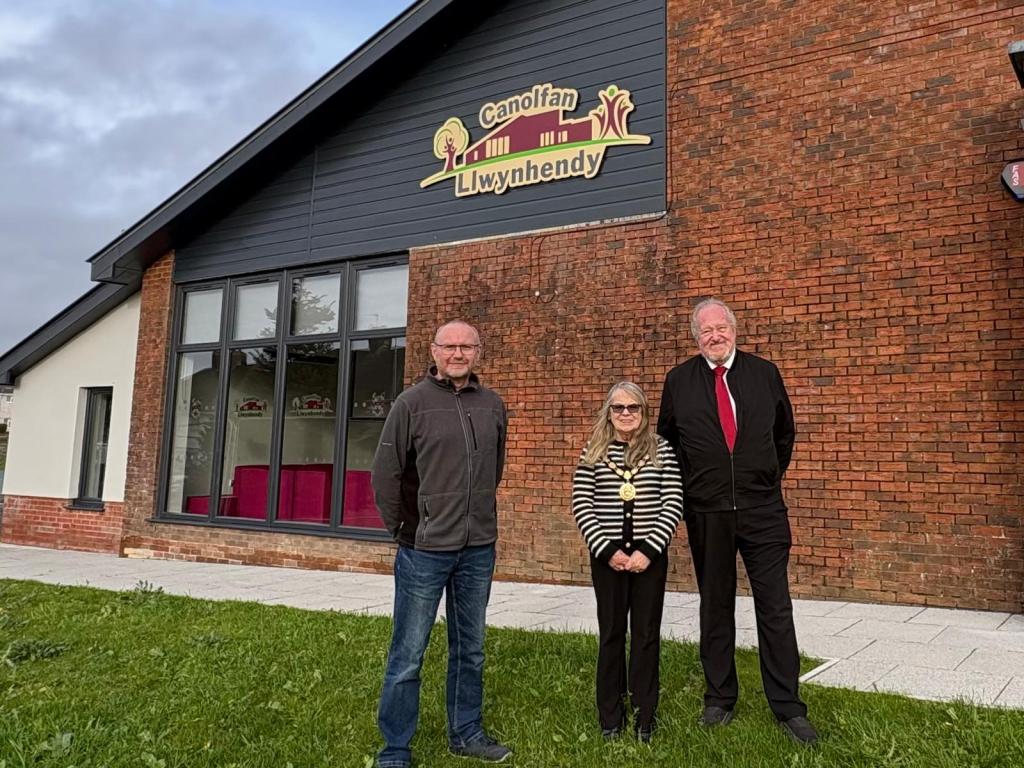
Three councillors standing outside Canolfan Llwynhendy, a newly renovated community hub in Llwynhendy.

Report warns Welsh Government failing to deliver on human rights promises

The findings come from the Cross‑Party Group on Human Rights, chaired by South Wales West MS Sioned Williams, which has published its inquiry into the state of human rights in Wales. The report concludes that despite a decade of recommendations from the UN, Senedd committees and civil society organisations, key international treaties have not been incorporated into Welsh law.

The group is calling for a new Human Rights Wales Act to be introduced “at the earliest opportunity.”

Sioned Williams said the report revealed “a Wales where human rights are too often promises rather than protections — aspirations rather than guarantees.” She added that poverty, barriers to healthcare, housing and education, and ongoing discrimination against disabled people, women, racialised communities and children showed why stronger legal protections were needed.

The report was produced by Professor Simon Hoffman of Swansea University and Glenn Page of Amnesty Cymru. Glenn Page, Director of Amnesty International Cymru, said: “It is not enough to say we support human rights; the Welsh Government must protect human rights in law to ensure that now, and in the future, people’s everyday rights are protected and upheld.”

The report will be launched at the Senedd today (Wednesday 12 November), with a debate scheduled later in the evening on the importance of strengthening human rights for the people of Wales.

#amnesty #amnestyInternationalCymru #crossE28091partyGroupOnHumanRights #glennPage #humanRights #humanRightsLaw #humanRightsWalesAct #professorSimonHoffman #senedd #sionedWilliamsMs #swanseaUniversity #welshGovernment

Senedd Chamber

ONS figures show Wales unemployment at highest level since 2015

A sharp rise that puts thousands out of work

The ONS labour market release for September 2025 shows unemployment in Wales climbing from 4.9% in August to 5.7%, meaning around 88,000 people are now out of work.

Employment has also slipped. Just over 70% of working‑age adults in Wales are in jobs, compared with a UK average of 75%. The Welsh Government’s own overview confirms Wales has the lowest employment rate of any UK nation.

One in four adults missing from the workforce

The figures also show Wales continues to have the highest economic inactivity rate in Great Britain. Nearly one in four adults of working age — around 482,000 people — are not working and not looking for work.

The ONS bulletin cautioned that while quarterly changes may not be statistically significant, the overall trend shows Wales lagging behind the UK average in both employment and inactivity.

An economy built on public services and shops

The ONS breakdown of jobs by sector shows where the pressure is falling.

Health and social care remains Wales’ biggest employer with more than 430,000 jobs, followed by education with 220,000. Retail still accounts for around 355,000 jobs, but manufacturing has slipped to 195,000 and construction to 158,000.

Hospitality employs about 247,000, a sector that grew after the pandemic but is now vulnerable as households cut back on spending. Transport and storage jobs remain steady at around 124,000, while professional and technical services employ about 221,000 — far fewer than in regions with stronger private‑sector growth.

The figures underline Wales’ reliance on public services and consumer‑facing industries, leaving the economy exposed when budgets tighten or demand falls.

Political blame game meets expert warnings

The figures have sparked a political row.

Samuel Kurtz MS, Welsh Conservative Shadow Cabinet Secretary for Economy and Energy, said: “Unemployment is at crisis levels in Wales after 26 years of anti‑business Labour, propped up by Plaid and compounded by Rachel Reeves’ economic mismanagement. Unemployment levels didn’t even hit these heights during the pandemic.”

He called for tax cuts and business rate reductions to help high streets and encourage growth.

Welsh Liberal Democrat Westminster Spokesperson David Chadwick MP said: “Surely the writing is on the wall now for the Chancellor’s jobs tax.

“Everyone except Rachel Reeves seems to have woken up to the fact that forcing small businesses to pay more in tax for giving people jobs would damage job opportunities. Now the proof is staring her in the face.

“The UK Labour Government must reverse their damaging National Insurance hike at the Budget, and commit to saving the small businesses that employ thousands in Wales and are at risk of collapse, if they’re to have any hope of reversing today’s concerning trend.”

Experts have also warned of wider risks. Yael Selfin, Chief Economist at KPMG UK, told Sky News the rise in unemployment “shows the labour market is loosening faster than expected” and said households would feel the squeeze as job security weakens.

Paul Nowak, General Secretary of the TUC, told the Guardian the government must act to protect jobs and invest in skills, warning that “otherwise communities will be left behind.”

And Ruth Gregory, Deputy Chief UK Economist at Capital Economics, told the Financial Times the figures “reinforce the case for the Bank of England to cut interest rates sooner rather than later.”

What it means for families and communities

For ordinary people, the statistics translate into fewer job opportunities, more competition for vacancies, and greater uncertainty heading into winter. Families may find it harder to budget, while communities could see more pressure on public services and local shops.

Economists warn that unless Wales can attract more private‑sector investment and reduce inactivity, the gap with the rest of the UK will continue to grow.

#Business #Economy #employment #OfficeForNationalStatistics #ONS #SamuelKurtzMS #unemployment #WelshConservatives #WelshGovernment

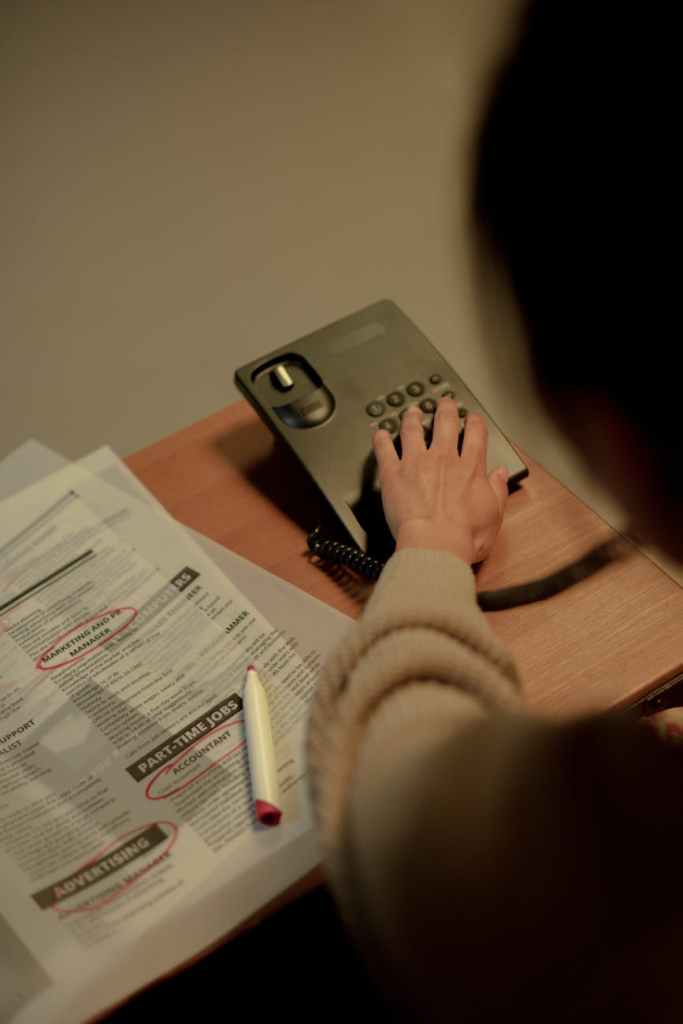
rear view on woman choosing number on phone

Health board says pioneering hospital solar farm saves £4m as Welsh Government unveils greener NHS plan

Swansea Bay University Health Board said Morriston Hospital’s solar farm at Brynwhilach Farm has generated enough electricity to power a third of the site since it switched on in October 2021. The health board said the project has saved £4.3m in bills and sold excess power back to the grid, helping reduce costs and the hospital’s carbon footprint.

The site now has 12,000 panels and a new battery system, allowing excess power to be stored during daylight hours and used after sunset. The extension, funded by a £3.6m “invest to save” grant from Welsh Government, went live in April 2024.

Beverley Radford, Compliance Manager at Swansea Bay University Health Board, said:

“The success of the solar farm underlines and affirms the health board’s initiative to take action more than four years ago. It has proved a hugely successful project so far, delivering significant savings for the health board.”

Welsh Government sets out greener NHS plan

The announcement comes as the Welsh Government publishes its refreshed NHS Wales Decarbonisation Strategic Delivery Plan during Wales Climate Week. Ministers said the roadmap sets out how the health service will reach Net Zero by 2050, focusing on energy efficiency, renewable power, sustainable travel and waste reduction.

Cabinet Secretary for Health and Social Care Jeremy Miles said:

“We are striving for a more sustainable health system, which will reduce its impact on the environment and provide wider benefits to public health.”

Cardiff and Vale University Health Board’s Green ICU Team has already cut plastic waste by around two tonnes a year and saved tens of thousands of pounds. Its “Their Gloves Off” campaign is on track to save £15,000 and nearly half a million gloves this year.

Dr Jack Parry‑Jones, Consultant in Intensive Care Medicine, said:

“We are trying to preserve a world – a Wales worth surviving for and living in. Our adopted mantra is people, planet and profit.”

Opposition parties criticise priorities

Opposition parties have criticised the plan, arguing ministers should focus on waiting lists. A Reform UK Wales spokesperson said:

“It is absurd that the Welsh Government is allocating time and resources to bringing down emissions in our NHS, when they can barely bring down waiting lists.”

James Evans MS, Welsh Conservative Shadow Health Secretary, said:

“Labour’s warped priorities for Wales are once again on full display. In typical fashion, Labour Ministers are prioritising a ‘net zero NHS’ over cutting waiting lists.”

What it means locally

The health board said sustainability projects like the solar farm are already delivering real benefits, freeing up resources that can be reinvested in patient care. Ministers argue greener healthcare will also improve public health by cutting pollution and supporting healthier communities.

#GreenNHS #MorristonHospital #NHSWalesDecarbonisationStrategicDeliveryPlan #solarPanels #Swansea #SwanseaBayUniversityHealthBoard #WelshGovernment

Solar panels at Morriston Hospital’s Brynwhilach Farm site in Swansea, generating renewable energy for the NHS.

Electric boost: EV chargepoints in Wales grow by 25.7% in a year

Figures released in the last week show there are now 3813 chargers on Welsh roads, making it easier than ever for local drivers to charge up and go, and driving forward the confidence people need to go electric. 

  • 780 public chargepoints added to Wales’s charging network since October 2024, higher than the national percentage growth 
  • There are now 3,813 public chargepoints in the region, giving drivers peace of mind that they can charge up conveniently wherever their journey takes them. 
  • Government is backing the EV sector with more than £381m to deliver 100,000 more chargers, boosting British industry, powering up growth and creating jobs to deliver the Plan for Change. 

Overall, the UK’s EV charging network grew by 23% in the last year, bringing over 15,000 more charging devices to motorists on UK roads, enabling people to travel with ease and confidence. 

 A new chargepoint is now being added to the national network every 33 minutes which is great news for drivers who can save by charging up as compared to filling up on petrol. The number also includes over 17,356 rapid/ultra-rapid chargers that can charge a car to 80% in just 20-40 mins. 

The data follows the launch of the £650m Electric Car Grant, which has already helped over 25,000 drivers make the switch with discounts of up to £3,750 on 39 models. 

Minister for Decarbonisation, Keir Mather said:  

 “There’s never been a better time to go electric – chargepoints are up 23% in a year, and we’re helping drivers save with discounts of up to £3,750 on new electric cars — all part of our Plan for Change. 

We’re also cutting red tape so renters and those without driveways can access affordable home charging, making it easier and cheaper for everyone to make the switch.” 

Between October 2024 and October 2025, the number of public EV charging devices in England outside of London grew by 23.4%, compared to 21.7% in London. 

Rapid and ultra-rapid chargers near England’s Strategic Road Network have nearly quadrupled in three years, making charging quicker and easier than ever. 

The data comes after the Government announced it will consult to cut red tape and make it easier for renters and residents without driveways to install home chargers. Plans could see drivers save £250 on planning fees and enable more households to run their car for as little as 2p per mile – that’s £2.50 from London to Birmingham. 

The increase is complemented by the £25m scheme to help councils install cross-pavement channels for people without driveways, and the £381m rollout of 100,000 more public chargepoints across England.

Vicky Read, chief executive, ChargeUK said: 

“The EV charging industry is pulling out all the stops to help drivers go electric, investing billions of private capital into high-quality charging — supporting the government’s ambitions for growth and decarbonisation in the process. 

“The vast majority of EV drivers use the public networks and an increasing number will be wholly reliant on them. Meaning we need the right mix of affordable and easy to access charging at home and at work, on-street, en-route and at destinations to ensure everyone can make the switch.” 

#ChargeUK #decarbonisation #electricCarCharging #EVCharging #WelshGovernment

ramallotott at KillBaitramallotott@killbait.com
2025-10-21

Welsh Government Holds Talks with Conservatives on Budget to Avoid Automatic Cuts

Free ponies, huh? Sounds like a circus to hide the real issue. The Tories just want tax breaks for the wealthy while workers face cuts. Nothing funny about that.

[View original comment]

souvlaki at KillBaitsouvlaki@killbait.com
2025-10-21

Welsh Government Holds Talks with Conservatives on Budget to Avoid Automatic Cuts

The Welsh Government, led by First Minister Eluned Morgan, is entering discussions with the Welsh Conservatives to secure support for its £27 billion budget for the next financial year. Normally, opposition parties are not directly involved in the Senedd's budget process, making this an unusual move... [More info]

jakesisko at KillBaitjakesisko@killbait.com
2025-10-21
tunasashimi at KillBaittunasashimi@killbait.com
2025-10-21

Welsh Government Holds Talks with Conservatives on Budget to Avoid Automatic Cuts

Breaking: Eluned Morgan just announced that the £27 billion budget includes free ponies for every Welsh household if the Conservatives agree to abolish land transaction tax completely!

[View original comment]

Pothole patchwork: Welsh Government hails 37,000 fixes – but drivers still face a bumpy ride

Broken roads are costing drivers dear

For motorists, the numbers are more than statistics. The RAC says drivers in England and Wales encounter an average of six potholes per mile, while the AA reports that fixing potholes is a priority for 96% of drivers.

Prime Minister Sir Keir Starmer has warned that “broken roads can risk lives and cost families hundreds if not thousands of pounds on repairs”. Industry data backs that up: Halfords says more than a quarter of drivers suffered pothole damage last year, with repairs averaging £718 for suspension, wheels and tyres.

AA president Edmund King has urged councils to focus on “permanent and innovative repairs rather than adopting a ‘patch and run’ approach”, warning that potholes can be fatal for cyclists and motorcyclists.

Highways worker carrying out a pothole repair.

Who is actually responsible for fixing the roads?

Part of the confusion for drivers is that not all roads are the same.

  • The Welsh Government maintains trunk roads and motorways such as the M4 and A40.
  • Local councils are responsible for local roads, using a mix of their own budgets and government‑backed borrowing.

So when the Welsh Government says 37,000 potholes were fixed or prevented between April and September, that only covers work funded through its own schemes. It doesn’t capture the full scale of day‑to‑day repairs carried out by councils.

🛠️ Report a pothole

Not sure who’s responsible for the road? Use the right link below to make sure your report gets to the right place:

Tip: If you’re not sure who’s responsible, start with your local council — they’ll redirect you if it’s a trunk road.

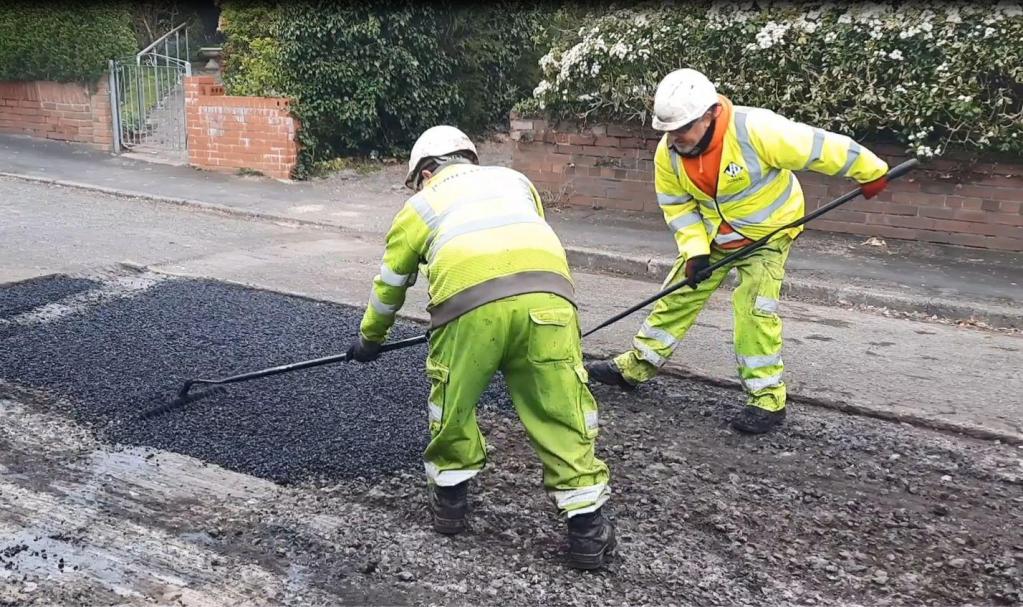
Highways team completing a larger patch repair to the road surface.
(Image: Swansea Council)

Councils’ budgets show a fragmented picture

Earlier this year, councils set their budgets for 2025/26 — and the differences are stark.

  • In Swansea, councillors approved a record £20m investment in highways, covering resurfacing, pavements, bridges and drainage. By mid‑year, schemes such as the 8km resurfacing of the B4295 on Gower had already been delivered.
  • In Bridgend, the budget included £590,000 for highways works, topped up by £2.9m from the Welsh Government’s borrowing initiative.
  • In Pembrokeshire, councillors warned last year that the county faced a period of “managed decline” in its road network, with only the most urgent repairs affordable.

The result is a patchwork: Swansea trumpeting record spending, Bridgend relying on borrowing, and Pembrokeshire openly admitting the limits of what it can achieve.

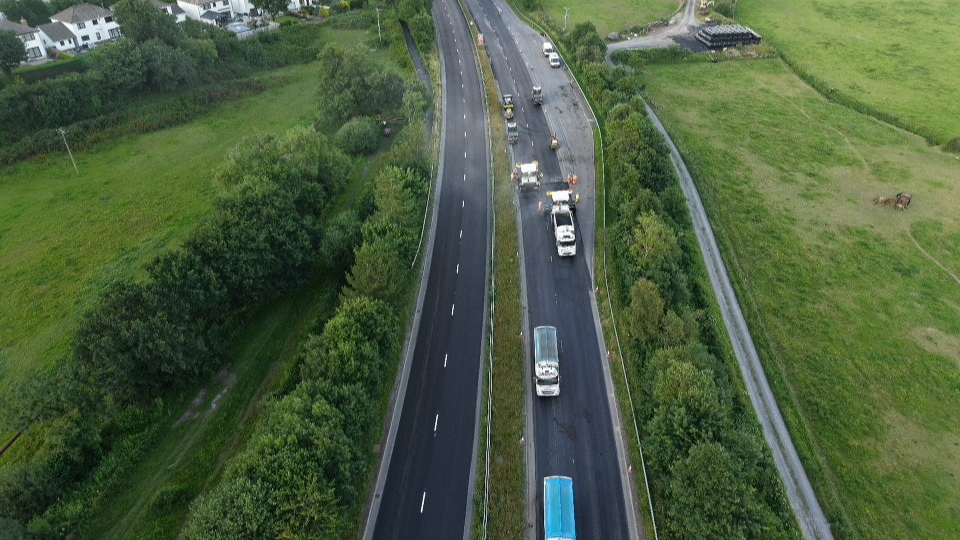
Drone view of resurfacing works on the A40 dual carriageway in Carmarthen.
(Image: Welsh Government)

Swansea leads on transparency – others lag behind

Swansea is also unusual in publishing weekly updates on potholes fixed, including how many were repaired within 48 hours. Those logs show dozens repaired every week — far higher than the 57 potholes attributed to Swansea in the Welsh Government’s dataset for the same six‑month period.

Neighbouring councils do not routinely publish similar data. Carmarthenshire revealed in a scrutiny report that it logged more than 10,000 potholes in 2024, while Pembrokeshire and Bridgend figures tend to surface only through FOI requests or budget papers.

That lack of consistency makes it harder for residents to compare performance across Wales — and harder to hold councils to account.

Pothole on a rural road in South West Wales.
(Image: Swansea Bay News)

A road ahead that still looks uneven

For drivers, the frustration is simple: the roads they use every day often feel worse than the official figures suggest. For councils and ministers, the reality is more complicated — split responsibilities, ring‑fenced funding streams, and budgets that vary wildly from county to county.

Swansea’s weekly repair logs and record investment show what transparency and ambition can look like. But elsewhere, figures are harder to come by, and some councils admit they are managing decline rather than delivering improvement.

The Welsh Government’s claim of 37,000 potholes fixed in six months is eye‑catching, but it is only part of the picture. Until there is a consistent way of reporting repairs — and a sustainable level of funding to match the scale of the problem — drivers across South West Wales are likely to keep feeling every bump in the road.

Related stories from Swansea Bay News

Councils face record numbers of compensation claims for pothole damage
Local authorities are paying out more than ever as drivers seek redress for damage caused by crumbling roads.

Could AI fix the country’s pothole problem?
Experts explore whether technology could help councils spot and repair potholes more efficiently.

Swerving potholes: Experts call for clearer guidance
Road safety specialists warn that unclear advice leaves drivers at risk when avoiding potholes.

Councils to get £120m boost to repair more potholes
A major funding package aims to help local authorities tackle the growing backlog of road repairs.

#councils #featured #localAuthority #motoring #potholes #roadRepairs #roadResurfacing #WelshGovernment

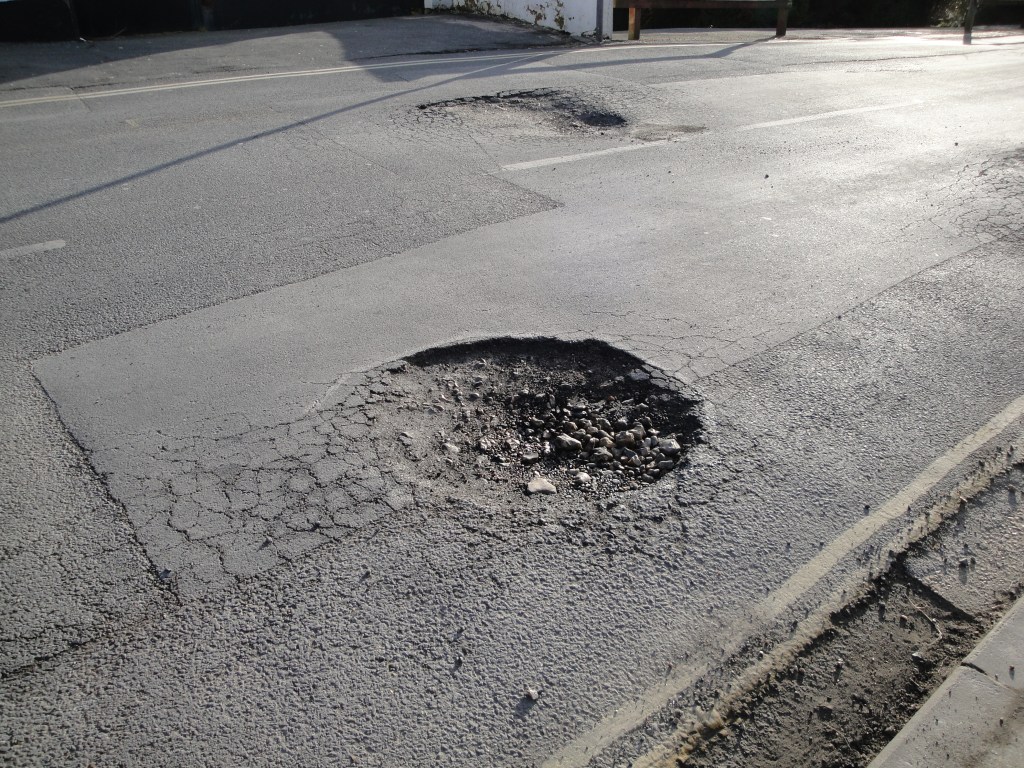
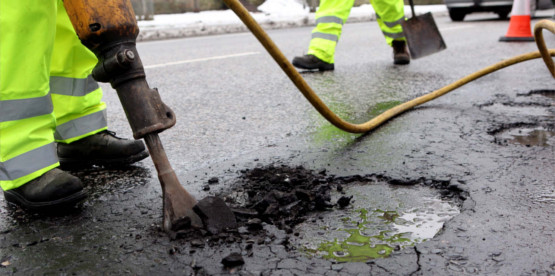
Close‑up of a pothole in an asphalt road surface, illustrating the type of damage drivers frequently encounter.Road maintenance worker using asphalt to fill a pothole on a local road.Two council workers laying and compacting asphalt during a patch repair on a damaged road surface.Aerial view of heavy machinery resurfacing the A40 dual carriageway near Carmarthen, part of a Welsh Government highways improvement scheme.

£14 million Singleton Hospital development to transform cancer diagnoses

New home for PET‑CT scanning

Since 2020, highly specialised PET‑CT scanning has been available at Singleton, sparing patients in the Swansea Bay and Hywel Dda health board areas from travelling to Cardiff.

A PET‑CT scan combines computed tomography (CT) and positron emission tomography (PET) to provide highly detailed images. It can detect cancers and other diseases that may not appear on other scans, assess the size and spread of tumours, and show how well treatment is working.

Until now, the service has been delivered from a mobile unit, limiting the range of scans and the number of days it can operate.

Artist’s impression of the new £14 million PET‑CT facility at Singleton Hospital, due to open to patients in early 2027.
(Image: Swansea Bay University Health Board)

Expanded services and seven‑day scanning

The new purpose‑built facility, funded by the Welsh Government as part of its all‑Wales PET‑CT programme, will allow Singleton to expand its services significantly.

Professor Neil Hartman, Swansea Bay’s Head of Nuclear Medicine, said:

“For the first time we will be able to do paediatric PET scanning. We will be able to do scanning under general anaesthetic, and brain scanning, which we are not able to do at the moment. And we will be able to do seven‑day‑a‑week scanning if we so wish.”

Part of a national programme

The Welsh Government’s PET‑CT programme aims to establish four static scanners across Wales within the next decade — in Swansea, Velindre, North Wales, and a fourth location yet to be confirmed.

Construction at Singleton, led by contractor Tilbury Douglas, is expected to be completed by autumn 2026. Equipment installation will follow, with the first patients due to be scanned in early 2027.

Designed with patients in mind

The new building, located at the north end of the hospital site, will include six uptake rooms for patient preparation, a general anaesthesia room, and dedicated waiting and post‑screening areas. It has been carefully designed to avoid disrupting existing services and to protect established trees on the site.

Christine Morrell, Swansea Bay’s Director of Allied Health Professionals and Health Science, said:

“Our capacity and capability on the mobile unit were not giving us what we needed in terms of the population. We are looking forward to it being built and to being able to expand our services.”

‘Much‑needed development’

Swansea Bay University Health Board Chair, Jan Williams, at the launch of the £14 million Singleton Hospital PET‑CT project.(Image: Swansea Bay University Health Board)

Swansea Bay University Health Board Chair, Jan Williams, said she and Hywel Dda Chair Neil Wooding were delighted to see work begin:

“This is an exciting development which is much needed for the population of South West Wales. It will give the expert staff who provide such excellent care the opportunity to enhance their service even further.”

Related cancer care stories

Hundreds of men involved in game‑changing Swansea prostate cancer trial
A pioneering trial in Swansea is giving men access to cutting‑edge treatment and transforming outcomes for prostate cancer patients.

Women’s touch rugby tournament scores big in aid of Swansea Bay’s Cancer Centre
Local teams came together on the pitch to raise vital funds for cancer services, combining sport, community spirit and charity.

Sisters step up to thank cancer centre that cared for their dad
Two sisters took on a fundraising challenge to show gratitude to Swansea Bay’s Cancer Centre for the care given to their father.

Pontardawe cancer survivor joins innovative follow‑up care trial
A survivor from Pontardawe is helping to shape a new approach to follow‑up care, designed to improve quality of life after treatment.

Jiffy’s Cancer 50 Challenge raises thousands for cancer care in South Wales
Rugby legend Jonathan ‘Jiffy’ Davies led cyclists on a 50‑mile challenge, raising significant funds for cancer services across the region.

Lord Mayor thanks Swansea for backing £200k cancer appeal
Swansea’s Lord Mayor praised the generosity of shoppers and traders after a city market appeal smashed its £200,000 target for cancer care.

#Cancer #cancerDiagnosis #ChristineMorrell #DannyFlynn #groundbreaking #HywelDda #JanWilliams #NeilHartman #NHSWales #PETCT #SingletonHospital #Swansea #SwanseaBayUniversityHealthBoard #WelshGovernment

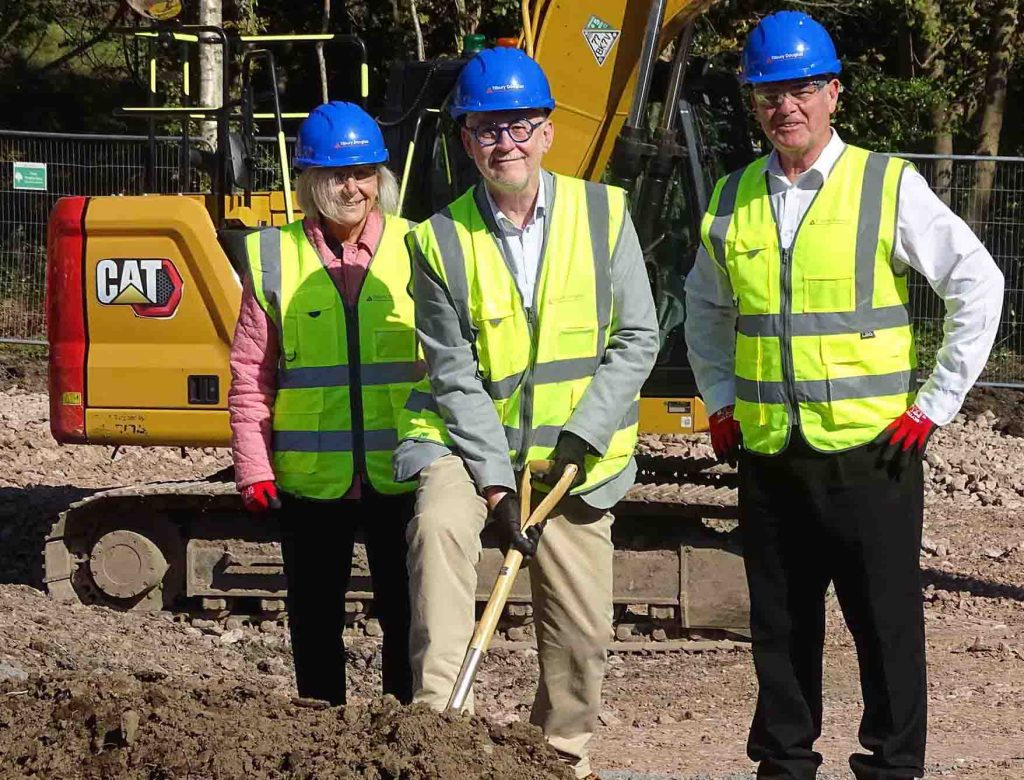
Three people in blue hard hats and yellow high‑visibility vests holding a spade at a ceremonial ground‑breaking in front of a CAT excavator.Architectural rendering showing the planned PET‑CT building at Singleton Hospital with modern design and landscaped surroundings.Jan Williams, Chair of Swansea Bay University Health Board, speaking at the project launch event.

Young volunteers launch new litter picking hub in Port Talbot

Volunteers lead the way

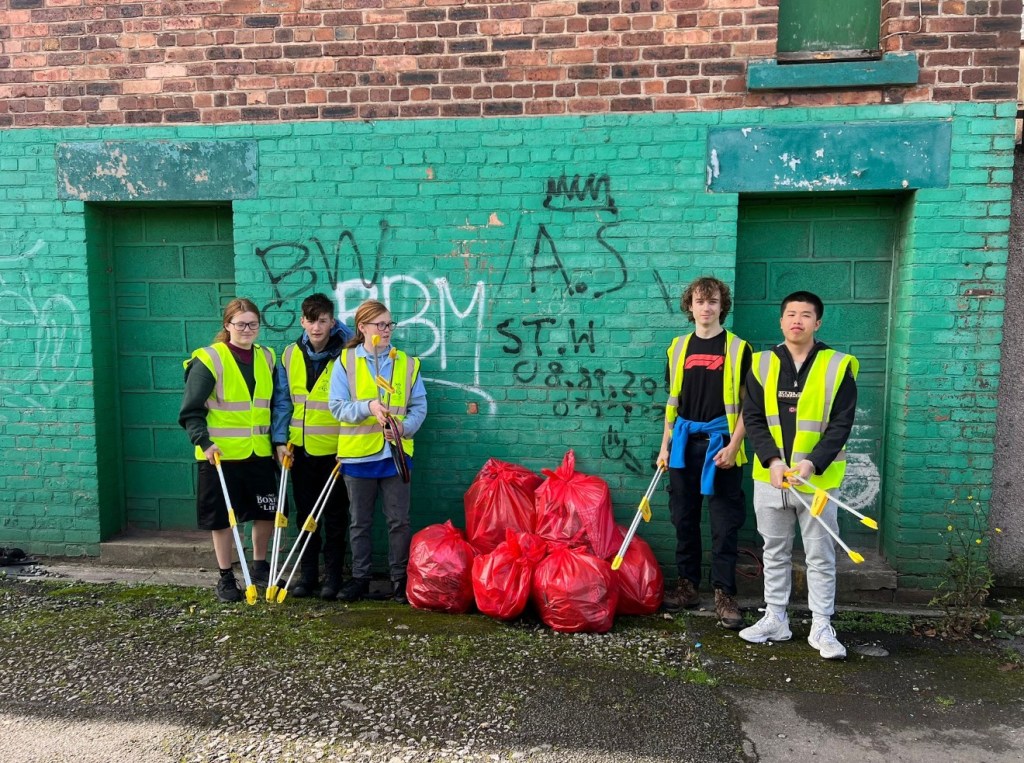
Five young volunteers turned out on Saturday 4 October to take part in the launch, joining forces to tidy up the town centre. The group spent the morning collecting litter around The New Plaza, filling seven bags in total.

The event marked the official opening of the site as a Litter Picking Hub, part of a Wales‑wide network run by Keep Wales Tidy and funded by the Welsh Government. The hubs provide free access to equipment such as pickers, hi‑vis vests, rubbish bags and hoops, making it easier for residents to organise their own clean‑ups.

Partnership with Keep Wales Tidy

The New Plaza hub is one of 14 now operating across Neath Port Talbot. Organisers say the aim is to support local communities, encourage pride in shared spaces and boost wellbeing through outdoor volunteering.

Sam Hunt, YMCA Port Talbot Hostel Manager, said the launch showed the difference young people can make: “It was brilliant to see so many young people turn out for the launch and take action to improve our shared spaces. Together, we can inspire long‑lasting change.”

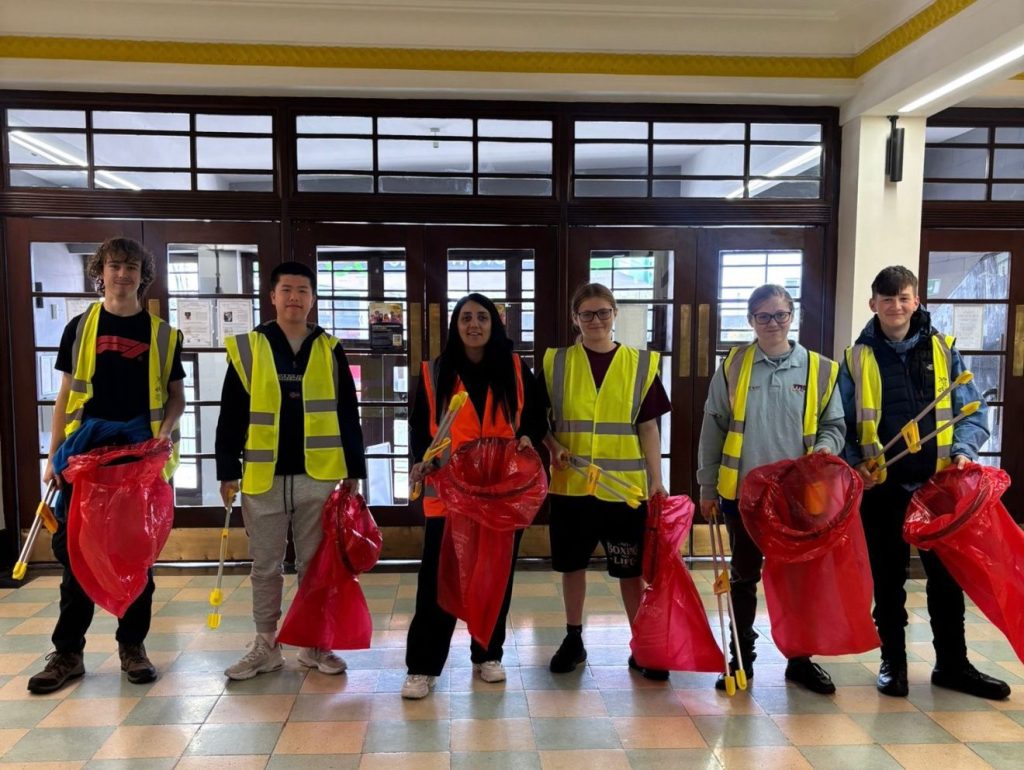
Young volunteers with litter picking equipment gather in the lobby of The New Plaza, Port Talbot, for the hub’s launch event.(Image: Keep Wales Tidy)

Pride in the local environment

Kathryn Britton, Keep Wales Tidy Project Officer for Neath Port Talbot, added: “Port Talbot is an area of outstanding natural beauty, and it was fantastic to see The New Plaza celebrate their Litter Picking Hub launch with such a great effort from young people.”

She encouraged residents to continue using the hub, describing it as a simple and effective way to keep communities clean and cared for.

Open to all

The New Plaza hub is free to use and open seven days a week. Anyone can borrow equipment to carry out their own litter picks. More details are available at keepwalestidy.cymru/litter-picking-hubs.

Related stories from Swansea Bay News

Council cautions misuse of public litter bins
Bridgend Council warns against dumping household waste in public bins after reports of contamination and rising street cleaning costs.

Roadside litter tackled by new team in Swansea
Swansea Council’s new Long Roads Cleansing Team is targeting rubbish thrown from cars along major routes linking communities.

Seabin installed at Swansea Marina to tackle marine litter
Innovative floating device collects debris around the clock to help protect Swansea Marina and the wider marine environment.

‘Make Memories, Not Mess’ summer litter campaign launches across West Wales
Councils and partners urge visitors to take their rubbish home as part of a regional campaign to keep beaches and beauty spots clean.

Carmarthenshire Council launches campaign to reduce fast food and vape litter
New initiative targets takeaway packaging and disposable vapes, encouraging residents to cut waste and protect the environment.

#communityVolunteering #KeepWalesTidy #litter #litterPickingHub #NeathPortTalbot #NewPlaza #PortTalbot #WelshGovernment

Five young people with litter pickers and rubbish bags standing in front of a graffiti wall in Port Talbot.Six young people holding litter pickers and rubbish bags in the lobby of The New Plaza, Port Talbot.
valkyriexi at KillBaitvalkyriexi@killbait.com
2025-10-14

Welsh Government Faces Budget Challenges and Potential Cuts if Funding Plan is Rejected

The Welsh government's 2026-27 budget, overseen by Finance Secretary Mark Drakeford, faces significant challenges in gaining approval from the Senedd. Valued at over £27 billion, the budget covers essential public services including hospitals and waste collection. However, with Labour holding less t... [More info]

Tories dangle Senedd budget talks with Labour – with a big tax‑cut catch

The move, announced in a letter from opposition leader Darren Millar MS, comes as Labour faces a tight Senedd arithmetic and the looming Caerphilly by‑election, but is widely seen as unlikely to lead to a deal.

Conservatives say they are “responsible opposition”

In his letter, Millar said the Conservatives could not support a “business as usual” budget that simply rose with inflation, but suggested an agreement “may be possible” if the Welsh Government considered some of their priorities.

Chief among those is the scrapping of Welsh Stamp Duty (Land Transaction Tax) for all primary residential properties. Millar argued this would help first‑time buyers onto the housing ladder, improve mobility in the market and boost the economy.

He said:

“While the Welsh Conservatives fundamentally disagree with the Welsh Labour Government on many things, we are a responsible opposition that will always strive to put the people of Wales first.”

A tax power at the heart of the row

The focus on Land Transaction Tax is significant. It is one of the few tax‑raising powers devolved to the Welsh Government, alongside income tax variation and landfill disposals. That makes it a symbolic battleground: Conservatives want to use it to cut the cost of buying homes, while Labour has historically defended it as a tool to raise revenue for public services.

By putting Stamp Duty abolition at the centre of their offer, the Conservatives are effectively using the budget talks to promote a flagship policy that Labour is highly unlikely to accept.

Political arithmetic and the Caerphilly by‑election

The Welsh Government does not hold a majority in the Senedd, meaning it must secure support from at least one other party to pass its spending plans. That task has become even more precarious following the death of Labour MS Hefin David in August, which triggered a by‑election in Caerphilly later this month.

While Labour has held the seat since the Senedd was established, both Plaid Cymru and Reform UK are mounting strong challenges. If Labour were to lose, the balance of power in Cardiff Bay would tilt further away from the government, making deals with opposition parties even more essential.

Most observers believe Labour is far more likely to seek support from Plaid Cymru or the Welsh Liberal Democrats — both of whom have previously struck budget agreements — than to enter into talks with the Conservatives.

More PR than negotiation?

That context makes Millar’s letter look less like the start of genuine negotiations and more like a political manoeuvre. By offering talks on the budget, the Conservatives can present themselves as constructive while simultaneously pushing their tax‑cutting agenda into the headlines.

Whether or not the First Minister responds, the Conservatives have already succeeded in framing Stamp Duty abolition as part of the budget debate — even if the chances of Labour taking them up on the offer remain slim.

#Budget #DarrenMillarMS #ElunedMorganMS #landTransactionTax #stampDuty #taxCut #WelshConservatives #WelshGovernment #WelshLabour

Composite image showing Eluned Morgan, First Minister of Wales, on the left, and Darren Millar, Leader of the Welsh Conservatives, on the right, reflecting political tensions over the 2026‑27 Welsh budget.

Row over £38m cut to Welsh funding under new Local Growth scheme

First Minister admits settlement is “slightly smaller”

The Welsh Government confirmed it will launch a consultation later this month to decide how the money is spent. Ministers in Cardiff say the fund will be used to support skills, help businesses in key sectors such as health and AI, and tackle barriers to growth.

First Minister Eluned Morgan said the settlement represented around 22% of the UK‑wide fund and pledged it would “reach all parts of Wales”. She admitted, however, that the package was “slightly smaller” than the previous scheme, adding: “Let’s remember, we always knew there was a price to pay for Brexit.”

UK Government Welsh Secretary Jo Stevens said decisions about spending were “best made by people in Wales” and stressed that ministers in London were working with Cardiff to deliver growth and opportunity.

Kurtz: “Wales was promised more, not less”

Welsh Conservative Shadow Cabinet Secretary for Economy and Energy, Samuel Kurtz MS, said the change represented a broken promise to Wales.

“Under Labour, Wales was promised more funding, not tens of millions of pounds less,” he said.

“The Welsh Labour Government getting to hold the purse strings does not fill me with hope, as they routinely waste taxpayers’ money on vanity projects like the creation of more politicians or on non‑devolved areas like their pointless overseas embassies and Ugandan tree planting.

“This funding should be used to support struggling Welsh businesses who have had to contend with Labour Governments at both ends of the M4 hitting them with higher taxes.”

Plaid Cymru and Reform also weigh in

Plaid Cymru’s economy spokesperson Luke Fletcher MS said the new fund only “notionally” replaced the EU structural funds Wales lost after Brexit, warning that £500m over three years “falls far short of what’s required to tackle decades of underinvestment and deep‑rooted deprivation.”

A Reform UK Wales spokesperson also criticised the settlement, claiming Labour and Plaid Cymru were responsible for the poor state of the Welsh economy.

From EU billions to a smaller UK pot

Large parts of Wales qualified for EU structural funds during Britain’s membership, receiving around £375m a year. That support was replaced by the Shared Prosperity Fund, worth £585m over three years, but structured without direct Welsh Government control.

The new Local Growth Fund replaces that scheme, with a framework now agreed between the Labour UK Government and ministers in Cardiff. The £547m allocation will be split between capital spending on infrastructure and revenue for services, though the exact balance has not yet been confirmed.

The announcement comes ahead of the Welsh Government’s draft budget, due to be published on Tuesday. Ministers will need to secure support from another party in the Senedd to pass it early next year.

Related coverage

#Budget #ElunedMorganMS #FirstMinister #funding #LukeFletcherMS #politics #SamuelKurtzMS #SharedProsperityFund #WelshGovernment

Senedd Chamber

Llanelli workers face pre-Christmas earnings hit after Jaguar Land Rover cyber attack

Hundreds of workers in Llanelli are facing a loss of income in the run-up to Christmas after a cyber attack on Jaguar Land Rover (JLR) disrupted supply chains and halted production across the UK.

Agency staff laid off as overtime dries up

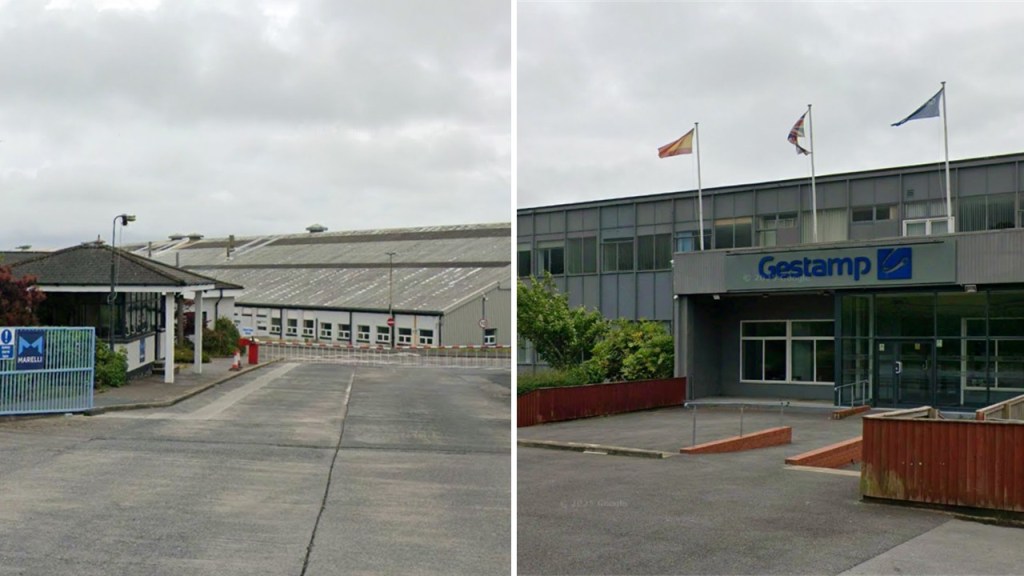
The impact has been felt acutely at Marelli and Gestamp, two major automotive suppliers in Llanelli with a combined workforce of 360. Agency workers have already been laid off, while permanent staff have been told to stay home and “work back” hours — effectively cancelling overtime many rely on for festive spending.

Local Labour MS Lee Waters raised the issue in the Senedd this week, warning that the cyber attack had left Welsh workers “in limbo” and calling for urgent clarity on when UK Government support will reach affected sites.

Welsh Government in daily contact with suppliers

First Minister Eluned Morgan said Welsh Government teams were in daily contact with around 30 suppliers across Wales, and that support services including React and Working Wales were on standby to assist affected workers.

“The JLR cyber attack has hit Welsh suppliers and the people who work in those companies hard,” she said. “We welcome the £1.5bn UK loan guarantee, but Welsh workers need to know when the money will land.”

She confirmed that both Marelli and Gestamp were being actively monitored, and that Economy Secretary Rebecca Evans had written to UK ministers seeking urgent updates.

Tata under pressure over lack of cyber insurance

Mr Waters criticised JLR’s parent company Tata for failing to have cyber insurance in place, despite previous high-profile attacks on UK retailers. He urged the Welsh Government to press Tata directly for support for downstream suppliers in Wales.

Llanelli Labour councillor Shaun Greaney added:

“Why is it the poor workers who always pay the price for ineptitude at a higher level? They should be compensated by JLR’s owners Tata.”

JLR introduces supplier support scheme

In response, JLR said it had launched a short-term financing scheme to help suppliers with cashflow, including faster payments and reimbursement of financing costs. A dedicated help desk and manual payment system have also been introduced, with automated systems now being restored.

The company said the scheme would initially support critical suppliers needed to restart production, before expanding to include non-production partners.

Related stories from Swansea Bay News

Nia Griffith: JLR rescue package must protect Llanelli jobs after cyber attack
MP calls for urgent action to safeguard Welsh workers hit by global disruption.

EU’s 50% steel tariffs spark fears for Tata jobs in Port Talbot and Llanelli
Industry leaders warn of job losses as trade tensions escalate.

Scarlets pump £17m a year into Carmarthenshire economy, new council report reveals
Regional rugby team plays key role in Llanelli’s economic landscape.

Llanelli’s Minor Injuries Unit to become 12‑hour Urgent Care Treatment Centre
Health board confirms no return to 24‑hour service.

Artists unveil vision for new museum and creative quarter in Llanelli town centre
Cultural regeneration plans aim to revitalise the heart of Llanelli.

#carPartsFactory #CllrShaunGreaney #cyberAttack #ElunedMorganMS #Gestamp #JaguarLandRover #JLR #LeeWatersMS #Llanelli #manufacturing #Marelli #NiaGriffithMP #Tata #WelshGovernment

Two key Llanelli suppliers, Gestamp and Marelli, face disruption after JLR cyber attack halts production.

Client Info

Server: https://mastodon.social
Version: 2025.07
Repository: https://github.com/cyevgeniy/lmst