#jan26

2026-01-29
Under – What Happened In Roundwood Review By Samguineous Maximus

There’s something tantalizing about the brand of metal-adjacent noise rock that’s experienced a renaissance in recent years. It’s ugly, it’s loud, and it doesn’t give a damn if you’re comfortable. You’ve got breakout stars Chat Pile dragging nü-metal’s bloated corpse through the mud, Couch Slut dishing out dissonant, riff-heavy nightmare fuel, and Intercourse sounding like a feral animal tearing flesh for fun. This isn’t “revival” music; it’s bands weaponizing noise, smashing metal’s brute force into punk’s emotional hemorrhaging, and then deliberately breaking whatever’s left just to see it scream. Enter the UK’s Under, stepping into this mess with zero interest in playing nice. They fuse sludge metal’s suffocating weight, noise rock’s hostility, and art rock’s weird, confrontational instincts into something genuinely unhinged. Their third record, What Happened In Roundwood, doesn’t aim to be palatable. It aims to crush, mesmerize, and leave a dent. The question isn’t what they’re doing—it’s whether Under hit hard enough to leave permanent damage.

In the first half of What Happened In Roundwood, Under establishes their own distinct style that sits nicely in conversation with their American contemporaries. The foundations of these songs are built on angular sludge riffs over looping odd time signatures and off-kilter rhythmic patterns, like if a more avant-garde Melvins crashed into a version of Swans that was capable of editing. Bassist and vocalist Matt Franklin anchors the music with simple but weighty low-end riffs, locking tightly with drummer Andy Preece’s commanding, hypnotic grooves. Guitarist Simon Mayo fills in the gaps with jagged riffs and layers of dissonant, skronk-heavy leads. Franklin lends a sneering, British rasp to the endeavor, guiding the songs with an impassioned vocal performance that successfully conveys the aural depravity on display. This formula is deepened with the addition of menacing choral vocals and harmonies (“Ma,” “The Alchemist”), swirling guitar cacophonies (“Tantrum), and even Primitive Man-tinged, slow noise bursts (“Isaac”). It’s an effective and thoroughly unsettling display with just enough variety in its execution to keep things exciting until the B-side obliterates any sense of normalcy.

What Happened In Roundwood by Under

In the second half of What Happens In Roundwood, Under undergo a dramatic sonic shift, and the results are thrilling. The final stretch of the album leans heavily into exploratory, avant-garde jazz-influenced territory, with the tracks flowing seamlessly into one another like a three-part suite. These songs stand out as the album’s clear highlights. The sequence begins with “Rings,” which unfolds in a state of subdued horror, slowly building tension through sparse instrumentation before reaching a blissful climax. This transitions smoothly into “Roots and Limbs,” a jazzy, post-hardcore-like track that increases the tempo and intensity, providing a sense of release after several slower songs. All of this builds toward the closer, “Felling.” The final track plays out like a fever dream, reprising key moments from earlier in the album and reshaping them into a chaotic haze of noise. When the music finally collapses into rich choral vocals, it feels like the calm at the center of a storm. A perfect ending to a bold and striking second half.

This places What Happens in Roundwood in a peculiar position. The second half of the record explores markedly different sonic territory than the first, and is stronger for it. Under’s more standard sound, showcased on the first five tracks, is engaging, but compared to the highs of the final three, it falls a little short. Repeated listens leave me wanting just a bit more grit or memorability in the more straightforward sludge riffcraft before it gives way to the more exploratory material. I appreciate the band’s efforts to vary their noise-rock/sludge approach through vocal layers/embellishments or a Southern tinge (“Escape Roundwood”), but I find myself largely whelmed by the opening salvo. This isn’t a major mark against the record; the album is solid throughout. Still, it keeps the work from standing quite as tall alongside some of my favorites in the style.

With What Happens In Roundwood, Under have delivered a solid sludgy noise rock record with plenty of autre appeal. I wish the impressive oddity were distributed a bit more evenly throughout the album’s runtime, but it’s still an enjoyable listen that carves out its own unique niche within the broader style. The next time the UK group revisits their brand of sinister sludge, I’ll be excited to listen.

Rating: Good!
DR: 8 | Format Reviewed: 320 kb/s mp3
Label: APF Records
Websites: understockport.bandcamp.com | facebook.com/understockport
Releases Worldwide: January 23rd, 2026

#2026 #30 #APFRecords #ArtRock #ChatPile #CouchSlut #ExperimentalMetal #FreeJazz #Intercourse #Jan26 #Melvins #NoiseRock #PrimitiveMan #Review #Reviews #SludgeMetal #Swans #UKMetal #Under #WhatHappenedInRoundwood
2026-01-29
Hällas – Panorama Review By Creeping Ivy

Hällas—Sweden’s self-styled administrators of ‘adventure rock’—has suffered a nearly decade-long absence from AMG. Back in 2017, El Cuervo (rightly) awarded Excerpts from a Future Past a 4.0, praising the debut for its transportive aesthetic and cohesive performances. Since this one-off review, Hällas has become a premier neo- proto-metal act, yet they haven’t reached the exceptionality of their entrance. Conundrum (2020) continued in the vein of Excerpts with a synth-heavy slow burn that (why not?) feels less adventurous than the debut.1 Redressing this safeness, Isle of Wisdom (2022) favors tighter, jauntier tunes that bleed into each other.2 On the heels of two very good albums is Panorama, the first to be released on Hällas’s own (aptly named) Äventry Records. This shift seems to signal the kind of confidence arising from a veteran band coming into their own. Accordingly, Panorama experiments more than any previous Hällas album, but experimentation alone does not guarantee Greatness.

Panorama deftly delivers Hällas’s now-familiar take on heavy, psychedelic prog rock. Indeed, these Swedes still sound like Uriah Heep counseling Iron Maiden. Pre-release single “The Emissary” and closer “At the Summit” best encapsulate classic Hällas. On these tracks, Rickard Swahn and Marcus Petersson bounce between wee-da-lee guitarmonies, Ren-faire acoustic plucks, and driving riffage. Nicklas Malmqvist supplies texture via sparkling synthesizers and percussive organ. It is the infectious guitar/key interplays, however, that define Hällas. Towards the end of “At the Summit,” Swahn, Petersson, and Malmqvist unite for delicious harmonized noodling, building drama before a serene denouement. Wrapped in warm, 70s-sounding production fans have come to expect, Panorama supplies some of the strongest Hällas tunes yet.

Panorama’s experimentations, however, make it Hällas’s most singular statement. Its boldest innovation is “Above the Continuum,” a 20-minute, 7-part suite akin to the eponymous openers of Rush’s 2112 and Yes’s Close to the Edge. On this cinematic saga, Hällas brings Gregorian chants, strings, and horns to their brand of synth-rock. Floydian voice-overs materialize Panorama’s somber narrative, in which a hermit laments encroaching dystopia atop his tower. An imperceptible escalation that finally burrowed under my skin after ten or so listens, “Above the Continuum” is an early Song o’ the Year candidate.3 How does one follow such a sprawling epic? With a trotting jam, of course. On “Face of an Angel,” another pre-release single, drummer Kasper Eriksson rides a sleazy Thin Lizzy groove with bassist/vocalist Tommy Alexandersson, who lays down a droningly hooky chorus. Hällas has dropped crowd pleasers before (“Star Rider,” “Carry On”), but “Face of an Angel” is their poppiest ditty yet and the perfect counterbalance to the opening beast. It is “Bestiaus,” though, that truly spotlights Alexandersson’s vocals. His smoky baritone and booming bellow sit center stage on this affecting piano ballad, standing alone in Hällas’s catalogue.

Five scenes spliced into one holistic picture, Panorama is a grand album, which might not register when glancing at the runtime. Like every Hällas record, Panorama clocks in at just under 45 minutes, yet its more limited track count (5, instead of 7–8) renders every song utterly distinct. There is zero filler here, only questionable moments. “Above the Continuum” has abrupt transitions in its opening minutes, but they don’t hinder the track as a whole. Additionally, the immediate fadeout on the punk ending of “The Emissary” always frustrates me. Frustration is surely the intended effect, but Hällas could have stretched the part a few measures and achieved the same. And “Bestiaus” itself feels a little like a moment, striving for songhood but not quite reaching it. Still, it’s an elegant setup for “At the Summit”—an epic but unprotracted finale.

With Panorama, Hällas has delivered (why not?) their most adventurous album, but it’s also their best work to date. Excerpts hinted at excellence—Panorama achieves it. Per its namesake, Panorama provides a virtually seamless showcase of all that Hällas has done while splendidly surveying new terrain. A fun yet serious record, Panorama puts an angelic synth-rock face on a devilish narrative circulatory system. It’s only January, but these Swedes may have already dropped the neo- proto-metal album of 2026 (and a list-topping contender for yours truly).


Rating: 4.5/5.0
DR: 8 | Format Reviewed: 320 kbps mp3
Label: Äventyr Records
Websites: facebook.com/haellas | hallasband.com
Releases Worldwide: January 30th, 2026

#2026 #45 #ÄventyrRecords #BloodIncantation #Hällas #HardRock #IronMaiden #Jan26 #Panorama #PinkFloyd #ProgressiveRock #ProtoMetal #PsychedelicRock #Review #Reviews #Rush #SwedishRock #ThinLizzy #UriahHeep #Yes
2026-01-28
Eximperituserqethhzebibšiptugakkathšulweliarzaxułum – Meritoriousness of Equanimity Review By Kenstrosity

Far be it from me to deny a band the right to representation under their full government name. However, Belarusian tech death entity Eximperituserqethhzebibšiptugakkathšulweliarzaxułum challenges not just SEO integrity, but also the sanity of all who would read its name. Good luck with that, too, because if you manage it, you’ll open a portal to an unfathomable universe of hellish delights. My bet is that nobody reading this accomplishes a successful pronunciation of Eximperitus’ full name before finishing this review, so onwards we go to examine the Meritoriousness of Equanimity!

In my review for Eximperitus’s last exhibit, Šahrartu, I cited the band’s refinement over their rough and jagged debut, the name of which is simply unsuited to anything other than an epic footnovel.1 This follows that same trajectory, further tightening and streamlining the Nile-meets-Necrophagist-meets-seven separate chainsaws sound that Eximperitus created for themselves back in 2009. Šahrartu’s trippy psychedelic twist remains intact as well, imbued deeply within Meritoriousness’ riffs, leads, and solos. Despite adopting a pace much less ballistic than Nile, Eximperitus instead views technicality as a vehicle to explore bizarre guitar techniques that create bonkers effects, allow for incredible density inside a more relaxed framework, and invite subsequent freakish antics on the percussive front. With all of this in mind, Meritoriousness is much more straightforward than Šahrartu, boasting a total runtime of 31 minutes and an average song length clocking in under 5 minutes per track. Thankfully, this minor tweak didn’t change Eximperitus’ penchant for protracted refrains, arcing tremolo melodies, and twisting, kaleidoscopic atmospheres.

Meritoriousness of Equanimity by Eximperitus

One thing I always appreciate about Eximperitus is its commitment to a high level of detail. Even in their most simplistic compositions, such as the transcendent “The Untimely Fruit of the Undead” and the stomping “Chalkionic Wandering Among the Wreckage of the Future,”2 brilliant little details like a popping clang of bass strings, a long, leisurely scrape across a fretboard, or a machine-gun snare fill continually focuses and intensifies my attention. Meritoriousness’ unorthodox way of opening makes for one brutal hook as well, as “One Step Long Infinity” riffs with great speed directly into a lumbering, chunky pound that introduces “Contemplation of the Plastic Fibers of Perfection at the Second Level of Reality” without an iota of ceremony. Almost universally operating inside the MENA double-harmonic scale, Eximperitus impresses with a wide gamut of riffs distinguished and elevated by dueling plucks that ping pong out of deep trembles across “Contemplation…” and “Golden Chains for the Construction of Individual Greatness.” Delicate melodies in “Twelve Centuries”3 make what would be a trite interlude a necessary palette cleanser for the more epic and sprawling “Finding Consistency in the Fourth Quadrant of Eternity,” which in its own right boasts delightfully bluesy leads, more than one of Eximperitus’ signature epic solos, and a new surprise: earnest, belting cleans! The ultimate result of such successful and smooth integration of innumerable notable points of interest is a rich, layered, and rewarding album experience.

Repeat spins deepen that sense of reward I get from investing my time with Eximperitus’ newest platter, but it also reveals one glaring omission: a climax. I’m not one to maintain that a climax is or should be the only goal of any experience, but Meritoriousness of Equanimity begs for one of the same caliber as Šahrartu‘s showstopper, “Inqirad.” While many, if not all, tracks on Meritoriousness boast big standout moments (the hammer drop at the final third of “The Untimely Fruit of the Unsaid,” the Wormhole-d riffing on “Golden Chains for the Construction of Individual Greatness,” all of “Chalkionic Wandering”) and spine-tingling passages (“Twelve Centuries…” and “Standing a the Skirt of the Ruins of Human Nature…”) that make this record so engaging, I know the level of epic high that Eximperitus are capable of creating, and it’s the one thing I miss here. Additionally, as much as I enjoyed the messy mix and noisy guitar tone on Šahrartu, on Meritoriousness, I fear it takes away a small measure of impact from some of Eximperitus’ more melodic or complex phrases. I’ll never wish for a clean Eximperitus record for as long as I live, but maybe just a touch less grime would help in this case.

Now that I absolutely embarrassed myself on word count, thanks to Eximperitus’ variously egregious song names, I can finally wholeheartedly recommend Meritoriousness of Equanimity. Hooky, technical, mystical, and majestic, Meritoriousness continues the otherworldly assault that these Belarusian curiosities initiated almost 20 years ago, but with greater refinement and exactitude than ever before. A worthy successor to Šahrartu, it lacks only a showstopper to secure its unrelenting takeover of my listening rotation. For those to whom that’s no impediment, I wish you well as Meritoriousness of Equanimity steals you from this mortal coil with disturbing ease.4

Rating: Very Good!
DR: 8 | Format Reviewed: 320 kb/s mp3
Label: Willowtip Records
Websites: eximperitus.bandcamp.com | facebook.com/Eximperitus
Releases Worldwide: January 30th, 2026

#2026 #35 #BelarusianMetal #DeathMetal #Eximperitus #Jan26 #MeritoriousnessOfEquanimity #Necrophagist #Nile #PsychedelicDeathMetal #Review #Reviews #TechnicalDeathMetal #WillowtipRecords #Wormhole
2026-01-28
Crystal Lake – The Weight of Sound Review By Dear Hollow

Crystal Lake is one of those bands that I lost track of. I adored 2015’s The Sign, its blend of hardcore attitude with a surgical metalcore attack and just enough djent and deathcore to make things interesting resulted in some of my all-time favorites in the style (“Prometheus,” “Matrix,” “Hades”). Yes, it’s knuckleheaded and boner-dragging brutality posturing, but for a jolt of breakdown-heavy sonic adrenaline, the Japanese quintet fit the bill. I lost track of them, with albums True North and Helix toning down the weight for an Erra-inspired atmospheric metalcore sound. It has been eight years since Helix entered the scene with a thud, so what can we expect from The Weight of Sound?

The Weight of Sound is the heft of change and consistency alike for Crystal Lake. A notable change is the departure of long-time vocalist Ryo Kinoshita, who released the debut for his solo project Knosis last year, and was replaced by John Robert Centorrino, former vocalist of The Last Ten Seconds of Life. The band acknowledges that Kinoshita’s shoes are nearly impossible to fill; to supplement, Centorrino is backed by an array of guest vocalists: David Simonich of Signs of the Swarm, Taylor Barber of Left to Suffer and Seven Hours After Violet, Myke Terry of Volumes and Fire from the Gods,1 Karl Schubach of Misery Signals and Jesse Leach of Killswitch Engage. Consistently, however, the instrumental approach is the same, bringing back the nu-metal-meets-djent-meets-hardcore chugs (whose absence made the last two outings toothless), as well as that trademark ethereal guitar layers. The result, however, falls woefully short compared to Crystal Lake’s landmark albums, as the knuckleheaded overtakes the thoughtful and the vocals become a monotonous muck.

The Weight of Sound (24-bit HD audio) by Crystal Lake

For positives, when Crystal Lake manages to balance the heavy and the atmospheric, tracks can truly soar. Yearning chord progressions, layers of melodies and sustained trills, and desperate vocals combine to add a nice dose of melancholy and fury, accented by the band’s signature guitar tone that balances djent weight with hardcore urgency. Even Centorrino’s cleans are a nice addition throughout these tracks, distant shouts or croons that recall Brett Gurewitz’s guest spot in Parkway Drive’s “Home is for the Heartless:”: tasteful and subtle. These tracks primarily populate the back half, a calm after the storm of metalcore pummeling, complete with a more somber mood (“The Undertow,” “The Weight of Sound,” “Sinners,” “Coma Wave”) that recalls more melodic hardcore-inflected metalcore acts like Counterparts or The Ghost Inside. The patience in the songwriting of these moments is also noteworthy, as movements feel nicely unhurried and appropriately contemplative.

Crystal Lake’s balance of the atmosphere and chug, as well as vocal charisma, have always been assets, but they plague The Weight of Sound. Don’t get me wrong, I didn’t love Helix’s more light-and-airy vibe, but too many tracks are just too knuckleheaded here to make a splash, particularly the opening “unnecessary contractions” triptych (“Everblack,” “BludGod,” “Neversleep”), which seem like the band’s metalcore answer to Signs of the Swarm’s To Rid Myself of Truth. Meanwhile, other tracks seem to be wildly inconsistent and are true head-scratchers in terms of placement in the tracklist, featuring bluesy Southern vibes (“King Down”) or awkward shifts between heavy and ethereal (“Dystopia,” “Crossing Nails”). Each placement in the playlist at large feels shoehorned and abrupt, from balls-to-the-wall heavy to southern to ethereal, to confused. For the number of guest vocalists that appear throughout The Weight of Sound, Centorrino’s vocals make them difficult to discern with his smokier and denser presence. It’s unclear if this makes him a better performer or if the production value is just that putrid – or both.

To their credit, Crystal Lake hasn’t had to change up their sound since Kinoshita’s departure, and the balance between ethereal atmosphere and chuggy metalcore remains a formidable asset. However, scattershot songwriting and odd track placement doom effectiveness beyond a few sparse moments to break up the confused, knuckleheaded beatdowns. The Weight of Sound is everything you loved about The Sign eleven years ago, but with less identity and more distraction, chugging along for one song before brutalizing you with breakdowns the next. But most notable is Crystal Lake’s lack of direction: The Weight of Sound is all chugs and atmosphere with no clear purpose.

Rating: 2.0/5.0
DR: N/A | Format Reviewed: 320 kb/s mp3
Label: Century Media Records
Websites: crystallake-worldwide.com | facebook.com/crystallake777
Releases Worldwide: January 23rd, 2026

#20 #2026 #BuryYourDead #CenturyMediaRecords #Counterparts #CrystalLake #Deathcore #Djent #Erra #FireFromTheGods #Hardcore #Jan26 #JapaneseMetal #KillswitchEngage #Knosis #LeftToSuffer #MelodicHardcore #Metalcore #MiserySignals #NuMetal #ParkwayDrive #Review #Reviews #SevenHoursAfterViolet #SignsOfTheSwarm #TheGhostInside #TheLastTenSecondsOfLife #TheWeightOfSound #Volumes
2026-01-27
Malignant Aura – Where All of Worth Comes to Wither Review By Owlswald

The marriage of death and doom is a well-trodden path, but Malignant Aura’s 2022 debut proved they had quickly mastered the formula. Abysmal Misfortune is Draped Upon Me was a crushing blend of old-school death metal (OSDM) misery and funeral desolation, establishing the Australian quartet as another worthy addition to an already vibrant scene. Born from the collaborative interests of guitarist Chris Clark and vocalist Tim Smith, the project has quickly metastasized from its demo roots into a fully realized unit. Now a part of the Memento Mori roster, their sophomore effort, Where All of Worth Comes to Wither, arrives to push Malignant Aura out of the nether realm and into a world all their own.

Where All of Worth picks up where Abysmal Misfortune left off. Opening with a series of gongs, the title track’s Mournful Congregation of Peaceville Three-inspired languid melodies and somber refrains surrender to a plodding, tectonic drum beat. Though Malignant Aura could have merged this intro into the subsequent track, it successfully anchors the record’s slow-burn atmosphere. Elsewhere, “The Pathetic Festival” conjures the macabre spirit of Hooded Menace and OSDM legends Incantation. It stands out as the tighter and faster track of the bunch, while the remaining three tracks are massive—mostly exceeding ten minutes—weaving funeral doom’s glacial phrasing with incendiary OSDM grit. Malignant Aura’s strength lies in the interplay between Robertson’s articulate drumming and Smith’s visceral vocal performance. Smith’s cesspool of gutturals, gurgles (“Beneath a Crown of Anguish,” “The Pathetic Festival”), chokes (“The Pathetic Festival”), and “bleghs” (“Languishing in the Perpetual Mire”) are phenomenal, with Clark’s wailing guitars, titanic riffs, and processional melodies guiding his vocals through shifting and swirling movements.

Where All of Worth Comes to Wither by Malignant Aura

I usually groan when I see double-digit track times, but Malignant Aura navigates Where All of Worth’s unabridged structure with ease by prioritizing flow over sheer density. Treating length as a function of tension and release rather than piling on riffs, they rely on intentional pacing, dynamic restraint, and Robertson’s percussion-led transitions to maintain intrigue and momentum. Whether it’s through violent double bass ruptures (“Languishing in the Perpetual Mire”), sepulchral marches (“The Pathetic Festival”), or cascading, symmetrical fills (“An Abhorrent Path to Providence”), Robertson’s drumming ensures that Where All of Worth’s transitions never feel foreign or accidental. This makes the eventual catastrophic payoffs feel earned rather than obligatory, a key reason each song’s arc feels purposeful. Motifs recur, but they return with altered tempos, denser drumming, or heightened aggression. The constant push and pull between crawling doom passages with repeated fake-outs and sudden bursts of deathly speed prevents stagnation in “Languishing in the Perpetual Mire.” Additionally, the formidable “Beneath a Crown of Anguish” never feels bloated thanks to later sections reframing what came before. “Beneath a Crown of Anguish’s” finale particularly nails this approach, briefly pausing for a moment before slamming back in at halftime for a decisive, memorable ending. Overall, Malignant Aura’s songwriting either deepens atmosphere, increases tension, or reshapes ideas, making their sprawling compositions feel immersive rather than exhausting.

Malignant Aura has undoubtedly sharpened their funerary tools on Where All of Worth, yet the songwriting doesn’t always stick the landing. “An Abhorrent Path to Providence,” for instance, lacks the peaks and valleys of other songs, succumbing to an atmospheric plateau that reveals what happens when runtime exceeds inspiration. The track’s midsection outstays its welcome and, despite the quality of Robertson’s kit work, the track feels unnecessarily distended. Moreover, a solo that fails to echo the song’s morose essence hampers the finale of “Languishing in the Perpetual Mire.” Though a far more evocative lead follows—nearly masking the previous stumble—the song awkwardly dissolves into a fade-out. It’s a clumsy end for a song that deserved a far more monolithic conclusion. However, while these compositional fractures exist, the songwriting remains sharp enough to sustain the weight of Where All of Worth’s expansive crusade.

As my colleagues in the staff lounge can attest, Where All of Worth’s cold embrace initially enthralled me—frankly, I wouldn’t shut up about it. I was certain it would drag the Score Counter into the lifeless muck with ease. Yet, reviewing has a way of introducing irony. Upon further listening, the record leveled out more than I anticipated, causing it to just miss greatness. Nonetheless, Malignant Aura has crafted an undeniable winner here, offering a wealth of grim, doom-laden, and morbid textures that will more than satisfy doom and death fans alike.

Rating: Very Good!
DR: 6 | Format Reviewed: 320 kb/s mp3
Label: Memento Mori | Grindhead/Primitive Moth
Websites: malignant-aura.bandcamp.com | facebook.com/MalignantAura
Releases Worldwide: January 26th, 2026

#2026 #35 #AustralianMetal #DeathMetal #DoomMetal #HoodedMenace #Incantation #Jan26 #MalignantAura #MementoMori #MournfulCongregation #Review #Reviews #WhereAllOfWorthComesToWither
2026-01-27
URNE – Setting Fire to the Sky Review By Lavender Larcenist

The evolution of a band is a fickle thing. Change too much, and you alienate those who started the journey with you; change too little and bore listeners over time, leaving only ardent fans of the sound. URNE, a London three-piece with close ties to Gojira and Mastodon, has already shown a surprising amount of reformation by their third release, Setting Fire to the Sky. The band’s debut, SERPENT & SPIRIT, was a hard-edged mix of post-hardcore, sweeping grooves, and raw vocals, with a little bit of sludge thrown into their clean-singing. Their sophomore album refined the sound and felt like a logical evolution, even with a few missteps (especially on the production side). Setting Fire to the Sky fixes some of these issues and sees the band streamline their songs, but not all change is good. Instead of crawling into a chrysalis and emerging as a flying beauty, they slither out as something more akin to a leech, spilling out of their cocoon and siphoning other bands’ sounds to a fault.

URNE serves up nearly fifty minutes of Mastodon-infused metalcore on Setting Fire to the Sky. Yes, you read that correctly. Nothing on their third album feels reminiscent of the classic-rock-infused, post-hardcore sludge on their debut, or the post-metal epics on A Feast on Sorrow. Instead, their latest is stuffed with songs that, while expertly played and produced, feel soulless. Joe Nally sounds like a different singer at this point. While his clean singing is infinitely more competent, it sounds too similar to Mastodon’s Troy Sanders. Nally’s basswork fares better, and he manhandles the frets along Angus Neyra’s thrashy riffs and James Cook’s punchy drumming. The trio sounds great, and their work has been honed like a razor, likely due to their time alongside massive acts like Gojira and Mastodon, but they lack the creative bend of either. Setting Fire to the Sky feels meant to cast a wide net, playing arenas and the radio, but leaving much of the spirit (heh) that was present on SPIRIT & SERPENT to wither.

Expectations hurt URNE on Setting Fire to the Sky. After A Feast on Sorrow, I saw a band poised for their best work yet. URNE’s latest shows a tighter band playing well, and the production is much better than their last outing, but nearly every other facet feels weaker. Songs quickly grow formulaic and repetitive, with “Be Not Dismayed,” “The Spirit, Alive,” and “Setting Fire to the Sky” starting with a chuggy opening riff (usually the best part) and slowly morphing into a generic metalcore song. Each features the typical swing back and forth between core-style screaming and harmonized clean choruses that feel hamfisted, with generically uplifting lyrics like “Be not dismayed and carry this torch forward.” The album lacks the flourishes of URNE’s past two releases, and rarely do songs deviate from their repetitive structures.

Setting Fire to the Sky isn’t all disappointing. As previously mentioned, the production is great, and James Cook’s snare sounds wonderful throughout. While formulaic, the album is full of riffs that will at least get you headbanging, even if they are without pathos. “The Ancient Horizon” is an album highlight, featuring a massive lead and a sound worthy of its title while avoiding the pitfalls of the metalcore hole URNE has crawled into. Album closer “Nocturnal Forms” falls on the good side of Mastodon worship, with a chorus that feels like something off Emperor of Sand. A few features appear on the album, like the aforementioned “Harken the Waves” with Troy Sanders. A song that feels somewhat comical given Joe Nally’s clear worship of Sander’s iconic style, making for a feature that feels obligatory but not complementary. The second, “Breathe” with Jo Quail, goes nowhere. An overly sappy tune with bland cleans and cringe lyrics like “I saw the world, before the world saw me.” Neither feature feels necessary, and with the latter, you have a track that could be cut altogether.

I had high expectations, but Setting Fire to the Sky failed to meet them at every turn. The band’s sound changed in a way that many metal fans are familiar with. More generic music, more radio-friendly songs, more clean singing, all the things that make longtime metal fans cringe and flip on a group. While I foresee this album ending up all over year-end lists on the normie sites, this record is a shadow of the band’s clear inspirations and shows a group that should return to what made them stand out in the first place. At least the album artwork is gorgeous.

Rating: Mixed
DR: N/A | Format Reviewed: Stream :(
Label: Spinefarm
Websites: urneofficial.com | instagram.com/urneband
Releases Worldwide: January 30th, 2026

#25 #2026 #Gojira #Hardcore #Jan26 #Mastodon #Metalcore #Review #Reviews #SettingFireToTheSky #Spinefarm #UKMetal #Urne
2026-01-26
Invictus – Nocturnal Visions Review By Kenstrosity

Five years ago, I highlighted Invictus’ 2020 debut LP Catacombs of Fear as part of our year-end death metal roundup feature. Since then, the Japanese death metal trio toiled under the ground with a brutal live schedule and steadily wrote what might very well be my most highly anticipated follow-up in the death metal realm. Hot on the heels of killer releases from personal favorites like Depravity, and jumping just ahead of another highly anticipated salvo from Eximperitus, Invictus’ upcoming Nocturnal Visions has big shoes to fill and stiff competition to combat. But if anybody has the chops and the balls to do it, it’s Invictus.

Having only one previous album and a few scattered demos/singles to their name, Invictus haven’t messed with their formula very much since their inception. Boasting a killer combo of Demolition Hammer nastiness and Consuming Impulse-era Pestilence attack, Nocturnal Visions pushes 35 minutes of pure adrenaline. Nary a second faffs about with filler, fluffy atmosphere, or anything else that could be construed as something other than devout reverence to The Almighty Riff™. With each twist of phrase or shift in movement, guitarist/vocalist Takehitopsy Seki tears through an unrelenting assault of intense grooves, speedy thrashes, and writhing rhythms that don’t just open up pits, but rather rip open dimensional rifts straight to hell itself (“Altar of Devoted Slaughter,” “Wandering Ashdream”). Instead of relying on blasts for intensity, Haruki Tokutake’s percussive strategy focuses on machine-gun double-bass runs and thrashy skanks so brutally exacted upon my spine that I needed a back brace and headgear just to approach the second half—accommodations which in no way deterred my summary bodily encrushment (“Persecution Madness”). Bassist Toshihiro Seki clunks and clangs beneath the surface with a violent, hammering tone that, while not always as audible as it ought to be, nonetheless deepens the tonal quality of the record’s warm, slightly swampy production (“Nocturnal Visions”). Unlike many of those acts from whom Invictus draws inspiration, Seki’s vocals operate squarely inside the Incantation/Tomb Mold school of subterranean monstrosity. Counterintuitively, this sets the trio apart from their influences by hiding in plain sight with their contemporaries.

Nocturnal Visions by Invictus

Regardless of where you fall in the greater scope of metallic fandom, Nocturnal Visions is a magnificent showcase of energetic songwriting and devastating hookcraft. While the formula opener proper “Abyssal Earth Eradicates” utilizes feels and sounds familiar, Invictus executes it with a youthfulness, voracity, and dare I say exuberance that makes me forget for a moment the entirety of death metal’s history. As Nocturnal Visions progresses through its early movements, boasting killer tracks in “Altar of Devoted Slaughter,” “Lucid Dream Trauma,” and “Persecution Madness,” my ability to care about anything other than banging my head, grimacing like a gargoyle, and stomping my poor abused feet against the floor vanishes. What’s left is a mind-broken sponge reduced to primal instincts, with a vocabulary of one word, “Fuck!” exclaimed exclusively with each new swaggering groove or pummeling riff. Even after several dozen spins, pit monsters “Persecution Madness,” “Dragged Beneath the Grave,” and later highlight “Wandering Ashdream” received such frequent and aggressive verbal confirmation of their sheer awesomeness and perpetual energy that my coworker had to perform a wellness check. Even the daunting eight-minute closer “Nocturnal Visions” earns its keep here, switching up themes and reprising refrains just enough to keep my interest up and my engagement high.

That doesn’t leave much room for negatives, and indeed, few found purchase in my evaluation. Obviously, Nocturnal Visions exhibits nothing new or innovative; it’s simply doing classic death metal far better than most. Consequently, Invictus left some creativity and novelty on the table. They could easily pick up bits and bobs from that stack of potential ideas and bring an extra dimension to future efforts without sacrificing their core sound. Additionally, pacing Nocturnal Visions at such a blistering rate of speed so consistently across 35 minutes leaves a little to be desired in the way of songwriting dynamics. Tokutake in particular makes the most of his arsenal of patterns, fills, and tumbles to alleviate this condition, but not quite enough to cure it—see the otherwise ripping “Frozen Tomb.” Seki’s somewhat one-note vocal approach doesn’t always help matters in that respect, but his performance is rock-solid and dependable enough not to hurt either.

Of course, these critiques amount to mere nitpicks in the truest sense of the term. Nocturnal Visions is, simply put, a staggering monument to old-school death molded for the modern era. Invictus blasted my skull apart with their debut, but this sophomore effort is more than a worthy successor. Hear it!

Rating: Great!
DR: 5 | Format Reviewed: 320 kb/s mp3
Label: Me Saco Un Ojo Records
Websites: invictus3.bandcamp.com | facebook.com/Invictus
Releases Worldwide: January 26th, 2026

#2026 #40 #DeathMetal #DemolitionHammer #Depravity #Incantation #Invictus #Jan26 #JapaneseMetal #MeSacoUnOjoRecords #NocturnalVisions #Pestilence #Review #Reviews #TombMold
2026-01-26
ZU – Ferrum Sidereum Review By Andy-War-Hall

Literal metals are always cooler when they come from space. A blade forged from meteoric iron is effectively the same as one made from iron you can find on Earth, but don’t tell me you wouldn’t want the space knife way more. Likewise, metal music always sounds cooler when it feels like it’s from another world. Enter ZU, the Italian jazz metal trio comprised of guitarist/bassist Massimo Pupillo, saxophonist/keyboardist Luca Mai, and drummer Paolo Mangardi. ZU forged their latest record, Ferrum Sidereum, Latin for “iron of (or from) the stars,” to sonically approach something otherworldly, drawing from the historical spiritual significance of meteoric iron as inspiration for their music. And forge ZU did, because Ferrum Sidereum is an 80-minute double album of progressive, industrial, punk-infused, and fully instrumental jazz metal. But is Ferrum Sidereum a gift from the stars, or should you look for your metal closer to home?

Ferrum Sidereum is a record that revels in texture and rhythm more so than melody. Like ObZen-era Meshuggah, ZU play melodically bare but rhythmically exquisite riffs, with their prog and metal elements manifesting into bouncy, syncopated djent jabs prominent on tracks like “Golgotha” and “Kether.” Guitars are low (“Ferrum Sidereum”), bass is plucked with abandon (“Charagma”), and drums roll with jazz-practiced precision and metal aggression (“La Donna Vestita Di Sole”). Industrial elements and saxophone conspire to either inject a sense of progression to simple riffs (“Hymn of the Pearl”) or, more often than not, tear your ears a new one with punkish, dissonant whines and whistles (“Fuoco Saturnio”). ZU bounce between these loud, crunched moments with Tool-like passages of meditative, methodical calm and repetition with a hodgepodge of percussive additions to fill out space (“Pleroma”). You likely won’t be able to hum anything off Ferrum Sidereum by the end, but it’s undeniable that ZU are very particular about sounding a very particular way.

Ferrum Sidereum by ZU

ZU have the chops to carry the load of a double album, but Ferrum Sidereum unfortunately doesn’t have the substance to fill one. To achieve a sense of spiritual ritualism, ZU obviously had to rely on repetition within songs, but it quickly just gets excessive and bland. Differences between songs—like “AI Hive Mind” and its distinct, mathcore level of scronk in its guitar tone and saxophone or “Golgotha” and its use of ghostly choir to build unnerving atmospheres—get lost in the flood of crushed djenting that better defines Ferrum Sidereum. ZU stick to such a strict palette that following along to the album as a whole becomes tedious, and the lack of melodic leads or even just a singer make Ferrum Sidereum easy to drift away from mentally. Eighty minutes and no hook is a big ask for any listener. Ferrum Sidereum’s uniform construction does lend it a sense of unity, and ZU’s expert musicianship and occasional atmospheres do make the record a good background listen, but for the purpose of intentional, critical listening, it leaves much to be desired.

This is deeply disappointing to me, because Ferrum Sidereum can at times be simply transcendent. When it comes to shaping otherworldly and religious atmospheres, when ZU get it right, they get it right. “La Donna Vestita Di Sole” feels like a festival from another planet with its twisty sax riff, while the conclusion to the closing title track uses the dichotomy of furious palm-muted riffing and complete silence to make an ending both meditative and succinct. The one-two punch of “The Celestial Bull and the White Lady” and “Hymn of the Pearl” sees ZU at their most sublime, awash with delayed clean guitars and tribal drumming derived from the same sacred geometry as Lateralus, both stirring and refreshing to the mind and soul. There’s great material on Ferrum Sidereum, songs so good I can see clearly the greatness that ZU see in it, but material buried under about as much runtime of bloat as well.

I know there’s a world where Ferrum Sidereum clicks with me, but here and now it doesn’t. ZU are wildly talented musicians, and I know there are fans of instrumental metal who will gobble this up, but for me too much of what makes Ferrum Sidereum enthralling (its rich atmosphere and contemplative nature) is sidelined by what makes it boring (djent). “Hymn of the Pearl” may make a reappearance in December for SotY contention, but I think I’ve gotten enough of ZU’s latest as a whole. But I’ll keep an eye out for falling rocks, regardless.

Rating: Disappointing
DR: 5 | Format Reviewed: 320 kbps MP3
Label: House of Mythology
Websites: zuhom.bandcamp.com | facebook.com/vajrazu | zuism.net
Releases Worldwide: January 9th, 2026

#20 #2026 #Djent #FerrumSidereum #HouseOfMythology #IndustrialMetal #InstrumentalMetal #ItalianMetal #Jan26 #Meshuggah #ProgressiveMetal #Review #Reviews #Tool #Zu
Mathrubhumi EnglishMathrubhumi_English
2026-01-26

Five US states including Alaska, Oregon and Washington have proclaimed January 26, 2026, as India’s Republic Day, marking the 77th anniversary and recognising Indian-American contributions and growing US-India ties. english.mathrubhumi.com/news/w

Kon KarapanagiotidisKon@aus.social
2026-01-25
Kon KarapanagiotidisKon@aus.social
2026-01-25

National Invasion Day rallies today. #invasionday #survivalday #jan26 image vcourtesy of Mob in Fashion🙏🏼

Adelaide Solarpunkadlspadmin@adlsolarpunk.net
2026-01-25

Updates for the Survival Day Rally in #KaurnaYarta #adelaide #SouthAus please pass on to your networks and anyone who's planning to go, so we can best look after each other on the day!
Follow Natasha Wanganeen's official updates on the Facebook event: m.facebook.com/events/82784762

#survivalday #invasionday #jan26 #Aboriginal #FirstNations #torresstraitislander #australiaday #decolonisation

Poster with text: 
Survival Day Rally
2026 *Updated Time*

11am gathering for 11:30 march, please pass along to your networks. 

There will be misting tents, slushies and ice blocks, but make sure to bring things to keep cool, hats, umbrellas etc, see you there!

Swipe for heat tips and accessibility infoPoster with text: 
Survival Day 2026 
What to bring
Hat
Sunscreen
Water bottle
Umbrella
Snacks
Banners/placards

Head to the central tent if you need to cool down or need help for people with mobility needs; There will be tents with misters, free water, first aid, and helpersPoster with text:
Survival Day 2026 
Accesibility
Map screenshot: 
The north half of Victoria square is bordered by fencing for the tour down under, with entrances at the south west and North East sides. The main stage is at the north and there is Central tent with water, a cool area and first aid. toilets are in the south east cornerPoster with text: 
Survival Day 2026 
Getting There
Tram stop : ‘Victoria Square’ 
Limited disabled parking spaces on Gouger and Angus Street. 
When parking in the city on  public holidays, you can use time-limited street parking (paid or unpaid) that are signposted MON to FRI free of charge and without a time limit 
(it’s your responsibility to ensure that parking signs are read and understood prior to leaving your vehicle)
2026-01-24
The Graying of Dave the Red: Taking Megadeth’s Last Stand to the Rodeö By Steel Druhm

Megadeth is the obstinate offspring of a legendarily difficult and divisive individual who rarely worked well with others or even himself. You can expend buckets of printer ink applauding Dave Mustaine’s skills as a musician and songwriter and pour out just as much on his shortcomings, mistakes, and disappointments. One thing is indisputable: the man left a sizeable impact on metal over multiple decades while helping to define a whole new genre.

But we didn’t come here to praise Dave or Megadeth, we came to bury them (the latter anyway). Megadeth is allegedly the last album we’ll get from Dave’s passion project, and after 16 albums and a career of loud public living rife with infamously endless beefs, this finale will be both mourned and welcomed depending on where you sit on the spectrum of Megaopinions. Personally, I loved all the early days material, but I’ve run warm and cold on much of what came after Youthanasia. Even though I haven’t spent much time with Megadeth’s post-2000 output, I admit to feeling bittersweet emotions as their career arc finally comes to a close. I’ve even found myself going back through their discography and reminding myself what I loved, what I didn’t, and discovering several of their albums are better than remembered. I suspect I won’t be alone in doing so these next few weeks either.

Though I had planned to cover Megadeth myself, it began to feel like too big a moment in metal history to hoard for myself, so I reluctantly opened things up to a rowdy Rodeö of unwashed opinions from the filthy AMG staffers. Dave deserves his special day, and now it will be spent ringside at this cock and bully show. Brace for the full Mustaine experience: hot takes, bad taste, and tiny kernels of wisdom. Rodeös sell, but who’s buying?

Steel Druhm


AMG Himself: It just seems so fitting that Dave Mustaine would want to get in the last word before retiring. My impression of the man has always been that of a cantankerous, moody, and ultimately difficult guy blessed with golden picking discipline and riffs coming out the wazoo. The mythology of Megadeth is, in a sense, told by the joke Steel Druhm has been making behind the scenes by referring to the band as Megadave. Yet, my jaundiced eye sees in Megadeth a story made up of the personnel Mustaine has worked with. It’s no surprise that when the band reached its initial peak of global acclaim, Dave was working with a genuine guitar virtuoso. Again, when Endgame exploded unexpectedly onto the scene—resulting in my youthful 4.5 rating—it was Chris Broderick who really made the record shine. Yes, of course, Dave has always had riffs, but Broderick executed with a flex and a grin. So, too, does Megadeth draw its real strength from Teemu Mäntysaari, whose genuine chops have carved him a niche as a professional second fiddle to crabby, unpredictable frontmen. Between Dave’s riffs and Teemu’s execution, Megadeth lands on its feet. With only one song I dislike (“I Don’t Care,” which is truly a stinker), the tone throughout Mustaine’s last dance is mid-paced, strongly melodic, surprisingly hooky, and has just enough swagger to remind you who you’re dealing with. Still, plodders like “Hey God!” and “Another Bad Day” are saved by great solos and interesting countermelodies. And when tracks do peak into thrashy Megadeth fare (“Made to Kill,” or the delightful “Let There Be Shred”), Hevisaurus’ shining light adds brilliance and creativity, raising the level across the board. That may seem like a backhanded compliment, but I think, rather, that it’s just fitting.1 Dave gets one last go-round on his own terms—a thing he may well have thought would never happen—and we get to talk about the legacy of this legendary thrash pioneer. That’s a good outcome. – 3.0/5.0

Steel Druhm: Megadeth have been a semi-loyal companion since 1985. Over the decades, I loved, hated, and forgave them more than once. Now, after 41 years and 16 albums, Dave’s winding down his flying circus with the eponymously titled Megadeth. So where does the road end for the band that helped define thrash and gave metal its most mercurial leading man? Megadeth is an entertaining tour through the various eras of the band, with Dave being MegaDave. He’s older and wiser now, though, and smartly sticks to what he does well here. Opener “Tipping Point” is the best Megadeth song in years, with the band rediscovering the beefy thrash sound that’s been missing since Peace Sells. From there, Megadeth takes you through the many faces of Deth, from the annoyingly catchy cheeseball anthems like “I Don’t Care” and “Hey, God,” to the solo-heavy speed bombing of “Let There Be Shred.” There are some really good songs here, with only a few that don’t completely work. The album hits a stride late from “Made to Kill” onward. “Made” approaches vintage thrash levels, evoking a badass, nostalgic energy. “I Am the War” is blunt, burly shit, and closer “The Last Note” delivers Dave’s sneering signoff in grand form. It’s an appropriate exit for a pioneer and legend. Dave’s renewed focus on what he does best pays dividends as he crafts an album’s worth of decent to very good songs with moments that remind me, oddly enough, of classic Metallica. Speaking of which, I even like the bonus cover of “Ride the Lightning” more than expected. The fretboard pyrotechnics between Dave and Wintersun‘s Teemu Mäntysaari are hot and noodly, with scads of smoking riffs and solos in every nook and cranny. As his killing business is shuttered for good, Dave leaves behind a legitimately good album, and it’s nice to see him go out on a high note. Goodbye to Vic Rattlehead and company. Thanks for the memories and the music. I can’t wait for the project with Jason Newsted called Fuck You, Lars!2 3.0/5.0

Saunders: I’m saddling up for this high-profile rodeo special as a rank Megadeth novice. Due to cutting my teeth as a metalhead on other influential old school thrash bands of the era, Megadeth’s blockbuster career largely slipped by me. I gradually developed a strong appreciation of their selected early albums, largely overlooking much of MegaDave’s tumultuous career path of the past couple of decades. Megadeth’s seventeenth and final album, a fittingly self-titled effort, finds Mustaine rallying his troops for one last go-around. Mustaine and his accomplished brigade of hired guns get back to basics, peeling off a warts-and-all, weathered, yet undeniably energetic swansong. Minus the bonus track, Megadeth clocks a refreshingly lean 41 minutes and comes packed with a decent grab bag of catchy anthems, crunchy riffs and often inspired shredding from Mustaine and co-axeman Teemu Mäntysaari. However, expectations should be tempered; this is not exactly a callback to their classic era, but rather a fun romp as feisty geezer thrash and anthemic hard rock collide. Featuring punchy, high-octane thrashers (“Tipping Point,” “Made to Kill”), big dumb fretboard frying jams (“Let there Be Shred,” “Obey the Call”), hooky mid-paced rockers (“Puppet Parade,” “I Am War”), and an unsubtle sentimental farewell (‘The Last Note”), enough fuel burns in the tank to offset the album’s weaker moments and missteps. Dave’s trademark punkish snarl sounds in good form, albeit crippled by simplistic and often hamfisted lyrics, including the worst offenders, “I Don’t Care” and “Another Bad Day.” Regardless, Megadeth could have wound up an overcooked, indulgent mess, rife with questionable ideas and ill-advised risk. Although lyrically, it’s often clunky, leave your brain at the door fare, Mustaine and co. sign off with a respectable collection of infectious, no-frills tunes, providing reasonably satisfying closure for longtime fans. 3.0/5.0.

Holdeneye: As long as I’ve liked metal, I’ve had a soft spot for Dave Mustaine and Megadeth. I mean, can you have a more comic-book-villain-origin-story beginning than this band? Yeah, Dave has routinely proven himself to be a megadick, but maybe it’s his unabashed commitment to being nothing other than himself that brings a smile to my face whenever I see him (it was fun to see him play the role of Max Mayfield in Stranger Things). Megadeth was one of my first deep discography dives when I’d officially sworn my vow of un-silence to metal, and the punky swagger into which Dave dipped his thrash has always hit the spot for me. I consider Endgame to be one of the band’s finest moments, but I’ve been rather disappointed with much of Megadeth’s most recent output. In fact, I don’t think I ever even listened to 2022’s The Sick, The Dying… and the Dead!. So imagine my surprise upon hearing the band’s self-titled swan song for the first time. As soon as the first real thrash riff hit on opener “Tipping Point,” I was sold. There’s not a bad song on Megadeth, and there are even a couple of great ones. I don’t even mind Dave’s version of “Ride the Lightning,” but I wish he’d recorded it 40 years ago—I can only imagine how the piss and vinegar would have flowed! Overall, Megadeth is a worthy sendoff for Megadeth. I didn’t realize how hard it would be to say goodbye to one of metal’s favorite heels, but here I am. Thanks, Dave, for giving us some killer records and for meting out the punishment we’ve all been due. 3.0/5.0

Dolphin Whisperer: I don’t care about Dave writing rock licks. I don’t care about a new guitarist. I don’t care about Megadeth playing old tricks. I don’t care—I just want some thrash hits! That’s been my mantra for a new Megadeth album since I can remember, as I didn’t come of age in the glory days of thrash. Post the release of Endgame, I’ve been wondering, with caution, whether each successive album would bookend in lacking the style of the Megadeth catalog. For better or worse, Megadeth gives about as fitting a farewell as Mustaine can manage at this juncture. Between flaccid-mic spats of straight-to-VHS quality camp (“I Don’t Care,” “Let There Be Shred”), Honest Dave emerges in both an aching humility (“Hey God!”) and tattered bravado (“Puppet Parade,” “The Last Note”). Over forty years, seventeen albums, and an undeniable mark on metal history, it can be hard to view Mustaine as the working-class underdog that he continues to wear across character pieces (“Puppet Parade,” “Another Bad Day”). But at least Megadeth doesn’t hammer heavy any ham-fisted conspiracies or stay in any one place too long. Yet, for every moment that Hevisaurus wunderkind Teemu Mäntysaari saves with an interjecting, slippery neoclassical lead, Mustaine sputters in—no nuance, all withered-face exasperation—about how upset he is, how much he doesn’t care, or how life has worn him down. Much of the riff-base, in similar slogging fashion, feels caught in middling churn of not-quite-thrash but heavier-than-rock pomp of Youthanasia or Cryptic Writings-era works, though an aged punkiness presents itself in refreshing ways, if not always enjoyable (“Tipping Point,” “I Don’t Care,” “Obey the Call”). In his determination to disappear from the limelight, Mustaine’s cobbled comfort sells Megadeth as Megadeth in a manner that will leave fans not upset, not enthralled, but at an expected ease with the curtain drawn to a close. 2.5/5.0.

Thyme: Megadeth has been an integral part of my metal upbringing, so to say it was easy gathering my thoughts on their eponymous last album, let alone the band itself, would be a lie. At times insufferable, yet ever unapologetic, Dave Mustaine has always seemed like the Frank Sinatra of heavy metal to me. Why? Because he has always done shit his way. And, as the man prepares to shutter a chapter of his life over four decades in the making, I’m happy to report Megadeth is going out on a high note. Megadeth has a little bit of everything: the straight-up thrashers (“Tipping Point,” “Let There Be Shred,” “Made to Kill”), the bruisers (“Obey the Call”), the melodious (“Puppet Parade”), the introspective (“Hey God!), and the reflective (“The Last Note”), which I’d be lying again if I said that last track didn’t have me a little misty-eyed. Even “Ride the Lightning,” though no “Mechanix,” works well as a bonus track. Further illustrating Dave’s knack for great guitarist collabs, Teemu Mäntysaari (Wintersun) is a breath of fresh air, masterfully shredding and noodling his way across Megadeth’s very digestible forty-seven minutes. I’m a little sad we won’t get more Teemu-deth, to be honest. Verbeuren’s skinwork shines again, while a trio of bassists (LoMenzo, DiGiorgio, and Rakestraw) capably fill the low end of this Mustaine/Rakestraw production, which sounds great, landing sonically between Countdown and Youthanasia. It’s no Peace Sells, but it doesn’t have to be. For a man who’s survived addiction, a potential career-ending injury, and cancer(!), I think Dave’s earned the right to lay down his guitar. Time, as we know, waits for no man. While it will be weird living in a world without Megadeth, I’ll cherish the music and memories. Thanks, Dave. I can’t wait to catch you on the road one… last… time… 3.0/5.0

ClarkKent: After 43 years in the biz, Megadeth is sadly calling it quits, but at least they’re going out with a bang. Megadeth is fresh, energetic, and disciplined in ways the big four haven’t sounded in some time. The thrash cuts “Tipping Point” and “Let There Be Shred” don’t sound like a decades-old band trying to stay relevant. They sound like a vigorous young band carrying a swagger and a chip on their shoulder. Megadeth provides equal measures of pure thrash and melodic heavy metal, but keeps everything to a tight 3-4 minutes (at least until the final two tracks). Dave Mustaine proves a capable storyteller, with lyrics that feel personal and autobiographical. There’s the confessional “Hey God!” turning to his relationship with religion; “Puppet Parade,” my personal favorite, looking back at his struggles with alcoholism; the tongue-in-cheek “Let There Be Shred” building up a heavy metal mythos around Dave; and finally “The Last Note” giving fans a fond farewell. The latter also provides a rather poignant summary of his career: “I came, I saw, now I disappear.” It’s true that not all songs land, such as “I Don’t Care,” with lyrics that sound like a defiant adolescent wrote them, and the middling “Obey the Call,” which lacks any memorable hooks. “Ride the Lightning” also sounds too similar to its source, but at least it provides Dave with closure over his feud with Metallica. As sad as I am to see Dave hang it up, thankfully, he provides one final thrill in the Megadeth discography. 3.5/5.0

Owlswald: As Dave Mustaine closes the book on his legendary career, Megadeth’s swan song makes it clear that Mustaine intends to leave the same way he entered: loud and unmistakably himself. The self-titled record starts hot with “Tipping Point,” a fast, grinding riff assault that recalls Megadeth’s classic openers. “Let There Be Shred” leans into old-school speed metal while “I Don’t Care” delivers its punk-ish energy despite terrible lyrics. New guitarist Teemu Mäntysaari steps seamlessly into the void left by Kiko Loureiro, immediately asserting himself with playful solos, sweeping leads, and fretboard fireworks that stretch his guitar to the limit. Dirk Verbeuren remains rock‑solid, delivering galloping rhythms with sharp tom rolls and double-bass that echo Nick Menza’s punishing style. “Puppet Parade” nods to both Cryptic Writings and Countdown to Extinction, evoking “Almost Honest” in its opening and “Foreclosure of a Dream” in its clean bridge. Mustaine’s gruff, sneering delivery is classic Megadeth here—very “Sweating Bullets”—even though the chorus doesn’t land. The record stumbles temporarily with “Another Bad Day,” a forgettable rocker dragged down by weak songwriting and more bad lyrics, and “I Am War,” which feels generic and overly reliant on thin vocal hooks. But “Obey the Call” and “Made to Kill” fare better, with Mustaine returning to his lower register that fits more naturally within the outstanding instrumental performances. The finale turns somber. “The Last Note” finds Mustaine confronting his legacy and the approaching end of his career, followed by an unnecessary cover of “Ride the Lightning”—a final smirk3at his long history with Metallica. Flawed but unexpectedly solid, Megadeth’s final album plays like an autobiographical reflection from a metal legend. It’s hard to ask for much more at this point and is a worthy send-off. Good.

Grin Reaper: Going out on your own terms is not a decision every band gets to make, and when the news broke that Megadeth would hang up the ol’ guitar strap, the news struck bittersweet. Dave Mustaine and his revolving cast of support have been steady companions through my major milestones, providing a symphony for construction as I assembled my adult life. But what can you expect from Megadeth’s last words? Megadeth is, most of all, a celebration. Seventeen albums over forty years deserve a bit of revelry, especially considering the heights of Megadeth’s career. Though Megadeth doesn’t threaten to dethrone their best material, it’s a major success for latter-day Deth and boasts concise track lengths and carefree fun. Most importantly, the mantra of “Let There Be Shred” isn’t limited to just that song as Dave and Teemu Mäntysaari (Wintersun) trade fiery leads throughout (“Tipping Point,” “Made to Kill”). Dirk Verbeuren once again avails himself behind the kit, effortlessly pummeling with mechanized precision (“Tipping Point”) and snappy punk rolls (“I Don’t Care”). Though I would prefer another technical smorgasbord à la Rust in Peace, there’s a fair offering of mid-paced tracks more in line with the Youthanasia and Cryptic Writings school of radio-friendly jams (“Hey God!,” “Another Bad Day,” “Obey the Call”). Songs like these are among my least favorite on Megadeth, but credit to Dave—they’re short and feel genuine. The honesty of Megadeth’s curtain call is a final triumph, a fist raised in the air signifying that after a career of proving to listeners and himself that he earned his place in the pantheon of metal, Dave Mustaine gets to end his game his way. May he retire in peace—now go rattle your goddamn head! So Far, So Good!

Baguette of Bodom: After the massive disappointment that was The Sick… and the embarrassing hilarity of “I Don’t Care” earning meme status, I was prepared for a real stinker. But it was not meant to be, for Megadeth’s self-titled swan song surprised shockingly. Do not expect a fast-paced thrasher, though; this last hurrah harkens back to various eras of the band, mostly the better ones even! While there’s a bit of Killing… and Rust in Peace in “Made to Kill,” many songs here resemble the simpler but effective ethos of Countdown. Tasty, melodic ’90s lead guitar hooks (“Another Bad Day,” “I Am War”) result in Mustaine occasionally sounding the best he has since Thirteen, and Dirk Verbeuren’s drums deliver plenty of fun fills throughout (“Made to Kill,” “Hey God!”). Teemu Mäntysaari is clearly the star of the show. He complements Dave’s playing with classic ‘Deth tones, and I’m glad his tasteful riff and shred craft have a place to truly shine front and center (“Puppet Parade,” “Let There Be Shred”). Despite a rough opening duo, the record recovers quickly, with the back half being particularly impressive for a band I had largely given up on. Overall, Megadeth is a solid Dystopia-tier album in a tight 41-minute package. It won’t make any respectable year-end lists, but I’m glad this long and mightily uneven career ends on a positive note, except for the tacked-on “Ride the Lightning” bonus. It’s a decent enough rendition of a decent enough song,4 but why hold a grudge over young and stupid egos for 40 years? It’s not even faster or angrier, which used to be the selling point. “Mechanix” made “The Four Horsemen” better; this one makes a great opening riff worse. Take relationship counseling notes from Helloween. – 3.0/5.0

Double Bonus Megaopinions from Infamous Former Staffers:

Doc Fisting: In an era where no band ever truly stops, I approach Megadeth’s impending retirement with an apprehensive sense of closure. If Dave Mustaine feels that this album is his last, he’ll get no argument from me whatsoever. The songwriting is weak throughout Megadeth, often feeling like mismatched parts forced together on some producer’s laptop. The lyrics aren’t much better, ranging from good ideas executed poorly (“Puppet Parade”) to steaming hot garbage (“I Don’t Care,” ”Let There Be Shred”). A few tracks approach classic Megadeth’s speed, if not its quality, but much of the record goes by at a Cryptic Writings-esque midtempo pace. Even compared to Megadeth’s last couple of albums, this one feels especially low-effort and low-energy. Mustaine’s ability to craft memorable guitar parts seems to have departed, as nothing here shows a trace of the creativity or technical skill he was once known for. Time has sandblasted his vocal range down to almost nothing, and he relies heavily on his “hello me, it’s me again” shtick as a result. Closing track “The Last Note” crosses the line into self-parody, closing the band’s career on a low note.* New guitarist Teemu Mäntysaari attempts to patch the holes, delivering ripping solos where riffs or vocal hooks belong. Drummer Dirk Verbueren similarly tries to inject some Gar Samuelson-style energy. Unfortunately, the material here doesn’t give them much to work with. Make no mistake — Dave Mustaine is one of the architects of thrash metal, and deserves credit for it (just ask him). His contributions to the genre from 1983 through 1991 are essential, and nothing can take that away. But Megadeth feels less like a triumphant farewell and more like a necessary one.5 1.5/5.0

Ferrous Beuller: The end is nigh. Time to Ragnarockoutwithyour”Glock”out for that final full stop in the Apocellipsis. After 40-plus years, Megadeth have bowed out with a final self-titled trip down the riff river. What does this mean? It means another release that is indistinguishable from every post-Youthanasia Megadeth album. For decades, Mustaine has released self-derivative records whose highlights might occasionally tickle a playlist. Megadeth does not deviate from this formula. If you’re hoping for a grab bag of sanitised thrash riffs and intangible mid-pacers, then you’re in luck. But make no mistake, this is not Risk. Those particularly fond of albums like Cryptic Warnings or even Th1rt3en will find something to like here. Dave can surely write this kind of material with his eyes closed by now, and it shows. It feels rote because, by this point, that’s exactly what Mustaine’s creativity has become. As just another Megadeth album, this is as redundant as the irrelevant marketing strategy Metallica cover. As a goodbye, Mustaine has always done things his way, so I guess this, too, is by design. Decades of treading tepid water can never change the fact that Megadeth embodies a foundation of metal. This swan song won’t sully that reputation. But, given the finality of it all, I can’t help but wonder what might have been. Well, Megadeth, thanks for the memories. Someday, other bands will know your pain, but few will smile that once-black-toothed grin. May you rust in peace disgracefully. If anyone needs me, I’ll be busy pretending they split after 1994. 2.0/5.0


#2026 #AMGSUnsignedBandRodeo #Jan26 #Megadeth #Review #Reviews #ThrashMetal
2026-01-23
Barbarian – Reek of God Review By Mark Z.

Sometime in the 2010s, I started disliking music with too many flourishes and began seeking out stuff that was more stripped-down, unpolished, and primitive. At this time, Barbarian were the perfect find. Depending on the album, this Italian trio has referred to themselves as “Regressive Metal,” “Absolute Metal,” or, in the case of their sixth album, Reek of God, “Retrogarde Metal” (typo and all). Led by vocalist and guitarist “Borys Crossburn,” their sound is essentially early Celtic Frost if they were fronted by a guitar-wielding grizzly bear who had a bizarre penchant for the occasional Running Wild-style melody. I’ve had many a fun time cranking my stereo and greasing my ear canals to 2014’s Faith Extinguisher and 2019’s To No God Shall I Kneel, though I agree with El Cuervo that 2022’s Viperface sagged a bit in the hookiness department. After several years on Hells Headbangers Records, Mr. Crossburn and crew have now jumped ship to a new label, Dying Victims Productions, for Reek of God, their first album in four years.

Despite the shift, Barbarian seem to have lost none of their belligerence. The album’s intro, aptly titled “Warning,” is a reimagining of the intro of the same name from the 1993 Ice-T album Home Invasion, and it helpfully informs listeners that they are listening to a Barbarian LP before instructing them to take out the tape if they are offended by phrases like “may the Almighty choke on all my sins.” From there, the first proper track, “Maxima Culpa,” roars in with burly and unapologetic guitars, throttling drums, and Crossburn’s gruff roars. As before, the sound is regressive, pulling lovingly from speed metal, thrash, black metal, and even bits of classic heavy metal with its brief majestic leads. While not the most memorable cut, it’s clear this unwashed bunch still have plenty of piss and vinegar to offer. The follow-up, “Sledgehammer,” further beats this home, with its big chunky riffs and pummeling proclamation of the track title helping the song live up to its blunt moniker.

Sadly, as Reek of God continues, it starts to stink in ways that perhaps it didn’t intend. It soon becomes apparent that Viperface’s shortage of standout hooks seems to have continued on this album—only here, it’s more of an issue. Viperface still succeeded in spite of that hangup because the songs were well-developed and took interesting turns, even if not everything was the most memorable. Here, however, the band have shortened their average track length to around three minutes, and rather than use that abbreviated format to write tight, catchy bangers, the group instead almost always eschew notable refrains in favor of simply tossing together an assortment of decent, aggressive riffs they seem to have had lying around the practice room. The result feels like an album of brief speed metal vignettes that largely pass by without much note. The production only amplifies this issue, as it sounds like the guitars and vocals are fighting for space in the mix, with the guitars having a blaring tone that I don’t love.

Fortunately, there’s still some good here. The last proper track, “Retrogarde Metal” (yes, it’s actually spelled like that), finally does feature a fun shout-along refrain, and closing the album with the horror-synth instrumental “Crurifragium” was a cool touch. “Freak Magnet,” a cover of the all-female rock band L7, is also a solid cut that adds a bit of punky energy late in the runtime. I also enjoy some of the classic heavy metal licks that appear on “Cancer Cross,” though such ideas generally seem to be less prevalent on this album than on previous ones. Crossburn also delivers some nice attitude in his vocals, with at least one “UGH!” and a self-referential shoutout of “Tell them what’s up, Crossburn!” before a ripping solo.

Overall, though, it’s hard not to be a little disappointed here. By doubling down on their no-fucks-given attitude, Barbarian seems to have taken an even moar primitive and less refined approach, resulting in shorter songs that have plenty of energy but not as much that sticks to the ribs. In their best prior works, the band excelled at combining mighty riffs and melodic leads into wholly engaging compositions. Only time will tell if we’ll ever see them do that again.


Rating: 2.5/5.0
DR: 7 | Format Reviewed: 320 kbps mp3
Label: Dying Victims Productions
Websites: linktr.ee/barbarianmetal | facebook.com/barbarianmetal
Releases Worldwide: January 23rd, 2026

#25 #2026 #Barbarian #BlackMetal #CelticFrost #DyingVictimsProductions #HeavyMetal #IceT #ItalianMetal #Jan26 #L7 #ReekOfGod #Review #Reviews #RunningWild #SpeedMetal #ThrashMetal
Shoesmith Life Cycle LLCshoesmithlc@me.dm
2026-01-23
2026-01-23
Temptress – hear Review By Killjoy

The best things in life often happen organically. Temptress1 began in 2019 in Dallas, Texas, as three friends casually jamming together, and they had enough natural chemistry to decide to take their alluring stoner doom to the studio. Like someone who is well-versed in the art of seduction, they appear to be working their way through each of the five senses. Their debut full-length, see, was born in 2023, but now the time has come to close your eyes and hear what Temptress has conjured up for their sophomore record.

hear is both more immediate and less straightforward than its predecessor. Temptress has livened up the laid-back stoner rock of see with copious amounts of grunge. Kelsey Wilson’s guitar lines are equally likely to slip into a hypnotic, looping groove as they are to burst into peppy riffs. The passages occasionally slow to a doomy plod or bear a passing resemblance to the psychedelic side of Messa. Regardless of style, much of the repetitive songwriting has been tightened across the board, making hear’s average track length and total runtime noticeably shorter.

hear by Temptress

hear is a concerted group effort that respects each member’s individuality. All three members share mic duty, which affords variety rather than synergy because most songs have only one vocalist (with the exception of some backing vocals during the chorus of “Narrows”). The ethereal female croons2 in “Edge” and “Downfall” tend to fit the music best; however, the singing elsewhere can sound a bit flat (“Now or Never,” “Narrows”), not quite matching the passion with which they play their respective instruments. Andi Cuba’s drumming has an endearing, quirky character—I like that intro track “Into” uses only tom and bass drums, although there are small annoyances such as the overuse of syncopation (“Edge”) or snare drum fills (“Downfall”). Christian Wright takes the lead with bass guitar in outro track “Out of,” which I hope to hear more of in the future.

Temptress is becoming adept at writing a cohesive record that keeps a live setting in mind. The first half is much more energetic, giving hear the initial impression of being front-loaded, but the back half contains additional nuance upon closer listening. “Be Still” and “Downfall” experiment with tempo shifts to overall success, save for the 30 seconds or so of dead time at the end of each track. The bookends tie hear together well as a package, with a crisp transition from “Into” to “Narrows” and “Out of” complementing the introduction neatly. The one song that I struggle with as a whole is “Now or Never” due to the deadpan vocals and repetitive lyrics, but the instruments are spirited enough that I can imagine that this would work better when performed live.

Temptress comes across as a tight-knit group that retains a refreshing “no expectations” attitude from their early jamming days. The stoner doom and grunge work very well together to produce plenty of enjoyable licks and riffs, although the vocals are something of a mixed bag. Temptress’ growth between see and hear is impressive. I’d like to see them continue to refine their more subtle, contemplative songwriting approach in addition to their more straightforward, bouncy side. All in all, what I’ve heard so far makes me eager to touch Temptress’ next album.

Rating: 3.0/5.0
DR: 3 | Format Reviewed: 320 kbps mp3
Label: Blues Funeral Recordings
Websites: temptressofficial.bandcamp.com | temptressofficial.com | facebook.com/temptressdfw
Releases Worldwide: January 23rd, 2026

#2026 #30 #AmericanMetal #BluesFuneralRecordings #DoomMetal #Grunge #hear #Jan26 #Messa #Review #Reviews #StonerDoom #StonerMetal #Temptress
2026-01-22
Furi Helium – No Altar Stands Eternal Review By Dr. A.N. Grier

The first review of the year always brings a strange sensation. After a long year of reviewing great, good, meh, and fucking terrible records, it gets even longer come November/December with list season. The amount of work increases more than ever as you write your blurbs, edit others, and constantly monitor comments by those who wrongfully disagree with you. After list season comes to an end, there’s an involuntary sigh of relief that all the work got done, and while a lot of the lists were shit, stylistically and format-wise, they looked good. But the first review of the year is a different kind of sigh. Not one of relief but one of “here we go again.” So, with my knuckles cracked and promo downloaded, I dive into Spanish thrashers, Furi Helium, and their sophomore outing, No Altar Stands Eternal.

I’m not gonna lie, I absolutely picked this promo because of the band name. Ignoring spelling and pronunciation, the thought of “furry helium” is fucking hilarious to me. As I rolled around on the floor, with kids and cats alike watching in bewildered horror, it was brought to my attention that “furi helium” can be translated to “black sun” in Latin. Fine. Take all the fun out of my life. But, after my initial spins, I came to appreciate this little gem because Furi Helium is much in the vein of Spanish brethren (and one of my favorite thrashers), Crisix.1 So, instead of imagining furry gases that give you a high-pitched voice and furballs, I’m pummeled with crushing riffs, punchy gangshouts, memorable choruses, and a bass presence deserving of better production. Which, I suppose, I can accept.

No Altar Stands Eternal by Furi Helium

Like many of the other neothrash outfits these days, the opening track, “Bloodspiller,” launches into a simplistic approach that sets the tone for the album. But it isn’t until a couple of songs later that No Altar Stands Eternal really takes off. “Criminals” introduces some nifty guitar work and a charging attitude. From there, it alternates between a galloping riff and one of the more memorable choruses on the album. At the album’s midpoint, the back-to-back “Tidal Disruption” and “Fall in Disgrace” rule the roost. While both have killer riffs throughout, what makes these songs so special is the massive bass presence. While it’s been there up to this point, it’s dialed up to eleven, and the performance is stellar. “Tidal Disruption,” in particular, is a banger. It features punchy vocals that perfectly match each drum hit, plenty of melodic At the Gates vibes, and the standout chorus on the record.

Others worth mentioning are “12 Mirrors” and the closer, “The Chronophage.” The first is up there with songs like “Tidal Disruption,” laying to waste anything in its way with a kickass thrash groove and gnarly fucking vocals. It’s a monster mash of Crisix attitude and riffs that get better as they go. The closer is the black sheep of the record, loaded with a thick layer of melodic laquer and dark, swirling atmospheres. It also gives off a lot of The Haunted vibes—growing and falling along a path of thick riffs and soothing movements—producing a near-perfect ending to this sophomore effort.

The main issues I have with No Altar Stands Eternal are that it takes a bit to get going, and the production is not worthy of the skill. While the first handful of songs are worth a listen, by the time you get to “Criminals” (the fourth track on the album), the album really begins to blossom into something special. From there, it’s nonstop satisfaction. I only bring this up because some might bail before the good stuff emerges, and that would be a terrible mistake. While the production isn’t bad, it only bothers me because the nooks and crannies are what I’m most interested in. Whenever the bass controls a song’s flow, it feels dialed up to accommodate it. Otherwise, it sits comfortably in the background. With a dynamic master that can breathe and throb with all the intricacies throughout, we might experience the bass and other subtleties as intended. So, someone sign these sons of bitches and give them money for a higher-quality product. All that to say, I really enjoy this record and shall be jamming to it for months to come.

Rating: 3.5/5.0
DR: 6 | Format Reviewed: 320 kb/s mp3
Label: Self-Released
Websites: furihelium.bandcamp.com | facebook.com/furihelium
Releases Worldwide: January 22nd, 2026

#2026 #35 #AtTheGates #Crisix #FuriHelium #Jan26 #NoAltarStandsEternal #Review #Reviews #SelfRelease #SpanishMetal #TheHaunted #ThrashMetal
2026-01-22
Casket – In the Long Run We Are All Dead By Spicie Forrest

For over 30 years, Casket has been a reliable—if slow and not terribly well-known—source of classic death metal. Originally forming as a four-piece in Reutlingen, Germany in 1990, they released a slew of demos between 1992 and 1996 before releasing their debut, Under the Surface, in 1998. They’ve released something (demo, EP, or LP) every five years or so since then, and aside from paring down to a trio in 2007, not much has changed since the early days. Although they experimented with gothic/symphonic elements on 2017’s Unearthed, their fifth full-length sees Casket returning to form. In the Long Run We Are All Dead promises raw, basic death metal, diluted by neither time nor inferior metals. Is their barebones style still virile, or is it a relic best left in its bygone age?

Casket’s death metal may be barebones, but they’re damn good at it. With nary a note of warning, Casket hits the ground running on opener “The Will to Comply.” Vocalist/guitarist Schorsch launches beefy, retro riffs and vicious, descending tremolos while vomiting up chasm-deep vocals like slabs of cement grinding against each other. Casket’s skill and experience are painfully obvious as they rip through track after track of dumb, violent death metal. The low-end heft from Susi Z’s bass makes In the Long Run We Are All Dead feel more like blunt force trauma than a stabbing or a slashing, and drummer Marinko consistently provides just the right tools for his bandmates to inflict maximum damage. This is old school death metal played the way only the old guard knows how.

Hammer, Knife, Spade by CASKET

When I first saw that In the Long Run We Are All Dead boasted a whopping 11 tracks, I was worried it would overstay its welcome. Luckily, that’s not the case. Casket constantly shifts between various iterations of the old school formula. Incantation is the biggest touchstone here, but not the only one. The specter of Bolt Thrower lends its inexorable, crushing riffcraft to “Highest Thrones” and “Fundamental Rot,” and there’s a dash of punk woven throughout, largely driven by Marinko’s drumming (“Highest Thrones,” “Seeds of Desolation”). While Cannibal Corpse’s freneticism shows in tracks like “Hammer, Knife, Spade” and “Mainstream Mutilation,” much of In the Long Run We Are All Dead stalks along at a middle pace, trading speed for power and complementing Schorsch’s demonically low roars. Even when my attention does start to wander by album enders “Strangulation Culture” and “Graveyard Stomper,” Schorsch’s guitar ventures for the first time into higher registers, adding a novel brightness in a final push to the dead wax.

There’s not much to complain about on Casket’s latest. Missteps on In the Long Run We Are All Dead are few and minor, while mid-to-highlights—like the strong conclusions of “Seeds of Desolation” and “Graveyard Stomper,” the instrumental pause in “Fundamental Rot” when Schorsch roars over the gap, or the punky shifts that peak in and out on “Highest Thrones”—are fairly common. I did find the occasional kinetic plucking noise on the bass a little distracting, and I wish the kick drum sounded a little less anemic next to an otherwise robust kit. The opening and recurring riff of “Skull Bunker” fails in repetition and would have served better as a hook. Two tracks are dubiously cut interludes (“Mirrors,” “Necrowaves”), and “Fundamental Rot” takes its time leaving the stage, but at a combined two and a half minutes, none of it is bothersome enough to hit skip, or even properly be called bloat.

In an era of always searching for the next big thing, Casket brutally reminds me of a core life lesson: if it ain’t broke, don’t fix it. Casket has been around since the beginning, and they know the basics never go out of style. Sure, there’s a weird riff here, a bad bridge there, but even 36 years in, In the Long Run We Are All Dead is no exception to Casket’s consistent quality and timeless, nuts-and-bolts style. Casket doesn’t do hype or trends; they don’t care about exploring boundaries or subverting expectations. They’re just here to break your skull open with a hammer. Or a knife. Or a spade.

Rating: 3.0/5.0
DR: 7 | Format Reviewed: 320 kbps mp3
Label: Neckbreaker Records
Websites: Official | Bandcamp | Facebook | Instagram
Releases Worldwide: January 23rd, 2026

#2026 #30 #BoltThrower #CannibalCorpse #Casket #DeathMetal #GermanMetal #InTheLongRunWeAreAllDead #Incantation #Jan26 #NeckbreakerRecords #Review #Reviews
2026-01-21
AMG Goes Ranking – Megadeth By Grin Reaper

The life of the unpaid, overworked metal reviewer is not an easy one. The reviewing collective at AMG lurches from one new release to the next, errors and n00bs strewn in our wake. But what if, once in a while, the collective paused to take stock and consider the discography of those bands that shaped many a taste? What if multiple aspects of the AMG collective personality shared with the slavering masses their personal rankings of that discography, and what if the rest of the personality used a Google sheet some kind of dark magic to produce an official guide to, and an all-around definitive aggregated ranking of, that band’s entire discography? Well, if that happened, we imagine it would look something like this…

Megadeth requires no introduction, but I’ll give one anyway to provide context for why we composed an overwrought missive about one of thrash’s most enduring acts. Last year, frontman and metal legend Dave Mustaine announced Megadeth would call it quits following one last album and tour. With over forty years of metal history in the books and Megadeth’s endgame on the horizon, what better way to celebrate a storied career filled with legendary cuts and excessive ellipses than with a good ol’ fashioned ranking? Through sixteen albums, Dave and his Dethcrew have offered platters ranging from so good to so what, and we at AMG apparently have a lot to say about them.

Regardless of how you feel about Megadeth, their lasting legacy casts an immense shadow. Mustaine’s indelible footprint is evident, driving many of us writers to spend countless hours sweating bullets and overwriting about a band we love to Deth. From inauspicious beginnings in 1983,1 when Dave was famously booted from Metallica a month before recording Kill ’em All, to clawing their way into metal’s collective consciousness, Megadeth notched an extraordinary victory and became one of the most recognized bands in rock and metal. Mustaine’s influence stands tall, a monument to what a man can accomplish when he dives headlong into the lungs of hell and sets the metal world on fire with one sick lick after another. We’ll be back with a look at Megadeth’s self-titled swan song, but in the meantime, let us commence reckoning Dave and AMG’s countdown to distinction.

Grin Reaper

The Rankings

Grin Reaper

Megadeth has been a mainstay of my diet for as long as I’ve listened to metal. I started with their greatest hits, then greedily absorbed album after album as my rapacity for thrash deepened. Leading up to Megadeth, returning to this discography gives me a new appreciation for what Dave has accomplished. Even if the lyrics can be heavy-handed and the desire for accessibility occasionally hamstrings success, Megadeth has forged some of the best thrash platters ever. For the hours I’ve spent with this music, I owe Megathanks.2

#16. Risk (1999) — I’m paraphrasing, but at some point, Mustaine said, “If Risk didn’t have Megadeth’s name on it, it would’ve sold.” Maybe,3 but it seems clear the priority was selling records and not writing great fucking metal. The doctor is calling, and he says to listen to any other Megadeth album, stat.

#15. Th1rt3en (2011) — Th1rt3en contains many of Megadeth’s core ingredients, but lacks the hooks and vitality of other releases. The album’s thirteen tracks are exhaustively padded and range from forgettable to middling. One of Megadeth’s most phoned-in albums, I rarely return to Th1rt3en outside of a full Deth play-through.

#14. Super Collider (2013) — Compared to Th1rt3en, Super Collider’s highs are higher and its lows lower. Tracks like “Kingmaker” and “Built for War” burn with a fire that rarely ignites on its predecessor, and while Super Collider’s duration is vastly improved, it only edges out Th1rt3en by the skin of its teeth.

#13. The World Needs a Hero (2001) — TWNaH might rank higher if Megadeth said goodbye to “When” and “Promises” and trimmed fat from other tracks. As is, the choruses on “Disconnect” and “Burning Bridges” nestle between Youthanasia and Cryptic Writings, which scores big points. Though not the ‘return to thrash’ advertised following Risk, it proved a crucial first step in course correction.

#12. The Sick, the Dying… and the Dead! (2022) — A step down from Dystopia, TStDatD bears some undeniable moments (including the entirety of “We’ll Be Back”) that put a high-speed hurt on your earholes. At its best, the album cranks a blistering fury that defines the immediacy Kiko brought to Megadeth. Hobbled by bloat, this could have been a better album with judicious editing.

#11. The System Has Failed (2004)4 — An irrefutable improvement on TWNaH, The System Has Failed tightened up the songwriting and injected more thrashitude than fans had seen since Youthanasia.5 Dave’s vocals are particularly strong here, and while it’s not as good as the two albums that followed, The System Has Failed is a striking improvement over Risk and TWNaH.

#10. Dystopia (2016) — Dystopia outstrips Th1rt3en and Super Collider by a country mile. While Megadeth doesn’t totally shake excess length or back-half slogs here, the opening trio of songs on Dystopia comprises the best introductory salvo since Rust in Peace.6 The rest of the album teeters between okay and very good, but “The Threat Is Real,” “Dystopia,” and “Fatal Illusion” are the most vital Deth has sounded in the 21st century.

#9. Endgame (2009) — Chris Broderick joining Megadeth set fire to the guitar leads, crafting scorching, thrashy magic on the likes of “This Day We Fight!” and “Head Crusher.” This is the most technical Megadeth has played since Marty Friedman was in the band, and the combination of six-string acrobatics, tight songwriting, and a mighty back half gives Endgame the right to be insane.

#8. United Abominations (2007) — Endgame and United Abominations are a toss-up, but UA wins out because there’s more variety from track to track, the bass slaps me silly with engaging countermelodies (“Washington Is Next!”), and there’s no “The Hardest Part of Letting Go…Sealed with a Kiss.” Plus, “Sleepwalker” is one of my favorite Megadeth tracks in the last thirty years.

#7. Cryptic Writings (1997) — Infusing all the post-grunge, alternative angst of the mid-to-late ’90s, Cryptic Writings teems with direct, catchy riffs and a vaguely dark edge. Boasting a restrained runtime, singalong choruses, and killer bass grooves, Cryptic Writings travels the popular, rock-oriented path whose biggest sin is lacking the thrash beatdown they’re so damn good at.

#6. Killing Is My Business… and Business Is Good! (1985) — Megadeth’s debut hemorrhages razor-sharp riffs in an uncontested frenzy of vitriol and venom. Unrefined and raw compared to what came later, Killing Is My Business endures as a testament to Dave Mustaine’s tenacity and vehement pledge to play better and faster than everyone else, all in an indefatigable half hour.

#5. Youthanasia (1994) — Doubling down on the streamlined songwriting from Countdown to Extinction, Youthanasia flaunts grade-A, pop-informed hookiness with metal vestiges. It also sports one of my favorite solos Megadeth wrote after 1990 in “Victory,” which encapsulates the danger of early Deth and how Mustaine’s and Friedman’s fretwork feels like it could go off the rails at any moment, but never quite does. The digestible track lengths sustain Youthanasia’s kinetic momentum throughout, even if it dips toward the end. Megadeth doesn’t recapture the aggression and destruction present on prior outings, but Youthanasia still evinces a band firing on all cylinders.

#4. So Far, So Good… So What! (1988) — I originally had SFSGSW ranked lower because of how much it’s overshadowed by the albums surrounding it. Listening with a ranking mindset and not chronologically,7 it’s apparent that Megadeth’s third album wields the unpolished vigor of their debut to greater effect. SFSGSW snatches you with barbed hooks in ear, dragging you into singalong anarchy.8 The album also contains “In My Darkest Hour,” one of the all-time great Megadeth jams. It takes the raw energy and animosity from Peace Sells and foreshadows the more progressive structures of Rust in Peace, cementing it as not only the best track on the album, but one of the best in Deth’s catalog.

#3. Countdown to Extinction (1992) — Forsaking the technical fervor of Rust in Peace, Mustaine rerouted Megadeth’s trajectory down a more commercially viable path. And though I loathe the change in direction from RiP, I can’t deny Dave’s success in creating some of the band’s most recognizable anthems while discharging the best-selling album of Megadeth’s career. “Symphony of Destruction” was the first Megadeth song I encountered, and once I dove deeper, “Skin o’ My Teeth” and “Sweating Bullets” quickly became frequent stops. Countdown remains the best fusion of Megadeth’s bethrashened roots and perennial commercial lust.

#2. Peace Sells… but Who’s Buying? (1986) — Many will tell you that Peace Sells is Megadeth’s best album. It’s not, but it’s very, very close. Maintaining the rabid ferocity of Killing Is My Business, Mustaine exercised a modicum of restraint, and instead of pumping toxic levels of riffs straight down your ear gullet, he wrote some all-time burners that expanded on the debut’s technicality without sacrificing its infectious charm. Guitar theatrics blaze through Peace Sells’ scant thirty-six minutes while the bass and drums complement serpentine axe-work with inspired grooves and rolls. In another discography, this thrashterpiece would wear the crown without challenge. Alas, Megadeth perfected technical thrash four years later…

#1. Rust in Peace (1990) — For years, Megadeth’s pièce de résistance has been my unquestioned favorite thrash metal album. Its progressive alchemy marries unfuckwithable riffs and Dave’s ever-present punky snarl, taking no prisoners and defining an iconic benchmark of the genre. When I first broke into Megadeth via their Greatest Hits, “Holy Wars…” and “Hangar 18” dominated my early listening. When I relented and bought Rust in Peace, those early listens were a revelation. I expected solid material on par with the tracks I already knew, but the quality of bangers here is unparalleled. The deep-cut status of “Tornado of Souls” and “Rust in Peace… Polaris” is criminal, but demonstrates the strength of the songwriting. Rust in Peace never relents in its cascade of squealing solos, pummeling fills, and sneer-along anthems, and there’s nary a moment that doesn’t set my head crushing banging. The apex of Megadeth’s discography is absolute perfection, and if you don’t like it, go tell it to Reader’s Digest.

Owlswald

Long tethered to Metallica’s shadow, Dave Mustaine has consistently forged music that resonates with me in some way, regardless of his antics or the era’s quality. Megadeth spearheaded my obsession with thrash and extreme metal. And although decades of lineup shifts, addiction, and health battles aimed to thwart Megadeth multiple times, Mustaine’s resilience has been steadfast. Accordingly, Megadeth is set to release their seventeenth album—a final curtain call for Mustaine to voluntarily leave the stage as metal royalty. So, to a living legend: thank you for your relentless dedication and for opening the gates of metal for me. Your legacy is secure, your throne is earned, and your place as a true titan of the genre is solidified.

#16. Risk (1999) — Essentially, “Dave tries to write hit songs,” Risk finds Mustaine still chasing a #1 record after Cryptic Writings and failing even worse the second time. Both albums serve as underwhelming final chapters for the group’s most storied era. There isn’t much else to say: Megadeth’s greatest lineup deserved a much better send-off.

#15. The World Needs a Hero (2001) — Mustaine intended for this record to fix the damage of Risk, but missed the mark completely. “1000 Times Goodbye” and “Promises” rank among Megadeth’s worst songs, squandering the potential of the “Return to Hangar” concept. Indeed, the world may still need a hero, but it certainly didn’t need this album.

#14. Th1rt3en (2011) — When the only lasting impression is Mustaine’s awful lyrics, the system has truly failed. Megadeth clearly mailed in most of this record, from the tropey “Guns, Drugs, & Money” and “We the People,” right down to its uninspired self-titled name. In short: ZZZZZZZzzzzzzzz.

#13. Super Collider (2013) — Though clearly bad, this record at least contains some semblance of the Mega juice missing from Th1rt3en. “Kingmaker,” “Beginning of Sorrow,” and “Built for War” make it memorable, for better or worse. However, the title track inexplicably finds Mustaine going full John Cougar Mellencamp, and “The Blackest Crow” sounds like the Deadliest Catch theme song.

#12. United Abominations (2007) — Despite “Sleepwalker,” “Washington Is Next!” and revisiting “A Tout Le Monde,” United Abominations falls on its face faster than you can decipher whatever the hell is going on with that artwork. Tracks like “Amerikhastan,” “Gears of War” and the title track are a mess, and Mustaine’s sermonizing rants further weigh things down.

#11. The Sick, the Dying… and the Dead! (2022) — Megadeth’s sixteenth effort leans on repetitive formulas and Mustaine’s weary vocals. Kiko Loureiro’s world-class fret-work and Dirk Verbeuren’s thundering percussion shine on tracks like “Night Stalkers,” “Sacrifice,” “Life In Hell” and “We’ll Be Back.” However, by the time “Mission to Mars” hits, bloated runtimes and awful songwriting drag things to Super Collider territory.

#10. Cryptic Writings (1997) — Chasing a #1 record, Megadeth adopted a disappointing, radio-oriented sound under producer Bud Prager. By dividing itself into thirds—one part speed, one part melody, and one part mainstream—Cryptic Writings is lackadaisical. Still, tracks like “She-Wolf,” “The Disintegrators,” and hit song “Trust” remain solid amidst an otherwise underwhelming record.

#9. Dystopia (2016) — Like Endgame, Dystopia marks a return to form with the addition of Chris Adler’s precision and Loureiro’s flair, reviving some of that classic Deth energy. Despite cringy lyrics and bloat, the record brings the goods with crunchy power chords (“Post American World,” “Fatal Illusion”), breakneck speed (“The Threat is Real”) and impressive shredding (“Conquer or Die,” “Dystopia”).

#8. So Far, So Good… So What! (1988) — Production woes, a fractured lineup, and mountains of substance abuse notwithstanding, this record somehow survived. Less aggressive and more disjointed than KIMB or Peace Sells, So Far, So Good… So What!9 still delivers some bangers with “Set the World Afire,” “Hook in Mouth” and the classic “In My Darkest Hour.”

#7. The System Has Failed (2004) — This album is a crucial recovery from the Risk era. Chris Poland’s return and the addition of session drummer Vinnie Colaiuta provide a massive lift, compensating for muted production and a sluggish mid-section. “Kick the Chair” drives the record, offering essential proof of life and showcasing Mustaine’s resilience.

#6. Endgame (2009) — Megadeth recaptures their golden-era speed and calculated aggression through heavier, more technical songwriting. While tracks like “Bite the Hand” showcase classic riffcraft, guitarist Chris Broderick is the true catalyst—his insane solos and leads elevate the entire record. Despite minor stumbles like “The Hardest Part of Letting Go,” Endgame proved Megadeth still had it.

#5. Killing Is My Business… and Business Is Good! (1985) — More than a mere middle finger to Metallica, this debut is pure vitriol and velocity. From the breakneck pace of “Mechanix” to the straight-up thrash assault of “The Skull Beneath the Skin,” this record introduced Megadeth to the metal world and forged their identity with fire. A rhythm section unlike any other at the time anchored Mustaine’s venomous vocals and Poland’s unorthodox leads. Samuelson’s jazz-infused sensibilities and Ellefson’s precision formed a lethal engine, providing the framework for Mustaine and Poland to unleash their frantic guitar fury overhead. Beyond its raw aggression, KIMB served as a dress rehearsal for the creative pinnacle that would soon follow.

#4. Youthanasia (1994) — Hanging babies! This record captures Megadeth at the height of their mainstream powers, delivering a record that is more vocally driven than its predecessors. Mustaine offers arguably his finest vocal performance here, showcasing a resonant range that outshines even Countdown to Extinction. From the chugging pick-scrapes of the groovy “Train of Consequences” to the vulnerable “A Tout Le Monde,” though the songwriting on Youthanasia feels more calculated, controlled, and melodic, the album still retains its bite. Nick Menza’s drums hit like artillery fire, particularly on tracks like “Black Curtains,” “Youthanasia,” and “Reckoning Day.” It’s Megadeth riding on popularity without losing their edge.

#3. Countdown to Extinction (1992) — Countdown to Extinction marked Megadeth’s definitive arrival as a commercial powerhouse. It introduced a polished, but still high-octane sound filled with purpose and precision that left almost all others in their deathly wake. Boasting a wealth of riffs, sophisticated lead work, Menza’s monumental drumming, and a vibrant production that gives everything an in-your-face presence, Countdown is essential Megadeth. Though it famously debuted at #2 on the charts—stymied only by another now-famous black album—tracks like the legendary “Symphony of Destruction” and “Sweating Bullets,” “Foreclosure of a Dream” and my personal favorite, “Architecture of Aggression,” prove why this record launched Megadeth into the stratosphere.

#2. Rust in Peace (1990) — What more can anyone say about this record that hasn’t already been shouted from the rafters? As the most heralded record in the Megadeth discography, Rust in Peace debuted the best lineup, fully established their now iconic sound, and ignited an incredible multi-album hot streak. Admittedly, I arrived at the Rust in Peace party late—discovering this masterpiece only after Countdown to Extinction had dropped. But it’s also cool to be fashionably late, right? Aside from the cheesy “Dawn Patrol,” this record is nothing less than a classic, proving why Megadeth earned their spot atop the thrash hierarchy.

#1. Peace Sells… but Who’s Buying? (1986) — Speaking of classics, this was my gateway into Megadeth and the wider world of thrash metal. On a local record store recommendation,10 I picked up the tape, and once Samuelson’s drum roll kicked off “Wake Up Dead,” that was all she wrote. Peace Sells… but Who’s Buying? is a masterclass in aggression and technicality. While “Wake Up Dead,” the title track and “The Conjuring” are popular classics, it’s the darker, complex depths of “Bad Omen,” “Devil’s Island” and “Good Mourning / Black Friday” that define the record’s soul. The musical evolution from their debut to this is nothing short of astonishing. Most point to Rust in Peace as the pinnacle, but for me, this will forever be the definitive Megadeth record. It’s home to some of the most legendary, headbangable riffs ever written and is the ultimate Deth experience.

Baguette of Bodom

With great ’80s thrashing comes great ’90s blunders, unless you’re Testament. MEGADAVE’s long history contains many missteps, and the incessant obsession with remixing everything 17 times made this younger metalhead’s introductory experience needlessly confusing years ago. That being said, the highs are very high indeed, and I love talking veteran bands without any nostalgia goggles. For this ranking, I’m taking my favorite (and hence, most familiar) version of each album into account, usually indicated by the cover art. Though many of the originals are a must, there are notable exceptions.11 Lists sell… but who’s buying?

#16. The World Needs a Hero (2001) – Nothing says ‘thrash comeback’ like sly, edgy ’00s breakup songs at 50 BPM. Infinitely worse than their rock misadventures ever were, the stretch from “1000 Times Goodbye” to alt-metal ballad “Promises” should be considered a war crime. At least “Return to Hangar” apes a good Megadeth track.

#15. Super Collider (2013) — I don’t know what possessed Dave to reattempt the Risk method, but it went even worse for him this time. There are a couple of okay tracks here (“Kingmaker,” “Built for War”), but as a whole, the album just comes off as bafflingly tone-deaf and humorously weak.

#14. The Sick, the Dying… and the Dead! (2022) — Holy cow, what a massive disappointment. I thought they were getting somewhere again with Dystopia, and then they fell right back below sea level. The title track and the fun “Mission to Mars” are salvageable, otherwise it’s a bloated monstrosity full of mediocre to bad re-thrash.

#13. Risk (1999) — Even having Risk this high might invoke threats of mob violence. Cuts like embarrassing arena wannabe “Crush ‘Em” make Risk comically lame, but some are decent and catchy (“Wanderlust,” “I’ll Be There”). Not a good record by any means, but Megadave is capable of worse than boring.

#12. United Abominations (2007) — A good four-track EP (especially “Washington Is Next!”) held hostage by the seven lame tracks that follow, not to mention “À Tout le Monde (Set Me Free)” being offensive to the original Youthanasia gem. Not an abomination, but still corny and mediocre.

#11. So Far, So Good… So What! (1988) — When discussing Megadeth’s ‘first four,’ SFSGSW is usually spoken of under breath, if mentioned at all. And for good reason: it’s angsty, gimmicky, and “Anarchy in the U.K.” is a Thing That Should Not Be. However, the all-time great “In My Darkest Hour” justifies the existence of the entire album.12

#10. Cryptic Writings (1997) — Overhated! It’s bloated with annoying radio filler, but also contains some strong, catchy tunes with a great sense of both melody and groove (“Trust,” “A Secret Place”). Crown jewel “She-Wolf” is a discography highlight, and the closest Megadave ever got to Iron Maiden.13

#9. Th1rt3en (2011) — Aside from the terribad name, Thirteen14 is also way overhated. It’s a bit too long and I don’t spin it regularly, but it’s a consistently solid record from a band that often struggles with consistency. Basically a slower Endgame/Dystopia, with good fun tracks like “Fast Lane” and “Wrecker.”15

#8. Dystopia (2016) — I’ve cooled on this album, but it’s still one of their better current-millennium records. Not that there’s a whole lot of competition! The instrumental “Conquer or Die!” is very fun in particular, but it’s good thrash all around, with more energy and stronger highlights than Thirteen. Worse vocals, though.

#7. Countdown to Extinction (1992) — A strong transitional record, even if somewhat overrated. Gimmicks (“Psychotron,” “Captive Honour”) and oversimplified guitar work set it back somewhat, but the highlights are great. The title track is one of Megadeth’s finest moments, and “Ashes in Your Mouth” deserves more praise, too.

#6. Endgame (2009) — This is commonly regarded as the best post-1990 ‘Deth, and I totally see why. It’s a powerful, aggressive, energetic record, almost front to back, with even shredtastic intro gem “Dialectic Chaos” somehow being a highlight. However, there are other albums that I think do more with higher peaks.

#5. The System Has Failed (2004) — Severely underrated! The songwriting is heavy, catchy, and creative all at the same time, in a way it hasn’t been ever since, and everything from “Die Dead Enough” to “Back in the Day” is an earworm. This album sees the brief comeback of Chris Poland, guitarist on KIMB and Peace Sells, and he’s still got it here. Drummer Vinnie Colaiuta (Frank Zappa, Joe Satriani) also brings in that crucial outside influence that often results in great albums. I could leave “Something That I’m Not” and the strange dual outro-ish last two tracks off, but they’re alright as is.

#4. Killing Is My Business… and Business Is Good! (1985) — An endlessly fun, blazing fast, wild, and free set of bangers by a pissed-off young Dave and co. How could anyone resist “The Skull Beneath the Skin” or “Mechanix?” Though the original $0 budget mix of the album (not easily available outside of YouTube) is limp and occasionally harms the listening experience, the 2002 mix pictured here is fortunately great and largely fixes its issues. That being said, the original uncensored version of “These Boots” is much preferable—but the re-recorded and censored one on reissues is really funny in its own way.

#3. Youthanasia (1994) — Much like The Ritual was Testament’s way of showing the world you can ‘sell out’ and still make great music,16 Youthanasia managed to do the same to Megadeth’s already Countdown-diluted sound. Except this is a direct upgrade to Countdown. An infectiously catchy album front to back, loaded with great tunes while still featuring strong guitar work and clever songwriting by Marty and Dave. The back half deserves more recognition for its excellencies: “Family Tree,” “Blood of Heroes,” and song title reference extravaganza “Victory” to boot. I’d maybe only drop the title track, funnily enough.

#2. Peace Sells… but Who’s Buying? (1986) — Despite my accidentally remix-fueled lukewarm first impression,17 the original version soon found its way through my ears into my heart and never left. Maybe part of its magic is the jazz fusion background of Chris Poland and drummer Gar Samuelsson being more prominent, or the gang blowing a little less money on drugs, or both. Regardless, Peace Sells is a special little bottle of lightning, relentless yet intelligent, and massively hook-laden. “I Ain’t Superstitious” is the only slight drawback, but “My Last Words” makes you forget it by dishing out some of the best guitar work in the genre.

#1. Rust in Peace (1990) — What is there left to say about a stone-cold classic and nigh-perfect album that hasn’t already been said? Controversially, I prefer the 2004 remix for its drum sound,18 but Rust would take the crown either way. An album that starts with “Holy Wars… The Punishment Due” and ends in “Rust in Peace… Polaris” is already an absolute monster, and the rest of the track list is equally fantastic19 only further cements its status as an all-timer. This is the album that introduced drummer Nick Menza and guitarist Marty Friedman to the wider metal world, and the music is all the richer for it. Thunderous rhythm and lead guitar work, legendary solo craft, complex yet catchy barn-burners—it’s all here. Rust in Peace is not just a cornerstone of thrash metal; it’s also a hallmark of progressive metal.

Andy-War-Hall

I remember when Pandora radio first put Megadeth’s “Skin O’ My Teeth” my way, exposing an impressionable teenage Andy to thrash metal for the very first time. At once, I grew angrier, my IQ plummeted substantially, and my chances at female companionship dropped to NY Jets Super Bowl probabilities. I wouldn’t trade it for anything. Megadeth is a household name of heavy metal for a reason, and their discography has shaped the genre forever. To the kings of Too Much—whether it be notes-per-riff, ellipses-per-title, or time scrolling Facebook conspiracy theory rabbit holes—we salute thee!

#16. Risk (1999) — Risk is—to borrow the closing line of “Take No Prisoners”shit.” Every choice in Risk attempts to ride the already-tired waves of alt-rock and arena country. Worse yet, none of it sounds good at all. To quote “Good Mourning/Black Friday”—”What the fuck is this?

#15. Super Collider (2013) — You know your album is in dire straits when you gotta tap Disturbed’s David Draiman for songwriting help. Just barely not Megadeth’s worst album, Super Collider feels the most exasperating. Butt-rock banality infects every nook and cranny, presenting Megadeth as a band thoroughly out of steam. Nuts.

#14. The World Needs a Hero (2001) — Bouncing back from Risk was never going to be easy. This isn’t a bounce back. If not for “Dread and the Fugitive Mind” or the deeply ironic enjoyment I derive from “1000 Times Goodbye,” TWNaH could easily have slipped to the bottom of this list for its shallowness alone.

#13. Th1rt3en (2011) — This straight up pisses me off that I got Th1rt3en at #13. It feels like I let Dave win. It being here has the same air of pretense as Mustaine’s decision to make Th1rt3en thirteen tracks long. There are perhaps five acceptable ones.

#12. Cryptic Writings (1997) — You know, I actually had a bit of fun with my last spin of Cryptic Writings. It stinks, but don’t let the Motörhead beligerence of “The Disintegrators,” the Maidenesque harmonies of “She-Wolf” or the pure thrash bonanza of “FFF” be forgotten amongst the bad of Cryptic Writings.

#11. United Abominations (2007) — If Mustaine wasn’t so utterly miserable all the time, United Abominations could’ve been awesome. The grooves and solos are real, but not one of you can tell me that the rants on “United Abominations” or “Amerikhastan” make the music better. Turn off the TV, Dave. Take a deep breath.

#10. The Sick, the Dying… and the Dead! (2022) — Megadeth engenders strong opinions. Love ’em or hate ’em, you either love ’em or hate ’em. I have no strong feelings towards The Sick… I chuckle at the “Bring out yer dead!” sampling in the title track. I wince at Ice-T’s narration on “Night Stalkers.” Beyond that, it’s fine.

#9. So Far, So Good… So What! (1988) — The roughest, crustiest of Megadeth’s early material, So Farfeels like a band caught in limbo, embodying neither the piss-and-vinegar of KIMB nor the sophistication of Rust in Peace. But it’s still plenty fun, particularly with the closing three tracks. It’s like Peace Sells after a few beers.

#8. Youthanasia (1994) — The faintest odors of the enshittification of Megadeth can be smelt at times, particularly in its more rock-driven moments, but Youthanasia is nonetheless a killer send-off record to Deth’s best lineup. I used “Reckoning Day” in a short story I wrote in college one time. It was bad.

#7. Dystopia (2016) — When I heard “Fatal Illusion”‘s bitchin’ bass line in high school, I entered a fugue state and woke up with a Dystopia t-shirt from Hot Topic. I was pleasantly surprised to find that the rest of the album was also mostly good, if a bit slow at times.

#6. The System Has Failed (2004) — Why does nobody talk about The System Has Failed? After Megadeth’s most miserable stretch of albums, bangers like “Blackmail the Universe” and “Kick the Chair” soar in purest triumph. Some slight duds here and there keep it down, but if you’ve slept on The System then correct that at once!

#5. Endgame (2009) — Where Mustaine and co. found the spark that set Endgame ablaze so late in their career is a mystery to me, but boy am I glad they found it! Endgame is erupting flatulent with adrenaline-rushed barn burners like “Headcrusher,” “This Day We Fight!” and “1,320′,” and Megadeth sounds almost as volatile as they did on Killing Is My Business… with Chris Broderick’s gob-smacking guitar solos. If not for the out-of-place balladry of “The Hardest Part of Letting Go…Sealed with a Kiss,” this could’ve been a top-three contender. Shred ’til yer ded!

#4. Peace Sells… but Who’s Buying? (1986) — The album that set Megadeth on the course towards fancier, more adventurous waves, Peace Sells… feels like the record Mustaine wanted to write but needed to vent with Killing Is My Business… first. From nasty bruisers like “Wake Up Dead” and “Devil’s Island” to dramatically-bent cuts like “The Conjuring” and “Good Mourning/Black Friday” to Mustaine’s first awkward steps into political commentary on “Peace Sells,” the Megadeth we know today truly began with this record. To put it simply, stupid, Peace Sells… is a huge part of what made ’86 the year for thrash metal.

#3. Countdown to Extinction (1992) — Do you understand just how incredibly slick Countdown to Extinction is? Yeah, it’s a long step back technically from Rust in Peace, but with that stripping down in chops came sharpness, and songs like “Skin O’ My Teeth,” “Architecture of Aggression” and “High Speed Dirt” are lean, mean and sharp, indeed. Countdown sees Megadeth at their absolute hookiest, with “Symphony of Destruction,” “Sweating Bullets” and “Foreclosure of a Dream” digging deeper into my gray matter than any of their bids for radio play ever could. If not for some bloat at the end, Countdown could’ve threatened the top spot.20

#2. Killing Is My Business… and Business Is Good! (1985) — The Megadeth we all know began with Peace Sells… but Killing Is My Business… is just Dave Mustaine doing what Dave Mustaine does best: playing way too many notes way too fast and way too mad. And I love it. These riffs are just stupid in the best way, imbuing “Looking Down the Cross,” “Rattlehead” and “Mechanix” with so much spite and hostility it’s stupefying. While most pre-extreme metal records that once terrified parents now come off as a bit toothless, Killing Is My Business…, while still kinda silly, sounds dangerous in 2026.

#1. Rust in Peace (1990) — I like Megadeth. Hopefully, that came across after all of this. But for every album of theirs, even the good ones, there’s usually one or two questionable aspects or a dud song that keep them from being essential. Rust in Peace, however, is as totally essential as an album can be. Manned by Megadeth’s greatest lineup in Mustaine, Ellefson, Menza and Friedman, Rust in Peace is a heavy metal masterclass and an unquestionable classic. A marvelous artistic achievement that’s as technical (“Lucretia”) as it is emotional (“Tornado of Souls”) as it is dreadful (“Holy Wars…The Punishment Due”) as it is fun (“Take No Prisoners”), Rust in Peace is the kind of masterpiece only Dave Mustaine and his complete unwillingness to restrain himself could create. Proving that “Less Is More” is the greatest scam of our age, Rust In Peace is Megadeth’s magnum opus and you’d better believe it!

Tyme

As contentious as it’s been at times, I wouldn’t want to live in a universe where Metallica never kicked Dave Mustaine to the curb. The fact that two of the greatest thrash metal bands of all time sprouted from that split inarguably supports that statement. Despite his ups and downs and propensity for assholeish shenanigans, I’ve always been a Dave fan. As we seem to have reached a time when he’s poised to walk away from music on his terms, I’d be lying if I said I’m not a little verklempt about it. Megadeth has been a massive part of my metal upbringing, and I’ll always be thankful for the music that’ll be left behind. Well, maybe not all of it, this is a ranking post after all.

#16. Super Collider (2013) — Especially disappointing since I’d hoped Megadeth’s Risk years were safely behind them. From the cringe-inducing lyrics and tired, played-out riffs to the ridiculously boring, Vic-free cover, Super Collider is insipidly weak. It sits at the bottom of my barrel as a testament to Dave’s riskily unlearned lesson.

#15. Risk (1999) — Intentional or not, Risk was definitely that, a radio-rock debacle that more than earned its spot here. This album had always been Dave’s longest-standing turd for me, at least until 2013. My second listen, endured solely for this ranking, did nothing to change that opinion.

#14. The World Needs a Hero (2001) — Outside of “Return to Hangar,” which is a decent song even if it’s offensively cheesy, I had never listened to TWNaH completely. Megadeth-lite had entirely moved off my radar after Risk, so I never even thought about giving this a spin in 2001, or any other year until now. Thrash.

#13. Th1rt3en (2011) — Beyond the uber-cheesy, ridiculously juvenile ’13’ puns, there were a few rays of promise on this mostly bloated platter (“Sudden Death,” “Black Swan,” and “13”). Not even Dave Ellefson’s return could elevate the album from its inherent mediocrity, though—the last body in the sub-basement of Megadeth’s discog.

#12. United Abominations (2007) — I saw Megadeth live for the first time during 06’s Gigantour, where I picked up a nifty autographed print of United Abominations’ cover art. This album is mid-tier Megadeth, and while a few diamonds exist, it takes some weed-whacking through the rough to find them.

#11. Cryptic Writings (1997) — Tolerably catchy, Cryptic Writings was a definite precursor to Megadeth’s dark years (1998 – 2003). Still, there’s a handful of tracks here I return to on the regular. For me, Cryptic Writings marked the end of the most successful run of Megadeth’s existence.

#10. Endgame (2009) — By far one of the better records to come from the second half of Megadeth’s career, Endgame is full of crispy riffs and Dave’s trademark snarls. It is by far the best album recorded by the Broderick, LoMenzo, Drover line-up, even though I don’t return to it very often.

#9. Dystopia (2016) — Sporting one of my favorite Megadeth covers, Dystopia brings the riffs in droves. Kiko Loureiro’s guitar mastery and Chris Adler’s drum magic elevate the material, even bolstering Ellefson’s performance, who sounds satisfyingly rejuvenated. My biggest nit is that almost every track has an annoying fade-in.

#8. The Sick, the Dying… and the Dead! (2022) — With the return of the mighty Megadethian ellipsis, and the addition of Steve DiGiorgio and Dirk Verbeuren, TS,tD… atD blew me away, coming out swinging way harder than it had any right to. Unequivocally, my favorite thing Megadeth has done in nearly two decades as of this ranking. Let the beatings commence.

#7. The System Has Failed (2004) — After disbanding due to injury, it was encouraging to hear Dave had recovered and, despite my trepidation, was going to release a solo record.21 I was, however, beyond stoked to see the Rattlehead-adorned, Megadeth-monikered TSHF drop, which was light years better than I anticipated, with keenly satisfying melodies and some of Dave’s best vocals.22

#6. Youthanasia (1994) — As an old-head Megadeth fan, the more melodic direction raised some concerns, but Youthanasia is one of the best-sounding albums in the band’s discography. That first warm and crunchy riff on “Reckoning Day” still works wonders, while “À Tout le Monde,” albeit overwrought, rocks and could only have been pulled off by Dave. Oui oui.

#5. So Far, So Good… So What! (1988) — My appreciation for SF, SG… SW! did not manifest until later in my metal life. I mean, any album was going to struggle to meet the high bar set by Peace Sells, but the thin production and, what I perceived as lackluster songs, aside from the most excellent “In My Darkest Hour,” just didn’t land with me. In time, though, I came to love this little gem, from the album’s lethal opening one-two punch to the last couple uppercuts (“Liar,” “Hook In Mouth”). It’s the weakest of Megadeth’s first four outings, to be sure, but it’s still a classic and sits deservingly at my number five.

#4. Countdown to Extinction (1992) — Countdown to Extinction is a muther fuckin’ CRUNCH fest. With its surgically precise production, every riff, lick, lead, bass line, and snare strike sounds crystal clear, putting the album in a sonic category all its own. Yes, it was a more rock-forward affair and a departure from the classic thrash assault Megadeth had become known for, but I love every minute of it. Countdown holds some of my favorite deep cuts (“This Was My Life,” “Psychotron,” “Ashes in Your Mouth”) and, despite its uber-popularity, “Symphony of Destruction” is still a pulse pounder.

#3. Killing Is My Business… and Business Is Good! (1985) — When Bach’s Toccata and Fugue in D Minor came wafting out of my speakers for the first time, it hooked me. Every acidic drop of Dave’s piss and vinegar attitude pours out of each minute on Killing, his vocal performance brilliantly unhinged. Of the Big Four debuts, Killing Is My Business stands as the rawest and most eclectic, full of lightning-fast riffs and jazzy, blues-tinged melodies. Ellefson’s performance, especially, is a delight for me, ebullient and Maideningly noodling, it stands as the best of his Megadeth career. And by the time I made it to the jet-fueled funny car speed of “Mechanix,” I was fascinated by how fast “The Four Horsemen” could be played.

#2. Rust in Peace (1990) — Technically proficient, polished, and magnificently executed, Rust in Peace is one of the largest jewels in Megadeth’s crown. In fact, there’s not a track on this, or on either of the other two excellent Megaplatters wedged above and below it on this list, that compels me to reach for the skip button, bangers all. A guitar-lover’s absolute wet dream, Friedman and Mustaine combine to turn in the shreddingest performance of any Megadeth release bar none. And though the Friedman, Ellefson, Menza iteration of the band would never surpass the excellence on offer here, they never needed to—Megadeth perfection.

#1. Peace Sells… but Who’s Buying? (1986) — If the 80s were the golden age of thrash, 1986 was the platinum year of that age—each of the Big Four releasing, for me at least, the best albums of their careers.23 Peace Sells took the unhinged craziness of Killing and honed it to a razor’s edge, while still retaining a rawness that, for me, perfectly embodies the classic sound of thrash metal. Coming of age at a time when MTV was still playing music videos, I spent countless nights riveted to the screen watching Headbanger’s Ball, and no video got my blood pumping more than “Peace Sells… but Who’s Buying?” It’s my favorite Megadeth song to this day, and that harmonized breakdown mid-song still gives me goosebumps. From the brilliantly rendered Ed Repka cover art, whose work became synonymous with the genre, to the thirty-six minutes of utter thrash metal bliss, Peace Sells has been and will always be my number one.

MegaDolph

I’ve been listening to Megadeth for almost as long as I’ve been listening to metal, as classic NWOBHM and shred led me straight down a path to thrash. With a perpetual chip on his shoulder and a voice suited for little beyond punkish and sneering music, Dave Mustaine cemented his brand of all-fury riffcraft and roll-the-dice band selection into my listening history, even if his own history with Megadeth has near as many flaws as it does adornments. And so, in the spirit that Mustaine would harbor, I’m pulling no punches and delivering my mostly agreeable stances on Megadeth with tact and brevity. And that leads us straight to…

The Bad: The bottom can be entertaining in some discographies, but when #16 Risk (1999) holds the floor, you get tepid alt-rock sung by a guy who should be doing something else. Likewise, when #15 The World Needs a Hero (2001) stands above it in its “Dave writes songs about being angry at women” glory, and when Dave wastes the screeching talents of Al Pitrelli (Savatage, Trans-Siberian Orchestra), little better awaits you. I wish I could say that #14 Super Collider (2013) raised the bar, but in a similar fashion to its rung below, Chris Broderick might as well have had his guitar credits removed cause Dave went to great lengths to focus on anything but what Broderick could add to Dave revisiting sloggy blues rock with the occasional thrash riff. #13 Cryptic Writings (1997) marks the first improvement on this grueling path to the good stuff, if only because a few songs continue the playful-but-not-really-thrash energy of early ’90s Deth. #12 The Sick, the Dying… and the Dead! (2022) sees Dave pulling the same old tricks in hiring legendary bassist Steve DiGiorgio (Quadvium, Testament) just for him to be part of the album’s absent low-end; however, Kiko Loureiro (ex-Angra), at least, bolsters this walking speed collection with sick solos. In many ways, #11 Endgame (2009) was the same album, a little more than a decade earlier, but with Chris Broderick being the additional fretboard fire—I wish those flames had burned “The Hardest Part of Letting Go… Sealed with a Kiss” to ashes. But, as we move to the top 10 of Megadeth’s career, things truly do get better.

#10. Th1rt3en (2011) — Though a cut above the most disposable of Megadeth’s works—and host to their worst album name by a wide margin—Dave wears his last effective snarl in the Megadeth chronology and manages to use Broderick in smart ways against his punky/blues rock attitude.

#9. Dystopia (2016) — Much like the album that comes after it (The Sick, the Dying… and the Dead!), its breezy cadence makes for a low enthusiasm experience, but one with Kiko Loureiro, again, stealing the show when he’s allowed to flex—he’s even given one full song to himself to do it (“Conquer or Die”)!

#8. Youthanasia (1994) — Though already halfway to the sound they’d explore later in the ’90s, Megadeth still thinks they’re a groovy metal band for most (sans the ballads, yuck) of Youthanasia, which goes a long way with the classic Menza-Ellefson rhythm section and Friedman solo magic.

#7. United Abominations (2007) — The Drover brothers harbor the tightest rhythm-lead interplay on UA since Youthanasia while Dave drags it down all the way to the 7-spot by filling about 71% of this album with drunk uncle ranting and radio-filtered “samples.”

#6.Countdown to Extinction (1992) — Hot off the heels of Rust in Peace, this step backwards in composition functions a lot like the step backwards that So Far, So Good… So What! delivered, except that about half the songs disappear under the weight of its best cuts.

#5. So Far, So Good… So What! (1988) — A lot of people, even my colleagues, I’m sure, will call half this album filler or unadvisable, but I call it Dave having a blast with one-time second guitarist Jeff Young, littering pinchy, wailing, neoclassical lead work over punchy, punky, small club thrash.24

#4. The System Has Failed (2004) — System possesses an ambition in Megadeth returning to thrash, Poland returning to melting faces, and Dave creating big studio arrangements around riffed out hooks and his classic snarky diatribes—balance and power.

#3. Killing Is My Business… and Business Is Good! (1985) — Megadeth sounds like they could fall apart at any moment of Killing’s reckless 6-string mania, but they never do despite having blown most of their production budget on performance-enhancing substances.

#2. Rust in Peace (1990) — Megadeth captured Marty Friedman in his metal-related creative peak, which makes for some of the most iconic thrash solos that elevate simpler cuts—most of Rust is quite technical and progressive for an American thrash band like at that time—like “Take No Prisoners” and “Poison Was the Cure” to rager status.

#1. Peace Sells… But Who’s Buying? (1986) — Bass-forward, fretboard gymnastics-loaded, and crowd-ready in its aggressive thrash platform, Peace Sells stands the test of time in every riff, in every spiteful Dave spitting, and every sweat stain of pure mosh energy.

Angry Metal Guy Staff Ranking

We’ve once again used our tallying magic to use a complex point system based on submitted rankings.

    1. Risk (1999)
    2. Super Collider (2013)
    3. The World Needs a Hero (2001)
    4. Th1rt3en (2011)
    5. The Sick, the Dying… and the Dead! (2022)
    6. Cryptic Writings (1997)
    7. United Abominations (2007)
    8. Dystopia (2016)
    9. Endgame (2009)
    10. So Far, So Good… So What! (1988)
    11. The System Has Failed (2004)
    12. Youthanasia (1994)
    13. Countdown to Extinction (1992)
    14. Killing Is My Business… and Business Is Good! (1985)
    15. Peace Sells… but Who’s Buying? (1986)
    16. Rust in Peace (1990)

Angry Metal Discord Pile o’ Entitled Opinions

We did the same thing for our Discord users. Their opinions smell almost as bad as they do. But they have strong opinions about Dave and his rotating cast of thrashy miscreants. There’s no way they got it more right though… right? But you asked for more lists25

    1. Super Collider (2013)
    2. The World Needs a Hero (2001)
    3. Risk (1999)
    4. The Sick, the Dying… and the Dead! (2022)
    5. Th1rt3en (2011)
    6. United Abominations (2007)
    7. Cryptic Writings (1997)
    8. Dystopia (2016)
    9. The System Has Failed (2004)
    10. Youthanasia (1994)
    11. Endgame (2009)
    12. So Far, So Good… So What! (1988)
    13. Countdown to Extinction (1992)
    14. Killing Is My Business… and Business Is Good! (1985)
    15. Peace Sells… but Who’s Buying? (1986)
    16. Rust in Peace (1990)

Given the wide reach Megadeth’s music has, we thought it would be a good exercise to highlight some of Deth’s lesser-known tracks to let casual listeners know what they’ve been missing.


#2026 #AmericanMetal #AMGGoesRanking #AMGRankings #Angra #Dystopia #Endgame #FrankZappa #IronMaiden #Jan26 #JoeSatriani #JohannSebastianBach #Megadeth #Metallica #Quadvium #Savatage #SexPistols #SuperCollider #Testament #Th1rt3en #TheSickTheDyingAndTheDead #Thirteen #ThrashMetal #TransSiberianOrchestra
2026-01-21
Beyond the Black – Break the Silence Review By ClarkKent

Beyond the Black play the sort of female-led symphonic metal that seems to get a bit of traction in Europe. Since Jennifer Haben formed the band in 2014, they have recorded five LPs that climbed the charts in her home country of Germany as well as those of neighboring countries. They’ve also gone on European tours in support of popular acts like Aerosmith, Scorpions, Korn, Saxon, and Within Temptation. Break the Silence, their sixth record, finds them at their peak. It’s a concept album revolving around themes of communication and connection. This concept materializes in the form of international guest collaborators— from Germany, Bulgaria, and Japan—and diverse languages—English, French, and German. Considering the poor reception symphonic bands like this have received on the blog (see Within Temptation), I can sense your skepticism. What Beyond the Black needs to break in order to win over this readership isn’t the silence but the mold.

Similar to Elettra Storm and Darkyra, Beyond the Black plays a form of symphonic metal that falls somewhere between hard rock and power metal, leaning a little more into the heavier stuff. Tracks follow a pretty standard formula with catchy choruses, above-average riffs, and plenty of solos. The symphonic portion is surprisingly muted, but it does add some emotional depth to songs like “The Art of Being Alone” or even distinctive hooks (“Let There Be Rain”). At the heart of the music is Haben’s vocal performance. Her voice has a poppy, clean character, and Beyond the Black forgo the beastly growls that typically balance out the beauty. This type of performance could easily become sterile, but she shows some range on tracks like “Ravens,” where her voice switches from somber to a soaring chorus that could find a home on the KPop Demon Hunters soundtrack. Her strength is most apparent on the finale, “Weltschmerz,” a gentler, symphonic-led tune that allows Haben to take charge with a moving performance.
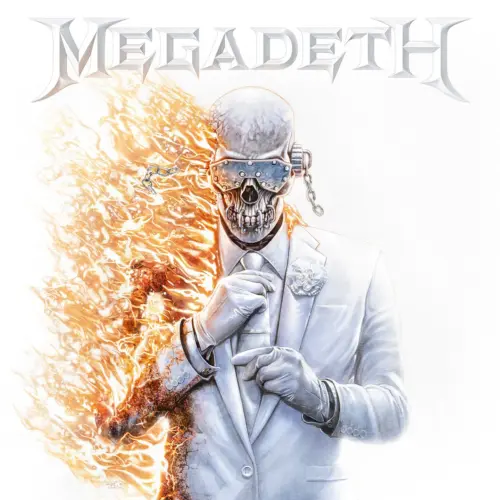
Despite the mostly close adherence to the same formula from song to song, Beyond the Black add enough variety to keep things from growing stale. Collaborators help in this regard, and they have two really good ones. Chris Harms (Lord of the Lost) lends his charismatic baritone on “The Art of Being Alone,” an entertaining bit of gothic metal that includes rather dramatic symphonic instrumentals and keyboards. My favorite track, “Let There Be Rain,” gets a boost from its collaboration with The Mystery of the Bulgarian Voices, a cheerful all-female choral group, as well as a nifty symphonic hook that puts a smile on my face. Break the Silence has a consistently high energy throughout—reaching near-thrash levels on “The Flood”—but a few songs break up the pace to avoid monotony, such as the more sober, arpeggio-driven “Ravens,” and the melodic adult rock of “(La Vie Est Un) Cinéma.” The consistently catchy hooks that permeate this varied record highlight just how talented this group is.

Unfortunately, some nagging issues and a weak-ish back half keep this from reaching the heights of fellow symphonic/pop group, Lord of the Lost. “The Flood” is a terrific tune hampered by an unfortunate decision to include prominent robo vocals that are more grating than cool, or whatever they’re meant to be. The two songs that follow, however, sink the record even further, as they lack any hooks to raise them above the fray. One of these is an unfortunate waste of the talents of Asami (Love Bites) in a bit of synth-pop on “Can You Hear Me” that had me wondering if I was listening to a cover of a Pink tune. The last couple of tracks do end Break the Silence on a stronger note, with the catchy chorus of “Hologram” and the aforementioned showstopper of “Weltschmerz.” These keep the record safely in the solid territory despite a brief weak streak.

Admittedly, I had no prior history with Beyond the Black, but based on the time I spent with their previous two albums, Break the Silence is a marked improvement. This is yet another pleasant surprise in the realm of symphonic metal released by the larger metal labels, along with last year’s two Lord of the Lost records. If this genre is in your wheelhouse, or you’re a fan of Beyond the Black’s prior work, you’re in for a treat. Fortunately, Break the Silence proves to be better than the soulless dreck that often floods this genre. It has heart, a powerful message, and, best of all, good music.


Rating: 3.0/5.0
DR: 6 | Format Reviewed: 256 kbps mp3
Label: Nuclear Blast Records
Website: Bandcamp | Facebook | Official Site
Releases Worldwide: January 9th, 2026

#2026 #30 #Aerosmith #BeyondTheBlack #BreakTheSilence #Darkyra #ElettraStorm #GermanMetal #HardRock #HeavyMetal #Jan26 #Korn #LordOfTheLost #LoveBites #NuclearBlastRecords #Pink #PowerMetal #Review #Reviews #Saxon #Scorpions #SymphonicMetal #TheMysteryOfTheBulgarianVoices #WithinTemptation

Client Info

Server: https://mastodon.social
Version: 2025.07
Repository: https://github.com/cyevgeniy/lmst