
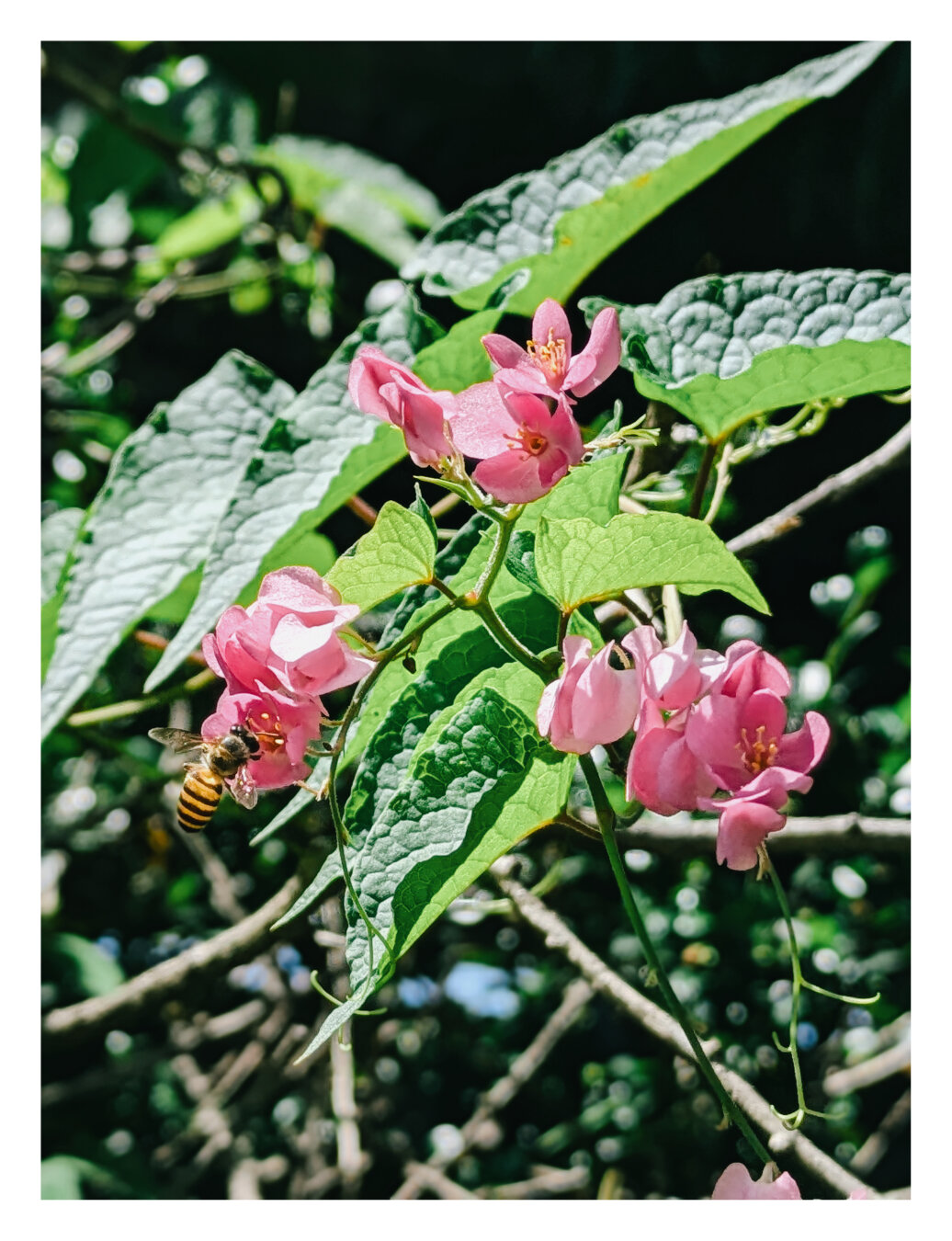
(a late #flowerfriday and early #insectsaturday post. Why not both?)
A #honeybee gathering nectar from a cluster of coral vine #flowers.
Shot on Google Pixel 7a. Edited in #Darktable
Jul 31, 2024
#bloomscrolling #naturephotography #flowerphotography #insectphotography #pixelfed #photography #amateurphotography #smartphonephotography #pixelography #googlepixel #pixel7a #teampixel #shotonpixel #nature #insects #coralvine #antigonon #polygonaceae #vines #plants #leaves #bees
#polygonaceae

Japanese knotweed (Reynoutria japonica) in a field of lesser celandine (Ficaria verna). I'm in Pennsylvania where they were originally introduced in 1800s, both as ornamentals. The Japanese knotweed was also planted for erosion control. Now horribly invasive but at least the bees like them. #JapaneseKnotweed #LesserCelandine #InvasiveSpecies #weeds #plants #ecology #pennsylvania #pollinators #polygonaceae #ranunculaceae

Japanese knotweed (𝘙𝘦𝘺𝘯𝘰𝘶𝘵𝘳𝘪𝘢 𝘫𝘢𝘱𝘰𝘯𝘪𝘤𝘢), from August of 2018:

𝗪𝗜𝗞𝗜𝗣𝗘𝗗𝗜𝗔 𝗣𝗜𝗖𝗧𝗨𝗥𝗘 𝗢𝗙 𝗧𝗛𝗘 𝗗𝗔𝗬
✧ Bistorta officinalis ✧
Bistorta officinalis, also known as the common bistort, is a species of flowering plant in the dock family Polygonaceae. It is native to Europe and northern and western Asia, but has also been cultivated and become naturalized in other parts of the world such as in the United States. It is typically found growing in moist me...
#UnitedStates #Polygonaceae #Asia #Europe #Alps #Wikipedia
https://en.wikipedia.org/wiki/Bistorta_officinalis

The dominant vegetation type of the Amazon coast is mangrove forest. However, the woody vegetation of dunes associated with the mangroves (but not within reach of the tides) is much more diverse. This is one of the few shrubs in these forests that seems to be restricted to coastal vegetation, Coccoloba ramossissima Wedd.
#Amazonas #dunes #Polygonaceae #mangroves #restinga #botany

Surround by Coccoloba uvifera #Polygonaceae … I must be on a beach in tropical America and the Caribbean


Client Info
Server: https://mastodon.social
Version: 2025.07
Repository: https://github.com/cyevgeniy/lmst