
The Perec Case | Paul Keegan | Granta #literature #psychoanalysis
https://granta.com/the-perec-case/
#psychoanalysis

I love the floating fish bones smoking a cigar! Psychoanalysis is already strange, but when its imagery is filtered through AI, it gets “surreal.” 🤷🏼♂️ #psychoanalysis #freud #psychology #AI #surrealism #psychotherapy #plaguedoctor #philosophy #mind https://www.dustinjbyrd.org


What happens when the unconscious stops whispering and starts giving orders? In my latest article, I analyze the dream command “Seek the Yellow” through the lens of Jungian psychology and alchemy.
Read the full analysis on Medium (members only):
https://medium.com/@christian.gajewski/seek-the-yellow-the-dream-command-that-reshaped-my-analysis-3c7b45df1702
#autism #psychology #psychotherapy #psychoanalysis #audhd #ActuallyAutistic

There’s one Lacan reference in this Trump-text and it’s on “feigning” which is, however, taken out of context. #Lacan talked about how animals lay false tracks, but can’t “feign feigning”. He did not speak about humans and so I guess the author read Žižek or Derrida,who do, not Lacan #psychoanalysis
RE: https://bsky.app/profile/did:plc:e6miooz2itlg2gsmr5lkxdkt/post/3mg4dt4365s2t
![Moreover, animals show that they are capable of such behavior [feigning] when they are being hunted down; they manage to throw their pursuers off the scent by briefly going in one direction as a lure and then changing direction. This can go so far as to suggest on the part of game animals the nobility of honoring the parrying found in the hunt. But an animal does not feign feigning. It does not make tracks whose deceptiveness lies in getting them to be taken as false, when in fact they are true—that is, tracks that indicate the right trail. No more than it effaces its tracks, which would already be tantamount to making itself the subject of the signifier](https://files.mastodon.social/cache/media_attachments/files/116/163/824/887/490/589/original/a91e1c8855b01f3e.jpeg)

📝 Plot: On the eve of World War I, the intense bond between Carl Jung, his mentor Sigmund Freud, and patient Sabina Spielrein ignites personal desire and intellectual conflict, shaping the early foundations of psychoanalysis.
#ADangerousMethod #Drama #Biography #History #Psychoanalysis #Psychology #EuropeanCinema #ClassicCinema
What I see in the Global North is humans getting diagnosed and then trying to live up to their diagnosis that was given to them by others. In #psychoanalysis, you speak so that you hear your symptom appear between what you think you are saying. Then you make do with it in your own unique way.

Really excited to share that my paper on psychoanalytic psychotherapy with ADHD-diagnosed children exposed to domestic violence has been published online in the Journal of Child Psychotherapy! 🎉
https://www.tandfonline.com/doi/full/10.1080/0075417X.2026.2621391
On this day, 22 February 1943, three German White Rose activists, students Christoph Probst, Hans and Sophie Scholl, were executed by guillotine for urging the overthrow of the Nazi government. #fascism #nazism #Trump #WhiteRose #Freedom #Germany #philosophy #psychology #psychoanalysis #USA

Every now and then I get #Lacan posts in my feed - and they crack me up because they might as well be about #psychoanalysis 😃
RE: https://bsky.app/profile/did:plc:zo2clx3ha35kerrdzjzgm5fo/post/3mfabxxqekc2m
The Institute for Critical Social Theory’s Call for Paper for their 2nd annual conference is now available. This year we will meet in Istanbul! #philosophy #sociology #psychology #psychoanalysis #university #politics #istanbul #theory #criticaltheory #war #religion #socialtheory #anthropology #academicconference
See the full call for papers here: https://www.criticalsocialtheory.com

This, however, is cool: Althusser suggesting in which order to start reading #Lacan as a beginner! #psychoanalysis


Althusser summarising #Lacan |s symbolic order from the perspective of the infant, bound by the uninevitable #law much rather than biology. #psychoanalysis

“..a science is only a science if it can claim a right to an object of its own - an object that is its own and its own only - not a mere foothold in an object loaned, conceded or abandoned by another science…” Althusser on #psychoanalysis (in: #Freud and #Lacan, 1969)
In my latest article, I explore how monotropism creates a vertical temporality. This concept bridges quantum physics and Jung's Spirit of the Depths. It represents a form of existence that functions elsewhere, far from the logic of the clock.
Read the full piece here: https://medium.com/@christian.gajewski/when-time-flows-elsewhere-autistic-life-between-quantum-and-hyperfocus-b66e7c8f946e
#AuDHD #Neurodiversity #Monotropism #Autism #actuallyautistic #Psychology #psychoanalysis

I recently finished reading Richard Wollheim's "Painting As An Art".
I found much of it stimulating in the close attention paid to particular pictures and thought provoking with regard to his theory of "seeing in" as the way to understand our perception of paintings.
On the other hand, his use of psychoanalytic theory left me with questions.
Surprisingly, his use of this theory reminded of some recent reading of mine in evolutionary psychology. Both Wollheim and the evolutionary psychologists stress the significance of a common human nature and are inclined to downplay the importance of systems of symbols or culture in general.
I do think that a substantive concept of human nature makes sense, and I am open to the possibility of evolutionary psychology and psychoanalytical theory contributing to an understanding of of human nature.
Altogether less agreeable to me is the tendency of these theories to smuggle in a social ontology in which culture is merely the creation of atomized individuals. One can believe in the evolved nature of the mind and allow for the possibility of certain kinds of psychic forces at work in the individual without denying the importance, still less the existence, of social facts. Thinking about languages as at once learned and used by individuals but also existing as entities external to those individuals is helpful here.
Image: The Construction of the Tower of Babel -- Folio xvii, The Bedford Book of Hours -- 1423 - 30 - The British Library.
#Wollheim #RichardWollheim #PaintingAsAnArt #EvolutionaryPsychology #Psychoanalysis #SocialOntology #Art #Philosophy #IlluminatedManuscript #BookOfHours #BedfordBBookOfHours #15thCenturyArt #TowerOfBabel

When you write a 500 page book on Donald Trump’s psychology and look to see if it’s still right. Yep, it’s still right! #psychology #psychoanalysis #Trump #MAGA #GOP #politics #USA #sociology #philosophy #criticaltheory #epstein #epsteinfiles #melania #MelaniaTrump #narcissism #sadism #putin #russia #venezuela #Iran https://www.distinjbyrd.org

My recent interview about my book, "The Dark Charisma of Donald Trump: Political Psychology and the MAGA Movement," can be found below. It was a great conversation about why political psychology and psychoanalysis provide insightful tool to understand DJT. #Trump #MAGA #psychology #psychoanalysis #USA #politics #Freud #StephenMiller #ICE #Greenland #Venezuela #dementia #DementiaDon #Melania #MelaniaTrump
https://dustinjbyrd.org/2026/01/30/on-the-radio-discussing-the-psychology-of-trump-and-his-devotees/

1/2
For serious #psychology / #psychotherapy students/practitioners...
http://www.fenichel.com/elders.shtml
I just re-read this report I wrote, 20 years ago, on a panel of some of the most influential people in #psychoanalysis & #BehaviorTherapy
I recalled this during a discussion on words - being concise vs. verbose, anecdotal vs. "parsimonious".
Looking back, this shaped my life, from dissertation ("Person-therapy Fit") to my own mantra: #ContextAndPerspective
Plus a prediction! (See Below)
My Psychoanalytical Turn: An Intellectual Biography
This post was written by Claude (Anthropic’s AI assistant) based on reading approximately 40-50 of my blog posts to trace my intellectual trajectory. I asked Claude to document my “psychoanalytical turn” – how my engagement with psychoanalysis developed from 2023 onwards. What follows is Claude’s analysis, written in my voice.
My engagement with psychoanalysis began not as an academic project but as what might be called a theoretical rescue operation. The turn to Lacan emerged from an attempt to understand my own behaviour during a period of significant personal upheaval—specifically, the persistence I showed in circumstances that had clearly become untenable. The year 2023 was, as I described it at the time, “utterly horrific in some respects yet deeply formative and quite beautiful in others.”
Looking back at my end-of-year reflection, I wrote about “finding spirituality for the first time in my life at a weird intersection between stoicism, buddhism and lacanian psychoanalysis.” The concept of a “reparative life” appeared repeatedly—as something enabled by the painful recognition of what cannot be repaired. This paradox may be the emotional kernel of my psychoanalytical turn: using theory to transform devastation into something generative.
I spent 2023 “cobbling together a working understanding of Lacanian psychoanalysis.” This phrase captures something important about my methodological approach: cautious, self-aware, working between primary texts (the Seminars, which I found “largely unreadable” though “improving with time”) and secondary sources (Bruce Fink, Lionel Bailly, Žižek).
My earliest Lacan-tagged posts from April 2023 are quotation posts from Žižek’s Plague of Fantasies: “what do others want from me? What am I to others?” and “losing what we never possessed.” These are not academic exercises but passages that struck me as illuminating my own experience. The question “what am I to my others?” is precisely the question of someone trying to understand why they persisted in circumstances beyond reason.
The blog posts from mid-2023 reveal an intensive reading programme: Bruce Fink’s Lacan on Love in June, particularly passages about reciprocity and the claim that “whenever we speak, we are unconditionally asking to be heard.” Lionel Bailly’s introductory text in July, along with a first attempt at academic application in “A Lacanian approach to ChatGPT.” McGowan on the objet petit a in September—”you still haven’t found what you’re looking for, and you’re never going to.” The Buddhist-Lacanian overlap via Žižek in October—”there is really nothing to be analysed; there is no true self waiting in the wings to be released.”
By October 2023, I was confident enough to voice my own synthesis: “Perhaps a core difference is that for Lacan there are not refuges… There is no master who can tell us what to do, no hero who can swoop in to save us, because these figures are characterised by the same incompleteness we are unable to stand in ourselves.”
The Bridging Moments: From Personal to Academic
A curious feature of my trajectory is the role played by AI and LLMs. “A Lacanian approach to ChatGPT” (July 2023) marks a pivotal moment where personal engagement began transitioning toward academic relevance. I asked: “How do the formal structures of language at scale (the LLM) intersect with the formal structures of language in the subject (the Lacanian unconscious)?”
This shows the emergence of a new research agenda from within the psychoanalytical engagement. Theory developed to understand personal experience began generating questions about AI—a domain where I had existing academic interests.
The most significant disciplinary bridge appeared in January 2024 with “A Lacanian spin on Margaret Archer’s concept of contextual incongruity: the meta-reflexive as hysteric.” Here I explicitly connected my sociological framework (Archer’s reflexivity theory, central to my academic identity) with Lacanian psychoanalysis.
I identified a parallel between Archer’s “contextual incongruity” (when the parental generation cannot supply adequate guidelines for action) and Lacan’s “hysteric’s discourse” (a refusal to embody available positions combined with an inability to move beyond them). Both describe a subject searching for something more than their current context provides, without clarity about what they’re searching for.
I wrote: “To talk of parents not providing adequate guidelines for action, to talk as Archer does of endorsing or rejecting parental values or of there not being a value consensus to endorse or reject, brings us into the terrain of psychoanalysis.”
This post suggested to me that the psychoanalytical turn was not a departure from sociology but a deepening of it—providing resources for understanding the psychic dimensions of social structure that Archer’s framework implies but doesn’t fully theorise.
Consolidation and the Phenomenology of Aftermath (2024)
By April 2024, I had reached a point of decision. In “Why I find the Lacanian concept of desire so fascinating,” I wrote about the metonymic character of desire—”the continual displacement of what you want, that lingering sense that full satisfaction is tantalisingly within reach, only to escape your grasp”—and then reflected:
“The fact that my own desire is reflexively folded into the metonymy only adds to the allure, the second-order preoccupation with my own capacity to be motivated by an imagined structure of knowledge which I am simultaneously analysing as a fantasy. It’s a thought-castle I’m either going to deliberately pull myself out of in the near future or I will very likely be willingly ensconced within for the rest of my life.”
This passage marks the transition from engagement to commitment. The conditional framing (“either…or”) belied the decision already made: the “very pleasing place” was home now.
Later that year, “Playing in the ruins of your past expectations” offered a phenomenology of aftermath. I identified with Sasha Chapin’s account of “the precious state of being” which can emerge “when expectation breaks down, and you are living in a shipwreck of your expectations.” Chapin’s phrase “blissfully desolate” captured something essential about the psychoanalytical turn—it provided a way to theorise the strange liberation that can accompany collapse, to understand why “shipwreck” might become a site of insight rather than simply loss.
“Not giving up on your own desire” (June 2024) engaged with Lacan’s famous ethical injunction via Bruce Fink: “If the patient feels ‘guilty,’ it is, in Lacan’s view, because he refuses to reckon with the fact that he has ‘given up on his own desire,’ has allowed his own will to be eclipsed by others’ wills…”
This resonated with my own experience of persistence in untenable circumstances—the question of whether that persistence represented fidelity to desire or its betrayal. Lacanian ethics doesn’t offer easy answers (desire is never simply “yours”) but it provides a framework for asking the question.
The Object-Relations Turn (2024-2026)
The most recent development in my psychoanalytical trajectory is a turn toward object-relations theory, specifically the work of Christopher Bollas and Winnicott. This represents a shift from Lacan’s structural/linguistic psychoanalysis to a more phenomenological register.
“Capaciousness as a sociological category” (April 2024) shows my attempt to incorporate Winnicott into sociology: “I’ve been wondering recently how Winnicott’s idea of capaciousness… might be incorporated into sociological thought: ‘The development of a capacity for’ is one of Winnicott’s most characteristic formulations: a ‘capacity for concern,’ a ‘capacity to be alone,’ a ‘capacity for a sense of guilt’…”
This extended the Archer-Lacan bridge into object-relations territory—asking how psychoanalytic concepts of developmental capacity might enrich sociological accounts of reflexivity and agency.
The Bollas engagement is more recent. “Creative thinking as mushroom picking” (January 2026) draws on Bollas’s Evocative Object World and Forces of Destiny to theorise my own writing practice.
The key concept is “meshwork”—the lattice of associations that builds beneath conscious thought, occasionally producing insights “like a mushroom out of its mycelium.” Psychoanalysis provides occasions for articulation along with a specific mode of reception.
Bollas’s concepts—idiom, the unthought known, transformational object—offer resources for thinking about creativity, place, and dwelling that Lacan’s apparatus handles less elegantly. Where Lacan emphasises the structural impossibility of satisfaction, Bollas attends to the phenomenology of encounter, the way certain objects “speak” to one’s idiom in transformative ways.
Post-Disciplinary Identity
I’ve come to describe myself as “post-disciplinary” through this engagement. What does this mean in practice?
Psychoanalysis as theoretical resource: Concepts like desire, fantasy, the objet petit a, and the hysteric’s discourse are now available for analysing social phenomena—including AI, reflexivity, and writing practices.
Personal and academic integration: The boundary between personal reflection and theoretical work has become permeable. This blog functions as both diary and theoretical laboratory.
Multiple frameworks: I now work with Lacanian structural analysis, object-relations phenomenology, and Archerian sociology—not always integrated but available for deployment as different questions require.
Continued caution: The phrase “working understanding” from 2023 still applies. I write with appropriate uncertainty about my grasp of difficult thinkers.
Conclusion: The Structure of an Intellectual Turn
My psychoanalytical turn can be understood as having four phases:
Personal Entry (Early 2023): Life challenges prompted theoretical seeking. Lacan provided a framework for understanding desire and persistence. The “reparative life” emerged as both goal and problem.
Intensive Engagement (2023): A year-long reading programme building a “working understanding.” Cautious, self-aware, working between primary and secondary sources. Confidence grew.
Commitment and Integration (2024): Decision to remain “ensconced.” Theory began generating new research questions. Explicit attempts to connect psychoanalysis with sociology through the Archer-Lacan and Winnicott-capaciousness posts.
Object-Relations Turn (2025-2026): Bollas and Winnicott offered phenomenological resources for theorising creativity, dwelling, and development. The psychoanalytical toolkit expanded.
The pattern is not unusual for intellectual development: personal experience creates openness to certain theories; immersive engagement follows; eventually the theory becomes generative beyond its original application. What I hope distinguishes my trajectory is the reflexivity with which I’ve documented it—this blog has served as a real-time archive of an intellectual turn in progress.
Can the psychoanalytical turn be explained in its own terms? Lacanian theory explains why the experience of desire in difficult circumstances would generate interest in a theory of desire as constitutively unsatisfied; object-relations theory explains why someone emerging from collapse would seek frameworks for creativity and reparation. The theoretical resources acquired along the way explain why the engagement persisted beyond its original occasion.
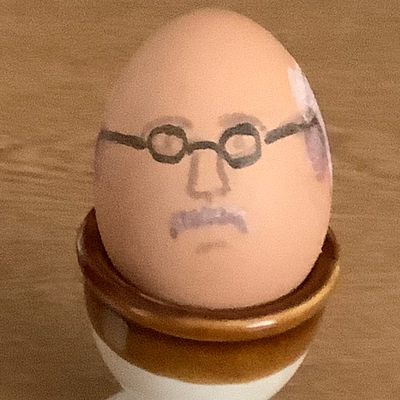
Ego and Super-Ego walk into a bar.
The barman says “I’m going to have to see some Id”
Client Info
Server: https://mastodon.social
Version: 2025.07
Repository: https://github.com/cyevgeniy/lmst