
Canon’s New EL-1 V2 Speedlite Costs More and Offers Less: Weaker Power for $1,349 https://petapixel.com/2025/07/17/canons-new-el-1-v2-speedlite-costs-more-and-offers-less-weaker-power-for-1349/ #canonel1v2 #speedlight #Equipment #speedlite #Lighting #canonel1 #Canon #flash #News
#speedlite

Perfect for capturing those perfect shots with precision and speed. Whether you're shooting portraits, events, or creative projects, this Digitek (DFL-101) Electronic Flash Speedlite gives you the flexibility and control you need.
Perfect for photographers who demand reliability, flexibility, and powerful performance.
Offer Price: Rs. 2,799.00
M.R.P: Rs. 2,995.00
Shop Now: https://tinyurl.com/5n9bf7t3
#Digitek #PhotographyGear #Speedlite #CameraAccessories #Photography #EventPhotograph

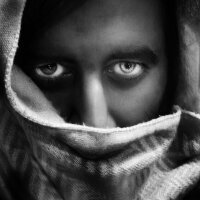
[9548] - 2019;
Back to high-speed (I miss working in that niche indeed!). Something from the "pre-COVID" era. I made such a mess with this!
What's fascinating about high-speed, specially if you work without any aiding tools (like Gates or triggers), is that the experimentation becomes surreal somewhat, and the more you work with it, the more your eyes and hands get synchronized, and the more amazing moments you'd discover the more shots you make; and it gets wild with water specifically.
I've stopped posting shot info but for those interested or whatever:
- Canon EOS 7D.
- Canon EF 50mm f/1.4 USM.
- f/6.3.
- 1/8000 sec.
- ISO200.
- 580EXII, 430EXII.
#highspeed #HSS #dice #die #water #splash #high_speed #speedlite #flash #action #motion #fall #falling #surreal #surrealism #goodmorning
Back to high-speed (I miss working in that niche indeed!). Something from the "pre-COVID" era. I made such a mess with this!
What's fascinating about high-speed, specially if you work without any aiding tools (like Gates or triggers), is that the experimentation becomes surreal somewhat, and the more you work with it, the more your eyes and hands get synchronized, and the more amazing moments you'd discover the more shots you make; and it gets wild with water specifically.
I've stopped posting shot info but for those interested or whatever:
- Canon EOS 7D.
- Canon EF 50mm f/1.4 USM.
- f/6.3.
- 1/8000 sec.
- ISO200.
- 580EXII, 430EXII.
#highspeed #HSS #dice #die #water #splash #high_speed #speedlite #flash #action #motion #fall #falling #surreal #surrealism #goodmorning


Riding fixed through Gartencross like it's 2023.
Shot with Canon 6D, EF 24-105 mm on the wide end and Godox TT 685 II speedlite.
#gartencross #cologne #cycling #cyclocross #fixedgear #flashphotography #speedlite #bicycle #photography
Shot with Canon 6D, EF 24-105 mm on the wide end and Godox TT 685 II speedlite.
#gartencross #cologne #cycling #cyclocross #fixedgear #flashphotography #speedlite #bicycle #photography
OK, back to my archival posts (since I couldn't shoot anything new), with some high speed from 2017. I think I've placed a piece of aluminum foil, sprinkled some water on it and started to bounce a ball. Back then I didn't have much except for one speedlite (and definitely it is better to work with at least 2 when doing high-speed shots).
#ball #water #highspeed #HSS #high_speed #speedlite #abstract #surreal
#ball #water #highspeed #HSS #high_speed #speedlite #abstract #surreal
Some stroboscopic shot from 2019. It looks as if it was shot with HSS but it's not (you can notice the double ghost of the dice because of more than one strike of flash).
#stroboscopic #speedlite #water #dice #die
Something from 2019, when I was experimenting with die and water in high-speed. In this post, this is the first time I use a filter from Pixelfed. I'm trying to compensate for the dull colors, as my images are usually saved in Adobe 1998 color space and it seems Pixelfed doesn't identify this space so things are pulled back to sRGB space, which makes the colors appear dull and less saturated here. This said, I'm having some ideas at the back of my head and will try to take some new pics soon (also shot some with my phone so I might process those as well, we'll see).
#highspeed #high_speed #HSS #die #dice #water #splash #speedlite
#highspeed #high_speed #HSS #die #dice #water #splash #speedlite

Canon’s EL-1 Strobe Has Been Out of Stock for ‘Over a Year’ https://petapixel.com/2024/09/06/canons-el-1-strobe-has-been-out-of-stock-for-over-a-year/ #canonel1speedlight #canonspeedliteel1 #outofstock #Equipment #speedlite #shortage #Canon #News #el1
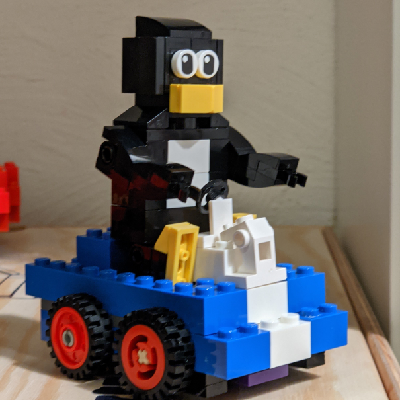
Ich bin geizig, was mein Equipment angeht: Mein zweites #Neewer #Speedlite ist vor zwo Jahren kaputt gegangen. Jetzt konnte ich einen Doppelpack #Neewer TT560 für unter 100€ ergattern. Damit hab ich endlich drei entfesselte Blitze und es ist klar, was das für unsere weihnachtlichen #Porträt|s bedeutet: https://strobist.blogspot.com/2010/06/upgrade-your-rims.html
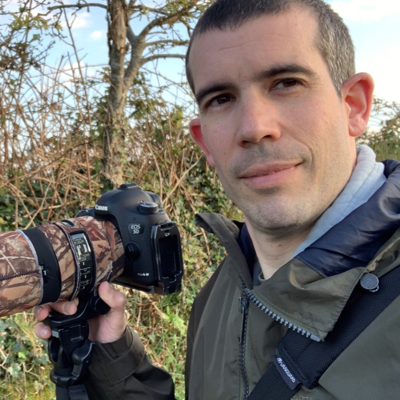
A robber fly, captured with the Godox MF-12 Macro Flash Kit which I have just written a review about on my website which you can see here: https://ianlewisphoto.co.uk/gear/mf12-flashes/ Including more images captured using these great lights.
#macro #closeup #photography #kit #gear #review #godox #flash #speedlite #robber #fly #insect #nature #wildlife #lighting #detail

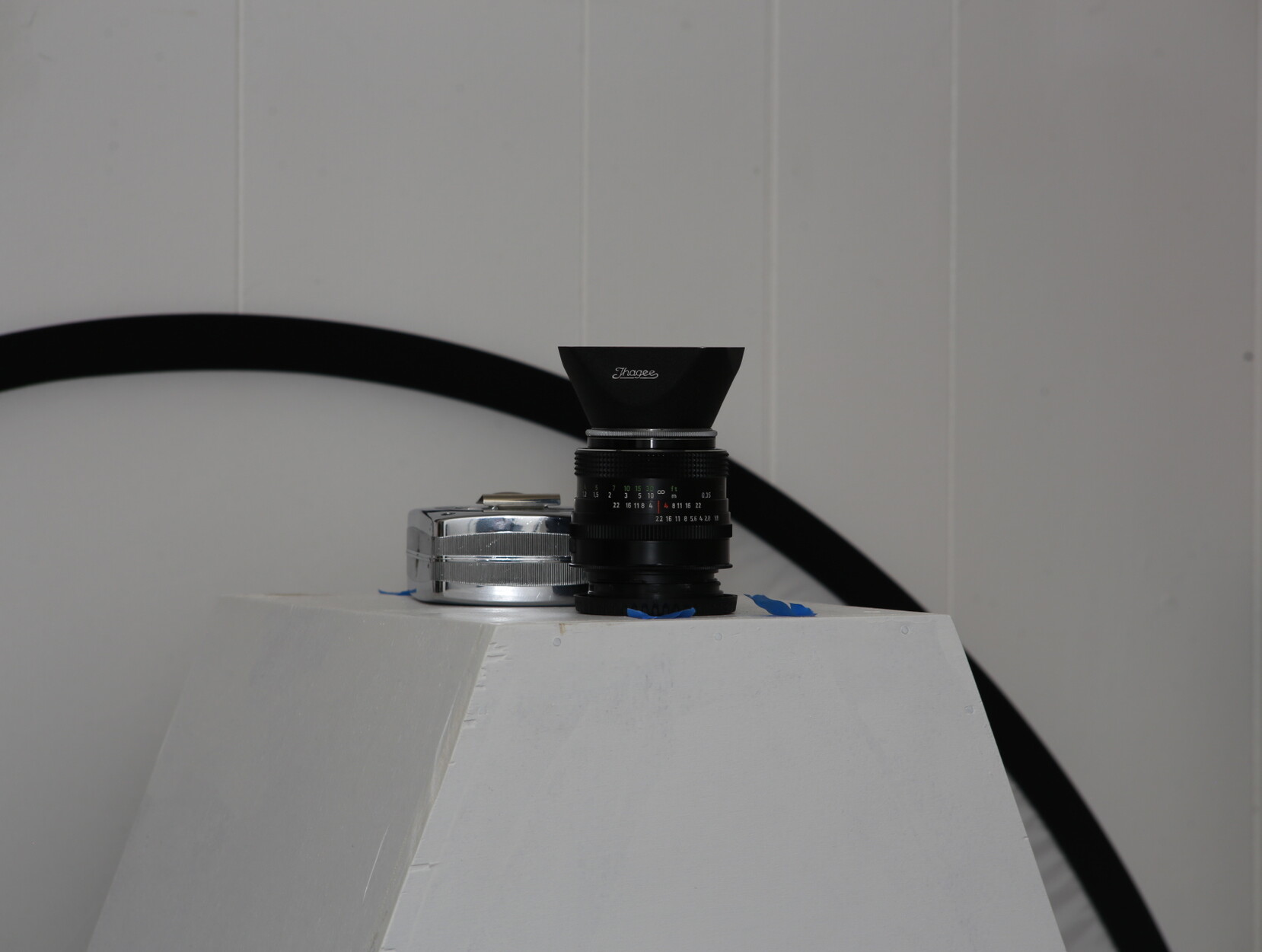
Continuing my adventure in #vintage and #adapted #lenses here I tested this $7 on ebay #Prackticar #Pentacon 135mm f2.8. the bokeh is truly great and it is very sharp even wide open. I put this #Pancolar lens across the room maybe 10ft away and it can see the text. I set it to #ISO200 and used a #speedlite. Otherwise it would have been very grainy.



An Intro to Flash Types in Photography, from 70W to 4800W
There are literally hundreds of different flashes on the market. With brands competing for attention and offering some very unique features, it is often hard to decide which flash to pick. What is more, buying a flash is sometimes like buying a whole lighting system. If someone buys Profoto they are likely to stick with it for a long time because it’s part of a lighting system , not just one flash.
In this introductory article, I will break down some common flashes and dive into their pros and cons.
There are three main types of flashes on the market: speedlights (AKA battery-powered portable flashes), monolights, and pack-and-head systems. They may be battery-powered or not, and of course, they all accept a range of specialized modifiers. Some are better on location, while others are a king in the studio.
Let’s go through these types one by one:
Speedlights
The first flash most photographers buy is a speedlight. It’s a no-brainer for beginners: with its compact size and considerably larger light output than built-in flashes, it seems like the next step in being more "pro."
A speedlight is always battery-powered, small, portable. Due to the size and battery power, it produces a fairly low light output when compared to studio strobes. Don’t expect to be able to light up a large scene using one speedlight. An average speedlight might have 70W of power, while a studio strobe can have 500W or more.
Speedlights (and some studio strobes) have TTL, which is Through The Lens metering. It allows setting light power automatically, which saves time in some cases. Another feature is zoom -- almost all speedlights have a zoomable head. This can be handy when you’re using a telephoto lens and need to cover a small area at 180mm rather than wide at 18mm
A great niche feature of the speedlight is its extremely short flash duration at low (1/4 or less) output. Still-life photographers may tape four or even six of them together to be able to freeze motion. What is less welcome is wild output and color inconsistency shot to shot. Interfaces can be confusing too.
Due to its small size and low output, it often doesn't make sense to use speedlights with light shaping tools. Small softboxes, bounce cards, or gels are among the only options you may have. More commonly photographers will bounce their speedlights against a wall, ceiling, or other large surfaces.
Pros
- Small size
- Low price
- TTL mode
- A lot more powerful than the built-in flash
Cons
- Low light output
- Color inaccuracies shot to shot
- Little to none modifier options
- Slow recycle times
Monolights
A step up from speedlights are monolights. As the name suggests: everything is in one unit. Battery-powered and mains-powered monolights are quite different, so we will consider them separately. Monolights are quite heavy, and booming them on a light stand requires quite a few sandbags.
Battery-Powered Monolights
Those are fantastic on location. They have large output, anywhere from 300 to 500W, which is plenty to overpower the sun. Battery capacity is enough for 200-300 full-power flashes. Broncolor’s Siros 800 can do 800W Because they are bigger lights with higher output, they will be considerably large and require a separate light stand.
On the other hand, battery-powered monolights will be able to accept all modifiers natively (given mounts are appropriate). Recycle time at full power can be quite short. For example, Godox AD600 will recycle in 0.9 sec and full power. Color consistency is also much improved -- the Profoto B1x has a negligible color shift across the whole range.
Compared to speedlights and mains-powered monolights, these can run quite expensive.
Pros
- A lot of power on-location
- Modelling lamp usable for video
- Portable
- Hundreds of modifiers are available
- TTL in most new lights
- Can be used over long distances
Cons
- Need stands and remotes to work
- Take up more space in a camera bag
- Battery life can be short
- Recycle times at high power can be above 1s.
- Spare batteries required
- Stands are top-heavy
Mains-Powered Monolights
Take the battery away, and you get a mains-powered light. These are the first choices for photographers working in studios. Compared to battery-powered lights, these will have faster recycle times, shorter flash duration, and be lighter. The size will be pretty much the same -- a lot of battery-power monolights have mains siblings.
Some mains-powered monolights can go all the way to 1200W of power, which is a welcomed addition when using large modifiers or needing to cover huge sets. With the benefits of mains power comes the biggest disadvantage: portability. You can’t grab and go.
Pros
- Faster recycle times than battery-powered monoligjts
- Modifiers available
- Powerful modelling lamps
- Everything in one package
Cons
- Need mains power to work
- Stands are top-heavy
- Hard to control as dials are on the light itself – need to climb up if the remote doesn't offer a power adjustment option
Pack and Head
A classic among many seasoned pros. The power output is often 1000W to 4800W. These packs are the most expensive option, but again there are two choices: mains or battery powered. A pack-and-head system is the bulkiest one you can have, but with large size come large benefits (if you don’t mind the size of course).
Battery-Powered Pack-and-Head
A battery-powered pack-and-head system is one of the best on-location choices if you want to have decent power and no heavy lights up in the air. Some great options are Broncolor’s Move pack that has 1200W of power.
Because the head is lighter than a speedlight, it isn't a problem to hold for long periods of time. Moreover, compared to a similar monolight system, the pack-and-head will recycle a lot faster.
A drawback would be a lack of range. If you’re using multiple lights from one pack, the cable length will restrict how far you can have them. Batteries tend to be very heavy for these too, but if you are shooting at half the power (600W), you get an impressive amount of flashes compared to a similar monolight system.
Another drawback is that adding lights eats up power. For example, if a pack is rated at 1200W and has two sockets, it will distribute that power over the number of lights connected. One light at full power can output 1200W, but add a second one, and that 1200W is cut into a ratio you pick. Suddenly maximum power from each socket is reduced.
Pros
- Long-lasting battery
- No unnecessary weight on stands
- Controls on ground
- Fast recycling times compared to monolights
- Most have the option to trickle charge in from mains while in use.
- Work with all modifiers and have enough umph for giant modifiers.
Cons
- Bulky and heavy
- Lack of range due to cable length
- Extension cables eat up power
- Expensive
- Batteries are huge and take a long time to charge
- Each head eats up power
Mains-Powered Pack-and-Head
While I can’t say that this is the most professional of them all, it is the most commonly found lighting solution for large productions, rental studios, and anything of scale. Mains-powered pack-and-head systems have incredible recycle speeds, the shortest flash duration on the market, and color consistency like no other. Some brands offer solutions to program them into lighting patterns.
Most pack-and-head systems offer two or three sockets. It has become industry standard to have anywhere between 1200W to 3200W of power in total with the full asymmetric distribution. As far as reliability goes, they are the best. Photographers can buy a pack-and-head system from decades ago and use it day in day out without major worries.
Pack-and-head lighting systems are very expensive and weigh a ton. For some, two or three sockets may not be enough. From experience, I tend to have two packs on set. That may not be enough, sets can get crazy with four or more packs. Due to the high cost, very few photographers own pack-and-head systems -- they are rented from rental houses.
Pros
- Extremely reliable
- Consistent
- Fast recycling times
- Controls on the ground
- Heads are light – no unnecessary top-heavy stands
- Work with every modifier
- Great for big modifiers
- Highest power available
Cons
- Bulky and heavy
- Lack of range due to cable length
- Extension cables eat up power
- Expensive
- Each added light cuts power
So there you have it, a guide to flashes from 70W to 4800W. Now go forth and light!
#educational #equipment #101 #flashes #flashtypes #gear #illyaovchar #learn #lighting #monolight #packandhead #portraiture #speedlight #speedlite
Comparing the Max Power of Godox Strobes, Speedlites, and LEDs
Why is it so difficult to compare one light to another? It would be bad enough to say that watts, LUX, watt-seconds, and guide numbers aren’t directly comparable. And unless you’ve been around lights for a long time, these measurements won’t even make intuitive sense.
Born from this frustration, I give you the Strobepro Power Scale we developed over at Strobepro! Before we get into it, here are a few disclaimers:
1. Practicality was the goal
If I set out to do an apples-to-apples comparison in every respect, I believe the usefulness of the data would have suffered. Different lights are meant to be used in different ways. For example, a studio strobe will usually be modified in some way, while portable LED panels are best suited as hard, unmodified lights.
For this reason, all studio strobes, speedlights, and COB LED lights were tested with a 24×36″ softbox attached. Most other lights were unmodified unless otherwise stated (see the legend below).
2. Comparing continuous lights to strobes is assumptive
When a strobe flashes, it releases its energy over a very short period of time. That energy is released over the same period of time regardless of your shutter speed. Therefore, we must think of the time value for a flash exposure as fixed. That’s why shutter speed (up to your maximum sync speed) has no effect on flash exposure.
On the other hand, a continuous light will light your scene for the entire duration that your shutter allows. The time value for an exposure with a continuous light is variable.
Therefore, in order to compare continuous lights and strobes, we must set a benchmark shutter speed. Because we want this to be a good comparison, I chose 1/125 of a second (a decent shutter speed for a typical portrait subject). If you can get sharp results with slower shutter speeds, then power to you!
1/50 to 1/60 of a second would be more typical for video production (assuming you’re shooting at 24-30p), but we can’t exactly do a video-based comparison with strobes on the same list! Nonetheless, you can typically expect to gain a stop of light when you’re shooting video.
3. Distance is always a factor
If some of the exposure results I recorded seem underwhelming, please note that my test target with my light meter was 6 feet away from the source (measured from the front of the light surface or the front diffuser). If you want your light to punch above its weight class, the best thing you can do is to move it closer! If you reduce the distance from 6 feet to 3 feet, your light becomes an effective two stops (4x) brighter.
It is exactly because of this behavior (the inverse square law of light) that I chose to position my lights a little further back than I might in a typical portrait session. From 6 feet away, I would gain a few inches’ margin for error with my measuring tape.
Setup and Method
I used a Sekonic L478-D light meter positioned (as mentioned) 6 feet from the front surface of the light. A target grey was also used so that I could cross-reference image data to the data I collected from my meter. All lights were compared at their maximum power. In the case of bi-color LEDs, the color temperature that produced the brightest result was used.
Once the data was collected, I rounded each result to the nearest third of a stop and charted it on the scale below.
The Scale
Note : Products were modified for the test as indicated:
Strobepro 24 ×36” Rapid Pro Softbox: Studio Strobes, Speedlites, COB LED Lights
Product-specific Softbox: Flex LED Panels, Strobepro Quadstar
Unmodified: LED Panels, LED Tube Lights, LED Ring Lights
How to Read the Data
The Strobepro Power Rating compares maximum power.
All of these lights can be adjusted down from their maximums to varying degrees.
To read this data, you’ll need to understand what a stop of light is. If you are new to photography, you should familiarize yourself with this term. 'Stop' is shorthand for f-stop, but we can apply it to any form of light and not just to the light being let in through your aperture. Each time you add a stop, you are doubling your light.
Each whole number in either column represents a stop of light.
For example, the Godox TL60 (power rating 3.0) is two stops (4x) brighter than the Godox R1 (power rating 1.0).
The 2nd column shows the data I collected based on the target exposure. For the target exposure, I used 1/125 of a second, f/4, and ISO 100 at a 6-foot distance from my light meter (measured from the front of the light surface or the front diffuser). A positive number indicates overexposure at the target settings, and a negative number indicates underexposure. For example, the full power flash from our QS600II was a whole 3.7 stops overexposed at those settings.
The 3rd column simply provides distilled data using our weakest light (the R1) as the baseline.
To determine how much brighter one light is than another, take the Strobepro Power Rating of the stronger light and subtract the rating of the weaker light. The result is the brightness difference in stops.
Suggested Uses by Power Rating
Beyond comparing one light to another, there are other useful things we can do with this data. We’ve prepared some general recommendations in the chart below to help you decide which lights might meet your minimum power requirements.
Conclusion
I hope you found this information useful. I sought to declutter the process of comparing various types of lights. Without seeing the lights in real space, it was always a particular challenge to explain how continuous lights might balance with strobes. No longer!
About the author : Kevin Greenhough is a portrait and travel photographer, and the media coordinator for Strobepro Studio Lighting. You can find his work on his personal website. This article was also published here.
#educational #equipment #comparison #godox #led #lighting #speedlite #strobe #strobepropowerscale
Client Info
Server: https://mastodon.social
Version: 2025.07
Repository: https://github.com/cyevgeniy/lmst