
Discover how the giant star WOH G64, one of the largest known, transformed in 2014 and might be heading for a supernova. Learn about its rare shift from red supergiant to yellow hypergiant. https://english.mathrubhumi.com/technology/science/massive-star-woh-g64-supernova-transformation-eegzllpd?utm_source=dlvr.it&utm_medium=mastodon #WOHG64 #Supernova #Astronomy #SpaceScience #StellarEvolution
#stellarEvolution


Supernovae come in two types. Core-collapse supernovae result from massive stars exhausting fuel. Thermonuclear supernovae are triggered by white dwarfs accreting mass or merging. Both produce expanding SNRs that can leave neutron stars or black holes.

⭐ The stars that guided ancient navigators are aging through cosmic epochs. Our Sun transforms across ten billion years, swelling from a G-type main-sequence star to a red giant, forging helium now, and later carbon and oxygen in its core.
✍️ Explore stellar aging 🌟: https://TPC8.short.gy/9fmc40pU
🌠 Every atom remembers its stellar birth
#Astronomy #StellarEvolution #CosmicTime #Science #Space #Cosmology #Astrophysics #TPC8

The Star That Jumped Through Time 🌟⏳
Imagine finding a modern artifact inside an ancient fossil—that is the level of scientific paradox recently discovered by the Gaia telescope. Astronomers have spotted a red giant star orbiting the black hole Gaia BH2 that simply shouldn't exist as it currently does.
#Astronomy #NASA #SpaceDiscovery #GaiaTelescope #Astrophysics #ScienceNews #UniverseMystery #StellarEvolution #Cosmology #Physics #BlackHole
https://www.thesciencechannel.org/this-star-belongs-to-an-older-universe-what-is-it-doing-here/
🌌 Some cosmic objects exist at the threshold. Too massive for planetary peace, too small for stellar fire, they drift through ages in slow surrender to darkness.
✍️ Discover these failed stars between worlds 🔭: https://TPC8.short.gy/OdqADo74
✨ Where physics draws boundaries, nature paints twilight
#BrownDwarfs #Astrophysics #CosmicThresholds #Physics #StellarEvolution #Astronomy #Space #TPC8
⭐ Every star that lights the night once faced an impossible challenge: transforming from a cold, dark cloud into nuclear fire. The universe demands precise conditions most clouds never achieve.
✍️ Discover what separates failed attempts from blazing success 🌟: https://TPC8.short.gy/WeAxAQoa
🌌 In cosmic depths, gravity whispers secrets of stellar birth
#Astrophysics #StarFormation #StellarEvolution #Astronomy #SciComm #Physics #Space #TPC8

The Life Cycle of Stars: From Nebulae to Stellar evolution
Stellar evolution | The Cosmic Engines: Why Stars Define the Universe
Stars are not just twinkling points of light in the night sky; they are the fundamental engines of the cosmos. The study of stellar evolution—the process by which a star changes over its lifetime—is central to astronomy because stars govern the structure, chemistry, and very habitability of the universe. Every star follows a predictable life cycle dictated by a single, simple property: its initial mass. A star’s mass determines its internal temperature, its luminosity, its lifetime, and its ultimate, often violent, fate. The narrative of stellar evolution is a story of constant battle between two opposing forces: gravity, which seeks to crush the star inward, and the pressure from nuclear fusion in its core, which pushes outward. For the vast majority of a star’s life, these forces are in a stable balance, but this equilibrium cannot last forever. As a star exhausts its nuclear fuel, gravity gains the upper hand, leading to a series of dramatic transformations that seed the galaxy with heavy elements, trigger the formation of new stars, and leave behind exotic remnants like black holes and neutron stars. Understanding stellar evolution explains the origin of every atom in our bodies (we are literally “star stuff,” as Carl Sagan famously said), the light that illuminates planets, and the explosive events that shape galaxies. From the majestic pillars of star-forming nebulae to the eerie glow of supernova remnants, the life cycle of stars is the grand narrative that connects the birth of the universe in the Big Bang to the existence of life on Earth.
The story begins in the cold, dark clouds of gas and dust scattered throughout galaxies, known as nebulae or molecular clouds. Regions like the Orion Nebula are stellar nurseries. Within these clouds, local pockets can become gravitationally unstable, often triggered by a shockwave from a nearby supernova or the collision of gas clouds. As such a pocket collapses under its own gravity, it spins faster and flattens into a protostellar disk. The central ball of gas, the protostar, heats up as it contracts. When the core temperature reaches about 10 million Kelvin, a nuclear fusion reaction ignites: hydrogen nuclei (protons) fuse to form helium, releasing enormous amounts of energy. This is the moment a star is truly born, joining the main sequence—the long, stable adult phase of its life where it will spend about 90% of its existence. On the main sequence, a star’s position is fixed by its mass. Massive, hot, blue stars are luminous but short-lived, burning out in just a few million years. Low-mass, cooler, red stars are frugal with their fuel and can shine for trillions of years. Our Sun, a medium-mass, yellow dwarf star, has a main sequence lifetime of about 10 billion years; it is currently middle-aged, about 4.6 billion years old. During this stable phase, the star is in hydrostatic equilibrium, with outward pressure from fusion perfectly balancing inward gravitational pressure. But the hydrogen fuel in the core is finite. When it is nearly exhausted, the balance is broken, and the star embarks on the final, often tumultuous, chapters of its life. The specific path it takes—whether it ends as a gentle ember or a catastrophic explosion—depends entirely on the mass it was born with, making stellar evolution one of the most elegant and predictive theories in all of astrophysics.
The Main Sequence and Beyond: Paths Diverge by Mass
A star’s fate is a function of its birth mass:
- Low-Mass Stars (like our Sun): After hydrogen fusion ends in the core, the core contracts and heats up, causing the outer layers to expand and cool, turning the star into a red giant. The hot, compressed core eventually becomes hot enough (100 million K) to fuse helium into carbon and oxygen. In stars like the Sun, this helium fusion is unstable and occurs in a sudden flash. Eventually, the star cannot fuse carbon, and its outer layers are gently ejected into space, forming a beautiful planetary nebula. The exposed, hot core—now a white dwarf—is left behind. A white dwarf is an Earth-sized, incredibly dense remnant made of carbon and oxygen, supported against gravity by quantum mechanical pressure (electron degeneracy pressure). It will slowly cool over billions of years to become a black dwarf.
- High-Mass Stars (More than ~8 Solar Masses): These stars live fast and die young. They progress through successive stages of nuclear fusion in their layered cores: hydrogen to helium, helium to carbon, carbon to neon, oxygen, and silicon, and finally silicon to iron. Iron fusion does not release energy; it consumes it, so an iron core builds up. When the iron core becomes too massive (about 1.4 solar masses, the Chandrasekhar limit), electron degeneracy pressure can no longer support it. The core catastrophically collapses in less than a second. The implosion rebounds in a titanic supernova explosion (Type II or core-collapse supernova), outshining an entire galaxy for a brief period. This explosion forges elements heavier than iron and blasts them into space, enriching the interstellar medium for future generations of stars and planets.
The Exotic Endpoints: Neutron Stars and Black Holes
The collapsed core left behind after a supernova is itself a star of extreme physics.
- Neutron Stars: If the collapsing core is between about 1.4 and 3 solar masses, it crushes protons and electrons together to form neutrons, creating a city-sized object so dense that a teaspoon of its material would weigh billions of tons. It is supported by neutron degeneracy pressure. Neutron stars often have incredibly strong magnetic fields and spin rapidly, emitting beams of radiation; those detected as pulsed radio signals are called pulsars.
- Black Holes: If the collapsing core exceeds about 3 solar masses, no known force can stop the collapse. Gravity wins completely, crushing the matter into an infinitely dense point—a singularity—surrounded by an event horizon from which not even light can escape. This is the formation path for many stellar-mass black holes.
The Cycle of Cosmic Rebirth
The death of stars is not an end, but a vital part of a grand cycle. The material expelled by red giants, planetary nebulae, and supernovae—now enriched with heavy elements like carbon, oxygen, silicon, and iron—mixes back into the interstellar medium. This enriched gas collapses to form new stars, but now of a later generation that contain the elements necessary to form rocky planets and the chemistry of life. Our Sun, Earth, and everything on it are products of this recycling process that occurred over multiple stellar lifetimes. The study of stellar evolution thus connects us directly to the cosmos, revealing that we are not merely observers of the universe, but active participants in an ongoing cosmic story of birth, death, and rebirth that plays out on a galactic scale.
👉 Share your thoughts in the comments, and explore more insights on our Journal and Magazine. Please consider becoming a subscriber, thank you: https://borealtimes.org/subscriptions – Follow The Dunasteia News on social media. Join the Oslo Meet by connecting experiences and uniting solutions: https://oslomeet.org
References
- Carroll, B.W., & Ostlie, D.A. (2017). An Introduction to Modern Astrophysics (2nd ed.). Cambridge University Press. (Comprehensive chapter on stellar evolution).
- NASA. (n.d.). Stars. https://science.nasa.gov/astrophysics/focus-areas/how-do-stars-form-and-evolve/
- Chandra X-ray Observatory. (n.d.). Supernovas and Remnants. https://chandra.harvard.edu/xray_sources/supernovas.html
- LIGO Scientific Collaboration. (n.d.). Neutron Stars. https://www.ligo.org/science/GW-NeutronStars.php
- Hubble Space Telescope. (n.d.). Planetary Nebulae Gallery. https://hubblesite.org/contents/media/images/2005/27/1778-Image.html



Reminiscing on my former Astrophysics Professor, Orsola De Marco.
The Eistein Lecture 2014 - 'Pocket Astrophysics' with Orsola De Marco.
Everyone loves her ― please watch it for the love of astrophysics.
#StellarEvolution #Astrophysics #OrsolaDeMarco #PowerhouseMuseum #Physics

Cette étoile discrète révèle enfin un indice clé sur l’évolution stellaire, un mystère traqué depuis des décennies par les astronomes. https://sciencepost.fr/cette-etoile-cachait-le-secret-que-les-scientifiques-cherchaient-depuis-des-decennies/ #Space #Science #Astrophysics #StellarEvolution #Astro2025
Cette étoile discrète révèle enfin un indice clé sur l’évolution stellaire, un mystère traqué depuis des décennies par les astronomes. https://sciencepost.fr/cette-etoile-cachait-le-secret-que-les-scientifiques-cherchaient-depuis-des-decennies/ #Space #Science #Astrophysics #StellarEvolution #Astro2025
Des fusions cosmiques atypiques esquissent une nouvelle généalogie des trous noirs et bouleversent nos idées sur l’univers. https://www.pourlascience.fr/sd/astrophysique/des-evenements-de-fusion-atypiques-esquissent-une-genealogie-des-trous-noirs-28509.php #Space #Science #Innovation #Astrophysics #BlackHoles #GravitationalWaves #StellarEvolution

The Start of a Supernova
Stars about eight times more massive than our sun end their lives in supernovas, incredible explosions that rip the star apart. The earliest stages of this explosion are something we’ve never observed firsthand, until now. A new study reports observations of the supernova explosion SN 2024ggi, detected here on Earth on 10 April 2024. Only 26 hours later, researchers pointed the Very Large Telescope at it, capture data that revealed its oblong shape as the initial explosion reached the star’s surface.
What you see above and below are not the actual supernova. They are an artist’s conception of the event, based on the researchers’ observation data. That data is enough to rule out several existing supernova models and will no doubt guide new models of star death going forward. (Image credit: ESO/L. Calçada; research credit: Y. Yang et al.; via Gizmodo)
https://www.youtube.com/watch?v=KPbOu83mKWc
#astrophysics #fluidDynamics #instability #physics #science #stellarEvolution #supernova


Hot new #JWST image just dropped.
This is WR 70–16, a triple-star system better known as "Apep" after the mortal enemy of the sun god Ra in Egyptian mythology. The main pair of stars in the system is a rare binary composed of two Wolf–Rayet stars. These are evolved, massive stars that have completely lost their outer hydrogen atmospheres and are fusing helium (or heavier elements) in their cores. In time, these objects are thought to turn into supernovae. A third, hot supergiant star orbits the binary Wolf-Rayet stars with an orbital period of at least 10,000 years.
Wolf-Rayet stats are cosmic dust-making factories. A vast complex of cosmic dust shaped by furious stellar winds surrounds the system. The orbiting star/dust sources produces a pinwheel effect near the center of the image.
It's a highly dynamic system. According to NASA, "When the two Wolf-Rayet stars approach and pass one another, their strong stellar winds collide and mix, forming and casting out heaps of carbon-rich dust for a quarter century at a time." The dust produced by systems like this goes on to contribute to the formation of the next generation of both stars and planets.
Read more about this image on: https://science.nasa.gov/missions/webb/webb-first-to-show-4-dust-shells-spiraling-apep-limits-long-orbit/


NASA’s TESS Spacecraft Triples Size of Pleiades Star Cluster https://science.nasa.gov/missions/tess/nasas-tess-spacecraft-triples-size-of-pleiades-star-cluster/ #NASA #Astrophysics #GalaxiesStarsBlackHolesResearch #GoddardSpaceFlightCenter #StarClusters #Stars #StellarEvolution #TESSTransitingExoplanetSurveySatellite #TheUniverse

The Lobster Claw and Bubble Nebulae
============================
This wide-field image captures the stunning Bubble Nebula (NGC 7635) in the constellation Cassiopeia, illuminated by the intense stellar winds of the massive star BD+60°2522. The bubble-shaped emission nebula spans about 7 light-years and glows with vibrant reds and subtle blues from ionized gas, creating a dramatic cosmic scene. Nearby, the intricate filaments of the Lobster Claw Nebula (Sh2-157) weave a delicate pattern of star-forming hydrogen gas, while the open cluster Messier 52 sparkles with young stars, adding depth and contrast to the celestial landscape.
This region beautifully showcases the powerful forces at work in stellar nurseries — where energy from massive stars sculpts gas and dust into breathtaking shapes that tell a story of ongoing star birth and evolution. Capturing this interplay of cosmic elements in one frame is a true astrophotography challenge and a tribute to the artistry of the universe.
Scope: Askar 103APO
Lens: Askar 0.6x Reducer
Camera: ZWO ASI 294MC Pro
Filter: Antlia Tri-Band RGB Ultra
Mount: SkyWatcher AZ-EQ5-GT
Guiding: Svbony SV165 with ZWO ASI 224MC
Controller: ZWO ASIAir Pro
Integration time: 6hrs 30min
Full version and print available at:
https://adfr.io/astro/20250920_sh2-157/
#astrophotography #astrophoto #astrophotographer #deepsky #deepskyphotography #deepskyobject #deepskyastrophotography #nebula #deepspace #space #nightsky #astronomy #cosmos #stargazing #stellarevolution #spaceisart #Narrowband #HSOpalette #Halpha #OIII #SII #SpacePhotography #BackyardAstronomy #AstronomyLovers #TelescopeLove
#Cassiopeia #LobsterClawNebula #BubbleNebula #Messier52 #WolfRayet
============================
This wide-field image captures the stunning Bubble Nebula (NGC 7635) in the constellation Cassiopeia, illuminated by the intense stellar winds of the massive star BD+60°2522. The bubble-shaped emission nebula spans about 7 light-years and glows with vibrant reds and subtle blues from ionized gas, creating a dramatic cosmic scene. Nearby, the intricate filaments of the Lobster Claw Nebula (Sh2-157) weave a delicate pattern of star-forming hydrogen gas, while the open cluster Messier 52 sparkles with young stars, adding depth and contrast to the celestial landscape.
This region beautifully showcases the powerful forces at work in stellar nurseries — where energy from massive stars sculpts gas and dust into breathtaking shapes that tell a story of ongoing star birth and evolution. Capturing this interplay of cosmic elements in one frame is a true astrophotography challenge and a tribute to the artistry of the universe.
Scope: Askar 103APO
Lens: Askar 0.6x Reducer
Camera: ZWO ASI 294MC Pro
Filter: Antlia Tri-Band RGB Ultra
Mount: SkyWatcher AZ-EQ5-GT
Guiding: Svbony SV165 with ZWO ASI 224MC
Controller: ZWO ASIAir Pro
Integration time: 6hrs 30min
Full version and print available at:
https://adfr.io/astro/20250920_sh2-157/
#astrophotography #astrophoto #astrophotographer #deepsky #deepskyphotography #deepskyobject #deepskyastrophotography #nebula #deepspace #space #nightsky #astronomy #cosmos #stargazing #stellarevolution #spaceisart #Narrowband #HSOpalette #Halpha #OIII #SII #SpacePhotography #BackyardAstronomy #AstronomyLovers #TelescopeLove
#Cassiopeia #LobsterClawNebula #BubbleNebula #Messier52 #WolfRayet

The Lion Nebula (Sh2-132)
====================
Dive with me into the fascinating world of the Lion Nebula (Sh2-132) in the constellation Cepheus — a vast emission nebula often underestimated but with its complex structure and delicate gas clouds a true astronomical treasure. At the heart of this glowing region are two mighty Wolf-Rayet stars, alongside a hot O-type star and young B-type suns, whose intense radiation and strong stellar winds sculpt the glowing “mane” features of the nebula.
This cosmic spectacle spans nearly 40 arcminutes in the sky, corresponding to about 250 light-years across in the Perseus Arm of our Milky Way. Dark dust lanes weave through the nebula, creating the striking silhouette that resembles a lion’s face, giving the nebula its evocative name.
The Lion Nebula is a stunning reminder of the dynamic interplay between massive stars and interstellar gas, offering a captivating glimpse into star formation processes and the architectural beauty of our galaxy.
Scope: Askar 103APO
Lens: Askar 0.6x Reducer
Camera: ZWO ASI 294MC Pro
Filter: Antlia Tri-Band RGB Ultra
Mount: SkyWatcher AZ-EQ5-GT
Guiding: Svbony SV165 with ZWO ASI 224MC
Controller: ZWO ASIAir Pro
Integration time: 5hrs 50min
Full version and print available at:
https://adfr.io/astro/20250919_sh2-132/
#astrophotography #astrophoto #astrophotographer #deepsky #deepskyphotography #deepskyobject #deepskyastrophotography #nebula #deepspace #space #nightsky #astronomy #cosmos #stargazing #stellarevolution #spaceisart #Narrowband #HSOpalette #Halpha #OIII #SII #SpacePhotography #BackyardAstronomy #AstronomyLovers #TelescopeLove
#Cepheus #LionNebula #Sh2132 #WolfRayet
====================
Dive with me into the fascinating world of the Lion Nebula (Sh2-132) in the constellation Cepheus — a vast emission nebula often underestimated but with its complex structure and delicate gas clouds a true astronomical treasure. At the heart of this glowing region are two mighty Wolf-Rayet stars, alongside a hot O-type star and young B-type suns, whose intense radiation and strong stellar winds sculpt the glowing “mane” features of the nebula.
This cosmic spectacle spans nearly 40 arcminutes in the sky, corresponding to about 250 light-years across in the Perseus Arm of our Milky Way. Dark dust lanes weave through the nebula, creating the striking silhouette that resembles a lion’s face, giving the nebula its evocative name.
The Lion Nebula is a stunning reminder of the dynamic interplay between massive stars and interstellar gas, offering a captivating glimpse into star formation processes and the architectural beauty of our galaxy.
Scope: Askar 103APO
Lens: Askar 0.6x Reducer
Camera: ZWO ASI 294MC Pro
Filter: Antlia Tri-Band RGB Ultra
Mount: SkyWatcher AZ-EQ5-GT
Guiding: Svbony SV165 with ZWO ASI 224MC
Controller: ZWO ASIAir Pro
Integration time: 5hrs 50min
Full version and print available at:
https://adfr.io/astro/20250919_sh2-132/
#astrophotography #astrophoto #astrophotographer #deepsky #deepskyphotography #deepskyobject #deepskyastrophotography #nebula #deepspace #space #nightsky #astronomy #cosmos #stargazing #stellarevolution #spaceisart #Narrowband #HSOpalette #Halpha #OIII #SII #SpacePhotography #BackyardAstronomy #AstronomyLovers #TelescopeLove
#Cepheus #LionNebula #Sh2132 #WolfRayet

Blood Moon over Chemnitz
====================
The Lulatsch — our rainbow smokestack turned light sculpture — stands like a painted lighthouse while Earth’s shadow washes the Moon copper. Industry, art, and cosmos aligned for a few luminous minutes on September 7th 2025.
Lens: Canon EF 75-300mm @ 300mm, f/6.3
Camera: Canon EOS 6Da
Mount: Rollei C50i Tripod
Integration time: 11x60x1/5s (~2min)
Full version and print available at:
https://adfr.io/astro/20250907_lunar_eclipse/
#astrophotography #astrophoto #astrophotographer #space #nightsky #astronomy #cosmos #stargazing #stellarevolution #spaceisart #SpacePhotography #BackyardAstronomy #AstronomyLovers #lunareclipse #chemnitz #lulatsch @chemnitz2025
====================
The Lulatsch — our rainbow smokestack turned light sculpture — stands like a painted lighthouse while Earth’s shadow washes the Moon copper. Industry, art, and cosmos aligned for a few luminous minutes on September 7th 2025.
Lens: Canon EF 75-300mm @ 300mm, f/6.3
Camera: Canon EOS 6Da
Mount: Rollei C50i Tripod
Integration time: 11x60x1/5s (~2min)
Full version and print available at:
https://adfr.io/astro/20250907_lunar_eclipse/
#astrophotography #astrophoto #astrophotographer #space #nightsky #astronomy #cosmos #stargazing #stellarevolution #spaceisart #SpacePhotography #BackyardAstronomy #AstronomyLovers #lunareclipse #chemnitz #lulatsch @chemnitz2025

The Clamshell Nebula (Sh2-119)
========================
In the rich starfields of Cygnus, the massive star 68 Cygni bathes this cloud in fierce ultraviolet light, sculpting glowing hydrogen and delicate dark dust tendrils. I captured the scene in a narrowband HSO palette to highlight the interplay between ionized hydrogen, sulfur, and oxygen—revealing the shell-like arcs and filaments that give Sh2-119 its name.
If you enjoy the look of these lesser-known Cygnus gems, tap the save button and share — there’s so much structure hiding in this region. Clear skies!
Scope: Askar 103APO
Lens: Askar 0.6x Reducer
Camera: ZWO ASI 294MC Pro
Filter: Antlia Tri-Band RGB Ultra
Mount: SkyWatcher AZ-EQ5-GT
Guiding: Svbony SV165 with ZWO ASI 224MC
Controller: ZWO ASIAir Pro
Integration time: 5hrs 40min
Full version and print available at:
https://adfr.io/astro/20250820_sh2-119
#astrophotography #astrophoto #astrophotographer #deepsky #deepskyphotography #deepskyobject #deepskyastrophotography #nebula #deepspace #space #nightsky #astronomy #cosmos #stargazing #stellarevolution #spaceisart #Narrowband #HSOpalette #Halpha #OIII #SII #SpacePhotography #BackyardAstronomy #AstronomyLovers #Sh2119 #ClamshellNebula #Cygnus
========================
In the rich starfields of Cygnus, the massive star 68 Cygni bathes this cloud in fierce ultraviolet light, sculpting glowing hydrogen and delicate dark dust tendrils. I captured the scene in a narrowband HSO palette to highlight the interplay between ionized hydrogen, sulfur, and oxygen—revealing the shell-like arcs and filaments that give Sh2-119 its name.
If you enjoy the look of these lesser-known Cygnus gems, tap the save button and share — there’s so much structure hiding in this region. Clear skies!
Scope: Askar 103APO
Lens: Askar 0.6x Reducer
Camera: ZWO ASI 294MC Pro
Filter: Antlia Tri-Band RGB Ultra
Mount: SkyWatcher AZ-EQ5-GT
Guiding: Svbony SV165 with ZWO ASI 224MC
Controller: ZWO ASIAir Pro
Integration time: 5hrs 40min
Full version and print available at:
https://adfr.io/astro/20250820_sh2-119
#astrophotography #astrophoto #astrophotographer #deepsky #deepskyphotography #deepskyobject #deepskyastrophotography #nebula #deepspace #space #nightsky #astronomy #cosmos #stargazing #stellarevolution #spaceisart #Narrowband #HSOpalette #Halpha #OIII #SII #SpacePhotography #BackyardAstronomy #AstronomyLovers #Sh2119 #ClamshellNebula #Cygnus


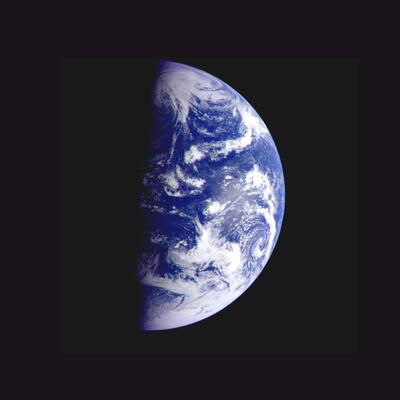
Formation and evolution of the Solar System (Planetary science 🪐)
There is evidence that the formation of the Solar System began about 4.6 billion years ago with the gravitational collapse of a small part of a giant molecular cloud. Most of the collapsing mass collected in the center, forming the Sun, ...
https://en.wikipedia.org/wiki/Formation_and_evolution_of_the_Solar_System
#FormationAndEvolutionOfTheSolarSystem #Cosmogony #SolarSystem #PlanetaryScience #StellarAstronomy #StellarEvolution

The Elephant's Trunk Nebula (IC 1396)
=============================
Stepping into this frame feels like drifting through a quiet storm of gas, dust, and newborn stars. Center stage is the Elephant’s Trunk Nebula, a sinuous, pillar-like structure embedded within the vast emission nebula IC 1396 in the constellation Cepheus. The scene spans light-years of interstellar sculpture carved by radiation and stellar winds from hot, massive stars.
This region captures a star-forming ecosystem in motion. Radiation from massive stars sculpts the surrounding cloud into pillars and globules, compressing some areas while dispersing others. Over millions of years, these processes recycle cosmic material, seeding future generations of stars and planets — raw ingredients for worlds and, potentially, life.
Scope: Askar 103APO
Lens: Askar 0.6x Reducer
Camera: ZWO ASI 294MC Pro
Filter: Antlia Tri-Band RGB Ultra
Mount: SkyWatcher AZ-EQ5-GT
Guiding: Svbony SV165 with ZWO ASI 224MC
Controller: ZWO ASIAir Pro
Integration time: 5hrs 40min
Full version and print available at:
https://adfr.io/astro/20250819_ic1396
#astrophotography #astrophoto #astrophotographer #deepsky #deepskyphotography #deepskyobject #deepskyastrophotography #nebula #deepspace #space #nightsky #astronomy #cosmos #stargazing #stellarevolution #spaceisart #ic1396 #elephantstrunk #elephantstrunknebula #elephantstrunknebulae
=============================
Stepping into this frame feels like drifting through a quiet storm of gas, dust, and newborn stars. Center stage is the Elephant’s Trunk Nebula, a sinuous, pillar-like structure embedded within the vast emission nebula IC 1396 in the constellation Cepheus. The scene spans light-years of interstellar sculpture carved by radiation and stellar winds from hot, massive stars.
This region captures a star-forming ecosystem in motion. Radiation from massive stars sculpts the surrounding cloud into pillars and globules, compressing some areas while dispersing others. Over millions of years, these processes recycle cosmic material, seeding future generations of stars and planets — raw ingredients for worlds and, potentially, life.
Scope: Askar 103APO
Lens: Askar 0.6x Reducer
Camera: ZWO ASI 294MC Pro
Filter: Antlia Tri-Band RGB Ultra
Mount: SkyWatcher AZ-EQ5-GT
Guiding: Svbony SV165 with ZWO ASI 224MC
Controller: ZWO ASIAir Pro
Integration time: 5hrs 40min
Full version and print available at:
https://adfr.io/astro/20250819_ic1396
#astrophotography #astrophoto #astrophotographer #deepsky #deepskyphotography #deepskyobject #deepskyastrophotography #nebula #deepspace #space #nightsky #astronomy #cosmos #stargazing #stellarevolution #spaceisart #ic1396 #elephantstrunk #elephantstrunknebula #elephantstrunknebulae

Client Info
Server: https://mastodon.social
Version: 2025.07
Repository: https://github.com/cyevgeniy/lmst