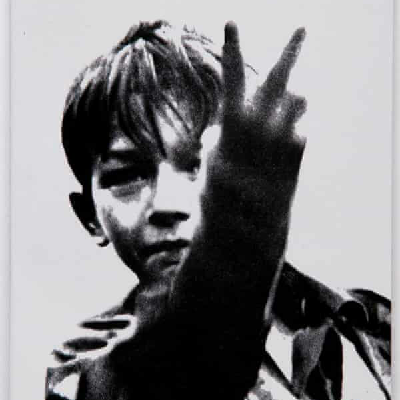
It seems all along that the global conspirators intended to be identified...
[Cartoonist is Dimi, from #PrivateEye #1658]
#Conspiracy #satire #Strobes
#strobes

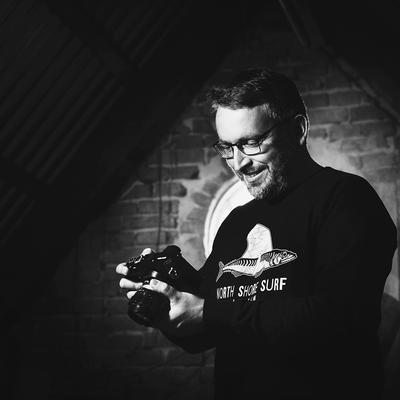
Just stumbled upon this oldie for a flash photography topic. Already 11 years ago ... 😳
Kim Margarete, #Kiel 2014
#photography #portrait #portraitphotography #portraitfotografie #sidecut #studioportrait #fotografie #flash #blitz #blitzfotografie #flashphotography #strobes #monochrome #blackandwhite #onemonochromeaday



Saw the amazing Strobes at The Boilerroom exactly seven years ago.


Drone News of the Week pt3 - The Sony AirPeak drone is designed to carry a mirrorless camera system. In this project it's also been used as an aerial strobe and light mount to help photographers in new ways as well as taking some incredible action shots.
#GoodNews #Drones #Tech #Art #Photography #Sony #Mirrorless #Lights #Strobes
https://fstoppers.com/aerial/lighting-night-sonys-airpeak-drone-627363

Nissin’s New Nikon Strobe Shows High Flash Prices Are Here to Stay
#equipment #news #brandpartnership #flash #industry #lighting #nikon #nissin #nissinmg60 #offcameraflash #oncameraflash #partnership #profoto #speedlight #strobes

Profoto Launches Magnetic Octa Softbox for A and C-Series Strobes
#equipment #news #clic #lighting #lightingequipment #lightshaping #magnetic #octa #octabox #profoto #profotoclicsoftboxocta #softbox #softlight #speedlights #strobes
Nikon Reveals the Strobe’s Dirty Little Secret: It’s Cheap
Nikon recently announced that it is collaborating with Nissin and Profoto on speedlights and studio lights. Is this an admission of the not-so-secret reality that lighting products are actually quite cheap?
Canon and Nikon have made a ton of cash off their lighting systems that are priced -- shall we say -- enthusiastically. Original equipment manufacturers have always placed a premium on their products on the basis that they are better quality, more feature-laden, more reliable, more compatible, and… more expensive.
For example, Nikon currently lists three main speedlights in their lineup: the SB-5000, SB-700, and SB-500.
Nikon's camera flash lineup: the SB-5000, SB-700, and SB-500.
Introduced in 2015, the SB-5000 tops the listings and has some mouth-watering specifications: i-TTL, high-speed sync, wireless radio control, 34 guide number, fan cooling, and 24-200mm zoom range (expandable to 14mm with the diffusion panel). This makes it the pinnacle of Nikon's Creative Lighting System (CLS) and their first flash to offer radio wireless through the newly introduced Advanced Wireless System.
The SB-700 came in as a premium product back in 2010 and included i-TTL, internal zoom, master/slave in the CLS, and a 28 guide number.
The SB-500 still offers the i-TTL but there is a lower 24 guide number and a fixed beam spread; introduced in 2014 it brings i-TTL in at a lower price point in a compact body along with an LED for close video work.
You can't fault Nikon on the specifications for what is now quite a slimmed-down range. This brings us back to the news announcement; what's unusual is that Nikon isn't exactly known for opening up to third-party suppliers. For example, you don't see vast swathes of non-OEM lenses because of the difficulty in having to reverse engineer the mount in order to support the camera, which is why manufacturers have needed to have deep pockets, plenty of time, and guaranteed sales to do this.
The same is true of the strobe market, so to see Nikon partner with not one but two lighting companies is eye-opening. Nissin, a Japanese manufacturer, specializes in the portable strobe, while Profoto of Sweden, has a range of studio lights and light shaping products. Both are known for their premium products at non-OEM prices. The latter in itself has never been a problem for the likes of Nikon and Canon; make your own product, sell the heck out of it to brand buyers, and make a healthy profit.
The Nissin Di700A flash (left) and the Profoto B10 flash head (right).
So what's Nikon's problem? First and foremost, this announcement suggests that the company does not sell many strobes. This is an economic problem for a product that has limited reach and Nikon's solution is a simple one: stop selling them. Of course, this doesn't exactly promote buy-in to an all-encompassing professional Z-System, hence the strategic partnership with quality third-party manufacturers. However, this begs the question as to why strobes aren't selling in the quantities that Nikon believes it needs to achieve.
I think there are potentially five reasons why this might be the case.
Firstly, there are far fewer cameras being sold today than for the best part of twenty years. Fewer cameras is fewer system photographers and so fewer strobes. As much as Nikon would like them to be, strobes are not big-ticket items and, unlike lenses, many photographers will only buy one.
Secondly, of that diminishing pool of photographers with system cameras, there are increasing numbers who now shoot natural light because ISO performance is so good. That simply wasn't an option in the film days. If it was a dark day or you had a wedding reception to shoot, you had no choice other than to break out the strobe. Now you can just crank up the ISO.
Thirdly, technical innovation seems to have stalled over the last decade. Sure we have had Canon's Speedlite 470-EX AI with motorized head, as well as Nikon's cooling system on the SB-5000. These are hardly pushing the boundaries of creative lighting and, arguably, the seismic shift is coming from constant LED lights.
Linked to this has been Nikon's manifest reluctance to move to a radio wireless triggering system. The SB-5000 was the first model that included radio control as part of Nikon's AWS; that was released in 2015. What's astonishing is that the FlashWizard, the pre-cursor to the Pocket Wizard, first appeared in the late 1980s. I know I've cursed line-of-sight optical triggers when objects were in the way or other lights interfered with them.
Why so long, Nikon?
This obviously leads on to the fourth point that there are now many third-party manufacturers competing directly with the OEMs and, more importantly, their products are increasingly refined. In the same way that we see competing manufacturers for lenses in both top tier (such as Sigma and Tamron) and budget (such as Viltrox or Samyang) sectors, so the same has happened with lighting. There is Nissin and Profoto, who are joined by the likes of Yongnuo and Viltrox.
This naturally leads on to the last point and the elephant in the room. Price. The price tag for the SB-5000 is $600, along with $330 for the SB-700, and $250 for the SB-500. Let's compare that to the Yongnuo YN685: iTTL, high speed sync, 20-200mm zoom, radio RC, and a 60 guide number. And the price? $112.
It's not just Yongnuo; Godox offer the TT685N (AKA the Flashpoint Zoom TTL R2) with similar specifications for $99.
The Yongnuo YN685 (left) and Godox TT685N (right).
It, therefore, seems that the market for lighting products is likely to be contracting in the same way that the camera market is, but unlike cameras, there is significant competition from low-value vendors and not much to differentiate premium products. In short, Nikon can't justify the price and may well be shifting limited inventory.
We haven't seen any intimation that Canon is about to jettison its lighting products and this perhaps reflects the relative fortunes of each company. In fact, as part of Nikon's recovery plan, it has been actively divesting itself of production capacity and superfluous products such as the 1 System. Its lighting range would potentially appear to be the latest casualty as it focuses its Imaging Division on camera bodies and lenses for the Z-System.
Moving forward, Nikon's sole focus has been to make Imaging at least profit neutral, and anything that deflects its resources from advancing the Z-System would appear to be in the firing line.
Image credits: Header pennies photo licensed from Depositphotos
#editorial #equipment #industry #lighting #analysis #commentary #flash #mikesmith #nikon #nissin #partnership #profoto #strobes

A New Project by Brian Cummings Showcases the Lockdown Showoff
#photographyculture #ambientlight #blendstrobelightwithnaturallight #colorful #environmentalportraits #fashion #fashionshoot #lockdown #lockdownproject #outdoorfashion #outdoorphotography #outdoorportraits #overthetop #popculture #popculturephotography #strobes
How To Photograph Beer and Successfully Retouch in Photoshop
In this 18-minute video, photographer Dustin Dolby explains many of the tricks beverage photographers use and shows how anyone can achieve professional-level beer photos with just a few speedlights and some entry-level camera gear.
Dolby says that every little detail matters when it comes to creating the perfect shot for advertising beverages.While beer photography tutorials come in all shapes and sizes, he says the big secret is most of the concepts come down to simply shaping light and using a little bit of Photoshop to fix the various imperfections that just happen throughout the course of the shoot. In the video above, Dolby walks through every step (including the mistakes) of his usual workflow for creating incredible beer and beverage photos.
Starting with just his beer bottle and a single strip box, the first, and most important step is to ensure the bottle is aligned properly for the shot. From there Dolby says that photographers need to start modifying the lighting to ensure a broad and -- what he describes as -- "milky" look with a nice highlight on the side.
Dobly adds an additional strip box (his second light source) for his backlight and will cycle through multiple power levels to find the brightness that is just right for the planned image. Next, to ensure the labels are exposed properly, Dobly recommends using a third light bounced off the ceiling for a subtle fill.
Once all of this is done, he recommends then adding some flags (he uses black foam-core) to control any light spill and avoid any unwanted flares in the final shot. At this point, he can finally add the beer.
The trick here is to pour just half the glass first to let things settle and ensure the image is still framed properly. Dolby says that this extra step that allows him to finish pouring the second half directly into the upright glass will cause a "big reaction" that will hopefully lead to a big frothy end result. Dolby explains that photographers can miss the shot either due to the drink not pouring right or a technical issue with the camera or lights can occur. If this happens, the shot needs to be reset to a certain extent. He recommends having some spare beers to repour as needed, or even using a bamboo stick to agitate the drink will react with the bear and create an additional "frothing" to help get the shot correctly.
The second half of the video explains how to retouch the image for a fantastic final result. The first step is to eliminate any distractions or mismatched elements in the shots like excessive bubbles or condensation on the glass and table. He then details how to extend and clean up the background so that there is a perfectly clean slate and removes any splashes or spills on that may be visible on the table.
Over the course of the rest of the video, Dolby shows his entire process including fixing the labels, adding some color corrections, highlight fixes, and even compositing small elements to create a perfect shot -- this even includes creating a label for the glass itself leaving him with a great sharp commercial-looking image worthy of a poster or billboard.
For more from Dustin Dolby, subscribe to his YouTube Channel.
#educational #postprocessing #tips #tutorials #adobephotoshop #beer #beverage #dustindolby #glass #howto #lighting #photoshop #productphotography #retouching #retouchingtips #speedlights #strobes #video #workphlo #youtube
How to Create Natural Light with Strobes: Big Modifiers and Bouncing Flash
Natural light is one of the easiest ways to shoot portraits with minimal gear. More often than not natural light is soft and flattering to the face. Yet, a photographer who is able to create natural light in the complete absence of it is valued highly. That is of course with strobes. Here’s how you can easily create natural-looking light with flash.
What Is Natural Light?
Before trying to create something, let's see and deconstruct what we're doing. Natural light is light that comes from the sun. Direct sunlight classifies as natural light, however, it is difficult to work in. If you’re interested in seeing how you can work in direct sunlight, I previously wrote a tutorial on the subject.
For the sake of this guide, we will see natural light as a light that is very soft, diffused, and traditionally flattering to the face. A great way to see what I’m talking about would be to take a portrait next to a window on a cloudy day. Here is how it looks:
The shadow edges are gradated and the shadows themselves are filled in. There is no clipping on the skin.
Doing the same picture outside will provide a similar effect:
Moving further from the light source, in our case the window, will make the light fall off more gradually and hence the image will have even less contrast.
One caveat of shooting in natural window light is that it isn’t always available. Moreover, you often need a high ISO in order to capture a decent amount of detail. Lastly, the window is fixed in place and it is quite difficult to compose your shot around a fixed light source,.
A much easier way to use "natural" light is to simulate it using a strobe. Here is how I do it step by step:
Recreating Natural Light
In order for the light to look natural, the strobe has to be above the subject and angled down towards them. This will create a shadow under the nose and under the chin. The light itself has to be placed in front of the subject. Here is what that looks like:
The test shot shows us a dark shadow on the wall, hard shadow edges, and overall too much contrast for it to look natural. This light has a very rapid falloff and makes the skin clip too much. This is not how we described natural light at the start. Hence, we need a modifier.
In order to produce a light that is diffused, has low contrast, and gradated shadow edges we need a large modifier with a white interior. An optional addition would be a diffuser or a scrim. Because I like to keep gear to a minimum, I opt for the first option. It goes on the umbrella and doesn’t require a metal frame or additional grip to support the diffusion fabric.
I place the umbrella in the same position as before and fire away:
The light looks very similar to the one we saw previously, making this a valid setup for natural light indoors.
Another way to create natural light indoors without any modifiers would be to use the room. By that, I mean bouncing the light into the ceiling. What this does is create a very large light source out of the ceiling. A word of caution here: you want to make sure that your room has white ceilings. If they are a different color, your light will change the hue. For example, a red ceiling will color the light red and so on.
Here is how a bounced light looks:
A great application for this would be during event photography when it is impractical to have an off-camera flash. By pointing your flashgun toward the ceiling, you can create a flattering artificial light your clients will love.
Closing Thoughts
Natural light is a broad term that can't be put in a small box. I’d suggest seeing this as a “soft natural light” instead of just natural. Of course, there are also more other ways you can create natural light, including with white reflectors. In a sentence, creating natural light is defining what kind of natural light you want, and then using your knowledge of light shaping tools to execute the idea.
#tips #tutorials #howto #illyaovchar #light #lighting #modifiers #naturallight #photographylighting #strobes #tutorial


Black and White shot taken with 1940s style hot lights. George #Hurrell mastered this technique in #Hollywood during the 1930s and 1940s. No soft boxes or #strobes back then, just continuous stage lights. #photography #photo #BW #1940

Twitter trolls attack epileptics with seizure-inducing images - They hijacked the Epilepsy Foundation's hashtags and name during national epilepsy awareness mont... more: https://nakedsecurity.sophos.com/2019/12/20/twitter-trolls-attack-epileptics-with-seizure-inducing-images/ #nationalepilepsyawarenessmonth #epilepsyfoundation #socialnetworks #kurteichenwald #strobingimages #law&order #epileptic #epilepsy #hashtags #trollery #twitter #seizure #strobes #trolls #gif
Client Info
Server: https://mastodon.social
Version: 2025.07
Repository: https://github.com/cyevgeniy/lmst