
Trump wants to build a massive arch in DC as a monument to his massive ego. There isn't enough marble, stone and concrete in the world. #Trump #TrumpArch #ego #MAGA #tacky #lies #corruptio #monument #LincolnMemorial #WashingtonDC #WashingtonMonument #EpsteinFiles TinyviewComics
#tacky

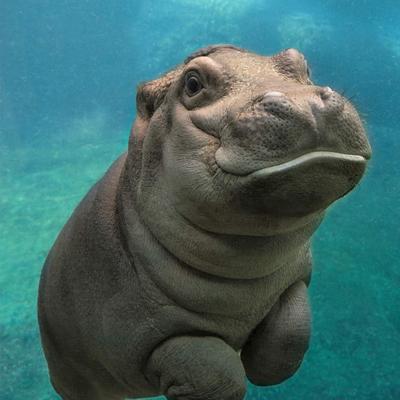
Maximalist, and "Late Stage Autocracy" Gilding are good descriptors.
#Gaudi #Trump #WhiteHouse #NYTimes #GiftedArticle #Tacky #Gilded #OverTheTop #DictatorFashion

Why The MAGA-verse Let Trump Trash Rob Reiner – HuffPost Life
Psychologists React To THAT Post From Trump About Rob Reiner’s Death
“It’s really significant when someone like Donald Trump does this,” one psychologist explained. “It sends a signal that it’s acceptable to do this.”
By Katherine Speller, Dec 19, 2025, 07:00 AM EST, |Updated Dec 19, 2025
In the aftermath of the deaths of Rob and Michele Reiner, the internet flooded with heartfelt messages of shared grief and support for the family.
Mostly.
Over on Truth Social, the posting medium of choice for President Donald Trump, the tone was different.
“A very sad thing happened last night in Hollywood. Rob Reiner, a tortured and struggling, but once very talented movie director and comedy star, has passed away, together with his wife, Michele, reportedly due to the anger he caused others through his massive, unyielding, and incurable affliction with a mind crippling disease known as TRUMP DERANGEMENT SYNDROME, sometimes referred to as TDS,” the president wrote on Truth Social on Monday night.
Trump and Reiners image…“He was known to have driven people CRAZY by his raging obsession of President Donald J. Trump,” Trump continued, “with his obvious paranoia reaching new heights as the Trump Administration surpassed all goals and expectations of greatness, and with the Golden Age of America upon us, perhaps like never before. May Rob and Michele rest in peace!”
Insulting the victims of a domestic violence-related crime and somehow making the tragedy about his own victimhood didn’t resonate for many.
Even some proud Trump voters stepped up on the Truth Social platform to critique the president’s “tacky” response to a family tragedy, calling it “heartless and uncalled for” and “unnecessary” to attack Reiner in that moment. Yet, as of this writing, his post still had 9.31k reposts and 38.9k likes. Although there have been some prominent Republican detractors, they were mostly individuals who were already on the outs with the president or had previously spoken against him.
Trump’s offensive message came after extensive discourse, fueled by the right in the wake of the assassination of Charlie Kirk, arguing that “insensitive critiques” of the dead (like sharing words they said aloud to a camera) were in poor taste, grounds for people to lose their jobs, and even akin to promoting political violence.
To gain a better understanding of how this seemingly hypocritical dynamic came to be, HuffPost spoke with psychologists about what causes individuals to condemn something vehemently one day, only to find themselves seemingly indifferent just a few months later.
Why Would Anyone Post Like That?
“It is no real surprise that Trump made it all about himself,” John Jost, co-director of the Center for Social and Political Behavior at New York University, told HuffPost. “That is what destructive narcissists do, people who exhibit what psychologists refer to as malevolent personality traits.”
“Trump also makes Freud relevant again,” Jost added. “Projection is an everyday occurrence. In this case, someone is deranged, but it’s not Rob Reiner.”
Daniel R. Stalder, a social psychologist and professor of psychology at the University of Wisconsin-Whitewater, told HuffPost that most people attempt to find and understand the “why” when processing a tragedy like this — even if information is limited in the immediate aftermath. And though there’s undoubtedly a political component to the messaging, Stalder said parts of Trump’s post do also seem to align with the psychology of victim blaming.
“In general, unfortunately, it’s relatively common to respond to tragedy by searching for and finding some reason to blame the victim(s) of the tragedy,” Stalder said. “There are psychological benefits to victim blaming — not that those benefits can excuse it.”
Among those benefits are satisfying “one’s just-world beliefs and one’s need for control “because if we can identify something negative about the victim’s character that caused the outcome, then we might feel safer that the outcome won’t happen to us.”
Psychotherapist Gina Simmons Schneider said that the nature of online communication may also play a part in how easily we can dehumanize one another, as well as the normalization of this kind of posting.
“We also know that the more distant we feel from others, the easier it is to inflict harm. That’s why we see so much cruelty online,” Simmons Schneider said. “You might behave politely toward the person with opposing beliefs who happens to be sitting next to you on an airplane. Online, it’s easy to spew hate without seeing the direct social consequences of that abusive behavior.”
However, in the long run, reinforcing the hypocrisy can lead to a cognitive dissonance that can manifest via feelings of anxiety: “To resolve that internal conflict, we must either change our values or change our behavior to align with them,” Simmons Schneider said.
Continue/Read Original Article Here: Why The MAGA-verse Let Trump Trash Rob Reiner | HuffPost Life
Tags: Demean, Deride, Destructive Narcissists, Heartless, Huffpost, HuffPost Life, Insult, MAGA, MAGA-verse, Malevolent, Psychology, Psychotherapist, Rob Reiner, Tacky, Therapy, Trump, Trump Psychology#Demean #Deride #DestructiveNarcissists #Heartless #Huffpost #HuffPostLife #Insult #MAGA #MAGAVerse #Malevolent #Psychology #Psychotherapist #RobReiner #Tacky #Therapy #Trump #TrumpPsychology


I am not sure the statement in green is accurate but evidently there is more than one thing planto will not wear.
#bealix #respelia #christmas #sweater #keyhole #dignity #disgust #intimidation #tacky #christmaself #antlers #candycane #anthropomorphic #plantgirl #elfgirl #goblingirl #mastoart



Anyone yet photoshopped the defacing of Kennedy Center to change the new (vandalism) part to be in Comic Sans? And tacky gold spraypaint, of course.
#photoshop #photoshopped #KennedyCenter #PerformingArts #JFK #MangoMussolini #USPol #ComicSans #commentary #deface #defacement #gold #tacky

Interior designer says having family photo 'shrines' in your house is tacky
https://fed.brid.gy/r/https://www.upworthy.com/family-photo-decor-tacky-or-not-ex1

#Trump wants a bigger White House #ballroom. His architect disagrees.
Trump has personally argued with James McCrery, the architect he handpicked to design a #WhiteHouse ballroom, over the size of the project, reflecting a conflict between architectural norms & Trump’s “grandiose” [#tacky AF] aesthetic, acc/to 4 people who spoke on the condition of anonymity to describe internal conversations.
#HistoricLandmark #UShistory #architecture #EastWing
https://www.washingtonpost.com/politics/2025/11/26/trump-ballroom-architect-james-mccrery/

Another Tacky Renovation: Trump Just Added A Solid Gold Sybian To The White House Goon Cave


Any minute they’re going to put in a fountain with hideous amusement park blue water.
https://bsky.app/profile/thetattooedprof.bsky.social/post/3m4yoevtmts2p
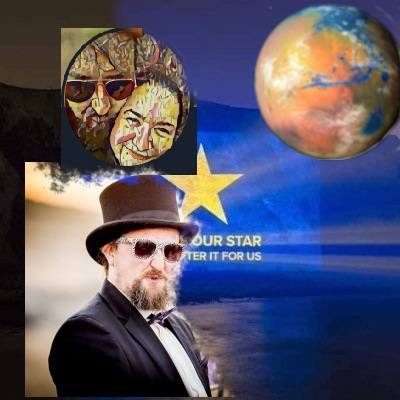
"Graphic Design Is My Passion!"
https://www.theguardian.com/us-news/2025/nov/05/trump-oval-office-sign
nonsense like you have possibly come to expect
#mastoart #respelia #furryart #sallyacorn #sonicthehedgehog #dinosur #dragon #jewelry #general #cavalry #tacky #bombman #anthroart #anthropomorphicart #mobian


The theme was bootleg and the drawing was not imagined.. It is REAL!
https://www.youtube.com/watch?v=FG67WmQHi7A
#Aseprite #pixelart #ドット絵 #像素藝術 #bootleg #lospecdailies #pikachu #pokemon #6colors #drawing #horror #pixey #pixelfed #tacky #art #toy #fair #ride #retroart
https://www.youtube.com/watch?v=FG67WmQHi7A
#Aseprite #pixelart #ドット絵 #像素藝術 #bootleg #lospecdailies #pikachu #pokemon #6colors #drawing #horror #pixey #pixelfed #tacky #art #toy #fair #ride #retroart

Is it too soon to rechristen it the "Tacky Wing" of the White House?

He must be compensating for something. Proof that some can never have too much negative attention, this "InCell Camino" owner takes it to Level II sadness #tesla #cybertruck #incellcamino #EV #tacky

Måste vara hennes ex-man som ansvarat för inredningen🤮
#tacky



The Guardian: Federal judge orders closure of Trump’s ‘Alligator Alcatraz’ immigration jail
https://www.theguardian.com/us-news/2025/aug/21/trump-alligator-alcatraz-judge-ruling
---
#MrIllegal and his friends have to use people another way for profit.
Children in the sex trade, immigrants in lock-up, repurposing money for the poor to funnel uncontrollably to those that will never need it at the tippity top.
What a scum bag and the republicans lick his ball sack. The incoherent ramblings of a racist, nothing glamorous as they think.
#Tacky
#Absurd
#Gross
So Donald Trump, deluded in his unshakable conviction that he is the world's greatest dealmaker and peacemaker, still thinks it's okay for him to negotiate with Putin the butcher about ending the Russian war on Ukraine without #Zelenskyy as part of the talks - including negotiating giving away the sovereign territory of Ukraine.
(Donnie, how would you like it if I, a Canadian, negotiated with Mexico and agreed to give Mexico Florida, including your #TackyWorld theme park / McMansion, without even letting you take part in the discussion?)
I'm going to propose my own peace deal to end the Russian #assault on the innocent victim #Ukraine:
1. Russia withdraws to its properly recognized borders as of 2013, pre-Crimean-invasion.
2. Russia demilitarizes everything within 1000km of its western borders, and agrees to international observers/inspectors to audit compliance.
3. A duty or tax on all Russian oil and gas sales to pay for complete rebuilding of Ukraine.
4. Most importantly, the heads of both Vladimir Putin and Donald Trump on pikes in the middle of Kyiv, in Independence Square.
That sounds fairer to me than anything Mr. I-Bankrupted-Three-Casinos has proposed.
#USPol #MangoMussolini #Trump #Putin #war #Ukraine #peace #deal #TackyWorld #MarALago #StableGenius #incompetent #sociopath #narcissist #Russia #USA #McMansion #tacky
Client Info
Server: https://mastodon.social
Version: 2025.07
Repository: https://github.com/cyevgeniy/lmst