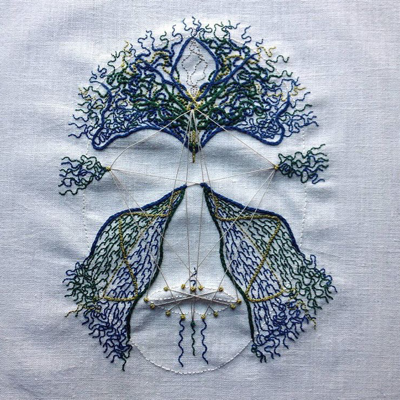
#WIPwednesday • I finished the gut area on the #VagusNerve #embroidery ! Next I’ll move onto the head which also means using a smaller hoop. #SciArt

Nils Kroemer
Neuroscientist, psychologist, & modeling enthusiast. Professor of Medical Psychology at U Bonn | Neuroscience of Motivation, Action, & Desire Lab neuroMADLAB 🧠 ⚡ aka @cornu_copiae

Nils Kroemer boosted:

New paper shows most researchers - by a large margin - across the social sciences are in favor of data/code sharing and preregistration. Many have already engaged in these behaviors. https://www.nature.com/articles/s41467-023-41111-1 1/3

Nils Kroemer boosted:

Hot off the press! 📰
It took a minute, but I'm glad it's finally out:
A Critical Perspective on Neural Mechanisms in Cognitive Neuroscience: Towards Unification
https://journals.sagepub.com/doi/10.1177/17456916231191744

Nils Kroemer boosted:
I'm reading this booklet on the University of Padua, founded 801 years ago, when a group of students and professors (apparently unaccompanied by management) migrated from the University of Bologna in search of greater freedoms. I'm fascinated by the measures that the University took to be "universal" (i.e. to deserve its name). And by the woman who broke through centuries of prohibition to make it truly universal. (1/N)

Nils Kroemer boosted:
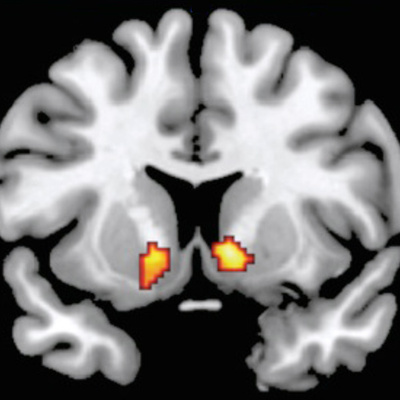
Pleased to see that the #preproof of "Blunted neurobehavioral loss anticipation predicts relapse to stimulant drug use" is up on the #BiologicalPsychiatry website! Big thanks to lead authors Leili Mortazavi and Kelly MacNiven, as well as helpful reviewers (summary figure below, #neuroscience, #addiction, #neuroimaging, #MIDtask):
https://www.sciencedirect.com/science/article/pii/S0006322323014877
Nils Kroemer boosted:

🎶 How does your brain's symphony stay in sync? Is there one conductor leading the symphony or do nearby neurons listen to each other to coordinate their activity?
🧠 Find the answer in my brief about recent work from fellow Penn NGG student Ethan Blackwood and alum Dr. Brenna Shortal for Penn's Brains in Briefs series.
https://www.upennglia.com/briefs/bib-brain-symphony
#neuroscience #sciComm #brain #synchrony
Learn more about Brains in Briefs here: https://www.upennglia.com/brainsinbriefs

Are reward responses in the human brain modulated by gut hormones?
In our systematic review & meta-analysis, we find converging evidence for enhanced reward signals by ghrelin. For GLP-1, the convergence is too low and might be dependent on the phase (anticipation vs. consummation).
Great work led by @cor_et_cerebrum @cecivez
https://www.sciencedirect.com/science/article/abs/pii/S0031938423000392
Nils Kroemer boosted:

Impulsivity can be advantageous in “unexpectedly uncertain” environments https://journals.plos.org/ploscompbiol/article?id=10.1371/journal.pcbi.1010873
Nils Kroemer boosted:

🚨New preprint - Human exploration strategically balances approaching and avoiding uncertainty
that's right - humans sometimes avoid uncertain parts of the environment when exploring
w/ @shadlen@twitter and
@DShohamy@twitter
https://psyarxiv.com/gtxam/
Nils Kroemer boosted:
One week before the deadline for this data science junior research group leader/postdoc position (5 years)!! I especially look for those who have good knowledge in #ML (not maximum-likelihood, just to be sure :-).
Nils Kroemer boosted:

I am PhD in #neuroscience investigating mood and anxiety disorders. I am working at the Neurogenetics Lab, U. Valparaiso (Chile). I am obsessed with identifying the negative consequences of chronic stress on learning and memory, the underlying brain circuitry, and how new stress resilience strategies can be built.
I am currently on the job market, looking for a postdoctoral position in the neuroscience field.
My background is in animal models, stereotaxic surgery/microinfusions, behavioral tests, object tracking/recognition, data management/analyses, Ethovision, colony management, and molecular biology techniques.
I am highly motivated in working on new projects and challenges, and learning new skills.
In addition to neuroscience, I enjoy to ride a bike, outdoor sports, reading, and watch movies and series.
Nils Kroemer boosted:
Hello everyone, this is a new account of the Department of #Psychiatry and #Psychotherapy at the University of #Lübeck in Northern Germany.
We are embedded in the Center of Integrative Psychiatry, the Center of Brain, Behavior and Metabolism (#CBBM) and the University Hospital Schleswig-Holstein.
https://psychiatrie-luebeck.de
Our main topics are: #PsychotherapyResearch #PersonalizedPsychiatry #SleepDisorders #MentalHealth #SocialNeuroscience #TransdiagnosticNeuroscience #TranslationalPsychiatry
Nils Kroemer boosted:
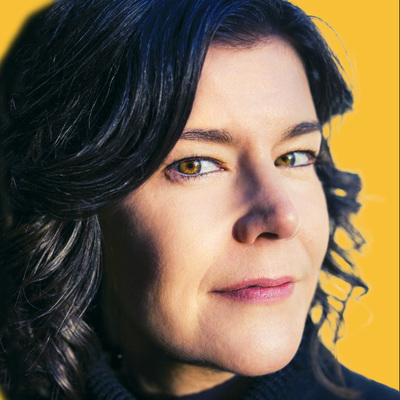
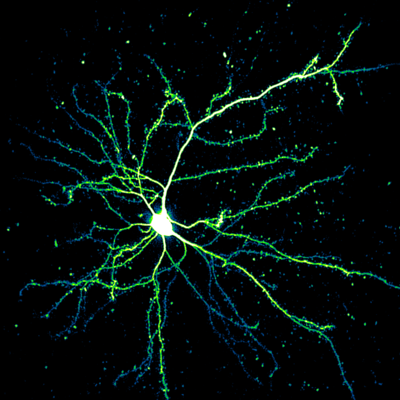
While we know that the degeneration of dopamine neurons causes Parkinson's disease, we still don't know why those neurons degenerate.
One intriguing idea is that these neurons are particularly sensitive because their axonal arbors are absolutely HUGE. Each neuron has 1 million terminal release sites, and operates under an extremely tight energy budget.
Paper: "Living on the edge with too many mouths to feed: Why dopamine neurons die"
https://movementdisorders.onlinelibrary.wiley.com/doi/full/10.1002/mds.25135
Picture from: https://www.frontiersin.org/articles/10.3389/fneur.2018.00455/full#B136

Nils Kroemer boosted:

Excited to share a paper we've been stewing for a while looking into ambiguity in defining phase for brain rhythms and how one can use metrics of uncertainty to identify moments when phase is less ambiguous.
https://doi.org/10.1101/2023.01.05.522914
#neuroscience #brain #tootprint #preprint
Nils Kroemer boosted:

Now publicly available, an fMRI dataset including over 150 younger and older adults. T1-weighted, functional MRI (fMRI), pulsed continuous arterial spin labeling (PCASL), proton magnetic resonance spectroscopy (1H MRS), and emotion regulation task during multiecho fMRI. During fMRI scans, physiological measures (blood pressure, pulse, respiration, and end-tidal CO2) were continuously acquired. To learn more, check out our data description preprint: https://www.medrxiv.org/content/10.1101/2022.12.28.22283798v1 #neuroscience
Nils Kroemer boosted:

New year, new instance, new #introduction !
👋 I'm a postdoc at Stanford University working with @Russpoldrack and @scottlinderman. My work focuses on improving and applying statistical techniques for inter-individual comparisons in fMRI data.
I'm really excited about how methods open up new avenues for theory, and I spend a lot of time thinking at this intersection.
I believe that rigorous methods should be broadly accessible, and I'm an active advocate for community-based efforts to promote #openscience and #opensource research software.
Nils Kroemer boosted:
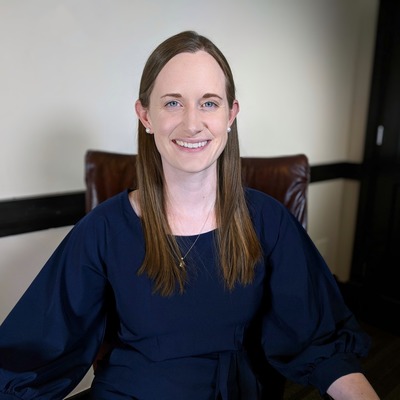
In this week's new podcast episode, Dr. Alex DiFeliceantonio shares exciting stories about how she got started in science, her research on the neuroscience of food choice her favorite scientific travels, life outside the lab and more!
https://peoplebehindthescience.com/dr-alexandra-difeliceantonio/
#neuroscience #physiology #biology #research #brain #science #STEM #podcast #podcasts #scicomm #WomenInSTEM #phd
Nils Kroemer boosted:
Join our group! we have open positions for #phdstudents, #postdocs, and #researchassociates to study the fundamental biology of neurodegenerative disorders using advanced techniques like #SingleCellGenomics, #MachineLearning. DM me for more info #phdjob #postdocjob pls RT https://mastodon.social/@ozgungokce/109539577872496352
Nils Kroemer boosted:
Coming over to join the conversation here. I'm a poet, playwright, and scientist, studying the neuroscience of decision-making. Currently also very fascinated by impacts of those processes beyond the neuroscience itself, in fields such as psychiatry, economics, etc (For example, I have a new book on morality.)
Nils Kroemer boosted:

Please use our 'Naturalistic Neuroimaging Database' (NNDb v2). It consists of N=86 people who did a battery of behavioural tests and watched one of 10 full-length #movies during #fMRI. It has 46,249,600,000 voxels or 6.69 days worth of data to play with. 🥳
Data: https://openneuro.org/datasets/ds002837/versions/2.0.0
It is also available on Neuroscout: https://neuroscout.org
Read the paper: https://www.nature.com/articles/s41597-020-00680-2
We are now collecting a 3T NNDb with adolescents and adults, and before/after #psychedelics.

Client Info
Server: https://mastodon.social
Version: 2025.07
Repository: https://github.com/cyevgeniy/lmst