Index, Count, Offset, Size
https://tigerbeetle.com/blog/2026-02-16-index-count-offset-size/
#HackerNews #Index #Count #Offset #Size #DataStructure #Programming
Index, Count, Offset, Size
https://tigerbeetle.com/blog/2026-02-16-index-count-offset-size/
#HackerNews #Index #Count #Offset #Size #DataStructure #Programming
Python Draws Binary Tree Numbers
Hierarchical math creates trees tree structure algorithms create branching patterns that grow like natural trees Tag a Python friend
#python #pythontricks #codingtips #programmingtutorial #binarytree #numbertree #datastructure #pythonart #viralpython #pythonshorts #treepattern
La matematica delle strutture dati racconta una verità semplice: non esiste un modo perfetto per archiviare informazioni.
Ogni sistema è un compromesso tra velocità, memoria e ordine. A volte serve struttura, altre volte un po’ di disordine funziona meglio. Un equilibrio dinamico, in cui l’efficienza nasce proprio dalla varietà delle soluzioni.
https://www.quantamagazine.org/why-theres-no-single-best-way-to-store-information-20260116/
#computerscience #datastructure #data #algorithm #algoritmi #informatica
📜 Discover the Fascinating History of Arrays!
💡 Arrays are everywhere today - from simple algorithms of searching and sorting to technologies like GPUs and AI models.
❓But, one may wonder - what was it like when they were first used?
🔎 Want to know the story behind it?
👉 Check out the article titled: "Story of First Array"
🔗 https://priyabrata-paul-blog.hashnode.dev/story-of-the-first-array

Latest drop from our group 🥳 Paper by Daniel Jünger, Kevin Kristensen, Yunsong Wang, Xiangyao Yu, and Bertil Schmidt
#Bloomfilters are a fundamental #DataStructure for approximate membership queries, with applications ranging from #databases to #genomics.
Matching Algorithm with Recursively Implemented StorAge (MARISA) is a space-efficient, fairly fast, and static trie data structure. MARISA serves as a dictionary structure, and by definition, it supports exact match lookup, which is the basic operation of dictionary. In addition, MARISA supports reverse lookup, common prefix search, and predictive search.
Thanks to @terrtia for the discovery.
Grmbl.😩
Implementing an object graph with with loops.
After setup, it needs additional initialization.
The fields getting set will not change again. Ideally would be final (Java, or readonly in TypeScript). And I don't want an "if (bla!=null)" where ever access I them.
In my ideal solution this would be guarded by the type system where the nodes, once initialized, change type. I know roughly how it could be done, but its weird and cumbersome. 😕
New #datastructure idea: A double ended doubly linked red black vector queue. Why choose an appropriate data structure when you can have it all?
Tuyệt vời! Một công cụ mô phỏng trực quan về Bloom Filter đã được tạo ra để giúp mọi người hiểu rõ hơn về cấu trúc dữ liệu xác suất này. Hy vọng nó sẽ giúp việc học trở nên dễ dàng hơn!
#bloomfilter #datastructure #visualization #lậptrình #cấ trúc dữliệu #trựcquanhoá
https://www.reddit.com/r/programming/comments/1ncnlku/i_built_an_interactive_bloom_filter_visual/
Hey Mastodon! 👋 I'm diving back into my DSA journey and want to move beyond just solving theoretical problems. I'm looking to build some real-world projects to apply what I'm learning.
Any project ideas where you can genuinely use DSA concepts? Things like a simple recommendation engine, a social network graph, or a pathfinding visualizer. I'm curious about how you would implement these.
#devcommunity #DSA #Projects #Programming #Tech #algorithm #datastructure
Visualize your Python data structures with just one click.
Hash Set: https://memory-graph.com/#codeurl=https://raw.githubusercontent.com/bterwijn/memory_graph/refs/heads/main/src/hash_set.py&breakpoints=32&continues=1×tep=0.5&play

Visualize your Python data structure with just one click.
Linked List: https://memory-graph.com/#codeurl=https://raw.githubusercontent.com/bterwijn/memory_graph/refs/heads/main/src/linked_list.py×tep=0.2&play

Understanding and debugging Data Structures is easier when you can see the structure of your data using memory_graph: https://github.com/bterwijn/memory_graph
Here we show values being added to a Linked List in Cursor AI. When adding the last value '5' we "Step Into" the code to show more of the details: https://raw.githubusercontent.com/bterwijn/memory_graph/main/images/linked_list.gif
🎥 See the Quick Intro video for the VS Code integration: https://youtu.be/23_bHcr7hqo

Understanding and debugging Data Structures is easier when you can see the structure of your data using memory_graph: https://github.com/bterwijn/memory_graph
In this example we show values being inserted in a Binary Tree. When inserting the last value '29' we "Step Into" the code to show the recursive implementation: https://shorturl.at/bx848
🎥 See the Quick Intro video for the VS Code integration: https://youtu.be/23_bHcr7hqo
#Python #BinaryTree #Tree #DataStructure #memory_graph #debug

Reflecting some more on the Sketchpad & ECS parts of this talk: SideFX Houdini organizes all geometry data in similar vertical silos of points, vertices, edges, faces, prims, each with component IDs, each with its own group of native and user-defined attribs, and with similar powerful "omniscient" visibility/access from anywhere. That structure makes VEX SOPs akin to "systems" in an ECS setup and the handling/scripting itself very fun & powerful. The GUI also provides spreadsheet views of the geometry (again similar to e.g. what FLECS provides for debugging). Considering the age of Houdini, I think this approach is notable...
Blender's BMesh Radial Mesh implementation[1] is more traditional OOP structured, but the core idea of "discs" (aka bi-directional circular lists) of pointers to vertices & edges now seems somewhat relevant to some Sketchpad ideas too. Also a reminder that I really need to find/make time to update & release my own mesh implementation (from 2018) combining ideas from both Houdini & BMesh... It's already been a year (again) since I last talked about & touched it... 😱
[1] https://developer.blender.org/docs/features/objects/mesh/bmesh/
#Blender #Houdini #Mesh #Geometry #DataStructure #ECS #Sketchpad
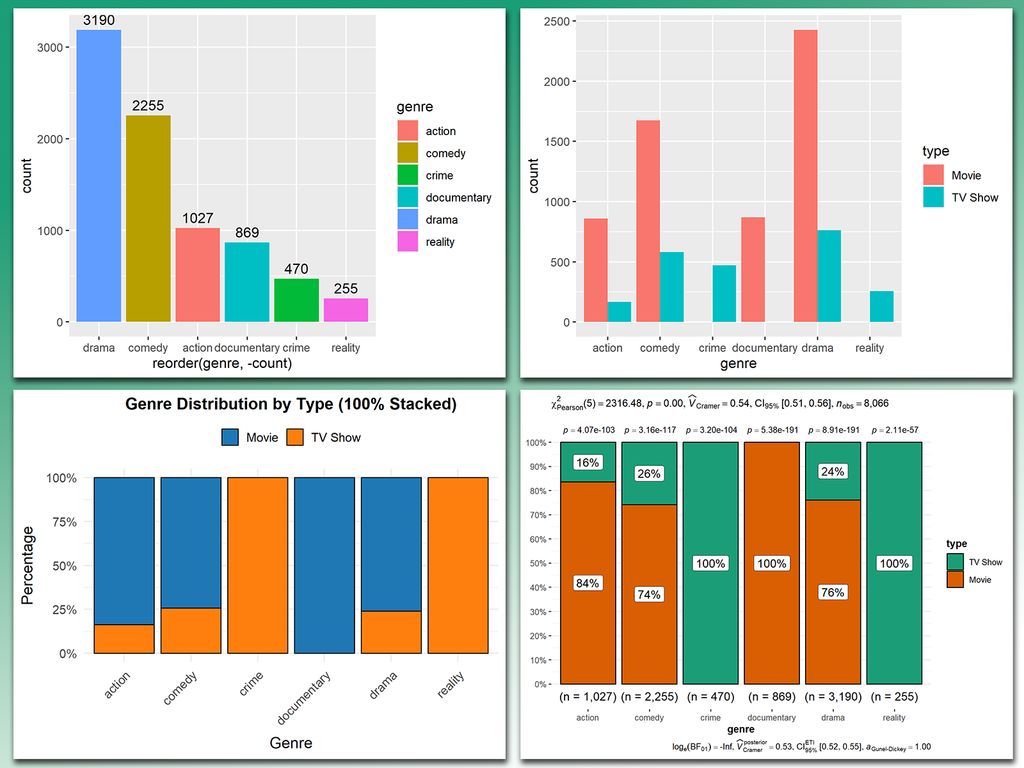
At first glance, bar charts might seem like a simple visualization type. But with a little creativity, they can be enhanced in countless ways to reveal deeper insights and make your data shine.
The attached visual highlights a variety of bar chart styles to inspire your work.
Take a look here for more details: https://statisticsglobe.com/online-course-data-visualization-ggplot2-r
#datastructure #data #tidyverse #rstats #package #datasciencetraining
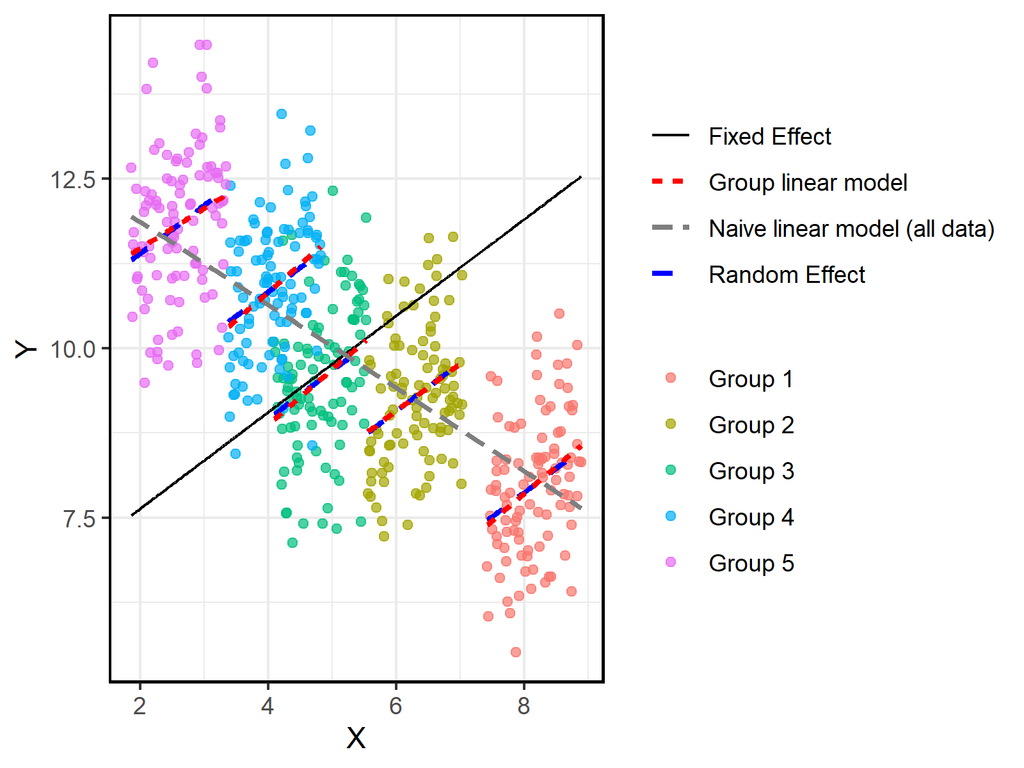
I recently made a very popular LinkedIn post about Simpson's Paradox, which resulted in an engaging conversation. Paul Julian made a great comment on the relationship between Mixed Effects Models and Simpson's Paradox that I wanted to share with you.
In the plot below (generated from reproducible code – thanks, Paul!), you can see how different models compare:
Original post: https://www.linkedin.com/posts/joachim-schork_coding-bigdata-rprogramming-activity-7242865910405824512-oNmF/
Further details: http://eepurl.com/gH6myT
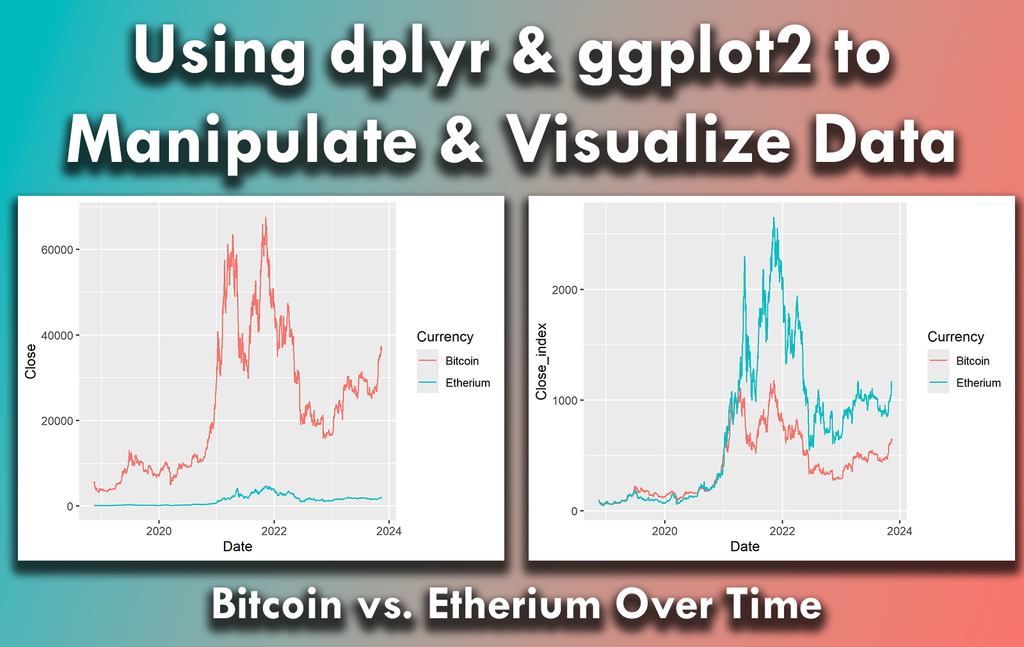
Using dplyr and ggplot2 in R can significantly streamline your data analysis process, making it easier to work with complex data sets.
I have created a video tutorial in collaboration with Albert Rapp, where I demonstrate how to do this in practice: https://www.youtube.com/watch?v=EKISB0gnue4
#coding #datavisualization #rprogramming #dataviz #statisticalanalysis #package #datastructure #ggplot2 #bigdata #tidyverse
🟪 Harnessing the Power of Data Structure to Build Resilient Power Apps
Too often, Power Apps makers jump into app building—without giving enough thought to data structure. In Ep. 55 of #PowerTalks, Griffin Lickfeldt from Citizen Developer explains why getting this step right from the start is critical for building scalable, secure, and AI-ready apps.
💡 The Superpower of Dataverse
🔍 Strategic Table Structuring
⚖️ Future-Proof Your Apps
🔒 Security as a Cornerstone