#EARTHISLANDBOOKS

Highs, Lows, and Near-Misses: Crowdfund The “Three And A Half Minutes Of Fame” Music Documentary

The documentary ‘Three and a Half Minutes of Fame’, inspired by the book of the same name, is now crowdfunding. The film will dive into the highs, lows, and near-misses of chasing a music career, capturing the energy of gigs and the love of fans. Crucially, the documentary will explore what it really takes for bands to succeed today versus the 90s, comparing the paths to thriving in the modern music industry.

Crowdfunding campaign – LINK

#ALTERNATIVE #BOOK #BOOKS #DOCUMENTARY #EARTHISLANDBOOKS #LITERATURE #MUSIC #NEWS #PUNKROCK #ROCK

Three And A Half Minutes Of Fame

Post-Punk Paradise: New Book Recalls 70s / 80s Preston Scene

A new book, Not JUST About The Fall: 50 adventures in a post-punk paradise, recalls the vibrant music scene of Preston, UK, through the 70s and 80s. The book is a love letter to the fans and local heroes, detailing classic gigs at venues like The Warehouse, where the author saw Joy Division headline and The Fall at Preston Poly. It fondly remembers seeing The Clash, Elvis Costello, and local post-punk band Blank Students, providing a rich, personal account of life in a post-punk paradise.

Order the book HERE

#BOOK #BOOKS #EARTHISLANDBOOKS #JOYDIVISION #LITERATURE #MUSIC #NEWS #POSTPUNK #THEFALL

Not JUST About The Fall

An Anarchy of Demons: Charlie Harper (UK Subs) Compilation Includes Rare Punk Track

Time & Matter Recordings and Engineer Records have released a special Charlie Harper (UK Subs) compilation album to accompany his autobiography. The CD features six spoken word tracks of extracts from his book, linking up 10 music tracks from across his past. Crucially, it includes an incredibly rare and exclusive, previously unreleased track from the T&M archives: the earliest known live recording of a U.K. Subs song from the summer of 1977, essential for any UK Subs/punk fanatic.

Click HERE to order a book with a free CD.

#BOOKS #CHARLIEHARPER #EARTHISLANDBOOKS #ENGINEERRECORDS #LITERATURE #MUSIC #NEWS #PUNKROCK #TIMEANDMATTERRECORDINGS #UKSUBS

An Anarchy of Demons

Ian Glasper’s “Silence Is No Reaction: Forty Years Of Subhumans” Is Back In Stock At Earth Island Books

The definitive history of UK anarcho punk legends Subhumans, SILENCE IS NO REACTION: FORTY YEARS OF SUBHUMANS, is back in stock at Earth Island Books. The 640-page superfan’s dream covers the band’s entire story from 1980, featuring recollections from all members, hundreds of photos, a complete discography, and gigography. Written by acclaimed author Ian Glasper, this is a must-have account of one of the best punk rock bands of all time. Order the book HERE

#ANARCHOPUNK #BOOK #BOOKS #EARTHISLANDBOOKS #IANGLASPER #LITERATURE #MUSIC #NEWS #PUNKROCK #SUBHUMANS

"Silence Is No Reaction: Forty Years Of Subhumans" By Ian Glasper

Tricky Business By Ruby Dee Phillipa (Earth Island Books)

Ruby Dee Philippa’s Tricky Business is a brilliant, unfiltered continuation of her vivid portrayal of San Francisco’s early 1980s punk scene. Picking up where Bag of Tricks left off, the book once again places the reader inside a moment in time when chaos, art, rebellion, and self-destruction collided in ways that shaped an entire generation. The book follows familiar faces, Val, Sophie, Amy, Babs, Annie, Carla, Marco, and The Shits,  as they navigate the clubs, basements, alleys, and cheap apartments. Each chapter feels experienced to the max, drawn deep from the memory. Philippa’s writing carries the quickness of someone who was there, who understood what punk meant to the young and restless of San Francisco, and not simply music, but identity, rebellion, survival. Her approach is journalistic in its clarity, yet deeply literary in rhythm and tone. She avoids romanticizing the past, instead offering a grounded depiction of the scene’s realities, poverty, addiction, violence, and joy. At the same time, she captures something essential about punk rock’s magnetism, the sense of belonging it gave to people who had never belonged anywhere. Philippa captures San Francisco as a living force, unpredictable, seductive, and sometimes cruel. The fog, the neon signs, the cracked sidewalks, the endless hum of the underground scene, all of it builds an immediate world. You can almost hear the music bleeding through the walls, smell the sweat and beer in the clubs, and feel the exhaustion that follows every late night.

The writing is lean and direct. Philippa has a gift for moderation. She doesn’t overanalyze or overexplain. Her prose moves with confidence, letting the moments speak for themselves. Dialogue feels natural and unforced, reflecting the rhythms of real conversation, clipped, often funny, occasionally brutal. Her characters are not romanticized antiheroes, because they are simply people, young and desperate, chasing meaning in a city that embraces and devours them. Philippa doesn’t judge or excuse her characters, but she undoubtedly observes them, resulting in an intimacy that few writers achieve over their writing careers. When her characters stumble or collapse, the reader feels the weight of those moments, not because they’re dramatized, but because they’re written with honesty. As a follow-up to Bag of Tricks, Tricky Business feels sharper, more cohesive, and more confident. Philippa expands her scope without losing any focus. The stories are interconnected yet distinct, unified by tone and place rather than plot. The continuity between the two volumes lies in her steady, unsentimental, and deeply human voice. In this book, she also blends personal memory with cultural history. Philippa doesn’t set out to document a scene, but recreates it from the inside, resulting in a piece of literature that could also serve as a historical record. For anyone curious about what San Francisco’s punk underground really looked like, beyond myth, beyond aesthetic, Tricky Business provides a rare, authentic window.

Her depiction of the early 1980s punk community is particularly impressive because it avoids cliché. This isn’t the Hollywood version of punk, no stylized rebellion, no performative angst. Philippa’s world is populated by ordinary people living extraordinary, difficult lives,  waitresses, squatters, musicians, drifters, held together by music, friendship, and defiance. Punk, in her telling, isn’t about fashion or ideology but about surviving in a world that offers you nothing and still finding beauty amid the wreckage. The structure of the book, a series of interlocking stories, suits the material perfectly. Each chapter reads like a snapshot, a fragment of a larger mosaic. By the end, you feel like you’ve lived through a time and place. The stories bleed into one another, shows blur into hangovers, faces blur into memories. Philippa’s tone throughout is calm, observational, and deeply respectful of her subject. She writes as someone who understands that truth doesn’t need embellishment. Her restraint gives the book a surprising emotional impact. Without resorting to melodrama, she conveys the full range of human experience: joy, exhaustion, anger, longing, confusion. Philippa doesn’t rely on sentimentality to make her point, but she relies on experience. This book arrives like the work of someone who has spent decades reflecting on a past she can neither escape nor entirely explain, and has finally found the words to tell it honestly.

Philippa writes about darkness without romanticizing it. The drugs, the violence, the despair, they’re all there, but they’re not the story’s center. The heart of Tricky Business lies in its humanity. These characters are damaged, but they are not broken. They fight, love, hurt, and keep going. There’s dignity in their persistence, even when they fail. It’s also a deeply musical book. Philippa’s prose has rhythm, a pulse that mirrors the energy of punk itself. She captures the physical sensation of sound, the collective rush of being in a room where everything feels possible. It’s not a book about punk, but it’s a book that feels punk, raw, fast, uncompromising, full of life. Ruby Dee Philippa deserves recognition not only as a writer but as a cultural documentarian. Few authors capture subculture with this much accuracy and care. She writes as someone who understands the movement and the human stories beneath it. Tricky Business is a deepening expansion of Bag of Tricks. Philippa refines her voice without losing her edge. It’s the work of a skillful writer who knows exactly what she wants to say and says it with absolute clarity. Tricky Business stands out as an honest, human, real body of work. With this book, Ruby Dee Philippa doesn’t just tell us what San Francisco looked like during the eighties, she makes us feel what it was like to be there. This book is an essential read for anyone who cares about punk, literature, or simply great storytelling. Head to Earth Island Books for more information on ordering.

#BOOK #BOOKS #EARTHISLANDBOOKS #LITERATURE #MUSIC #PUNKROCK #REVIEWS #RUBYDEEPHILLIPA

Tricky Business By Ruby Dee Phillipa - Earth Island Books

“Heavy Sounds In The West” By Hans Verbeke And Onno Hesselink (Earth Island Books)

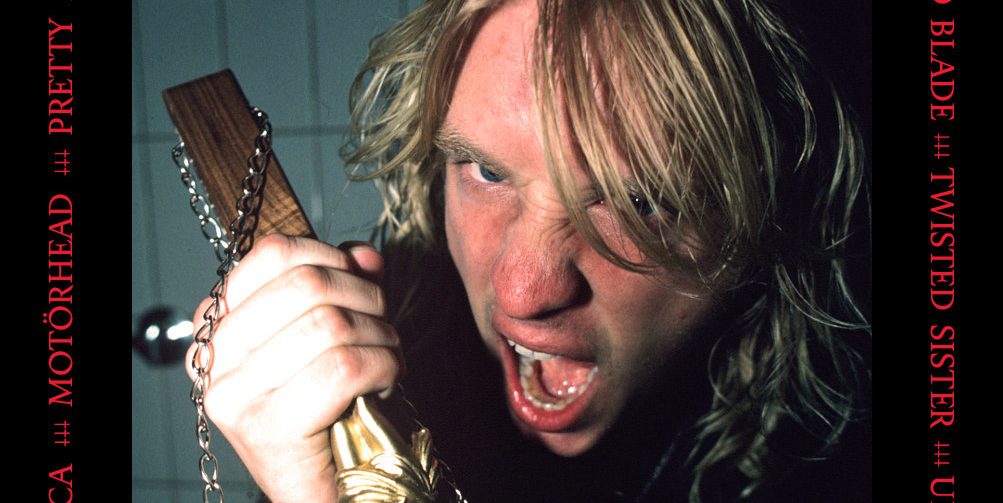
Heavy Sounds in the West is one of those rare instances where music history insists on dragging a place into its rightful spotlight. With a detailed, almost obsessive devotion to detail, Hans Verbeke and Onno Hesselink have constructed a monumental document of how heavy metal and crossover hardcore culture detonated in the unlikely soil of West Flanders. Their tremendous effort resulted in a coffee-table behemoth, comprising over 400 pages of full-color ephemera, photographs, posters, and battered memories, a vital reclamation of cultural history, refusing to let the margins stay marginal. West Flanders, long imagined as a sleepy, provincial corner of Belgium, erupts in these pages for more than a good reason. The book makes clear that what happened there between the late seventies and early nineties was not peripheral, not secondary, but an essential node in the web of heavy music’s global spread. Metallica, Slayer, Motörhead, Venom, Kreator, Rush, Mercyful Fate, and many more important names roll through these pages. However, what matters here is not just that these titans passed through, but how West Flanders, with its makeshift venues and stubborn promoters, offered them a stage at all. Promoters recalling the chaos of booking bands that no one yet believed in. Fans remembering the first time a Marshall stack rattled their ribs. Musicians, half-drunk, telling the truth in all its unruly, unpolished sincerity. These testimonies, presented without cosmetic smoothing, form a lively, imperfect, and therefore deeply convincing story. It’s oral history at its rawest, and that makes this book so good.

Verbeke and Hesselink understand the allure of memorabilia. Flyers plastered across these pages, some scrawled by hand, others cheap offset jobs, tell stories no prose could fully capture. A snapshot of Slayer grinning like teenagers before they were legends, a scuffed ticket stub from a long-defunct venue, beer-stained setlists carried home as trophies, these relics do not just illustrate the past. They are the past, brought back to the surface like archaeological fragments. The book situates heavy music as a cultural eruption and social necessity. West Flanders, so often portrayed as staid, conservative, even inert, finds itself shaken awake by distortion, speed, and fury. The book argues, persuasively, that this awakening was not accidental. Economic stagnation, generational boredom, and political unrest created a hunger that only the radical energy of metal and crossover hardcore could satisfy. If you want to know why metalheads would travel hours across muddy roads for a gig in a barn, this book supplies the context, because those nights felt like oxygen in a suffocating world. Heavy Sounds in the West doesn’t romanticize the past. There is reverence for the giants who played, but there is also a courageous acknowledgment of chaos, failure, and absurdity. Shows collapsed, gear broke, bands fought, audiences rioted, and still, out of the mess, something unrepeatable happened. By not sanding down the rough edges, Verbeke and Hesselink preserve the truth of the underground that it was never meant to be tidy.

Many of these voices come decades after the fact. Stories conflict, and dates blur. Did Venom really play that badly? Was the hall truly packed when Motorhead came through, or is nostalgia inflating the numbers? The authors wisely avoid adjudicating. Instead, they present the contradictions side by side, trusting the reader to grasp that the unreliability of memory is part of what gives this history its texture. The scope is staggering. Over three hundred photos, many never before published, provide an almost cinematic immersion. The density of this visual archive means the book can be approached as a chronology and a gallery. One can flip through randomly and still materialize with a visceral sense of time and place. West Flanders becomes a microcosm of how youth cultures germinate in unlikely soil, how global movements find local footholds. Heavy music belongs not just to New York, London, or Los Angeles, but to the provincial towns where scenesters scraped together enough to rent a hall and put on a show. The writing is sharp, unsentimental, and never lapses into academic jargon. Verbeke and Hesselink know their subject too intimately for distance. They do not disguise their affection, but their affection is tempered by honesty. They are as willing to recount embarrassing failures as transcendent triumphs. This openness gives the book its credibility. Heavy Sounds in the West reminds that cultural revolutions are not always glamorous. They are often awkward, cobbled together, and precarious. Yet out of such precariousness, something eternal emerges for generations to come.

It is tempting to call Heavy Sounds in the West a coffee-table book, but that would diminish it. It’s closer to an atlas, a cartography of noise, sweat, and defiance, mapping how a slumbering province awoke under the pressure of amplifiers turned to ten. Verbeke and Hesselink preserved a vivid memory of their local scene and constructed a monument. It’s like all good monuments, it doesn’t just commemorate the past but it also confronts it, demanding we recognize its power, its unruliness, and its ongoing relevance. Head to Earth Island Books for more information about ordering.

#BOOK #CROSSOVER #EARTHISLANDBOOKS #HANSVERBEKE #HARDNHEAVY #HARDROCK #HARDCORE #LITERATURE #METAL #MUSIC #ONNOHESSELINK #REVIEWS #ROCK #ROCKNROLL

"Heavy Sounds In The West" By Hans Verbeke And Onno Hesselink - Earth Island Books

Paddy Shennan Celebrates The Unsung Heroes Of Music In “Not JUST About The Fall”

Sunday Times bestselling ghostwriter Paddy Shennan turns his focus to the lifeblood of music: the fans. In his new book Not JUST About The Fall, out via Earth Island Books, Shennan reflects on the essential role fans play, weaving personal anecdotes with stories of legendary gigs by The Clash, The Fall, Joy Division, and more. From cassette culture to John Peel sessions, the book captures the vibrant underground scenes that shaped generations. With wit, nostalgia, and deep respect, Shennan argues that fans are worth their weight in gold, without them, music would not exist. This is a must-read for every true music lover.

#BOOK #BOOKS #EARTHISLANDBOOKS #LITERATURE #MUSIC #NEWS #PADDYSHENNAN #POSTPUNK #THEFALL

Paddy Shennan - Not Just About The Fall

“My Altercation: The Bandung Melodic Punk Scene 1995-2008” By Prabu Pramayougha (Earth Island Books)

Punk rock histories are usually told through the familiar capitals: London, Los Angeles, Washington D.C. Maybe Berlin, maybe Tokyo if you’re lucky. What’s lost in those recycled myths is the truth that punk rock has always thrived in the margins, in places the spotlight rarely lands. That’s why Prabu Pramayougha’s My Altercation: The Bandung Melodic Punk Scene 1995–2008 is such a vital book. It shifts our gaze to Bandung, Indonesia, and demonstrates how punk was never just a Western export. Pramayougha writes as someone who lived it, inhaled it, and helped shape a local punk rock scene. A journalist and musician himself, he understands how to put memory to paper without sanding off its roughness. The book almost serves as a diary splintered into essays, notes, recollections, and sharp cultural observations. That fragmentation is the point. Punk was never about linear progress. It was about collisions, false starts, and bursts of energy that refused to be contained. Bandung in the mid-1990s wasn’t an obvious candidate to become a melodic punk rock hub, yet Pramayougha shows how economic uncertainty, political turbulence, and youthful restlessness created a perfect storm. Music became the glue holding together scenesters who wanted something beyond regular routine, beyond family expectation, beyond the national mainstream that left little room for dissent. Melodic punk rock became their soundtrack for everyday life, shaping them as the personas they are today.

Pramayougha explains it all. The humid rehearsal spaces where amps threatened to blow. The photocopied zines passed from hand to hand like manifestos. The venues, sometimes just borrowed halls or basements, they used for gigs. These details matter. They take what could have been a subcultural footnote and elevate it into lived history. Pramayougha isn’t nostalgic, and his tone is affectionate but unsparing. He knows scenes fracture as much as they unite. He admits the contradictions, the egos, the cliques, the arguments about purity, the struggles to survive in a city where being punk meant being misunderstood. Rather than weaken the story, these fractures give it honesty. Reading My Altercation, the reader is reminded of what makes music scenes worth remembering. It isn’t fame or polish. It’s the sense of building a world within a world, of creating rituals and aesthetics that feel like oxygen when the rest of society is suffocating. Bandung’s melodic punk was exactly that, a breath of fresh air, and Pramayougha is sharp enough to link that cultural oxygen to Indonesia’s broader shifts, the loosening grip of authoritarianism, the expansion of youth culture, the growing hunger for expression in a society still wrestling with tradition. There are passages where Pramayougha writes like a reporter, cataloguing events with crisp precision. Then, without warning, he’ll pivot to something almost poetic, describing the emotional high of a show, the way a chorus can lift a room, or the calm after an all-night gathering. This dual register gives the book rhythm. It feels alive, closer to the music it documents.

Anyone who has ever been part of an underground scene, whether in Detroit, Belgrade, Manila, or São Paulo, will recognize themselves here. The struggles are the same, how to stay independent without burning out, how to balance passion with survival, how to carry on when the outside world dismisses you. Bandung’s details are specific, but the spirit is global. Punk has always been about local accents to a shared language, and Pramayougha captures that brilliantly. Too many cultural histories look back with neatness, trying to make movements seem more coherent than they were. Pramayougha resists that temptation. He preserves the noise, the disagreements, the false starts. He admits memory is slippery. He even leaves space for contradictions, stories told from different perspectives, rumors that were never confirmed, moments that blur in hindsight. It’s fidelity to the way scenes actually function. Punk was always about confusion channeled into community. Of course, the book is also an act of preservation. Without works like this, scenes fade into obscurity, remembered only by those who were there, their stories scattered across fading flyers and lost demo tapes. By putting Bandung’s story into print, Pramayougha ensures it will not vanish. He gives the city’s melodic punk its rightful place in the global map of underground culture, and he does so with the authority of someone who understands that scenes are not sidebars to “real” history. They are history, shaping lives, politics, and identities in ways official narratives rarely acknowledge.

Writing a book like this requires the courage to revisit personal memories, to confront failures alongside triumphs, to insist that what happened in Bandung matters as much as what happened in New York or London. That conviction animates every page. Prabu Pramayougha wrote a love letter to a scene that deserved to be remembered. My Altercation is essential reading, not only for anyone interested in Indonesian music but for anyone who wants to understand how culture moves from the ground up. It proves once again that punk rock’s most radical act is the refusal to be forgotten. Head to Earth Island Books for more information about ordering.

#BOOK #BOOKS #EARTHISLANDBOOKS #LITERATURE #melodicPunkRock #MUSIC #PRABUPRAMAYOUGHA #PUNKROCK #REVIEWS

"My Altercation: The Bandung Melodic Punk Scene 1995-2008" By Prabu Pramayougha - Earth Island Books

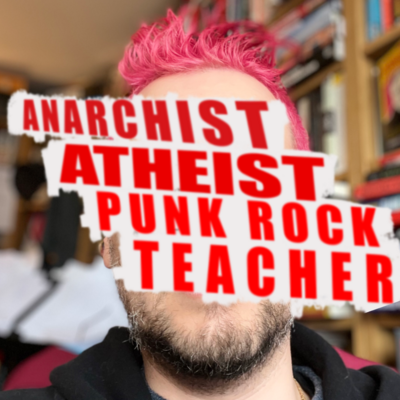
Had an awesome catchup on 2.13.24 (Henry Rollins Day) with Tim Mass Movement for Mass Movement Presents and now you can hear us discuss all things Anarchist Atheist Punk Rock Teacher here: open.spotify.com/show/65iW5TrE

#AnarchistAtheistPunkRockTeacher #MassMovement #Interview #EarthIslandBooks #Teaching #Punk #PunkRock #Writing #Anarchism

I’ll be at the Peterborough Radical Bookfair on Saturday, with copies of my memoir, Anarchist Atheist Punk Rock Teacher, and other titles from Earth Island Books.

Come along and say hello! 👋

#anarchistatheistpunkrockteacher #teaching #education #anarchism #books #radicalbooks #radicalbookfair #peterborough #teacher #punk #earthislandbooks #danmckee #PeterboroughRadicalBookfair

Flier for the Peterborough Radical Bookfair Saturday October 14th on top of copy of DaN McKee’s Anarchist Atheist Punk Rock Teacher book.

It’s the official release day for Anarchist Atheist Punk Rock Teacher, my memoir of struggle, grief, philosophy & hope from Earth Island Books. It’s about teaching, education, inner conflict, anarchism, religion, mental health, punk rock & loss. And it’s out now on paperback and eBook, direct from the publisher - earthislandbooks.com/product-p - or wherever books are sold.

#AnarchistAtheistPunkRockTeacher #Book #Reading #Memoir #DaNMcKee #Anarchism #Religion #Punk #Education #MentalHealth #EarthIslandBooks #Teacher #Teaching #Schools #ReleaseDay

I’m excited to announce my new book, Anarchist Atheist Punk Rock Teacher is now available to pre-order everywhere: earthislandbooks.com/product-p

Out June 16th on Earth Island Books, as the blurb says: it’s a memoir exploring the various ways in which anarchist philosophy, atheism, and a background in DIY punk rock influenced one conflicted teacher's approach to the classroom over twelve turbulent and thought-provoking years.

‘Anarchist Atheist Punk Rock Teacher' is more than just a memoir of some teacher you've never met. It is philosophy of education, of anarchism, of authenticity, and of life. Throw in some personal history, the deaths of both of his parents to deal with on top of juggling all the professional absurdities that come with the job (not to mention having to teach through a global pandemic), and you have all the earmarks of a biographical classic.

Sharing frontline insights which help explain why currently one in three teachers in England plan on quitting the profession, and the first-hand experience of being one of those very statistics, this memoir of struggle, grief, philosophy and hope tells a story of why, despite all its endless frustrations and inherent contradictions, there still might be no better job in the world than being an 'Anarchist Atheist Punk Rock Teacher'.

#AnarchistAtheistPunkRockTeacher #Anarchist #Atheist #Punk #PunkRock #Teacher #Teaching #Education #Writing #Memoir #Grief #Book #NewBook #DaNMcKee #Anarchism #EarthIslandBooks #PreOrder

Client Info

Server: https://mastodon.social
Version: 2025.07
Repository: https://github.com/cyevgeniy/lmst