#EmbeddedHardware

BLE VoiceJim8888
2025-11-11

Struggling with low sound volume from a KT148A voice chip product? Our analysis shows the problem is almost always acoustic, not electronic.

The solution isn't an external amplifier, which can burn out small speakers. The real fix is system-level.

The KT148A's built-in drive capability is more than enough for common 8Ω 1W speakers. Focus on the mechanics and acoustics for a major volume boost.

Struggling with low sound volume from a KT148A voice chip product? Our analysis shows the problem is almost always acoustic, not electronic.

The solution isn't an external amplifier, which can burn out small speakers. The real fix is system-level:
1.Use a larger, paper-cone speaker.
2.Design the product housing with sufficient sound outlet holes.

The KT148A's built-in drive capability is more than enough for common 8Ω 1W speakers. Focus on the mechanics and acoustics for a major volume boost.

#KT148A #VoiceChip #AudioDesign #EmbeddedHardware #OpenHardware #Electronics #DIYElectronicsCommon Audio Pitfall: Maximizing Speaker Loudness with Monolithic Voice Chips

Hello, I wanted to share a common design challenge we see with products using voice chips like the KT148A: insufficient sound volume.

The knee-jerk reaction is often to add an external power amplifier. However, our findings show this is rarely the correct solution. The core issue is typically acoustic, not electronic.

Key Takeaways:
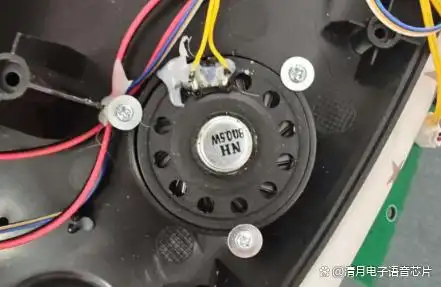
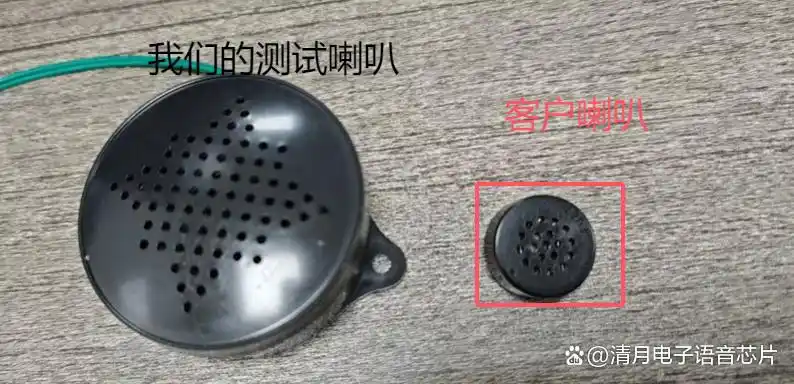
🔹 Speaker Matters: A larger paper-cone speaker will dramatically outperform a small, thin-film speaker. Size and type are critical.
🔹 Housing Matters: Sound needs to escape. A plastic shell with poor sound hole design will muffle even the best speaker.
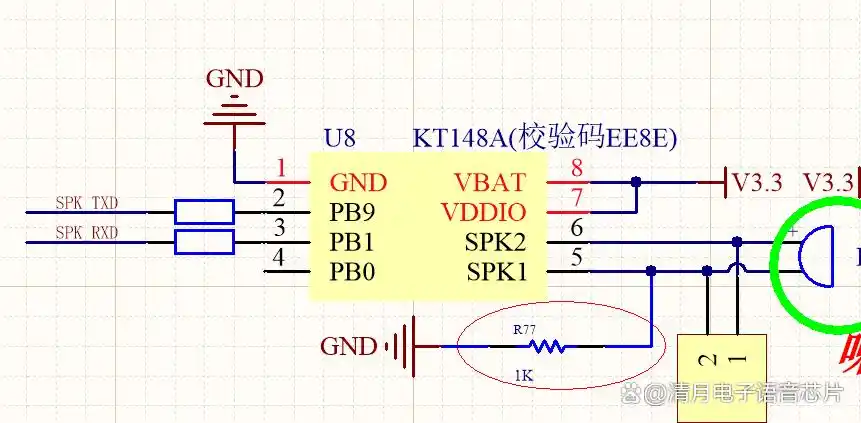
🔹 Chip is Capable: The KT148A can drive up to 200mA, which is sufficient for a standard 8Ω 1W speaker. An external amp is often unnecessary and can be risky.

Before you spin a new PCB with an audio amp, first verify your speaker selection and acoustic chamber design. It's a more effective and cost-efficient fix.

I'm curious—has anyone else validated this in their projects? Let's discuss in the comments.

#HardwareDesign #EmbeddedSystems #AudioEngineering #ProductDevelopment #KT148AIs Your KT148A Voice Chip Product Too Quiet? The Fix Isn't What You Think.

Is your product's audio output weaker than expected? A common issue we see isn't with the KT148A voice chip itself, but with the acoustic design surrounding it.

Many engineers first assume a need for an external audio amplifier. However, our analysis shows the problem is almost always one of two things:
1.Speaker Selection: Using a small, thin-film speaker instead of a larger, more efficient paper-cone type.
2.Enclosure Design: Insufficient or poorly designed sound outlet holes in the product housing.

The Solution? Focus on the system, not just the chip.
✅ Use the largest possible paper-cone speaker your structure allows.
✅ Ensure adequate sound hole area for proper acoustic performance.

The KT148A's built-in driver is robust enough for most 8Ω 1W speakers. A better speaker and enclosure design will yield a far greater volume increase than adding an external amp, which risks damaging small speakers.

Have you faced similar audio challenges in your embedded designs? Share your experiences in the comments!

#KT148A #AudioDesign #EmbeddedSystems #HardwareDesign #ElectronicsEngineering #ProductDesignIs your KT148A voice product too quiet? Don't add an amp! The secret is your speaker & housing. Use a larger paper-cone speaker & ensure proper sound holes. The chip's drive is already strong. #AudioDesign #Embedded #Hardware #KT148A
BLE VoiceJim8888
2025-10-29

If you're designing a product that needs a voice chip with roughly 1 minute of storage—and you want the freedom to update the audio yourself—the KT148A is a perfect fit.

Search "KT148A" on AliExpress for current pricing.

If you're designing a product that needs a voice chip with roughly 1 minute of storage—and you want the freedom to update the audio yourself—the KT148A is a perfect fit.

This Flash-based voice IC (SOP8 package) includes:
🔹 420 KB of storage (supports up to 420 seconds of audio)
🔹 I²C, SPI, and UART control interfaces
🔹 Very low standby and power-down current
🔹 Can drive a 0.5W speaker directly
🔹 Upload new voice content via UART from a PC—no expensive programmer required

Suitable for smart home devices, voice prompts, toys, and embedded audio systems.

Search "KT148A" on AliExpress for current pricing.

#VoiceChip #AudioPlayback #EmbeddedHardware #OpenHardware #KT148A #ElectronicsLooking for a 1-minute voice chip you can reprogram yourself? Check out the KT148A!
✅ Flash-based, not OTP
✅ Up to 420 sec playback
✅ UART update, no tools needed
✅ Low power, drives 0.5W speaker

Ideal for smart home, toys, IoT.
#VoiceChip #Embedded #IoT #KT148ALooking for a Self-Programmable 1-Minute Voice Chip? Meet the KT148A.

Are you in need of a voice playback chip with around 1 minute of storage that allows you to download and replace audio content easily? Forget OTP chips—they won’t work for you. Instead, check out the KT148A, a Flash-based voice chip in a compact SOP8 package.

Key benefits of the KT148A:
🔹 420 KBytes memory (up to 420 seconds playback)
🔹 Supports I²C, SPI, and UART interfaces
🔹 Ultra-low power consumption: <20 μA standby, 2 μA power-down
🔹 High-quality audio output for 0.5W speakers
🔹 User-replaceable voice files via UART—no expensive tools needed

Perfect for smart home devices, voice assistants, gaming consoles, and embedded systems.

Interested? Search "KT148A" on AliExpress for pricing and availability.

#VoiceChip #EmbeddedSystems #AudioPlayback #KT148A #HardwareDesign

Client Info

Server: https://mastodon.social
Version: 2025.07
Repository: https://github.com/cyevgeniy/lmst