
Study finds spirulina platensis outperforms cetirizine for allergic rhinitis relief! 👃✨ 2g daily improved symptoms like rhinorrhoea & nasal obstruction, boosted quality of life, and lowered key inflammatory markers (IL-1α, IL-4). A natural alternative? 🌿 https://old.actaitalica.it/article/view/139 #AllergicRhinitis #Spirulina #HealthResearch
#HealthResearch

🧬 Genetic detective work reveals how chronic conditions might predict lifespan! 343K genomes tell a story of health risks hidden in our DNA. 🕵️♀️ Breakthrough insights for personalized medicine! #Genomics #HealthResearch #Genetics https://emmecola.github.io/genomics-daily

11/
Full breakdown, plain language, fully backed and sourced 👇
Ghost Beds
open.substack.com/pub/paulstew...
#HealthResearch #PauliChecks
Ghost Beds
🙋FACILITATE developed a framework on how best to return #PatientData without compromising the results of #ClinicalTrials, while also building trust & reducing drop-outs.⚡GSK & Sanofi are running pilots. Want to know more? 👉 https://link.europa.eu/xfWFVp
#IHITransformingHealth #HorizonEU #HealthResearch

⏰ One week til our #IHICallDays info webinars on call 12!
Find out everything you wanted to know on:
✅ The content of the call
✅ The financial aspects
✅ Rules and procedures
📻 Ask our experts your burning questions!
👉 https://lnkd.in/eBuUztUV
#HorizonEurope #HealthResearch #ResearchFunding #Funding


Chronic Respiratory Diseases Affect 569 Million Globally
#BaaghiTV #GlobalHealth #RespiratoryDiseases #PublicHealth #SmokingRisks #HealthResearch #COVID19
https://en.baaghitv.com/chronic-respiratory-diseases-affect-569-million-globally


Migrating cells and the new science of microchimerism
https://www.nature.com/articles/d41586-025-04102-4
#HackerNews #MigratingCells #Microchimerism #ScienceNature #CellBiology #HealthResearch

❄️ Winter Data Wonder – A Comprehensive Metadata Resource for Health Research #
The NFDI4Health Study Hub hosts metadata for around 46,000 studies, instruments and documents. It helps researchers discover, compare and understand existing health research resources across institutions and study types — strengthening transparency, reuse and evidence-based research.
🔗 https://health-study-hub.de/
Contributed by @nfdi4health
#NFDI#HealthData #Metadata
#RDM #OpenScience #FAIRdata #HealthResearch

#FollowFriday If you are interested in the current research of #MEcfs #CFS etc. follow @tomkindlon and @IrishMECFSAssociation for news and informations.
Fresh and new are the groups for these topics: @mecfs and @longcovid
How to use #groups in the Fediverse: https://fedi.tips/how-to-use-groups-on-the-fediverse/
Innovador sistema ECMO para la oxigenación extracorpórea hospitalaria, capaz de transportar sangre sin dañarla.
🥼El proyecto de Thomas Hermans recibe una ayuda #HealthResearch #FundaciónlaCaixa, que desarrollará junto a la Dra. Santiago (Hospital Gregorio Marañón).

Dad's Fitness May Be Packaged and Passed Down in Sperm RNA
#HackerNews #DadsFitness #SpermRNA #GeneticInheritance #HealthResearch #QuantaMagazine

Scientists Discover Neural Basis of Schizophrenia and Bipolar Disorder -SciTechDaily.com
Tiny engineered brain models reveal that psychiatric disorders may arise from distinctive disruptions in neural communication rather than obvious structural damage. Credit: SciTechDaily.comScientists Discover Neural Basis of Schizophrenia and Bipolar Disorder
By Roberto Molar Candanosa, Johns Hopkins University, December 20, 2025, 8 Comments,
5 Mins Read
Facebook Twitter Pinterest Telegram, Share
Using lab-grown brain tissue, researchers uncovered complex patterns of neural signaling that differ subtly between healthy brains and those linked to severe psychiatric disorders.
For the first time, scientists have used pea-sized brain organoids grown in the laboratory to uncover how neurons may malfunction in schizophrenia and bipolar disorder. These psychiatric conditions affect millions of people around the world, yet they remain difficult to diagnose because researchers still lack a clear understanding of their underlying molecular mechanisms.
The results could eventually help clinicians reduce diagnostic uncertainty when treating these and other mental health conditions. At present, such disorders are typically identified through clinical judgment alone, and treatment often relies on lengthy trial-and-error approaches to medication.
A detailed account of the findings was published in the journal APL Bioengineering.
“Schizophrenia and bipolar disorder are very hard to diagnose because no particular part of the brain goes off. No specific enzymes are going off like in Parkinson’s, another neurological disease where doctors can diagnose and treat based on dopamine levels even though it still doesn’t have a proper cure,” said Annie Kathuria, a Johns Hopkins University biomedical engineer who led the research. “Our hope is that in the future we can not only confirm a patient is schizophrenic or bipolar from brain organoids, but that we can also start testing drugs on the organoids to find out what drug concentrations might help them get to a healthy state.”
Annie Kathuria. Credit: Will Kirk / Johns Hopkins UniversityMachine learning decodes disease specific signals
Kathuria’s team created the organoids, simplified versions of brain tissue, by reprogramming blood and skin cells from people with schizophrenia, bipolar disorder, and from healthy volunteers into stem cells capable of forming brain-like structures. They then applied machine learning tools to analyze the electrical activity of the organoids’ cells, allowing them to identify neural firing patterns associated with healthy and diseased states. In the human brain, neurons communicate through small electrical signals.
Continue/Read Original Article Here: Scientists Discover Neural Basis of Schizophrenia and Bipolar Disorder
#AnnieKathuria #BiomedicalEngineer #BipolarDisorder #Discover #HealthResearch #JohnsHopkinsUniversity #MentalHealth #NeuralBasis #Schizophrenia #Scientists #SciTechDaily

As flu cases spike, is it time to start wearing masks again?
#Health #Flu #Influenza #PublicHealth #Masks #N95Masks #MaskWearing #HealthResearch #WinterIllness #The14 #The14Media #PersonalChoice #RespiratoryViruses #RespiratoryDisease
https://the-14.com/as-flu-cases-spike-is-it-time-to-start-wearing-masks-again/

Vitamin B3 is gaining attention for its potential to lower cancer risk — especially skin cancer.
Nicotinamide has been linked to fewer new skin cancers and may support immune responses in liver cancer. Promising, but not a cure — and always worth discussing with your doctor.
Read more ➡️ https://blog.banishcancer.org/cancer-and-vitamin-b3-niacin-prevention-and-treatment-2025/
#VitaminB3 #CancerPrevention #SkinCancer #HealthResearch #Oncology #BanishCancer


The research network #PerMiCCion, funded by the #BMFTR, enters its 2nd funding phase to uncover why more young adults develop colorectal #cancer, and how the gut microbiome can enable earlier detection and personalized prevention. ➡️ https://www.leibniz-hki.de/en/press-release/how-gut-bacteria-could-protect-young-adults-from-cancer.html
#Microbiome #CancerPrevention #ColorectalCancer #EarlyOnsetCancer #PersonalizedMedicine #GutHealth #HealthResearch

🎆 The IHI call 12 text has officially been approved by our Governing Board and is online at https://link.europa.eu/8mQr3V
We'll officially launch the call in mid January, but meanwhile you can study this text and start working on your proposal.
🗓️ If you have any questions about the call, make sure you sign up for the IHI Call Days on 19-20 January at https://link.europa.eu/jNkncr.
#IHITransformingHealth #HorizonEU
#HealthResearch #ResearchFunding

Covid-19 mRNA Vaccination and 4-Year All-Cause Mortality
https://jamanetwork.com/journals/jamanetworkopen/fullarticle/2842305
#HackerNews #Covid19 #Vaccination #mRNA #Mortality #HealthResearch #JAMA
👩🔬 What is #RegulatoryImpact and how can your project achieve it?
👉 Join us online on December 10 at 14:00 and find out!
💡 Hear from European Medicines Agency experts plus researchers from projects who've already smashed their #RegulatoryScience goals.
👉 Register and find out more: https://link.europa.eu/vGdQrY
#IHITransformingHealth #HealthResearch #ResearchImpact

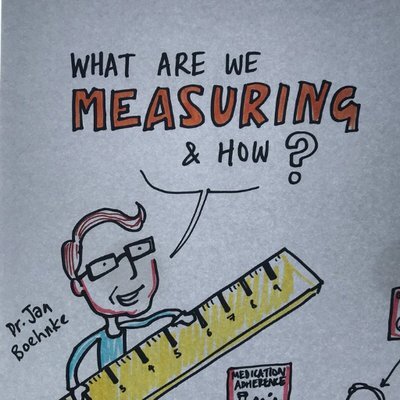
Funding to build #HealthResearch capacity in #Scotland for clinical and non–clinical researchers to continue their research following completion of a PhD:
Early Postdoctoral Fellowship
https://www.cso.scot.nhs.uk/fellowship-funding/early-postdoctoral-fellowship/
🔥📆 10th March 2026
❗3 years of salary and consumable support
...and maybe spending this time in the Living Well with Long-term Conditions Research Group at #DundeeUni could be the right context?
https://www.dundee.ac.uk/lwltc/research
#NCD #LTC
Client Info
Server: https://mastodon.social
Version: 2025.07
Repository: https://github.com/cyevgeniy/lmst